Honours versus Money
Bruno S. Frey
Mentioned 4 months ago
62. How Can You Escape a Drama Triangle?
Research psychologist Angela Duckworth (author of "Grit") and tech and sports executive Mike Maughan really like to ask people questions, and they believe there’s no such thing as a stupid one. So they have a podcast where they can ask each other as many “stupid questions” as they want. New episodes...
Recently mentioned
Bruno S. Frey
Mentioned 4 months ago
62. How Can You Escape a Drama Triangle?
William C. Dement
Mentioned 7 months ago
50. Are You as Observant as You Think?
Nassim Nicholas Taleb
Mentioned 7 months ago
49. How Does Facing Death Change Your Life?
Angela Duckworth
Mentioned 8 months ago
46. How Can You Stop Feeling So Irritable?
Michael Erard
Mentioned 8 months ago
45. How Much Better Do You Really Want to Be?
Paul Bloom
Mentioned 9 months ago
44. Is Empathy in Fact Immoral?
Meyer Friedman
Mentioned 9 months ago
44. Is Empathy in Fact Immoral?
Steven D. Levitt
Mentioned 9 months ago
42. How Does When You Are Born Affect Who You Are?
![Freakonomics [Revised and Expanded]: A Rogue Economist Explores the Hidden Side of Everything cover](https://media.podcastbookpicks.com/books/677.jpg)
Steven D. Levitt
Mentioned 9 months ago
41. Why Are We So Attracted to Fame?
Daniel Thomas Cook
Mentioned 9 months ago
41. Why Are We So Attracted to Fame?
Robert B. Cialdini PhD
Mentioned 9 months ago
41. Why Are We So Attracted to Fame?
Jordan Ellenberg
Mentioned 10 months ago
40. Have We All Lost Our Ability to Compromise?
The Power of Passion and Perseverance
The book was repeatedly brought up as a central example of the power of perseverance and sustained effort, often framed as an anti‑quitting manifesto. Stephen Dubner and Angela Duckworth discussed its core idea that grit, not talent, drives achievement, citing interviews with high‑achieving figures like Pete Carroll and Jamie Dimon. It was also highlighted for its bestseller success and its role in a book‑club gathering, reinforcing its status as a must‑read for the audience.
Grit was mentioned as an amazing book about passion and perseverance. It was part of a book club discussion, and it was the book that was read when the book club flew out to Philadelphia to visit Angela.
Or an amazing book called Grit.
Did you read Grit for that?
We did read Grit for that, of course, if we're coming to visit you.
Angela Duckworth's book Grit, the Power of Passion and Perseverance, became an instant success. It introduced a broad global audience to her research and insights on grit as a predictor of achievement.
Angela Duckworth's book Grit, the Power of Passion and Perseverance became an instant success.
The book perched atop the bestseller list and became a global clarion call.
Angela's book Grit, The Power of Passion and Perseverance was published in 2016.
It was mentioned that Angela Duckworth was writing her second book, potentially Grit, which she was getting feedback on from ChatGPT.
I'm writing this book as you know Mike and I will regularly let chat GPT give me feedback on entire chapters
It was mentioned as being the subject of Angela's Ted Talk and book, and how she became known as 'the grit lady' for it, but she feels it's not the sole factor for success.
My TED Talk used to be called the key to success and some very unhappy person pointed out that's overselling and unlikely to be true.
I've been thinking about how the human mind likes for there to be THE key to weight loss, romantic satisfaction, a happy life, fill in the blank.
Like Grit, it's the secret to success. Oh, I got it.
And then I guess you're going to get that as opposed to what I would say, which is like Grit is one thing among many.
I am still known as the Grit lady.
The book 'Grit' by Angela Duckworth was discussed in the context of the self-improvement movement, suggesting it focuses on individual goals and work habits, potentially impacting the larger world.
And it's this idea that if you focus on your own goals, your own Grit and work habits and your interpersonal relationships, you are inevitably having a good effect on the larger world as well.
Is it mostly high status people, for instance, who read a book like Grit in order to help themselves become a little higher status?
The concept of substituting nuance for novelty within a task was mentioned in relation to the book Grit, as a means to combat boredom and improve engagement.
it reminds me of something you taught me long, long ago. I think this came from your work on Grit which is the notion of substituting nuance for novelty.
It was mentioned that the author had a series of group interviews to sell the book proposal, implying the book's significance.
I remember when I sold Grit the book proposal, I had this sequence of these group interviews.
It was mentioned in the context of the author's research involving high-achievers, like Pete Carroll and Jamie Dimon, who demonstrated grit in their careers.
When you were writing Grit you were interacting with a lot of high achievers right? Pete Carroll and Jamie Dimon come to mind.
It was mentioned in the context of the author's research on high achievers and how they may have reached the top of their field through grit and talent. It was also used as a springboard to discuss social comparison in the context of her research.
When you were writing "Grit" you were interacting with a lot of high achievers right? Pete Carroll and Jamie Dimon come to mind.
It was mentioned in relation to the concept of grit, passion, and perseverance, and it was acknowledged that even the most gritty people can sometimes benefit from quitting.
Professor Duckworth, you are known to advocate the power of Grit as the subtitle of your book puts it, the power of passion and perseverance.
In that regard, the subtitle of your book, The Power of Passion and Perseverance, I think is relevant because if the passion isn't there, and if you're doing it for a different set of goals, then you can see how the payoff, even if you get it, isn't as meaningful.
It was mentioned in the context of Angela Duckworth's research into high-achievers, and how she interacted with people like Pete Carroll and Jamie Dimon, without being demotivated by their success.
When you were writing Grit, you were interacting with a lot of high achievers, right?
My objects of study.
It was mentioned in the context of Angela's research on high achievers, such as Pete Carroll and Jamie Dimon, whom she studied while writing the book.
When you were writing Grit, you were interacting with a lot of high achievers, right?
The book was mentioned in the context of perseverance versus patience, suggesting Ben Franklin might have confused the two concepts before the book's publication.
Maybe he hadn't read Grit.
The subtitle of Angela Duckworth's book was mentioned, suggesting it promotes the power of passion and perseverance, which Stephen Dubner noted sounded like an anti-quitting manifesto.
Professor Duckworth, you are known to advocate the power of Grit, as the subtitle of your book puts it, the power of passion and perseverance.
Angela Duckworth mentioned interacting with many high achievers while writing the book, such as Pete Carroll and Jamie Dimon.
When you were writing Grit, you were interacting with a lot of high achievers, right? Pete Carroll and Jamie Dimon come to mind.
Angela Duckworth was mentioned as the author of this book.
You also wrote the book Grit.
The book was mentioned when identifying Angela Duckworth as its author.
You also wrote the book Grit.
The book was mentioned in passing when describing Angela Duckworth's background as a psychologist and director of Character Lab.
You also wrote the book Grit.
The author confessed that the idea in this book was framed to be interesting by contrasting it with the conventional wisdom that talent makes someone great, asserting that sustained effort is the key instead.
it was very clear to me when I wrote Grit that what made the idea interesting is that we had a view that what makes somebody great at what they do is talent. That is the accepted wisdom.
But in fact, it's not. It's sustained effort and interest in what you're doing. That's Grit. So I had this idea that for Grit to be interesting, it had to have a foil.
The speaker mentioned writing a lot about her own daughters in this book before they were old enough to give permission for sharing their stories.
I wrote a lot about my own daughters in Grit before they were old enough to really give me permission to do that.
A Rogue Economist Explores the Hidden Side of Everything
The hosts repeatedly cited the book as the catalyst for their podcast’s fame, noting its film adaptation and the widespread recognition it brought them. They used it as a reference point for discussions on cheating, risk assessment, name trends, and the distinction between correlation and causation, often highlighting its influence on listeners and guests. Overall, the book was portrayed as a foundational and positively viewed work that shaped many of the show’s topics.
The podcast hosts discussed cheating in a variety of settings, referencing a section in their first book, 'Freakonomics,' which explored examples like sumo wrestlers colluding to cheat.
We actually wrote about cheating a good bit in Freakonomics, our first book, and a variety of settings.
It was mentioned that the listener's father had inspired her to read all of the Freakonomics books, and it was the only thing he had enjoyed as a gift for the past three years.
She writes that her dad, whose name is Neil Bonner, is who quote, got me into your podcast.
She writes, he inspired me to read all the Freakonomics books and he was the reason I wanted to major in economics.
She says, I have gotten him Freakonomics books the last three years, poor fella.
And that is about the only thing he has actually enjoyed.
The podcasters discussed the first Freakonomics book and how the film adaptation of it misinterpreted the authors' points about the impact of names on life.
It reminds me a little bit of the argument that we made in the first Freakonomics book about names.
That was partly driven by the fact that there was a film made called Freakonomics that we didn't make. We kind of participated in it and they sort of got it backwards.
It was mentioned that a character in Modern Family was reading the book. It was also mentioned that the Freakonomics podcast appeared on Modern Family.
She's supposed to be like the nerdy one. Gosh, I can't remember. I think they were at a swimming pool and everybody's jumping around having fun and she's sitting by the pool reading Freakonomics.
You know why I watched it is because Freakonomics was on it. It was in the first season.
It was briefly mentioned as the podcast's first book and it was used as an example of how new names are adopted and then become less popular with higher-income families over time.
One example that we highlighted in Freakonomics in our first book was about how in America, especially in the last 50 to 100 years, new names tend to be adopted by higher income families who see them as kind of interesting and maybe classy.
The podcast hosts mentioned their first Freakonomics book, which discussed how most people are terrible at assessing risk, using swimming pools and guns as an example of this.
Back in our first Freakonomics book we did write a bit about how most people are pretty terrible at assessing risk and one example we used is let's say that you have a child and the neighbor has a child and you send your child to play at your neighbor's house which should you be more scared of if your neighbor has a swimming pool or a gun in their home.
The first book in the Freakonomics series was mentioned, and it was later adapted into a documentary film which led to the speaker being recognized in public.
Our first book Freakonomics came out and then as we were working on the second book, there was a movie being made.
It was mentioned that the speaker had many foreign edition contracts for the book when it was first released, which he initially kept but later discarded.
I did take these 40 or 50 crates of work product and I did start to triage and I did get rid of one or two categories entirely that I felt like I could let go of.
They were the contracts for all the foreign additions of Freakonomics that we signed when Freakonomics first came out.
Like the Bulgaria contract.
We had contracts from I don't know 60, 80 countries and first of all, when they came in, I thought it was like an awesome document just to have.
But at a certain point, I decided that I didn't need the Bulgarian contract.
It was mentioned that the book deals with correlation vs causation, a topic relevant to the podcast discussion on narrative fallacy.
but it is funny when you ask it in the context of like a life story whether it's a memoir or biography the first book that I wrote I think we've talked about this a little bit in the past on this show is about my parents
It was mentioned as a book that Stephen had co-authored with Steven Levitt, and was discussed in the context of correlation not rising to causation.
a lot of the stuff that we've written in Freakonomics deals with this directly
The first book by Stephen Dubner and his collaborator was mentioned as the one that led to the speaker being recognized in airports after a documentary film based on it was released.
Our first book, Freakonomics, came out. And then as we were working on the second book, there was a movie being made.
The speakers referenced writing about different kinds of cheating in this book, including how schoolteachers cheated by erasing wrong answers on student score sheets to boost scores.
So we wrote a bit in our first and second Freakonomics books about different kinds of cheating.
The cheating school teacher data that we wrote about in Freakonomics, the way that the teachers cheated was they would give an exam, they would collect the score sheets from the kids, and then they would literally erase wrong answers and fill in correct ones.
The book was mentioned as an example when discussing skill and the application of skill in the context of human achievement modeling.
Let's take Freakonomics, for example. You have a skill, skill, and then you have to apply that skill. So that's the time.
Stephen mentioned the foreign edition contracts for this book, which he initially kept as awesome documents but later decided he could live without, such as the Bulgarian contract.
I can't pull the trigger. I can't get rid of them. I did take these 40 or 50 crates of work product and I did start to triage and I did get rid of one or two categories entirely that I felt like I could let go of.
They were the contracts for all the foreign editions of Freakonomics that we signed when Freakonomics first came out. Like the Bulgaria contract. Exactly. We had contracts from, I don't know, 60, 80 countries.
Stephen Dubner mentioned he wrote this book among quite a few others.
And you wrote the book Freakonomics among quite a few others.
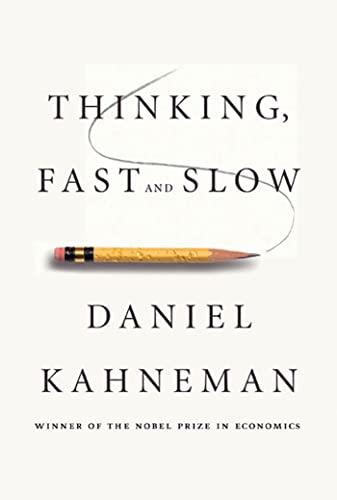
The hosts repeatedly referenced the title as a bestselling work that introduced the influential concepts of System 1 and System 2 thinking, priming, the narrative fallacy, and the Dunning‑Kruger effect. Angela Duckworth, Stephen Dubner, and other contributors cited it to explain how our brains form quick judgments and compelling stories, while also noting the later controversy over some priming research. Overall, the book was presented as a foundational and highly recommended resource for understanding cognitive biases.
The book, Thinking Fast and Slow, was described as a bestseller and explored the concept of 'system one' and 'system two' thinking, which are respectively, fast, effortless, and automatic, and slow, controlled, conscious, and effortful.
That's why Danny called his bestselling book, thinking fast and slow because thinking fast is using system one and thinking slow is using system two.
It was discussed as a source of information on priming, although there was later controversy around the validity of some of the research Kahneman cited in this book.
Josiah says, Greetings from England. I recently came upon the No Stupid Questions podcast and would love to hear your thoughts on the importance of semantics, especially in relation to the idea of priming as written about in the great Danny Kahneman's Thinking Fast and Slow.
He's so great, Danny Kahneman. He is.
And so is Josiah from England exactly.
And Danny Kahneman did write a great book too, you know, Thinking Fast and Slow.
One of the things that some readers took from Thinking Fast and Slow was the idea that priming was really important. But what then happened after Danny Kahneman published Thinking Fast and Slow was that there was a huge controversy about whether it was true.
It was mentioned in passing as being more well-known than adversarial collaboration, a concept also attributed to Kahneman.
It's one of Danny Kahneman's Inventions but has gotten less attention than like thinking fast and slow and cognitive biases and so forth
It was briefly mentioned that Daniel Kahneman, a Nobel laureate in economics, has made distinctions between two systems of thinking, which were discussed in relation to sloth and thoughtful deliberation.
So think about system one and system two, a distinction in judgment and reasoning that our good friend, wait for it. Danny Kahneman has made.
It was mentioned that the book contains a line which suggests that humans are not only blind to the obvious but also to their own blindness, related to the Dunning-Kruger effect.
Not only are we blind to the obvious, but we are blind to our blindness.
It was mentioned as a book where the author discusses the narrative fallacy, explaining how people often create compelling but potentially inaccurate causal stories.
I know that Danny Kahneman wrote about what Nassim Talab calls the narrative fallacy and Danny wrote about that in Thinking, Fast and Slow
It was mentioned in relation to the narrative fallacy, specifically the concept of how humans create compelling stories that are often oversimplified and focus on a few striking events, neglecting chance and uncertainty.
I know that Danny Kahneman wrote about what Nassim Talab calls the narrative fallacy and Danny wrote about that in "Thinking, Fast and Slow"
It was mentioned in relation to the Dunning-Kruger effect and the concept that people are blind to their own biases and lack of knowledge. A quote from the book was referenced.
Not only are we blind to the obvious, but we are blind to our blindness.
It was mentioned in relation to the narrative fallacy, and how people create compelling explanatory stories that are often simple and concrete, while underemphasizing luck and chance.
I know that Danny Kahneman wrote about what Nassim Taleb calls the narrative fallacy and Danny wrote about that in Thinking, Fast and Slow.
It was mentioned as a book where Kahneman wrote about the narrative fallacy, the tendency for humans to create simple and compelling stories to explain events.
and Danny wrote about that in Thinking, Fast and Slow
It was mentioned in relation to a conversation with Barbara Tversky, the widow of Amos Tversky, who was a close collaborator with Daniel Kahneman, discussing how the brain connects related ideas and concepts.
And she was like, well, of course you do that because one of the features of the human brain, and it's actually something that Danny Condomin wrote about, and I think it's like widely misunderstood.
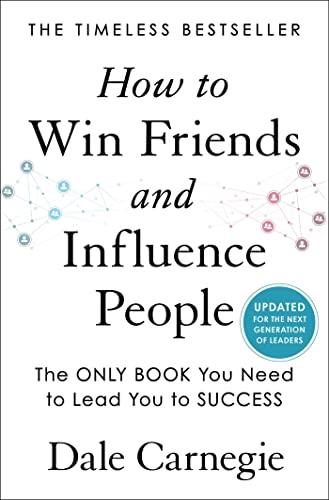
Updated For the Next Generation of Leaders (Dale Carnegie Books)
The book was repeatedly referenced as a classic self‑help work, with Stephen Dubner and Angela Duckworth noting its advice to be liberal with compliments and to use a person's name in conversation. Angela and Stephen often misquoted the title, and Stephen highlighted both its popularity and a sense that its tactics could feel manipulative. Overall, the hosts mentioned it casually as a well‑known source of social advice.
It was briefly mentioned in relation to the importance of using someone's name in conversation, a technique Carnegie advocated for, emphasizing that a person's name is the most important sound to them.
The most beautiful sound in the world is the sound of your own name
Remember that a person's name is to that person the sweetest and most important sound in any language
It was discussed as a potentially manipulative approach to persuasion, but also presented as a way to have more constructive conversations. Angela Duckworth was described as a superfan of the book.
You know that I'm a secret superfan of Dale Carnegie, right?
I am a superfan in How to Win Friends and Influence People.
I'd like just the title, How to Win Friends and Influence People.
And to tell someone they're wrong, first tell them they're right.
I mean, the whole Dale Carnegie shtick is a little distasteful.
It was mentioned as a self-help book that encouraged being liberal with compliments and praise, but the speaker forgot the title and only recalled how it made him feel.
So Dale Carnegie 7 habits of highly effective people we've talked about this self-help book.
How to Win Friends and Influence People.
Can't remember the title of the book but I remember how it made me feel sorry but do you remember the chapter or the recommendation?
to be liberal with your compliments to be liberal with your praise.
It was mentioned as a classic self-help book and it was briefly discussed, but was misreferenced multiple times by Angela throughout the episode.
How to make friends and influence people.
Later, Angela refers to Dale Carnegie's 1936 book How to Win Friends and Influence People, but mistakenly refers to it as how to make friends and influence people.
The speaker was attempting to recall the title and discussed the book's recommendation to give compliments freely, and it was said that the book's central message was often incorrectly remembered.
Dale Carnegie, seven habits of highly effective people...How to get people, How to Win Friends and Influence People...I can't remember the title of the book, but I remember how it made me feel.
This book was briefly mentioned in the context of the discussion on humor and its impact on social interactions, particularly in the workplace. It was alluded to as a possible source of advice on the benefits of laughing at others' jokes.
I wonder if like, you know, it's in that book, How to Win Friends and Influence People Laughing at someone's jokes.
The book was referenced as a classic self-help work, although the title was misquoted by Angela as "how to make friends and influence people" on two separate occasions.
How to make friends and influence people. There's the classic. I know you like that one a lot.
Though Stephen initially confused the title, this book was referenced for its advice on being liberal with praise and compliments, which is a key takeaway for many readers.
And one of them was to be liberal with your compliments, to be liberal with your praise.
Global Cooling, Patriotic Prostitutes, and Why Suicide Bombers Should Buy Life Insurance
Stephen Dubner referenced the book several times as a source for topics such as the relative age effect in sports, lab experiments on altruism, the Kitty Genovese murder narrative, and changes in the prostitution industry. He noted that the authors had written about these subjects in the book, using it to provide background and revised perspectives. The mentions were factual and without strong endorsement, indicating the book was used as a useful reference.
The book discussed prostitution as an industry, as well as a shift in sexual mores that was observed between the mid-20th century and recent decades.
We wrote about this a little bit in SuperFreakonomics
The relative age effect in sports was discussed, and the book was mentioned as having covered the birth date bulges in youth leagues.
We've written about it in a couple of our books...
We wrote about this I believe it was in Super Freakonomics...
The Kitty Genovese story was retold in this book, along with discussion about the incentives for the reporters and police involved, which shed light on how the original story was exaggerated.
But we went back and in our second book, Super Freakonomics, we actually retold the story as well as we could, including the incentives for the reporters involved and the police involved.
The speakers referenced writing about the relative age effect in Major League Baseball within this book, noting they analyzed birth date bulges related to the July 31st cutoff date in youth leagues.
We wrote about this, I believe it was in Super Freakonomics, but we looked at the birth date bulges.
In this book, they wrote about lab experiments concerning altruism, where later research suggested that observed giving was often motivated by scrutiny rather than true altruism.
And then we also wrote in Super Freakonomics about something that might not strike many people as cheating, but I would argue that it was.
The speakers referred to this book where they retold the story of the murder of Kitty Genovese, attempting to correct the narrative presented in the New York Times regarding bystander apathy.
And we went back and in our second book, Super Freakonomics, we actually retold the story as well as we could, including the incentives for the reporters involved and the police involved.
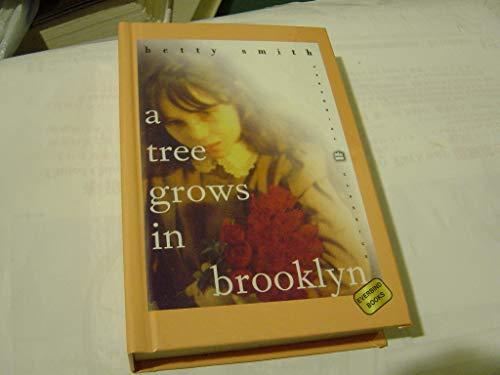
Angela Duckworth and Stephen Dubner repeatedly recalled the title as a beloved childhood read that left a strong emotional impression despite their inability to recount plot details. They cited it as a comforting, familiar book to revisit during stress and linked its themes to discussions of aspirational consumption and feeling not alone. The hosts treated it as a nostalgic favorite rather than a rigorous recommendation.
It was mentioned as an example of a familiar and comforting book that someone might choose to reread during times of stress or uncertainty.
no, I'm going to reread A Tree Grows in Brooklyn.
It was discussed how the speaker loved the book but could not remember any of the details, only how it made them feel as a young girl and later when her daughter read the same copy, which was a hardcover with a green cloth cover.
Stephen, I've been thinking about a conversation that we had about A Tree Grows in Brooklyn.
You said you loved that book, loved it, but you couldn't remember a single thing about it.
I remember that it made me feel not alone.
it was on a shelf somewhere...and it was on a shelf somewhere.
I think what I'll remember about A Tree Grows in Brooklyn is not any of the details of the plot, but I remember how it made me feel and I'll remember how I felt when I learned that Amanda had taken that book off the shelf.
It was mentioned as an example of a comforting and familiar book that someone might choose to reread during difficult times, as opposed to seeking out new challenges.
And there are other people who are like, no, I'm going to reread A Tree Grows in Brooklyn.
It was discussed how one of the speakers loved the book but couldn't recall details of the plot or characters, only the emotional impact it had.
Stephen, I've been thinking about a conversation that we had about A Tree Grows in Brooklyn.
You said you loved that book, loved it, but you couldn't remember a single thing about it.
So I thought you might have even forgotten the conversation about how I had forgotten.
I'm a girl, she's a girl, she's confused, I'm confused. I remember that it made me feel not alone.
it was on a shelf somewhere and then she read it.
It was discussed as a favourite book from childhood, where the mother's action of having more than she needed and then discarding it was linked to aspirational consumption, even in poverty.
one of my favorite books when I was a kid was A Tree Grows in Brooklyn.
it's about a family, the Nolan family in Brooklyn and basically how they struggle to get by the very poor.
Every day or maybe multiple times a day, mama would give the kids a cup of coffee and neither of them really liked coffee.
They'd put their hands on it to keep warm. And then they would dump it down the drain.
When you have so little in the world, just to get the feeling once a day of having more than you need and being able to get rid of it is a taste of what luxury must feel like.
The speakers discussed this book, noting that one of them loved it evangelically but couldn't remember any specific details about the plot or protagonists, retaining only a strong residue of emotion about the experience of reading it.
Stephen, I've been thinking about a conversation that we had about A Tree Grows in Brooklyn. Do you recall this conversation?
You said you loved that book, loved, loved, loved it, but you couldn't remember a single thing about it.
I remember that I was a young girl when I read A Tree Grows in Brooklyn. I felt some communality with the protagonist.
Green cover, by the way, cloth, hardback. And it was on a shelf somewhere. And then she read it.
This was mentioned as one of the speaker's favorite childhood books, though they could not recall the plot or characters. It was discussed in the context of aspirational purchases and the feeling of having luxury, relating to the coffee wasting scene in the story.
So what this phenomenon reminds me of a little bit, maybe even a lot, is one of my favorite books when I was a kid was A Tree Grows in Brooklyn. Did you ever read it?
I loved it. Can't tell you anything about it, but I remember reading it, which is another interesting question. Why can't we remember anything about the books we love?
And what the mother explained was that, you know what? When you have so little in the world, just to get the feeling once a day of having more than you need and being able to get rid of it is a taste of what luxury must feel like.
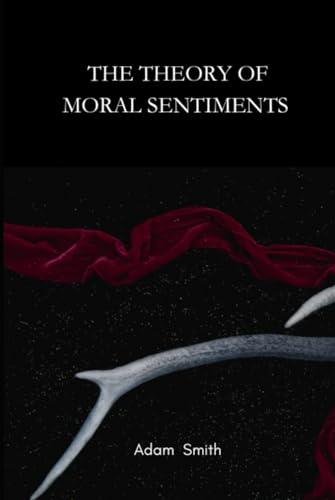
original Version
The hosts repeatedly cited the book as Adam Smith’s foundational moral philosophy, noting its insights on the human desire for praise, the distinction between self‑interest and selfishness, and the role of empathy and willpower in overcoming weaknesses. Stephen Dubner introduced it as Smith’s “big moral philosophy book,” and Angela Duckworth referenced its ideas on being praiseworthy. The overall tone was appreciative, presenting the work as a key reference for understanding human nature.
It was mentioned that Adam Smith, in his book 'The Theory of Moral Sentiments', discussed willpower and overcoming weaknesses, which was then contrasted with Thomas Schelling's perspective on self-control and 'playing games' with oneself.
He's like you know if you go back and read The Theory of Moral Sentiments Smith goes on and on about just like strength of will overpowering our weaknesses and Schelling thought that was silly.
It was discussed as a philosophical work that explored the inherent human capacity for empathy and care for others, despite our natural selfishness. It illustrated the tension between caring for those close to us and extending that care to a wider circle.
Well, The Theory of Moral Sentiments.
Yeah, but in The Theory of Moral Sentiments Smith wrote about this, you know, all of China was the example he gave.
How selfish so ever man may be supposed there are evidently some principles in his nature which interest him in the fortune of others and render their happiness necessary to him, though he derives nothing from it except the pleasure of seeing it.
The most frivolous disaster which could befall himself would occasion a more real disturbance. If he was to lose his little finger tomorrow, he would not sleep tonight; but provided he never saw them, he will snore with the most profound security over the ruin of 100 millions of his brethren. And the destruction of that immense multitude seems plainly an object less interesting to him than this paltry misfortune of his own.
It was mentioned that Adam Smith discussed the desire to be praiseworthy in this book. The speaker also humorously commented that he wanted to get a candle, referencing an earlier part of the discussion about giving candles as a gift.
I think it was in a theory of moral sentiments he wasn't saying we want to be praised we want to be praise worthy I want to get a candle.
It was described as his big moral philosophy book, where he viewed self-interest as a useful component of human nature, distinct from selfishness, and related it to the idea of collective society and economy.
Adam Smith, you know, we consider him the founder of classical economics, but let's not forget he was a moral philosopher and he saw self-interest as a key and useful component of human nature, but it's not the same as selfishness.
The Theory of Moral Sentiments was his big moral philosophy book.
This work was mentioned in the context of Adam Smith's idea that people desire praise and to be praiseworthy, suggesting that receiving esteem is distinct from receiving a physical gift like a candle.
Well, I don't know. I guess it depends what the point of the compliment is. Like if I'm trying to compliment someone to make them feel good about themselves or to make them happy for the day or to repay them a kindness even, right?
No, because when Adam Smith said that we all want to be praised and we all want to be praiseworthy, I think it was in a theory of moral sentiments.
This was mentioned as Adam Smith's major work on moral philosophy, which argued that self-interest is a key component of human nature, but noted that human nature also contains principles that interest people in the fortune of others.
The Theory of Moral Sentiments was his big moral philosophy book.
How selfish soever man may be supposed, there are evidently some principles in his nature which interest him in the fortune of others and render their happiness necessary to him, though he derives nothing from it except the pleasure of seeing it.
The hosts recalled reading the title in school and despising it, yet the concluding line about cultivating one's garden stuck with them as a reminder to focus on what they can control. Both Angela Duckworth and Stephen Dubner referenced it across episodes to illustrate the idea of personal agency. While the book itself was not enjoyed, its core message was valued.
It was mentioned in the context of a personal anecdote. Angela disliked reading it in high school but took away the core message of focusing on what you can control and cultivate your own sphere of influence.
I remember reading in French class, I think it was junior year, and Dr. Rowland had assigned Candide by Voltaire, and I hated it by the way.
You have to cultivate your garden.
There's what you can't do, and there's what you can do, and the things that you can do, just do and don't be paralyzed.
Stephen Dubner mentioned reading Voltaire's 'Candide' in high school, relating the concept of 'cultivating your garden' to focusing on what you can personally control, rather than broader societal issues.
You know, when I was in high school, I read Candide. Did you read Candide by Voltaire? Let us go cultivate our garden.
And even as a junior in high school, I was like, oh you have to cultivate your own garden. Don't try to do things that you can't change even though you know that they should be changed.
It was mentioned that Angela Duckworth disliked it when she had to read it for a French class as a teenager, but the memorable final line "cultivate our garden" was recalled.
I also remember when I was 16, I had to read, I think for a French class, Candide, which I hated by Voltaire.
Cultivate our garden.
It was mentioned as a book the speaker disliked when she was 16 years old, but they will never forget the last line. The speaker stated that she despised it.
I had to read, I think for a French class, Candide, which I hated by Voltaire.
I despised it, but I'll never forget the last line. Cultivate our garden. We must cultivate our garden.
The speaker mentioned reading this book for a French class at age 16 and strongly disliking it, but recalling the final line: 'Cultivate our garden.'
I also remember when I was 16, I had to read, I think for a French class, Candide, which I hated by Voltaire. I despised it, but I'll never forget the last line. Cultivate our garden.
30th Anniversary Edition (*LARGE PRINT)
The book was referenced several times, often to illustrate concepts like scarcity versus abundance mindset and to note its influence on business self‑help literature. Angela Duckworth cited it as a source of the Eisenhower Matrix and mentioned having read it repeatedly, while Mike and Stephen Dubner highlighted a misattributed quote that actually originated from Peter Drucker. Overall, the hosts treated the title as a well‑known, moderately influential work rather than a central recommendation.
It was incorrectly attributed to the book's author; the quote 'Do first things first, and second things not at all' actually originated from Peter Drucker's 'The Effective Executive'.
It was the old Stephen Covey, 'Do first things first, and second things not at all'.
Finally Mike attributes the quotation 'Do first things first, and second things not at all' to Stephen Covey, author of the 1989 book 'The Seven Habits of Highly Effective People'. The line actually comes from the 1966 book 'The Effective Executive' by Peter Drucker whose work was a significant influence on Covey.
It was mentioned as the origin of the terms 'scarcity mindset' and 'abundance mindset'. The book was described as self-helpy and business-focused, emphasizing effectiveness in commercial and business contexts.
Then I felt silly about being surprised actually came from an extraordinarily popular book called the seven habits of highly effective people By Steven Covey who was an interesting guy who I didn't really know.
Covey says that a scarcity mentality refers to people who see life as a finite pie in other words, it becomes a zero-sum game, right? If you have something I can't have it.
He writes that people with a scarcity mentality have a very difficult time sharing recognition and credit power or profit whereas someone with an abundance mentality has the idea that there's plenty out there for everyone.
So I think these are really two different things we're talking about and I think what Matthew is writing is to ask what psychology has to say about this sort of Getting ahead framework that's posed by Steven Covey of setting off scarcity versus abundance.
This is a book that Steven Covey first published in 1989. It was kind of a self-helpy business book.
It was mentioned as a book that Angela had read multiple times and where she learned about Eisenhower's Matrix.
I actually know about this matrix because I have read Stephen Covey's book more times than anyone would believe. This is the seven habits of highly effective people.
It was briefly mentioned and discussed in context of Angela's misreferencing of another book.
Angela appropriately enough confuses the work with another best-selling self-help book, The Seven Habits of Highly Effective People, which was written by author and businessman Stephen Covey.
Public Discourse in the Age of Show Business
The hosts referenced the title as a mid‑1980s work that warned about mass distraction weakening individual thought, likening it to a modern "bread and circuses" scenario. They cited it when discussing the risks of passive media consumption and binge‑watching, noting that the book’s concerns about entertainment’s impact on thinking remain relevant today.
It was mentioned in relation to the dangers of passively consuming media and entertainment, especially in the context of binge-watching television.
I think of a book from maybe 30 years ago by Neil Postman called Amusing Ourselves to Death which wasn't about binge watching because it didn't exist but it was about an engagement with media or entertainment but the point is if watching TV is not the most intellectually and physiologically and socially stimulating thing that one can do which we could probably agree on and if it becomes easier and easier and easier to do more of this thing then that's probably not so good but it may also be that we're in the early days and people kind of feel a reaction to it or against it and start to adapt
It was discussed as a book written about media and entertainment, particularly about how increasing ease of access to media is potentially detrimental.
I think of a book from maybe 30 years ago by Neil Postman called Amusing Ourselves to Death, which wasn't about binge watching because it didn't exist, but it was about an engagement with media or entertainment.
It was discussed as an extension of the Orwellian fear that people were being distracted from thinking for themselves by entertainment, mirroring modern issues with technology.
In the mid 1980s, there was a book by Neil Postman called Amusing Ourselves to Death.
This book, published in the mid-1980s, was discussed as an extension of the fear that mass distraction was weakening individual thought, similar to the idea of bread and circuses.
In the mid-1980s, there was a book by Neil Postman called Amusing Ourselves to Death.
And it basically was an extension of the Orwellian fear that we were being distracted by bread and circuses, that the individual was getting weaker and weaker and less likely to think for him or herself.
A Revolutionary Way to Influence and Persuade
It was strongly recommended as a way to understand how people are persuaded and avoid being scammed, as it highlights principles of persuasion used by con artists.
If I gave Raymond, who sent us this question, why do people get scammed? What's your advice? If I gave Raymond the best advice, I think it would be Go Read Influence by Bob Chaldini.
— Episode: 150. Why Do People Get Scammed?
It was strongly recommended as a way to understand how people are persuaded and avoid being scammed, as it highlights principles of persuasion used by con artists.
If I gave Raymond, who sent us this question, why do people get scammed? What's your advice? If I gave Raymond the best advice, I think it would be Go Read Influence by Bob Chaldini.
And the reason I suggest that is that what Bob Chaldini as a psychologist did was to document the half dozen basic principles by which human beings persuade other people to do and believe things.
And I wanna recommend this to Raymond, not only because like, wow, how do I not fall prey to these techniques? Well, learn them from the master.
But when I got to know Bob in the last several years, I came to discover something that I didn't realize from reading Influence the first time which is that he is like the most morally upright person.
And I think what truly has motivated him is just the idea that his moral duty is to kind of inoculate all of us against scams and against being had and against being fooled and taken advantage of by writing as clearly as possible about how it is that that happens.
The book, Influence, was discussed as a classic read for CEOs due to its focus on persuasion, and the author was said to have gone undercover in the restaurant industry to study manipulation tactics.
If you've read his book which I know you have and I know I have and I'm guessing many other people have It's called Influence, he's written few But this was the big one
Yeah, and it's a recent revision of it, right? Exactly And he tells a story about going undercover In these different industries to do his research
To learn how firms manipulate people essentially
When Bob revised influence this classic book That every CEO has because it's the science of persuasion
The second book really actually explains more How his whole life purpose is to illuminate The principles of human persuasion for good Not for ill
It was mentioned as a book that helped one of the podcast hosts become a psychologist, specifically because of a story about a jewellery store mistakenly increasing prices and sales rising. It was later discussed in the context of persuasion.
The original version of influence is why I became a psychologist in the first place.
I don't think Bob Chaldini would want anyone to have the absolute superpower of persuasion.
he says that he wrote the book Influence so that we, all of us civilians, could be hip to the tricks that professional persuaders use but he will freely admit that his book became a sort of Bible for professional persuaders including salespeople, marketing people, political persuaders and so on.
It was mentioned that the speaker was reading a soon-to-be-published new version of Robert Cialdini's 'Influence' and that it discussed how people make decisions based on social proof.
You know, I was just talking to our common friend, Bob Chaudini. Well, he's uncommon as a human being, but we are both friends with him. I was reading his soon to be published new version of influence and how we persuade each other.
The Authors of Freakonomics Offer to Retrain Your Brain
The hosts referenced the title several times to illustrate how stepping away from a moral compass can improve problem‑solving, to cite a charitable fundraising case study, and to explain why they wrote a self‑help guide for data‑driven thinking. Stephen Dubner and other guests highlighted its practical advice while noting it might not suit every reader. Overall, the book was presented as a useful tool for thinking differently about complex issues.
The podcast discussed a charitable organization, Smile Train, and its fundraising methods, referencing an example from the book about how the charity adjusted its business model.
It reminds me of something that Steve Levitt and I wrote about in one of our Freakonomics books, Think Like a Freak.
It was written as a guide to how the authors think, collect data, analyse, and tell stories, a sort of self-help book, but they were aware it wouldn't be a perfect fit for every reader.
So, yeah, we did sort of write a self-help book.
The reason that we wrote that book was because we would just get so many requests for help that we couldn't give.
The speakers referenced their work in this book to advocate for setting aside a moral compass when solving problems, suggesting that relying on it can lead to deluding oneself about the actual issue at hand.
So the idea of a moral compass, I think, again, is extremely appealing. We all like to think that we have learned through our parents and our communities and the people that we admire and so on to have a moral compass, a way of navigating our way through the world.
And the reason is that what a moral compass does is basically you align yourself to what's the right or wrong way to think about a given issue, whether it's fracking or gun control or genetically engineered food. Climate change.
A New Translation (Modern Library)
The hosts mentioned the book as a classic alternative to modern self‑help titles, suggesting that readers who prefer the essays of ancient thinkers might find it more satisfying than works by Dale Carnegie. Stephen Dubner highlighted its relevance both as a source of timeless philosophical insight and as the origin of the idea that imitation is a form of flattery. The discussion presented the title as a thoughtful, if niche, reading option for discerning listeners.
It was noted that a version of the idea 'imitation is the highest form of flattery' originated with the Roman emperor in his work, Meditations.
a version of the idea originated with second century Roman emperor Marcus Aurelius, who in Meditations wrote, 'you should consider that imitation is the most acceptable part of worship and that the gods had much rather mankind should resemble than flatter them.'
It was discussed as an alternative to more modern self-help books, perhaps more palatable for those who are more discerning about their reading.
Yeah, Marcus Aurelius, right?
Maybe the snob in you would feel better reading Meditations or reading the essays of Michel de Montaigne than reading Dale Carnegie.
This work was mentioned as a possible reading choice for someone who might feel better reading the essays of classical figures over modern self-help authors like Dale Carnegie.
And maybe the snob in you would feel better reading Meditations or reading the essays of Michel de Montaigne than reading Dale Carnegie.
Inside the Doomsday Machine
The book was referenced while explaining the reckless self‑confidence of mortgage lenders before the recession, illustrating how borrowers felt like they were "the king or queen of their castle." Mike Mann mentioned it in that context, and Steven Dubner highlighted it as an example of Michael Lewis’s insightful nonfiction work and his prolific, purpose‑driven writing. The hosts found it insightful but only mentioned it casually rather than strongly recommending it.
It was briefly mentioned that Michael Lewis, a well-known non-fiction author, has written a number of books, including 'The Big Short,' and that he prioritizes doing only work that he finds fulfilling.
The Big Short the blind side money ball. Yes amazing nonfiction books every single one of them brilliant and he was backstage and I was backstage and he was going to go on and I remember asking him something.
Yeah he was something like you know I do what I want to do and I don't waste my life doing things that I don't want to do but he's been incredibly prolific it must be that he wants to write.
The book was mentioned in the context of explaining the mortgage lenders prior to the recession, where individuals felt like 'the king or the queen of their castle who are just crushing it,' leading to high self-credit.
Michael Lewis writes about this in The Big Short.
You have all of these individuals who think that they are the king or the queen of their castle who are just crushing it. And I am the greatest, I, I, I, I.
The book was highlighted as the seminal work that introduced behavioral economics to a broad audience, mentioned by Angela Duckworth and Stephen Dubner. It was cited for its iconic fly‑sticker example that nudged men to aim better in urinals and for its broader guidance on nudging people toward pro‑social actions instead of mandates. The hosts treated it as a foundational, highly regarded text.
The book was mentioned as a seminal work that introduced behavioral economics to the general public.
And so he basically talked about how he starts his morning with three minutes of a breathing exercise, three minutes of gratitude, three minutes of prayer, and then three minutes of what he, I think, calls prioritization.
And he says, here are the three things that I need to accomplish today, regardless of whatever else comes into my life or time, etc.
And I love that idea of a morning routine.
And Katie Milkman, aforementioned friend, collaborator, behavioral scientist, and I were hosting Cass Sunstein, who was the co-author of Nudge, the famous book that kind of launched behavioral economics into the popular consciousness.
It was mentioned as an example of a book that detailed the use of a fly sticker in a urinal to influence male behaviour, reducing mess and waste.
one of the most famous examples from the book Nudge by Thaler and Sunstein was about Putting an image of a fly a house fly on a urinal in the airport
It was mentioned in passing as a book that talks about nudging people towards pro-social behavior instead of mandates, in the context of the pandemic.
Richard Thaler and so on, who wrote a book called Nudge, talking about the way to Nudge people towards pro-social behavior, as opposed to mandates.
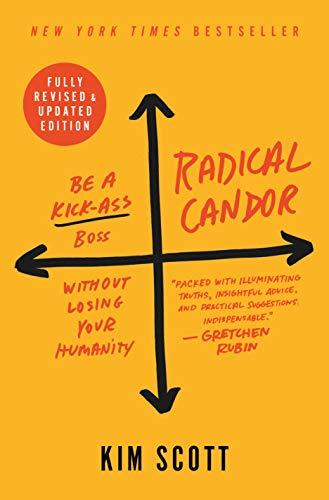
Fully Revised & Updated Edition
Kim Scott, author of Radical Candor, was mentioned as a prominent CEO coach in Silicon Valley. She gave a Q&A to Qualtrics employees and said "none of you are Steve Jobs".
She said, none of you are Steve Jobs. And I'm really sorry if I'm the first one telling you that.
— Episode: 201. Are You Dreaming Too Big?
Kim Scott, author of Radical Candor, was mentioned as a prominent CEO coach in Silicon Valley. She gave a Q&A to Qualtrics employees and said "none of you are Steve Jobs".
She said, none of you are Steve Jobs. And I'm really sorry if I'm the first one telling you that.
She came to Qualtrics in our early days and was doing a Q&A with the employees.
And I love that she said that.
And the point was, if you were Steve Jobs, you would not be in this room. You'd be creating your own company.
It was discussed as a framework for building a successful organization, differentiating between 'rock stars' and 'superstars' based on their ambitions and abilities.
look at kind of this mediocre life versus the I don't know what you call it the excelling life so Kim Scott, friend of both of ours author of Radical Candor and Jess Work an amazing human being Kim has this construct that she calls rock stars and superstars
The book covers the concept of radical candor, which encourages a culture of truth-telling in feedback delivery, provided it is done in a kind and helpful manner, differentiating it from 'obnoxious aggression.'
Kim Scott wrote a book called Radical Candor. And I think the basic idea is when you have a culture of truth telling, like at all times, I mean, you know, Stephen, your breath smells. That joke there was both unfunny and inappropriate. I'm out of here.
Kim Scott, the author of the book Radical Candor, refers to that type of language as, quote, obnoxious aggression. And she says that when practicing Radical Candor, feedback should be delivered in a kind and helpful manner.
Philosopher Robert Nozick was mentioned as a thought experiment creator. He came up with the experience machine, a hypothetical machine which simulates pleasure, and questioned whether people would choose to plug in.
Have you ever heard of Bob Nozick?
— Episode: 201. Are You Dreaming Too Big?
Philosopher Robert Nozick was mentioned as a thought experiment creator. He came up with the experience machine, a hypothetical machine which simulates pleasure, and questioned whether people would choose to plug in.
Have you ever heard of Bob Nozick?
I was reading about this thought experiment that he came up with.
It was such an interesting hypothetical.
It was called the experience machine.
So Nozick asked, and I think this was 1974, and I remember noting the date around when he said this because he didn't say this in 2024, right?
So in 1974, Nozick says, imagine there's an experience machine.
And when you plug yourself into the experience machine, it's like you're kind of just like a brain liquid and basically you experience pleasure, but not just like some blunt force pleasure.
It's like you can have these like vivid experiences of having written the great American novel, having the perfect family.
One could fill in the blank being a triathlete, but also a unicorn billionaire or whatever.
So that's the experience machine.
You plug in and it gives you this vicarious sensation that you are living your best life.
And the puzzle or the question, the dilemma, whatever you want to call it is, do you choose to plug in or not?
And Nozick is like, that's pretty simple.
Who would choose to plug into the experience machine?
And then he goes on to say, it's like, because what is carriage if not like actually taking, you know, charge of your life and like taking real risks?
It's like, what is love and what are relationships unless they're real and difficult and so forth.
And I think in 2024, we have a kind of stunning answer to his question, which is, oh yeah, we choose to plug into the experience machine all the time.
And I wish Bob Nozick were alive today to ask it again, because I think he would have to reckon with the reality that like, well, like for example, Bob, people are on their screens like about as many hours as they're sleeping today.
It was mentioned in relation to the 'philosophical problem of being plugged into a pleasure machine' thought experiment, where humans could choose reality or a pleasant simulation.
Angela was likely thinking of the thought experiment described by American philosopher Robert Nozick in his 1974 book Anarchy, State and Utopia.
in the book humans have the choice to experience reality as it exists or to live forever in a pleasant simulation Nozick posited that most people would choose not to plug into the pleasure machine he died in 2002
It was mentioned in relation to a philosophical thought experiment about humans choosing between reality or living in a pleasurable simulation, a concept discussed in the podcast.
Angela was likely thinking of the thought experiment described by American philosopher Robert Nozick in his 1974 book, Anarchy, State and Utopia.
In the book, humans have the choice to experience reality as it exists or to live forever in a pleasant simulation.
Nozick posited that most people would choose not to plug into the pleasure machine.
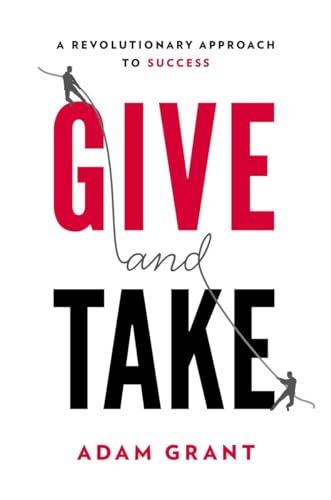
A Revolutionary Approach to Success
The book was highlighted for its framework that classifies people as givers, takers, and matchers, and for advocating a balanced approach to helping others that also benefits the giver. It was praised by a guest who noted the author’s impressive breadth of work and even listed the title among books she wished she had written. Overall, the discussion conveyed strong endorsement of the book’s insights.
In his book, Adam Grant categorizes people into three types: givers, takers, and matchers. He argued against selfless giving, emphasizing that it was more sustainable to help others in a way that benefited both parties, suggesting a more balanced approach to giving.
And in the book Give and Take, Adam has this typology. There are three kinds of people. One kind of person is a giver. They're primarily motivated to help other people solve their problems. One kind of person is a taker. They're primarily motivated to get ahead and to relate to other people with the question, what can you do to solve my problems? Also, there's the possibility that you're a matcher and the matcher is actually the thing that we were just describing. Like I'll do this for you if you do something for me.
And then he gave me this counter proposal. He's like, look, here's the way to be a giver who doesn't get taken advantage of. When you give, always ask yourself, what's the problem that I'm solving for this other person? And at the same time, how does this benefit me?
I was like, that's not the way my mother raised me.
It was mentioned that Adam Grant does a lot of things very well, inspiring a feeling of envy in Angela Duckworth.
Adam has ascended to another plane of existence because he just does it all and he does it so well.
But for me, it's Adam Grant. We do the same thing. I co-direct an institute with him. We're at the same school. We both have podcasts. We write books.
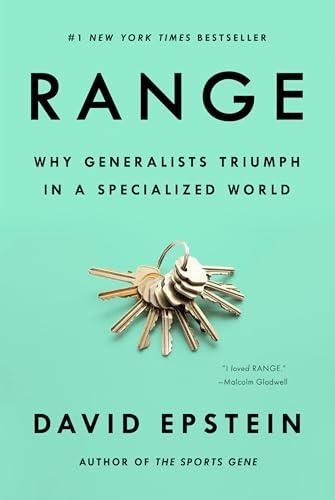
Why Generalists Triumph in a Specialized World
Across several episodes, the book was highlighted by Angela Duckworth, who called it a great and incredible work that underscores the value of sampling many experiences and maintaining a broad range of interests. The hosts discussed it as a counterpoint to grit, noting that while breadth is important, true expertise still demands focused practice. Its insights into how generalists can thrive in a specialized world were praised, leading to a strong recommendation.
David Epstein's book Range was praised for its exploration of the benefits of a broad range of experience and sampling in life. It was recommended for its insights into how generalists can succeed in a specialized world.
I love David Epstein go on
I just need to say it's a great book he's a great guy.
Incredible book and he talked about this experience of this electrical engineer
The idea of Range that David Epstein was so correct I think in putting his finger on is that you never want to lose some amount of sampling you never want to have a day in your life where you're only exploiting and not exploring because then you can't cross-fertilize with anything
The book discussed the benefits of having multiple interests and not specializing too early, suggesting it acts as a counterpoint to 'grit.' The speaker found that while the book raises good points about sampling and exploration, true expertise still requires extended, dedicated practice.
You're going to talk about Range now, right?
Correct. And I think in a way you could argue that Range is a counterpoint to grit because he talks a lot about the benefits of doing lots of things and having multiple interests and not committing or specializing too early to any one thing.
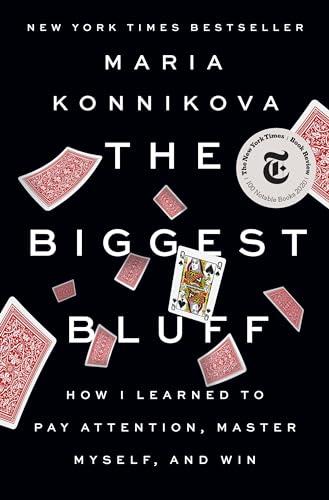
How I Learned to Pay Attention, Master Myself, and Win
The hosts highlighted the title as a narrative of the author's transformation into a professional poker player, using it to illustrate the interplay of luck and skill and the psychological concept of locus of control. Stephen Dubner introduced it while discussing how much of life one can control, noting its relevance to everyday decision‑making. Overall, the book was presented as an insightful example rather than a strong endorsement.
It was mentioned as a book about the author's journey to become a professional poker player, focusing on the relationship between luck and skill, and the concept of the locus of control.
This question arose when I was reading Maria Kanakova's new book, The Biggest Bluff.
And this book is about her quest to become a professional poker player starting from scratch.
The book was discussed in the context of the concept of locus of control, which was introduced by Julian Rotter in 1966, and related to success and well-being, using the example of Maria's journey to becoming a poker player.
This question arose when I was reading Maria Kanakova's new book, The Biggest Bluff.
So Maria, like you, has a PhD in psychology but she's not an academic. She's a writer and this book is about her quest to become a professional poker player starting from scratch.
And really what Maria is wrestling with throughout that book is the relationship between luck and skill.
The book was about the author's quest to become a professional poker player starting from scratch. It explored the relationship between luck and skill in the context of poker, which was easy to extrapolate to daily life.
This question arose when I was reading Maria Konnikova's new book, The Biggest Bluff. So Maria, like you, has a PhD in psychology, but she's not an academic. She's a writer. And this book is about her quest to become a professional poker player, starting from scratch.
And really what Maria is wrestling with throughout that book is the relationship between luck and skill.
So here's the passage that made me think of you: There's an idea in psychology, she writes, first introduced by Julian Roeder in 1966 called the locus of control.
Note: The book recommendations on this page are discovered automatically from podcast transcripts, and may be incorrect or incomplete.
Podcast Name