
Podcast Mentions
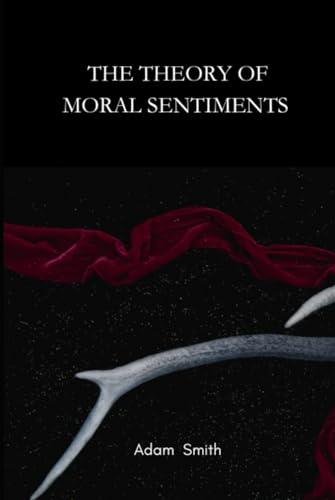
The Theory of Moral Sentiments original Version
Adam Smith
Buy this paperback to read while listening to the audiobook for free here: https://librivox.org/the-theory-of-moral-sentiments-by-adam-smith/
Podcasts
10
Quotes
31
Podcast
Today, Explained
Adam Smith's foundational philosophical text, The Theory of Moral Sentiments, was briefly brought up during a discussion exploring the history of capitalism. The podcast noted that Smith authored this work in 1759, establishing it as a key biographical point predating his more famous economic treatise, The Wealth of Nations.
Episode: Blame Capitalism: Souring on the system
Adam Smith, a philosopher born 300 years prior to the context of the discussion, wrote this book before he wrote The Wealth of Nations.
"
He became a philosopher, wrote a book called The Theory of Moral Sentiments in 1759, moved to France, became a tutor.
Podcast
Freakonomics Radio
It was discussed as Smith's first book, with the suggestion that Smith's views on morality were not fully appreciated and he was often considered only as an economist.
"
She didn't read the first book, The Theory of Moral Sentiments, clearly.
— Episode: 527. Can Adam Smith Fix Our Economy?
Episode: 527. Can Adam Smith Fix Our Economy?
It was discussed as Smith's first book, with the suggestion that Smith's views on morality were not fully appreciated and he was often considered only as an economist.
"
She didn't read the first book, The Theory of Moral Sentiments, clearly.
It's in the theory of moral sentiments, but it's understood a richer context in the theory of moral sentiments.
And I know The Wealth of Nations is the most famous book, but for me, as was said earlier, it's the theory of moral sentiments, which is the guide.
Episode: 526. Was Adam Smith Really a Right-Winger?
It was Adam Smith's first published book, released in 1759, which gained him a stellar reputation as a writer and philosopher, and was initially well received for its beautiful writing and humane approach to wealth and poverty.
"
Man naturally desires not only to be loved, but to be lovely, or to be that thing which is the natural and proper object of love. He naturally dreads not only to be hated, but to be hateful, or to be that thing which is the natural and proper object of hatred.
He desires not only praise, but praiseworthiness, or to be that thing which though it should be praised by nobody is however the natural and proper object of praise. He dreads not only blame, but blameworthiness, or to be that thing which though it should be blamed by nobody is however the natural and proper object of blame.
We want to be appreciated. We want to matter. And what he's saying there is that not only do we want to be praised and honored and respected, but we want to earn that honestly.
He says the pursuit of wealth - here's the person who wrote 'The Wealth of Nations' who says the pursuit of wealth is a fool's game. It's going to degrade you. You're going to do things you're going to be ashamed of and that you'll want to hide.
My book is an attempt to bring to the modern reader Adam Smith's forgotten masterpiece, 'The Theory of Moral Sentiments'.
Episode: 525. In Search of the Real Adam Smith
It was described as a deeply humanistic work that explored human behavior and morality. It was said to be a more innovative and interesting book than The Wealth of Nations.
"
I see the theory of moral sentiments as showing this deeply humanistic, curious and imaginative person interested in what makes humans tick in all spheres of life.
What is it like when we see somebody in pain? How do we feel when we tell a joke and somebody doesn't laugh?
It's almost as though you're saying that Smith described our daily behavior and our moral behavior in a similar way as he describes economic transactions, which are there are costs and benefits to everything.
I happen to think that of the two books, the theory of moral sentiments is the more interesting, the richer, in many ways, the more innovative of the two books.
The theory of moral sentiments is the more interesting, the richer, in many ways the more innovative of the two books.

Podcast
Hidden Brain
It was discussed in the context of Adam Smith's belief in integrating material interests with moral values, suggesting a path to a more balanced economic and societal approach.
"
His two great books were The Wealth of Nations, as is well known, but also The Theory of Moral Sentiments.
— Episode: Our Better Angels
Episode: Our Better Angels
It was discussed in the context of Adam Smith's belief in integrating material interests with moral values, suggesting a path to a more balanced economic and societal approach.
"
His two great books were The Wealth of Nations, as is well known, but also The Theory of Moral Sentiments.

Podcast
The Megyn Kelly Show
It was mentioned as part of a Scottish intellectual legacy that Niall Ferguson believes in and feels responsible for preserving.
"
Think of Adam Smith's contribution, The Wealth of Nations, The Theory of Moral Sentiments.
— Episode: Biden's Foreign Policy Failures, Rise of...
Episode: Biden's Foreign Policy Failures, Rise of Woke Poli...
It was mentioned as part of a Scottish intellectual legacy that Niall Ferguson believes in and feels responsible for preserving.
"
Think of Adam Smith's contribution, The Wealth of Nations, The Theory of Moral Sentiments.

Podcast
The Matt Walsh Show
Matt Walsh mentioned it as Adam Smith's "best book" while discussing moral philosophy.
"
He said that was his best book. Theory of Moral Sentiments, right.
— Episode: Daily Wire Backstage: The LIBS’ New Plan...
Episode: Daily Wire Backstage: The LIBS’ New Plan... Indict...
Matt Walsh mentioned it as Adam Smith's "best book" while discussing moral philosophy.
"
He said that was his best book. Theory of Moral Sentiments, right.
It was mentioned as Adam Smith's first book, published 17 years before 'The Wealth of Nations', showcasing his background as a moral philosopher, rather than solely an economist.
"
But 17 years I think before that he'd written his first book, he only completed two and that was called 'Theory of Moral Sentiments' and that exhibited what Adam Smith was, which was a moral philosoph...
— Episode: Capitalism, Private Equity, and the Seve...
Episode: Capitalism, Private Equity, and the Seven Deadly S...
It was mentioned as Adam Smith's first book, published 17 years before 'The Wealth of Nations', showcasing his background as a moral philosopher, rather than solely an economist.
"
But 17 years I think before that he'd written his first book, he only completed two and that was called 'Theory of Moral Sentiments' and that exhibited what Adam Smith was, which was a moral philosopher.
Podcast
No Stupid Questions
The hosts repeatedly cited the book as Adam Smith’s foundational moral philosophy, noting its insights on the human desire for praise, the distinction between self‑interest and selfishness, and the role of empathy and willpower in overcoming weaknesses. Stephen Dubner introduced it as Smith’s “big moral philosophy book,” and Angela Duckworth referenced its ideas on being praiseworthy. The overall tone was appreciative, presenting the work as a key reference for understanding human nature.
Episode: 136. Is Sloth a Sin or a Virtue?
It was mentioned that Adam Smith, in his book 'The Theory of Moral Sentiments', discussed willpower and overcoming weaknesses, which was then contrasted with Thomas Schelling's perspective on self-control and 'playing games' with oneself.
"
He's like you know if you go back and read the theory of moral sentiments Smith goes on and on about just like strength of will overpowering our weaknesses and Schelling thought that was silly.
Episode: 132. Is It Wrong to Enjoy Yourself While the World...
It was discussed as a philosophical work that explored the inherent human capacity for empathy and care for others, despite our natural selfishness. It illustrated the tension between caring for those close to us and extending that care to a wider circle.
"
Well, the theory of moral sentiments.
Yeah, but in the theory of moral sentiments Smith wrote about this, you know, all of China was the example he gave.
How selfish so ever man may be supposed there are evidently some principles in his nature which interest him in the fortune of others and render their happiness necessary to him, though he derives nothing from it except the pleasure of seeing it.
The most frivolous disaster which could befall himself would occasion a more real disturbance. If he was to lose his little finger tomorrow, he would not sleep tonight; but provided he never saw them, he will snore with the most profound security over the ruin of 100 millions of his brethren. And the destruction of that immense multitude seems plainly an object less interesting to him than this paltry misfortune of his own.
Episode: Why Do We Forget So Much of What We’ve Read? (Ep....
It was mentioned that Adam Smith discussed the desire to be praiseworthy in this book. The speaker also humorously commented that he wanted to get a candle, referencing an earlier part of the discussion about giving candles as a gift.
"
I think it was in a theory of moral sentiments he wasn't saying we want to be praised we want to be praise worthy I want to get a candle.
Episode: 11. Are Ambitious People Inherently Selfish?
It was described as his big moral philosophy book, where he viewed self-interest as a useful component of human nature, distinct from selfishness, and related it to the idea of collective society and economy.
"
Adam Smith, you know, we consider him the founder of classical economics, but let's not forget he was a moral philosopher and he saw self-interest as a key and useful component of human nature, but it's not the same as selfishness.
The theory of moral sentiments was his big moral philosophy book.
Episode: 24. Why Do We Forget So Much of What We’ve Read?
This work was mentioned in the context of Adam Smith's idea that people desire praise and to be praiseworthy, suggesting that receiving esteem is distinct from receiving a physical gift like a candle.
"
Well, I don't know. I guess it depends what the point of the compliment is. Like if I'm trying to compliment someone to make them feel good about themselves or to make them happy for the day or to repay them a kindness even, right?
No, because when Adam Smith said that we all want to be praised and we all want to be praiseworthy, I think it was in a theory of moral sentiments.
Episode: 11. Are Ambitious People Inherently Selfish?
This was mentioned as Adam Smith's major work on moral philosophy, which argued that self-interest is a key component of human nature, but noted that human nature also contains principles that interest people in the fortune of others.
"
The Theory of Moral Sentiments was his big moral philosophy book.
How selfish soever man may be supposed, there are evidently some principles in his nature which interest him in the fortune of others and render their happiness necessary to him, though he derives nothing from it except the pleasure of seeing it.

Podcast
The Daily Stoic
This book by Adam Smith was mentioned alongside his more famous "Wealth of Nations." The host expressed a strong positive reaction to the book, indicating its significant impact on him.
"
You might be familiar with Wealth of Nations, the Indian and the invisible hand, but he also writes a book called The Theory of Moral Sentiments, and both these books hit me so much--I think this is r...
— Episode: Russ Roberts on Making Better Decisions
Episode: Russ Roberts on Making Better Decisions
This book by Adam Smith was mentioned alongside his more famous "Wealth of Nations." The host expressed a strong positive reaction to the book, indicating its significant impact on him.
"
You might be familiar with Wealth of Nations, the Indian and the invisible hand, but he also writes a book called The Theory of Moral Sentiments, and both these books hit me so much--I think this is right around the time I was writing the Ecosiannemy.
Note: The book recommendations on this page are discovered automatically from podcast transcripts, and may be incorrect or incomplete.