Honours versus Money
Bruno S. Frey
Mentioned 4 months ago
62. How Can You Escape a Drama Triangle?
Research psychologist Angela Duckworth (author of "Grit") and tech and sports executive Mike Maughan really like to ask people questions, and they believe there’s no such thing as a stupid one. So they have a podcast where they can ask each other as many “stupid questions” as they want. New episodes...
Recently mentioned
Bruno S. Frey
Mentioned 4 months ago
62. How Can You Escape a Drama Triangle?
William C. Dement
Mentioned 7 months ago
50. Are You as Observant as You Think?
Nassim Nicholas Taleb
Mentioned 7 months ago
49. How Does Facing Death Change Your Life?
Angela Duckworth
Mentioned 8 months ago
46. How Can You Stop Feeling So Irritable?
Michael Erard
Mentioned 8 months ago
45. How Much Better Do You Really Want to Be?
Paul Bloom
Mentioned 9 months ago
44. Is Empathy in Fact Immoral?
Meyer Friedman
Mentioned 9 months ago
44. Is Empathy in Fact Immoral?
Steven D. Levitt
Mentioned 9 months ago
42. How Does When You Are Born Affect Who You Are?
![Freakonomics [Revised and Expanded]: A Rogue Economist Explores the Hidden Side of Everything cover](https://media.podcastbookpicks.com/books/677.jpg)
Steven D. Levitt
Mentioned 9 months ago
41. Why Are We So Attracted to Fame?
Daniel Thomas Cook
Mentioned 9 months ago
41. Why Are We So Attracted to Fame?
Robert B. Cialdini PhD
Mentioned 9 months ago
41. Why Are We So Attracted to Fame?
Jordan Ellenberg
Mentioned 10 months ago
40. Have We All Lost Our Ability to Compromise?
A Handbook and Classification
This book is mentioned by Angela Duckworth in the context of studying human virtues and how courage is not about the absence of fear, but about acting despite it.
I remember back in the day when I was first running graduate school there was a psychologist who's no longer alive his name was Chris Peterson and he was creating the inventory of character strengths...
— Episode: 187. Is Fear Running Your Life?
This book is mentioned by Angela Duckworth in the context of studying human virtues and how courage is not about the absence of fear, but about acting despite it.
I remember back in the day when I was first running graduate school there was a psychologist who's no longer alive his name was Chris Peterson and he was creating the inventory of character strengths for positive psychology and he was working with my advisor Marty researching carriage as one of the key human virtues and he told this story all is about firefighters he said what carriage is it isn't not being afraid of dying in the fire it's going into the burning house despite the fact that you are feeling fear and I always thought that was just Chris Peterson's insight or maybe from his interviews but it turns out that there is a literature on courage and there's a psychologist named Stanley Rackman who was a lifelong scholar of fear and carriage and he wrote a book of the same title fear and carriage and he said people have the misunderstanding that carriage means lack of fear and I think what Rackman would say is that there may be a class of people who have a minimal fear response but that is not the only way to be courageous because any of us can learn to experience fear and do things nevertheless there was actually a New York Times article called searching for the source of a fountain of carriage where the journalist talked a lot about Rackman's research I thought it was a very nice lay summary this is about paratroopers actually who were being studied by Rackman as they prepared for their very first parachute jump so the article says the work revealed three basic groups the predator naturally fearless who displayed scant signs of the racing heart sweaty palms spike in blood pressure and other fight or flight responses associated with ordinary fear and who jumped without hesitation second group was the hand ringers whose powerful fear response at the critical moment kept them from jumping that's a direct quote from the article oh wow so they just didn't do it yeah that would be me and finally the ones who reacted physiologically like the hand ringers but who acted like the fearless leapers so this study by Rackman so nicely summarized in this article I think gives us some hope those of us who feel like we have the racing heart we have the sweating palms we have the spike in blood pressure we have the fighter flight response we feel like we have a highly functioning amygdala I feel like for me that is the only kind of carriage I'm ever going to be capable of and if I had to choose a surgeon or a collaborator or a friend honestly I think I would choose those courageous jumpers who did it despite the fear not because of the absence of fear right so I don't know permission to feel seems like a good well it's a great book but it's also just a good one liner for this question that Jeff gave us and maybe for life so Jeff there you have it permission to feel.
Poverty and Profit in the American City
It was described as a fascinating and heartbreaking exploration into poverty in the United States, focusing on the effects of unstable housing on children's development.
I don't know if you've ever read the book Evicted.
— Episode: 186. Do You Need a Routine?
It was described as a fascinating and heartbreaking exploration into poverty in the United States, focusing on the effects of unstable housing on children's development.
I don't know if you've ever read the book Evicted.
Evicted, I think, is a fascinating and heartbreaking exploration into poverty in the United States and how not having a stable housing situation, not knowing that there's a place that you can come home to every day, really disrupts the development of children because they're constantly inflexed, whether that's not knowing where they're going to live or going into an unhoused situation, etc., etc.
It was mentioned as an example of a heavy and sad book that explores the psychological and social impact of poverty and eviction, particularly in financially limited environments.
This book that we've talked about before called Evicted that goes through this psychological and social and emotional impact of growing up in a really financially limited setting where you're constantly being Evicted.
It was mentioned during the fact check segment as one of Victor Hugo's works while discussing a story about a writer who used a commitment device to overcome procrastination.
This is actually a famous story about french poet and novelist victor hugo who authored lame as a rob and the hunchback of Notre Dame
— Episode: How Much of Your Life Do You Actually Co...
It was mentioned during the fact check segment as one of Victor Hugo's works while discussing a story about a writer who used a commitment device to overcome procrastination.
This is actually a famous story about french poet and novelist victor hugo who authored lame as a rob and the hunchback of Notre Dame
The book was mentioned in a fact-check segment, relating an anecdote about Victor Hugo's use of a commitment device to prevent himself from procrastinating on writing.
This is actually a famous story about French poet and novelist Victor Hugo who authored Les Miserables and The Hunchback of Notre Dame.

A Novel (Perennial Classics)
A passage from Sylvia Plath's novel, "The Bell Jar", was used to illustrate the struggle of facing numerous possibilities and the fear of missing out on potential futures, leading to inaction.
I saw my life branching out before me like the green fig tree from the tip of every branch, a wonderful future beckoned and winked.
— Episode: 176. Why Is It So Hard to Make Decisions...
A passage from Sylvia Plath's novel, "The Bell Jar", was used to illustrate the struggle of facing numerous possibilities and the fear of missing out on potential futures, leading to inaction.
I saw my life branching out before me like the green fig tree from the tip of every branch, a wonderful future beckoned and winked.
One fig was a husband and a happy home and children. Another fig was a famous poet. Another fig was a brilliant professor and yet another was an amazing editor.
Beyond and above these figs were many more figs I couldn't quite make out. I saw myself sitting at the base of this fig tree starving to death just because I couldn't make up my mind which of the figs I would choose.
I wanted each and every one of them, but choosing one meant losing all the rest and as I sat there unable to decide the figs began to wrinkle and one by one they plopped to the ground at my feet.
I wonder what you would say to Alex now after we've covered the terrain that we did. Alex, let me just say I think maybe you're asking this question because you are a little like me and sometimes fall into this path of analysis, paralysis so the advice I would give myself and maybe you after listening to all of what Angel has shared with us and reliving some of my past bad experience not making decisions is it's always better to decide and take action than to wallow at the foot of the fig tree forever.
It was mentioned in relation to Sylvia Plath's mental health and its potential link to her creative output, specifically during manic episodes rather than depressive ones.
We think of Sylvia Plath, right? when we think of Van Gogh. They're like tortured artists. You cut off your ear, right?
But marty's conjecture is that she actually had her creative output, her writing, you know, The Bell Jar, the poetry, during her manic episodes.
How to Get Things Right
It was discussed as a tool to reduce errors in complex procedures, especially in fields like surgery and aviation, but also mentioned the limitations in its application for more creative tasks.
I read Atul Gawande's checklist manifesto.
— Episode: 26. Do Checklists Make People Stupid?
It was discussed as a tool to reduce errors in complex procedures, especially in fields like surgery and aviation, but also mentioned the limitations in its application for more creative tasks.
I read Atul Gawande's checklist manifesto.
Great book, right?
Even if you think it wouldn't appeal, it does appeal because he's a good writer and a great human.
And The Checklist Manifesto, I should give the gist of it.
Yeah, I think in the back there's even a photo of the checklist that pilots have to use in order to take off and to land.
The book was discussed as a source material regarding the utility and function of checklists in complex procedural tasks, particularly in surgery to avoid simple mistakes like leaving sponges inside a patient.
I read Atul Gawande's Checklist Manifesto.
It just is. Even if you'd think it wouldn't appeal, it does appeal because he's a good writer and a great human.
And The Checklist Manifesto, I should give the gist of it.
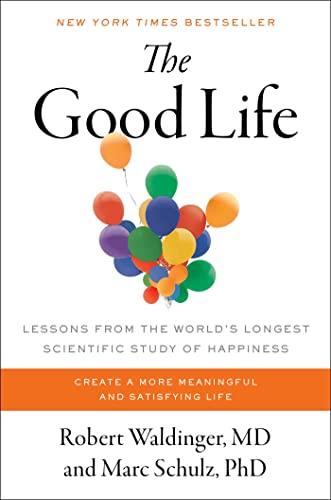
Lessons from the World's Longest Scientific Study of Happiness
It was discussed as a great book based on research from the Harvard Study of Adult Development, which focused on what makes people happy and healthy, concluding that good relationships are crucial for both.
There's a great book I love this book. I love even more the research the book is based on but the book is fantastic it's by Robert Waldinger and Mark Schultz and it's called The Good Life
— Episode: 157. How Can You Get Closer to the Peopl...
It was discussed as a great book based on research from the Harvard Study of Adult Development, which focused on what makes people happy and healthy, concluding that good relationships are crucial for both.
There's a great book I love this book. I love even more the research the book is based on but the book is fantastic it's by Robert Waldinger and Mark Schultz and it's called The Good Life lessons from the world's longest Scientific study of happiness.
Good relationships keep us healthier and happier period.
It was summarized as a book about the lessons learned from the longest scientific study of happiness, emphasizing that strong relationships are key to a healthy and happy life, especially in old age.
the Harvard study of adult development as is called has of course had to be passed on like baton from one side is to another and the scientists who now hold that baton are named Robert Waldinger and Mark Schultz but basically they wrote a book called The Good Life lessons from the world's longest scientific study of happiness
if there's one very simple sentence to summarize all of this research which of course spans decades and decades it is that relationships are the key to aging well to staying physically healthy to staying mentally healthy and of course as it says in the title to being happy.
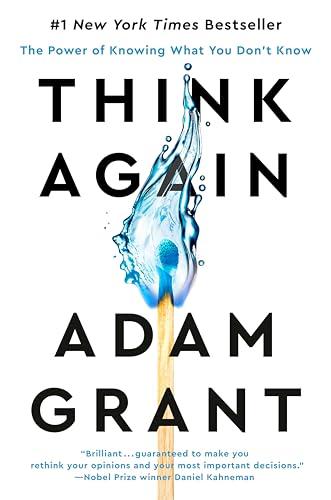
The Power of Knowing What You Don't Know
Adam Grant's book, 'Think Again,' was mentioned as one of three bestselling books that the speaker envied Adam for having written.
I wish I had whatever Adam has now like three bestselling books.
— Episode: 123. What’s Wrong With Coveting?
Adam Grant's book, 'Think Again,' was mentioned as one of three bestselling books that the speaker envied Adam for having written.
I wish I had whatever Adam has now like three bestselling books.
It was discussed as a book that touches upon the reasons why people struggle to alter their opinions, particularly emphasizing how linked our beliefs are to our identities.
Adam Grant, your colleague has written this book called Think Again.
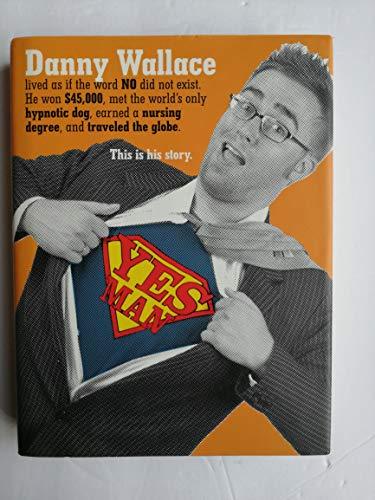
It was discussed in relation to a man who decided to say 'yes' to everything for six months, which led him to engage with a scam and experience new things.
There's this book called Yes Man. I think they later made a movie about it.
— Episode: Why Do People Get Scammed? (Replay)
It was discussed in relation to a man who decided to say 'yes' to everything for six months, which led him to engage with a scam and experience new things.
There's this book called Yes Man. I think they later made a movie about it.
But this guy, Danny Wallace, who lived in London, he was getting bored. His life was getting boring. His friends were worried about him. So he makes this decision that for six months he's just going to say yes to literally everything.
And the story goes that he never actually wires the money, but he does. He's in London. He flies to Amsterdam. He like meets up with these people.
It's a very beautiful and somewhat dangerous way to live.
Oh, it's a true story. Yeah. Danny Wallace is a real human.
It was discussed in the context of a man who said 'yes' to everything for six months, including a scam, and how it led to unexpected experiences and personal growth.
There's this book called Yes Man.
I think they later made a movie about it.
But this guy, Danny Wallace who lived in London, he was getting bored. His life was getting boring. His friends were worried about him.
So he makes this decision that for six months he's just gonna say yes to literally everything.
No, it's a true book that then became a Hollywood movie.
It was discussed as a book that was influential in the idea of focusing on one's strengths rather than weaknesses, in a way that helped revolutionize psychology.
I discovered that my advisor, Marty Seligman, was the founder of Paws of Psychology.
— Episode: 61. Should We Just Ignore Our Weaknesses...
It was discussed as a book that was influential in the idea of focusing on one's strengths rather than weaknesses, in a way that helped revolutionize psychology.
I discovered that my advisor, Marty Seligman, was the founder of Paws of Psychology.
And I say that I discovered that after signing up to be his graduate student because I literally didn't know that's this whole shtick.
You thought he was a plumber?
Well, I knew he was a psychologist but I didn't know that he was trying to revolutionize psychology by getting people to think about their strengths and happiness and not focus on weaknesses.
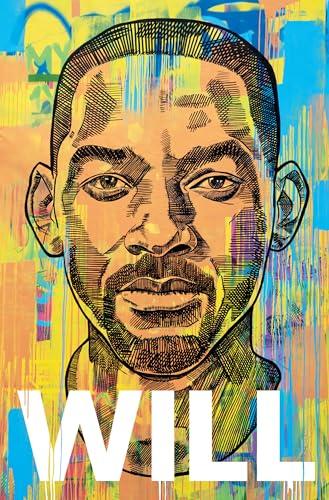
It was mentioned that Will Smith's memoir, "Will", details his experience with analysis paralysis early in his career, where a Hollywood producer encouraged him to stop overthinking and take action.
He tells the story in his memoir of being a very young Will Smith, a certain deal has come his way.
— Episode: 176. Why Is It So Hard to Make Decisions...
It was mentioned that Will Smith's memoir, "Will", details his experience with analysis paralysis early in his career, where a Hollywood producer encouraged him to stop overthinking and take action.
He tells the story in his memoir of being a very young Will Smith, a certain deal has come his way.
Will there's one way to fail in this industry and that is paralysis by analysis and it was basically like just stop thinking and go forward.
In the first half of the show, Angela says she was introduced to the expression, paralysis by analysis in Will Smith's 2021 memoir, Will.
Will Smith's autobiography was discussed in the context of his 14-day solitary retreat in Utah, where he experienced loneliness transitioning into solitude and a surge in creativity.
He talked about going through this weird time in his life and he takes, I think it was 14 days, he goes to Utah and he basically locks himself in this house and he's all by himself.
Day one, it's terrible. Day two, he's bouncing off the walls. Day three, it's a mess. Day four, finally he begins to quiet in his heart and his mind and then he just says creativity explodes.
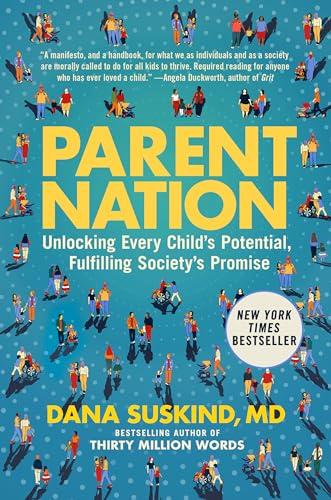
Unlocking Every Child's Potential, Fulfilling Society's Promise
It was discussed as a book about societal responsibility for all children, and had a colder reception than her previous book, '30 Million Words'.
She is a pediatric surgeon and she wrote this book called 'Parent Nations' about what we have to do as a society To take care of all children.
— Episode: 102. What’s So Bad About Nepotism?
It was discussed as a book about societal responsibility for all children, and had a colder reception than her previous book, '30 Million Words'.
She is a pediatric surgeon and she wrote this book called 'Parent Nations' about what we have to do as a society To take care of all children.
And it's very much about the kids who are overlooked the kids who don't have advantages
It is really a policy book more than a behavioral family book
It was mentioned that Dana Susskind published a book called 'Parent Nation' that argues the U.S. doesn't sufficiently support parents from a governmental standpoint, which could affect decisions about the number of children to have.
The doctor and researcher Dana Susskind at the University of Chicago is just published a book called Parent Nation, which makes a larger similar argument that the U.S. just does not support parents very well from the governmental level at least.
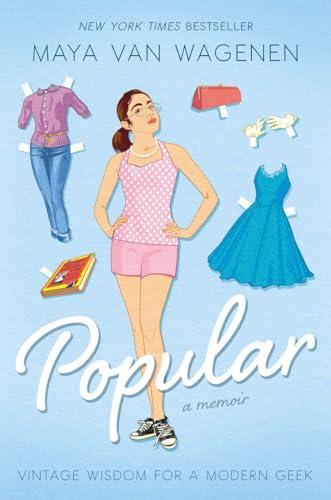
Vintage Wisdom for a Modern Geek
It was discussed as exploring the difference between two types of popularity, one being a social hierarchy and the other being more likable.
Mitch Princeton's thesis here is that there's really at least two kinds of Popular.
— Episode: 18. How Do You Raise a “Likable” Kid?
It was discussed as exploring the difference between two types of popularity, one being a social hierarchy and the other being more likable.
Mitch Princeton's thesis here is that there's really at least two kinds of Popular.
And he wrote this book called Popular, Finding Happiness and Success in a World That Cares Too Much About the Wrong Kinds of Relationships.
Mitch Prinstein's book explored the concept of popularity, distinguishing between 'pecking order' and 'likable' popularity and suggesting that the latter is more beneficial in the long run.
Mitch Princeton's thesis here is that there's really at least two kinds of Popular.
Finding Happiness and Success in a World That Cares Too Much About the Wrong Kinds of Relationships.
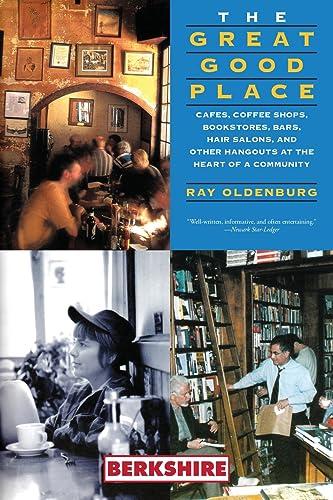
Cafes, Coffee Shops, Bookstores, Bars, Hair Salons, and Other Hangouts at the Heart of a Community
It was brought up regarding the decline of 'third places' - spaces outside of home and work where people can gather and socialize.
I knew you were going to either invoke Bob Putnam or Ray Oldenburg, who wrote The Great Good Place and talked about the loss of third places.
— Episode: 149. Is It Harder to Make Friends as an...
It was brought up regarding the decline of 'third places' - spaces outside of home and work where people can gather and socialize.
I knew you were going to either invoke Bob Putnam or Ray Oldenburg, who wrote The Great Good Place and talked about the loss of third places.
And we used to have all of these third places to which we would go like bowling leagues or churches or pubs or bookstores, barbershops, whatever that was.
It was mentioned in the context of the decline of 'third places' - spaces outside of home and work where people can gather and build community, such as pubs, bowling alleys, or bookstores.
I knew you were going to either invoke Bob Putnam or Ray Oldenburg who wrote The Great Good Place and talked about the loss of third places
so home being the first place, work being the second place and we used to have all of these third places to which we would go like bowling leagues or churches or pubs or bookstores, barbershops whatever that was and that's where we would gather in these areas
Stephen Dubner had begun writing a book about money and its relationship with happiness, inspired by behavioral economics and the taboo of discussing finances, but he ultimately shelved the project.
I once set out to write a book about this very topic. It was called 'Money Makes Me Happy', Parenthesis Except When It Doesn't.
— Episode: Why Is It So Hard to Talk About Money? (...
Stephen Dubner had begun writing a book about money and its relationship with happiness, inspired by behavioral economics and the taboo of discussing finances, but he ultimately shelved the project.
I once set out to write a book about this very topic. It was called 'Money Makes Me Happy', Parenthesis Except When It Doesn't.
Steven Dubner had once begun writing a book about money and its emotional impact, but ultimately shelved it after starting work on Freakonomics.
I once set out to write a book about this very topic. It was called 'Money Makes Me Happy', Parenthesis Except When It Doesn't.
It was mentioned that the speaker thought a quote about knowledge and memory was from this book, but he was incorrect and the quote is from a different source, 'When Memory Comes'.
But the quote I remember was something along the lines of, with knowledge comes memory for knowledge and memory are one and the same.
— Episode: Why Do We Forget So Much of What We’ve R...
It was mentioned that the speaker thought a quote about knowledge and memory was from this book, but he was incorrect and the quote is from a different source, 'When Memory Comes'.
But the quote I remember was something along the lines of, with knowledge comes memory for knowledge and memory are one and the same.
The Power of Mathematical Thinking
It was mentioned in relation to the story of Abraham Wald and his work on optimising the armour on US fighter planes during World War II, highlighting the importance of considering missing data.
as he writes, the missing bullet holes were on the missing planes
— Episode: 40. Have We All Lost Our Ability to Comp...
It was mentioned in relation to the story of Abraham Wald and his work on optimising the armour on US fighter planes during World War II, highlighting the importance of considering missing data.
as he writes, the missing bullet holes were on the missing planes
This book was mentioned in relation to the famous story about mathematician Abraham Wald and the missing bullet holes on WWII planes, illustrating the importance of missing data.
One is in a book by Jordan Ellenberg, who I believe is a mathematician himself. And his book is called How Not to Be Wrong.
And as he writes, the missing bullet holes were on the missing planes.
The Joy and Transformative Power of Lifelong Learning
It was discussed as a book about lifelong learning and how skill learning is like high intensity interval training for the brain, even at an older age. The book's author explored several new activities himself.
skill learning, he writes, is like high intensity interval training for your brain.
— Episode: 39. Is Everybody Cheating These Days?
It was discussed as a book about lifelong learning and how skill learning is like high intensity interval training for the brain, even at an older age. The book's author explored several new activities himself.
skill learning, he writes, is like high intensity interval training for your brain.
in science, if you know what you are doing, you should not be doing it. In engineering, if you don't know what you are doing, you should not be doing it.
The book argued that skill learning acts like high-intensity interval training for the brain, promoting plasticity even at an advanced age. The author explored new activities like chess, singing, surfing, drawing, and juggling.
The author is Tom Vanderbilt. The book is called Beginners, the Joy and Transformative Power of Lifelong Learning.
Skill learning, he writes, is like high intensity interval training for your brain.
I have received a copy of this book by Tom Vanderbilt.
And at one point, Vanderbilt includes a comparison that I love. It's attributed to the mathematician Richard Hemming, who was describing the difference between engineers and scientists.
So anyway, Richard Hemming says, as quoted in Tom Vanderbilt's book, in science, if you know what you are doing, you should not be doing it. In engineering, if you don't know what you are doing, you should not be doing it.
The podcasters discussed the concept of multiple selves and how they can manifest in different situations, drawing a comparison to David Hume's philosophy regarding human perception.
he wrote this about our different elements, I may venture to affirm of the rest of mankind that they are nothing but a bundle of different perceptions which succeed each other with an inconceivable ra...
— Episode: 35. Does Psychotherapy Actually Work?
The podcasters discussed the concept of multiple selves and how they can manifest in different situations, drawing a comparison to David Hume's philosophy regarding human perception.
he wrote this about our different elements, I may venture to affirm of the rest of mankind that they are nothing but a bundle of different perceptions which succeed each other with an inconceivable rapidity and are in perpetual flux and movement
our eyes cannot turn in their sockets without varying our perceptions, our thought is still more variable than our sight, nor is there any single power of the soul which remains unalterably the same perhaps for one moment
the mind is a kind of theater where several perceptions successively make their appearance pass repass glide away and mingle in an infinite variety of postures and situations
This book was cited to support the idea that an individual is a bundle of rapidly succeeding perceptions, suggesting that having multiple 'selves' is natural. The speaker described the mind as a constantly changing theater of perceptions based on a quote from Hume's work.
I may venture to affirm of the rest of mankind that they are nothing but a bundle of different perceptions which succeed each other with an inconceivable rapidity and are in perpetual flux and movement. Our eyes cannot turn in their sockets without varying our perceptions. Our thought is still more variable than our sight. Nor is there any single power of the soul which remains unalterably the same, perhaps for one moment.
The mind is a kind of theater where several perceptions successively make their appearance, pass, repass, glide away, and mingle in an infinite variety of postures and situations.
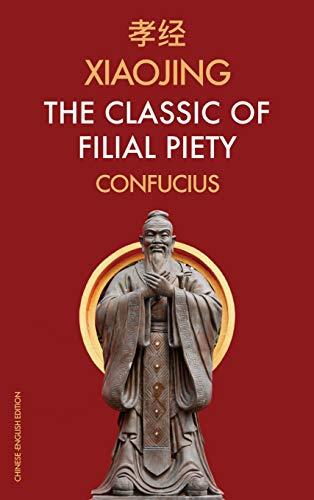
Chinese-English Edition
It was mentioned in the context of Chinese culture and filial piety, and how it was temporarily banned during the Cultural Revolution before being republished in 2012 with updates to incorporate modern ideas.
the importance of filial piety was ingrained in Chinese culture through tradition rather than law the value is perhaps exemplified by Yuan Dynasty scholar Gua Zhu Jing's book the 24 Paragons of Filial...
— Episode: 19. Is There Such a Thing as Good Estran...
It was mentioned in the context of Chinese culture and filial piety, and how it was temporarily banned during the Cultural Revolution before being republished in 2012 with updates to incorporate modern ideas.
the importance of filial piety was ingrained in Chinese culture through tradition rather than law the value is perhaps exemplified by Yuan Dynasty scholar Gua Zhu Jing's book the 24 Paragons of Filial Piety
the work includes a story of an exemplary son born to a couple too poor to afford a mosquito net and so the son would sit shirtless by his parents bed allowing the mosquitoes to bite him so that his parents could rest peacefully
the book was temporarily banned during the Chinese cultural revolution as the government emphasized loyalty to the Communist Party over loyalty to one's family but it was modernized and republished in 2012 with new suggestions for keeping parents happy including teaching them how to use the internet and purchasing healthcare for them
A former NFL player wrote about a sprinter who was struggling with confidence and how his coach helped him by slightly altering his race time, giving him the confidence to become NCAA champion.
the book is actually written by former NFL player John W. Wright the coach in the story is his father Robert C. Wright and the sprinter is Nigerian track and field star Charlton Aheezwillen
— Episode: 12. Does “As If” Thinking Really Work?
A former NFL player wrote about a sprinter who was struggling with confidence and how his coach helped him by slightly altering his race time, giving him the confidence to become NCAA champion.
the book is actually written by former NFL player John W. Wright the coach in the story is his father Robert C. Wright and the sprinter is Nigerian track and field star Charlton Aheezwillen
the story takes place at the 1974 NCAA track and field championships an hour before his triple jump competition Aheezwillen was feeling under the weather and considered dropping out of the contest
Wright encouraged Aheezwillen to run 100 meters as a test of his physical state and as Angela recalled he secretly gave him the head start by not quite starting the stopwatch on time
according to the book this trick gave Aheezwillen the confidence to participate in the competition and an hour later he became the NCAA champion in triple jump with the second longest jump in the world that year
It was mentioned in the context of the placebo effect and a story about a sprinter whose coach lied to him about his time to boost his confidence, resulting in him winning a championship.
the book is actually written by former NFL player John W. Wright
the coach in the story is his father Robert C. Wright
and the sprinter is Nigerian track and field star Charlton Aheezwillen
the story takes place at the 1974 NCAA track and field championships
an hour before his triple jump competition Aheezwillen was feeling under the weather and considered dropping out of the contest
Note: The book recommendations on this page are discovered automatically from podcast transcripts, and may be incorrect or incomplete.
Podcast Name