Honours versus Money
Bruno S. Frey
Mentioned 4 months ago
62. How Can You Escape a Drama Triangle?
Research psychologist Angela Duckworth (author of "Grit") and tech and sports executive Mike Maughan really like to ask people questions, and they believe there’s no such thing as a stupid one. So they have a podcast where they can ask each other as many “stupid questions” as they want. New episodes...
Recently mentioned
Bruno S. Frey
Mentioned 4 months ago
62. How Can You Escape a Drama Triangle?
William C. Dement
Mentioned 7 months ago
50. Are You as Observant as You Think?
Nassim Nicholas Taleb
Mentioned 7 months ago
49. How Does Facing Death Change Your Life?
Angela Duckworth
Mentioned 8 months ago
46. How Can You Stop Feeling So Irritable?
Michael Erard
Mentioned 8 months ago
45. How Much Better Do You Really Want to Be?
Paul Bloom
Mentioned 9 months ago
44. Is Empathy in Fact Immoral?
Meyer Friedman
Mentioned 9 months ago
44. Is Empathy in Fact Immoral?
Steven D. Levitt
Mentioned 9 months ago
42. How Does When You Are Born Affect Who You Are?
![Freakonomics [Revised and Expanded]: A Rogue Economist Explores the Hidden Side of Everything cover](https://media.podcastbookpicks.com/books/677.jpg)
Steven D. Levitt
Mentioned 9 months ago
41. Why Are We So Attracted to Fame?
Daniel Thomas Cook
Mentioned 9 months ago
41. Why Are We So Attracted to Fame?
Robert B. Cialdini PhD
Mentioned 9 months ago
41. Why Are We So Attracted to Fame?
Jordan Ellenberg
Mentioned 10 months ago
40. Have We All Lost Our Ability to Compromise?
The Classic Memoir
The hosts explained that a quote about knowledge and memory, which had been misattributed to another author, actually originated from this 1979 Holocaust memoir. They clarified the correct source and noted the earlier mistake in attribution. The discussion served mainly to correct the record rather than to endorse the work.
This book was mistakenly recalled by Stephen as a biography of Ring Lardner's author, but the quote he remembered about knowledge and memory being one and the same was actually from this 1979 Holocaust memoir, which itself referenced another work.
But the quote I remember was something along the lines of, With knowledge comes memory, for knowledge and memory are one and the same.
Stephen thought that the quote came from Helmrich's 1976 book, Wake Up, Wake Up, to do the work of the creator. But he was actually thinking about Israeli historian Saul Friedlander's 1979 Holocaust memoir, When Memory Comes.
Why Philanthropy Is Failing Democracy and How It Can Do Better
Stephen Dubner referenced the title while discussing how billionaire philanthropy can turn private wealth into public influence, potentially undermining democratic processes. He highlighted the author's argument that this dynamic can subvert democracy and suggested the book offers ways to improve philanthropic practices, especially within intellectual institutions. The discussion presented the work as a useful critique of current philanthropic trends.
It was discussed in relation to how billionaire philanthropy can impact democracy, arguing that it converts private assets into public influence, potentially subverting the democratic process.
There's a similar-ish book by Robert Reesh who is a Stanford political scientist called Just Giving Why Philanthropy is failing democracy and how we can do better.
the way Reesh talks about it is that you convert private assets into public influence. So it subverts in a way the democratic process.
It was mentioned as exploring how philanthropy can fail democracy by converting private assets into public influence, potentially subverting the democratic process.
There's a similar-ish book by Robert Reesh who is a Stanford political scientist called Just Giving Why Philanthropy is failing democracy and how we can do better.
Stories from a South African Childhood
It was described as a thoughtful and serious look at Trevor Noah's life, where he stated that he doesn't regret anything he's done but regrets the things he didn't do.
I don't regret anything I've ever done in my life any choice that I've made but I'm consumed with regret for the things I didn't do the choices I didn't make the things I didn't say we spend so much t...
— Episode: 152. What’s the Worst Kind of Regret?
It was described as a thoughtful and serious look at Trevor Noah's life, where he stated that he doesn't regret anything he's done but regrets the things he didn't do.
I don't regret anything I've ever done in my life any choice that I've made but I'm consumed with regret for the things I didn't do the choices I didn't make the things I didn't say we spend so much time being afraid of failure, afraid of rejection but regret is the thing we should fear most because failure is an answer rejection is an answer regret is an eternal question you will never have the answer to
It was mentioned as one of the speaker's favorite books. The author, Trevor Noah, also discussed the infantilization of singlehood in modern society.
Trevor Noah, who's the comedian, wrote one of my favorite books, his book Born a Crime.
The Collapse and Revival of American Community
It was discussed in relation to the decline of social connections and the loss of community-building institutions, such as bowling leagues and churches, in modern society.
Bob Putnam who wrote Bowling Alone and whose work I think you know of.
— Episode: 149. Is It Harder to Make Friends as an...
It was discussed in relation to the decline of social connections and the loss of community-building institutions, such as bowling leagues and churches, in modern society.
Bob Putnam who wrote Bowling Alone and whose work I think you know of.
Bob Putnam wrote Bowling Alone about how as you know I guess like that Americans are spending time alone that they used to spend with friends
is that American adults spend time alone that they used to spend with others and he would I think say that what churches do and what pubs do and softball leagues for adults and volunteering for the Salvation Army and a lot of other institutions.
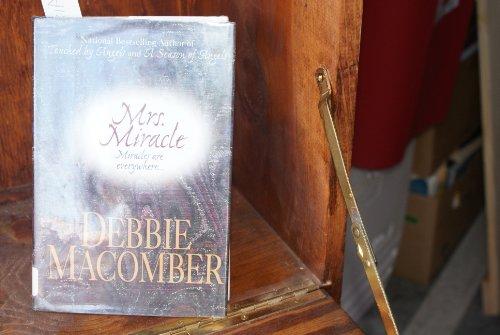
The phrase "the grass is always greener on the other side" was discussed in relation to its origins, with a mention of its evolution from a line within this book.
the grass is always greener on the other side seems to have originated in a line from Mrs. Miracle a 1996 book by best-selling romance novelist Debbie Maycomer
— Episode: 161. How Effective Are Ultimatums?
The phrase "the grass is always greener on the other side" was discussed in relation to its origins, with a mention of its evolution from a line within this book.
the grass is always greener on the other side seems to have originated in a line from Mrs. Miracle a 1996 book by best-selling romance novelist Debbie Maycomer
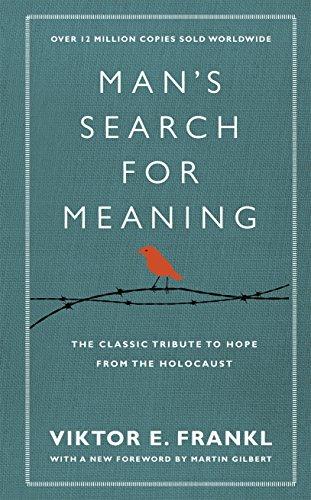
The classic tribute to hope from the Holocaust (With New Material)
It was discussed as a Holocaust memoir and a philosophical treatise, suggesting that the meaning of life comes from having a purpose and making something of one's life, rather than pleasure or entertainment.
It's a memoir and it's like a philosophical treatise in one.
— Episode: 20. Should We Separate the Art From the...
It was discussed as a Holocaust memoir and a philosophical treatise, suggesting that the meaning of life comes from having a purpose and making something of one's life, rather than pleasure or entertainment.
It's a memoir and it's like a philosophical treatise in one.
What I've come to realize after reading Man's Search For Meaning, really the meaning of life is not from pleasure and it's not from distracting yourself with entertainment. It's having a purpose and making something of your life where you can say, this is how it connects to other people.
And in fact, there are several theories of happiness and all of them have in common that there are multiple kind of like building blocks of happiness and meaning is a really important building block.
And if you don't have that building block, if you don't feel like your life is part of something greater than yourself and serves some larger purpose, it's very, very hard to be happy.
So let's say you live in an environment that is not under threat of war or extreme poverty and et cetera, but that you are feeling existential dread. How could you potentially interpret that signal in a fruitful way? In a Frankel way.
It was discussed as a Holocaust memoir and philosophical treatise, where the meaning of life was described as having a purpose and making something of one's life, rather than pleasure or entertainment. The book's relevance to existential dread was also discussed.
It's a memoir and it's like a philosophical treatise in one.
What I've come to realize after reading Man's Search For Meaning, really the meaning of life is not from pleasure and it's not from distracting yourself with entertainment. It's having a purpose and making something of your life where you can say, this is how it connects to other people.
And in fact, there are several theories of happiness and all of them have in common that there are multiple kind of like building blocks of happiness and meaning is a really important building block.
And if you don't have that building block, if you don't feel like your life is part of something greater than yourself and serves some larger purpose, it's very, very hard to be happy.
So I believe that Frankel said that you can find meaning in work, as I suggested, do something productive. The second was relationships. Many people find meaning in their close relationships with family, their friends. And then the third is to find meaning in suffering, which is of course so directly relevant to his personal experience in the concentration camps.

Complete 4 Book Set ( 1 Pb & 3 Hb ) (Twilight (pb) / New Moon (hb) / Eclipse (hb) / Breaking Dawn (hb))
It was discussed as a popular book series that was enjoyed by Angela and Steve Levitt. Angela recalled reading the series in a week and even having a near obsessive need to obtain the next book.
What were those famous books called? Oh, Twilight.
— Episode: 112. Is It Okay to Hate Highbrow Culture...
It was discussed as a popular book series that was enjoyed by Angela and Steve Levitt. Angela recalled reading the series in a week and even having a near obsessive need to obtain the next book.
What were those famous books called? Oh, Twilight.
I read the Twilight series in a week, Steven.
I remember being in the train station in Philadelphia, which is called 30th Street Station. And I remember it was like being a drug addict. I was frantically hunting through the Hudson News racks and I was like, oh my God, they have to have New Moon.
If they don't have New Moon, I mean, Amazon can't get it here until tomorrow. I need it right now. So, yes, I loved that series. I've read it more than once.
I will of course choose Choice C, the new Twilight which by the way there are no more to make because they finish the whole series just in case you were wondering.
It was mentioned as a series of books and movies, and in the context of the main character's ability to read minds. It was also mentioned that one of the hosts was not a fan of this book series.
By the way, I don't know if you're a Twilight fan. I assume you are not. Correct. Do you know what Twilight is? A series of books. A series of books and movies starring Rob Pattinson.
But you know what? I don't think he has the chops to be a sanitation collector or citizen number one, so don't get any ideas.
Look, because we're on a twig of a branch of a digression of whatever. But here's Stephen why I think this question is so perennially popular.
He has the ability to read minds in Twilight.
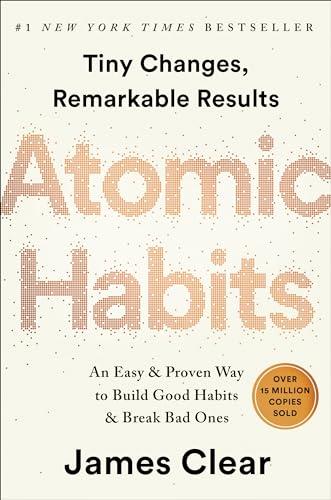
An Easy & Proven Way to Build Good Habits & Break Bad Ones
It was described as a very good book, particularly for its intuitive advice.
He's not a professor or psychologist, but he's incredibly intuitive.
— Episode: 186. Do You Need a Routine?
It was described as a very good book, particularly for its intuitive advice.
He's not a professor or psychologist, but he's incredibly intuitive.
So maybe I should call him a psychologist.
it's a pretty gosh darn good book.
It was mentioned and discussed in context of its origin from a story about Thomas Carlyle, and its subsequent popularity and use as a tool to encourage self-improvement, particularly for the less fortunate.
I know the book Self-Help, which I believe was the origin of the phrase.
Yeah, so I remember coming across this book and reading it.
This began with Thomas Carlisle.
It was mentioned as one of the first and perhaps most significant self-help books in history.
I mean, the sociologist Mickey McGee has written about the idea that the Bible is one of the first and perhaps the most significant self-help book in history.
— Episode: 37. How Do You Know if People Don’t Like...
It was mentioned as one of the first and perhaps most significant self-help books in history.
I mean, the sociologist Mickey McGee has written about the idea that the Bible is one of the first and perhaps the most significant self-help book in history.
The Bible was mentioned as potentially the most read book in the history of the universe, containing influential sets of rules like the Ten Commandments, though many people struggled to recall those rules.
Think about the Bible. It is the most read book in the history of the universe.
But I think that's true. Among. And whenever you're uncertain, you say among the most. Among, yeah.
The Surprising Secrets of America's Wealthy
It was mentioned and discussed as a self-help book that Angela had read, offering a different perspective on earning, saving, and investing money.
Including The Millionaire Next Door.
— Episode: 37. How Do You Know if People Don’t Like...
It was mentioned and discussed as a self-help book that Angela had read, offering a different perspective on earning, saving, and investing money.
Including The Millionaire Next Door.
It's like this is how you actually earn money, save money, spend less, invest more, all that stuff.
This book was a huge eye-opener for Angela in her mid-to-late 20s, teaching her about earning, saving, spending less, and investing money.
I do think about some of the things that I've learned from actual self-help books, including The Millionaire Next Door.
So one of my brothers gave that to me when I was in my mid-late 20s, when I had my first real-ish jobs and started to earn a little bit of money. And that was a huge eye-opener for me.
The Making of Behavioral Economics
The biography of Richard Thaler was discussed, focusing on his path towards behavioural economics, a field for which he won a Nobel prize.
I have recently been slightly fascinated with the biography of Richard Taylor for a variety of reasons
— Episode: 147. Is Nudging Enough?
The biography of Richard Thaler was discussed, focusing on his path towards behavioural economics, a field for which he won a Nobel prize.
I have recently been slightly fascinated with the biography of Richard Taylor for a variety of reasons
So his story and how he became an economist and not a psychologist I think two paths diverged and yellow wood and there he the weary traveler stood and looked down one as far as he could To where it bent in the undergrowth and he took the economic path But I think he could have actually has easily become a psychologist
Honestly, that's why he did win the Nobel Prize for developing the discipline of behavioral economics, right?
So anyway, I've been on that rabbit hole and I think This is a good rabbit hole to be in now that we're coming out of a pandemic
But also I think there's another reason why all of this, you know nudging is a good is a bad What's beyond nudging?
It was mentioned that Richard Thaler, a Nobel laureate in economics, is often described as lazy, but that his approach to laziness involves conserving energy for things he finds important and saying no to less important tasks.
I think of Richard Thaler the economist the University of Chicago are famously lazy Nobel laureate.
He loves I shouldn't say he loves to brag about being lazy but when other people talk about him being lazy he does kind of love it.
He does talk about himself as being lazy in the first person.
I would describe it as conserving attention and energy for things that you really care about and everything else you just say no to.
The Power of Thinking Without Thinking
It was mentioned as a source where Stephen Dubner read about thin slicing, a concept where quick impressions can be predictive of later judgments.
No, but I read about thin slicing in one of Malcolm Gladwell's books, Blink.
— Episode: 36. Which Matters More, a First or Last...
It was mentioned as a source where Stephen Dubner read about thin slicing, a concept where quick impressions can be predictive of later judgments.
No, but I read about thin slicing in one of Malcolm Gladwell's books, Blink.
The speaker mentioned reading about thin slicing research in one of Malcolm Gladwell's books called Blink.
No, but I read about thin slicing in one of Malcolm Gladwell's books, Blink.
Underdogs, Misfits, and the Art of Battling Giants
The book was referenced as an example of Malcolm Gladwell's interesting ideas, specifically mentioning the concept that disadvantages, like dyslexia, can sometimes provide advantages such as enhanced creative problem-solving.
In one book, David and Goliath, he talks about how dyslexia can actually make people more successful because in the absence of one ability, like reading, people can develop other abil...
— Episode: 222. What Makes an Idea Interesting?
The book was referenced as an example of Malcolm Gladwell's interesting ideas, specifically mentioning the concept that disadvantages, like dyslexia, can sometimes provide advantages such as enhanced creative problem-solving.
In one book, David and Goliath, he talks about how dyslexia can actually make people more successful because in the absence of one ability, like reading, people can develop other abilities like creative problem-solving, acting, listening, rule-bending, etc.
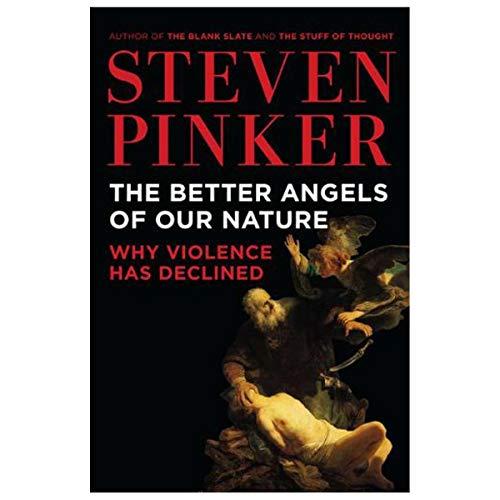
Why Violence Has Declined
It was mentioned as a book summarizing the positive trends in global human prosperity and well-being over the last few hundred years, contrasting it with common doomsayer predictions.
This is like this Steven Pinker hypothesis.
— Episode: 132. Is It Wrong to Enjoy Yourself While...
It was mentioned as a book summarizing the positive trends in global human prosperity and well-being over the last few hundred years, contrasting it with common doomsayer predictions.
This is like this Steven Pinker hypothesis.
Yes. Yes, Pinker wrote a book about it.
I think he did a really good job summarizing it, but there are a lot of people who've been writing about this.
This book was mentioned as a predecessor to Pinker's work in *Enlightenment Now*, both discussing how the world is objectively improving.
So, well, I'm familiar with the work Better Angels of Our Nature, which I think preceded Enlightenment Now, right?
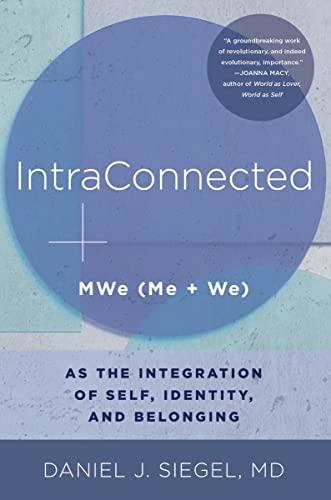
MWe (Me + We) as the Integration of Self, Identity, and Belonging (Norton Series on Interpersonal Neurobiology)
It was mentioned as a book that argues that social circles have a large influence on us, including emotions and behaviors, and that the individual is a product of the people we know.
He's the co-author of a book called Connected, The Surprising Power of Our Social Networks and How They Shape Our Lives.
— Episode: How Much Do Your Friends Affect Your Fut...
It was mentioned as a book that argues that social circles have a large influence on us, including emotions and behaviors, and that the individual is a product of the people we know.
He's the co-author of a book called Connected, The Surprising Power of Our Social Networks and How They Shape Our Lives.
The book's author argued that social circles significantly impact individuals, affecting aspects like emotions, behavior, and even health, suggesting that individual identity is shaped by the people they know.
He's the co-author of a book called Connected, The Surprising Power of Our Social Networks and How They Shape Our Lives.
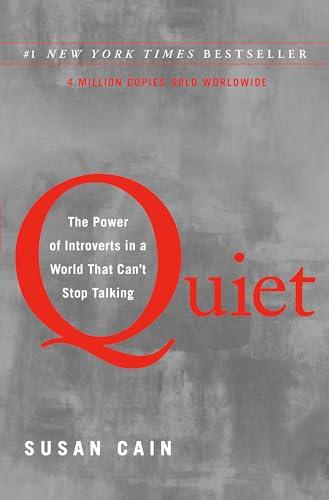
The Power of Introverts in a World That Can't Stop Talking
It was described as a wonderful book about the difference between introversion and extroversion. The book discusses the rise of the extrovert ideal and how it underestimates what introverts can offer the world. It also clarifies the difference between introversion and shyness.
I found one of the most wonderful books ever written about this was Susan Cain's book Quiet, The Power of Introverts in a World That Can't Stop Talking.
— Episode: 194. Is It Okay to Be an Introvert?
It was described as a wonderful book about the difference between introversion and extroversion. The book discusses the rise of the extrovert ideal and how it underestimates what introverts can offer the world. It also clarifies the difference between introversion and shyness.
I found one of the most wonderful books ever written about this was Susan Cain's book Quiet, The Power of Introverts in a World That Can't Stop Talking.
Which is a massive bestseller, yes?
Yes, it was the number one New York Times bestseller.
It was a while ago.
2012, I believe.
But she talks about, and this is what I loved about it so much. She talks about the rise of the extrovert ideal and how it's permeated our culture in a way that in her words may be dramatically under values, introverts and what introverts have to offer the world.
And she gave an incredible TED talk on this.
She herself is a lawyer. And this is one of the things I love that she said. She said, I became a Wall Street lawyer of all things instead of the writer that I had always longed to be partly because I needed to prove to myself that I could be bold and assertive too.
I should say that I didn't know Susan when she wrote that book, but I know her now. And she's not kidding when she says she's an introvert.
But the thing that I think my acquaintance with Susan has taught me is that introverts like Susan Cain are not not relationship oriented. It's just that when they relate to other people, they don't necessarily want to do it in quantities and at scales that extroverts are happy with.
So they also want best friends and to share intimacies, but they don't necessarily have this orientation towards what psychologists call sociability, which is just like many people, many conversations going out to the bar after the dinner and then maybe another bar after that.
So Susan Cain is a very relationship oriented person.
But I think that's maybe one of the things that she wanted to correct as a misunderstanding.
Right?
It's not that introverts are misanthropes.
Right.
In fact, she this is one thing that I had not understood before. She talked about the difference between being shy and being an introvert.
And she says that shyness is about fear of social judgment.
But introversion is about how you respond to stimulation, including social stimulation.
And to your point, it's not that introverts don't want social stimulation. It's that they value relationships in a more maybe intimate way rather than this massive group setting.
But it's not the same as being shy.
I wonder again, just going back to what Susan Cain has written on introverts, that if the world is so geared toward extroverts, like in school.
My oldest brother, Peter, said when he read Quiet, Susan Cain's book, these are his exact words. He said, it was the first time I understood myself.
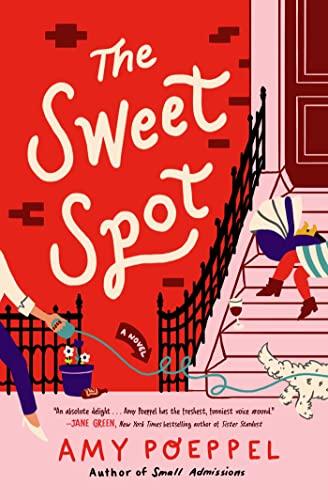
A Novel
The book argues that there's a "sweet spot" of discomfort that is essential for growth and meaning in life, and it explores the connection between suffering and purpose.
He wrote this book called The Sweet Spot and it really was, I think, a kind of like manifesto on how there is a sweet spot of discomfort.
— Episode: 202. Why Can’t We Tolerate Discomfort?
The book argues that there's a "sweet spot" of discomfort that is essential for growth and meaning in life, and it explores the connection between suffering and purpose.
He wrote this book called The Sweet Spot and it really was, I think, a kind of like manifesto on how there is a sweet spot of discomfort.
The reason why he wants to say sweet spot is it's not more is always better. It's not like a little bit of discomfort is good and if you cut off your left arm, it's even better. It's really that there is this sweet spot that we should be looking for in life where there's like some challenge, that there's like some amount of discomfort.
It was mentioned that Paul Bloom's book, 'The Sweet Spot', contained information about a 2016 paper that examined the relationship between having children and happiness across 22 countries.
I'm looking here from something that Paul Bloom wrote. You know Paul Bloom obviously.
His most recent book is called The Sweet Spot.
He wrote about a 2016 paper looking at the happiness levels of people with and without children in 22 countries.
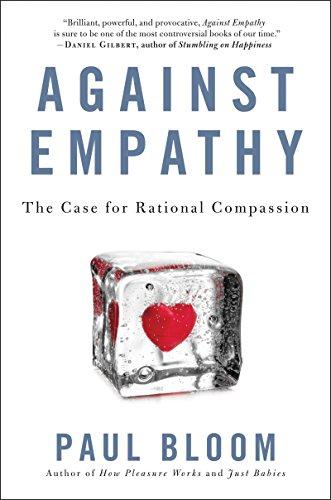
The Case for Rational Compassion
Bloom argues against the benefits of empathy, claiming it can lead to detrimental consequences, and that rational compassion is a better approach.
So where do you think he falls on the spectrum?
— Episode: 200. What’s the Difference Between Empat...
Bloom argues against the benefits of empathy, claiming it can lead to detrimental consequences, and that rational compassion is a better approach.
So where do you think he falls on the spectrum?
He's very famous for his work on children, on development of moral emotions.
I remember when this book came out because I was talking to a friend about empathy and I got into an argument.
But here's something I thought was really interesting in Paul's book.
He talks about the negative implications that can come from empathy.
It was described as shocking and bold, arguing that empathy is a primary driver of inequality and immorality, appealing to narrow prejudices rather than improving lives.
Empathy is one of the leading motivators of inequality and immorality and that far from helping us to improve the lives of others, empathy is a capricious and irrational emotion that appeals to our narrow prejudices.
Empathy he writes is a spotlight focusing on certain people in the here and now. This makes us care more about them but it leaves us insensitive to the long-term consequences of our acts and blind as well to the suffering of those we do not or cannot empathize with.
Our empathy for those close to us is a powerful force for war and atrocity toward others. It is corrosive in personal relationships, it exhausts the spirit and can diminish the force of kindness and love.
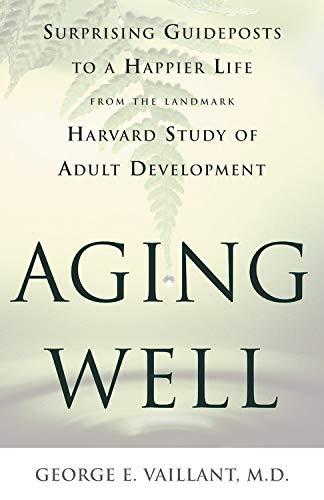
Surprising Guideposts to a Happier Life from the Landmark Harvard Study of Adult Development
It was discussed as a book about aging well, and included factors like relationships, coping styles, and education as important aspects for a positive aging experience.
I do know a little bit about the work of the psychologist George Valiant. I'm sure you know much more. I love George. So George wrote about Aging Well. That was the name of the book.
— Episode: What’s So Great About Retirement? (Ep. 8...
It was discussed as a book about aging well, and included factors like relationships, coping styles, and education as important aspects for a positive aging experience.
I do know a little bit about the work of the psychologist George Valiant. I'm sure you know much more. I love George. So George wrote about Aging Well. That was the name of the book.
So when I read that list of George Valien's seven factors that do predict positive aging, it makes me think that the question of retirement or aging generally for Pat or you or me is really nothing more than a continuation of everything that we talk about on this show about how every decision we make, every behavior we take up is a trade-off to some degree.
Here's what he says are seven factors that do predict positive aging, not being a smoker or having stopped smoking young, adaptive coping style, mature defenses, absence of alcohol abuse, healthy weight.
And especially the decisions and behaviors you've been making all along. I do know a little bit about the work of the psychologist George Valiant.
But then here we go, stable marriage, as you referred to, exercise, and years of education.
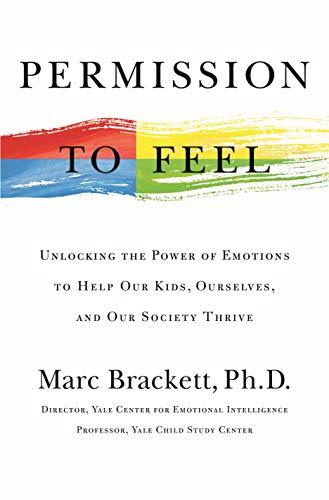
Unlocking the Power of Emotions to Help Our Kids, Ourselves, and Our Society Thrive
The book, recommended by a friend, suggests that we should allow ourselves to feel fear and other negative emotions, recognizing their importance in our lives.
There's a really interesting author of just been reading a book called Permission to Feel.
— Episode: 187. Is Fear Running Your Life?
The book, recommended by a friend, suggests that we should allow ourselves to feel fear and other negative emotions, recognizing their importance in our lives.
There's a really interesting author of just been reading a book called Permission to Feel.
Oh by Mark bracket yes yes I know mark are you literally reading that book he's going to be so happy I'm going to text him.
I am a dear friend recommended it so I tweeted out a year ago to my 17 followers just kidding but I tweeted out and I just said what is a book that changed your life like I don't want a book I like or here's a fun book that I read what's a book that legit changed your life and dear friend who I admire deeply wrote back and said it was Permission to Feel.
I think Mark would say on behalf of emotion researchers and Mark does run the Yale Center for emotional intelligence I think he would say on the topic of fear that we do have to have the Permission to Feel fear as well as these other negative emotions and since you bought up Mark I'll just say that he has this mood meter it's actually not just his the field of emotion has said that look you can think of any emotion jealousy pride calm bliss board of frustration like any emotion and you can place it somewhere in one of four quadrants so you can think of a horizontal and a vertical axis and the horizontal axis is often just negative on the left positive on the right the vertical axis is a rousal so high rousal emotions to at the bottom like not a lot of energy now that gives you four quadrants and I think where most people especially Americans want to be is the upper right quadrant like high arousal positive right right excitement giddyness but where we don't want to be is high arousal negative like fear and we might not even want to be in the low arousal negative right that's like boredom and then the fourth quadrant is low arousal positive and that's things like calm and anyway the reason I asked permission from Mark for use of the mood meter is that I wanted to start every single class with these four quadrants so it's just you know the first slide that is in my PowerPoint and what the students do is they put themselves somewhere on the mood meter and it's kind of auto populated so you can kind of see where their little dot shows up on the screen in real time and as I say to the students every time as you can see all four of these quadrants are populated maybe not equally I know where you want to be you want to be in the top right so do I I want to be there all the time but that's not life so I think this Permission to Feel fear and to reckon with its function in our life and even to like embrace the fact that like really high achievers super achievers the most gritty people they are sometimes driven by fear of failure for me it was like surprising but also very enriching I was like oh this is a much more complex view of emotion and even achievement.
It was mentioned as a book that can help readers improve their emotional intelligence through reading and learning.
Also there are books like Permission to Feel by Mark Brackett from Yale. And the whole point is read this book, you can become a little more emotionally intelligent by the end.
Note: The book recommendations on this page are discovered automatically from podcast transcripts, and may be incorrect or incomplete.
Podcast Name