Honours versus Money
Bruno S. Frey
Mentioned 4 months ago
62. How Can You Escape a Drama Triangle?
Research psychologist Angela Duckworth (author of "Grit") and tech and sports executive Mike Maughan really like to ask people questions, and they believe there’s no such thing as a stupid one. So they have a podcast where they can ask each other as many “stupid questions” as they want. New episodes...
Recently mentioned
Bruno S. Frey
Mentioned 4 months ago
62. How Can You Escape a Drama Triangle?
William C. Dement
Mentioned 7 months ago
50. Are You as Observant as You Think?
Nassim Nicholas Taleb
Mentioned 7 months ago
49. How Does Facing Death Change Your Life?
Angela Duckworth
Mentioned 8 months ago
46. How Can You Stop Feeling So Irritable?
Michael Erard
Mentioned 8 months ago
45. How Much Better Do You Really Want to Be?
Paul Bloom
Mentioned 9 months ago
44. Is Empathy in Fact Immoral?
Meyer Friedman
Mentioned 9 months ago
44. Is Empathy in Fact Immoral?
Steven D. Levitt
Mentioned 9 months ago
42. How Does When You Are Born Affect Who You Are?
![Freakonomics [Revised and Expanded]: A Rogue Economist Explores the Hidden Side of Everything cover](https://media.podcastbookpicks.com/books/677.jpg)
Steven D. Levitt
Mentioned 9 months ago
41. Why Are We So Attracted to Fame?
Daniel Thomas Cook
Mentioned 9 months ago
41. Why Are We So Attracted to Fame?
Robert B. Cialdini PhD
Mentioned 9 months ago
41. Why Are We So Attracted to Fame?
Jordan Ellenberg
Mentioned 10 months ago
40. Have We All Lost Our Ability to Compromise?
And Why Some Companies Never Give In (Good to Great, 4)
Better Home Cooking Through Science
This was mentioned as J. Kenji Lpez-Alt's first number one New York Times bestselling book, detailing his very scientific approach to cooking. The author intended the book to provide context and technique rather than just specific turn-by-turn recipes.
The Food Lab is also the title of Kenzie's first number one New York Times bestselling book.
— Episode: Presenting “Smart Girl Dumb Questions”
This was mentioned as J. Kenji Lpez-Alt's first number one New York Times bestselling book, detailing his very scientific approach to cooking. The author intended the book to provide context and technique rather than just specific turn-by-turn recipes.
The Food Lab is also the title of Kenzie's first number one New York Times bestselling book.
I wrote this in my first book that I feel like it's, it's far more important, at least with my work to read the surrounding material as opposed to just the specific recipe. Because the recipe is like a set of turn-by-turn directions that doesn't give you context.
The Food Lab was just like, I wrote a book thinking, I started a column thinking, okay, what would me as a young cook have wanted?
What the Secrets of the Brain Reveal About Getting It Right When You Have To
Angela mentioned the book 'Choke' and a study within it on expressive writing, suggesting it aids in emotion regulation and performance under pressure, which might have helped her in college.
I'm thinking about like the yurky Dodson curve... I think was first posited at the turn of the 20th century
— Episode: 146. How Do You Avoid Freezing Under Pre...
Angela mentioned the book 'Choke' and a study within it on expressive writing, suggesting it aids in emotion regulation and performance under pressure, which might have helped her in college.
I'm thinking about like the yurky Dodson curve... I think was first posited at the turn of the 20th century
there's a research study by Sian Bailak who's a scientist as well known as any scientist who's studied choking and wrote a book called Choke on the science of high pressure performance
expressive writing may help individuals develop insights that can aid emotion regulation and perceive control of stressful situations thereby offloading worries and freeing cognitive resources that can be used to optimize performance
The Hidden Influences Behind How Sports Are Played and Games Are Won
It was brought up in the context of sports statistics and conventional wisdom, particularly in relation to the concept of home field advantage and referee bias.
who co-wrote a book called Score Casting which was about sports statistics and conventional wisdoms
— Episode: 40. Have We All Lost Our Ability to Comp...
It was brought up in the context of sports statistics and conventional wisdom, particularly in relation to the concept of home field advantage and referee bias.
who co-wrote a book called Score Casting which was about sports statistics and conventional wisdoms
Building a Child's Brain
It was mentioned as being more easily digested advice about good parenting, as compared to 'Parent Nations'.
And data wrote a book prior to that called '30 Million Words'
— Episode: 102. What’s So Bad About Nepotism?
It was mentioned as being more easily digested advice about good parenting, as compared to 'Parent Nations'.
And data wrote a book prior to that called '30 Million Words'
But that one was more easily Digested by a parent as like these are the things that I need to do for my kid
The book seemed to have so much warmer reception than 'Parent Nation'
It was described as a book of true stories of epic screw-ups by federal workers, written by a lawyer for the U.S. Department of Defense as a way to get people to pay attention to rules and regulations.
So instead, he created this book of true stories that he called The Encyclopedia of Ethical Failure.
— Episode: 10. Why Are Stories Stickier Than Statis...
It was described as a book of true stories of epic screw-ups by federal workers, written by a lawyer for the U.S. Department of Defense as a way to get people to pay attention to rules and regulations.
So instead, he created this book of true stories that he called The Encyclopedia of Ethical Failure.
And it was nothing but a catalog of epic screw-ups perpetrated by federal workers.
And his claim was that it was much more successful.
Why English Won't - and Can't - Sit Still (Like, Literally)
It was mentioned in relation to how language evolves over time, with dictionaries sometimes lagging behind actual usage, and how words change meaning and function. It was briefly mentioned in relation to the changing meaning of "literally."
And he talked about the very fact that words just change and dictionaries sort of set in our minds that language is going to be precise forever.
— Episode: 171. Where Is the Line Between Exaggerat...
It was mentioned in relation to how language evolves over time, with dictionaries sometimes lagging behind actual usage, and how words change meaning and function. It was briefly mentioned in relation to the changing meaning of "literally."
And he talked about the very fact that words just change and dictionaries sort of set in our minds that language is going to be precise forever.
And this is just what this word means or this is how we say it.
But it's a constantly evolving thing and that's why Latin became French. That's why Old English became Modern English.
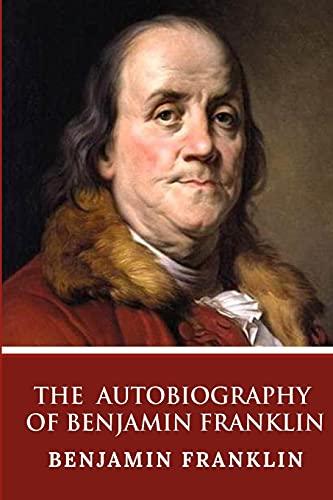
Franklin detailed an anecdote where he used a wheelbarrow full of paper to appear industrious in the neighborhood while paying off a debt to a printing house.
He's like, fill a wheelbarrow with piles of paper and walk around the neighborhood so that people think you're an industrious person. Like, that's easier than actually being industrious.
— Episode: 17. How Can We Get More Virtue and Less...
Franklin detailed an anecdote where he used a wheelbarrow full of paper to appear industrious in the neighborhood while paying off a debt to a printing house.
He's like, fill a wheelbarrow with piles of paper and walk around the neighborhood so that people think you're an industrious person. Like, that's easier than actually being industrious.
I sometimes brought home the paper I purchased at the stores through the streets on a wheelbarrow, thus being esteemed an industrious, thriving young man and paying duly for what I bought.
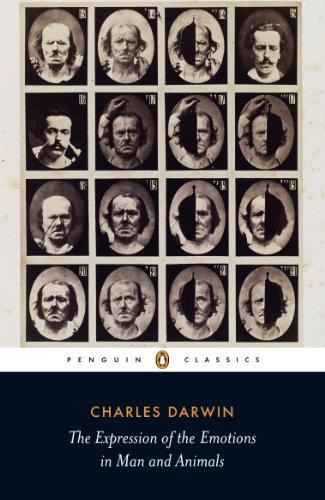
The speakers noted that Charles Darwin described emotions related to learning and thinking in this 1872 book, suggesting that the study of interest as an emotion is not entirely new.
we should note that in 1872, Charles Darwin described emotions related to learning and thinking in his book The Expression of the Emotions in Man and Animals.
— Episode: 222. What Makes an Idea Interesting?
The speakers noted that Charles Darwin described emotions related to learning and thinking in this 1872 book, suggesting that the study of interest as an emotion is not entirely new.
we should note that in 1872, Charles Darwin described emotions related to learning and thinking in his book The Expression of the Emotions in Man and Animals.
PREDICABLE CRISES OF ADULT LIFE.
It was mentioned as a book that was widely popular in the 1970s and 1980s, particularly focusing on the aging process for both men and women, based on interviews with educated middle-class individuals.
There was a book by Gail Sheehy, which was just at the time massively everywhere. It was particularly looking at the passage of time and aging from a female perspective. But it was called PASS...
— Episode: 115. Are You Having a Midlife Crisis?
It was mentioned as a book that was widely popular in the 1970s and 1980s, particularly focusing on the aging process for both men and women, based on interviews with educated middle-class individuals.
There was a book by Gail Sheehy, which was just at the time massively everywhere. It was particularly looking at the passage of time and aging from a female perspective. But it was called PASSAGES: Predictable Crises of Adult Life.
He thought the book was about what aging is like from a female perspective.
In actuality, the book covers the aging process for both men and women, or at least a certain demographic of men and women.
It was mentioned in a hypothetical example, illustrating the shift from hands-on experiences to vicarious ones through media.
Like there was a time when people bought Julia Child's cookbook and made cacao van for the first time.
— Episode: 100. Is It Weird for Adults to Have Imag...
It was mentioned in a hypothetical example, illustrating the shift from hands-on experiences to vicarious ones through media.
Like there was a time when people bought Julia Child's cookbook and made cacao van for the first time.
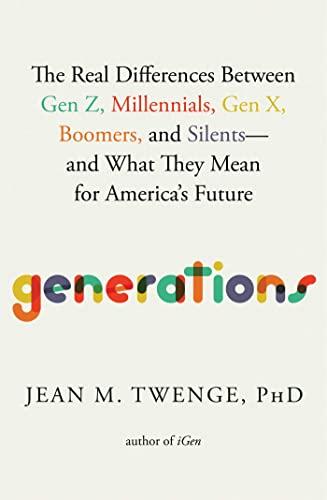
The Real Differences Between Gen Z, Millennials, Gen X, Boomers, and Silents―and What They Mean for America's Future
It was discussed as a book that explores the differences between generations, specifically Gen Z, millennials, Gen X, boomers, and silents, and their impact on America's future. The book was mentioned as relevant to the topic of generational differences and provided a framework to discuss it.
The title of that book is Generations, Colin, the real differences between Gen Z, millennials, Gen X, boomers and silence and what they mean for America's future.
— Episode: 165. Do "Generations" Mean Anything?
It was discussed as a book that explores the differences between generations, specifically Gen Z, millennials, Gen X, boomers, and silents, and their impact on America's future. The book was mentioned as relevant to the topic of generational differences and provided a framework to discuss it.
The title of that book is Generations, Colin, the real differences between Gen Z, millennials, Gen X, boomers and silence and what they mean for America's future.
So what is the root cause of these cultural changes and thus the root cause of generational differences? It should be something that keeps progressing year after year and something with a big impact on day to day life. The strongest candidate is technology.
Technology and its after effects on culture, behavior and attitudes have broken the old cycles of Generations to form something novel.
How Parents and Teachers Can Let Go and Let Grow
It was mentioned in relation to the 'free-range parenting' concept, which advocates for giving children more independence, as exemplified by the Macy's subway trip story that was also written about in a newspaper column.
I do kind of wonder whether we're like bubble wrapping our kids.
— Episode: 178. Do Kids Need More Independence?
It was mentioned in relation to the 'free-range parenting' concept, which advocates for giving children more independence, as exemplified by the Macy's subway trip story that was also written about in a newspaper column.
I do kind of wonder whether we're like bubble wrapping our kids.
What I think is fascinating in this outgrowth is because there are people like you who believe that maybe we're bubble wrapping kids. This idea of free range parenting.
I always laugh when I say it because when you go buy eggs at the grocery store, there's like free range chickens.
Angela is right that the term was coined by a New York City mom but she misremembers some of the details.
In 2008, Lenore Schenazy wrote a column in The New York Sun describing how she let her then 9-year-old son, not yet in middle school, make his way home from Bloomingdale's alone via the subway and bus.
John Wooden's TED Talk and philosophy of success was discussed, focusing on self-satisfaction and effort rather than external validation or winning, it was suggested that focusing on the internal journey often leads to external success.
So John Wooden gives a TED talk back in 2001 called The Difference Between Winning and Succeeding.
— Episode: 177. What Does Success Look Like?
John Wooden's TED Talk and philosophy of success was discussed, focusing on self-satisfaction and effort rather than external validation or winning, it was suggested that focusing on the internal journey often leads to external success.
So John Wooden gives a TED talk back in 2001 called The Difference Between Winning and Succeeding.
He said, peace of mind attained only through self-satisfaction in knowing you made the effort to do the best of which you are capable.
If you make the effort to do the best of which you're capable, trying to improve the situation that exists for you, I think that's success.
Reputation is what you're perceived to be. Character is what you really are.
It comes down to like, did you put out your very best effort?
The book, "Administrative Behavior" by Herbert Simon, was mentioned in the context of his theory of "satisficing", an alternative to maximizing that involves choosing a "good enough" option rather than the best.
So Herb Simon who truly was brilliant had this expression.
— Episode: 176. Why Is It So Hard to Make Decisions...
The book, "Administrative Behavior" by Herbert Simon, was mentioned in the context of his theory of "satisficing", an alternative to maximizing that involves choosing a "good enough" option rather than the best.
So Herb Simon who truly was brilliant had this expression.
Here's one sentence from Herb Simon's original work in 1947.
Simplification may lead to error, but there's no realistic alternative in the face of the limits on human knowledge and reasoning.
The hosts briefly mentioned that one of them had read it in a book club and was impressed by it.
Have you ever read anything of hers? I have absolutely my book club we read The Hundred Secret Senses have you read that one?
— Episode: 174. What’s the Point of I.Q. Testing?
The hosts briefly mentioned that one of them had read it in a book club and was impressed by it.
Have you ever read anything of hers? I have absolutely my book club we read The Hundred Secret Senses have you read that one?

The story of my first forty years and of the early years of the Experiment in International Living
Angela Duckworth's PhD thesis, it was mentioned as exploring non-IQ factors influencing achievement, reflecting her strong perspective on the topic.
My PhD dissertation, I'm trying to remember what it was exactly called. I think it was called non-I.Q. determinants of achievement.
— Episode: 174. What’s the Point of I.Q. Testing?
Angela Duckworth's PhD thesis, it was mentioned as exploring non-IQ factors influencing achievement, reflecting her strong perspective on the topic.
My PhD dissertation, I'm trying to remember what it was exactly called. I think it was called non-I.Q. determinants of achievement.
Teacher expectation and pupils' intellectual development
How the Science of Attachment Can Help You Make--and Keep--Friends
It was mentioned regarding how people who view friendships as based on effort tend to be less lonely later in life compared to those who see it as luck.
Let me share a little from Marissa Franco, who's at the University of Maryland.
— Episode: 149. Is It Harder to Make Friends as an...
It was mentioned regarding how people who view friendships as based on effort tend to be less lonely later in life compared to those who see it as luck.
Let me share a little from Marissa Franco, who's at the University of Maryland.
And she talks about this. She said, and those who see it as something that happened based on effort are less lonely in later years.
Working with Shadow Magick & the Dark Moon
It was discussed in relation to the author's journey as a chef, including the various skills and challenges involved in the profession and the evolution of her perspective on leadership and teamwork.
I am dying to ask you a question that has actually been simmering as I read through like essays that you've published in the Times and course I read Blood Boons and Butter.
— Episode: 149. Is It Harder to Make Friends as an...
It was discussed in relation to the author's journey as a chef, including the various skills and challenges involved in the profession and the evolution of her perspective on leadership and teamwork.
I am dying to ask you a question that has actually been simmering as I read through like essays that you've published in the Times and course I read Blood Boons and Butter.
You've titled your book, Blood, Bones and Butter, The Inadvertent Education of a Reluctant Chef.
Note: The book recommendations on this page are discovered automatically from podcast transcripts, and may be incorrect or incomplete.
Podcast Name