The Biggest Bluff: How I Learned to Pay Attention, Master Myself, and Win Cover
Podcast Mentions

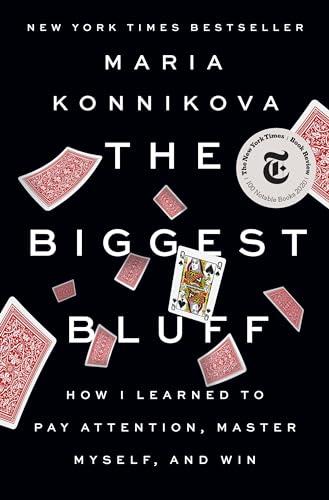
The Biggest Bluff How I Learned to Pay Attention, Master Myself, and Win

Maria Konnikova

The It's true that Maria Konnikova had never actually played poker before and didn't even know the rules when she approached Erik Seidel, Poker Hall of Fame inductee and winner of tens of millions of dollars in earnings, and convinced him to be her mentor. But she knew her man: a famously thoughtfu...

Podcasts 4
Quotes 32
Freakonomics Radio

It was discussed in the context of a past episode of Freakonomics Radio, where the author was interviewed and excerpts of the book were read.

"

That episode was called How to Make Your Own Luck. The author was Maria Konnikova, a PhD psychologist who became a professional poker player in order to learn more about decision making and luck. Her...

— Episode: What if Your Company Had No Rules?

Episode: What if Your Company Had No Rules?

It was discussed in the context of a past episode of Freakonomics Radio, where the author was interviewed and excerpts of the book were read.

"

That episode was called How to Make Your Own Luck. The author was Maria Konnikova, a PhD psychologist who became a professional poker player in order to learn more about decision making and luck. Her book is called The Biggest Bluff.

Episode: 424. How to Make Your Own Luck

It details her journey from a poker novice to a professional, highlighting how poker is a metaphor for life, illustrating decision making, and the role of skill and chance.

"

The Biggest Bluff is Konnikova's third book. The others are called Mastermind, How to Think Like Sherlock Holmes, and The Confidence Game, which is about con artists.

The deeper I went into poker, the better of a metaphor for life I realized it was, and the stronger of a tool I realized it was to address so many of the psychological questions that had been percolating in my head for years.

It's not the people who hold the best cards, it's the people who convince everyone else, who are the most confident.

This started out as something of a stunt. I was looking for a way to a stunt. I was looking for a way to look and this seemed like a good idea. And I was like, bam, this is going to sell.

It became a different book. It became a different project. It became a passion of mine.
No Stupid Questions

The hosts highlighted the title as a narrative of the author's transformation into a professional poker player, using it to illustrate the interplay of luck and skill and the psychological concept of locus of control. Stephen Dubner introduced it while discussing how much of life one can control, noting its relevance to everyday decision‑making. Overall, the book was presented as an insightful example rather than a strong endorsement.

Episode: How Much of Your Life Do You Actually Control? (Ep...

It was mentioned as a book about the author's journey to become a professional poker player, focusing on the relationship between luck and skill, and the concept of the locus of control.

"

This question arose when I was reading Maria Kanakova's new book, The Biggest Bluff.

And this book is about her quest to become a professional poker player starting from scratch.

Episode: 15. How Much of Your Life Do You Actually Control?

The book was discussed in the context of the concept of locus of control, which was introduced by Julian Rotter in 1966, and related to success and well-being, using the example of Maria's journey to becoming a poker player.

"

This question arose when I was reading Maria Kanakova's new book, The Biggest Bluff.

So Maria, like you, has a PhD in psychology but she's not an academic. She's a writer and this book is about her quest to become a professional poker player starting from scratch.

And really what Maria is wrestling with throughout that book is the relationship between luck and skill.

Episode: 15. How Much of Your Life Do You Actually Control?

The book was about the author's quest to become a professional poker player starting from scratch. It explored the relationship between luck and skill in the context of poker, which was easy to extrapolate to daily life.

"

This question arose when I was reading Maria Konnikova's new book, The Biggest Bluff. So Maria, like you, has a PhD in psychology, but she's not an academic. She's a writer. And this book is about her quest to become a professional poker player, starting from scratch.

And really what Maria is wrestling with throughout that book is the relationship between luck and skill.

So here's the passage that made me think of you: There's an idea in psychology, she writes, first introduced by Julian Roeder in 1966 called the locus of control.

The Jordan Harbinger Show

It was discussed throughout the podcast as Maria Konnikova's journey from having no interest in poker to becoming a professional poker player and writing a book about it.

"

I love this book, I love this conversation and I know you will too.

— Episode: 371: Maria Konnikova | Pulling Off the B...

Episode: 371: Maria Konnikova | Pulling Off the Biggest Blu...

It was discussed throughout the podcast as Maria Konnikova's journey from having no interest in poker to becoming a professional poker player and writing a book about it.

"

I love this book, I love this conversation and I know you will too.

I recommend everybody grab it the links in the show notes I read the whole thing and I plowed through it and it was really a pleasure to read.

You're going to enjoy listening to or reading it and if you do go and grab this book please do use our website links it helps support the show but you'll enjoy this read even if you don't care about poker you don't care about gambling.

I've known you for several years so you know what I mean when I say that is kind of ridiculous right no I mean it's not kind of ridiculous I think that is ridiculous it's absolutely ridiculous like what in the world is.

It's like saying you know I want to learn a little bit about soccer for this book oh I'm just gonna go work with Cristiano Ronaldo and oh Manchester United wants me to play for them because I got good.

Episode: 371: Maria Konnikova | Pulling Off the Biggest Blu...

It was discussed at length how Maria used her psychology PhD to help her win at poker, in a way that is different than just memorizing statistics and probabilities, and it was explained that success in poker is primarily a skill, not luck.

"

I love this book, I love this conversation and I know you will too.

I'd recommend everybody grab it the links in the show notes I read the whole thing and I plowed through it and it was really a pleasure to read.

You're going to enjoy listening to or reading it and if you do go and grab this book please do use our website links it helps support the show but you'll enjoy this read even if you don't care about poker you don't care about gambling.

According to one study that several economists ran of hundreds of thousands of hands that they analyzed in online poker the best hand won 12% of the time.

That means the best player won 88% of the time and over two thirds of the time the hand didn't even go to show down which means that someone won without ever having to show their cards.

Episode: 371: Maria Konnikova | Pulling Off the Biggest Blu...

It was discussed as a book about poker and how it can teach valuable life skills regarding decision-making, emotional control and separating skill from luck. It was also recommended as a great read.

"

I love this book, I love this conversation and I know you will too.

I read the whole thing and I plowed through it and it was really a pleasure to read so thank you so much for coming on the show today Maria.

I recommend everybody grab it the links in the show notes.

you're going to enjoy listening to or reading it and if you do go and grab this book please do use our website links it helps support the show but you'll enjoy this read even if you don't care about poker you don't care about gambling.

I loved this book also one of the things that we talked about offline after the show was that venting and complaining about luck or bad luck as we mentioned on the show it actually damages your social relationships.

Chasing Life

It was described as relating life to a game of poker, in that both are full of unknowns and probabilities, and we are still forced to make moves in both situations. The author's belief that the key to handling tough decisions may be a game of poker was discussed.

"

But what if I told you that the key to handling these tough decisions may be a game of poker?

— Episode: Life Is Like a Game of Poker

Episode: Life Is Like a Game of Poker

It was described as relating life to a game of poker, in that both are full of unknowns and probabilities, and we are still forced to make moves in both situations. The author's belief that the key to handling tough decisions may be a game of poker was discussed.

"

But what if I told you that the key to handling these tough decisions may be a game of poker?

She says that life is like a game of poker because they are both full of unknowns, probabilities and incomplete information. And yet in both situations, we are still forced to make a move.

One of the things that you wrote in your book is the best way to understand uncertainty is to bet on it.

Note: The book recommendations on this page are discovered automatically from podcast transcripts, and may be incorrect or incomplete.