Honours versus Money
Bruno S. Frey
Mentioned 4 months ago
62. How Can You Escape a Drama Triangle?
Research psychologist Angela Duckworth (author of "Grit") and tech and sports executive Mike Maughan really like to ask people questions, and they believe there’s no such thing as a stupid one. So they have a podcast where they can ask each other as many “stupid questions” as they want. New episodes...
Recently mentioned
Bruno S. Frey
Mentioned 4 months ago
62. How Can You Escape a Drama Triangle?
William C. Dement
Mentioned 7 months ago
50. Are You as Observant as You Think?
Nassim Nicholas Taleb
Mentioned 7 months ago
49. How Does Facing Death Change Your Life?
Angela Duckworth
Mentioned 8 months ago
46. How Can You Stop Feeling So Irritable?
Michael Erard
Mentioned 8 months ago
45. How Much Better Do You Really Want to Be?
Paul Bloom
Mentioned 9 months ago
44. Is Empathy in Fact Immoral?
Meyer Friedman
Mentioned 9 months ago
44. Is Empathy in Fact Immoral?
Steven D. Levitt
Mentioned 9 months ago
42. How Does When You Are Born Affect Who You Are?
![Freakonomics [Revised and Expanded]: A Rogue Economist Explores the Hidden Side of Everything cover](https://media.podcastbookpicks.com/books/677.jpg)
Steven D. Levitt
Mentioned 9 months ago
41. Why Are We So Attracted to Fame?
Daniel Thomas Cook
Mentioned 9 months ago
41. Why Are We So Attracted to Fame?
Robert B. Cialdini PhD
Mentioned 9 months ago
41. Why Are We So Attracted to Fame?
Jordan Ellenberg
Mentioned 10 months ago
40. Have We All Lost Our Ability to Compromise?
![Sapiens [Tenth Anniversary Edition]: A Brief History of Humankind Cover](https://media.podcastbookpicks.com/books/563.jpg)
A Brief History of Humankind
It was mentioned as the author's big book and then discussed in the context of a point Harari made about how quickly we are to punish public figures for things they say in private vs. their public actions.
I think he's a historian by discipline.
— Episode: 144. What Should Be the Eighth Deadly Si...
It was mentioned as the author's big book and then discussed in the context of a point Harari made about how quickly we are to punish public figures for things they say in private vs. their public actions.
I think he's a historian by discipline.
Yeah, I don't know what he is but I may be wrong but you know his big big book is Sapiens but then he's written other things and he was on Steve Levitt's podcast People I Mostly Admire and he said one small thing that I found so interesting and insightful he was talking about this isn't quite hypocrisy but I filed it under that. He was talking about how quick we are to punish public people and he was talking about politicians in this case.
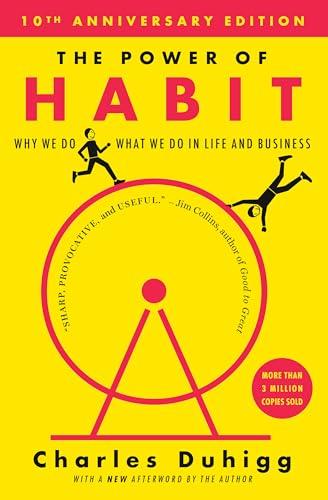
Why We Do What We Do in Life and Business
It was mentioned as a book that discusses the benefits of making your bed in the morning and how it can be a keystone habit for better productivity, well-being and stronger budgeting skills.
Charles Duhigg wrote about this as a keystone habit. He said, making your bed every morning is correlated with better productivity, a greater sense of wellbeing and stronger skills at sticking with a...
— Episode: 193. Are You as Conscientious as You Thi...
It was mentioned as a book that discusses the benefits of making your bed in the morning and how it can be a keystone habit for better productivity, well-being and stronger budgeting skills.
Charles Duhigg wrote about this as a keystone habit. He said, making your bed every morning is correlated with better productivity, a greater sense of wellbeing and stronger skills at sticking with a budget. That was in his book, The Power of Habit.
I think Charles Duhigg was just a guest on our sibling show, People I Mostly Admire. Yes?
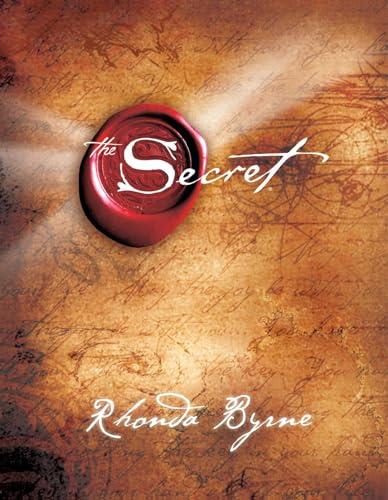
It was discussed as a 2006 book and film that popularized the concept of manifestation and the law of attraction, selling over 30 million copies.
The first time I was truly introduced to the idea of manifestation came in, I don't know, 2006. There was this book that came out in this movie that came out called The Secret.
— Episode: 179. Can You Really “Manifest” Success T...
It was discussed as a 2006 book and film that popularized the concept of manifestation and the law of attraction, selling over 30 million copies.
The first time I was truly introduced to the idea of manifestation came in, I don't know, 2006. There was this book that came out in this movie that came out called The Secret.
So The Secret was written by this Australian TV writer. Her name is Rhonda Byrne.
In the first half of the show, Mike says that in her 2006 book The Secret, author Rhonda Byrne writes that the titular concept is largely based on the law of attraction.
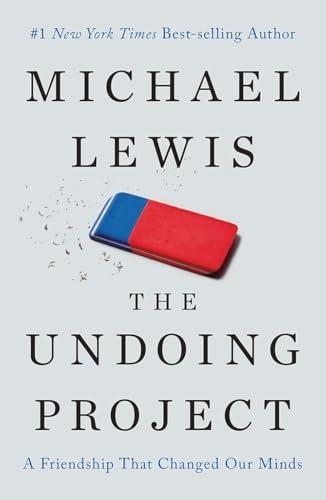
A Friendship That Changed Our Minds
It was described as a book that makes good writing look easy and was highly praised for its storytelling.
I am in awe. I so wish...
— Episode: 68. Why Do We Want What We Can’t Have?
It was described as a book that makes good writing look easy and was highly praised for its storytelling.
I am in awe. I so wish...
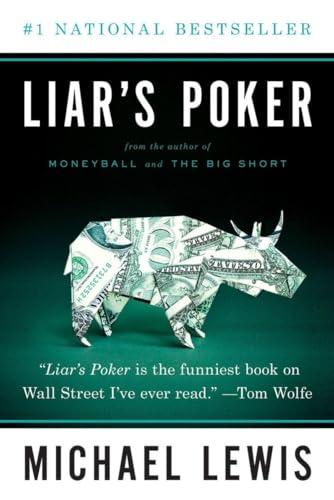
Michael Lewis is a writer that a lot of writers envy.
Michael Lewis is someone who I and a lot of other writers think makes really good writing look really easy.
When you talk to him, it kind of is.
I read writing by him and I'm like, swoon and you know, envy.
The Art of Winning an Unfair Game
It was mentioned in the context of a conversation about Paul DePodesta's role in baseball analytics and how it was adapted into a film starring Brad Pitt.
I'm sure I'd heard of him, I read Michael Lewis's book Moneyball, but I think he was the executive right, who sort of first had the idea.
— Episode: 207. How Clearly Do You See Yourself?
It was mentioned in the context of a conversation about Paul DePodesta's role in baseball analytics and how it was adapted into a film starring Brad Pitt.
I'm sure I'd heard of him, I read Michael Lewis's book Moneyball, but I think he was the executive right, who sort of first had the idea.
Oh Billy Bean, I saw the movie with Brad Pitt.
Yeah, so Brad Pitt plays the role of Billy Bean.
Okay, he's the general manager or the coach or something right?
He's the general manager I believe and then Jonah Hill plays the role of Paul DePodesta.
How Our Culture Enables Misbehaving Men
It was mentioned in relation to the psychology of magic bullets and how people tend to look for one cause to explain a complex event, as illustrated by a case study involving Theranos.
He has this new book called Complicit, How We Enable the Unethical and How to Stop.
— Episode: 104. How Simple Is Too Simple?
It was mentioned in relation to the psychology of magic bullets and how people tend to look for one cause to explain a complex event, as illustrated by a case study involving Theranos.
He has this new book called Complicit, How We Enable the Unethical and How to Stop.
I was teaching this group of executives online. I asked the class what caused the massive fraud at Theranos?
Clearly there were multiple causes of fraud at Theranos. But when I looked at the class's answers, I found they tended to be simple and singular.
62 of the 70 responses offered a single cause. 56 of those 62 were a simple description of Elizabeth Holmes, such as her ego or lack of integrity.
In other words, the vast majority of the sophisticated executives in my class who knew all aspects of the story blamed a single source.
Emotional Attunement for Couples
John Gottman, a couples counselor and relationship expert, was quoted in the episode. He discussed the importance of closure in relationships, arguing that negative events which are not fully processed can linger and be remembered repeatedly. He likened unprocessed emotional events to an improvised explosive device, ready to explode with even the slightest trigger. The zygarnic effect, according to Gottman, plays a vital role in this.
And he says, the potential role of the zygotic effect is colossal.
— Episode: 185. Do You Need Closure?
John Gottman, a couples counselor and relationship expert, was quoted in the episode. He discussed the importance of closure in relationships, arguing that negative events which are not fully processed can linger and be remembered repeatedly. He likened unprocessed emotional events to an improvised explosive device, ready to explode with even the slightest trigger. The zygarnic effect, according to Gottman, plays a vital role in this.
And he says, the potential role of the zygotic effect is colossal.
If we engage in a tuned processing, right, getting to closure of a negative emotional event or a regrettable incident with our partner, we will only foggyly remember it. The details will become hazy and the event insignificant.
On the other hand, if we dismiss and avoid processing a negative emotional event, it will not disappear. It will fester, ready to be triggered again.
This is why attuning, right, getting closure to a negative regrettable incident is so incredibly important, like the Viennese waiters in Zygarnik's cafe, if partners avoid processing the incident with attunement, the event and its negative emotion will lie inside each partner like an improvised explosive device, an IED ready to explode if inadvertently stepped on.
The way relationships fail is through something called the zygarnic effect. If a couple's negative events are not fully processed, that's what he calls attunement, right? Like getting to closure. If they're not fully processed, then they're remembered and rehearsed repeatedly, turned over and over in each person's mind.
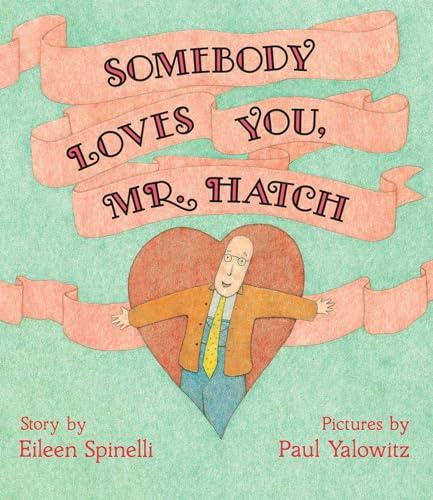
The book 'Somebody Loves You, Mr. Hatch' was mentioned as an example of how mystery and lack of closure can lead to positive outcomes. A lonely man's life is transformed when he receives a box of chocolates with a note that says 'somebody loves you'. He is filled with joy and curiosity, discovering a new world of connection and happiness through the unknown sender.
I mean, there's this Valentine's book that we always read as kids called Somebody Loves You, Mr. Hatch.
— Episode: 185. Do You Need Closure?
The book 'Somebody Loves You, Mr. Hatch' was mentioned as an example of how mystery and lack of closure can lead to positive outcomes. A lonely man's life is transformed when he receives a box of chocolates with a note that says 'somebody loves you'. He is filled with joy and curiosity, discovering a new world of connection and happiness through the unknown sender.
I mean, there's this Valentine's book that we always read as kids called Somebody Loves You, Mr. Hatch.
It's an awesome book, but there's this older gentleman lives alone, never had a family, and he gets this big box of chocolates that says somebody loves you.
He's like, maybe it was the person I buy the paper from. Maybe it was someone at work. Maybe it was the neighbors.
And then the postman comes back and says, Mr. Hatch, I'm in a lot of trouble. I delivered this to the wrong house.
And he becomes so involved in his community and he starts making brownies and inviting people over and all this.
Our Thousand-Year Struggle Over Technology and Prosperity
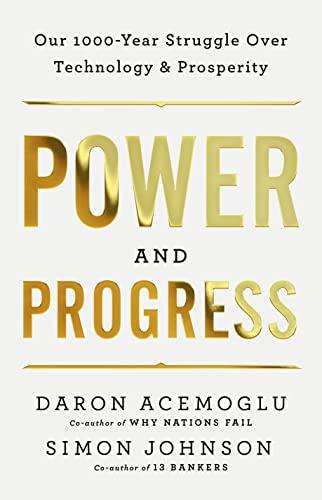
It was mentioned as a forthcoming book by Daron Acemoglu, exploring the effects of technology on labor and humanity, hinting at a potential shift towards skepticism about the abundance mindset.
He's got a forthcoming book called Power and Progress Our 1000 year struggle over technology and prosperity.
— Episode: 145. Do You Have a Scarcity Mindset or a...
It was mentioned as a forthcoming book by Daron Acemoglu, exploring the effects of technology on labor and humanity, hinting at a potential shift towards skepticism about the abundance mindset.
He's got a forthcoming book called Power and Progress Our 1000 year struggle over technology and prosperity.
English in the Gutter
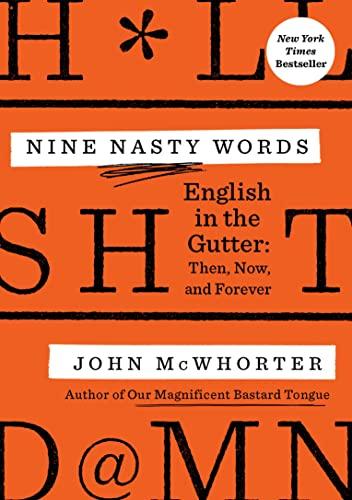
It was discussed in the context of the evolution of swear words through history, specifically touching on religion, the body, and demeaning others.
John McWhorter's most recent book...is actually about swearing. It's called Nine Nasty Words English in the Gutter, Then Now and Forever.
— Episode: 119. J***s C****t, Angela, Why Are You S...
It was discussed in the context of the evolution of swear words through history, specifically touching on religion, the body, and demeaning others.
John McWhorter's most recent book...is actually about swearing. It's called Nine Nasty Words English in the Gutter, Then Now and Forever.
He describes essentially three historical eras of what swear words were about.
The New Psychology of Success
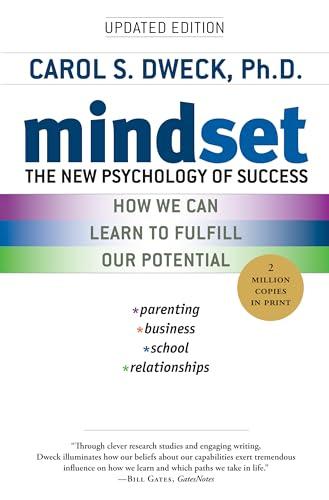
The speaker discussed how Carol Dweck popularized the term 'growth mindset' from her popular book for a lay audience, replacing her previous, less catchy terminology.
But growth Mindset is a pretty sexy phrase, right?
— Episode: Why Do People Love Horror Movies? (Repla...
The speaker discussed how Carol Dweck popularized the term 'growth mindset' from her popular book for a lay audience, replacing her previous, less catchy terminology.
But growth Mindset is a pretty sexy phrase, right?
And so growth Mindset ended up being the terminology we all know and love today.
She used to call it implicit theories of incremental--I know, right? I can't even remember. It was like incremental intelligence theory.
It was mentioned as a source of comfort for Jenny, suggesting that compared to Aristotle, everyone else is pretty awesome.
I will leave Jenny with one thought if she's looking for ammunition for why she's right to think that young people are terrible. This is from Aristotle who did his thinking many centuries ago. He wrot...
— Episode: 76. Why Can’t Baby Boomers and Millennia...
It was mentioned as a source of comfort for Jenny, suggesting that compared to Aristotle, everyone else is pretty awesome.
I will leave Jenny with one thought if she's looking for ammunition for why she's right to think that young people are terrible. This is from Aristotle who did his thinking many centuries ago. He wrote, And for the record, That is true. Aristotle wrote, Aristotle is really cranky. I think he's throwing everyone under the bus.
So I guess if Jenny wants to feel better, she should read some Aristotle and say that compared to him, everybody is actually pretty awesome. I think that's a good antidote.
The Psychology of Persuasion
It was highly recommended as a resource to learn about the principles of persuasion and how to protect oneself from being scammed, with the author being described as a moral person.
If I gave Raymond, who sent us this question, why do people get scammed? What's your advice? If I gave Raymond the best advice, I think it would be go read Influence by Bob Cialdini.
— Episode: Why Do People Get Scammed? (Replay)
It was highly recommended as a resource to learn about the principles of persuasion and how to protect oneself from being scammed, with the author being described as a moral person.
If I gave Raymond, who sent us this question, why do people get scammed? What's your advice? If I gave Raymond the best advice, I think it would be go read Influence by Bob Cialdini.
And I know you and I have both read Influence and we're both big fans. The reason I suggest that is that what Bob Cialdini as a psychologist did was to document the half dozen basic principles by which human beings persuade other people to do and believe things.
And I want to recommend this to Raymond not only because, like, wow, how do I not fall prey to these techniques? Well, learn them from the master.
But when I got to know Bob in the last several years, I came to discover something that I didn't realize from reading Influence the first time, which is that he is like the most morally upright person.
And I think what truly has motivated him is just the idea that his moral duty is to kind of inoculate all of us against scams and against being had and against being fooled and taken advantage of by writing as clearly as possible about how it is that that happens.
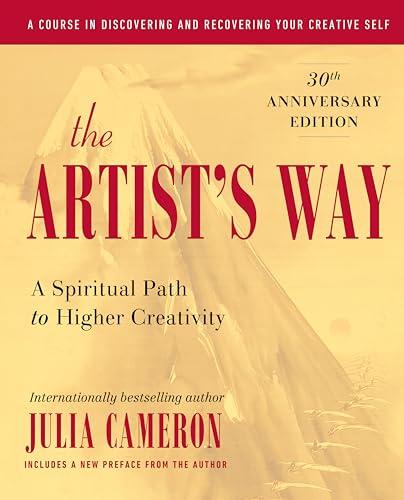
A Spiritual Path to Higher Creativity
It was mentioned as a self-help book for artists and was described as extremely famous. The book suggests a creative way to approach life by writing 4 pages in a hardcopy journal every morning.
So he has this podcast, and he was telling me about this famous self-help book called The Artist's Way. I, of course, had never heard of it. And he said, wait, what?
— Episode: 193. Are You as Conscientious as You Thi...
It was mentioned as a self-help book for artists and was described as extremely famous. The book suggests a creative way to approach life by writing 4 pages in a hardcopy journal every morning.
So he has this podcast, and he was telling me about this famous self-help book called The Artist's Way. I, of course, had never heard of it. And he said, wait, what?
And the advice that he was passing along to me from the author of this apparently extremely famous self-help book, which was written by and for artists.
And if you're an artist, what you do is you grab a hard copy journal and you write, I think it's four pages. And that's the rule.
It's not about time. It's not about what you write about. But it's just that you write four pages in the morning.
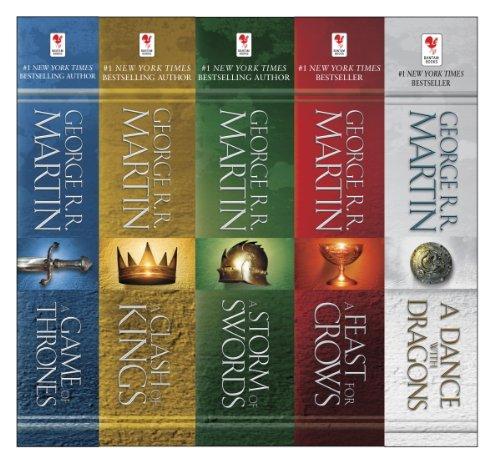
A Game of Thrones, A Clash of Kings, A Storm of Swords, A Feast for Crows, and A Dance with Dragons
The book series was mentioned as something Angela Duckworth had never watched or read, despite being goal-oriented, leading Stephen to jokingly suggest she needed to binge-watch it.
By the way, every time you say winter is coming, I think of Game of Thrones.
— Episode: 25. Is Hedonism Better Than Self-Control...
The book series was mentioned as something Angela Duckworth had never watched or read, despite being goal-oriented, leading Stephen to jokingly suggest she needed to binge-watch it.
By the way, every time you say winter is coming, I think of Game of Thrones.
I've never watched it. It looks too like combination scary, sci-fi, noisy, time consuming, cold.
So how can you be this alleged goal-oriented person who's always thinking about accomplishment and achievement for the sake of helping the kids, but you're also spending hours and hours and hours watching Game of Thrones?
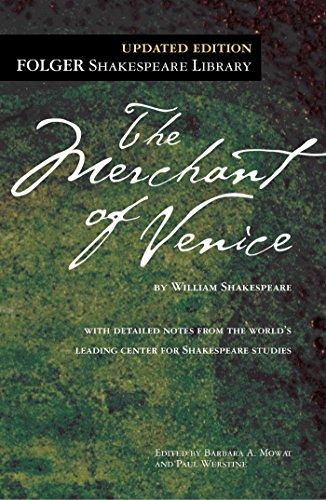
It was described as profoundly antisemitic by Harold Bloom, causing discussion on whether it should be removed from reading lists due to the author's potentially problematic views.
He wrote Merchant of Venice.
— Episode: 20. Should We Separate the Art From the...
It was described as profoundly antisemitic by Harold Bloom, causing discussion on whether it should be removed from reading lists due to the author's potentially problematic views.
He wrote Merchant of Venice.
OK, Harold Bloom, maybe the most prominent literary critic of the past generation at least, he called Merchant of Venice a profoundly antisemitic work. And most people who study that kind of thing would agree.
Note: The book recommendations on this page are discovered automatically from podcast transcripts, and may be incorrect or incomplete.
Podcast Name