No Stupid Questions
Book Recommendations

No Stupid Questions

Research psychologist Angela Duckworth (author of "Grit") and tech and sports executive Mike Maughan really like to ask people questions, and they believe there’s no such thing as a stupid one. So they have a podcast where they can ask each other as many “stupid questions” as they want. New episodes...

Episodes 322
Books 342

Recently mentioned

Latest Recommendations

Honours versus Money: The Economics of Awards cover

Honours versus Money

Bruno S. Frey

Mentioned 4 months ago

62. How Can You Escape a Drama Triangle?
This book was referenced as arguing that awards can enhance performance across various situations, even when they are purely symbolic, suggesting that the desire for recognition is a fundamental part of human nature.

And so there's a book by Jana Gallus and Bruno Frey. It's called Honors vs. Money, the Economics of Awards.

Buy on Amazon
Some must watch while some must sleep (The Portable Stanford series) cover

Some must watch while some must sleep (The Portable Stanford series)

William C. Dement

Mentioned 7 months ago

50. Are You as Observant as You Think?

Angela referenced this book she read as a teenager, which had a forest green cover with a Picasso painting of a sleeping woman. The book detailed the story of a colleague of DeMent's who began sleeping only four hours a night after the age of 23, a pattern that continued for the rest of his life.

I read this book when I was a teenager that my sister had on her shelf. I can picture it vividly. It had a forest green cover with a Picasso painting of a woman sleeping. It was called Why Some Must Sleep and Others Must Watch.

Buy on Amazon
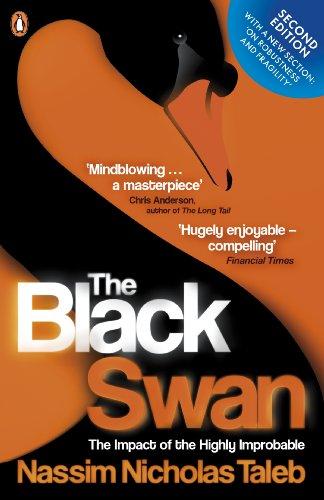
The Black Swan: The Impact of the Highly Improbable cover

The Black Swan

Nassim Nicholas Taleb

Mentioned 7 months ago

49. How Does Facing Death Change Your Life?

The book defined a black swan event as something unpredictable, carrying a massive impact, and which people rationalize after the fact to seem predictable. The speakers noted that people tend to misinterpret the concept by trying to predict these rare events.

Many people think of this now as the black swan effect after Nassim Taleb's book of that name.

Buy on Amazon
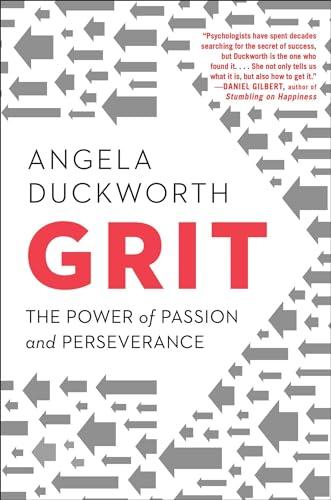
Grit: The Power of Passion and Perseverance cover

Grit

Angela Duckworth

Mentioned 8 months ago

46. How Can You Stop Feeling So Irritable?

The book was mentioned in the context of perseverance versus patience, suggesting Ben Franklin might have confused the two concepts before the book's publication.

Maybe he hadn't read grit.

Buy on Amazon
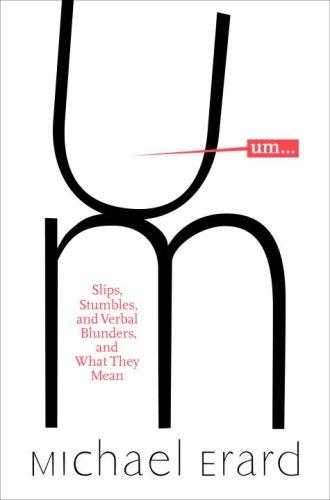
Um. . .: Slips, Stumbles, and Verbal Blunders, and What They Mean cover

Um. . .

Michael Erard

Mentioned 8 months ago

45. How Much Better Do You Really Want to Be?

The book discussed the observation that people generally did not focus on or complain about the use of 'um' until voice recording became common. The author made the interesting note that all languages possess their own equivalent to 'um'.

With a few exceptions, people didn't really start talking about um or complaining about it until the advent of voice recording. It is likely they were using it all along, but either they didn't notice it or didn't deem it worthy of writing down. It wasn't considered a word, but a noise like a cough.

Buy on Amazon
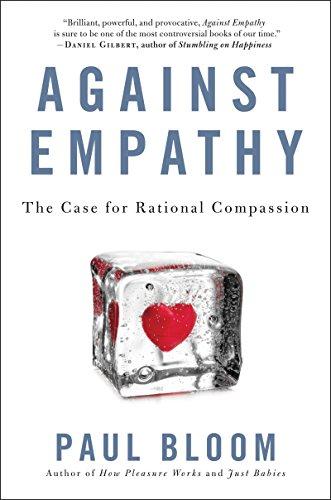
Against Empathy: The Case for Rational Compassion cover

Against Empathy

Paul Bloom

Mentioned 9 months ago

44. Is Empathy in Fact Immoral?

This book argued that empathy is a leading motivator of inequality and immorality, characterizing it as a capricious and irrational emotion that appeals to narrow prejudices and can diminish kindness and love.

He argues that empathy is one of the leading motivators of inequality and immorality, and that far from helping us to improve the lives of others, empathy is a capricious and irrational emotion that appeals to our narrow prejudices.

Buy on Amazon
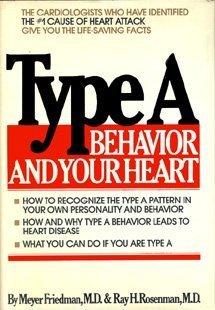
Type A Behavior and Your Heart cover

Type A Behavior and Your Heart

Meyer Friedman

Mentioned 9 months ago

44. Is Empathy in Fact Immoral?

This book detailed the authors' findings that people exhibiting Type A personality traits, such as impatience and irritability, were significantly more prone to heart attacks than those with more relaxed Type B traits.

In 1974, they published a book about their findings called Type A Behavior and Your Heart.

Buy on Amazon
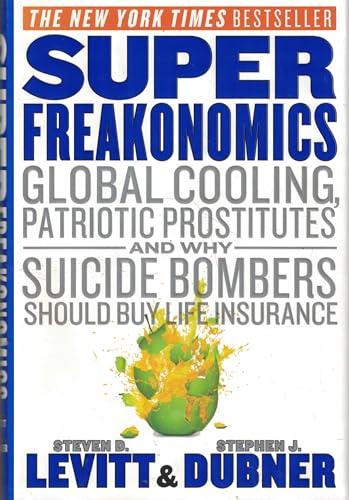
Super Freakonomics: Global Cooling, Patriotic Prostitutes, and Why Suicide Bombers Should Buy Life Insurance cover

Super Freakonomics

Steven D. Levitt

Mentioned 9 months ago

42. How Does When You Are Born Affect Who You Are?

The speakers referenced writing about the relative age effect in Major League Baseball within this book, noting they analyzed birth date bulges related to the July 31st cutoff date in youth leagues.

We wrote about this, I believe it was in Super Freakonomics, but we looked at the birth date bulges.

Buy on Amazon
Freakonomics [Revised and Expanded]: A Rogue Economist Explores the Hidden Side of Everything cover

Freakonomics [Revised and Expanded]

Steven D. Levitt

Mentioned 9 months ago

41. Why Are We So Attracted to Fame?

The first book by Stephen Dubner and his collaborator was mentioned as the one that led to the speaker being recognized in airports after a documentary film based on it was released.

Our first book, Freakonomics, came out. And then as we were working on the second book, there was a movie being made.

Buy on Amazon
The Wiley Blackwell Encyclopedia of Consumption and Consumer Studies (Wiley Blackwell Encyclopedias in Social Sciences) cover

The Wiley Blackwell Encyclopedia of Consumption and Consumer Studies (Wiley Blackwell Encyclopedias in Social Sciences)

Daniel Thomas Cook

Mentioned 9 months ago

41. Why Are We So Attracted to Fame?

This encyclopedia was cited as a source for categorizing different types of celebrities, which the speaker found useful for discussing the roles of fame.

He's at the City University of London and he wrote about celebrity for the Wiley-Blackwell Encyclopedia of Consumption and Consumer Studies, it's called.

Buy on Amazon
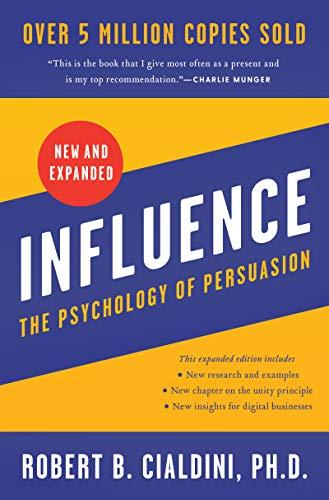
Influence, New and Expanded: The Essential Guide to the Psychology of Influence and Persuasion in Everyday Life cover

Influence, New and Expanded

Robert B. Cialdini PhD

Mentioned 9 months ago

41. Why Are We So Attracted to Fame?

A forthcoming new version of this book, which discusses persuasion and mental shortcuts like social proof, was mentioned as being read by Stephen Dubner.

I was just talking to our common friend, Bob Cialdini. Well, he's uncommon as a human being, but we are both friends with him. I was reading his soon to be published new version of influence and how we persuade each other.

Buy on Amazon
How Not to Be Wrong: The Power of Mathematical Thinking cover

How Not to Be Wrong

Jordan Ellenberg

Mentioned 10 months ago

40. Have We All Lost Our Ability to Compromise?

This book was mentioned in relation to the famous story about mathematician Abraham Wald and the missing bullet holes on WWII planes, illustrating the importance of missing data.

One is in a book by Jordan Ellenberg, who I believe is a mathematician himself. And his book is called How Not to Be Wrong.

Buy on Amazon

Most Recommended

Honours versus Money: The Economics of Awards Cover

Bruno S. Frey

Honours versus Money

The Economics of Awards

This book was referenced as arguing that awards can enhance performance across various situations, even when they are purely symbolic, suggesting that the desire for recognition is a fundamental part of human nature.

"

And so there's a book by Jana Gallus and Bruno Frey. It's called Honors vs. Money, the Economics of Awards.

— Episode: 62. How Can You Escape a Drama Triangle?
Listen on Audible 7-day free trial

Episode: 62. How Can You Escape a Drama Triangle?

This book was referenced as arguing that awards can enhance performance across various situations, even when they are purely symbolic, suggesting that the desire for recognition is a fundamental part of human nature.

"

And so there's a book by Jana Gallus and Bruno Frey. It's called Honors vs. Money, the Economics of Awards.

Note: The book recommendations on this page are discovered automatically from podcast transcripts, and may be incorrect or incomplete.