Police Exam Prep 7th Edition
Kaplan Test Prep
Mentioned 4 months ago
1288: Test Prep | Skeptical Sunday
(Apple's Best of 2018) In-depth conversations with people at the top of their game. Jordan Harbinger unpacks guests' wisdom into practical nuggets you can use to impact your work, life, and relationships. Learn from leaders (Ray Dalio, Simon Sinek, Mark Cuban), entertainers (Moby, Tip "T.I." Harris,...
Recently mentioned
Kaplan Test Prep
Mentioned 4 months ago
1288: Test Prep | Skeptical Sunday
David Killoran
Mentioned 4 months ago
1288: Test Prep | Skeptical Sunday

Kaplan Test Prep
Mentioned 4 months ago
1288: Test Prep | Skeptical Sunday

Eve Ensler
Mentioned 5 months ago
1282: The Vagina | Skeptical Sunday
Richard Shotton
Mentioned 6 months ago
1273: Richard Shotton & MichaelAaron Flicker | Marketing to Human Minds
Derek Thompson
Mentioned 6 months ago
1273: Richard Shotton & MichaelAaron Flicker | Marketing to Human Minds
Milan Kundera
Mentioned 1 year ago
1042: Sex Trafficking | Skeptical Sunday
Ryan Holiday
Mentioned 1 year ago
1041: Groped In Your Sleep, Betrayal Runs Deep | Feedback Friday
James J. Sexton
Mentioned 1 year ago
1035: James Sexton | A Divorce Lawyer's Guide to Lasting Love Part One
Charles Duhigg
Mentioned 1 year ago
1034: Fat-Free Foods | Skeptical Sunday
Glennon Doyle
Mentioned 1 year ago
1031: Sarah Hill | How Birth Control Rewires Women's Brains Part One
Toni Weschler
Mentioned 1 year ago
1031: Sarah Hill | How Birth Control Rewires Women's Brains Part One
The host highlighted the book for its unparalleled insight into human nature, noting that it was both banned in prisons and widely read by scholars, leaders, and various subcultures. He praised the author's expertise and even prepared extensively by reading the entire work before interviewing the author, describing the experience as one of his best. Overall, the discussion conveyed strong endorsement of the book’s relevance and impact.
It was mentioned that Robert Greene is a highly acclaimed author whose books have been banned in prisons and are widely read by scholars and leaders alike.
Robert Green, one of the most acclaimed authors of our time. Robert's insight into human nature is second to none, and there's a reason that his books are banned in prisons, yet widely read by both scholars and leaders alike.
Robert Green's book on power dynamics and human nature was mentioned, and it was said that it is banned in prisons but widely read by scholars and leaders.
Roberts insight into human nature is second to none and there's a reason that his books are banned in prisons.
Jordan was very impressed by Robert Green's book, and read it before interviewing him for the podcast, which he considered to be one of the best interviews he had done. He took notes throughout the 600-page book, as well as its footnotes, and felt he needed to put in the necessary work for every episode.
I can't mess this up, this is Robert Freakin' Green.
And I got all new equipment and I worked to learn the equipment and then I read his whole book and then I read his other book.
These things are like 600 freaking pages long. It's Robert Green, he doesn't write 200 pages.
Why did this take so long, we've been talking by email for like five years.
I've done a lot of media, and this is one of the best interviews that I've ever done.
It was mentioned that it has been a perennial seller and influenced various groups, including the hip-hop community, who found it useful for navigating power dynamics. It was also noted that it has been banned in some prisons.
When I first came up with The 48 Laws of Power way back in 95, I wasn't writing from a position of power right.
So when I say play on people's need to believe to create a cult like following, you know people going Robert is teaching people how to create a cult.
So when I in Hollywood I would do all the writing for a screenplay you know, duck bits of dialogue. My name was never put on it never right?
So since 1998 when it came out I've received thousands of emails from readers right and occasionally there'll be someone who will say I'm certain that my boss read your book and did this bad maneuver to me and I feel kind of bad but 98% of them were saying you know I didn't realize that I was out shining the master law number one.
The people who needed are people who would like myself kind of came out of the universe from kind of naive by nature and needed some awakening needed to kind of learn the rules, the laws of power so they could play the game.
It was mentioned that Robert Greene's book is widely read by scholars and leaders, but banned in prisons due to its insights into human nature.
Robert's insight into human nature is second to none and there's a reason that his books are banned in prisons yet widely read by both scholars and leaders alike
It was mentioned that Robert Greene's book on human nature is widely read by leaders and scholars and is banned in some prisons, implying its powerful, albeit controversial insights.
Robert Green, one of the most acclaimed authors of our time. Robert's insight into human nature is second to none.
and there's a reason that his books are banned in prisons yet widely read by both scholars and leaders alike.
It was mentioned in the context of an interview with the author. It was described as an interview that Jordan did five years prior.
it was interviewing Robert Greene the first time and he said wow you're pretty good at this and I said you know this is the first time I read the book for an interview this is you know five years ago more and he said wow and I thought what if I do this much work for every interview I'll be great at this you know that was the snowball it took seven years for me to get to that point
It was mentioned that the book is not allowed in federal prisons because of its content, but many inmates still read it. It was said that a lot of the content is common sense.
is not allowed in federal prisons by the way
he's told me that and a lot it always finds its way in let me be clear i volunteered at a prison and I want to and all the guys were familiar with that book and a lot of them the more violent and gang related and sort of predatory these guys had grown up the way they'd grown up one guy even told me i've read that book it's all right but most of its common sense around here
It was mentioned that Robert Greene's book is banned in prisons, but is widely read by scholars and leaders due to its insights into human nature.
Robert Green, one of the most acclaimed authors of our time. Robert's insight into human nature is second to none and there's a reason that his books are banned in prisons yet widely read by both scholars and leaders alike.
It was mentioned as a previous book by Robert Greene that had been popular in prisons and among certain groups of people. It was discussed in the context of manipulation and power dynamics.
I think The 48 Laws of Power might have branded you a little bit is like wow he's using all these he lives in a cave with like nuclear missiles.
And you hear people who that book was big I think in a lot of prisons people are passing it around rappers rappers yeah football players and things like that and kind of people that you would expect to be using those levers.
I'm a part of that book I was working in Hollywood and everyone likes to pretend they're so liberal so PC there's so angelic in favor of all the right causes. And it's not true behind the doors they're master manipulators they're Machiavellian they're pretty rough and I was really irritated by that stupid image that people have of this film director or that actor and I wanted to show this is what power is really like this is what people are really like to sort of prick that bubble of a pretentiousness of that's that air of superiority.
And in a chapter on envy it was called never appear to perfect and I have the story of the writer whose partner was so envious of him and his success because they were both wanting to be right as Joe or the ended up murdering him.
It was mentioned in passing, and the host briefly mentioned that he had read it for the first time before interviewing the author for the show a few years prior.
seventh year anniversary I was interviewing Robert Green the first time and he said wow you're pretty good at this and I said you know this is the first time I read the book for an interview this is you know five years ago more and he said wow and I thought what if I do this much work for every interview I'll be great at this you know that was the snowball it took seven years for me to get to that point
The book, 'The 48 Laws of Power', was mentioned as being popular with some inmates, though not allowed within the prisons, due to its manipulative nature. It was deemed to contain common sense by one inmate.
I know you know the authors that book is not allowed in federal prisons by the way.
he he's told me that and a lot it always finds its way in let me be clear i volunteered at a prison and I want to and all the guys were familiar with that book and a lot of them the more violent and gang related and sort of predatory these guys had grown up the way they'd grown up one guy even told me i've read that book it's all right but most of its common sense around here
It was discussed in relation to how people manipulate others and how humans can mislead themselves. It was also discussed in the context of asking for favors and advice in a non-transactional manner.
I think everybody that has this mindset needs to go listen to Robert Greene's interview this week because he specifically talks about how to ask for favors and how to get people to do things you want and get the advice that you want specifically covers this exact topic
It was mentioned multiple times as a previous work of Robert Greene, and it was said to have been popular with various demographics, including those in prisons and amongst athletes.
I think The 48 Laws of Power might have branded you a little bit is like wow he's using all these he lives in a cave with like nuclear missiles.
And you hear people who that book was big I think in a lot of prisons people are passing it around rappers rappers yeah football players and things like that and kind of people that you would expect to be using those levers.
And in a chapter on envy it was called never appear to perfect and I have the story of the writer whose partner was so envious of him and his success because they were both wanting to be right as Joe or the ended up murdering him.
I've been doing that for a long time I did that kind of indirectly with the 48 laws because I'm a part of that book I was working in Hollywood and everyone likes to pretend they're so liberal so PC there's so angelic in favor of all the right causes.
The author had a conversation with Robert Greene, who wrote 48 Laws of Power, and said he didn't want to mess up the interview because he is a really good author. The author prepared by reading his whole book and taking notes. The author was surprised that Robert Greene said it was one of the best interviews he had ever done.
He's an author who wrote 48 Laws of Power and a lot of people probably know who he is.
And I got all new equipment and I worked to learn the equipment and then I read his whole book and then I read his other book and these things are like 600 freaking pages long it's Robert Green he doesn't write 200 pages so I'm taking notes and they're dense there dense books too they're dense you can't mess with these these are not like oh here's a really long story it's like no no no this is like 600 pages in half of it the end is footnotes and that's 200 more pages so I read these books took a bunch of notes did the interview and at the end I said thank you so much this was really good and he goes why did this take so long we've been talking by email for like five years and I said I didn't want to mess it up you know you're a really good author I didn't want to waste your time and he said I've done a lot of media and this is one of the best interviews that I've ever done this is seven years into me doing the show so that told me well if Robert Green says that it was good then I'm probably pretty good at this and I remember sitting there and going I have to do everything different and I told my my girlfriend at the time now wife her name's Jen I go Jen Robert Green said this is one of the better interviews that he's done she goes well what did you do different I go I live write all the books and I took all the notes and she goes you probably should start doing that for every episode of your show and I went and I read the book for every author that comes on the show I can't prep like that and she goes okay I mean I guess this is a choice on which shows you want to do that for them which shows you don't and then I remember sitting down and going I have a choice whether I want to do this really really well every single time and work really hard or just do crappy ones and then do some good ones I can't keep lying to myself and telling me that I can go 15% 20% effort and get 100% results and she goes yeah I mean used to brag about how you don't need to read the book because you can wing it and everybody is like down with that and I go yep I'm faking it and even if not everybody knows if I'm the only person that knows I'm not like respecting the craft to put it in kind of an over leopoetic way if I really want to fulfill my potential as an interviewer journalist whatever you want to call it I actually have to put the work in surprise surprise like that's how that works so I started from that point on I was like I have to read every book from every person that comes on the show I have to do like 10 hours of prep for every guest on the Jordan Harbinger show and if I'm two, three hours in and I go this is boring shoot me I have to cancel that interview because I'm not going to do a good show and this is what true professionals do they probably throw out a thousand photographs they say this was a crap session and the lighting sucked and you delete 45 hours worth of work and planning and airfare and hotel and model fees or whatever and location fees you throw that crap in the garbage because it's not your best work or it's not good enough to put your name on it and when I started doing that I realized this is actually way more fun because every time I do a show or almost I'm like up against that curve where I go this is good and I did something better this time and I got a really good interview out of Chase Jarvis and he you know he liked it because he was smiling and laughing and like the producer and the sound booth who's not a guy that just works for me came out and was like wow that was good I like this Chase Jarvis guy and then wants to talk about the content like that's how you know you did a good job
I remember there was a spot when I wasn't having fun I wish I didn't have to admit this right now but I would be like checking my email during the interview you could hear me typing the person would say something and I'd go cool so and I look at my like pre the list of questions I had before and I go so tell me the story about how you got interested in photography you know you could just I was just checked out man and I hated it and the reason isn't because I didn't like podcasting or interviewing is because I wasn't challenging myself and I wasn't in that like red line zone where you're in the top 10% of your own ability forget everyone else's ability you want to be in that like top 10% top 5% of your own ability so if you do a photo shoot and everything sucks but you're like a lighting man I crushed the lighting it was so good look at that lighting too bad the model sucks and my shots were off and the angles are weird and I use the wrong lens but like the lighting you can take that victory and you can be like I'm getting better at this and then you delete everything because it's not that good but like you know you're getting better at it that crap is fun like that's fun not having a celebrity on that's a treat but the fun is getting better at the craft like not getting a famous person to stand next to you for an hour like that's a treat you should just rewind that last section if you're watching right now or listening on your walk because again the two absolute missiles just hit right in the temple as you're walking down near a little path right now or in your commute fewer truths have been spoken in that amount of time in the last ever eight minutes
It was described as a book written from the perspective of someone who had experienced the negative effects of power and wanted to expose the realities of power games, especially in Hollywood.
Well they're not evil. Obviously, according in my opinion, you know when I first came up with The 48 Laws of Power way back in 95, I wasn't writing from a position of power right.
I had been kind of a failure in life to be honest with you. I had 60 some different jobs. I tried journalism.
So I wanted to rip away the curtain show you people. This is what really goes on in the world of power because I had been on the wrong end of it.
I had suffered because of my Niai Vite. My natural Niai Vite after graduating university and thinking everybody was just so interested in ideas and getting things done.
So I wanted to show the reality of what goes on in this world. And sort of help people like myself who are naive, deal with these kind of power games that are going on.
It was mentioned that Robert Greene's book on human nature is very insightful, and that the content is so relevant that it is banned in prisons.
Robert's insight into human nature is second to none and there's a reason that his books are banned in prisons yet widely read by both scholars and leaders alike
if we just sit in our inner tube with our hands behind our head and crack open a six pack of beer the river of dark nature takes us towards that waterfall of the shadow yeah
so when we're children if we weren't educated if we didn't have teachers or parents telling us to study we'd be these monsters we're all flawed
i believe we humans naturally feel envy it's the chimpanzee in us it's been shown that primates are very attuned to other animals in their clan and are constantly comparing themselves
you're dislike of that fellow artist or that other podcaster 99% sure that it comes from a place of envy you are not a rational being rationality is something you earn it's a struggle it takes effort it takes awareness you have to go through steps you have to see your biases when you think you're being rational you're not being rational at all
It was mentioned that Robert Greene's books are banned in prisons, yet widely read by scholars and leaders due to his insight into human nature.
Robert Green, one of the most acclaimed authors of our time. Robert's insight into human nature is second to none and there's a reason that his books are banned in prisons yet widely read by both scholars and leaders alike.
It was mentioned in passing, in context of a story where Jordan Harbinger was interviewing Robert Greene for the first time and was praised for his interview skills.
...seventh year anniversary I was interviewing Robert Green the first time and he said wow you're pretty good at this and I said you know this is the first time I read the book for an interview this is you know five years ago more and he said wow and I thought what if I do this much work for every interview I'll be great at this you know that was the snowball it took seven years for me to get to that point...
It was mentioned as a book that is not allowed in federal prisons, and some inmates were familiar with it, even though it's not allowed.
can you be swept into it can you be punished four day laws of power I know you know the authors that book is not allowed in federal prisons by the way
Robert Greene's book on power dynamics was discussed, with Jordan having recently interviewed him on the podcast.
One of the greats was here and we really had something special in my opinion.
It was mentioned as a book that was popular in prisons and among certain demographics like rappers and athletes, and it was perceived as being manipulative. It was also described as being about power dynamics.
I think The 48 Laws of Power might have branded you a little bit is like wow he's using all these he lives in a cave with like nuclear missiles.
And you hear people who that book was big I think in a lot of prisons people are passing it around rappers rappers yeah football players and things like that and kind of people that you would expect to be using those levers.
And a chapter on envy it was called never appear to perfect and I have the story of the writer whose partner was so envious of him and his success because they were both wanting to be right as Joe or the ended up murdering him.
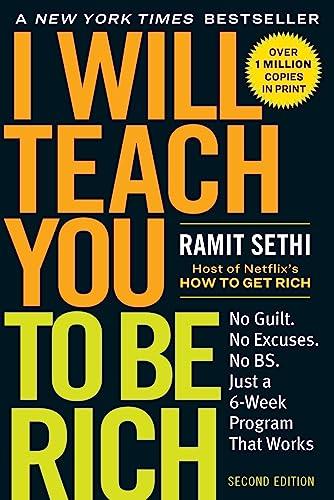
No Guilt. No Excuses. Just a 6-Week Program That Works (Second Edition)
The book was repeatedly highlighted by Jordan Harbinger and, on occasion, by Ramit Sethi himself as a practical guide for negotiating salaries and credit‑card terms, building financial systems, and securing job offers. Listeners reported significant raises and savings after applying its negotiation scripts and habit‑building strategies. The host praised its updated edition for adding new pages, scripts, and a humorous, actionable tone, noting it had helped him and many audience members save tens of thousands of dollars.
Ramit Sethi's book was discussed as a foundation for his 'Find Your Dream Job' program, which was mentioned as being completely rebuilt from the ground up.
Yeah, it's funny because whenever we do an event in person, this is probably one of the most common things people come up to me they're like, oh my God, I got a $26,000 raise because of dream job.
And it makes sense, you know, most people have a job, I think 97% of our audience does and most people don't know how to go about the job, hunt and negotiation process.
So you know, it's been out since 2012 but we decided to completely redo it from ground zero.
There's a lot of things that changed and you know, people want remote work, there's new techniques out there.
And honestly, when we built it, it was 220 something guys. And now we have much more diverse team.
It was mentioned as a resource for negotiating credit card interest rates and debt, as well as containing updated scripts for such communications.
check out his book I Will Teach You to Be Rich he's got a new addition I think that came out in 2018 or 2019 updated scripts everything you need to say to negotiate credit cards and other things go grab I Will Teach You to Be Rich will link to that in the show notes as well and just grab it and buy it if you don't have it
It was mentioned in relation to negotiation skills learned from Ramit Sethi, which were used by a listener to secure a pay raise from a previous boss.
I started working for a multinational consulting company as a software engineer year and a half ago. Initially, I negotiated a great salary with the techniques I learned from Alex Scouts and Rameet Satee.
Those will be linked in the show notes. You should go check those out if you want to revamp your negotiation, not just basics but intermediate and advanced skills.
Ramit Sethi's book was mentioned as his first major work, and he has since adapted a similar approach to his later works, like 'Find Your Dream Job'. It was a popular topic of discussion amongst listeners, with many reporting positive experiences and salary increases due to its insights.
Yeah, it's funny because whenever we do an event in person, this is probably one of the most common things people come up to me they're like, oh my God, I got a $26,000 raise because of dream job.
And it makes sense, you know, most people have a job, I think 97% of our audience does and most people don't know how to go about the job, hunt and negotiation process.
So you know, it's been out since 2012 but we decided to completely redo it from ground zero. There's a lot of things that changed and you know, people want remote work, there's new techniques out there.
And honestly, when we built it, it was 220 something guys. And now we have much more diverse team. We have people on our own team who have taken part time roles because they want to take care of family.
So it gave us opportunity to rebuild it and to be a lot more forward thinking diverse include different types of dream jobs, not just the $300,000 year Google job but all kinds.
It was discussed in detail, including the changes made in the second edition, such as removing interest rates, due to complaints from readers. The concept of big wins was reiterated.
This book I read ten years ago it's back new edition and I like that you're not barefoot on the cover we talked about that pre show because apparently that's racist which totally makes sense now that you explain it.
There's eighty new pages in the book so I added a whole bunch of new stuff I did update new accounts because I have switched credit cards there are better accounts for certain things there's also some bullshit accounts that you do not want to be using.
one of the things that I loved about the book is it goes hey look here's certain things that you should not be doing and it's not like don't spend money on that latte that's your favorite thing to say is like screw the latte idea by as many as you want by as many as you want
I wanted to make sure first of all I want the book to be funny so yeah if you're picking up a personal finance book you already already kind of hate it you're like oh god somebody's gonna tell me to keep a budget right and not spend money on a lot of things and I already knew I would never do that but I did want all the books the both books to be fun
special thanks to repeat the book title as I Will Teach You to Be Rich it's actually 10 years more than 10 years old and I've read it a long time ago implemented a bunch of the stuff hugely influential on me being able to do a lot of the things that I wanted to do in my life frankly
Ramit Sethi's book was referenced for its advice on negotiating lower interest rates on credit cards and the importance of freezing credit cards to avoid impulsive spending.
Remete satia, good friend of mine from I Will Teach You to Be Rich, He says don't use your cards. Literally put them in a plastic bowl of water and then shove the bowl in the freezer.
I've got a script here. This is also from Remete satia. Hello, this script to negotiate a lower interest rate. It can save you thousands of dollars.
I've actually done this when Remy's book came out. I followed the script his book, I Will Teach You to Be Rich.
The podcast discussed Ramit Sethi's 'Briefcase Technique' which was said to be a powerful way to demonstrate value to connections and potential employers by showing, rather than telling, what you could do.
The way to stand out is to not just tell people what you would do, but show them.
the briefcase technique is one of my favorite techniques people use it to get jobs that they might not even be qualified for on paper they use it to raise their rates as freelancers and they use it to get in touch with busy people and connect with them and often get jobs so what is it it's called the briefcase technique because it involves a little bit of theatricality which I love and the concept is when most people apply for jobs or they they try to network with someone they basically all do it the same and they all do it wrong they're like hey man I'd like a job here's my charisma yeah it's like you and 10,000 other people just did that you already lost you don't even know it same thing with networking they're like hey I really loved your article uh any chance we can talk and I can pick your brain it's like that person got 10 of those emails in the last hour so you already lost there too but imagine you did something different imagine you were applying for a job I'm going to give you that example first and you did a little research you listened to the interviews that the CEO has given in the last two months and the CEO might mention you know we have a real focus on retention right now that's a big thing for us and then you search retention and the name of the company and then you talk to somebody from LinkedIn who used to work there and you say hey would you mind spending 10 minutes on the phone I'm thinking about applying and love to know what it's like there you ask them are they focused on retention is there something that I could help with and by the time you go to apply for that job you've already spoken to multiple people at the company you've listened to the CEOs interviews you walk in whether it's through your uh cover letter or when you get the interview and you say I understand that retention is one of the core challenges in the business uh I took the liberty of speaking to a couple people used to work here and a couple people that currently do Joe and Nancy and they mentioned that uh you know I should talk to you here's a couple of things I would do in my first 30 60 and 90 days this is where the briefcase comes in now you can literally have a brief case if you have one and pull it out or you can pull it out of your backpack it doesn't matter the point is it's actually very theatrical boom you put this piece of paper down three or four pages and you say goal increase retention by 10% here are some of the projects I would do here's what another company has done here's what my objectives would be and here's how you would measure it handed to the manager Jordan what do you think that manager is going to do as they are reading this page
It was mentioned as a great book, and it was said to have literally saved the speaker tens of thousands of dollars in the past.
I think this is from Ramit Sethi's book a million years ago.
I Will Teach You to Be Rich will link that in the show notes great book by the way.
It's a financial management book.
It's not about getting rich per say such a great book. This book literally saved me tens of thousands of dollars.
Yeah, I love this book.
It was mentioned as a good book to help with the question of debt repayment versus investing, offering practical advice for financial stability.
And also pick up Ramit Sethi's book, I Will Teach You to Be Rich.
It's not really about making money overnight. It's about things like this.
I Will Teach You to Be Rich.
I know he takes a lot of guff and flax for that title but frankly it does talk about should I pay off debt, should I save, how do I do that?
What funds do I use? It's really, really practical and tactical and I think you just re-released it so it should be available everywhere.
It was mentioned as a useful resource for learning how to negotiate with credit card companies, particularly for lowering interest rates.
check out his book I Will Teach You to Be Rich he's got a new addition I think that came out in 2018 or 2019 updated scripts everything you need to say to negotiate credit cards and other things go grab I Will Teach You to Be Rich will link to that in the show notes as well and just grab it and buy it if you don't have it
It was discussed as a good starting point for developing financial systems and habits to automate savings, particularly for retirement, to help combat stress-related spending.
I love Ramit Sethi, 'I Will Teach You to Be Rich'. I know the book title says I'll teach you to be rich, but really what that means is I'm going to teach you systems and habits that are going to automate the process of saving enough for retirement.
It was mentioned as a resource to help with negotiating skills. It was referenced alongside an episode number where it was discussed.
Those will be linked in the show notes. You should go check those out if you want to revamp your negotiation, not just basics but intermediate and advanced skills.
It was mentioned as a great book for financial management, and it was said to have helped the speaker save money in the past.
I think this is from Ramit Sethi's book a million years ago.
I Will Teach You to Be Rich will link that in the show notes great book by the way.
It's a financial management book.
It's not about getting rich per say such a great book. This book literally saved me tens of thousands of dollars.
Yeah, I love this book. It's an only bit of goody. It's probably 10 plus years old and it's easy to learn. It's designed to help people with this sort of thing.
It was discussed in detail, including updates and changes made for the second edition, and the author's philosophy around money, which is more psychology-based rather than simply focusing on finance.
This book I read ten years ago it's back new edition and I like that you're not barefoot on the cover we talked about that pre show because apparently that's racist which totally makes sense now that you explain it.
There's eighty new pages in the book so I added a whole bunch of new stuff I did update new accounts because I have switched credit cards there are better accounts for certain things there's also some bullshit accounts that you do not want to be using.
One of the things that I loved about the book is it goes hey look here's certain things that you should not be doing and it's not like don't spend money on that latte that's your favorite thing to say is like screw the latte idea buy as many as you want.
special thanks to repeat the book title as I Will Teach You to Be Rich it's actually 10 years more than 10 years old and I've read it a long time ago implemented a bunch of the stuff hugely influential on me being able to do a lot of the things that I wanted to do in my life frankly.
If you don't know how to talk about this with your partner you can you can use an excuse pick a third party and use them as an excuse say look I heard this podcast on with Jordan and Rami and they were talking about like picking something you really love as a couple and starting to save towards that.
Ramit Sethi's book and advice were mentioned regarding how to get out of credit card debt, including a script for negotiating lower interest rates with credit card companies.
Remete satia, good friend of mine from I Will Teach You to Be Rich. He says don't use your cards. Literally put them in a plastic bowl of water and then shove the bowl in the freezer.
I've got a script here. This is also from Remete satia. Hello, this script to negotiate a lower interest rate. It can save you thousands of dollars.
I've actually done this when Remy's book came out. I followed the script his book, I Will Teach You to Be Rich.
It was suggested as a helpful resource for managing personal finances, particularly regarding debt and saving, which was discussed in the context of a listener's question about paying off debt or investing.
Pick up Ramit Sethi's book, I Will Teach You to Be Rich.
It's not really about making money overnight. It's about things like this.
I Will Teach You to Be Rich.
We'll link it in the show notes. I know he takes a lot of guff and flax for that title but frankly it does talk about should I pay off debt, should I save, how do I do that? What funds do I use?
It's really, really practical and tactical and I think you just re-released it so it should be available everywhere.
It was discussed as a good resource to establish financial systems and habits, particularly automating savings for retirement, to combat overspending related to stress.
I love Ramit Sethi's "I Will Teach You to Be Rich". I know the book title says "I'll teach you to be rich", but really what that means is I'm going to teach you systems and habits that are going to automate the process of saving enough for retirement.
It was mentioned as a great book for financial management, and it was said to have helped the speaker save tens of thousands of dollars in the past.
I think this is from Ramit Sethi's book a million years ago, I Will Teach You to Be Rich, will link that in the show notes, great book by the way.
It's a financial management book, it's not about getting rich per say, such a great book.
This book literally saved me tens of thousands of dollars.
It's an oldie but goody, it's probably 10+ years old and it's easy to learn, it's designed to help people with this sort of thing.
It was discussed how Ramit Sethi's book, 'I Will Teach You to Be Rich', helped people increase their income, particularly in the context of finding and negotiating for dream jobs.
Yeah, it's funny because whenever we do an event in person, this is probably one of the most common things people come up to me they're like, oh my God, I got a $26,000 raise because of dream job.
And it makes sense, you know, most people have a job, I think 97% of our audience does and most people don't know how to go about the job, hunt and negotiation process.
It was mentioned as a resource for negotiating credit card debt and other financial matters, providing updated scripts and strategies to help listeners gain leverage.
Check out Ramit Sethi's book, 'I Will Teach You to Be Rich.' He's got a new addition, I think, that came out in 2018 or 2019, updated scripts, everything you need to say to negotiate credit cards and other things.
It was discussed how the book has changed since its first edition ten years ago, with an update to reflect the changing financial landscape and cultural sensitivities.
This book I read ten years ago it's back new edition and I like that you're not barefoot on the cover we talked about that pre show because apparently that's racist which totally makes sense now that you explain it.
There's eighty new pages in the book so I added a whole bunch of new stuff I did update new accounts because I have switched credit cards there are better accounts for certain things there's also some bullshit accounts that you do not want to be using.
One of the things that I loved about the book is it goes hey look here's certain things that you should not be doing and it's not like don't spend money on that latte that's your favorite thing to say is like screw the latte idea by as many as you want by as many as you want it's the big wins concept right
I'm fucking weirdo when it comes to this but I had a lot of similar struggles with other parts of my life like fitness so you you nailed it like I was a skinny dude I always used to call myself skinny Indian guy haha funny joke not that funny in retrospect and I really hate now when I hear people self-deprecating in a way that almost puts themselves in a box because I see myself in that you know they say oh I'm a skinny Indian guy or I'm not good at math or I'm bad with money and I just want to really gently shake them and say don't say that about yourself because when I called myself a skinny Indian guy I sentenced myself to being a skinny Indian guy.
special thanks to repeat the book title as I Will Teach You to Be Rich it's actually 10 years more than 10 years old and I've read it a long time ago implemented a bunch of the stuff hugely influential on me being able to do a lot of the things that I wanted to do in my life frankly and so we'll link to that in the show notes and it's great to have for me still in the game and to be back on the show I mean he was on my show 12 11 years ago something like that
It was mentioned as a source for tips on how to get out of credit card debt, including advice on freezing cards and negotiating interest rates.
Remete satia, good friend of mine from I Will Teach You to Be Rich. He says don't use your cards.
Literally put them in a plastic bowl of water and then shove the bowl in the freezer.
You won't be tempted to use your cards and if you are, you'll have plenty of time to think about why you want to use them when you're chipping them out of an ice block.
I've got a script here. This is also from Remete satia.
Hello, this script to negotiate a lower interest rate. It can save you thousands of dollars.
It was recommended as a practical guide for managing finances, including debt repayment and savings, as opposed to just generating money.
Pick up Ramit Sethi's book, I Will Teach You to Be Rich.
It's not really about making money overnight. It's about things like this.
I know he takes a lot of guff and flak for that title, but frankly it does talk about, should I pay off debt, should I save, how do I do that?
What funds do I use? It's really, really practical and tactical and I think you just re-released it, so it should be available everywhere.
It was discussed as a way to build good financial habits and automate the process of saving for retirement using systems, instead of just relying on willpower. The book was recommended for its emphasis on developing systems and habits to build wealth.
I love Ramit Sethi's, "I Will Teach You to Be Rich." I know the book title says I'll teach you to be rich, but really what that means is I'm going to teach you systems and habits that are going to automate the process of saving enough for retirement.
It's not really complex. It doesn't sound like you're depressed as much as it sounds like you're stressed and spending gives a dopamine hit that you then crave.
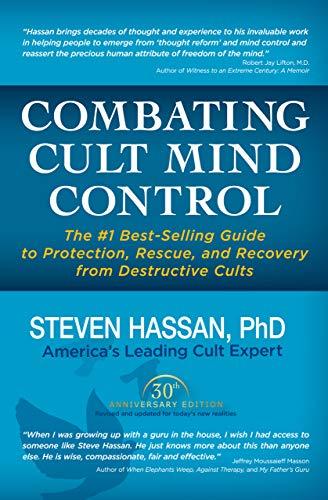
The Guide to Protection, Rescue and Recovery from Destructive Cults
Jordan Harbinger repeatedly cited the book as a primary resource for listeners dealing with cults, undue influence, and coercive organizations, highlighting Dr. Steven Hassan's expertise and the practical BITE model it presents. He recommended it for understanding mind‑control tactics, asking clarifying questions to help loved ones exit harmful groups, and navigating disinformation. The discussion consistently portrayed the book as a valuable, actionable guide for protection and recovery.
Dr. Hansen, a cult expert, was mentioned by name and his book "Combating Cult Mind Control" was mentioned. It was suggested to the listener as a resource for understanding and coping with the difficult situation they were in.
We also shared your story with Dr. Stephen Hansen, licensed mental health counselor, author of Freedom of Mind and Combating Cult Mind Control, a resident cult expert around here.
It was mentioned alongside "Freedom of Mind" as another helpful resource from Dr. Steven Hassan related to understanding undue influence and how to help those who may be susceptible to mind control.
He's the author of Freedom of Mind and Combating Cult Mind Control, both great books and he's also been on the show a bunch of times.
It was mentioned as a great book by Dr. Steven Hassan, an expert in undue influence and cults, who has been writing and talking about those topics for over 40 years.
He's the author of Freedom of Mind and Combating Cult Mind Control both great books.
It was mentioned as a resource for dealing with loved ones who have been unethically influenced by fringe ideologies, suggesting using ethical influence and thoughtful questions.
Dr. Hassan is a mental health counselor who's been writing and teaching about mind control and destructive cults for over 40 years he's the author of Combating Cult Mind Control and a few other books of frequent guest on the show you've seen him come on and talk about cults mostly
It was recommended alongside another book by the same author, for its insightful information regarding cults and coercive organisations, particularly for individuals leaving or trying to leave such groups.
I definitely start with Stephen Hassan's two books doctor Stephen Hassan's two books on this topic freedom of mind and Combating Cult Mind Control they're both fantastic reads especially for people leaving or trying to leave any kind of coercive organization
The podcast discussed the book 'Mind Control' by Stephen Hassan, and how the listener was influenced by a self-help cult that used similar tactics and principles.
I listened to your podcast with cult expert Stephen Hassan.
It was suggested as a book that might help the listener and their mother understand the nature of the church involved, comparing it to other cult-like organisations.
I'm really sorry to hear about your situation here. You may want to check out the book Combating Cult Mind Control by Steven Hassan.
It was mentioned in the context of asking clarifying questions to help someone extricate themselves from a potentially harmful situation, such as a multi-level marketing scheme.
Steven Hassan outlines these in his book Combating Cult Mind Control but in short this would be things like how much profit have you been able to make?
The book, written by a licensed mental health counselor, details the manipulative practices cults employ, ranging from advanced hypnosis to blackmail, and how to escape them.
His book Cult Mind Control so interesting it's all about the manipulative practices cults use advanced hypnosis all the way down to blackmail.
and the freedom of mine book is you know kind of the advanced stuff on how to help somebody wake up from from a mine control cult.
Well linked to that in the show notes the book was excellent and linked to your website as well thank you very much for your time I know we we did a big old interview here but it was worth it.
The book is called Cult Mind Control it's got a new book coming out we're gonna have him back on the show for that
It was discussed throughout the podcast and explained how cults use control of behavior, information, thought, and emotion to manipulate and recruit people. Steven Hassan also discussed how he refined cult deprogramming tactics.
I'm the author of Cult Mind Control, Stephen Hassan, joins us on the show to explain how cults recruit and there's a certain set of tools and deception that seem to be very pervasive here.
I'm for spirituality, I'm for growth, I'm for meditation, I'm for people practicing love and non-ego-tism like he was an egomaniac.
It's a book of listed listings of so-called mental illnesses or whatever mostly for insurance purposes, there is I was just teaching this at a human traffic and conference in Texas there is a category 300.15 that's a dissociative disorder and it explicitly talks about brainwashing thought reform coercive persuasion as in cults sex and what so what we're talking about with mind control is a creation of a pseudo-self that suppresses your real self.
I want to add a whole another dimension which I don't know if you were prepared for but it's really important two things right so there was a six-week trial that ended a few weeks ago in New York City of Keith Raniere head of a cult called NXIVM right because that podcast too convicted on all counts of conspiracy racketeering sex trafficking and voluntary servitude on and on and on two billion air airists the Bronfman's Allison Mack the actress was in that group pled guilty and Lauren Salzman excuse me Nancy Salzman Lauren's mother was trained in something called neuro linguistic programming NLP right and LP which was created by John Grinder and Richard Bandler I was actually trained in NLP in 1980 and 81 by both of them and the founders they developed that based on the work of psychiatrist Milton Erickson who was one of the MK Ultra experts that the CIA was going to to understand hypnotic techniques Tony Robbins who does a lot of large group awareness trainings is trained in NLP he doesn't use that term I apparently had a financial arrangement with Grinder and Bandler but that's what he's basically teaching and then there are websites of people who are going to teach you how to have covert hypnosis use covert hypnosis for sex.
There's different kinds of cults that you outline in the book, cult mind control that you have many books but the one I'm referring to is cult mind control and one is commercial the other religious that seems to be the one that we most normally think of political which you're doing some stuff maybe in the future that we can't talk about yet.
It was recommended as a potentially helpful resource for understanding the dynamics of cult-like behavior in a religious organization, and how to cope with it.
I'm really sorry to hear about your situation here. You may want to check out the book Combating Cult Mind Control by Steven Hassan.
It was mentioned as a resource for understanding how to extract someone from a cult-like situation, specifically in the context of multi-level marketing schemes.
If you're super close with somebody and you want to get them out of the MLM or any other cult, you ask clarifying questions. Steven Hassan outlines these in his book Combating Cult Mind Control but in short this would be things like how much profit have you been able to make?
It was discussed in detail, covering manipulative practices used by cults, ranging from advanced hypnosis to blackmail, and how it may have originated from intelligence agencies.
His book Cult Mind Control so interesting it's all about the manipulative practices cults use advanced hypnosis all the way down to blackmail.
Combating Cult Mind Control is 30 years old it tells my story about the monies in depth and gives a good overview and the freedom of mine book is you know kind of the advanced stuff on how to help somebody wake up from from a mine control cult.
Well linked to that in the show notes the book was excellent and linked to your website as well thank you very much for your time I know we we did a big old interview here but it was worth it.
The book is called Cult Mind Control it's got a new book coming out we're gonna have him back on the show for that
It was discussed as a guide to protect against destructive cults and includes the BITE model to assess cult influence. It was also mentioned that cult leaders often read this book to help them in their methods.
cult expert and former cult member and author of Cult Mind Control, Stephen Hassan, joins us on the show to explain how cults recruit and there's a certain set of tools and deception that seem to be very pervasive here.
I have many books but the one I'm referring to is cult mind control and one is commercial the other religious that seems to be the one that we most normally think of political which you're doing some stuff maybe in the future that we can't talk about yet.
Unfortunately, that was a negative side effect of my book coming out is that it was teaching people how cults operate and could be used for the various purposes.
It was recommended as a great book by Dr. Steven Hassan, who discussed it during the podcast with the context of a listener who needed help with a family member caught up in various scams.
Dr. Hassan is a mental health counselor who has been writing and talking about undue influence and cults for over 40 years. He's the author of Freedom of Mind and Combating Cult Mind Control both great books.
It was mentioned as a resource for understanding mind control and cult ideologies, particularly in the context of helping someone who has been influenced by them.
Dr. Hassan is a mental health counselor who's been writing and teaching about mind control and destructive cults for over 40 years he's the author of Combating Cult Mind Control and a few other books of frequent guest on the show you've seen him come on and talk about cults mostly.
It was suggested along with another book by the same author for those trying to escape a cult or a coercive organization, as a way to understand the nature of cults and mind control.
I do recommend reading a few books that might help. I definitely start with Stephen Hassan's two books... Combating Cult Mind Control... they're both fantastic reads, especially for people leaving or trying to leave any kind of coercive organization.
It was recommended to help understand the nature of the religious organization mentioned in the transcript, which was compared to other cults.
I'm really sorry to hear about your situation here. You may want to check out the book "Combating Cult Mind Control" by Steven Hassan.
It was mentioned as a resource to help understand how to extract someone from an MLM scheme by asking clarifying questions, specifically about profits and time invested.
Steven Hassan outlines these in his book Combating Cult Mind Control but in short this would be things like how much profit have you been able to make? Not revenue, profit, above what you've paid.
It was discussed in detail, including its origin and how it details manipulative practices that cults utilize, from advanced hypnosis to blackmail.
His book Cult Mind Control so interesting it's all about the manipulative practices cults use advanced hypnosis all the way down to blackmail.
and the freedom of mine book is you know kind of the advanced stuff on how to help somebody wake up from from a mine control cult.
Well linked to that in the show notes the book was excellent and linked to your website as well thank you very much for your time I know we we did a big old interview here but it was worth it.
The well is so deep on cults that you know we could be talking for we could actually have an entire show every week about cults they go so deep and I just love having Stephen Hassan on the show because he's been there it's not like some academic that is giving us advice you know based on stuff that he's read or interviews that he's done.
so thank you so much to Stephen for coming on the show this was this was so enlightening and I can use this every time I get a new friend that wants to sign up for herbal life.
It was discussed as a guide to help understand and identify destructive cults based on the BITE model of behavior, information, thought, and emotional control. The BITE model was explained as a useful tool for assessing influence and potential harm.
And I've been interviewed about CrossFit. And I'm by the way in a book called The Cult of Mac.
And so you can go through those four areas, they overlap in some cases but you can get a pretty quick snapshot of where on the influence continuum from healthy and ethical to destructive group will be.
Most of the cults that I work with in the last 43 years after being rescued from the moon called myself were religious cults political cults there be cults cults of personality with a person controlling another person or a small group of other people.
I've seen a lot of these lately but even I've gotten sort of duped into going to what you might call a leadership class and I show up and there's nothing about leadership going on here. It's some guy from Mexico who is a charismatic speaker ripping open everyone's childhood wounds half the room's crying the other half of the room is feeling some sort of weird shame imposed on him because they showed up two minutes late.
It's what you were just describing I'm just giving you the paradigm the academic paradigm so you to become a leader first you have to take the person and destroy them bring them completely down to nothing that's the unfreezing so you can overload the person with too much information with emotionally upsetting material to all kinds of group dynamics sleep deprivation is always a typical thing is that why these things go till 2 a.m.
The Story of Success
It was brought up as an example of how external factors and practice influence success, cited when discussing the 10,000‑hour rule and the importance of deliberate practice, and repeatedly suggested as a worthwhile read before trusting one's instincts or revisiting Malcolm Gladwell’s ideas. Hosts Jordan Harbinger and guest Brian Grazer explicitly recommended listeners read the title, while Allen Gannett critiqued its popularization of the 10,000‑hour concept. Overall, the book was treated as a notable but debated reference, leading to a casually mentioned sentiment.
It was mentioned that Malcolm Gladwell's book 'Outliers' was discussed in relation to trusting one's instincts.
read Malcolm Gladwell's book on Outliers do that and then come back and start trusting right exactly and I mean Malcolm's latest book he was on the show last week oh wow Malcolm's latest book is all about hey your instincts probably totally wrong people get shot because you think your instincts are correct it's not really a good look you know
Malcolm Gladwell's book, 'Outliers', was mentioned in the context of his other books and the podcast host's admiration for him as an author.
He wrote Outliers. He wrote the tipping point. His new book is called Talking to Strangers.
It was mentioned as an example of a book that popularized the '10,000-hour rule', which was later criticized for not emphasizing the importance of deliberate practice over simple repetition.
Like there's this whole 10,000 hour rule thing that Malcolm Gladwell popularized because that is just scientifically, you know, not there.
And there are two big problems one ericsons research said that 10,000 hours was the average across skills and across people because different skills take different amounts of time.
literally in the book Outliers he does not use the word purposeful or deliberate anywhere he just used the word practice and the entire research is about deliberate practice which is also called purposeful practice.
It was briefly mentioned as a book that quoted one of Ryan Holiday's college professors, highlighting the potential for networking and reaching out to influential people.
I remember because I wrote for the college newspaper it was like I found out that one of the college professors at my college was like quoted in a Malcolm Gladwell book and I like that was like the extent of the greatness you know what I mean yeah.
Malcolm Gladwell's book, 'Outliers', was mentioned as something that someone should read before trusting their instincts when making a decision.
read Malcolm Gladwell's book on Outliers do that and then come back and start trusting right
It was mentioned amongst other books by the author, in relation to the guest Malcolm Gladwell who was interviewed on the podcast.
He wrote Outliers.
Jordan mentioned rereading this book after a long time, having previously only read the first chapter years ago.
I read stuff that I haven't read in like 10, 12 years I think, like the tipping point from Malcolm Gladwell, Outliers, you know, stuff I just like read the first chapter of five years ago and then put away. I finished that.
It was recommended to the listeners to read Malcolm Gladwell's book on outliers, as part of a discussion on trusting your instincts, and whether they were informed or not.
read Malcolm Gladwell's book on Outliers do that and then come back and start trusting right exactly
Malcolm's latest book he was on the show last week oh wow Malcolm's latest book is all about hey your instincts probably totally wrong people get shot because you think your instincts are correct it's not really a good look you know
Jordan mentioned rereading this book after a long time, suggesting he enjoyed it again and possibly found new insights after a break.
I read stuff that I haven't read in like 10, 12 years I think like the tipping point from Malcolm Gladwell, Outliers, you know, stuff I just like read the first chapter of five years ago and then put away. I finished that.
The title was repeatedly highlighted by Jordan Harbinger and guests such as Julia Galef, Daniel Kahneman, Maria Konnikova, and Chris Voss as a foundational guide to understanding cognitive biases, the dual‑process model of fast and slow thinking, and effective decision‑making. They praised it as an excellent, widely‑referenced work that helped illustrate concepts from mental models to negotiation tactics, while Stuart Ritchie noted that some of the priming studies it cites have been questioned by replication attempts. Overall, the podcast presented the book as a highly recommended resource for listeners interested in improving their thinking.
It was mentioned in the context of discussing biases and how one bias can lead to others, a concept explored in a previous podcast episode.
also Julia mentions in the book that there are ripple effects of bias or misjudgment this is something I hadn't thought about before but it is true let's say that we don't think that we have one bias we did talk about this a little bit with Daniel Coniman in episode 518 but when we think that we are not biased and others are we view ourselves as perfect we may be less patient with others also if we have one bias it can lead to other biases later on down the line cascading bias is what this was called and this is a fascinating concept where being wrong in one way can lead us to be wrong in many other ways that just make us more and more wrong no surprise there so the key is to mitigate bad decisions and bad thinking early on in the decision chain of the results chain
It was discussed at length, with reference to system one and system two thinking, as a prior work by the author.
I read Thinking, Fast and Slow and we talked about system one and system two thinking today.
In Thinking, Fast and Slow, Kahneman discusses various studies on priming, unconscious influences, and their effects on human behavior, which have been called into question.
There's loads of stuff in thinking fast and slow is like ultra popular and really good overall really good book. I'm not you know criticizing the book. I think it's a great book but you know he says in that book there are these studies on priming unconscious influences can have you know big effects on our behavior and you know these are published in scientific journals.
This is a direct quote he says you have no choice but to believe that these are true about you about your behavior.
It was brought up as a book that provided a way to help people understand mental models and biases. It was referenced in the context of ego playing a large part in rejecting new ideas.
Yeah it's ego is at the center of a lot of it I mean there is a another good book called thinking about spianny dude true yeah
The book was discussed during the podcast when the host and guest were talking about the issue of priming in psychology research. The guest mentioned that this book is considered a great book, but it includes some studies on priming that have not held up to scrutiny in replication studies.
There's loads of stuff in Thinking, Fast and Slow is like ultra popular and really good overall really good book.
There are these studies on priming unconscious influences can have you know big effects on our behavior and you know these are published in scientific journals. This is a direct quote he says you have no choice but to believe that these are true about you about your behavior.
And you know these are published in scientific journals. This is a direct quote he says you have no choice but to believe that these are true about you about your behavior.
It was mentioned in relation to how using how- or what-questions triggers in-depth thinking and can be used to exhaust the other party, giving the asker the advantage.
Danny Connellman wrote a book called Thinking Fast and Slow
I'll link to that in the show notes as well
It was mentioned as a book that focuses on reducing cognitive biases and improving decision-making, which is relevant to poker, as Phil explained.
you and I talked earlier via email about Annie Duke who I just spoke with think like three or four days ago and she would her book 'Thinking, Fast and Slow', just getting rid of bias and making better decisions.
It was discussed and mentioned multiple times, primarily as a foundation to understand the concept of system one and system two thinking, later contrasting with the new book "Noise".
I read Thinking Fast and Slow and we talked about system one and system two thinking today.
It was mentioned as a great book to better understand the relationship between the amygdala and the neocortex, and the differences between the 'fast' and 'slow' thinking processes.
So you have to realize, there's a wonderful book thinking fast and slow by an economy.
It was mentioned in the context of negotiation and how asking 'how' or 'what' questions can trigger slow thinking and in-depth thinking, which can be exhausting.
Danny Connellman wrote a book called Thinking Fast and Slow Slow Thinking is in-depth thinking you're using a how or what question to trigger in-depth thinking which also is exhausting
I'll link to that in the show notes as well
It was discussed in relation to the concept of cognitive biases, which poker players need to combat and minimise as much as possible when playing.
and she would, her book 'Thinking, Fast and Slow', just getting rid of bias and making better decisions.
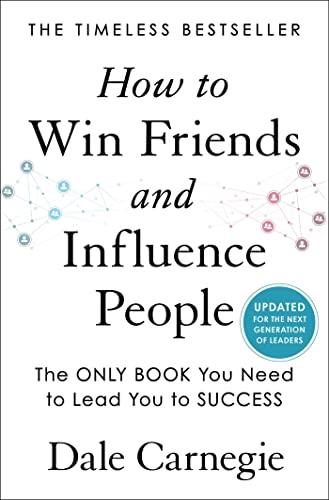
Updated For the Next Generation of Leaders (Dale Carnegie Books)
The book was highlighted by guest James Jani as an early self‑help read whose advice he still uses, and Jordan Harbinger repeatedly referenced it for classic principles like being interested in others, the Ben Franklin effect, and understanding people’s motivations. Listeners also mentioned it as a popular nonfiction audiobook, though they sometimes struggled to retain its key takeaways. Overall, the podcast portrayed it as a timeless, valuable resource for building rapport and influence.
It was mentioned as a good book that James Jani read early in his self-help journey. He said that it has elements of truth and he uses the advice in it today.
How to Win Friends and Influence People which I actually think is a pretty good book
That's the book where you go man there's got to be something to this and somebody some old friend or friend of your family gives you this book and you go oh yeah this is really cool be interested in other people I like that and then it's like three years later you're reading about the secret and you're like I'm just going to manifest all my priorities and my money and it's like wait how did you make yourself make yourself dumber over the last couple of years what happened
I thought it was a great book and that's it had elements of truth to it like there's so many things in like How to Win Friends and Influence People that I do use today
It was mentioned alongside other nonfiction audiobooks that were listened to, and the listener was having trouble remembering key takeaways after a few months.
I mostly listened to nonfiction audiobooks introduced on the show such as the psychology of persuasion, captivate, How to Win Friends and Influence People etc.
It was mentioned as the source of the advice to be interested in others to become more interesting, specifically within the context of interacting with a spouse's friends.
you've heard this before but the best way to be interesting is to be interested in other people
nothing new there I think that's from Dale Carnegie How to Win Friends and Influence People and it's probably been around before that as well it's one of Dale Carnegie's sort of original concepts from a hundred years ago
The Ben Franklin effect was mentioned, which comes from this book and discusses how asking someone for a small favour can increase their liking of you.
Also let's make good use of what's called the Ben Franklin effect. You've heard about this on the show before, but essentially this comes from Dale Carnegie How to Win Friends and Influence People.
The Ben Franklin effect, mentioned in the context of asking for advice, was described as a way to generate affinity by helping others, potentially making them like you more.
you can also ask for career advice going into your new gig you might end up with some great feedback and you might end up with some tips or tricks or just the option to stay in touch and ask to keep in touch you can say his phone or email best
maybe it sounds a little manipulative i wouldn't worry about it's from dailcarnegee How to Win Friends and Influence People so i feel i feel like it's fair play
It was mentioned in the context of understanding concepts vs. applying them, and as a book containing the brilliant phrase, 'Ultimately, people do things for their reasons, not ours.'
it goes along with what I said about Dale Carnegie is How to Win Friends and Influence People where we might know the concepts but whether or not we're applying them as a totally different story.
and I believe this was Dale Carnegie's underlying principle in his classic How to Win Friends and Influence People to me it was the most brilliant phrase of a brilliant book and it's where he wrote ultimately people do things for their reasons not our reasons
It was mentioned among other books as an example of a nonfiction audiobook that was discussed on the show, and the listener had trouble remembering the key takeaways after a couple of months.
I mostly listened to nonfiction audiobooks introduced on the show such as the psychology of persuasion, captivate How to Win Friends and Influence People etc.
It was mentioned as a source for the advice to be interested in others and ask questions in order to build social connections and start conversations.
you've heard this before but the best way to be interesting is to be interested in other people
nothing new there I think that's from Dale Carnegie How to Win Friends and Influence People and it's probably been around before that as well it's one of Dale Carnegie's sort of original concepts from a hundred years ago
It was mentioned in relation to the 'Ben Franklin effect', which was described as a way to make people like you by asking for small favors, making them think well of you.
Also let's make good use of what's called the Ben Franklin effect. You've heard about this on the show before, but essentially this comes from Dale Carnegie How to Win Friends and Influence People.
The Ben Franklin effect, discussed in the podcast, originated from this book, and it was described as a way to build affinity by asking for advice.
it's from Dale Carnegie, How to Win Friends and Influence People, so I feel like it's fair play
It was mentioned as a classic book with a brilliant phrase that highlights the importance of understanding people's motivations and how to influence them. It was also used as an example of a book with concepts people might know but not apply.
it goes along with what I said about Dale Carnegie is How to Win Friends and Influence People where we might know the concepts but whether or not we're applying them as a totally different story.
and I believe this was Dale Carnegie's underlying principle in his classic How to Win Friends and Influence People to me it was the most brilliant phrase of a brilliant book and it's where he wrote ultimately people do things for their reasons not our reasons
It was described as a good book with elements of truth, some of which were still being used today.
I actually think is a pretty good book
that's the book where you go man there's got to be something to this and somebody some old friend or friend of your family gives you this book
I thought it was a great book and that's it had elements of truth to it like there's so many things in like How to Win Friends and Influence People that I do use today
It was mentioned as a popular nonfiction audiobook that the listener enjoyed, but found difficult to retain the key information from.
I mostly listened to nonfiction audiobooks introduced on the show such as the psychology of persuasion, captivate, How to Win Friends and Influence People, etc.
It was mentioned as a source for the advice on how to be interesting by being interested in others, and the 'FEW' formula was discussed in relation to this book.
you've heard this before but the best way to be interesting is to be interested in other people
I think that's from Dale Carnegie How to Win Friends and Influence People
and it's probably been around before that as well it's one of Dale Carnegie's sort of original concepts from a hundred years ago
The Ben Franklin effect, a concept discussed within the book, was mentioned as a way to improve social interaction and build rapport with others.
Also let's make good use of what's called the Ben Franklin effect. You've heard about this on the show before, but essentially this comes from Dale Carnegie How to Win Friends and Influence People.
The Ben Franklin effect, mentioned as a strategy to gain affinity by asking for advice, was discussed as a technique from this book.
you can also ask for career advice going into your new gig you might end up with some great feedback and you might end up with some tips or tricks or just the option to stay in touch and ask to keep in touch you can say his phone or email best and sometimes they'll give you both and you can get both even if you don't end up you know texting your old boss or something like that and ask for a personal as well as a work email because if people leave then you don't have to track them down on LinkedIn or try to find their personal email through someone else because you never know if you leave and then somebody else leaves you don't want to have a bunch of dead emails from your office workers that now you have to find out where everyone is and then i would say hit them up every other month or every quarter and keep those relationships fresh enough we have systems for that in level one in our level one class which is free jordan harbanger.com slash level one i'll show you how to keep and maintain those connections use those systems it really will help you in the future even if you don't see immediate ROI from keeping in touch with people from your old office
it's from dailcarnegee How to Win Friends and Influence People so i feel i feel like it's fair play
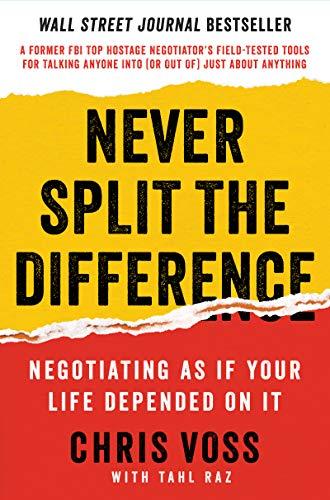
Negotiating As If Your Life Depended On It
The podcast repeatedly highlighted the title as a leading resource for mastering negotiation, emphasizing its real‑world hostage stories, tactical empathy techniques, and practical applications for business and personal deals. Jordan Harbinger and guest Alex Kouts both recommended it, noting it as one of the best‑selling and most useful books on the subject, while Chris Voss himself discussed its principles on the show. Listeners were encouraged to use its strategies for everything from salary raises to high‑stakes negotiations.
Chris Voss, a former FBI hostage negotiator, was quoted as saying that the listener's tendency to explain their actions was an obstacle to improvement. He also said that if you are explaining, you are losing.
Chris picked up on the same thing I did a moment ago, which is you're getting this feedback from more than one source and you're not quite rejecting it. Maybe you did in the past, but less so now. But there does seem to be some resistance to really taking it in.
Chris's feeling was that it is an obstacle to getting better, and that stance can make somebody not very coachable.
Chris shared an interesting saying with us, which is that if you're explaining, you're losing.
So if you're busy explaining to people, people who are trying to help you why they're wrong and you're right or yeah, you might come across that way, but it's not your intention. That itself is the barrier to improving. And as Chris pointed out, just engaging in that kind of justification, that actually does sound a little condescending.
The speaker mentioned Chris Voss's book "Never Split the Difference" as an example of how a book about negotiation and persuasion can be misused to justify an offensive joke.
It's like you try to ask a question that's like let me try to get in with this person, ask like make an offensive joke and then they're like, "My wife's that," and you're like, "Oh."
The book by Chris Voss, a former FBI hostage negotiator, was briefly discussed in relation to Joe Buttons, a rapper, and a couple who appeared to be amazing on the outside but horrible on the inside.
There's a Joe buttons line that like they're so he's a rapper for those who don't know Joe button
It was discussed throughout the podcast, primarily as a tool to improve business negotiations using hostage negotiation techniques. The host highlighted Chris's unique approach to negotiation, which focuses on emotional persuasion and understanding the other party's perspective.
And in the book Never Split the Difference.
I've read getting to yes, I bought getting to yes. It's still one of the best-selling negotiation books on a planet.
I've never had anybody say to me, wow, I read getting to yes and immediately we can apply a principle that made a difference in my deal.
Getting to yes is like trying to learn the English language by reading the dictionary. It's technically nothing flawed about it, you will go well, how do I use this? You know, what am I going to do with this?
Chris, thank you so much, much appreciated. We'll link to the book Never Split the Difference in the show notes as well. Thanks so much, Chris.
It was described as being like a more interesting instruction manual or textbook with real stories, which makes it more practical. It was also said to be one of the best books on negotiation.
I read the whole book of course again which is great because he still learned there's so much in the book.
It reads like a more interesting instruction manual or textbook with actual stories which most textbooks don't have because there's no other any practical application.
The book is loaded with very detailed negotiation examples from both hostage situations and business situations.
it's I think it's probably got to be one of the most widely regarded books on negotiation even if even if you do say so yourself
the book title is Never Split the Difference one of the best books on negotiation anywhere
It was mentioned, a book about negotiations where the author, an FBI hostage negotiator, emphasizes giving the other party the illusion of control.
So before he could become an FBI hostage negotiator he was asked to be a suicide hotline phone responder.
And so one of the interesting things here is that when he was talking to people in those situations he said he would use a late night FM DJ voice.
So when people feel like they're out of control, they begin to shut down.
So it's possible for you to have a productive conversation.
But one of the things that he talks about a lot is the illusion of control.
It was recommended for its focus on tactical empathy, a concept the speaker had been teaching in his negotiation classes, though he had only read about 60% of it.
one of the only books that I recommend on negotiations called Never Split the Difference by Chris Voss
he uses a phrase called tactical empathy and I've been teaching this class for years and basically the same thing in different words but I like the way he phrases it negotiations are about the use of tactical empathy
It was described as a more interesting instruction manual or textbook, filled with real-life stories, that helped revolutionize negotiation tactics in various fields like the FBI and business.
I read the whole book of course again which is great because he still learned there's so much in the book. It reads like a more interesting instruction manual or textbook with actual stories which most textbooks don't have because there's no other any practical application.
I'm gonna say you know those are really good chance we're gonna do something here it's gonna scare the hell out of you you know I don't exactly how all this is going you know I got a team with me this is not just me saying this I got a team I am a representative of our entire body of institutional knowledge this is not my decision everything I do I bounce off a lot of people by one team in advance we're gonna ask you to do stuff that scares the heck out of you and actually and I'm gonna I'll say I'm gonna tell you an advance I want you to be scared it's gonna help us in the negotiation.
The book is loaded with very detailed negotiation examples from both hostage situations and business situations there's a lot more than we could get to here and it's I think it's probably got to be one of the most widely regarded books on negotiation even if even if you do say so yourself.
The book title is Never Split the Difference one of the best books on negotiation anywhere I'll link to that in the show notes.
I've read that I thought that was a brilliant tactic it's how does this work in practice is I'm screaming at you stop asking me stupid freaking questions sending a pizza and two million dollars I'm going to start whacking some of these dumb kids I got here you know stuck in this bank what are you doing to calm me down at this point yes you're listening but what else I mean I'm just pissed off it's been 13 hours I got nothing left in the tank I'm over it.
The concept of the illusion of control was mentioned, and it was discussed how Chris Voss used this technique in his work as an FBI hostage negotiator.
So before he could become an FBI hostage negotiator he was asked to be a suicide hotline phone responder.
And so one of the interesting things here is that when he was talking to people in those situations he said he would use a late night FM DJ voice.
But the whole point is like we want people to be calm but we also want to give them the sense that they're in control, this illusion that they're in control.
If you're talking to someone on the other side of the table then you feel them beginning to shut down using body language or inflection and reading that which we'll talk about in a minute, take it back from them.
So it's possible for you to have a productive conversation.
It was recommended as one of the few useful books on negotiation, and the concept of tactical empathy was highlighted as beneficial for negotiation.
one of the only books that I recommend on negotiations called Never Split the Difference by Chris Voss
he uses a phrase called tactical empathy and I've been teaching this class for years and basically the same thing in different words but I like the way he phrases it negotiations are about the use of tactical empathy
It was discussed how hostage negotiation tactics can be applied to everyday life, particularly in business negotiations, and how emotions play a key role in interactions.
In the book Never Split the Difference.
It's still one of the best selling negotiation books on a planet.
I've never had anybody say to me, wow, I read getting to yes and immediately we can't reply a principle that made a difference in my deal.
I love this guy's work and I love the book the stories of the bank robberies and the kidnappings in the hostage situations it's just so high pressure it's a job I'm glad I don't have but all so fascinated to hear about it from the inside I especially enjoy how he ties these wild tales into sizing up the person on the other side of the table or the phone figuring out how to talk to those people in their language in their religion he also uses a lot of really great insightful techniques to generate rapport as well as getting people to flesh out their own thoughts so they come to the same conclusions as you or I that is a useful tool I have been using all these tools to great effect myself over the years since learning them from Chris I know you will certainly do the same as well.
I especially enjoy how he ties these wild tales into sizing up the person on the other side of the table or the phone figuring out how to talk to those people in their language in their religion he also uses a lot of really great insightful techniques to generate rapport as well as getting people to flesh out their own thoughts so they come to the same conclusions as you or I that is a useful tool I have been using all these tools to great effect myself over the years since learning them from Chris I know you will certainly do the same as well.
It was described as a more engaging instruction manual or textbook with real-life stories, and was recommended for its negotiation techniques.
I read the whole book of course again which is great because he still learned there's so much in the book. It reads like a more interesting instruction manual or textbook with actual stories which most textbooks don't have because there's no other any practical application.
I think it's probably got to be one of the most widely regarded books on negotiation even if even if you do say so yourself.
the book is loaded with very detailed negotiation examples from both hostage situations and business situations
one of the best books on negotiation anywhere
just Never Split the Difference my prince boss
The author mentioned using a late night FM DJ voice during negotiations, which he learned while working as a suicide hotline phone responder, a job that prepared him for his career as an FBI hostage negotiator. He discussed how giving someone the illusion of control can help to de-escalate a stressful situation.
And so one of the interesting things here is that when he was talking to people in those situations he said he would use a late night FM DJ voice.
It's kind of funny because we're sitting in a recording booth so I feel like I can do this very convincingly but he would slow it down, he would deepen his voice, he would talk very calmly and he would put the other person at ease.
Now the reason that he wanted to do that is if I'm talking so bad at that job. You're gonna pull the trigger? Oh yeah, you're tough guy. How can I go and do it? Do it. See if you have the balls. I don't think you have it in you, shoot. That did not work.
The whole point is like we want people to be calm but we also want to give them the sense that they're in control, this illusion that they're in control.
It was recommended for its focus on tactical empathy in negotiation, and was partially read by the guest, Alex.
one of the only books that I recommend on negotiations called Never Split the Difference by Chris Voss
Survival Signals That Protect Us from Violence
The book was repeatedly highlighted by Jordan Harbinger, often with guest Michele Rigby Assad, as a crucial tool for recognizing intuition and using fear to protect oneself. He emphasized practical advice such as never going to a secondary location after an abduction attempt and trusting early warning signals to avoid predators. The discussions praised its popularity and lifesaving insights, presenting it as a highly recommended resource for personal safety.
Strongly recommended by Jordan Harbinger as a book that talks about listening to your gut and using your fear, with the key takeaway that intuition is always right in at least two important ways: It is always in response to something and it always has your best interest at heart.
Gavin DeBecker put it best in his book The Gift of Fear. Intuition is always right in at least two important ways. It is always in response to something and it always has your best interest at heart.
The book was used to explain that at some point a domestic violence victim becomes a domestic violence volunteer, and it was highlighted that we often collude with predators by ignoring our intuition.
A line from Gavin DeBecca's book "The Gift of Fear" puts it best that at some point a domestic violence victim becomes a domestic violence volunteer.
The ways we often collude consciously or unconsciously with predators usually by ignoring our intuition, discounting the numerous alarm bells that go off early on with somebody dangerous.
I imagine Gavin gets a decent amount of flak for saying stuff like that because it sounds like victim blaming.
I've read his book, interviewed him here on the show. I've walked away with a totally different reading of that. I don't see this as victim blaming, I actually see it as victim empowering.
What Gavin's trying to do here is push people and he can be a little bit tough about this sometimes. I know it comes from a place of actually caring about this. He's pushing people to recognize how much agency they do have and how we still have a personal responsibility to protect ourselves from people who want to harm us.
It was mentioned as a book that contains valuable information about intuitive feelings and the ability to trust your instincts in potentially dangerous situations.
I only realized a decade and a half later when reading the book they give to fear that that was you.
It was mentioned by Jordan Harbinger and Michele Rigby Assad as a book that contains valuable advice about dangerous situations and how to avoid being a victim.
We did an episode with Gavin Debecker who wrote The Gift of Fear and one of the things that he taught me in the 90s that he writes about in some of his books is never go to the secondary location.
I always reference this book The Gift of Fear it is absolutely one of the best books that I've ever read and he is spot on in terms of telling you how to handle these situations.
It was discussed in detail throughout the podcast as a valuable tool for understanding fear, intuition, and recognizing potential danger, particularly in the context of abusive or predatory relationships.
Gavin's been head of security for folks like Oprah, Jeff Bezos, one of the world's most respected people in the security industry globally. He's also the author of The Gift of Fear. This book is tremendously popular.
This show morphed into a sort of a toolbox for safety here on The Jordan Harbanger Show, send it to everyone you care about.
Links to everything he's done will be in the website in the show notes, of course, including the book The Gift of Fear.
If you buy the book, it does help support the show.
There's so much here in the book as well. A lot of practical exercises about asking yourself what your anxiety is hiding using The Gift of Fear might have to have you come back at some point as well.
It was discussed at length, particularly the concepts of intuition, danger signals, and how people can protect themselves from harm. It was said to be an extremely popular book for decades.
Gavin is also the author of The Gift of Fear which is simply amazing and extremely popular book for the past few decades on the subject of fear, why fear exists and how we can use it as a tool instead of just being afraid of it or avoiding it.
I noticed in the books there's a little factoid here that I thought was fascinating dogs are really great at reading us and every dog owner knows this but they don't have better intuition that reads other people they're just really good at reading us we're just really really bad at reading ourselves.
It was easier short term to go oh come on what are the odds that this is going to happen especially given and this occurred to me years and years later you're only really basing your actions on your previous experience so if you've never been kidnapped chopped up and murdered you think well the odds are pretty slim it's never happened to me before and I've been on this planet for 20 years.
well it's never happened to me before so I can feel safer ignoring this because I don't have an experience that says anything contrary to it however there was a point at which my brain said remember that guy and Oprah oh yeah that's what's happening right now knucklehead get with the program.
big thank you to Gavin the book title is The Gift of Fear links to everything he does will be on our website in the show notes by the way if you buy books please use our website links if you buy books it does help support the show also in the show notes there are worksheets for each and every episode so you can review what you've learned here today from Gavin we also now have transcripts for each episode and those can be found in the show notes as well.
The book's wisdom on avoiding dangerous situations was referenced as a valuable tool for the author's work, advising never to go to a secondary location when being taken.
We did an episode with Gavin Debecker who wrote The Gift of Fear and one of the things that he taught me in the 90s that he writes about in some of his books is never go to the secondary location which as you know is the place where they're going to take you because your best chance to stand and fight is right there and mulling to that Gavin Debecker episode in the show notes but that's essentially the concept that you're talking about is do not get taken if you get killed at the point at which they're trying to take you so be it it's probably better than the way you're going to get killed later after they take you.
and I always reference this book The Gift of Fear it is absolutely one of the best books that I've ever read and he is spot on in terms of telling you how to handle these situations and so it was like don't ever get taken absolutely not
It was discussed in detail, using the example of Kelly, who was almost a victim of a rapist. Many key takeaways were provided on how to notice signs of danger and predators.
This book is tremendously popular. It's just known as being a lifesaver for some people literally will dissect fear, why it exists, how we can use it as a tool instead of avoiding it.
And she later came to me and she said, what in the world made me feel uncomfortable about him when all I had heard was his voice.
And she said like an animal opening up inside me, it used its muscles to move me down the hall. And I had nothing to do with it. I was a passenger moving down that hallway.
And so she prevailed tremendously well through that and was not killed, obviously.
In the book, you use a classic example. The main story of this woman Kelly.
It was discussed in great detail, with the podcast host sharing his own experience of being in a dangerous situation, and how he applied the concepts from the book to escape. The author's intention to remove the word 'should' from his vocabulary, and encourage readers to do the same, was mentioned.
Gavin is also the author of The Gift of Fear which is simply amazing and extremely popular book for the past few decades on the subject of fear, why fear exists and how we can use it as a tool instead of just being afraid of it or avoiding it.
I only realized a decade and a half later when reading the book they gift of fear that that was you
Well Jordan I'm so glad to hear that story and that makes my day that means a lot to me particularly as I'm about to hear I hope how well you prevailed because I know we're here having the conversation so you did well
the big element of denial is that you can try to make it the way you wish it could be or the way you think it should be interestingly in that whole book if to fear I think the word should appears only twice and both times it's in a sentence with somebody else saying it I don't use the word at all in any prescriptive way such as you should do this or people should do that the word should always invites the question according to whom right
big thank you to Gavin the book title is The Gift of Fear links to everything he does will be on our website in the show notes by the way if you buy books please use our website links if you buy books it does help support the show
It was mentioned as an example of how some people will disappear after one response, while others continue their obsession. It was also mentioned as a source for advice to stop all communication with a stalker.
I remember examples in The Gift of Fear that some people will disappear after getting that one bit of response back but some people continue their obsession.
really the best thing you can do is stop all communications all of them nothing from you nothing direct nothing indirect just silence
It was referenced as the book where the listener recalled advice about avoiding secondary locations after a potentially dangerous experience.
and then I remembered some guy on Oprah in 1994 something like that when I was a kid sitting there with my mom who said never go to the secondary location and I only realized a decade and a half later when reading the book they give to fear that that was you
The Gift of Fear was mentioned as a book that the author found helpful for understanding how to deal with dangerous situations, particularly with regard to avoiding kidnappings and other threats.
we did an episode with Gavin Debecker who wrote The Gift of Fear and one of the things that he taught me in the 90s that he writes about in some of his books is never go to the secondary location which as you know is the place where they're going to take you because your best chance to stand and fight is right there and mulling to that Gavin Debecker episode in the show notes but that's essentially the concept that you're talking about is do not get taken if you get killed at the point at which they're trying to take you so be it it's probably better than the way you're going to get killed later after they take you
and I always reference this book The Gift of Fear it is absolutely one of the best books that I've ever read and he is spot on in terms of telling you how to handle these situations and so it was like don't ever get taken absolutely not
It was discussed in detail, with specific examples of how to use intuition and fear as a tool to avoid danger, and understand the pre-incident indicators of a potential threat.
This book is tremendously popular. It's just known as being a lifesaver for some people literally will dissect fear, why it exists, how we can use it as a tool instead of avoiding it.
She later came to me and she said, what in the world made me feel uncomfortable about him when all I had heard was his voice.
And she was lamenting that she didn't listen to that signal where she was immediately uncomfortable with the voice.
I'm quoting her and she said like an animal opening up inside me, it used its muscles to move me down the hall. And I had nothing to do with it. I was a passenger moving down that hallway.
Links to everything he's done will be in the website in the show notes, of course, including the book The Gift of Fear.
It was discussed in detail throughout the episode, focusing on the importance of trusting one's intuition and recognizing warning signs in potentially dangerous situations, past tense.
Gavin is also the author of The Gift of Fear which is simply amazing and extremely popular book for the past few decades on the subject of fear, why fear exists and how we can use it as a tool instead of just being afraid of it or avoiding it.
I noticed in the books there's a little factoid here that I thought was fascinating dogs are really great at reading us and every dog owner knows this but they don't have better intuition that reads other people they're just really good at reading us we're just really really bad at reading ourselves.
it seems like we've programmed or deprogrammed ourselves when it comes to listening to our intuition entirely and that's what leads us into a lot of trouble
You say in the book that the intuition process works it just doesn't work as well as the denial process which I assume the denial process is some combination of what you just mentioned PC rational thought manners social programming and things like that yes
the book title is The Gift of Fear links to everything he does will be on our website in the show notes by the way if you buy books please use our website links if you buy books it does help support the show also in the show notes there are worksheets for each and every episode so you can review what you've learned here today from Gavin
It was discussed in the context of a stalker situation, where the listener was unsure whether the stalker would escalate the situation after receiving a response. It was used as an example of how some stalkers will continue their obsession, despite initial attempts at deterrence.
I remember examples in The Gift of Fear that some people will disappear after getting that one bit of response back but some people continue their obsession.
![Surrounded by Psychopaths: How to Protect Yourself from Being Manipulated and Exploited in Business (and in Life) [The Surrounded by Idiots Series] Cover](https://media.podcastbookpicks.com/books/20878.jpg)
How to Protect Yourself from Being Manipulated and Exploited in Business (and in Life) [The Surrounded by Idiots Series]
Jordan Harbinger repeatedly highlighted the book as a go‑to resource for listeners who wanted a crash course in the psychopathic mindset and practical tips for self‑protection. He and author Thomas Erikson discussed how the title explains typical psychopath behavior in personal and work settings, advising people to keep distance and recognize manipulation. The episode remarks emphasized its usefulness and recommended it strongly.
It was mentioned as a good resource for understanding the psychopathic mindset, and the author was consulted for his opinion on a listener's question about potential psychopathic tendencies.
So we consulted with your boy Thomas Erikson, behavioral expert and author of the books Surrounded by Psychopaths.
I highly recommend checking it out if you want a great crash course in the psychopaths mindset.
It was mentioned that the book helped a listener understand psychopathy better and made a lot of things click, specifically about a coworker. The book's advice on how psychopaths behave in the workplace was discussed.
I am so grateful for your episode of Thomas Erickson he was actually the one who provided the model of psychopathy that made everything click with my coworker in particular
the more interesting question might be or all assholes psychopaths
if this person turns out to be a psychopath they don't react to that kind of the way normal people do
if she explodes on you or backstabs you in a meeting later or leaves a I don't know dead squirrel in your trash or something like that
if this person seems like trouble just keep your guard up minimize your contacts stay the hell away she's bad news regardless
It was mentioned as a good introduction to the psychopathic mindset and how they operate within society, particularly when they are not breaking the law.
He was on the show recently, episode 465. I highly recommend listening to it if you want a solid introduction to the psychopath's mindset.
It was mentioned as a resource for understanding psychopathic behavior and how to protect oneself from manipulation and exploitation, particularly in the context of a manipulative individual.
Psychopaths are seriously, seriously vengeful. If they can get back at you for something they think that you did to them, even though they are the problem, they will try to do as much harm as possible to you.
Move on with your life, put as much distance as you possibly can between you and the psychopath walk away.
When a psychopath tries to contact you, walk away.
When they try to contact somebody you know in order to get at you, walk away.
When they show up at your doorstep full of promises, I'm going to live a new life. I'm a changed man or I'm a changed woman, walk away. Remember, a psychopath will never ever change. Walk away.
It was discussed as an episode focused on psychopathy, covering how to identify psychopaths, defend against them, and protect oneself from their negative influence.
This is a psychopath specific episode how to spot the psychopaths in our lives a little bit of psychopaths self defense what to do when we find out who that person is, how do we defend ourselves protect ourselves against their psychopathy and other craziness that they bring to our lives.
It was mentioned as one of the author's books, and he stated that he was finishing another book that his American publisher asked him to write.
By the way, you've written a book about being surrounded by idiots and another about being Surrounded by Psychopaths so you must keep some pretty interesting company man.
It was mentioned as a good book to understand the psychopathic mindset, with the listener's email being discussed in contrast to what a true psychopath's behavior might be.
We consulted with your boy Thomas Erikson, behavioral expert and author of the books Surrounded by Psychopaths.
I highly recommend checking it out if you want a great crash course in the psychopaths mindset.
It was discussed how the book helped one listener understand psychopathy, particularly within the context of a coworker, and understand how psychopaths tend to avoid work and take credit for others' accomplishments.
I am so grateful for your episode of Thomas Erickson he was actually the one who provided the model of psychopathy that made everything click with my coworker in particular
whenever he hears someone say that they're encountering multiple psychopaths like my neighbors a psychopath my boss is a psychopath and the guy I met on plenty of fish is a psychopath he usually thinks that's highly unlikely
according to Thomas the psychopath is always much canier and definitely more non empathic there's usually not much of an emotional life there at all
if your colleague is exhibiting that kind of behavior on a regular basis maybe you do have a psychopath on your hands if not it's possible she's just your garden variety asshole
the more interesting question might be or all assholes psychopaths
It was mentioned as a helpful resource for understanding the mindset of psychopaths, particularly in the context of the listener's situation involving a difficult neighbor.
He was on the show recently, episode 465. I highly recommend listening to it if you want a solid introduction to the psychopath's mindset.
It was mentioned as a resource for understanding psychopathic behavior and how to protect oneself from manipulation, in the context of the listener's story.
Psychopaths are seriously, seriously vengeful.
If they can get back at you for something they think that you did to them, even though they are the problem, they will try to do as much harm as possible to you.
And they do not work by the same rational logic that you and I do usually psychopaths. They don't care about consequences because in their minds, they have the right to do whatever they want.
Move on with your life, put as much distance as you possibly can between you and the psychopath walk away.
This is a game you cannot win.
It was discussed as an episode focused on psychopaths, how to identify them in one's life, and what actions to take in self-defense against them and their influence.
This is a psychopath specific episode how to spot the psychopaths in our lives a little bit of psychopaths self defense what to do when we find out who that person is, how do we defend ourselves protect ourselves against their psychopathy and other craziness that they bring to our lives.
It was mentioned that the author was finishing a new book at the time of the podcast recording, in response to his American publisher.
By the way, you've written a book about being surrounded by idiots and another about being Surrounded by Psychopaths so you must keep some pretty interesting company man.
The Disciplined Pursuit of Less
The host repeatedly highlighted the title as a cornerstone for anyone seeking to cut through overwhelm by focusing on what truly matters, often citing its 80/20 principle and the "less but better" mindset. Greg McKeown himself explained how the book serves as an antidote to the endless pursuit of more, while Jordan Harbinger praised it as an amazing, timeless guide that helped him streamline his own work. Listeners were encouraged to identify and double‑down on the few essential tasks that drive results, and to eliminate the rest. The overall tone was strongly positive, positioning the book as a must‑read for better productivity.
Greg McKeown's new book, "Effortless", was mentioned, focusing on productivity by prioritizing the right tasks instead of just being busy.
We also had Greg McEun if you've read Essentialism or even if you haven't his new work is called effortless he's just a very productivity is not quite the right word for it.
It was discussed in the context of productivity and how it helps people avoid being overwhelmed by focusing on what's essential, which was a defining moment for the author.
Essentialism really is about looking at your life through the lens of what is essential eliminating what is not essential and then back to the magic word of conversation so far how to build systems to make execution of what is essential as easy as possible.
and that was one of the defining moments in you know later creating and writing Essentialism and then teaching those ideas
It was discussed how Greg McKeown uses the 80/20 rule from his book to increase productivity and achieve more with less effort. It was also mentioned that the book itself is amazing.
He talked about how to 80-20 your work. This is not in the show. It's just part of his book, Essentialism.
So you make a list of the five or 10 things you spend the most time on. You circle the one or two that really drive your results.
Look, the book is amazing.
He's the author of Essentialism, the discipline to pursuit of less.
It's hard to explain. Look, the book is amazing. The show was great. I really enjoyed it and I think you will too.
It was discussed as an antidote to the 'undisciplined pursuit of more', encouraging readers to prioritize quality over quantity and focus on fewer, more meaningful tasks.
Essentialism is the antidote to that. The disenchallant, the disciplined pursuit of less has the subtitle exactly. The disciplined pursuit of less but better.
Essentialism says no it's about doing less but better. Fewer things done better.
If you don't prioritize your life someone else will
Essentialism doesn't say no to everyone at everything I didn't write a book called noism Essentialism says figure out what's really essential and put your energies into those less but better
It's about trying to challenge and inspire people that they have permission to design a life that they really want to pursue
It was discussed how Greg McKeown uses the 80/20 rule from his book to improve productivity and focus on the most important tasks, leading to increased output in a shorter timeframe.
He talked about how to 80-20 your work.
This is not in the show. It's just part of his book, Essentialism.
So you make a list of the five or 10 things you spend the most time on. You circle the one or two that really drive your results.
So if you pick ten, circle two that drive your results, do more of that stuff, eliminate everything else, automate, outsource whatever you can.
Pause the rest. That's the hardest part is pausing the rest because you think, oh I can turn this into something.
It was discussed as an antidote to the 'undisciplined pursuit of more' and presented as a method for prioritizing life and work effectively, achieving more by doing less.
Essentialism is the antidote to that. The disenchallant, the disciplined pursuit of less has the subtitle exactly. The disciplined pursuit of less but better.
You say in the book that if you don't prioritize your life someone else will that's probably been true forever but now we see it happening when we're home eating dinner and we're on our phone and you see that email and don't pretend like you don't know what I'm talking about see that email come in from your boss or business partner and you go because this happens to do what is it that never happened.
Essentialism doesn't say no to everyone at everything I didn't write a book called noism Essentialism says figure out what's really essential and put your energies into those less but better fewer things done better is a better strategy for breaking true to the next level.
Don't major in minor things however how do we decide what's important it's not always really obvious and sometimes everything looks important.
If you don't prioritize your life someone else will.
Greg McKeown's new book, 'Effortless', was discussed, which focuses on prioritizing the right things rather than just productivity.
If you've read Essentialism or even if you haven't, his new work is called Effortless...
It was discussed as a classic book on productivity, or perhaps non-productivity, that helped the author avoid the trap of churning out books just for the sake of doing so.
Just like our computer slows down when there's too many tabs open, likewise our brains slow down when we have too many things going on and we no longer have the bandwidth to deal with what needs to get done.
People go oh yeah I'm pretty good at boiling things down and focusing or I'm pretty good at not getting bogged down in the details and you're like oh really because you're not really good at it.
Essentialism really is about looking at your life through the lens of what is essential eliminating what is not essential and then back to the magic word of conversation so far how to build systems to make execution of what is essential as easy as possible.
It helped me to avoid that you know because the idea is that people get off the focus on what's essential because they become successful and it breeds so many options and opportunities.
I remember when it came out I was like oh this guy must be some like super famous author because this book is everywhere.
It was discussed in relation to the 80/20 rule, and how Jordan Harbinger used it to reduce his social media activity, focusing on what drives results.
He talked about how to 80-20 your work. This is not in the show. It's just part of his book, Essentialism.
It was discussed as an antidote to the undisciplined pursuit of 'more', suggesting that focusing on fewer, better things leads to greater success and fulfillment, in contrast to minimalism which focuses on physical possessions.
Essentialism is the antidote to that. The disenchallant, the disciplined pursuit of less has the subtitle exactly. The disciplined pursuit of less but better.
You say in the book that if you don't prioritize your life someone else will that's probably been true forever but now we see it happening when we're home eating dinner and we're on our phone and you see that email and don't pretend like you don't know what I'm talking about see that email come in from your boss or business partner and you go because this happens to do what is it that never happened.
Essentialism doesn't say no to everyone at everything I didn't write a book called noism Essentialism says figure out what's really essential and put your energies into those less but better fewer things done better is a better strategy for breaking true to the next level.
If you don't prioritize your life someone else will.
I've learned that Essentialism is either done collectively or not at all.
An Easy & Proven Way to Build Good Habits & Break Bad Ones
Jordan Harbinger repeatedly highlighted the title as a practical guide to habit formation, emphasizing its focus on incremental change, environment design, and the importance of building a system rather than chasing goals. He frequently cited James Clear’s appearances on the show and praised the book’s science‑backed strategies for mastering small, sustainable actions. The podcast framed it as a key resource for listeners looking to improve sleep, fitness, productivity, and creative output, and Harbinger expressed clear enthusiasm for its concepts.
James Clear, author of "Atomic Habits", shared his perspective on the four qualities of a great career, including enjoyment, skill, income, and fascinating people.
This is a little nugget from James Clear. He's the author of Atomic Habits and he's a guest on the show episode 108.
It was mentioned as a relevant topic that has been previously covered in another podcast episode, focusing on incremental change to improve one's life.
we've got habits academy creator James clear shares processes and practicals we can use to incrementally change our own lives for the better here's a quick bite it's not a single one percent change that's going to transform your life it's a thousand of them remember I feel like giving up I think about the stone cutter who pounds a stone a hundred times without a crack showing and then on the hundred and first below it splits into and I know that it wasn't the hundred and first that did it it was all the hundred that came before newsworthy stories are only about outcomes when we see outcomes all day long on social and on the news we tend to overvalue them and overlook the process like you're never going to see a new story that is like man eats salad for lunch today like this just not right it's only a story six months later when man loses a hundred pounds the real reason habits matter is because they provide evidence for the type of beliefs that you have about yourself and ultimately you can reshape your sense of self yourself image the person that you believe you are if you embody the identity a lot of people watch too much tv or don't want to play as many video games they do or whatever if you walk into pretty much any living room where do all the couches and chairs face they all face the tv so it's like what is this room designed to get you to do you could take a chair and turn it away from the television you could also increase the friction associated with the task so you could take batteries out of the remote so that it takes an extra five or ten seconds to start it up each time and maybe that's enough time for you to be like do I really want to watch something or am I just doing this mind the point here is if you want to build a good habit you've got make it obvious if you want to break about how do you just make it invisible your entire life you are existing inside some environment and most of the time you're existing inside environments that you don't think about right you're like in that sense you're kind of like the victim of your environment but you don't have to be the victim of it you can be the architect of it for more with James clear including what it takes to break bad habits while creating good ones and how to leverage tiny habits for giant outcomes check out episode one oh eight on the Jordan Harbinger show with James clear
The book's methods were suggested as a way to create positive habit loops to improve sleep, fitness, and overall motivation in life.
Get your butt to bed early, don't look at your phone, use blackout curtains, get a night mask, you will wake up at 6 a.m. if you go to bed at 9 or 10, then go to the gym, use the techniques from Atomic Habits with James Clear, that's episode 108 by the way of this show and get to the gym four plus days a week.
It was mentioned as an example of someone who focused on creating high-quality content consistently, which led to a large readership, and that focusing on mastery over metrics is key.
James Clearsen other perfect example of this. Most of the listeners probably already know who James Clears if not definitely worth checking out.
Yeah. He was on the show a couple of times he's on this show as well with Atomic Habits. Yeah. And everybody knows I mean he's the he's late if you look at what he's done.
It was mentioned in the introduction of the episode, referencing its contents on habit formation and how to change your environment to build better habits.
this week we had James clear talking about habit formation how you can change your environment to build better habits, how you can create habits that stick really good science in his new book Atomic Habits
The book emphasized the importance of small, sustainable changes in habit formation, likening it to compound interest in self-improvement, where even minor adjustments over time can lead to significant results. It also explored the idea that habits are influenced by both internal emotions and external stimuli, and that building a system rather than focusing solely on achieving a goal is crucial for long-term success.
I love this book. I love this interview and I think you will as well.
And we'll discover that what you do depends on the type of person that you believe you are.
I think I mean, that's kind of a hallmark of habits and one of the things I say in the book is that habits of the compound interests of self improvement.
I say this in the conclusion of Atomic Habits it's not a single 1% change that's going to transform your life it's a thousand of them and so you need to like make all these small sustainable changes that are easy to do by themselves but then layer them on top of each other.
The goal isn't to run a marathon it's to become a runner. Right the goal isn't to read the book it's to become a reader which would read to 100 books.
It was mentioned that James Clear's readership grew to hundreds of thousands because he focused on writing 2 articles a week, something he could control, instead of focusing on follower counts.
James Clearen, another perfect example of this. Most of the listeners probably already know who James Clears if not definitely worth checking out.
Yeah, he was on the show a couple of times, he's on this show as well with Atomic Habits. Yeah, and everybody knows, I mean, he's the, he's late if you look at what he's done.
I remember when I asked him because James Clear's readership is in that hundreds of thousands of subscribers and he told me he basically decided that he would write two articles a week. That was that was the solution to his hundreds of thousands of subscribers and he said he's like, think about it. That's the one thing that was in his control.
It was mentioned in the introduction as a book about habit formation, containing good science on how to change your environment to build better habits that stick.
this week we had James clear talking about habit formation how you can change your environment to build better habits, how you can create habits that stick really good science in his new book Atomic Habits
James Clear's book was mentioned as an example of someone who focused on mastering their craft and producing high-quality work, rather than obsessing over metrics. This approach, according to the podcast, led to a substantial audience.
James Clearen, other perfect example of this. Most of the listeners probably already know who James Clears if not definitely worth checking out.
Yeah. He was on the show a couple of times he's on this show as well with Atomic Habits. Yeah. And everybody knows I mean he's the he's late if you look at what he's done.
I remember when I asked him because James Clears readership is in that hundreds of thousands of subscribers and he told me he basically decided that he would write two articles a week.
It was mentioned in the context of habit formation, discussing how one can change their environment to build better habits and create habits that stick, using good science.
this week we had James clear talking about habit formation how you can change your environment to build better habits, how you can create habits that stick really good science in his new book Atomic Habits
Building a Civilized Workplace and Surviving One That Isn't
Jordan Harbinger repeatedly pointed listeners to the book as a useful guide for handling manipulative or difficult supervisors and coworkers. He noted that the author, a Stanford professor, originally aimed to build a civil workplace but the work evolved into a practical survival guide for dealing with "brilliant jerks" and toxic employees. Across episodes the show consistently recommended it as a well‑written, highly relevant resource for anyone forced to work with unpleasant colleagues.
It was mentioned in relation to dealing with a difficult boss, and the episode discussed how to handle working with someone who is manipulative and incompetent.
I recommend checking out episode three seventy five with Bob Sutton he's a business school professor and he has written a very well written book as well called The No Asshole Rule if memory serves and one of the things we talked about in that episode is what to do if you're forced to work with an a hole so that's going to be very relevant and helpful to you as well
It was discussed as a good resource for dealing with difficult people in the workplace, specifically on the topic of how to deal with a brilliant jerk, a difficult person who is also a high performer.
we also did an episode about a holes in the workplace, it's episode three fifty seven with Bob Sutton he wrote a book called the no as whole rule and it's all about dealing with difficult people at work really really good the guy is speaking of master class
It was mentioned in relation to dealing with difficult people in the workplace, even outside of a traditional office environment, as the book explores strategies for handling such individuals.
he wrote a book called The No Asshole Rule and it's about how to deal with people in the office who are not always super nice.
It was initially about building an asshole-free work culture, but the author found that most people wanted advice on how to deal with jerks they worked with.
He's got another book, The Asshole Survival Guide and you cannot sensing a theme here. How to deal with people who treat you like dirt?
your other book the no-asshole rule took the world by storm.
I thought the first book was about how to build a relatively asshole free work culture so I talked about things like how to select employees how to socialize them how to give them feedback, put a fire or things like that
I'm somebody who even in the no asshole world i talked about Steve Jobs being an asshole and stuff like that
It was mentioned as a book about dealing with difficult people in the workplace, which is still relevant despite the shift away from traditional office settings.
he wrote a book called The No Asshole Rule and it's about how to deal with people in the office who are not always super nice.
It was initially about creating an asshole-free work environment, but it became a guide for dealing with difficult people due to overwhelming responses from readers.
He's got another book, The Asshole Survivor Guide and you cannot sensing a theme here.
He's also a professor of management science and engineering and a professor of organizational behavior at Stanford.
So he's not just a nice guy, he's a smart nice guy and today we'll discover why assholes actually do not finish first.
We'll explore what to do if you're forced to work with somebody who treats you poorly and will uncover how to tell if maybe the A-hole in the office is actually you.
Your other book the no-asshole rule took the world by storm.
It was mentioned as a well-written book about what to do when forced to work with someone difficult, relating to dealing with a challenging boss in the workplace.
I recommend checking out episode three seventy five with Bob Sutton he's a business school professor and he has written a very well written book as well called The No Asshole Rule if memory serves and one of the things we talked about in that episode is what to do if you're forced to work with an a hole so that's going to be very relevant and helpful to you as well
It was discussed as a resource for dealing with difficult people at work, likely as a result of the brilliant jerk question.
we also did an episode about a holes in the workplace, it's episode three fifty seven with Bob Sutton, he wrote a book called the no as whole rule and it's all about dealing with difficult people at work really really good
It was mentioned in relation to dealing with difficult people in the workplace, even though the context had shifted to remote work due to COVID.
he wrote a book called The No Asshole Rule and it's about how to deal with people in the office who are not always super nice.
It was initially written about building a work culture without jerks, but the response was such that it turned into a book about dealing with them in the workplace.
He's got another book, The Asshole Survival Guide and you cannot sensing a theme here.
your other book the no-asshole rule took the world by storm.
I thought the first book was about how to build a relatively asshole free work culture so I talked about things like how to select employees how to socialize them how to give them feedback, put a fire or things like that
but the response to the book was that everywhere I went both in person and especially over email people would tell me their stories about the assholes that they dealt with
even in the no asshole world i talked about Steve Jobs being an asshole and stuff like that
Why Skills Trump Passion in the Quest for Work You Love
Across multiple episodes, Jordan Harbinger and Cal Newport highlighted the book as a go‑to resource for developing exceptional skills that make one’s work impossible to ignore. They noted its origin story about a title change and emphasized that building craftsmanship, rather than chasing passion or relying on social media, leads to confidence and marketability. The hosts consistently presented it as a valuable guide for anyone seeking a focused, skill‑driven career.
It was mentioned that Cal Newport's book, 'So Good They Can't Ignore You', was originally titled "Don't Follow Your Passion." The publisher said they would never publish a book with that title. After leaving the meeting, they swapped the name to "So Good They Can't Ignore You." This positive vision of getting better is more appealing than focusing on the negative, and the book went to auction.
So Good They Can't Ignore You true story about So Good They Can't Ignore You by the way when I pitched that to my publisher the title was don't follow your passion oh and the publisher said yeah I will never publish a book with that title and we left I was at random house but we left them with the hash yet but after we left we swapped the name from don't follow your passion to be So Good They Can't Ignore You to the positive and then the book went to auction huh like a lot of people want to buy it
Cal Newport's book "So Good They Can't Ignore You" was discussed as being a book that CEOs and founders often pass around to their teams, demonstrating its influence on productivity and focus.
author of many amazing books, including So Good They Can't Ignore You,
Cal's books are the kind of books that I see CEOs and founders passing around to their key team members and each other.
Jordan mentioned this book as a good resource for developing one's craft, becoming so skilled in a field that it becomes undeniable and easier to market in the future.
by the way there's a book called So Good They Can't Ignore You by my friend cal newport who is awesome you should grab that as well we'll link to that in the show notes
it's about becoming so good at your craft that later on when it is time to market it's an easy product to sell because what you're selling isn't please pay attention to me what you're selling is i can't believe you don't know about this right
The book's ideas were mentioned briefly while discussing how millennials are often advised to use social media to find jobs. Cal Newport, the author, believed it was not very effective in helping people get hired.
I would used to go out there...and say something provocative like pay millennials social media is not going to get you a job actually...how dare you take a time if you take that time using social media maybe work on building up a new skill and probably be better...your employers aren't really looking at your Instagram follower accounts to see if they should hire you...
The book, 'So Good They Can't Ignore You,' was recommended as a helpful resource for developing one's craft to the point where it becomes impossible to ignore, leading to greater success and a loyal fanbase.
by the way there's a book called So Good They Can't Ignore You by my friend cal newport who is awesome you should grab that as well we'll link to that in the show notes it's about becoming so good at your craft that later on when it is time to market it's an easy product to sell because what you're selling isn't please pay attention to me what you're selling is i can't believe you don't know about this right
Cal Newport's book, "So Good They Can't Ignore You," was mentioned as one of his many amazing books that rock the world of productivity and focus.
author of many amazing books, including So Good They Can't Ignore You, Digital Minimalism, and Deep Work, all of which kind of rock the world of productivity and focus and all that, if there is a world of productivity.
The book 'So Good They Can't Ignore You' by Cal Newport was recommended for its focus on developing exceptional skills in one's field, making it easier to market oneself when the time comes.
by the way there's a book called So Good They Can't Ignore You by my friend cal newport who is awesome you should grab that as well we'll link to that in the show notes
it's about becoming so good at your craft that later on when it is time to market it's an easy product to sell because what you're selling isn't please pay attention to me what you're selling is i can't believe you don't know about this right
Helping Loved Ones Leave Controlling People, Cults, and Beliefs
The book was repeatedly highlighted as a practical guide for listeners dealing with cults, undue influence, and mind‑control situations. Jordan Harbinger and mental‑health expert Dr. Steven Hassan both recommended it, noting its clear explanations of the BITE model, common fear‑inducing tactics, and strategies for safely exiting coercive groups. The discussion consistently framed it as a valuable resource for anyone trying to help loved ones break free from controlling environments.
Dr. Hansen, a licensed mental health counselor and cult expert, mentioned his book, "Freedom of Mind", as being relevant to the listener's story. It was suggested to help the listener navigate the difficult situation with their family.
Dr. Hansen reminded us about a book called Educated by Tara Westover.
It's a memoir written by a woman who escaped her survivalist family in Idaho and ended up studying at Harvard and Cambridge.
She has an amazing story, very inspiring. We'll link to that in the show notes for you.
It was mentioned as a helpful resource in the context of understanding undue influence and mind control, and how to potentially help people trapped in such situations.
He's the author of Freedom of Mind and Combating Cult Mind Control, both great books and he's also been on the show a bunch of times.
that's from his book Freedom of Mind.
It was mentioned as a great book by Dr. Steven Hassan, an expert in undue influence and cults, who has been writing and talking about those topics for over 40 years.
He's the author of Freedom of Mind and combating cult mind control both great books.
It was recommended alongside another book by the same author, for its insightful information regarding cults and coercive organisations, particularly for individuals leaving or trying to leave such groups.
I definitely start with Stephen Hassan's two books doctor Stephen Hassan's two books on this topic Freedom of Mind and combating cult mind control they're both fantastic reads especially for people leaving or trying to leave any kind of coercive organization
Steven Hassan's own book, discussed throughout the podcast, specifically mentioned as a place to find a BITE model analysis of QAnon, and the basis of rapport and trust building.
i did a bite model analysis of qAnon it's on my website Freedom of Mind calm
it's the basis of rapport and trust building in my book freedom of mine
In his book, Hassan discusses phobia indoctrination in cults, including how people are made to fear leaving the group and the irrational fears they might experience.
and in my book Freedom of Mind I have four pages single space of the most common phobias that I've encountered in my career uh you'll be hit by a car you'll get cancer you'll die of a drug overdose you'll be possessed by demons you'll be reincarnated 10,000 times
It was mentioned as a follow-up to Combating Cult Mind Control, focusing on techniques to help individuals awaken from cult mind control. It includes a list of common phobias encountered in his career.
combating cult mind control is 30 years old it tells my story about the monies in depth and gives a good overview and the freedom of mine book is you know kind of the advanced stuff on how to help somebody wake up from from a mine control cult.
and in my book Freedom of Mind I have four pages single space of the most common phobias that I've encountered in my career uh you'll be hit by a car you'll get cancer you'll die of a drug overdose you'll be possessed by demons you'll be reincarnated 10,000 times um but the idea Jordan is that when you're under mind control cult mind control you can't imagine being free and happy and fulfilled spiritually you can only generate negative models in your brain.
It was mentioned as a useful text in combating cult mind control and undue influence, particularly in the context of disinformation and propaganda.
bottom line he thinks about mind control as a mental illness
people who are free have the moral responsibility to exert flexibility
the worst thing you can do with a relative or friend is, you know, cut them off because it's too annoying or upsetting for you to interact
It was mentioned as a great book by Dr. Steven Hassan, who specializes in undue influence and cults, and was discussed in the context of a listener's sister who had fallen victim to scams.
Dr. Hassan is a mental health counselor who has been writing and talking about undue influence and cults for over 40 years. He's the author of Freedom of Mind and combating cult mind control both great books.
It was recommended along with another book by the same author for understanding cults and coercive organizations, likely discussed in relation to escaping a cult.
I do recommend reading a few books that might help. I definitely start with Stephen Hassan's two books... Freedom of Mind... they're both fantastic reads, especially for people leaving or trying to leave any kind of coercive organization.
It was mentioned as a website where information on the BITE model and QAnon is available. The book is also said to contain the basis of rapport and trust building.
it's on my website Freedom of Mind calm and people act like there have been programmed into this radical
it's the basis of rapport and trust building in my book freedom of mine and she does more of the scientific research what actually works in communication
It was briefly mentioned as containing a list of the most common phobias he encountered in his career, which are often instilled in cult members.
and in my book Freedom of Mind I have four pages single space of the most common phobias that I've encountered in my career uh you'll be hit by a car you'll get cancer you'll die of a drug overdose you'll be possessed by demons you'll be reincarnated 10,000 times
Confronting the New Culture of Extremism
The book was highlighted as a compelling, story‑driven account of the author’s exit from white‑supremacist gangs and his efforts to de‑radicalize others. Jordan Harbinger repeatedly recommended it as a good, easy‑to‑read yet powerful look at how vulnerability, not ideology, fuels extremist recruitment, drawing parallels to films like American History X. The overall tone was enthusiastic, presenting the title as a highly recommended resource for understanding and combating modern extremism.
It was discussed as an example of how people join extremist groups, not for the ideology, but for a sense of belonging and acceptance, which was relevant to the sister's situation.
Christian Picciolini we had him on the show episode three seventeen he's been on a couple times actually he wrote a book called Breaking Hate well linked to it in the show notes that's exactly how he explains why he became a neo nazi he was the leader of one of the largest skinhead gangs in the United States probably in the world he talks about how he recruited so many people to the movement before he finally left he didn't do it through ideology he did it through vulnerability he didn't hit people with a bunch of racist dogma he lured them in with the promise of acceptance period
It was discussed as a book about escaping gangs and de-radicalization, similar to American History X in its themes, and featured a heartbreaking but inspiring story about the author's life and brother.
Christian's got a new book called Breaking Hate and it's almost like the exact same story as American history acts in so many ways.
He even lost his brother at the end of the whole thing.
It's really a heartbreaking but also somehow inspiring and super interesting story.
It was discussed how the book details the author's journey out of white supremacy and the tactics used by extremist groups to recruit vulnerable individuals, especially online.
I really wanted to give people and a view into the reality of what it was like.
it's about the people I've worked with and it's about seven people and you know to keep them anonymous it was difficult because I had to kind of change their names and appearances and where they live and things like that.
who am I? Where do I belong? What does my life mean?
Breaking Hate: Confronting the New Culture of Extremism
it's just story based it's not heavy duty stuff the stories are heavy but they're an easy read
It was described as a good read, containing a lot of stories of Christian rescuing people from extremist gangs and his personal journey of leaving that life.
his book by the way if you want to go pick it up is Breaking Hate confronting the new culture of extremism it's a good read a lot of stories in there about how he rescues people from these crazy extremist gangs really interesting stuff fascinating this whole underworld that i've never really seen before
It was discussed how Christian Picciolini, a former neo-Nazi leader, explained his recruitment tactics, emphasizing vulnerability over ideology, and how he lured people into the movement with the promise of acceptance.
Christian Picciolini...he wrote a book called 'Breaking Hate'.
It was described as a heartbreaking yet inspiring story about a former neo-nazi skinhead gang leader and his journey to de-radicalize others, similar to American History X in many ways.
Christian's got a new book called Breaking Hate and it's almost like the exact same story as American history acts in so many ways.
He even lost his brother at the end of the whole thing.
It's really a heartbreaking but also somehow inspiring and super interesting story.
It was described as an honest account of Christian's experiences, detailing his past involvement in white supremacist groups and his current work to help others avoid extremism. It was discussed as being story-based and easy to read despite its heavy subject matter.
it's just story based it's not heavy duty stuff the stories are heavy but they're an easy read
I really enjoyed it links to christians book and website will be in the show notes also when the show notes are worksheets for every episode including this one
Who am I? Where do I belong? What does my life mean?
it was very important for me to be as honest as possible and I really wanted to give people and a view into the reality of what it was like
I really tried to speak in the language of who I was at that moment about the time I'm writing about
It was described as a good read with lots of stories about rescuing people from extremist groups, and a look into the 'underworld' of extremist gangs.
his book by the way if you want to go pick it up is Breaking Hate confronting the new culture of extremism it's a good read a lot of stories in there about how he rescues people from these crazy extremist gangs really interesting stuff fascinating this whole underworld that i've never really seen before
It was discussed how Christian Picciolini's book detailed his experience as a neo-Nazi leader and how he used vulnerability, not ideology, to recruit members.
Christian Picciolini, we had him on the show episode 317, he's been on a couple of times actually, he wrote a book called 'Breaking Hate', well linked to it in the show notes, that's exactly how he explains why he became a neo-Nazi.
It was compared to American History X in its subject matter and was described as heartbreaking but also inspiring, covering Cholini's past as a neo-Nazi skinhead and his work de-radicalizing others.
Christian's got a new book called Breaking Hate and it's almost like the exact same story as American history acts in so many ways.
He even lost his brother at the end of the whole thing.
It was discussed that this book goes into detail about how extremist ideologies rise and how people can help others who are at risk of being radicalized. The book was described as story-based, with heavy but easy-to-read stories.
I really enjoyed reading this, it's just story based, it's not heavy duty stuff, the stories are heavy, but they're an easy read.
Breaking Hate: Confronting the New Culture of Extremism
The book was mentioned as a good read that includes many stories about rescuing people from extremist groups and was recommended at the end of the podcast.
his book by the way if you want to go pick it up is Breaking Hate confronting the new culture of extremism it's a good read a lot of stories in there about how he rescues people from these crazy extremist gangs really interesting stuff fascinating this whole underworld that i've never really seen before
Across eleven episodes, the title was repeatedly invoked as a benchmark for authoritarian and propaganda‑driven societies, with Jordan Harbinger drawing direct comparisons to contemporary Russia, North Korea, China, modern information overload, and cult mind‑control tactics. The hosts used it as an analogy rather than a recommendation, highlighting its relevance to current events. Overall, the discussion treated the work as a familiar cultural reference point.
The radio system in North Korean homes was compared to the novel, where the government constantly broadcasts propaganda to control the population.
it's straight out of Orwell's 1984
It was contrasted with Aldous Huxley's Brave New World, suggesting Huxley's prediction of information being drowned in irrelevance was more accurate in describing the current information landscape.
George Orwell who wrote 1984 thought that in the future we just wouldn't be able to get any information and we wouldn't be able to get the truth and of course I think it was all this Huxley who turned out to be right who said he was actually afraid that information and truth would simply be drowned in a sea of irrelevance and that is exactly what happened. That's what's happening right now.
The concept of constant propaganda and the lack of freedom from speech was compared to George Orwell's book '1984', due to the prevalence of loudspeakers in North Korean homes broadcasting news and propaganda.
that to me is not just straight out of 1984 but is is kind of disturbing because we talk here about freedom of speech obviously don't have anything remotely like that in North Korea but you don't even have freedom from speech in that place right you have to listen to propaganda
It was mentioned as a book that the environment of North Korea resembled, with its constant propaganda and lack of freedom from speech.
This is very 1984 if you've read that book every house has a speaker inside it that you can't turn off and it plays quote-unquote the news it wakes you up at the I don't know six o'clock every morning or whatever it is by playing music they have news but the news is always yelling and it's always like the United States is gonna bomb us we have to tighten our belts and da da da da da and I've because I've asked about what it's saying you can turn the volume down a little but it doesn't really do anything because I've messed with the one in the house that we went to on that collective farm as if I could touch it and they were like sure you can't really turn it off that to me is not just straight out of 1984 but is is kind of disturbing because we talk here about freedom of speech obviously don't have anything remotely like that in North Korea but you don't even have freedom from speech in that place right you have to listen to propaganda
It was compared to the book 1984 due to the way China exerts social control and the methods they use to monitor and manipulate people.
you think wow this is 1984 this is a science fiction movie it can't be real you can't people you know a country can't actually be doing this and they can't be designing it so it actually arrives on top of the international economic and financial order but yet there it is
It was mentioned as a book that Steven Hassan read before being in the Unification Church. It suggests he had a good foundation of critical thinking prior to cult indoctrination.
I was educate I read books like Animal Farm in 1984 before I was in the cult but you suppress all of these things that do not compute to the narrative of what the ideal you want to believe the group is doing
The events described in the podcast were compared to those in Orwell's novel, particularly in relation to Putin's tactics of fear and scarcity in Russia.
that stuff is not even just straight out of 1984 it's straight out of 1984 the nightmares that people have in the book 1984
The book '1984' by George Orwell was mentioned as an analogy to the control mechanisms used by the North Korean regime to enforce conformity and eliminate independent thought.
it's straight out of Orwell's 1984 yeah
It was referenced to illustrate the parallels between the novel's dystopian themes of social control and the actions of the Chinese Communist Party.
you think wow this is 1984, this is a science fiction movie, it can't be real.
It was mentioned as a book that Stephen Hassan read prior to joining a cult. It was used to illustrate that people may suppress thoughts and beliefs that don't align with a cult's narrative, which was a point related to how individuals can be influenced and indoctrinated by cults.
I was educate I read books like Animal Farm in 1984 before I was in the cult but you suppress all of these things that do not compute to the narrative of what the ideal you want to believe the group is doing
Break Through the Blocks and Win Your Inner Creative Battles
The book was repeatedly cited by guests and hosts such as Daniel Pink, Chase Jarvis, Jordan Harbinger, and Brian Rose as a key source on the concept of resistance that blocks creative work. It was highlighted for explaining how the "lizard brain" creates fear of failure, that resistance grows with the size of the undertaking, and that one should expect it and push through without getting emotional. The discussion consistently framed it as essential reading for anyone wanting to overcome internal blocks and consistently show up for their work.
It was discussed in relation to the natural human tendency to avoid risk due to the fear of failure, especially regarding creative pursuits. The podcast mentioned how it was not until the author's 40s that he achieved the success he'd been striving for.
Stephen Pressfield wrote a book called The War of Art and he's a famous author and he's written screenplays and the like but he didn't actually attain the level of success that he was striving until he was about 40 and his whole book The War of Art talks about how there's sort of our lizard brain or whatever you want to call it that tells us to not do something because of risk of failure.
It was defined as the force that stops you from accomplishing your goal, writing a book, or making a change. It was also said that the force is directly proportional to the size of the thing you are trying to do.
I coined the term from Stephen Pressfield as a great book called The War of Art.
So if you're trying to kick heroin or if you're trying to start a podcast or create a business or find the perfect wife or husband, you're going to find resistance.
This is the way he defines it. This is the way I define it and is this.
And the thing about resistance is directly proportional to the size of the thing you're trying to do.
But what Stephen Pressfield says is expect it don't become emotional about it.
It was discussed in relation to the concept of perceived risk, specifically how our brains often prevent us from pursuing creative interests due to a fear of failure.
Stephen Pressfield wrote a book called The War of Art and he's a famous author and he's written screenplays and the like but he didn't actually attain the level of success that he was striving until he was about 40 and his whole book The War of Art talks about how there's sort of our lizard brain or whatever you want to call it that tells us to not do something because of risk of failure.
Brian Rose mentioned this book and its author, Stephen Pressfield, in the context of explaining the concept of 'resistance' as defined by Pressfield. Rose said that whenever you go to do something in your life, such as create a piece of art or make a change, you will be met by this force called resistance.
He wrote that book, obstacle is the way, you've got to tattoo it on his arm, and I remember when I first read it, I was like, okay, that's a good book, but I don't know if it's always the way.
And the thing about resistance is directly proportional to the size of the thing you're trying to do.
So if you're trying to kick heroin or if you're trying to start a podcast or create a business or find the perfect wife or husband, you're going to find resistance.
This is the way he defines it. This is the way I define it and is this. Whenever you go to do something in your life or create a piece of art or go make a change or a transformation, you are going to be met by this force called resistance.
And the crazy thing about resistance is the biggest former resistance comes from you.
It was mentioned in the context of professionals showing up and doing the work, even on days when they don't feel like it.
I think that Seth Godin has written about this, Stephen Pressfield has written about this.
It was mentioned briefly in passing, in relation to the concept of resistance and overcoming discomfort in pursuing one's creative endeavors. It was used as an example of a book that discusses overcoming resistance.
Keep in press field talks about this in The War of Art this resistance and I'm saying that the best stuff in life is on the other side of comfort.
It was discussed in relation to the lizard brain that stops us from pursuing our creative interests due to the perceived risk of failure.
Stephen Pressfield wrote a book called The War of Art and he's a famous author and he's written screenplays and the like but he didn't actually attain the level of success that he was striving until he was about 40 and his whole book The War of Art talks about how there's sort of our lizard brain or whatever you want to call it that tells us to not do something because of risk of failure.
The book, The War of Art, talks about the concept of "resistance", which is anything stopping a person from accomplishing a goal or creating a piece of art. According to Stephen Pressfield, a person should expect resistance, not become emotional about it, and deal with it emotionally and move on.
It's a little abstract.
Right, right.
Resistance.
Whenever you go to do something in your life or create a piece of art or go make a change or a transformation, you are going to be met by this force called resistance.
So if you're trying to kick heroin or if you're trying to start a podcast or create a business or find the perfect wife or husband, you're going to find resistance.
A Counterintuitive Approach to Living a Good Life
It was mentioned in passing, while discussing the challenges of writing a book with Will Smith, highlighting the intense and demanding nature of the process.
I was actually talking with Mark Manson, author of "The Subtle Art of Not Giving a F*ck" in his new book, "Everything is F*cked", of course, rolling with that theme.
— Episode: 205: What to Do When Your Purpose Starts...
It was mentioned in passing, while discussing the challenges of writing a book with Will Smith, highlighting the intense and demanding nature of the process.
I was actually talking with Mark Manson, author of "The Subtle Art of Not Giving a F*ck" in his new book, "Everything is F*cked", of course, rolling with that theme.
and we're friends so I ask him all the time like hey how's the book with Will Smith going and stuff and he's like well I mean aside from the crippling anxiety and the fact that I'm working with somebody that has impossibly high standards and is like richer than all of my friends and family combined and like you know expects all this crazy stuff.
It was discussed as a best-selling book of the decade, and the unique cover design was highlighted, mentioning that other authors copied the style.
He invented putting that on the cover. I know what you're thinking like, go, one of those, no, this is he originated it. Everyone else followed suit because of the success of this book.
It was mentioned as a once-in-a-decade type book that sold over 7.5 million copies, and was the best-selling non-fiction book in 13 countries.
Like it's two-year-old horned. No one's going to judge you.
I mean, so it's at the time of this recording, I think it's around seven and a half million copies. That's bonkers.
And it's been number one in 13 countries. And it's just, it's like a once-a-decade type book.
Yeah, and so yeah, obviously everybody's like, dude, just do it again.
Like what makes the title good is subtle art, you know, because fuck is just such a bold like yeah, godly like ugly in your face word.
It was discussed that a listener was attempting to use the book as leverage to gain advice from Jordan. It was highlighted that this was not an effective strategy.
it's actually not good to ask for advice and then offer to give something in return the sort of if then relationship makes things transactional
if you found the show valuable for three years why haven't you reviewed it also I'm not gonna I don't really want that care because it cheapens the tree makes this a transactional situation
it's kind of like saying hey look if you do all this work for me I'll like you well wait a minute what hold on you know it doesn't it doesn't sit right
if you've got a give and you know it's acceptable just give the give like if you're like all reviewers show because I love it but help me with this one just give the give and don't expect anything in return
don't have the attachment if you want to say hey I reviewed the show I love it by the way I've got a couple questions about this it's still better than saying I'll do this if you do what I want you to do
It was mentioned as being a book about not caring what other people think and that it's not about running around telling everyone that you don't care.
It's a subtle art if not giving a fuck it doesn't mean you run around telling everybody that you don't give a fuck that that part that is the subtle part let it come out naturally.
It was discussed as one of the best-selling books of the decade, and the unique cover design was highlighted as something the author originated.
one of the best selling authors of the decade with his previous book, The Settle Art of Not Giving in F.
He invented putting that on the cover. I know what you're thinking like, go, one of those, no, this is he originated it. Everyone else followed suit because of the success of this book.
It was a once-in-a-decade type of book that sold over 7.5 million copies, which was discussed as a major achievement, and it was mentioned multiple times in the context of his writing style and overall success.
Like it's two-year-old horned. No one's going to judge you.
You know, subtle art was so huge.
I mean, so it's at the time of this recording, I think it's around seven and a half million copies. That's bonkers.
And it's been number one in 13 countries.
And it's just, it's like a once-a-decade type book.
It was mentioned in relation to not caring what other people think, with the speaker suggesting that it's not a good life approach to not care about anyone's opinions.
It's a subtle art if not giving a fuck it doesn't mean you run around telling everybody that you don't give a fuck that that part that is the subtle part let it come out naturally.
It was mentioned that Mark Manson's book was in progress, and there was some discussion about the challenges and anxieties he faced while collaborating with Will Smith on the project.
I was actually talking with Mark Manson, author of "The Subtle Art of Not Giving a F*ck", in his new book "Everything is F*cked", of course rolling with that theme...
and we're friends so I ask him all the time like hey how's the book with Will Smith going and stuff and he's like well I mean aside from the crippling anxiety and the fact that I'll I'm working with somebody that has impossibly high standards and is like richer than all of my friends and family combined and like you know expects all this crazy...
I'm like oh okay so it's not just like every day kicking it with Will Smith and like being being fun right he's like no not really I mean he's loving it right but not because of the wild thrill ride that is every amazing day of typing out this book...
It was discussed as a best-selling book of the decade, and the unique cover design was mentioned as something the author originated.
He invented putting that on the cover. I know what you're thinking, like, 'Oh, one of those?' No, this is he originated it. Everyone else followed suit because of the success of this book.
It was a once-in-a-decade type book that sold over 7.5 million copies and was mentioned as being a great read.
subtle art was so huge. Like it's two-year-old horned. No one's going to judge you.
it's like a once-a-decade type book.
I'm not just going to cram fuck into it just to have fucking into it.
Like I'm not just going to try to keep beating the same horse.
I think it's deeper. It's it's more thoughtful. I think it's a better book.
Rules for Focused Success in a Distracted World
It was mentioned that Cal Newport's book, 'Deep Work', suggests process-oriented emails. The suggestion is to think through what really needs to happen, spell it out, and lay out the process to prevent a chain of back and forth emails.
I saw this for example in response to something I suggested in Deep Work my book from 2016 where I had a very common sense suggestion about email it was called process oriented email...
— Episode: 975: Cal Newport | Reclaiming Time and F...
It was mentioned that Cal Newport's book, 'Deep Work', suggests process-oriented emails. The suggestion is to think through what really needs to happen, spell it out, and lay out the process to prevent a chain of back and forth emails.
I saw this for example in response to something I suggested in Deep Work my book from 2016 where I had a very common sense suggestion about email it was called process oriented email but I was like look if we're being very rational about this if you sit and think before you write an email about some sort of project or request if you really think through what really needs to happen here and you spell it out alright here's what we need to do we need to reach this decision here's the steps that are required let me spell out how we should do this let me lay out the process like I'm going to suggest these times I'm going to put them in this document and you take a look on them and everyone takes a look on them and by Wednesday everyone marks which ones that work I'm going to check it on that document Thursday morning I'll pick the time that works in the middle and like you could if you laid out the process of like how the work was going to unfold in your original email you can prevent needing to have another 25 back and forth messages each of which requires a much inbox check it's just much better
It was mentioned alongside another book by the same author, and was discussed in relation to how to focus better in a busy work environment.
definitely check out my episode with Cal Newport on focusing in a busy world that was episode 159
He also wrote a killer book about focus called Deep Work
The book "Deep Work" was mentioned as one of Cal Newport's books that have a significant impact on productivity, focus, and related concepts. The book was also used as an example of how executives might need to be more responsive, but the author later learned that Jack Dorsey's work is actually quite sequential and deep.
including So Good They Can't Ignore You, Digital Minimalism, and Deep Work,
Now back in my book, Deep Work, I hinted at this.
I used them in my book Deep Work as an example of like what you were saying like well maybe executives have to be more responsive and it's a different type of job but then I heard after that book came out from one of his early stage investors that said oh that's not a valid way to think about what Jack is doing here.
It was recommended for its helpful insights on social media and the importance of prioritizing meaningful work over superficial interactions. It was mentioned alongside 'Digital Minimalism' as a useful counterbalance to the FOMO (fear of missing out) often associated with social media.
speaking of which grab Cal Newport's books he's got Deep Work and digital minimalism he'll show you why I'm right about this social media stuff and he'll help you strike the right balance listen to my earlier podcast with Cal Newport as well it'll help you let go of the idea that you need any of this social media stuff and we'll link to his we'll link to Cal's books in the show notes here
It was discussed how chess algorithms, in an effort to win, sometimes sacrifice their queen, which is an unexpected move that isn't intuitive to humans.
Gary Kespereff told me...one of the ideas from the book is chess algorithms are actually still kind of hard and clunky for computers...
and one of the moves that computers were doing in chess games is shortly as a few years ago was doing things like sacrificing the queen...
but it was rare and then the computers were like oh I'm just going to sacrifice my queen first because whenever are this players about to win they sacrifice their queen...
yeah you can't do that to get to the victory part yeah the victory part right right and then you do that yeah and the computer doesn't really know that...
It was recommended as a valuable resource for understanding the negative impact of social media and developing a healthy balance between online presence and meaningful work.
grab Cal Newport's books he's got Deep Work and digital minimalism he'll show you why I'm right about this social media stuff and he'll help you strike the right balance listen to my earlier podcast with Cal Newport as well it'll help you let go of the idea that you need any of this social media stuff and we'll link to his we'll link to Cal's books in the show notes here
It was discussed in relation to chess algorithms, particularly the idea that computers sometimes make moves that seem counterintuitive, like sacrificing a queen, to achieve a win.
Gary Kespereff told me...one of the ideas from the book is chess algorithms are actually still kind of hard and clunky for computers...we're really bad...it was like the longer you waited the better move the computer would come up with because it took forever...and one of the moves that computers were doing in chess games is shortly as a few years ago was doing things like sacrificing the queen...
It was mentioned as a book written by Cal Newport about focus in a busy world. It was linked in the show notes along with another book called 'A World Without Email'.
definitely check out my episode with Cal Newport on focusing in a busy world that was episode 159
He also wrote a killer book about focus called Deep Work and the other one I think is called a world without email those are both linked in the show notes as well
Cal Newport's book, "Deep Work," was mentioned as one of his many amazing books that rock the world of productivity and focus, and was referenced as a book where he hinted at the concept of switching costs.
author of many amazing books, including So Good They Can't Ignore You, Digital Minimalism, and Deep Work, all of which kind of rock the world of productivity and focus and all that, if there is a world of productivity.
Now back in my book, Deep Work, I hinted at this.
I used them in my book Deep Work as an example of like what you were saying like well maybe executives have to be more responsive and it's a different type of job but then I heard after that book came out from one of his early stage investors that said oh that's not a valid way to think about what Jack is doing here. It's actually very sequential and very deep.
It was recommended as a good read on the topic of social media and the idea that we don't need to be on it to be successful.
speaking of which grab Cal Newport's books he's got Deep Work and digital minimalism he'll show you why I'm right about this social media stuff and he'll help you strike the right balance listen to my earlier podcast with Cal Newport as well it'll help you let go of the idea that you need any of this social media stuff and we'll link to his we'll link to Cal's books in the show notes here
It was discussed how the book's ideas about chess algorithms were still considered clunky and hard for computers, as they would sometimes sacrifice the queen in unusual circumstances.
I think it's from his book deep thinking
and one of the ideas from the book is chess algorithms are actually still kind of hard and clunky for computers and especially the older ones
we're really bad it was like the longer you waited the better move the computer would come up with because it took forever
and one of the moves that computers were doing in chess games is shortly as a few years ago was doing things like sacrificing the queen and that's something you do in chess when there's a very specific set of circumstances right already rare but but it was rare and then the computers were like oh I'm just going to sacrifice my queen first because whenever are this players about to win they sacrifice their queen and it's like uh yeah you can't do that to get to the victory part
yeah the victory part right right and then you do that yeah and the computer doesn't really know that so the computer doesn't say let's piss everyone off and even the data engineers the data scientists aren't saying here's an idea let's piss everyone off and scare them it's just that when people are pissed off and scared that's when they're like oh I'm going to research this yeah hey have you seen this share this with my mom I want to share this with my whole family because this is terrifying
Choosing a Focused Life in a Noisy World
The title was brought up repeatedly as a guide to cutting digital clutter and regaining focus, especially in discussions about productivity and the mental‑health effects of social media. Jordan Harbinger praised it, saying he had given copies to friends in creative and high‑performance roles and found the results astounding, while Charlamagne Tha God called it a game‑changing resource for managing online anxiety. Listeners were told the book offered practical steps to eliminate optional tech, treat technology as a tool, and rebuild a more intentional digital experience.
The book "Digital Minimalism" was mentioned alongside "So Good They Can't Ignore You" and "Deep Work" as a book written by Cal Newport that has a significant impact on productivity, focus, and related concepts.
including So Good They Can't Ignore You, Digital Minimalism, and Deep Work,
It was recommended for its helpful insights on social media and the importance of prioritizing meaningful work over superficial interactions. It was mentioned alongside 'Deep Work' as a useful counterbalance to the FOMO (fear of missing out) often associated with social media.
speaking of which grab Cal Newport's books he's got deep work and Digital Minimalism he'll show you why I'm right about this social media stuff and he'll help you strike the right balance listen to my earlier podcast with Cal Newport as well it'll help you let go of the idea that you need any of this social media stuff and we'll link to his we'll link to Cal's books in the show notes here
Charlamagne recently interviewed the author and recommended the book because of its practical advice on managing the negative impact of social media on mental health. He'd found it to be very helpful for his own struggles with social media-induced anxiety.
I just read this great book called Digital Minimalism.
that shit is gonna be a game changer, I now that shit is going to be one of those generational like, yo, you...I'm not I'm not saying this as no shameless plug, I really feel like this generation needs to read Shook One anxiety playing tricks on me, which is my book on anxiety, and you know just meeting on my mental health and therapy and stuff like that and Cal Newport's Digital Minimalism, this book is so amazing because everything I was going through, he put in this book.
It was discussed as a way to declutter your digital life, and to only use the technologies that are most important to you and bring the most value to your life.
The results were astounding.
One thing that I love about the minimalist idea here is focus is the new IQ as one of the things that you'd said.
I devoured the book I've given a couple copies out too to some of my friends who really needed it and I think almost everybody actually really needs it now.
and this is a great advice I've loved Cal stuff for years his deep work stuff has been fantastic and this is just another add-on to his like awesome library of just taking back your mind.
definitely check out Digital Minimalism I was talking with charlamagne the god while I was in New York if you don't know who he is super popular fm radio dj talk show host interviewer and he was freaking out about Digital Minimalism he's like this is going to be a game changer this gonna change the world like he was really excited about this and he he just because this is a guy who gets ten thousand tweets a week literally yeah and has millions of followers on instagram and he's like you know what I'm just not gonna do this and he changed the way that he uses that stuff he actually ended up deleting his twitter because as you can imagine when you're a hip hop interviewer and you have a twitter it's just accessible and it was making him feel awful.
It was suggested alongside 'Deep Work' as a means of understanding the negative impacts of social media and finding a better balance.
grab Cal Newport's books he's got deep work and Digital Minimalism he'll show you why I'm right about this social media stuff and he'll help you strike the right balance listen to my earlier podcast with Cal Newport as well it'll help you let go of the idea that you need any of this social media stuff and we'll link to his we'll link to Cal's books in the show notes here
It was described as a game-changer for handling the negative impacts of social media, providing tips and tools to manage its effects on mental health.
I just read this great book called Digital Minimalism.
that shit is gonna be a game changer... this book is so amazing because everything I was going through, he put in this book.
You got to treat it like a tool... you use it when you need it.
It was highly recommended by Jordan Harbinger, who had given copies to friends in creative/high-performance roles and found the results to be impressive.
I've given a handful of copies of this book to other friends of mine especially those in creative or high-performance spaces that require maximum focus. The results were astounding.
I love the book...I've given a couple copies out too to some of my friends who really needed it and I think almost everybody actually really needs it now...
Definitely check out Digital Minimalism...
Cal Newport's book, "Digital Minimalism," was mentioned as one of his many amazing books that rock the world of productivity and focus.
author of many amazing books, including So Good They Can't Ignore You, Digital Minimalism, and Deep Work, all of which kind of rock the world of productivity and focus and all that, if there is a world of productivity.
It was suggested as a helpful read in conjunction with Deep Work, as it further expands on the concept of minimizing our digital footprint and social media use.
speaking of which grab Cal Newport's books he's got deep work and Digital Minimalism he'll show you why I'm right about this social media stuff and he'll help you strike the right balance listen to my earlier podcast with Cal Newport as well it'll help you let go of the idea that you need any of this social media stuff and we'll link to his we'll link to Cal's books in the show notes here
Charlamagne mentioned that he had just interviewed Cal Newport, the author, and stated that he found the book to be amazing and a game changer in how to handle social media and its effects on mental health.
I just read this great book called Digital Minimalism.
That shit is gonna be a game changer.
You got to treat it like a tool, you got to treat it like a resource. You use it when you need it.
It was discussed at length, with Cal Newport explaining its core principles of decluttering one's digital life by removing optional technology, reflecting on what's truly important, and then intentionally rebuilding a more focused digital experience.
My friend Cal Newport professor of computer science at Georgetown University and author of Digital Minimalism.
I've given a handful of copies of this book to other friends of mine especially those in creative or high-performance spaces that require maximum focus.
The results were astounding.
And so that's the basic of Digital Minimalism it's worth thousands of people out there have been doing this is starting from scratch clearing it out rebuilding from scratch you've got the clutter is costly digital declutter that you'd started
I love the book I devoured the book I've given a couple copies out too to some of my friends who really needed it and I think almost everybody actually really needs it now and this is a great advice I've loved cal stuff for years his deep work stuff has been fantastic and this is just another add-on to his like awesome library of just taking back your mind
Note: The book recommendations on this page are discovered automatically from podcast transcripts, and may be incorrect or incomplete.
Podcast Name