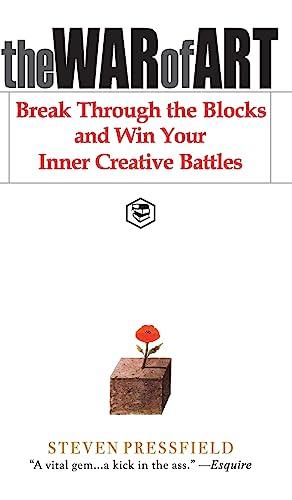
The title was highlighted as a practical guide for creative people, emphasizing daily discipline, treating the muse as a real presence, and pushing through the resistance that blocks work. Sam Tallent noted he often gave copies to guests, while hosts such as Sara Imari Walker, Jack Carr, and Joe Rogan discussed its advice on showing up consistently and not waiting for inspiration. The overall tone was strongly positive, presenting the book as a must‑read for anyone seeking to overcome creative blocks.
Highly Recommended
Episode: #2175 - Sam Tallent
Sam Tallent recommends this book by Steven Pressfield. He mentions that he used to give copies to creative people who came on his podcast.
"
Have you read Pressfield's War of Art no I have not oh we have a copy of it for you
Then I love he sent us a box of them because I used to give it to comics when they would or any kind of creative person when they came on the podcast but Pressfield wrote this book and he talks about the muse as if it's a real thing
Episode: #2165 - Jack Carr
Jack Carr mentioned Steven Pressfield's book, The War of Art, and said that it's about summoning the muse. He said that part of that is a ritual of showing up at a specific time every day. He said that this is important for creative people, and that it's about discipline, focus, dedication, and summoning the muse.
"
You know, that's a big part of Steven Pressler's book. Steven Pressfield?
Excuse me, Pressfield.
Yeah, with the War of Art.
Amazing.
Yeah. His book, you know, is kind of all about summoning. It's about discipline, focus, dedication, but also summoning the muse.
Episode: #2184 - Sara Imari Walker
The book is a guidebook for creative types to avoid procrastination and resistance, and to develop a structure that allows them to sit down at their desk at a very specific time every day and summon the muse.
"
This is the concept of the muse that the muse you summon the muse you treat the muse with respect you you literally communicate with the muse you put this intention out there and if you do this every day she will reward you and she will consistently bring you ideas and if you are a person who can develop that kind of discipline to sit there and do that you'll you'll become productive through the muse.
Episode: #1317 - Andrew Santino
It was mentioned as a book that Steven Pressfield wrote about the creepy resistance that people face when they have to do something that they don't want to do.
"
It's like you got to push past that creepy resistance that Steven Pressfield wrote about in the War of Art.
Episode: #1287 - Rich Benoit
The War of Art was mentioned as a great book about professional and creative writing, specifically the idea of not waiting for inspiration to strike.
"
The War of Art which is a great book and I'm also got it from reading Stephen King on writing and talking to a lot of different writers about how they handle things if you just waited to be inspired and that's the only time you wrote you wouldn't have half as much shit right not even close written not even close half as much good material as you do if you decide I'm going to write.
Episode: JRE MMA Show #75 with Dan Hardy
The War of Art was discussed in relation to the idea of the muse and how treating the creative process as magical can make it work like magic. It emphasizes the importance of showing up consistently and respecting the creative process.
"
Stephen Pressfield wrote about that in a really unique way in the war of art because he talked about how just showing up and counting on the muse like thinking about the muse as a real thing
Episode: #1467 - Jack Carr
He mentioned the book among Pressfield's works on creativity, noting it as part of the material that helped him develop his writing discipline.
"
Stephen Pressfield's books on creativity. The War of Art.
Episode: #1188 - Lex Fridman
They called The War of Art a beautiful book that emphasized hard work and grinding out hours rather than focusing on creativity.
"
I think Stephen Pressfield, I hope I'm not saying the wrong thing. The War of Art. The War of Art. Yeah. It's a beautiful book. And I would say, from my recollection, they don't necessarily talk about creativity very much. That it's really hard work putting in the hours of every day of just grinding it out.
Episode: #2468 - Luke Grimes
They called it a tiny, easytoread book and one of the best ever on creativity, stressing the need to treat the muse seriously.
"
I got a box of copies, I bought a bunch of them and I used to hand them out to comedians and artists. It's a really small book, it's easy, but it's one of the best books ever about creativity. He tells you if you treat it like there is a muse, like there is a God, you have to show up every day.
Episode: #2485 - John Fogerty
The book was highlighted as a great resource on the creative process and the concept of the muse, and it was recommended enthusiastically.
"
Have you ever heard of Steven Pressfield? Huh? Steven Pressfield, he's an author. He wrote a great book called The War of Art.
Episode: #2496 - Julia Mossbridge
Julia referenced "The War of Art" as a book that discusses the muse and creative discipline.
"
He wrote The War of Art.
Episode: #2504 - Skylar Grey
Skylar Grey said she had a copy of the small paperback and described it as a concise guide about channeling the muse, noting Pressfield's lateblooming career shift around age 40.
"
I have copies out there. I'll give you a copy if you don't have one. I think I started the book on tape version. I have copies of the book. It's a very small book. It's very easy, but it's all about that. And Pressfield was, you know, kind of like an underachiever until he was like 40.
Have you ever read the war of art? ... I started it. I started it.
Andrew Huberman highlighted the book in two episodes, first noting its emphasis on using discomfort to boost creative discipline and identity‑based habits. He later shared that he had read the title years earlier, loved it, and said it transformed how he approached his science, the podcast, and many aspects of life, positioning it as a highly influential work. The overall tone was strongly endorsing.
Highly Recommended
Episode: How to Overcome Inner Resistance | Steven Pressfie...
Andrew said he had read the book years earlier, loved it, and said it transformed the way he approached his science and the podcast. He also noted that the book is frequently referenced as his most influential work.
"
I read Steven's book, The War of Art, some years ago, and I loved it. It transformed the way that I did my science, how I approached the podcast, and many, many other aspects of life.
First, War of Art. Then I started through the library.
It's either The War of Art or Gates of Fire.
It's in The War of Art, actually. I wrote this out in The War of Art.
including the now iconic War of Art and also the book Do the Work
Episode: Best Ways to Build Better Habits & Break Bad Ones...
The book was mentioned while discussing the importance of uncomfortable work environments and creative discipline, noting that Pressfield advocated for using discomfort to fuel productivity. It was cited as a source of insight on identitybased habits.
"
Steven Pressfield, author of The War of Art, sat in the exact chair you're sitting in right now. And he said, oh no, you want kind of an uncomfortable chair. So it's like kind of painful. Now he's a former Marine and wrote a book called The War of Art After All.
The book was cited as an inspiring guide on the challenges of artistic creation, discussing mastery, insecurity, and the need for confidence in a creator's work.
"
and it's that book I'm sure many people have said it but in that book the war of art I think one of the it's really amazing I think you'd enjoy it but it talks about the complicated nature of artistry...
— Episode: Cleo Abram: What Could Go Right?
Episode: Cleo Abram: What Could Go Right?
The book was cited as an inspiring guide on the challenges of artistic creation, discussing mastery, insecurity, and the need for confidence in a creator's work.
"
and it's that book I'm sure many people have said it but in that book the war of art I think one of the it's really amazing I think you'd enjoy it but it talks about the complicated nature of artistry and the journey of making and what it means to create right to take something from nothing bring it out into the world make it something and other people consume it and one of the main things it speaks about is how the true mastery of
The book was repeatedly highlighted as a source of motivation for treating creative work like athletic training, encouraging listeners to 'turn pro' and adopt disciplined habits. Chris Williamson and guests referenced its ideas about the difficulty of simply sitting down to write and the notion of 'shadow careers' that divert aspiring artists. The discussions portrayed the book as a valuable guide for overcoming internal resistance and focusing on professional growth. Overall, the podcast presented it as highly recommended.
Highly Recommended
Episode: #717 - Jeremy Boreing - Going To War With Mainstre...
It was mentioned as a book that inspired the podcast host to think about treating his career like an athlete would train for a competition.
"
I'd read Steven Pressfield's The War of Art and then Turning Pro and I thought, wow, imagine what would happen if you treated the pursuit of my chosen career, which is podcasting, like an athlete.
Episode: #670 - Alex Hormozi - 23 Controversial Truths Abou...
Alex mentioned reading Stephen Pressfield's book, "War of Art", as inspiration to "turn pro" with his podcast. He was inspired to treat his work like an athlete would, dedicating himself fully to the pursuit.
"
I want to turn pro I read Stephen Pressfield War of Art and then I read Turning Pro I want to turn pro with the show what's that mean what would it mean if I treated this pursuit like an athlete does so an athlete they review game tape and they do mindset work and they've got a sports psychologist and they look at what they eat and they look at what they drink and they go to bed on time and they're hanging around with people that are growth minded and they're getting the right coaches and then all the rest everything is done in order to facilitate performance in the thing that they say they care about but everybody has the opportunity to do that you just need to define what the thing is I'm never going to be Patrick Mahomes right yeah I know but I managed to find my thing and then nearly kill myself in dedication toward it
The host referenced Steven Pressfield's "The War of Art" when discussing the importance of sitting down to write as a skill that must be built.
"
Stephen Pressfield says this in The War of Art real writers know that the difficulty isn't the writing part the difficulty is the sitting down to write part and that is it.
Episode: #589 - 14 Lessons from 5 Years Of Modern Wisdom
He said he had read the book during the pandemic and noted that a chapter from it, TurningPro, was later expanded into its own sequel.
"
I read it three years ago at the start of the pandemic and I actually read sorry I read the war of art which is Steven Pressfield book and turning pro is a chapter in the war of art which he then turned into a sequel and they're both great and you can get both of them by going to chriswillx.com books that is a list of 100 books you should read before you die and it'll explain why I like them in a little bit more detail and there's links to.
Episode: #585 - Adam Mastroianni - Are Smart People Actuall...
The host described Pressfield's concept of "shadow careers," noting how many aspiring actors end up in related but unsatisfying jobs.
"
There's a concept from Steven Pressfield's, the War of Art where he calls those shadow careers. He says the number of people that he met in LA who were failed actors or always wanted to become an actor, but ended up becoming an agent because it was tangential enough to the industry that it made them feel like they were maybe in the thing, but it wasn't the thing.
The speaker mentions "The War of Art" and how Stephen Pressfield, the author, talks about putting your butt in the chair and doing the work as what makes a professional.
"
Stephen Pressville talks about this, and the War of Art, it's about putting your butt in the chair.
— Episode: Moment 149: Why You Are Easily Distracte...
Episode: Moment 149: Why You Are Easily Distracted & How To...
The speaker mentions "The War of Art" and how Stephen Pressfield, the author, talks about putting your butt in the chair and doing the work as what makes a professional.
"
Stephen Pressville talks about this, and the War of Art, it's about putting your butt in the chair.
It was recommended as a book that someone else, Steven Pressfield, wrote. It was noted that it would likely be of interest to the podcast's listener.
"
And I have a friend named Steve Pressfield is an incredible writer wrote a book called The War of Art which you'd be very interested in I think.
— Episode: 232. Narrative, Story, and Writing pt. 2
Episode: 232. Narrative, Story, and Writing pt. 2
It was recommended as a book that someone else, Steven Pressfield, wrote. It was noted that it would likely be of interest to the podcast's listener.
"
And I have a friend named Steve Pressfield is an incredible writer wrote a book called The War of Art which you'd be very interested in I think.
Episode: 166. Writer of Braveheart | Randall Wallace
The book was mentioned as one that Jordan Peterson would be interested in, and described as an incredible book about investigating your own faith.
"
A friend named Steve Pressfield is an incredible writer wrote a book called The War of Art which you'd be very interested in I think um the Steve Pressfield was um investigating his own faith he had decided to to look into spiritual matters and he asked me to go along with him to rabbi Finley's lectures at the University of Judaism and a rabbi Finley is very practical guides got a son in the Marine Corps it's got a daughter and Israeli intelligence and he's a tough guy
The host mentioned the book as a reference about resistance that blocks creative work, distinguishing it from Sun Tzu's Art of War.
"
I don't know if you ever read the book, uh, the war of art, not the art of war, the war of art is about, do you have a project? What do you want to do? It's the guy who wrote Bagger Vance, the guy who...
— Episode: Build Instant Connection with Improv
Episode: Build Instant Connection with Improv
The host mentioned the book as a reference about resistance that blocks creative work, distinguishing it from Sun Tzu's Art of War.
"
I don't know if you ever read the book, uh, the war of art, not the art of war, the war of art is about, do you have a project? What do you want to do? It's the guy who wrote Bagger Vance, the guy who wrote, uh, the screenplay for Bagger Vance, the war of art.
It was highly praised by Matt Rogers, who found it insightful and impactful, having a positive influence on him.
"
Um okay the last book I read was The War of Art.
— Episode: "Niche!" (w/ Jordan Firstman & Charles R...
Episode: "Niche!" (w/ Jordan Firstman & Charles Rogers)
It was highly praised by Matt Rogers, who found it insightful and impactful, having a positive influence on him.
"
Um okay the last book I read was The War of Art.
Which is the one you gave me, loved it.
Opened up the doors.
It's great right?
I'm surprised you didn't read it before and I had sworn you'd read it and then I was like when I was like have you read The War of Art and you were like no I was like oh but then you must.
The book was repeatedly cited by guests and hosts such as Daniel Pink, Chase Jarvis, Jordan Harbinger, and Brian Rose as a key source on the concept of resistance that blocks creative work. It was highlighted for explaining how the "lizard brain" creates fear of failure, that resistance grows with the size of the undertaking, and that one should expect it and push through without getting emotional. The discussion consistently framed it as essential reading for anyone wanting to overcome internal blocks and consistently show up for their work.
Highly Recommended
Episode: 197: How to Stop Fearing Entrepreneurial Risks | F...
It was discussed in relation to the natural human tendency to avoid risk due to the fear of failure, especially regarding creative pursuits. The podcast mentioned how it was not until the author's 40s that he achieved the success he'd been striving for.
"
Stephen Pressfield wrote a book called The War of Art and he's a famous author and he's written screenplays and the like but he didn't actually attain the level of success that he was striving until he was about 40 and his whole book The War of Art talks about how there's sort of our lizard brain or whatever you want to call it that tells us to not do something because of risk of failure.
Episode: 154: Brian Rose | An Honest Look in the Real View...
It was defined as the force that stops you from accomplishing your goal, writing a book, or making a change. It was also said that the force is directly proportional to the size of the thing you are trying to do.
"
I coined the term from Stephen Pressfield as a great book called The War of Art.
So if you're trying to kick heroin or if you're trying to start a podcast or create a business or find the perfect wife or husband, you're going to find resistance.
This is the way he defines it. This is the way I define it and is this.
And the thing about resistance is directly proportional to the size of the thing you're trying to do.
But what Stephen Pressfield says is expect it don't become emotional about it.
Episode: 197: How to Stop Fearing Entrepreneurial Risks | F...
It was discussed in relation to the concept of perceived risk, specifically how our brains often prevent us from pursuing creative interests due to a fear of failure.
"
Stephen Pressfield wrote a book called The War of Art and he's a famous author and he's written screenplays and the like but he didn't actually attain the level of success that he was striving until he was about 40 and his whole book The War of Art talks about how there's sort of our lizard brain or whatever you want to call it that tells us to not do something because of risk of failure.
Episode: 154: Brian Rose | An Honest Look in the Real View...
Brian Rose mentioned this book and its author, Stephen Pressfield, in the context of explaining the concept of 'resistance' as defined by Pressfield. Rose said that whenever you go to do something in your life, such as create a piece of art or make a change, you will be met by this force called resistance.
"
He wrote that book, obstacle is the way, you've got to tattoo it on his arm, and I remember when I first read it, I was like, okay, that's a good book, but I don't know if it's always the way.
And the thing about resistance is directly proportional to the size of the thing you're trying to do.
So if you're trying to kick heroin or if you're trying to start a podcast or create a business or find the perfect wife or husband, you're going to find resistance.
This is the way he defines it. This is the way I define it and is this. Whenever you go to do something in your life or create a piece of art or go make a change or a transformation, you are going to be met by this force called resistance.
And the crazy thing about resistance is the biggest former resistance comes from you.
Episode: 522: Daniel Pink | To Sell Is Human
It was mentioned in the context of professionals showing up and doing the work, even on days when they don't feel like it.
"
I think that Seth Godin has written about this, Stephen Pressfield has written about this.
Episode: 252: Chase Jarvis | Cultivating Your Creative Call...
It was mentioned briefly in passing, in relation to the concept of resistance and overcoming discomfort in pursuing one's creative endeavors. It was used as an example of a book that discusses overcoming resistance.
"
Keep in press field talks about this in the war of art this resistance and I'm saying that the best stuff in life is on the other side of comfort.
Episode: 197: How to Stop Fearing Entrepreneurial Risks | F...
It was discussed in relation to the lizard brain that stops us from pursuing our creative interests due to the perceived risk of failure.
"
Stephen Pressfield wrote a book called The War of Art and he's a famous author and he's written screenplays and the like but he didn't actually attain the level of success that he was striving until he was about 40 and his whole book The War of Art talks about how there's sort of our lizard brain or whatever you want to call it that tells us to not do something because of risk of failure.
Episode: 154: Brian Rose | An Honest Look in the Real View...
The book, The War of Art, talks about the concept of "resistance", which is anything stopping a person from accomplishing a goal or creating a piece of art. According to Stephen Pressfield, a person should expect resistance, not become emotional about it, and deal with it emotionally and move on.
"
It's a little abstract.
Right, right.
Resistance.
Whenever you go to do something in your life or create a piece of art or go make a change or a transformation, you are going to be met by this force called resistance.
So if you're trying to kick heroin or if you're trying to start a podcast or create a business or find the perfect wife or husband, you're going to find resistance.
Rosanne Cash mentioned this book and quoted a line from it about showing up for your work even if you do not feel inspired, comparing the process to love.
"
He says, you have to show the muse or serious. You can't just expect to be hit by these beautiful bolts of inspiration and lightly. You have to keep showing up even if you don't get hit for a year or...
— Episode: Rosanne Cash, Time Traveler
Episode: Rosanne Cash, Time Traveler
Rosanne Cash mentioned this book and quoted a line from it about showing up for your work even if you do not feel inspired, comparing the process to love.
"
He says, you have to show the muse or serious. You can't just expect to be hit by these beautiful bolts of inspiration and lightly. You have to keep showing up even if you don't get hit for a year or two years just show the muse or serious.
Episode: [Unedited] Rosanne Cash with Krista Tippett
Rosanne Cash mentioned this book and a quote from it, "You have to show up for your work. You can't just expect to be hit by these beautiful bolts of inspiration lightly." She connected the quote to the idea of a loving relationship with one's art and the hard work involved.
"
You have to show up for your work. You can't just expect to be hit by these beautiful bolts of inspiration lightly.
Episode: Rosanne Cash, Time Traveler
Rosanne Cash mentioned a quote from this book that resonated with her, relating the dedication to one's craft to a loving relationship with one's muse.
"
He says, you have to show the muse or serious. You can't just expect to be hit by these beautiful bolts of inspiration and lightly. You have to keep showing up even if you don't get hit for a year or two years just show the muse or serious. And then that, the relationship there feels like love to me. I mean it feels like the heart opening.
Episode: [Unedited] Rosanne Cash with Krista Tippett
It was mentioned as a great book with a memorable quote about showing up seriously for one's work, even without inspiration, comparing it to a loving relationship.
"
He says, you have to show them use your serious. You know? You can't just expect to be hit by these beautiful bolts of inspiration and lightly. You have to keep showing up. Even if, you know, you don't get hit for a year or two years just show them use your serious.
The podcast repeatedly highlighted the book as essential reading for anyone tackling a creative or entrepreneurial project, emphasizing its focus on recognizing and overcoming “the Resistance.” Host Ryan Holiday and various guests praised it as a favorite, classic, and go‑to text that they reread before starting new work. The overall sentiment was that the book’s insights were life‑changing and indispensable for turning professional and beating procrastination.
Highly Recommended
Episode: 9 Stoic Strategies to Overcome Procrastination
The book discusses the force known as 'The Resistance' which makes people put things off, rather than doing what they need to do. The author suggests that we don't tell ourselves we'll never do something, we instead tell ourselves we'll do it later.
"
Several years ago, the legendary writer Stephen Pressfield gave this force a name in his seminal book on creativity, The War of Art. He called it The Resistance.
We don't tell ourselves I'm never going to write my symphony. Instead we say I'm going to write my symphony, I'm just going to start tomorrow.
Episode: Becoming A Professional | The War of Art Excerpt
It was highly recommended by the podcast host, particularly for its insights into creativity and overcoming internal resistance. The book was described as a classic and a favourite.
"
And one of my all time favorite books is The War of Art.
If you haven't read The War of Art, I don't know if you've been living under a rock or what you've been doing, but you absolutely should.
I try to pick it up, flip through it, find something, because I think Stephen is just one of the greatest thinkers on creativity and battling this idea of the resistance, that lower self that prevents us from being what we're capable of being and doing what we know we need to do, that sort of civil war inside all of us.
And so in today's episode, I'm bringing you a chunk from Book Two of The War of Art, which Stephen was nice enough to send over.
I carry this in the painted porch. It's a classic. It's a favorite.
Episode: What Does Your Calendar Say? | 12 (Stoic) Secrets...
Steven Pressfield uses a story similar to Roseanne Cash's to illustrate the concept of "the resistance", which he says is the reason people are half-hearted in their efforts, using it as an excuse to avoid facing rejection or failure.
"
Steven Pressfield tells a version of that story also in The War of Art.
He's saying that that's the resistance, right?
The resistance is, well, if I don't really try, if I'm half doing it or I have this addiction or this compulsion or this this other thing, then I can always use that as an excuse for why it's not happening for me.
And then when it doesn't happen, I don't have to feel as bad because it's not a rejection of me.
It's only a partial rejection of me.
Episode: Steven Pressfield Painted Porch Book Tour
The speaker highly recommended this book and any other book by the same author.
"
If you haven't read the War of Art, Gates of Fire, and any of Steven's books, I don't know what you're doing with your life.
Episode: Choose To Become Your Best | Paul Rabil PT2
Ryan Holiday compares Paul Rabil's book, The Way of the Champion, to The War of Art, even though he believes the lessons apply more broadly.
"
It's a sort of a, the war of art for sports. Uh, but, but like the war of art, it doesn't really matter what you do.
Episode: Tom Segura Tours The Painted Porch
It was mentioned and thought of highly.
"
Also like is it on writing again? Yeah it's his memoir about it so it's kind of I would say Government Cheese it's like the stories between all the stories in the War of Art so it's like what he was actually doing as he was learning all that stuff.
Episode: Mastering High Performance | Paul Rabil PT1
It was mentioned as a book studied by the interviewee, explaining the differences in life when one becomes a professional. The book's insights on the transition from amateur to professional were highlighted.
"
And he does a really good job on the ladder of just explaining how different life is when you become a pro.
Episode: You Aren’t Killing Time. Time Is Killing You | Rya...
The speaker considers this an important book, regardless of whether the reader is an artist or not. It's a book the speaker rereads regularly.
"
One of my other favorites is Stephen Pressfield's The War of Art, which I think is important whether you're an artist or not.
That's a book I try to read on a regular basis as well.
Episode: 4 Stoic Quotes On Change To Kick Off The New Year
Ryan Holiday referenced this book and a quote from it which supports the concept of starting now instead of delaying.
"
he has this great line and they're similar to what Mark who's talking about which basically says that nobody says I'm never going to do it we say we're going to do it tomorrow
Episode: Steven Pressfield On Work Without Attachments (Par...
It was mentioned as one of Steven Pressfield's most popular books, frequently reread before starting a project to set the right mindset. The book's value and impact were highly praised by the podcast host.
"
if you haven't read The War of Art, Do The Work, Turning Pro, Gates of Fire, government cheese, Tides of War, A Man at Arms, what are you even doing with your life?
when I'm about to start a project it's just like a nice sort of head space to get into
Episode: Morgan Wade On Sticking To The Routine
The book and its concept of 'resistance' were referenced in relation to Morgan Wade's journey in professionalizing her music career, highlighting the struggle between partially committing versus fully dedicating oneself to a pursuit.
"
there's kind of a there's um Stephen Pressfield tells a version of that story also in the war of art he's saying that that's the resistance right the resistance is well if I don't really try if I if I am half doing it or I have this addiction or this compulsion or this this other thing then I can always use that as an excuse yeah for why it's not happening for me and then when it does it happen I don't have to feel as bad because it's not a rejection of me it's only a partial rejection of me
Episode: Dr. Peter Attia On The Philosophy and Quality Of L...
Steven Pressfield's book, "The War of Art," was referenced in the context of overcoming resistance in creative work, with a humorous anecdote about Hitler and his painting.
"
it was easier for you to not do the book to give what I know as we talked about it. A large amount of money back to the publisher then to sit down and reconcile what you creatively knew you wanted to do or what you needed the book to be and then the place that you had to get emotionally to be able to pull that off it was easier for you to go. Fuck the whole thing I just won't do a book right.
Yeah there press field has a joke in the war of art which I guess is maybe not politically correct but he says something like it was easier for Hitler to start world war two than it was to do his painting.
Episode: Christina Pazsitzky On Teaching Comedians Philosop...
This book, and its discussion of discipline and overcoming resistance, was mentioned as a favorite and relevant to the challenges of creative work.
"
the war of art is my favorite book and how you discuss that one to your huge fan there's a reason like that it's the discipline and in that discipline yourself is where the yeah the resistance yeah well it's the procrastination is hard and then also the putting I think an underrated part of it is like the willingness to put yourself out there that's that's terrible that's a whole other fucking discussion man yeah just like you to to be bad in public for a while is so it's why it's good to start when you're young
Episode: Tie Your Well-Being To This | You Are The Project
The book explores the idea of viewing oneself as a business, using the example of Hollywood writers creating loan-out corporations. The speaker found the book's concept of viewing oneself as a business to be important.
"
Something that hit me when I read one of my favorite books ever for the first time this is Stephen Presfield's The War of Art.
Episode: Rick Rubin on The Creative Act Part One
Ryan Holliday mentioned this book and its author, Steven Pressfield, positively, referencing a quote from the book. He highlighted the book's ability to be both timely and timeless.
"
You know what's amazing about a book like gates of fire is that it was it's only like i don't know 20 years old or 30 years old but it feels like it's like a thousand years old like when somebody does something i guess even the war of art but but when somebody does something and it's both very timely but also without a place in time there that's something incredible about what art can do where it can be everywhere and nowhere current and and timeless at the same time those are the things that that speak to me the most when i can hear a piece of music that i love music that is outside of time and it can and one of the things about using organic instruments is a piano sounds like a piano 100 years ago and it sounds like a piano today sure and it'll sound like a piano in a hundred years
His line now you got to put your ass where your heart wants to be
Episode: Steven Pressfield on Creating Work That Lasts
The book was referenced in relation to Pressfield's other works, and was cited as a source of impactful lessons and insights. The speaker reads it whenever starting a new creative project.
"
It's sort of like it's the stories in between the lessons that make turning pro and the war of art and all those other books so fantastic.
I read the word of art whenever I'm starting a creative part I already know it's in I've read it a lot of times but something pops out at me in a new like you know like even even though I've read the book ever the other books right no you you still get something new out of it each time
Episode: The Professional — An Excerpt from Steven Pressfie...
Ryan Holiday mentioned this book alongside "Turning Pro" as something he often consults when starting creative projects. It was mentioned as a motivational book.
"
and I pick up either the War of Art or Turning Pro pretty much anytime I start a creative project so hopefully this can be something that gets you going as well.
I said in the war of art that I could divide my life neatly into two sections before I turn pro after this is absolutely true
in the war of art i listed the following is habits and qualities that the professional possesses that the amateur doesn't
Episode: Robert Mckee on the Power of Storytelling
Ryan Holiday mentioned that Robert McKee wrote the foreword to Steven Pressfield's book, "The War of Art."
"
if you've read the War of Art you've also read some Robert McKee because Robert McKee writes writes the forward to that
Episode: No More Than This Is Required | Ask Daily Stoic
This book by Steven Pressfield, alongside Gates of Fire, was mentioned to have sold millions of copies. It was referenced in relation to a discussion of the creative process.
"
Steven Pressfield whose books like Gates of Fire and the War of Art have sold millions of copies explains in his new book put your ass where your heart wants to be the rather penal and low key process of creation.
Episode: Resistance: Defining the Enemy - An Excerpt from S...
It was described as one of the host's all-time favorite books, having read it dozens of times over 15 years. The book's excerpt discussed the concept of "resistance", a force hindering progress toward goals.
"
Every time I start a new book, I sit down and reread one of my all time favorite books, the War of Art being that book.
It's a book I first read 15 years ago now and for it dozens of times. It's by the one and only Stephen Pressfield, one of the most influential writers in my life and a great dude
If you haven't read the War of Art, you are missing out; it's about breaking through, winning your inner creative battles and it sold millions of copies for a reason. It works. It's the best.
We carry the War of Art in the painted porch. You can pick this book up on Audible, I books anywhere audio books are sold.
Again, if you haven't read the War of Art you have to; if you have, this is a great time to revisit the book as I was saying I love to do and it's always a good time to take some insights and get some advice from the one and only Stephen Pressfield
Episode: Steven Pressfield on Consistency, Overcoming Resis...
The podcast host stated that they reread this book before starting any creative project and had done so dozens of times. Its impact on the host's career was described as life-changing.
"
I first read The War of Art this would have been in 2006 or 2007. I reread it before I start any creative project. I've gone through it dozens and dozens of times.
It helped that book blow up.
Episode: How To Have a Great Empire? | Ask Daily Stoic
Its concept of 'resistance,' encompassing fears, worries, and laziness that hinder achievement, was described as highly influential to the speaker as a writer.
"
Stephen Pressfield's The War of Art, the concept of the resistance which hold us back from accomplishing what we want to do are sort of fears and worries and laziness. Super influential to me as a writer.
Episode: Meg Mason on Writing, Developing Taste, and Tolera...
The book's author was mentioned in relation to the writing process; the speaker referenced Pressfield's idea of putting your 'ass where your heart wants to be'.
"
Stephen Pressfield who wrote The War of Art who talks about how you have to put your ass where your heart wants to be
Episode: Jack Carr on Writing, Becoming World Class, and Bu...
This book on creativity was mentioned for its message about the importance of sitting down and doing the professional work of writing, and not getting distracted.
"
but he also has a series of books on creativity and the first one is the war of art and\I got so much from all of his books in particular that one and then turning pro they all say essentially you're gonna have to sit down be professional and do the work essentially that's what he's saying don't get distracted really
Episode: A Leader Must Be a Reader | You Are The Project
The speaker mentioned this book favorably, highlighting a concept discussed within its pages regarding the professional approach of starting a company and then working for it. The book was also mentioned alongside another of Pressfield's books, Turning Pro.
"
Something that hit me when I read one of my favorite books ever for the first time. This is Stephen Pressfield's The War of Art.
And you should read The War of Art in turning pro.
Episode: Why You Should Re-Read, Not Just Read Books
Considered inspirational, it is reread at the start of each creative project, providing motivation and guidance. The speaker's understanding and application of the book's teachings have evolved over time.
"
It's like a kick in the pants, it's inspirational.
Episode: Author Adam Rubin on Creativity and Pursuing Your...
The speaker recommended this book, which discusses the "resistance"--procrastination, doubt, and imposter syndrome--that hinders creative work.
"
no oh it's one of the best but he calls it the resistance so procrastination, doubt, imposter syndrome you know doing other stuff so you don't have to do this thing it's all about the resistance we know what we want to do we know what we need to do we know what our calling is but then resistance is what gets between us and that thing he calls it the resistance like capital T capital R and so I just think he's calling it the War of Art because instead of the Art of War that it's like that the creative process is the battle against this resistance
Episode: You Can Do This. You Can Do This.
It was cited as one of the speaker's favorite books. The speaker discussed the book's concept of "imposter syndrome" and the idea of continuous improvement.
"
He said, I don't think there really is such a thing as being an imposter. You're just on the spectrum of getting better and getting better.
Episode: Steven Pressfield on Battling Resistance and Winni...
It was described as a book that made other books possible for the speaker. The speaker had a well-worn, well-thumbed copy.
"
I have his book, The War of Art right here. This is my very well-worn, well-thumbed through copy.
I don't think any of my books would be possible without this book.
Episode: If You Only Read a Few Books This Year, Read These
The speaker stated that this book is essential reading before starting any big creative project, as it helped him understand the constant internal battle against 'the resistance' that prevents creatives from doing what they are meant to do. It was recommended for writers, artists, parents, and entrepreneurs facing any challenging endeavor.
"
And yet I don't make a single thing. Every big creative project that I sit down to do, I read this book first. And I don't think my success as a writer or artist or creative or whatever you want to call it would be possible without this book.
Every creative person is at war with themselves. They're in a battle against the resistance, as Pressfield says. The thing that gets between us and what we're meant to do, what we're capable of doing.
Note: The book recommendations on this page are discovered automatically from podcast transcripts, and may be incorrect or incomplete.