Police Exam Prep 7th Edition
Kaplan Test Prep
Mentioned 4 months ago
1288: Test Prep | Skeptical Sunday

(Apple's Best of 2018) In-depth conversations with people at the top of their game. Jordan Harbinger unpacks guests' wisdom into practical nuggets you can use to impact your work, life, and relationships. Learn from leaders (Ray Dalio, Simon Sinek, Mark Cuban), entertainers (Moby, Tip "T.I." Harris,...
Recently mentioned
Kaplan Test Prep
Mentioned 4 months ago
1288: Test Prep | Skeptical Sunday

David Killoran
Mentioned 4 months ago
1288: Test Prep | Skeptical Sunday

Kaplan Test Prep
Mentioned 4 months ago
1288: Test Prep | Skeptical Sunday

Eve Ensler
Mentioned 5 months ago
1282: The Vagina | Skeptical Sunday
Richard Shotton
Mentioned 6 months ago
1273: Richard Shotton & MichaelAaron Flicker | Marketing to Human Minds
Derek Thompson
Mentioned 6 months ago
1273: Richard Shotton & MichaelAaron Flicker | Marketing to Human Minds
Milan Kundera
Mentioned 1 year ago
1042: Sex Trafficking | Skeptical Sunday
Ryan Holiday
Mentioned 1 year ago
1041: Groped In Your Sleep, Betrayal Runs Deep | Feedback Friday
James J. Sexton
Mentioned 1 year ago
1035: James Sexton | A Divorce Lawyer's Guide to Lasting Love Part One
Charles Duhigg
Mentioned 1 year ago
1034: Fat-Free Foods | Skeptical Sunday
Glennon Doyle
Mentioned 1 year ago
1031: Sarah Hill | How Birth Control Rewires Women's Brains Part One
Toni Weschler
Mentioned 1 year ago
1031: Sarah Hill | How Birth Control Rewires Women's Brains Part One
The Story of My Life
It was mentioned that Dave Chappelle was impacted by this book, which caused him to leave the 'Chappelle Show' at its peak and ultimately led to his departure from Hollywood.
he tells a story about iceberg slim the Pimp when you read between the lines you're like oh really interesting
— Episode: 248: How to Navigate Around a Hostile Co...
It was mentioned that Dave Chappelle was impacted by this book, which caused him to leave the 'Chappelle Show' at its peak and ultimately led to his departure from Hollywood.
he tells a story about iceberg slim the Pimp when you read between the lines you're like oh really interesting
and he talks about how iceberg controls the girls that work with him the prostitutes that work with him and it's very enlightening
and it sort of gives you insight to Hollywood and you go oh is that what happened do you got to rewatch this it's so interesting
obviously it's psychology that's what Pimp's used they use like very manipulative dark psychology
it's in my Kindle and I never went back in in reddit so now I gotta go back and read that book thanks for the homework Jordan
Dave Chappelle mentioned that reading 'Pimp' had a profound impact on him, particularly the manipulative aspects of the pimp's psychology, which potentially influenced his decision to leave the show at its peak.
he talks about why he left but he can't do it directly and he tells a story about iceberg slim the Pimp when you read between the lines you're like oh really interesting
and he talks about how iceberg controls the girls that work with him the prostitutes that work with him and it's very enlightening and it sort of gives you insight to Hollywood and you go oh is that what happened
it's in my Kindle and I never went back in in reddit so now I gotta go back and read that book
Dave Chappelle mentioned reading this book, which impacted him significantly and ultimately led to his departure from the Chappelle Show, discussing the manipulative psychology used by the protagonist.
he talks about why he left but he can't do it directly and he tells a story about iceberg slim the Pimp when you read between the lines you're like oh really interesting
and he talks about how iceberg controls the girls that work with him the prostitutes that work with him and it's very enlightening and it sort of gives you insight to Hollywood
it's in my Kindle and I never went back in in reddit so now I gotta go back and read that book thanks for the homework Jordan
The New Brain Science of Contentment, Calm, and Confidence
It was discussed how the brain can be rewired for the better, and the concept of positive neuroplasticity was introduced as a way to turbocharge the process of learning and growth.
The brain continually remodels itself.
— Episode: 192: Rick Hanson | The Science of Hardwi...
It was discussed how the brain can be rewired for the better, and the concept of positive neuroplasticity was introduced as a way to turbocharge the process of learning and growth.
The brain continually remodels itself.
The brain is evolving. It can change for the better or for the worse.
So if you learn how to learn, if you know how to harness the power of positive neuroplasticity, every day you can have a steeper of more vertical growth curve as you go through that day.
The green zone is when we feel that we are safe enough and satisfied enough and connected enough in this moment at least now and now and now.
If you do that 10 days in a row it'll change your life.
It was discussed as a basis for understanding the green zone and how positive experiences can be hardwired into the nervous system.
That's kind of the simple, you know, you open it up and you put the nozzle in and you pull the trigger and the gas goes in and you're good to go.
The green zone is when we feel that we are safe enough and satisfied enough and connected enough in this moment at least now and now and now.
That's my 10 minute challenge for you: a few times a day taking the good, second know the one thing in particular you're growing these days and therefore look for opportunities to experience that one thing and then take those experiences in.
If you do that it'll change your day because partly you'll be looking for things you can do over the day that'll change your whole day and um you'll go to bed feeling different.
it's the real value versus what ends up in the box and if you want to be super cool you can keep the box in your closet nobody needs to know that you have it it's your own little private box
It was discussed as a key to understanding how to hardwire positive experiences into the nervous system, in contrast to how negative experiences are easily stored.
The brain continually remodels itself. It's one of the concepts from it. Now I'm getting your books all blended together because you read a bunch and prep for this. I'm not even going to pretend I know which one that concept comes from. Let's just say all of them.
The green zone is when we feel that we are safe enough and satisfied enough and connected enough in this moment at least now and now and now and when we feel that that our basic needs for safety satisfaction and connection are sufficiently met in the moment our whole body moves out of the red zone the whole sympathetic fight flight freeze system starts calming stress hormones fade away the heart returns to a normal rate the whole visceral core of the body is not being strained and burdened and it settles down and our mind is colored in a broad sense in terms of those three needs with a feeling of peacefulness in terms of safety contentment in terms of satisfaction and in a word broadly love in terms of connection.
How I Learned to Pay Attention, Master Myself, and Win
It was discussed throughout the podcast as Maria Konnikova's journey from having no interest in poker to becoming a professional poker player and writing a book about it.
I love this book, I love this conversation and I know you will too.
— Episode: 371: Maria Konnikova | Pulling Off the B...
It was discussed throughout the podcast as Maria Konnikova's journey from having no interest in poker to becoming a professional poker player and writing a book about it.
I love this book, I love this conversation and I know you will too.
I recommend everybody grab it the links in the show notes I read the whole thing and I plowed through it and it was really a pleasure to read.
You're going to enjoy listening to or reading it and if you do go and grab this book please do use our website links it helps support the show but you'll enjoy this read even if you don't care about poker you don't care about gambling.
I've known you for several years so you know what I mean when I say that is kind of ridiculous right no I mean it's not kind of ridiculous I think that is ridiculous it's absolutely ridiculous like what in the world is.
It's like saying you know I want to learn a little bit about soccer for this book oh I'm just gonna go work with Cristiano Ronaldo and oh Manchester United wants me to play for them because I got good.
It was discussed at length how Maria used her psychology PhD to help her win at poker, in a way that is different than just memorizing statistics and probabilities, and it was explained that success in poker is primarily a skill, not luck.
I love this book, I love this conversation and I know you will too.
I'd recommend everybody grab it the links in the show notes I read the whole thing and I plowed through it and it was really a pleasure to read.
You're going to enjoy listening to or reading it and if you do go and grab this book please do use our website links it helps support the show but you'll enjoy this read even if you don't care about poker you don't care about gambling.
According to one study that several economists ran of hundreds of thousands of hands that they analyzed in online poker the best hand won 12% of the time.
That means the best player won 88% of the time and over two thirds of the time the hand didn't even go to show down which means that someone won without ever having to show their cards.
It was discussed as a book about poker and how it can teach valuable life skills regarding decision-making, emotional control and separating skill from luck. It was also recommended as a great read.
I love this book, I love this conversation and I know you will too.
I read the whole thing and I plowed through it and it was really a pleasure to read so thank you so much for coming on the show today Maria.
I recommend everybody grab it the links in the show notes.
you're going to enjoy listening to or reading it and if you do go and grab this book please do use our website links it helps support the show but you'll enjoy this read even if you don't care about poker you don't care about gambling.
I loved this book also one of the things that we talked about offline after the show was that venting and complaining about luck or bad luck as we mentioned on the show it actually damages your social relationships.
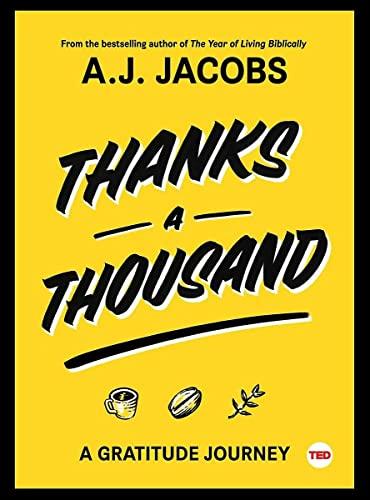
A Gratitude Journey (TED Books)
It was discussed as an experiment in gratitude, where the author thanked 1,000 people involved in making his morning coffee. It was explained as a way to increase happiness by focusing on the positive aspects of daily life.
Thankfully though, this isn't just another gratitude episode, far from it.
— Episode: 174: A.J. Jacobs | Thanks a Thousand: A...
It was discussed as an experiment in gratitude, where the author thanked 1,000 people involved in making his morning coffee. It was explained as a way to increase happiness by focusing on the positive aspects of daily life.
Thankfully though, this isn't just another gratitude episode, far from it.
part of that book was all about connection and that we are in fact connected and the hope was which is a little idealistic that we would treat each other with a little more kindness.
and that like it thousand year ago oh that's not a lot it's a lot that's a lot a lot god it was a lot a hundred people would be a tedious know it it was it was way more than ten times that many
and that we take for granted and just making this mental switch just from a selfish point of view is very good because it really does help you appreciate the hundreds of things that go right every day instead of focusing on the three or four that go wrong.
happiness does not lead to gratitude gratitude leads to happiness so having that mindset really will make you happier
It was explained that the book was about the author thanking 1,000 people involved in making his morning coffee possible, which helped him to appreciate the interconnectedness of society and feel less self-involved.
His last experiment was to thank 1,000 people that made his morning cup of coffee possible, from the bean farmers in Colombia to the truckers who get the stuff to the States, to the barista who hands him the cup at the end of the journey.
And that like it thousand year ago oh that's not a lot it's a lot that's a lot a lot god it was a lot a hundred people would be a tedious know it it was it was way more than ten times that many and you know I went wide so I thanked the obvious people like the farmer of the coffee beans and the barista but I also you know I would go out and meet the truck driver who drove the coffee beans are I remember I called the woman who did pest control for the warehouse where my coffee beans are stored and I said I called her up and I said I know this is a little strange but I just want to thank you for keeping the insects out of my coffee and she said yep that is strange but thank you you know I don't get a lot of appreciation yeah and I was one of the themes of the book that we take hundred of the people for granted and everything we do requires hundreds thousands of interconnected people and that we take for granted and just making this mental switch just from a selfish point of view is very good because it really does help you appreciate the hundreds of things that go right every day instead of focusing on the three or four that go wrong so there was really a you know a selfish motivation for this book because I am I talk about it you know we all have our Larry David side and our mr. Roger side and I was born with a very strong Larry David side the grumpy pessimist and this which is why I you know I love Larry watching Larry David but it's not fun to be in that mind yeah it's watching it is different watching it you go look all this guy so grumpy like he's a bit negative side and everything you don't necessarily want to be that exactly it's funny because we go better you than me look at this guy complaining about every little thing yeah but living it being in that mindset which I find myself a lot is not a great way to live so this this was an attempt to bulk up that mr. Roger side get him ripped and because it is so linked to happiness there's so much evidence there's a great quote that happiness does not lead to gratitude gratitude leads to happiness so having that mindset really will make you happier
I'm grateful for Barry
I'm not quite a year but several months going around the world wow thanking people so gratitude leads to happiness and not the other way around and that's kind of the key
It was discussed as an experiment in gratitude, where A.J. Jacobs thanked 1,000 people involved in his morning coffee, from farmers to baristas, which helped him appreciate the unseen efforts that make daily life possible.
Thankfully though, this isn't just another gratitude episode, far from it.
It's a lot, a lot, god, it was a lot. A hundred people would be tedious, no, it was, it was way more than ten times that many.
It was an amazing lesson in, you know, how much goes in.
Happiness does not lead to gratitude, gratitude leads to happiness.
It's easier to act your way into a new way of thinking than to think your way into a new way of acting.
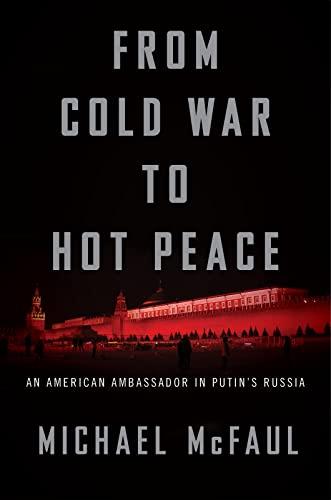
An American Ambassador in Putin’s Russia
It was discussed in the context of the author's experiences as a US ambassador to Russia during a challenging period of US-Russia relations, and how the KGB/FSB actions impacted him and his family.
I write about it in my book. You know the kind of just overreaction to challenges to his regime and overreaction to actions that we took.
— Episode: 114: Michael McFaul | What It's Like to...
It was discussed in the context of the author's experiences as a US ambassador to Russia during a challenging period of US-Russia relations, and how the KGB/FSB actions impacted him and his family.
I write about it in my book. You know the kind of just overreaction to challenges to his regime and overreaction to actions that we took.
I think that comes from being trained in the KGB.
his book is called From Cold War to Hot Peace the inside story of Russia and America it's a great read if you're interested in this sort of topic
In the book from Cold War to hot piece there are some stories
It was discussed in the context of the author's experiences as an ambassador to Russia during a period of heightened tensions with the Russian government. The book also discusses the author's experiences living in Russia during the Cold War.
I write about it in my book. You know the kind of just overreaction to challenges to his regime and overreaction to actions that we took.
And then in Russia of course because the intelligence officers now run the country.
his book is called from Cold War to hot piece the inside story of Russia and America it's a great read if you're interested in this sort of topic
In the book from Cold War to hot piece there are some stories there was one in particular where I think it was like 9 a.m.
And you know I'm on the sanctions list right now I can't travel to Russia because of the difficulties in our relationship and that we put so many of their people on the list.
It was discussed in the context of the author's experiences as a US ambassador to Russia, with some discussion around the overreactions to challenges to Putin's regime, and Putin's paranoia stemming from his KGB background.
I write about it in my book. You know the kind of just overreaction to challenges to his regime and overreaction to actions that we took.
His book is called 'From Cold War to Hot Peace: The Inside Story of Russia and America'.
In the book From Cold War to Hot Peace there are some stories there was one in particular where I think it was like 9 a.m. and they brought in vodka or something like that and you're going well guess I got to take part in this yeah there's got to be some areas where you go look I'm not doing this or or do you have to are there courses that you guys take where it's like look they're going to bring in vodka yes it's going to be 7 30 in the morning you just have to deal with it.
In the book there's sort of this tone of it seems like everyone thinks you're a spy except for your kind of old contacts that you'd met earlier. And I wondered if there was anything specific that you had to do to kind of either build trust with new people or shake off the reputation that preceded you even before you arrived.
Yeah, the Soviet Union back then was very different. You know, I lived there in '83, '85, '88, '89, '90, '91. So I lived a good chunk of time in the Soviet Union right before Russia emerged from the Soviet Union and it was a command economy, communist economy that led to, so prices were determined by the state.
The Hidden Forces that Shape Behavior
The book 'Invisible Influence' was mentioned as Jonah Berger's previous book that was discussed on the show.
The last book I interviewed you about was Invisible Influence, last time you were on the show.
— Episode: 414: Jonah Berger | How to Change Anyone...
The book 'Invisible Influence' was mentioned as Jonah Berger's previous book that was discussed on the show.
The last book I interviewed you about was Invisible Influence, last time you were on the show.
The podcast host, Jordan Harbinger, mentioned this book as being the last one he interviewed Jonah Berger about.
The last book I interviewed you about was Invisible Influence, last time you were on the show.
Berger's previous book, Invisible Influence, was discussed, and the current book, The Catalyst, was said to be similar in many ways. The concept of anti-persuasion radar was also mentioned as something covered in his previous book.
The last book I interviewed you about was Invisible Influence, last time you were on the show.
Life in a Mafia Family
The book was discussed at length, with the author's philosophy on career success being highlighted, including the importance of embracing luck and focusing on unique and valuable skills.
I feel like you're riding high at that time. Can you tell us that story? I think it's a fun thing.
— Episode: 190: Guy Kawasaki | Life Lessons from a...
The book was discussed at length, with the author's philosophy on career success being highlighted, including the importance of embracing luck and focusing on unique and valuable skills.
I feel like you're riding high at that time. Can you tell us that story? I think it's a fun thing.
I think that that's important to note because right now there is this trend in like the Instagram entrepreneur, influencer, sphere, which is getting a lot of attention.
I think it's important to say that playing the odds in this way or playing to the numbers is a good strategy because right now there's this narrative out there that playing to the numbers or getting a job even if it's for a company that you enjoy doing is somehow like a suckers play and you're a chump if you do this.
One of the top concepts from the book as well is learn to embrace the unknown that's a common refrain in Silicon Valley but you have this ice cutter example and I'd love it if you would go into that sure sure and how we can practice.
I don't think emulate is the wrong word okay okay I think the lessons of Steve Jobs are several one is that your current customers cannot tell you how to innovate they will tell you how to build better faster cheaper.
It was discussed that Guy Kawasaki has authored several paperbound books, and his most recent one is 'Wise Guy: Lessons from a Life'. The host mentioned it multiple times in the introduction and conclusion of the interview.
Guy Kawasaki ( @GuyKawasaki) is the chief evangelist of Canva, was once the chief evangelist for Apple, and is the author of many paperbound books -- his latest is Wise Guy: Lessons from a Life.
One of the top concepts from the book as well is learn to embrace the unknown.
One of his 15 books, the newest one is called Wise Guy.
It was discussed throughout the podcast and mentioned as his latest book, with various anecdotes and philosophies from it highlighted, such as sending the elevator back down, and the importance of getting high and to the right.
his latest is Wise Guy: Lessons from a Life.
One of the top concepts from the book as well is learn to embrace the unknown.
I know that you're really big on when you make it big provide opportunities to other people to come up that's something that you talk a lot about in the book and I think that a lot of folks say that they say send the elevator back down
I think a lot of people are emulating speaking of thermos right a lot of people are emulating Steve Jobs qualities or trying to right they'll wear a black turtleneck they'll be an a-hole
the newest one is called wise guy
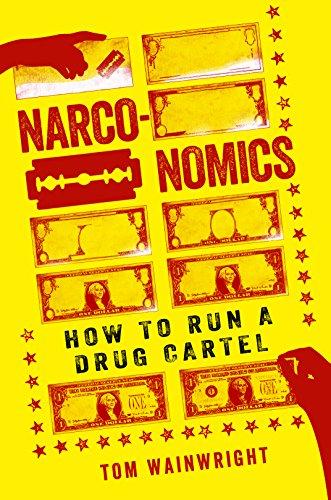
How to Run a Drug Cartel
It was discussed how drug cartels operate like businesses, with tactics like branding and PR, and that focusing on demand reduction is more effective than supply interdiction.
I just found the concepts so interesting and compelling that I wanted to do a show on this.
— Episode: 387: Tom Wainwright | How to Run a Drug...
It was discussed how drug cartels operate like businesses, with tactics like branding and PR, and that focusing on demand reduction is more effective than supply interdiction.
I just found the concepts so interesting and compelling that I wanted to do a show on this.
You wore a GPS device to meeting with a drug cartel leader and it didn't work.
It's not worth very much at all to make a kilo of pure cocaine powder you need about a turn of fresh coca leaf and in Colombia for instance that turn is worth probably about $500 or thereabouts which is nothing and of course by the time that kilo of cocaine makes it to the United States it's worth probably more than a hundred thousand dollars.
If you try to interrupt supply you're going to find that if you do it early in the chain you have very little effect and if you do it late in the chain you'll have more of an impact but by that stage it's very very difficult because by the time the product makes its way to the states it's dispersed into tiny quantities of just a few grams here and there and you can lock up those dealers but by then you know if you try and lock up every dealer who's shifting a gram or two of cocaine you're going to end up locking up you know a very very large number of people which indeed is exactly what has happened in the US.
If the trucks business were a country it's a pretty serious economy they really use that economic power and if you look at some of the countries where they operate particularly ones in central america where in many cases the state the government is very very weak the cartels just have the upper hand.
It explored the parallels between drug cartels and regular businesses, arguing that understanding them as profit-driven enterprises is key to combating them. The author discussed how cartels use branding, PR, and even corporate social responsibility tactics.
I just found the concepts so interesting and compelling that I wanted to do a show on this.
You wore a GPS device to meeting with a drug cartel leader and it didn't work.
It's a pretty serious economy they really use that economic power.
It's just really really interesting to see how the problems have to be handled in the same way.
The book is called Narconomics, links to that stuff is always on the website in the show notes.
It explored the parallels between drug cartels and regular businesses, revealing how drug cartels operate like profit-motivated businesses rather than purely criminal organizations.
I just found the concepts so interesting and compelling that I wanted to do a show on this.
You wore a GPS device to meeting with a drug cartel leader and it didn't work. So that was kind of what hooked me into this and I thought this guy, this guy's crazy.
I think the kind of height of this PR activity is a form of what really looks like corporate social responsibility and it sounds crazy but again if you watch that show Narcos or if you read about Pablo Escobar one of the interesting things about him is that despite the fact that he brought stunning levels of violence to Columbia he remained in many areas a popular figure.
If you don't have to intimidate a certain wrong of people on the ladder here you can end up with a base right you end up with a base and those people can protect you.
This has been absolutely fascinating thank you so much Tom narco nomics will be linked of course in the show notes as well it's a great read and it goes by quick and there's just so many interesting parallels here between the cartels and quote unquote regular business here in the good old USA and the rest of the world.
It was mentioned as a source of inspiration for the development of Hassan's BITE model. It was discussed in relation to cognitive dissonance and how individuals seek to maintain consistency between their thoughts, feelings, and actions.
when I read the book When Prophecy Fails by Leon the best thinger and learned about cognitive dissonance theory.
— Episode: 471: Steven Hassan | The #iGotOut Guide...
It was mentioned as a source of inspiration for the development of Hassan's BITE model. It was discussed in relation to cognitive dissonance and how individuals seek to maintain consistency between their thoughts, feelings, and actions.
when I read the book When Prophecy Fails by Leon the best thinger and learned about cognitive dissonance theory.
It was mentioned as a book that influenced Hassan's understanding of cognitive dissonance theory, which he used as a foundation for his BITE model.
and then when I read the book When Prophecy Fails by Leon the best thinger and learned about cognitive dissonance theory.
It was mentioned as a source of inspiration for the development of Hassan's BITE Model, specifically the concept of cognitive dissonance and the alignment between thoughts, feelings, and behaviors.
when I read the book When Prophecy Fails by Leon the best thinger and learned about cognitive dissonance theory.
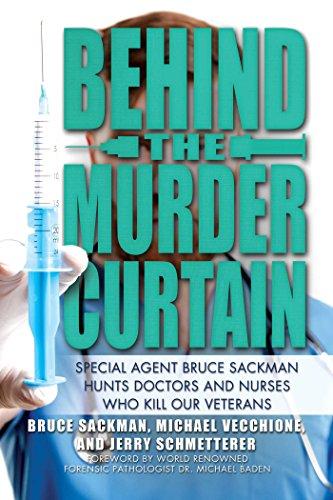
Special Agent Bruce Sackman Hunts Doctors and Nurses Who Kill Our Veterans
It discussed the investigation into medical serial killers, highlighting the challenges of detection and the devastating impact on victims and their families. The author's experience with tracking down and catching these killers was explored.
I read the book. I really enjoyed it.
— Episode: 470: Bruce Sackman | A Glimpse Behind th...
It discussed the investigation into medical serial killers, highlighting the challenges of detection and the devastating impact on victims and their families. The author's experience with tracking down and catching these killers was explored.
I read the book. I really enjoyed it.
I wouldn't say it's a fun read, you know, exactly.
It's maybe not a fun read but it's certainly in parts enjoyable and entertaining, I would say.
The book title is Behind the Murder Curtain, great title, will link to that in the show notes.
Michael Swango that doctor who's now in a super max prison... he went to Africa to help treat people who were unable to pay for medical care and they caught him killing people over there.
It detailed the stories of medical serial killers, including the infamous cases of Michael Swango and Kristen Gilbert, and the difficulties in detecting and prosecuting them.
I read the book. I really enjoyed it. I wouldn't say it's a fun read, you know, exactly.
In the book you detail some of the the way she harassed her boyfriend and she's just completely pardon the expression she's that shit crazy I mean she really was.
Kristen Gilbert responsible for over 80% of the deaths on her ward and even more close calls which were probably attempts to kill according to the book.
the book title is Behind the Murder Curtain great title will link to that in the show notes
and they caught him killing people over there it took a lot longer he killed a lot more they have a lot less infrastructure there and this guy said how dare you i brought my own drugs to treat people of course what he brought was poison and things that he could use to easily kill people
It detailed the experiences of Bruce Sackman, a special agent, who uncovered a series of medical serial killers, particularly within the VA hospital system. The book explored how difficult it was to detect and prosecute these killers due to the system's desire to protect its reputation.
I read the book. I really enjoyed it.
I wouldn't say it's a fun read, you know, exactly.
It's maybe not a fun read but it's certainly in parts enjoyable and entertaining, I would say.
There was one guy in England that I read about in your book. I think it was named Shipman.
Kristen Gilbert responsible for over 80% of the deaths on her ward and even more close calls which were probably attempts to kill according to the book.
The Curious Science of Your Brain's Ability to Deceive, Transform, and Heal
The book explored the science of how our brains can deceive, transform, and heal using the placebo effect, false memories, and the power of expectation, with examples like the satanic panic and curses.
I think if it happened to me as an adult I would legit have a heart attack
— Episode: 461: Erik Vance | The Curious Science of...
The book explored the science of how our brains can deceive, transform, and heal using the placebo effect, false memories, and the power of expectation, with examples like the satanic panic and curses.
I think if it happened to me as an adult I would legit have a heart attack
If you give someone the same, you know, Narcan, basically the same drug you take when you're having an overdose, like an opioid overdose, if you give that to someone having a placebo effect, the placebo effect goes away, like a pain placebo effect.
The book title is Suggestible You. We'll link it in the show notes.
If you're spending $10 a month on sugar pills and it's working, hey, good for you, keep doing it. But if you're spending $40,000 a year on vitamin infusions from some fake doctor, you're getting conned. Or a real doctor, you're still getting conned.
...and that's okay in some cases, even good. It makes a lot of the animosity that at least some parts of our society have against each other maybe eases it or makes a little easier to understand. You know, none of us are right, none of us have a clear picture of...I mean, you can stand out to politics, but you know certainly with health, none of us have a clear picture what's going on our bodies. We're all malleable and our memories are all fallible...
It explored the science behind the placebo and nocebo effects, how our brains twist reality to match expectations, and the impact of false memories, including the Satanic Panic.
The brain has one job, there's basically one thing that the brain does, and that is predict. It's a prediction machine.
If you take a pill and your brain really thinks that's a pain killer... your brain does not feel better, and it's like, okay, well either I can change my whole expectation about what pills are, or I can just drop some endogenous opioids that I have in my brain and make the pain go away and then I don't have to change the expectation.
If you pay more for a placebo, it works better... it's also really evil because people can then take it to the next level, charge thousands of dollars... and I have talked to people who spent their life savings chasing cures that were never going to happen.
The brain responds well to higher prices, and the same can be said of food enjoyment, like wines... when you price wines higher, people like them more... they very likely are having a different taste experience.
It's okay, we're all fallible. Our brains are all fallible, and it's okay... realize it, look, my memories probably aren't right... and that's okay in some cases, even good.
The book explores the science of how our brains can be tricked into believing things, impacting our health and experiences, as the author learned from his unique background as a Christian Scientist.
The brain has one job, there's basically one thing that the brain does, and that is predict. It's a prediction machine.
The brain is basically, it's like a bureaucrat. It's like some sort of like, you know, stamping bureaucrat; it doesn't want to make its job any harder than it has to.
Our brains twist reality to match expectations.
It's almost like there's an analogy here, I'm not quite getting, but since we know that vision is entirely created in our brain... it sounds like taste is similar and maybe smell also is similar.
The book title is 'Suggestible You'. We'll link it in the show notes.
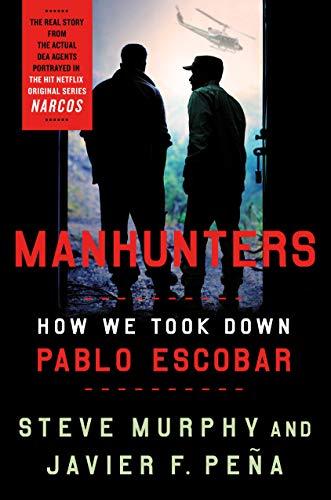
How We Took Down Pablo Escobar
It was discussed and recommended for its detailed account of the DEA agents' experiences in taking down Pablo Escobar. The book's contents were referenced throughout the conversation.
If you didn't know that, well, you're in for a treat because these guys are the real deal.
— Episode: 453: Javier Peña and Steve Murphy | Taki...
It was discussed and recommended for its detailed account of the DEA agents' experiences in taking down Pablo Escobar. The book's contents were referenced throughout the conversation.
If you didn't know that, well, you're in for a treat because these guys are the real deal.
And the reason you may have heard their names is because of Narcos on Netflix. So these are the real guys behind the guys. These are the real agents that that story is about.
The whole thing is outlined in our book man hunters but the reason I mentioned that is because we had a ghostwriter is a bell Vincent who wrote our book for us we told her all the stories and everything but she's an excellent researcher so she documents in the book where she went back and found the media articles in Cuba where when all this came out depressed Fidel Castro blamed that on a couple of army generals one of his name the leader was a guy named Mochoa believe it or not and they put him in front of a death squad shot him but there's no doubt anybody's mind you know those guys were allowing their airstrips to be used their military base airstrips to be used as a transship my point for cocaine
The book alternates between your two stories so you know I'm a little fuzzy on what crazy things happened to which one of you so you might have straight me out here but there was one of you is with I think was it your wife you were with and you got trapped by a car and this is right afterwards right after Kiki and so it's like what's gonna happen which one of you was that
Big thank you to Steve Murphy and Haviha Pena that book title is Manhunters of course the series is Narcos go check that out in the book is really good as well links to everything will be in the website in the show notes please do use our website links if you buy the books it does help support the show
It was mentioned as the book written by Javier Pena and Steve Murphy, detailing their experiences in taking down Pablo Escobar, providing the basis for the Netflix series 'Narcos'. It was mentioned that a ghostwriter, Nell Vincent, helped with its creation.
The whole thing is outlined in our book man hunters but the reason I mentioned that is because we had a ghostwriter is a bell Vincent who wrote our book for us we told her all the stories and everything but she's an excellent researcher so she documents in the book where she went back and found the media articles in Cuba where when all this came out depressed Fidel Castro blamed that on a couple of army generals one of his name the leader was a guy named Mochoa believe it or not and they put him in front of a death squad shot him but there's no doubt anybody's mind you know those guys were allowing their airstrips to be used their military base airstrips to be used as a transship my point for cocaine
If you want to find out more about us go to our website www.deanarkas.com we're hoping next year to compete with you in the podcasting markets so we've got a surprise coming after the first of the year
that book title is Manhunters of course the series is Narcos go check that out in the book is really good as well
please do use our website links if you buy the books it does help support the show
It was mentioned as the book where Steve and Javier detailed their experiences taking down Pablo Escobar, including the threats against their lives and the corruption they encountered.
If you didn't know that, well, you're in for a treat because these guys are the real deal.
They're hopefully end the rest of our lockdown here with a good old Netflix binge.
The reason I mentioned that is because we had a ghostwriter is a bell Vincent who wrote our book for us we told her all the stories and everything but she's an excellent researcher so she documents in the book where she went back and found the media articles in Cuba where when all this came out depressed Fidel Castro blamed that on a couple of army generals one of his name the leader was a guy named Mochoa believe it or not and they put him in front of a death squad shot him.
The book title is Manhunters of course the series is Narcos go check that out in the book is really good as well.
Seven Conversations for a Lifetime of Love (The Dr. Sue Johnson Collection, 1)
It was mentioned as a great book to learn more about attachment theory, particularly in understanding relationship patterns, especially in the context of dating apps.
Hold Me Tight by Sue Johnson is a great one.
— Episode: Bonus: How to Stop Falling for Everyone...
It was mentioned as a great book to learn more about attachment theory, particularly in understanding relationship patterns, especially in the context of dating apps.
Hold Me Tight by Sue Johnson is a great one.
How Understanding Your Partner's Brain and Attachment Style Can Help You Defuse Conflict and Build a Secure Relationship
It was recommended as a valuable resource for gaining a deeper understanding of attachment theory in the context of romantic relationships and dating apps.
Wired for Love by Stan Tatkin
— Episode: Bonus: How to Stop Falling for Everyone...
It was recommended as a valuable resource for gaining a deeper understanding of attachment theory in the context of romantic relationships and dating apps.
Wired for Love by Stan Tatkin
It was mentioned in relation to the idea that consciousness is a collaboration between subjective and objective elements, suggesting that our consciousness is shaped by our experiences, environment, and time.
David Lenson wrote a wonderful book called On Drugs said that consciousness is a collaboration between subjective and objective so it's person multiplied by place multiplied by time r...
— Episode: 451: Jason Silva | Origins of a Performa...
It was mentioned in relation to the idea that consciousness is a collaboration between subjective and objective elements, suggesting that our consciousness is shaped by our experiences, environment, and time.
David Lenson wrote a wonderful book called On Drugs said that consciousness is a collaboration between subjective and objective so it's person multiplied by place multiplied by time revealing a guard in a forking path as possible consciousnesses
It was cited for its perspective on consciousness as a collaboration between subjective and objective factors, influenced by context and time.
David Lenson wrote a wonderful book called On Drugs said that consciousness is a collaboration between subjective and objective so it's person multiplied by place multiplied by time revealing a guard in a forking path as possible consciousnesses
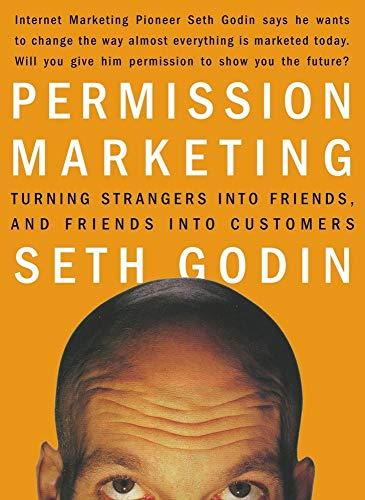
Turning Strangers into Friends and Friends into Customers (A Gift for Marketers)
It was mentioned as an example of a book that was initially poorly received, with some calling it delusional due to its focus on email marketing, a concept that wasn't widely accepted at the time, but it later proved to be a successful and accurate prediction.
And that was horrible to hear but I was right, you know and in the case of practice, I think I might be able to thread the needle here between that's really useful and I never thought about that befor...
— Episode: 445: Seth Godin | Shipping Creative Work
It was mentioned as an example of a book that was initially poorly received, with some calling it delusional due to its focus on email marketing, a concept that wasn't widely accepted at the time, but it later proved to be a successful and accurate prediction.
And that was horrible to hear but I was right, you know and in the case of practice, I think I might be able to thread the needle here between that's really useful and I never thought about that before and that's sort of what I'm hearing but a few people who would say I'm delusional would be helpful.
when I wrote Permission Marketing people said I was delusional and they said that email marketing wasn't a thing and we would never happen.
And that was horrible to hear but I was right, you know
I just said that it's a $20 billion year industry as zero billion when I started so it's a form of dog days in Ferno for me every day to open my inbox and watch how poorly people are doing 20 years after I told them how to do it right.
It was mentioned as a book that was initially criticised for being delusional, but turned out to be correct about the future of email marketing.
And that was horrible to hear but I was right, you know and in the case of practice, I think I might be able to thread the needle here between that's really useful and I never thought about that before and that's sort of what I'm hearing but a few people who would say I'm delusional would be helpful.
when I wrote Permission Marketing people said I was delusional and they said that email marketing wasn't a thing and we would never happen.
I just said that it's a $20 billion year industry as zero billion when I started so it's a form of dog days in Ferno for me every day to open my inbox and watch how poorly people are doing 20 years after I told them how to do it right.
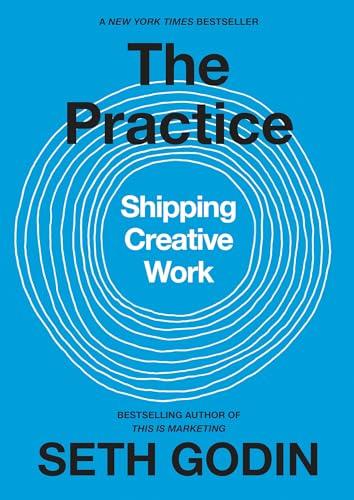
Shipping Creative Work
It was discussed at length throughout the episode, with various points from the book highlighted and debated. The concept of 'shipping' creative work was a key element that was discussed.
I read it and I don't think your delusional sorry to be unhelpful. I think it was spot on.
— Episode: 445: Seth Godin | Shipping Creative Work
It was discussed at length throughout the episode, with various points from the book highlighted and debated. The concept of 'shipping' creative work was a key element that was discussed.
I read it and I don't think your delusional sorry to be unhelpful. I think it was spot on.
You did mention in the book this industrial system that we have has brainwashed us into believing that the outcome matters and that this is a bad bargain.
You mentioned in the book which by the way, I got that super rough cut which I like. There's some T-sips in there and so I think you should leave those in.
Well, I got to get this one line from you because this is my favorite line in the whole book if a reason doesn't stop everyone from doing something it's not a reason it's an excuse
the book is called The Practice will link to it in the show notes thank you very much for sitting down with us
It was discussed as a book that helps people understand the importance of shipping creative work, even if it's not perfect, and that writer's block is a myth. It was described as being quite insightful and helpful.
I think it was spot on.
With email marketing, you know yeah, you are right.
And that was horrible to hear but I was right, you know and in the case of practice, I think I might be able to thread the needle here between that's really useful and I never thought about that before and that's sort of what I'm hearing but a few people who would say I'm delusional would be helpful.
You mentioned that in the book which by the way, I got that super rough cut which I like. There's some T-sips in there and so I think you should leave those in.
If a reason doesn't stop everyone from doing something, it's not a reason, it's an excuse.
It was discussed in depth throughout the episode, with the host particularly enjoying the unedited rough-cut version of the audiobook recording.
You mentioned that in the book which by the way, I got that super rough cut which I like. There's some T-sips in there and so I think you should leave those in.
I think it makes it even more realist. Like you're really sitting there talking to me because you go, oh wait, hold on. Right? Alright, let me start that sentence over. It's so much more realistic.
I actually enjoyed listening to those and he's got all these breaks where he's sipping tea and I think it's something about it was just so natural I suggested he leave them in obviously that won't happen but it does feel like you're hanging out with somebody who's explaining something to you when they are sipping tea or swallowing or all these things that people hate on podcasts I don't know maybe I'm weird anyway
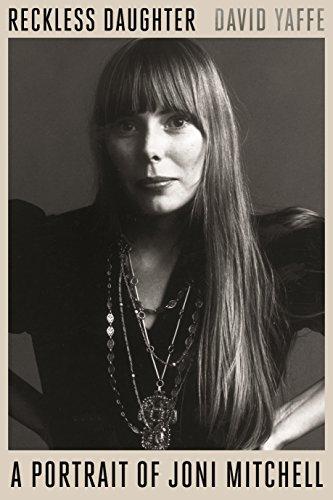
A Portrait of Joni Mitchell
It was mentioned as an example of an artist choosing to pursue their creative vision, even if it meant alienating some of their fanbase and potentially sacrificing commercial success, ultimately leading to a happier life for the artist.
Joni realized A she had enough money B she could do this for the next 40 years for 40 years she could keep playing songs in the Joni Mitchell genre they're not that hard she didn't want to do that she...
— Episode: 445: Seth Godin | Shipping Creative Work
It was mentioned as an example of an artist choosing to pursue their creative vision, even if it meant alienating some of their fanbase and potentially sacrificing commercial success, ultimately leading to a happier life for the artist.
Joni realized A she had enough money B she could do this for the next 40 years for 40 years she could keep playing songs in the Joni Mitchell genre they're not that hard she didn't want to do that she didn't want to play covers of herself she liked the feeling of art instead so she released a record called Don Juan's Reckless Daughter intentionally designed to make most of her fans walk away and they stuck with her and she had to do it two more times before they gave up on her but those records let Joni Mitchell go back to being the person she wanted to be and not keep score
It was mentioned as an album that Joni Mitchell released intentionally to alienate some of her fanbase, and as a way to reclaim her artistic direction, even at the cost of mainstream popularity.
Joni realized A she had enough money B she could do this for the next 40 years for 40 years she could keep playing songs in the Joni Mitchell genre they're not that hard she didn't want to do that she didn't want to play covers of herself she liked the feeling of art instead so she released a record called Don Juan's Reckless Daughter intentionally designed to make most of her fans walk away and they stuck with her and she had to do it two more times before they gave up on her but those records let Joni Mitchell go back to being the person she wanted to be and not keep score they certainly annoyed her record label but Joni's problem is not her record labels problem and vice versa she's not them and they're not her she gets to do what she wants
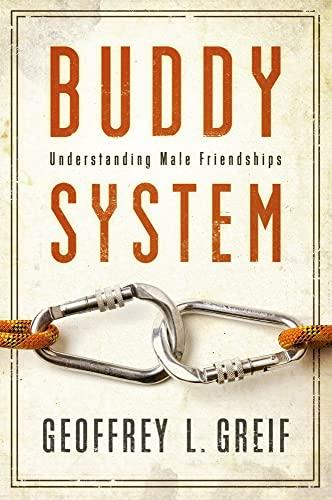
Understanding Male Friendships
It was discussed as a good resource to understand male friendships, particularly how men often connect through shared activities rather than emotional vulnerability.
One of them is called Buddy System understanding male friendships it's written by therapist and a friendship expert his name is Jaffrey grief and in this book he talks about how men i...
— Episode: 442: Sextortion Scam Security for Naive...
It was discussed as a good resource to understand male friendships, particularly how men often connect through shared activities rather than emotional vulnerability.
One of them is called Buddy System understanding male friendships it's written by therapist and a friendship expert his name is Jaffrey grief and in this book he talks about how men is it Jeffrey or Jaffrey because that name is Jaffrey that name is fallen out of favor did I say Jaffrey does that you said Jaffrey it's got to be Jeffrey I'm 100% sure it's Jeffrey I think I think I was either thinking about the restaurant in Malibu or I was thinking about game of threats yeah let's be real the restaurant Malibu now you're thinking about game of thrones you were thinking about game of thrones come on man I don't know why I just call them Jeffrey that's a lot yeah Jeffrey I don't even know this guy but him pretty sure his name is Jeffrey or Jeffrey yeah well anyway he talks about how men generally rely on what he calls shoulder to shoulder friendships that means doing things together while women tend to enjoy face-to-face friendships that's when they just sit and honestly share thoughts emotions kind of like football camp for Jordan I guess you know it's one of the best books for what I understand about how men relate to one another and how they connect through activities
It was discussed as a book that explores male friendships, contrasting the 'shoulder-to-shoulder' approach of men with the 'face-to-face' approach of women, suggesting that men may need to be more intentional with emotional intimacy.
one of them is called Buddy System understanding male friendships it's written by therapist and a friendship expert his name is Jaffrey grief and in this book he talks about how men is it Jeffrey or Jaffrey because that name is Jaffrey that name is fallen out of favor
Note: The book recommendations on this page are discovered automatically from podcast transcripts, and may be incorrect or incomplete.
Podcast Name