Podcast
The Jordan Harbinger Show
The book explored the science of how our brains can deceive, transform, and heal using the placebo effect, false memories, and the power of expectation, with examples like the satanic panic and curses.
I think if it happened to me as an adult I would legit have a heart attack
— Episode: 461: Erik Vance | The Curious Science of...
Episode: 461: Erik Vance | The Curious Science of the Sugge...
The book explored the science of how our brains can deceive, transform, and heal using the placebo effect, false memories, and the power of expectation, with examples like the satanic panic and curses.
I think if it happened to me as an adult I would legit have a heart attack
If you give someone the same, you know, Narcan, basically the same drug you take when you're having an overdose, like an opioid overdose, if you give that to someone having a placebo effect, the placebo effect goes away, like a pain placebo effect.
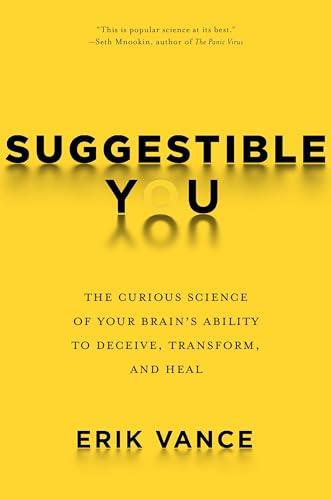
The book title is Suggestible You. We'll link it in the show notes.
If you're spending $10 a month on sugar pills and it's working, hey, good for you, keep doing it. But if you're spending $40,000 a year on vitamin infusions from some fake doctor, you're getting conned. Or a real doctor, you're still getting conned.
...and that's okay in some cases, even good. It makes a lot of the animosity that at least some parts of our society have against each other maybe eases it or makes a little easier to understand. You know, none of us are right, none of us have a clear picture of...I mean, you can stand out to politics, but you know certainly with health, none of us have a clear picture what's going on our bodies. We're all malleable and our memories are all fallible...
Episode: 461: Erik Vance | The Curious Science of the Sugge...
It explored the science behind the placebo and nocebo effects, how our brains twist reality to match expectations, and the impact of false memories, including the Satanic Panic.
The brain has one job, there's basically one thing that the brain does, and that is predict. It's a prediction machine.
If you take a pill and your brain really thinks that's a pain killer... your brain does not feel better, and it's like, okay, well either I can change my whole expectation about what pills are, or I can just drop some endogenous opioids that I have in my brain and make the pain go away and then I don't have to change the expectation.
If you pay more for a placebo, it works better... it's also really evil because people can then take it to the next level, charge thousands of dollars... and I have talked to people who spent their life savings chasing cures that were never going to happen.
The brain responds well to higher prices, and the same can be said of food enjoyment, like wines... when you price wines higher, people like them more... they very likely are having a different taste experience.
It's okay, we're all fallible. Our brains are all fallible, and it's okay... realize it, look, my memories probably aren't right... and that's okay in some cases, even good.
Episode: 461: Erik Vance | The Curious Science of the Sugge...
The book explores the science of how our brains can be tricked into believing things, impacting our health and experiences, as the author learned from his unique background as a Christian Scientist.
The brain has one job, there's basically one thing that the brain does, and that is predict. It's a prediction machine.
The brain is basically, it's like a bureaucrat. It's like some sort of like, you know, stamping bureaucrat; it doesn't want to make its job any harder than it has to.
Our brains twist reality to match expectations.
It's almost like there's an analogy here, I'm not quite getting, but since we know that vision is entirely created in our brain... it sounds like taste is similar and maybe smell also is similar.
The book title is 'Suggestible You'. We'll link it in the show notes.