![Twilight of the Idols and The Anti-Christ [Hardcover] cover](https://media.podcastbookpicks.com/books/11603.jpg)
Twilight of the Idols and The Anti-Christ [Hardcover]
Friedrich Nietzsche
Mentioned 1 year ago
Episode #212 ... Nietzsche and Critchley on the tragic perspective. (Amor Fati pt. 2)
Beginner friendly if listened to in order! For anyone interested in an educational podcast about philosophy where you don't need to be a graduate-level philosopher to understand it. In chronological order, the thinkers and ideas that forged the world we live in are broken down and explained.
Recently mentioned
Friedrich Nietzsche
Mentioned 1 year ago
Episode #212 ... Nietzsche and Critchley on the tragic perspective. (Amor Fati pt. 2)
Simon Critchley
Mentioned 1 year ago
Episode #212 ... Nietzsche and Critchley on the tragic perspective. (Amor Fati pt. 2)

Friedrich Nietzsche
Mentioned 1 year ago
Episode #211 ... Nietzsche returns with a hammer!
Friedrich Nietzsche
Mentioned 1 year ago
Episode #211 ... Nietzsche returns with a hammer!
Friedrich Wilhelm Nietzsche
Mentioned 1 year ago
Episode #211 ... Nietzsche returns with a hammer!
Paulo Freire
Mentioned 1 year ago
Episode #210 ... The Pedagogy of the Oppressed (Paulo Freire, Education)
Peter Singer
Mentioned 1 year ago
Episode #209 ... Improving our world through applied ethics. (Peter Singer, Katarzyna de Lazari-Radek)
Peter Singer
Mentioned 1 year ago
Episode #209 ... Improving our world through applied ethics. (Peter Singer, Katarzyna de Lazari-Radek)

Peter Singer
Mentioned 1 year ago
Episode #209 ... Improving our world through applied ethics. (Peter Singer, Katarzyna de Lazari-Radek)
Katarzyna de Lazari-Radek
Mentioned 1 year ago
Episode #209 ... Improving our world through applied ethics. (Peter Singer, Katarzyna de Lazari-Radek)
Robert Nozick
Mentioned 1 year ago
Episode #208 ... The moral evolution of a philosopher. (Peter Singer)

Derek Parfit
Mentioned 1 year ago
Episode #208 ... The moral evolution of a philosopher. (Peter Singer)

The book was referenced across multiple episodes as a classic example of ancient metaphysical writing, illustrating the essentialist worldview of early thinkers and its influence on later philosophers like Zeno. Hosts noted that its perceived dullness often stems from a reader's approach rather than the text itself, and described it as brilliant and fascinating but not revolutionary in the philosophical canon. Overall, the discussion treated the title as an interesting historical work rather than a must‑read recommendation.
The podcast host suggests that if a listener finds reading Plato's Timaeus boring and useless, it's likely because of their limited approach to the information, not the book itself. He implies that engaging with the material deeply can lead to a more useful perspective.
If you read a book about Plato's Timaeus, and as you're reading it, you're thinking, wow, this is really boring and useless to me. Then I'm going to go out on a limb and say that you probably have a pretty boring and useless way of looking at that information.
It was mentioned as an example of a metaphysical work alongside the New Testament and works by Leibniz and Plotinus; the speaker implied that aligning oneself with such metaphysical systems could be seen as problematic due to their unverifiability.
You know, that's precisely what's wrong with using metaphysics as a means of arriving at reliable knowledge in the first place.
that's fine if you want to call the New Testament a work of metaphysics, but just realize that Plato's Timaeus was a work of metaphysics. Leibniz, Plotinus, all metaphysical systems that are completely unverifiable and you're now aligning yourself with that.
The book was highlighted across several episodes as a key text for understanding existential ethics, with the hosts examining its challenge to traditional narratives and its emphasis on embracing the ambiguity of existence. They emphasized Beauvoir's arguments about freedom, responsibility, and the ethical imperative to will one's own freedom and that of others, presenting the work as essential for grasping her philosophy.
The Ethics of Ambiguity is a complex work that challenges the dominance of traditional narratives like Christianity and Marxism. De Beauvoir argues against reducing existence to either pure subjectivity or objectivity, emphasizing the importance of embracing the ambiguity of existence.
It was a matter of eliminating ambiguity by making oneself pure interiority or exteriority, by evading the world of the senses, or by being engulfed by it, by attaining eternity, or by enclosing oneself in a pure instant
morality resides in the painfulness of an indefinite questioning
abdicate her womanhood
The podcast discussed De Beauvoir's work, focusing on the concepts of ambiguity, freedom, and responsibility. It explored different strategies people use to avoid confronting the ambiguity of existence and the importance of willing the freedom of others.
one does not submit to a war or an occupation as he does to an earthquake. He must take sides for or against, and the foreign wills thereby become allied or hostile. It is this interdependence which explains why oppression is possible and why it is hateful.
it will be said that these considerations remain quite abstract. What must be done practically? Which action is good? Which is bad? To ask such a question is also to fall into a naive abstraction. We don't ask the physicist which hypotheses are true nor the artist by what procedures does one produce a work whose beauty is guaranteed. The field of ethics does not furnish recipes any more than do science and art. One can merely propose methods,
The podcast extensively discussed Beauvoir's work, focusing on the ambiguity of human existence, the importance of individual freedom alongside societal responsibility, and the ethical implications of oppression. The concept of willing both one's freedom and the freedom of others was highlighted as essential to ethical action.
one does not submit to a war or an occupation as he does to an earthquake. He must take sides for or against, and the foreign wills thereby become allied or hostile. It is this interdependence which explains why oppression is possible and why it is hateful.
As we have seen, my freedom, in order to fulfill itself, requires that it emerge into an open future. It is other men who open the future to me. It is they who, setting up the world of tomorrow, define my future. But if, instead of allowing me to participate in this constructive movement, they oblige me to consume my transcendence in vain, if they keep me below the level which they have conquered and on the basis of which new conquests will be achieved, then they are cutting me off from the future. They are changing me into a thing.
it will be said that these considerations remain quite abstract. What must be done practically? Which action is good? Which is bad? To ask such a question is also to fall into a naive abstraction. We don't ask the physicist which hypotheses are true nor the artist by what procedures does one produce a work whose beauty is guaranteed. The field of ethics does not furnish recipes any more than do science and art. One can merely propose methods,
The podcast discussed De Beauvoir's work, focusing on the concept of ambiguity in human existence and the ethical responsibility to will one's freedom and the freedom of others. It explored various strategies people employ to deny this ambiguity and the importance of acknowledging biases when engaging with the world.
one does not submit to a war or an occupation as he does to an earthquake. He must take sides for or against, and the foreign wills thereby become allied or hostile. It is this interdependence which explains why oppression is possible and why it is hateful.
As we have seen, my freedom, in order to fulfill itself, requires that it emerge into an open future. It is other men who open the future to me. It is they who, setting up the world of tomorrow, define my future. But if, instead of allowing me to participate in this constructive movement, they oblige me to consume my transcendence in vain, if they keep me below the level which they have conquered and on the basis of which new conquests will be achieved, then they are cutting me off from the future. They are changing me into a thing.
it will be said that these considerations remain quite abstract. What must be done practically? Which action is good? Which is bad? To ask such a question is also to fall into a naive abstraction. We don't ask the physicist which hypotheses are true nor the artist by what procedures does one produce a work whose beauty is guaranteed. The field of ethics does not furnish recipes any more than do science and art. One can merely propose methods,
The podcast discussed the first part of this book, which explores the ambiguity of human existence and the tension between facticity and transcendence. It focuses on the idea that humans are condemned to be free and the implications for ethics.
the continuous work of our life says Montaigne is to build death.
at the present time, there still exists many doctrines which choose to leave in the shadows, certain troubling aspects of a too complex situation, but their attempt to lie to us is in vain. Cowardice does not pay. Those reasonable metaphysics, those consoling ethics with which they'd like to entice us only accentuate the disorder from which we suffer.
the nihilist attitude manifests a certain truth in this attitude. One experiences the ambiguity of the human condition, but the mistake is that it defines man not as a positive existence of a lack, but as a lack at the heart of existence. Whereas the truth is that existence is not a lack as such. And if freedom is experienced in this case, in the form of rejection, it is not genuinely fulfilled.
the nihilist is right in thinking that the world possesses no justification and that he himself is nothing, but he forgets that it is up to him to justify the world and make himself exist validly. Instead of integrating death into life, he sees in it the only truth of the life, which appears to him as a disguised death. However, there is life. And the nihilist knows that he is alive. That's where his failure lies. He rejects existence without managing to eliminate it.
like nothing merits desire or effort
The hosts explored the book as a central source for Nietzsche’s philosophy, focusing on the three metamorphoses (camel, lion, child) and the concept of the overman. Stephen West and the hosts highlighted its relevance for understanding the critique of the “last man” and the drive toward self‑overcoming, while Simone de Beauvoir noted a potential selfish tilt in its emphasis on self‑fulfillment. The discussion presented the work as essential reading for listeners interested in Nietzsche’s ideas.
The concept of the "last man" is discussed, representing a life of comfort and security, avoiding suffering, which Nietzsche criticizes as life-denying.
And the question that leads him to his idea of the Ubermensch is to say, okay, we know how a system of morality would be if it was created by a weak person that was trying to avoid suffering all the time.
the values and projects that he has created. More than that, he also thinks that we can spot examples of these remarkable people that have done this by looking at our history.
The podcast extensively discussed Nietzsche's Thus Spoke Zarathustra, focusing on its central themes of overcoming the self and the three stages of human development (camel, lion, child). The episode explored Zarathustra's teachings on good vs. evil and the concept of the "overman", analyzing their significance in Nietzsche's philosophy.
behold, I teach you the overman. The overman is the meaning of the earth. Let your will say the overman shall be the meaning of the earth. I beseech you, my brothers remain faithful to the earth and do not believe those who speak to you have otherworldly hopes. Poison mixers are they, whether they know it or not. Despisers of life are they decaying and poison themselves of whom the earth is weary. So let them go. I teach you the overman man is something that shall be overcome. What have you done to overcome him? All beings so far have created something beyond themselves. And do you want to be the ebb of this great flood and even go back to the beast rather than overcome man? What is the ape to man, a laughingstock or a painful embarrassment and man shall be just that for the overman, a laughingstock or a painful embarrassment.
they fear their higher self because when it speaks, it speaks demandingly,
let the youthful soul look back on life with the question, what have you truly loved up to now? What has drawn your soul aloft? What has mastered it and at the same time blessed it set up these revered objects before you, and perhaps their nature and their sequence will give you a law, the fundamental law of your own true self.
but say my brothers, what can the child do that even the lion could not do? Why must the praying lion still become a child? The child is innocence and forgetting a new beginning, a game, a self-propelled wheel, a first movement, a sacred yes. For the game of creation, my brothers, a sacred yes is needed. The spirit now wills his own will, and he who had been lost to the world now conquers his own world.
A New Translation (Modern Library)
The hosts referenced the book across several episodes to illustrate Stoic concepts such as embracing discomfort, cultivating optimism, and preparing for adversity, noting that some translations were regarded as superior. They used its passages to underscore the importance of living according to nature and maintaining compassion toward others. The overall discussion was positive, presenting the work as a valuable source of philosophical guidance.
The author reflects on a quote from Marcus Aurelius' Meditations, where Aurelius questions the purpose of living a life of comfort and avoiding discomfort and challenges. The author uses this quote to illustrate the importance of embracing the ambiguity of existence and not sacrificing one's subjectivity for comfort.
You know, was this your purpose to sit warm under the blanket at home never experiencing things?
To never feel the discomfort of actually doing things, to deny your subjectivity so that you don't have to feel that ambiguity of existence
The speaker mentioned "Meditations" by Marcus Aurelius and how some people highly recommend specific translations of the book, implying a quality difference between translations.
You know, they'll say things like, this translation of Meditations by Marcus Aurelius is the best one and all the other ones? Complete waste of your time.
The podcast mentioned Marcus Aurelius's advocacy for optimism, emphasizing the importance of focusing on beauty and positivity, even for a Stoic who usually advises low expectations.
dwell on the beauty of life, watch the stars and see yourself running with them
The podcast frequently referenced Aurelius's Meditations, particularly his thoughts on expectations and preparing for adversity. His perspective on compassion and the interconnectedness of all beings was also highlighted.
Begin each day by telling yourself, today I shall be meeting with interference, ingratitude, insolence, disloyalty, ill will, and selfishness, all of them due to the offender's ignorance of what is good or evil.
If you work at that which is before you, following right reason, seriously, vigorously, calmly, without allowing anything else to distract you, but keeping your divine part pure, as if you were bound to give it back immediately, if you hold to this, expecting nothing, but satisfied to live now according to nature, speaking heroic truth in every word that you utter, you will live happy, and there is no man able to prevent this.
get rid of the judgment, get rid of the I am hurt, and you are rid of the hurt itself.
Do not waste what remains of your life in speculating about your neighbors, unless with a view to some mutual benefit. To wonder what so-and-so is doing and why, or what he is saying or thinking or scheming. If something distracts you from fidelity to the ruler within you, it means a loss of opportunity for some other task. See then that the flow of your thoughts is kept free from idle or random fancies, particularly those of an inquisitive or uncharitable nature. A man should habituate himself to such a way of thinking that if suddenly asked what is on your mind at this minute, he could respond frankly and without hesitation, thus proving that all his thoughts were simple and kindly, as becomes a social being with no taste for the pleasures of sensual imaginings, jealousies, envies, suspicions, or any other sentiments that he would blush to acknowledge in himself. Such a man, determined here and now to aspire to the heights, is indeed a priest and minister of the gods. For he is making full use of that indwelling power which can keep a man unsullied by pleasures, proof against pain, untouched by insult, and impervious to evil. He is a competitor in the greatest of all contests. The struggle against passion's mastery. He is imbued through and through with uprightness, welcoming wholeheartedly whatever falls to his lot, and rarely asking himself what others may be saying or doing or thinking except when the public interest requires it. He confines his operations to his own concerns, having his attention fixed on his own particular thread of the universal web, seeing to it that his actions are honorable, and convinced that what befalls him must be for the best, for his own directing fate is itself under a higher direction. He does not forget the brotherhood of all rational beings, nor that a concern for every man is proper to humanity, and he knows that it's not the world's opinions he should follow, but only those of men whose lives confessedly accord with nature. As for others whose lives are not so ordered, he reminds himself constantly of the characters they exhibit daily and nightly, at home and abroad, and of the sort of society they frequent, and the approval of such men, who do not even stand well in their own eyes, has no value for him.
Premium Edition
The podcast referenced the book several times, noting its central role in explaining the sovereign’s duty to protect citizens’ political identities and its influence on pre‑Enlightenment theories of governance. Hosts highlighted its lasting relevance, from the way it modeled the social contract and the state of nature to its insights on fear and reason that resonated with a listener who first read it at sixteen. Across the episodes the discussion portrayed the work as a foundational and powerful text in political philosophy.
The author made a reference to Thomas Hobbes's Leviathan and mentioned how a sovereign's role is to protect the citizens' political identities.
This is a sentiment expressed in Hobbes' Leviathan. When carrying out their end of the bargain in a social contract, part of the job of the sovereign, part of what makes a state legitimate at all, is when the sovereign has the ability to protect the members of the state and their political identities.
The book, "Leviathan", was compared to Machiavelli's work, focusing on the role of a sovereign in a pre-Enlightenment nation state. It was described as an influential text used to model governance before the American and French Revolutions.
It was modeled more after a Renaissance-era interpretation of Machiavelli's The Prince and Leviathan by Thomas Hobbes.
The speaker found the book's message about the nature of fear to be enduring and relatable, particularly during their youth. Reading it at 16 helped them understand their own irrational fears and the role of fear in self-preservation.
Thomas Hobbes and his Leviathan is a beautiful work with all sorts of messages woven in through it.
for though the nature of that which we conceive be the same, yet the diversity of our reception of it in respect of different constitutions of body and prejudices of opinion gives everything a tincture of our own different passions. And therefore in reasoning, a man must take heed of words, which besides the signification of what we imagine their nature, have a signification also of the nature, disposition and interest of the speaker.
in geometry, which is the only science that it hath pleased God hitherto to bestow upon mankind, men begin at settling the significations of their words, which settling of significations they call definitions and place them at the beginning of their reckoning.
the use and end of reason is not the finding of the sum and truth of one or a few consequences remote from the first definitions and settled signification of names, but to begin at these and proceed from one consequence to another. For there can be no certainty in the last conclusion without a certainty of all those affirmations and negations on which it was grounded and inferred.
reason is attained by industry, first in apt imposing of names, and secondly, by getting a good and orderly method in proceeding from the elements, which are names, to assertions made by connection of one of them to another, and so to syllogisms, which are connections of one assertion to another, till we come to a knowledge of all the consequences of names appertaining to the subject in hand. And what that is, is what men call science.
It was Hobbes's most famous work, and he helped design the cover of the first printing, depicting a giant human-shaped figure composed of smaller human bodies, with one man as the head, representing the sovereign. The podcast episode discussed the book's exploration of the social contract and the state of nature.
in such condition there is no place for industry because the fruit thereof is uncertain, and consequently no culture of the Earth, no navigation, nor use of the commodities that may be imported by sea, no commodious building, no instruments of moving or removing such things as require much force, no knowledge of the face of the Earth, no account of time, no arts, no letters, no society, and which is worst of all, continual fear and danger of violent death and the life of man solitary, poor, nasty, brutish, and short
To this war of every man against every man, this is also consequent, that nothing can be unjust. The notions of right and wrong, justice and injustice, have there no place. Where there is no common power, there is no law. Where no law, no injustice. Force and fraud are in war the two cardinal virtues. Justice and injustice are none of the faculties neither of the body nor mind. If they were, they might be in a man that were alone in the world, as well as his senses and passions. They are qualities that relate to men in society, not in solitude
...so that in the nature of man we find three principal causes of quarrel. First, competition. Secondly, diffidence. Thirdly, glory. The first maketh men invade for gain. The second, for safety. And the third, reputation. The first use violence to make themselves masters of other people's persons, wives, children, and cattle. The second, to defend them. The third, for trifles as a word, a smile, a different opinion, some other sign of undervalue either direct in their persons or by reflection in their kindred, their friends, their nation, their profession, or their name
From this equality of ability, ariseth equality of hope and attaining of our ends. And therefore, if any two men desire the same thing, which nevertheless they cannot both enjoy, they become enemies, and in the way to their end, endeavor to destroy or subdue another. If one plant, sow, build, or possess a convenient seat, then others may probably be expected to come prepared with forces united, to dispossess and deprive him not only of the fruit of his labor, but also of his life or liberty. And from this dividends of one another, there is no way for any man to secure himself so reasonable as anticipation, that is by force or wiles, to master the persons of all men he can, so long till he sees no other power great enough to endanger him
that every man ought to endeavor peace, as far as he can hope of obtaining it, and when he cannot obtain it, that he may seek and use all helps and advantages of war. The first branch of which rule containeth the first and fundamental law of nature, which is to seek peace and follow it
The podcast repeatedly highlighted the book as a cornerstone of Sartrean philosophy, using its notion that "man is condemned to be free" to explore ethical implications of human freedom. Hosts referenced it while discussing consciousness as an active freedom rather than a passive receptacle, and critiqued the reduction of complex personalities to universal essences. Throughout the episodes, the discussion framed the work as essential for understanding Sartre's ideas on nothingness and the inseparability of consciousness and the world.
It was described as Sartre's seminal work, exploring his concept of consciousness as freedom and nothingness. The podcast host discussed the book's complex ideas about the relationship between consciousness and the world, emphasizing the concept of consciousness as an activity rather than a passive receptacle.
transition, becoming anything that permits us to say that being is not yet what it will be and that it is already what it is not. All that is forbidden on principle. It is full positivity. It's important. It knows no otherness. It never posits itself as other than another being. It is not subject to temporality
that man back there in the past is me. It's not someone else after all. I recognize myself in that past man. And yet in the sense that matters right now, that man is not me. That man has good resolutions that speak to him and are persuasive. But those resolutions do not affect me one bit unless I make those resolutions anew now. I don't find his resolutions affecting me.
The podcast extensively discussed Sartre's seminal work, focusing on his concepts of consciousness as freedom and nothingness. The episode explored Sartre's ideas about consciousness as an activity of pure directedness towards being-in-itself and his rejection of the unconscious mind as a scapegoat for actions.
transition, becoming anything that permits us to say that being is not yet what it will be and that it is already what it is not. All that is forbidden on principle. It is full positivity. It's important. It knows no otherness. It never posits itself as other than another being. It is not subject to temporality
that man back there in the past is me. It's not someone else after all. I recognize myself in that past man. And yet in the sense that matters right now, that man is not me. That man has good resolutions that speak to him and are persuasive. But those resolutions do not affect me one bit unless I make those resolutions anew now. I don't find his resolutions affecting me.
The podcast mentioned Sartre's critique of using universal essences to understand individuals, illustrated by his analysis of a biography of Gustave Flaubert. His work challenged traditional philosophical approaches and emphasized the inseparability of consciousness and the world.
a critic for example wishing to explain the psychology of Flaubert will write that he quote appeared in his early youth to know as his normal state a continual exaltation resulting from the twofold feeling of his grandiose ambition and his invincible power. The effervescence of his young blood was then turned into literary passion as happens about the 18th year and precocious souls who find the energy of style or the intensities of fiction some way of escaping the need of violent action or of intense feeling which torments them end quote.
in this passage there's an effort to reduce the complex personality of an adolescent to a few basic desires as the chemist reduces compound bodies to merely a combination of simple bodies. The primitive givens will be grandiose ambition the need of violent action and of intense feeling these elements when they enter into combination produce a permanent exaltation end quote.
at each state in the description just quoted we meet with a hiatus why did ambition and the feeling of his power produce in Flaubert exaltation rather than tranquil waiting or gloomy impatience why did this exaltation express itself specifically in the need to act violently and feel intensely or rather why does this need make a sudden appearance by spontaneous generation at the end of the paragraph and why does this need instead of seeking to appease itself in acts of violence by amorous adventures or in debauch choose precisely to satisfy itself symbolically and why does Flaubert turn to writing rather than to painting or music for the symbolic satisfaction he could just as well not resort to the artistic field at all quote I could have been a great actor wrote Flaubert somewhere why did he not try to be one in a word we have understood nothing we have seen a succession of accidental happenings of desires springing forth fully armed one from the other with no possibility for us to grasp their genesis end quote
Stephen West referenced the title as a seminal dystopian work, calling it the "Casablanca of dystopian futures" and noting its frequent use as a benchmark for discussions about surveillance. He pointed out that it is one of the most banned books, suggesting governments may want to hide its warnings about the erosion of rights. The overall tone was appreciative of its cultural impact but remained a casual mention rather than a strong endorsement.
It was described as a classic, like the Casablanca of dystopian futures, and was mentioned as a commonly cited example of a dystopian future.
It's a classic. It's like the Casablanca of dystopian futures.
I mean, I'd like to die in it
It was mentioned that 1984 by George Orwell is one of the most banned books in the world, and the speaker speculated that it could be because governments are trying to hide the dangers of surveillance. The speaker also commented on the book's focus on the negative aspects of a surveillance state.
Did you guys know that George Orwell's 1984 is one of the most banned books in the history of the world?
It's like governments don't want people hearing about the gradual erosion of people's rights through surveillance, all the different forms that surveillance can take.
In hindsight, he really did focus a bit too much on the negative, didn't he?
I mean, yeah, dystopian future and all, but have you ever thought about the upside of an all-encompassing surveillance state?
The episode used '1984' as a point of comparison for a hypothetical dystopian sci-fi novel called '2024', imagining a future controlled by machines and the potential societal effects of this.
Instead of the book being called 1984 Let's pretend this one's called 2024
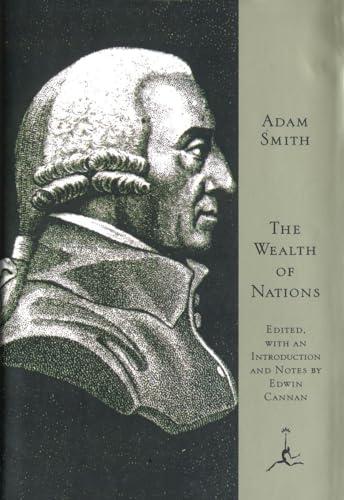
The title was brought up in three episodes as a historical reference point for early capitalism, with the hosts noting that its description of specialization and division of labor differed from later Marxist critiques. Stephen West and other speakers contrasted the idealized system presented in the book with the modern capitalist reality and the critiques of Marx, emphasizing that the 1776 version was not the same as the system being analyzed in the 1800s.
The Wealth of Nations was referenced as an example of capitalism from 1776. It was not the same system that was being critiqued in the 1800s.
It's not the same thing as what Marx was critiquing in the 1800s.
The speaker contrasts the current capitalist system with the idealized version of capitalism described by Adam Smith in his book The Wealth of Nations.
You don't live in a capitalist system as described by Adam Smith and the wealth of Nations.
The podcast discussed Adam Smith's book, focusing on its ideas of specialization and division of labor within a capitalist system and how it was viewed at the time of its publication. The speaker contrasted Smith's ideas with the later critiques of Karl Marx.
So when Adam Smith writes The Wealth of Nations and he walks into some guy's office, it's pulling the strings, and he just slams his book on his desk, he says, wow, capitalism, read it.
The book was referenced across multiple episodes as a source of philosophical insight. Stephen West expressed his love for learning about it and how it enriches his life, while the hosts quoted passages to illustrate Aristotle’s views on inductive versus deductive reasoning and the focus on means rather than ends. These mentions highlighted its relevance to understanding ethical deliberation, and the overall tone was positive and appreciative.
The podcast briefly mentioned this book as an example of philosophy the speaker enjoys learning about, contrasting it with ontological questions. It was mentioned as an area of philosophy that enriches the speaker's life.
I love learning about the existentialists and their approach to life. I love learning about the Nicomachean ethics. That's interesting.
The narrator quotes Aristotle from the Nicomachean Ethics, discussing the relationship between inductive and deductive reasoning and the distinction between knowledge of fact and knowledge of reasoned fact.
We must suppose it to be mere theory
A quote from Book 3, Part 3, was used to illustrate Aristotle's concept of deliberation focusing on means rather than ends in achieving life goals.
We deliberate not about ends but about means. For a doctor does not deliberate whether he shall heal, Nor an orator whether he shall persuade, Nor a statesman whether he shall produce law and order...
The title was cited as a clear illustration of Kant's argument that enlightenment requires shedding self‑imposed tutelage and embracing reason, which the hosts linked to broader calls for liberty, equality and solidarity. Stephen West highlighted the essay in relation to Bookchin's ideas, and the episode summaries reiterated Kant's "dare to know" motif as a challenge to religious dogma.
The book was mentioned as a demonstration of how Enlightenment ideas align with Bookchin's view on the human tendency toward greater liberty, equality and solidarity, referencing Kant's call for removing oneself from self-imposed tutelage and using reason to structure society.
You know when Immanuel Kant writes his famous essay in 1784 called What is Enlightenment and he says that to be enlightened We got to remove ourselves of our self-imposed tutelage of the past to him meaning the needless authority of religious thought and then when he says that moving forward we should be using reason as a more reliable guide for structuring the systems in our world When Kant writes that that is him and many others existing in a society where they look around them and obviously feel like something's very wrong about the way things are and it's them Standing up to the authority of religious claims to truth and demanding greater levels of Liberty equality and solidarity for people in the process.
It was written by Immanuel Kant and describes enlightenment as "man's removal of his self-incurred tutelage." Kant refers to the tutelage of thousands of years of religious dogma and challenges thinkers to "dare to know" or "dare to think for yourselves."
man's removal of his self-incurred tutelage.
This essay is about man's removal of self-incurred tutelage (i.e. religious dogma) and that man needs another way than religious faith to be able to arrive at the truth about things, because faith has caused a lot of problems historically.
man's removal of his self-incurred tutelage.
dare to know or dare to think for yourselves for once.
The book was brought up in three episodes as a key historical text that illustrated how rulers could maintain power, often by using force alongside law. The hosts discussed its relevance to topics ranging from Foucault's analysis of the pre‑Enlightenment state to debates about moral compromise in political change, emphasizing its reputation as a pragmatic handbook for new princes. Overall, the podcast treated the title as an influential but controversial work rather than issuing a strong endorsement.
The book, "The Prince", was described as a Renaissance-era interpretation of Machiavelli's work, focusing on a king's ability to maintain power, which Foucault compared to the pre-Enlightenment nation state.
It was modeled more after a Renaissance-era interpretation of Machiavelli's The Prince and Leviathan by Thomas Hobbes.
It was described as a handbook for new rulers, offering a blueprint for seizing and maintaining power, with stability as the paramount concern. The author believed that rulers might need to act immorally to achieve this stability.
It ought to be remembered that there is nothing more difficult to take in hand, more perilous to conduct, or more uncertain in its success, than to take the lead in the introduction of a new order of things, because the innovator has for enemies all those who have done well under the old conditions, and lukewarm defenders and those who may do well under the new. This coolness arises partly from fear of the opponents who have the laws on their side, and partly from the incredulity of men who do not readily believe in new things until they have had a long experience of them. Hence it comes that all armed prophets have been victorious, and all unarmed prophets have been destroyed.
Is it better to be loved rather than feared, or feared rather than loved? It might perhaps be answered that we should wish to be both, but since love and fear can hardly exist together, if we must choose between them, it is far safer to be feared than loved.
The lion cannot protect himself from traps, and the fox cannot defend himself from the wolves. One must therefore be a fox to recognize traps, and a lion to frighten wolves.
I say that every prince must desire to be considered merciful and not cruel. He must, however, take care not to misuse this mercifulness. A prince, therefore, must not mind incurring the charge of cruelty for the purpose of keeping his subjects united and confident. For with a very few examples, he will be more merciful than those who, from excess of tenderness, allow disorders to arise, from whence spring murders and rapine. For these as a rule injure the whole community, while the executions carried out by The Prince injure only one individual.
You must know then that there are two methods of fighting, the one by law, the other by force. The first method is that of men, the second of beasts. But as the first method is often insufficient, one must have recourse to the second. It is therefore necessary to know well how to use both the beast and the man.
The hosts referenced the book as an example of a work that could shape people's subjectivity through idealism, and they noted its complexity made it unsuitable for children, suggesting it was a heavy philosophical text. They did not endorse it directly, merely cited it as influential yet too advanced for younger audiences.
What's Become of the Common Good?
The Tyranny of Merit questions whether rewarding people solely based on talent, hard work, and qualifications is a good way to recognize people in society. The book suggests that a meritocracy can lead to unintended consequences, such as a feeling of deservingness among the successful and a sense of humiliation and resentment among those struggling. This, in turn, contributes to a decline in civic virtue, populism, and corrosive attitudes towards each other.
Michael Sandel in his 2020 book called The Tyranny of Merit is going to question whether that's actually a good way to be giving recognition in a society.
— Episode: Episode #205 ... Why a meritocracy is co...
The Tyranny of Merit questions whether rewarding people solely based on talent, hard work, and qualifications is a good way to recognize people in society. The book suggests that a meritocracy can lead to unintended consequences, such as a feeling of deservingness among the successful and a sense of humiliation and resentment among those struggling. This, in turn, contributes to a decline in civic virtue, populism, and corrosive attitudes towards each other.
Michael Sandel in his 2020 book called The Tyranny of Merit is going to question whether that's actually a good way to be giving recognition in a society.
The person that originally coined the term meritocracy was a guy named Michael Young back in the year 1958. He wrote a book called The Rise of the Meritocracy.
It's a fiction novel that's about a dystopian future where society organizes things around a meritocracy.
It tells successful people that you're the reason for all your success and you don't have to consider all the factors outside of your control that made your situation a pretty fortunate one.
We start to view the entire concept of education in our societies as just a way for people to acquire credentials so they can get paid in the world.
The podcast mentions that in his recent book, Sandel suggests that success is the ultimate thing we honour in our societies, and we flatter the successful and humiliate the unsuccessful.
As Sandel talks about in his more recent book, The Tyranny of Merit, are the consequences of that, that we got a bunch more successful people in the world rolling around in Bugatti's or do we just have a society that ends up more divided one where, as he says, we flatter the successful in the world and humiliate the unsuccessful.

Books 1-7 (Slipcase)
The newest Harry Potter book was mentioned as an example of a topic where people commonly recycle the same fallacious arguments.
With our co-workers about what the best course of action is to take moving forward on a project. With our spouses about whether we were out of line that day when we made too much noise in the kitchen....
— Episode: Episode #073 ... How To Win An Argument...
The newest Harry Potter book was mentioned as an example of a topic where people commonly recycle the same fallacious arguments.
With our co-workers about what the best course of action is to take moving forward on a project. With our spouses about whether we were out of line that day when we made too much noise in the kitchen. And yes, as you probably guessed by the start of this episode, these arguments are an integral part of what it means to be conducting philosophy.
no matter what subject we're talking about, football, health care, welfare, civil rights, or even the newest Harry Potter book, people pretty much use the same ones over and over again.
The narrator used the combined word count of the Harry Potter book franchise and the Fifty Shades of Grey franchise to illustrate the sheer volume of Aristotle's writings, which totaled approximately 1.5 million words.
To put that into perspective, That is about the same as the entire Harry Potter book franchise Combined with the entire Fifty Shades of Grey franchise
Original Text
The podcast host mentioned listening to the audiobook version, narrated by Elijah Wood, at half speed, finding some of the narration humorous and ridiculous.
There's a book called The Adventures of Huckleberry Finn, narrated by Elijah Wood.
— Episode: Episode #012 ... The Hellenistic Age Pt....
The podcast host mentioned listening to the audiobook version, narrated by Elijah Wood, at half speed, finding some of the narration humorous and ridiculous.
There's a book called The Adventures of Huckleberry Finn, narrated by Elijah Wood.
The book explores the idea that human beings cannot function in the world while also having a constant awareness of their death. It posits that we engage in a "denial of death" by creating meaning and significance through cultural heroes and immortality projects, often rooted in our fear of impermanence and insignificance.
This is the terror of death. To have emerged from nothing, to have a name, consciousness of self, deep inner feelings and excruciating inner yearning for life and self-expression. And with all this ye...
— Episode: Episode #162 ... The Creation of Meaning...
The book explores the idea that human beings cannot function in the world while also having a constant awareness of their death. It posits that we engage in a "denial of death" by creating meaning and significance through cultural heroes and immortality projects, often rooted in our fear of impermanence and insignificance.
This is the terror of death. To have emerged from nothing, to have a name, consciousness of self, deep inner feelings and excruciating inner yearning for life and self-expression. And with all this yet to die.
Power means power to increase oneself, to change one's natural situation from one of smallness, helplessness, finitude, to one of bigness, control, durability and importance.
It is still a mythical hero system in which people serve in order to get a feeling of primary value, of cosmic specialness, of ultimate usefulness to creation, of unshakable meaning.
Civilized society is a hopeful belief and protest that science, money and goods make men count for more than any other animal.
necessary and basic dishonesty about oneself and one's whole situation.
The Denial of Death explores the tension between our biological existence, which is fragile and temporary, and our symbolic existence, which allows us to contemplate the infinite and create meaningful things. Becker argues that we cannot function in the world while constantly aware of our mortality, so we deny it through various means, such as religion, drugs, and immersion in mundane tasks.
This is the terror of death. To have emerged from nothing, to have a name, consciousness of self, deep inner feelings and excruciating inner yearning for life and self-expression. And with all this yet to die, end quote.
Power means power to increase oneself, to change one's natural situation from one of smallness, helplessness, finitude, to one of bigness, control, durability and importance. End quote.
necessary and basic dishonesty about oneself and one's whole situation. End quote.
kill out of joy, as Becker says.
The podcast mentioned this book as an example of how Richard Dawkins packaged existing atheistic ideas to resonate with the culture of the early 2000s, not as presenting new ideas. It was discussed in the context of the "new atheist" movement and its impact on how people view the concept of God.
When Richard Dawkins writes The God Delusion or when Sam Harris writes the end of faith. Neither of these guys would say that these are new ideas that they're presenting.
— Episode: Episode #076 ... Hegel's God
The podcast mentioned this book as an example of how Richard Dawkins packaged existing atheistic ideas to resonate with the culture of the early 2000s, not as presenting new ideas. It was discussed in the context of the "new atheist" movement and its impact on how people view the concept of God.
When Richard Dawkins writes The God Delusion or when Sam Harris writes the end of faith. Neither of these guys would say that these are new ideas that they're presenting.
The book was mentioned as a "mega-selling best book" by the podcast host, in reference to its author, Richard Dawkins, who debated Bill O'Reilly on the existence of God.
Richard Dawkins, the author of the mega-selling best book, The God Delusion.
This book argues for a minimal state that provides only basic protection and contract enforcement, rejecting both anarchy and a large state with extensive responsibilities. It suggests that the best form of government is one that respects individual rights and entitlements.
Individuals have rights and there are things no person or group may do to them.
— Episode: Episode #138 ... Robert Nozick - The Min...
This book argues for a minimal state that provides only basic protection and contract enforcement, rejecting both anarchy and a large state with extensive responsibilities. It suggests that the best form of government is one that respects individual rights and entitlements.
Individuals have rights and there are things no person or group may do to them.
The only way you'd owe them money is if you consented to pay them for the music before they started playing.
This is of course in direct contrast to the long tradition of political philosophy being centered around utilitarianism.
The book Anarchy, State, and Utopia offers a unique argument in favor of libertarianism, which at the time was in many ways a different solution to 20th century political problems that were going on.
It's been said that while Nozick offers a defensive libertarianism from the perspective of rights, Hayek offers a defensive libertarianism from the perspective of markets.
It was mentioned in relation to the 'Experience Machine' thought experiment, which challenged Peter Singer's early hedonistic utilitarianism by highlighting the value of authentic experiences over constant pleasure.
And he says one of the examples that really made him realize this during this period in his life was a thought experiment put out by the philosopher Robert Nozick in his famous book called Anarchy, State and Utopia.
The book was cited in two episodes as a source for a striking Nietzsche quote about laughter, highlighting his view that humans laugh because they suffer deeply, and later as a bleak forecast that millions would die within a century due to humanity's self‑inflicted predicament. The hosts referenced the passages to illustrate Nietzsche's dark insights rather than to endorse the work, presenting it as a provocative but unsettling text.
The book was mentioned as the source of a passage about laughter that Nietzsche wrote. He believed that humans are the only creatures that laugh because they suffer so deeply.
Perhaps I know best why man alone laughs. He alone suffers so deeply that he had to invent laughter. The unhappiest and most melancholy animal is, as fitting, the most cheerful.
I tore myself away from the safe comfort of certainties through my love for truth, and truth rewarded me.
It was ominously predicted in this book that tens of millions of people would die in the next hundred years after its publication, due to the difficult situation humanity had worked itself into.
Nietzsche predicts in his book The Will to Power very ominously that in the next hundred years after having written that book tens of millions of people are going to die because of this position that we've worked ourselves into.
Note: The book recommendations on this page are discovered automatically from podcast transcripts, and may be incorrect or incomplete.
Podcast Name