![Twilight of the Idols and The Anti-Christ [Hardcover] cover](https://media.podcastbookpicks.com/books/11603.jpg)
Twilight of the Idols and The Anti-Christ [Hardcover]
Friedrich Nietzsche
Mentioned 1 year ago
Episode #212 ... Nietzsche and Critchley on the tragic perspective. (Amor Fati pt. 2)
Beginner friendly if listened to in order! For anyone interested in an educational podcast about philosophy where you don't need to be a graduate-level philosopher to understand it. In chronological order, the thinkers and ideas that forged the world we live in are broken down and explained.
Recently mentioned
Friedrich Nietzsche
Mentioned 1 year ago
Episode #212 ... Nietzsche and Critchley on the tragic perspective. (Amor Fati pt. 2)
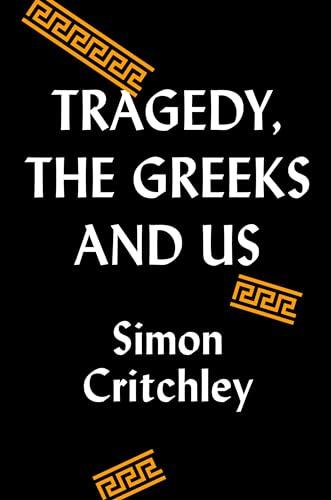
Simon Critchley
Mentioned 1 year ago
Episode #212 ... Nietzsche and Critchley on the tragic perspective. (Amor Fati pt. 2)
Friedrich Nietzsche
Mentioned 1 year ago
Episode #211 ... Nietzsche returns with a hammer!
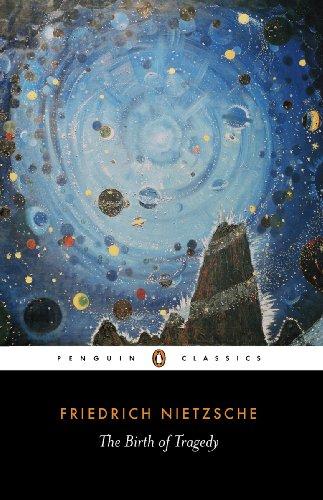
Friedrich Nietzsche
Mentioned 1 year ago
Episode #211 ... Nietzsche returns with a hammer!
Friedrich Wilhelm Nietzsche
Mentioned 1 year ago
Episode #211 ... Nietzsche returns with a hammer!
Paulo Freire
Mentioned 1 year ago
Episode #210 ... The Pedagogy of the Oppressed (Paulo Freire, Education)
Peter Singer
Mentioned 1 year ago
Episode #209 ... Improving our world through applied ethics. (Peter Singer, Katarzyna de Lazari-Radek)
Peter Singer
Mentioned 1 year ago
Episode #209 ... Improving our world through applied ethics. (Peter Singer, Katarzyna de Lazari-Radek)
Peter Singer
Mentioned 1 year ago
Episode #209 ... Improving our world through applied ethics. (Peter Singer, Katarzyna de Lazari-Radek)
Katarzyna de Lazari-Radek
Mentioned 1 year ago
Episode #209 ... Improving our world through applied ethics. (Peter Singer, Katarzyna de Lazari-Radek)
Robert Nozick
Mentioned 1 year ago
Episode #208 ... The moral evolution of a philosopher. (Peter Singer)
Derek Parfit
Mentioned 1 year ago
Episode #208 ... The moral evolution of a philosopher. (Peter Singer)
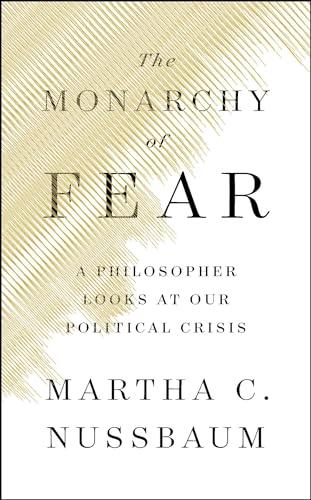
A Philosopher Looks at Our Political Crisis
It discussed the negative impact of fear on democracy, suggesting that unexamined fear hinders trust and cooperation, and contrasted it with the importance of fostering practical hope.
that's the title of her book that we're talking about today The Monarchy of Fear
— Episode: Episode #207 ... Fear is toxic to a demo...
It discussed the negative impact of fear on democracy, suggesting that unexamined fear hinders trust and cooperation, and contrasted it with the importance of fostering practical hope.
that's the title of her book that we're talking about today The Monarchy of Fear
fear is also an emotion that when left unexamined is fundamentally toxic to the processes of democracy in particular
if you're wondering why our democratic institutions seem less capable of solving our political problems than they've been in the past we have to consider this fact that we have an emotional climate of fear that's better suited to make a monarchy work well than it is to make a democracy work well
the arts offer bridges to sing human diversity as joyful funny tragic delightful not as a horrible fate to be shunned
good works need hope
The podcast detailed Thoreau's concept of civil disobedience, emphasizing individual conscience over government coercion, illustrated by his tax refusal during the Mexican-American War. The speaker cited the famous quote, "the government that governs best governs least."
the government that governs best governs least
— Episode: Episode #083 ... Henry David Thoreau
The podcast detailed Thoreau's concept of civil disobedience, emphasizing individual conscience over government coercion, illustrated by his tax refusal during the Mexican-American War. The speaker cited the famous quote, "the government that governs best governs least."
the government that governs best governs least
it is not a man's duty as a matter of course to devote himself to the eradication of any, even the most enormous wrong. He may still properly have other concerns to engage him, but it is his duty at least to wash his hands of it. And if he gives it no thought longer not to give it practically his support. If I devote myself to other pursuits and contemplations, I must first see at least that I do not pursue them sitting upon another man's shoulders. I must get off him first that he may pursue his contemplations too,
most of the luxuries and many of the so-called comforts of life are not only indispensable, but positive hindrances to the elevation of mankind. With respect to luxuries and comforts, the wisest have ever lived a more simple and meager life than the poor.
the government does not concern me much and I shall bestow the fewest possible thoughts on it. It's not many moments that I live under a government even in this world. If a man is thought free, meaning free in his thinking, fancy free, imagination free, that which is not never for a long time appearing to be to him, unwise rulers or reformers cannot fatally interrupt him,
It was mentioned as a source for a quote where Nietzsche stated his preference for Thucydides' work over Platonism, highlighting his appreciation for Thucydides' non-moralizing approach to history.
my recreation, my predilection, my cure after all Platonism has always been Thucydides
— Episode: Episode #212 ... Nietzsche and Critchley...
It was mentioned as a source for a quote where Nietzsche stated his preference for Thucydides' work over Platonism, highlighting his appreciation for Thucydides' non-moralizing approach to history.
my recreation, my predilection, my cure after all Platonism has always been Thucydides
It was mentioned that Wollstonecraft's most famous work is A Vindication of the Rights of Woman, in which she critiques the societal norms that perpetuate women's subjugation and advocates for their equal rights and educational opportunities. The podcast host highlighted its significance in challenging traditional views on gender roles and the education of women.
...strengthen the female mind by enlarging it, and there will be an end to blind obedience.
— Episode: Episode #065 ... Mary Wollstonecraft
It was mentioned that Wollstonecraft's most famous work is A Vindication of the Rights of Woman, in which she critiques the societal norms that perpetuate women's subjugation and advocates for their equal rights and educational opportunities. The podcast host highlighted its significance in challenging traditional views on gender roles and the education of women.
...strengthen the female mind by enlarging it, and there will be an end to blind obedience.
slavery, even in this case, will have its constant effect, degrading the master and the abject dependent,
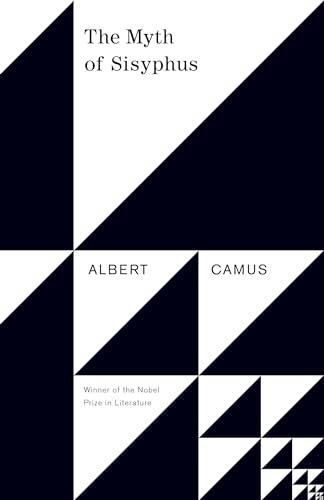
This book explores the absurdity of the universe and suggests that we should strive to fully engage in our tasks and appreciate the process, rather than agonizing over the lack of ultimate meaning. The metaphor of Sisyphus pushing a boulder is used to represent the human condition.
But what I love about Camus in The Myth of Sisyphus is that he talks about the process of discovering that void for the first time.
— Episode: Episode #108 ... The Frankfurt School pt...
This book explores the absurdity of the universe and suggests that we should strive to fully engage in our tasks and appreciate the process, rather than agonizing over the lack of ultimate meaning. The metaphor of Sisyphus pushing a boulder is used to represent the human condition.
But what I love about Camus in The Myth of Sisyphus is that he talks about the process of discovering that void for the first time.
We live in a universe that's so inconceivably large and complex and of a scope that we as human beings can't even wrap our heads around. We live out our lives with every step we take. We're fighting against a tidal wave of things that are trying to kill us at any moment.
Camus gives two main strategies that Sisyphus uses to be happy.
Camus would say that as outsiders if we could somehow sit on the sidelines and watch Sisyphus push the boulder up the hill over and over again it would no doubt look to us like a totally meaningless torturous insane thing that Sisyphus is being forced to do.
The podcast host considers Montaigne's essays a great starting point for those new to philosophy because of their relatable topics and candid style, despite sometimes being overly candid. They were described as beautifully written and insightful.
With such frequent and ordinary examples passing before our eyes, how can we possibly rid ourselves of the thought of death and of the idea that at every moment it is gripping us by the throat?
— Episode: Episode #024 ... Montaigne
The podcast host considers Montaigne's essays a great starting point for those new to philosophy because of their relatable topics and candid style, despite sometimes being overly candid. They were described as beautifully written and insightful.
With such frequent and ordinary examples passing before our eyes, how can we possibly rid ourselves of the thought of death and of the idea that at every moment it is gripping us by the throat?
Physicians have this advantage. The sun lights their success and the earth covers their failures.
For truth itself does not have the privilege to be employed at any time and in every way. Its use, noble as it is, has its circumscriptions and limits.
Why may not a goose say thus? The earth serves me to walk upon, the sun to light me. The stars have their influence upon me. I have such an advantage by the winds and such by the waters. There is nothing that yon heavenly roof looks upon so favorably as me. I am the darling of nature. Is it not man that keeps and serves me?
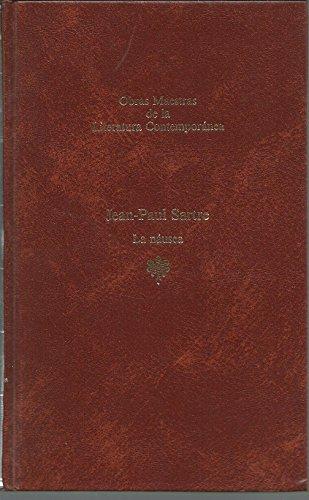
The book explores the concept of existentialism through the experiences of its main character, who grapples with the absurdity of existence and the lack of preordained meaning in the world. Sartre uses examples like the character's reaction to a chair and a chestnut tree to illustrate this feeling of absurdity.
if anyone had asked me what existence was, I would have answered in good faith that it was nothing. Simply an empty form which was added to external things without changing anything in their nature.
— Episode: Episode #086 ... Sartre and Camus pt. 1...
The book explores the concept of existentialism through the experiences of its main character, who grapples with the absurdity of existence and the lack of preordained meaning in the world. Sartre uses examples like the character's reaction to a chair and a chestnut tree to illustrate this feeling of absurdity.
if anyone had asked me what existence was, I would have answered in good faith that it was nothing. Simply an empty form which was added to external things without changing anything in their nature.
Existence had suddenly unveiled itself. It had lost the harmless look of an abstract category. It was the very paste of things.
This root was needed into existence or rather the root, the park gates, the bench, the sparse grass, all that had vanished.
The diversity of things, their individuality were only an appearance, a veneer. This veneer had melted leaving soft monstrous masses all in disorder, naked in a frightful obscene nakedness.
I kept myself from making the slightest movement, but I didn't need to move in order to see behind the trees, the blue columns and the lampposts of the bandstand and the veleta. In the midst of a mountain of laurel, all these objects, how can I explain? They inconvenienced me. I would have liked them to exist less strongly, more dryly, in a more abstract way with more reserve.
Out of the Spirit of Music (Penguin Classics)
Nietzsche argued that great artwork embodies both Dionysian (chaotic, passionate) and Apollonian (ordered, rational) energies; Socrates, by prioritizing rationality, neglected the Dionysian, thus steering Western thought astray.
In Nietzsche's first book, The Birth of Tragedy, Nietzsche makes the case that great artwork has represented in it both the energies of Dionysus and Apollo.
— Episode: Episode #211 ... Nietzsche returns with...
Nietzsche argued that great artwork embodies both Dionysian (chaotic, passionate) and Apollonian (ordered, rational) energies; Socrates, by prioritizing rationality, neglected the Dionysian, thus steering Western thought astray.
In Nietzsche's first book, The Birth of Tragedy, Nietzsche makes the case that great artwork has represented in it both the energies of Dionysus and Apollo.
This book explores Nietzsche's critique of the concepts of 'good' and 'evil', tracing their historical origins and arguing that they are human constructs rather than objective realities.
this is what Nietzsche writes about in his book on the genealogy of morality, that around this time of Socrates, the religion of Zoroastrianism that would later go on to influence Judaism and Christia...
— Episode: Episode #211 ... Nietzsche returns with...
This book explores Nietzsche's critique of the concepts of 'good' and 'evil', tracing their historical origins and arguing that they are human constructs rather than objective realities.
this is what Nietzsche writes about in his book on the genealogy of morality, that around this time of Socrates, the religion of Zoroastrianism that would later go on to influence Judaism and Christianity, well it no doubt had an influence on Plato's thinking around this time too.
A Translation for the 21st Century)
In his Confessions, Augustine reflects on his past sins, even those committed in infancy, expressing deep self-condemnation and highlighting his belief in personal accountability for all actions from birth. He details his journey from Manichaeism to Christianity and the pivotal moment of his conversion.
Who can recall to me the sins I committed as a baby? For in your sight no man is free from sin, not even a child who has lived only one day on earth.
— Episode: Episode #016 ... Saint Augustine
In his Confessions, Augustine reflects on his past sins, even those committed in infancy, expressing deep self-condemnation and highlighting his belief in personal accountability for all actions from birth. He details his journey from Manichaeism to Christianity and the pivotal moment of his conversion.
Who can recall to me the sins I committed as a baby? For in your sight no man is free from sin, not even a child who has lived only one day on earth.
I went to Carthage where I found myself in the midst of a hissing cauldron of lust, bodily desire like a morass and adolescent sex welling up within me exuded mists which clouded over and obscured my heart so that I could not distinguish the clear light of true love from the murk of lust. This was the age at which the frenzy gripped me and I surrendered myself entirely to lust which your law forbids but human hearts are not ashamed to sanction.
But my sin was this, that I looked for pleasure, beauty, and truth not in him but in myself and his other creatures, and the search led me instead to pain, confusion, and error.
My soul speaks with truth when it confesses to you that I do measure time. Is it the case then, Lord my God, that I perform the act of measuring but do not know what I am measuring? I measure the motion of a body in time. Is it the case that I do not measure the time itself?
It is inaccurate to say there are three tenses of time, past, present, and future. Though it might properly be said, there are three tenses of times, the present of past things, the present of present things, the present of future things. These are three realities in the mind, but nowhere else as far as I can see, for the present of past things is memory, the present of present things is attention, and the present of future things is expectation. If we are allowed to put it that way, then I do see three tenses or times, and I admit that they are three.
It was discussed as an example of Descartes' attempt to apply mathematical certainty to thinking, aiming to achieve certainty about things through clear and distinct propositions. The podcast highlighted his method of linking propositions, similar to mathematical equations, to build a foundation for certain knowledge.
He's a mathematician turned philosopher, a mathematician fascinated by the level of certainty we can have when we say things like one plus one equals two. And he wants to try emulate this process of m...
— Episode: Episode #103 ... Sartre and Camus pt. 4...
It was discussed as an example of Descartes' attempt to apply mathematical certainty to thinking, aiming to achieve certainty about things through clear and distinct propositions. The podcast highlighted his method of linking propositions, similar to mathematical equations, to build a foundation for certain knowledge.
He's a mathematician turned philosopher, a mathematician fascinated by the level of certainty we can have when we say things like one plus one equals two. And he wants to try emulate this process of mathematical certainty and apply it to thinking, the goal being to arrive at certainty about things.
in his book Rules for the Direction of the Mind, he talks about taking clear and distinct propositions and linking them together in the same sort of way a mathematician might say something like, okay well one plus one equals two. All right now two plus five equals seven. We know that, right? Okay now seven times four equals twenty-eight.

with Hume's Abstract of A Treatise of Human Nature and A Letter from a Gentleman to His Friend in Edinburgh (Hackett Classics)
The podcast mentioned this book in relation to Heidegger's critique of phenomenology, questioning the assumptions of traditional philosophy and its limitations in understanding the structure of human thought. Heidegger questioned whether Hume's work would be different if it were focused on squirrels or raccoons instead of humans.
You know, when David Hume writes an Inquiry Concerning Human Understanding, who really is to say that if David Hume lived for another few years and composed another book, this one called An Inquiry Co...
— Episode: Episode #100 ... Heidegger pt. 1 - Pheno...
The podcast mentioned this book in relation to Heidegger's critique of phenomenology, questioning the assumptions of traditional philosophy and its limitations in understanding the structure of human thought. Heidegger questioned whether Hume's work would be different if it were focused on squirrels or raccoons instead of humans.
You know, when David Hume writes an Inquiry Concerning Human Understanding, who really is to say that if David Hume lived for another few years and composed another book, this one called An Inquiry Concerning Squirrel Understanding or Raccoon Understanding, who's to say that it wouldn't have been the exact same book?
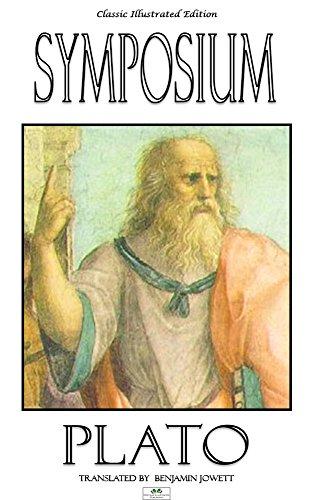
This fictional book depicts a dinner party where Athenian figures discuss love, with Diotima's speech on love as a progression through different stages being particularly noteworthy. The podcast summarizes Diotima's concept of love as ascending a ladder, beginning with bodily love and culminating in a love of the form of beauty.
the symposium was a fictional book written by the Greek philosopher Plato about a dinner party. It's a dinner party where various noteworthy figures from Athens at the time all meet up to talk about a...
— Episode: Episode #093 ... Nietzsche pt. 4 - Love
This fictional book depicts a dinner party where Athenian figures discuss love, with Diotima's speech on love as a progression through different stages being particularly noteworthy. The podcast summarizes Diotima's concept of love as ascending a ladder, beginning with bodily love and culminating in a love of the form of beauty.
the symposium was a fictional book written by the Greek philosopher Plato about a dinner party. It's a dinner party where various noteworthy figures from Athens at the time all meet up to talk about a particular subject.
Diatema told Socrates about how she sees love as sort of a progression. It's a progression ascending up rungs of a ladder where throughout your various experiences with love in your life, you go through a number of phases.
How Effective Altruism Is Changing Ideas About Living Ethically
Peter Singer advocates for donating 10% of one's income to charity in this book, arguing that it is a life-saving amount that can be used more effectively in places like Africa than in the United States. The book also discusses effective altruism and how to make the most impact with charitable contributions.
In Peter Singer's book, The Most Good You Can Do, he advocates 10% of your income.
— Episode: Episode #085 ... Peter Singer on Effecti...
Peter Singer advocates for donating 10% of one's income to charity in this book, arguing that it is a life-saving amount that can be used more effectively in places like Africa than in the United States. The book also discusses effective altruism and how to make the most impact with charitable contributions.
In Peter Singer's book, The Most Good You Can Do, he advocates 10% of your income.
Note: The book recommendations on this page are discovered automatically from podcast transcripts, and may be incorrect or incomplete.
Podcast Name