![Twilight of the Idols and The Anti-Christ [Hardcover] cover](https://media.podcastbookpicks.com/books/11603.jpg)
Twilight of the Idols and The Anti-Christ [Hardcover]
Friedrich Nietzsche
Mentioned 1 year ago
Episode #212 ... Nietzsche and Critchley on the tragic perspective. (Amor Fati pt. 2)
Beginner friendly if listened to in order! For anyone interested in an educational podcast about philosophy where you don't need to be a graduate-level philosopher to understand it. In chronological order, the thinkers and ideas that forged the world we live in are broken down and explained.
Recently mentioned
Friedrich Nietzsche
Mentioned 1 year ago
Episode #212 ... Nietzsche and Critchley on the tragic perspective. (Amor Fati pt. 2)
Simon Critchley
Mentioned 1 year ago
Episode #212 ... Nietzsche and Critchley on the tragic perspective. (Amor Fati pt. 2)

Friedrich Nietzsche
Mentioned 1 year ago
Episode #211 ... Nietzsche returns with a hammer!
Friedrich Nietzsche
Mentioned 1 year ago
Episode #211 ... Nietzsche returns with a hammer!
Friedrich Wilhelm Nietzsche
Mentioned 1 year ago
Episode #211 ... Nietzsche returns with a hammer!
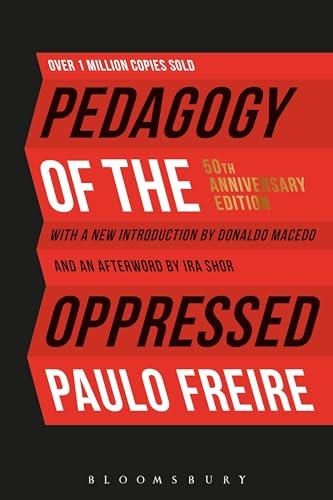
Paulo Freire
Mentioned 1 year ago
Episode #210 ... The Pedagogy of the Oppressed (Paulo Freire, Education)
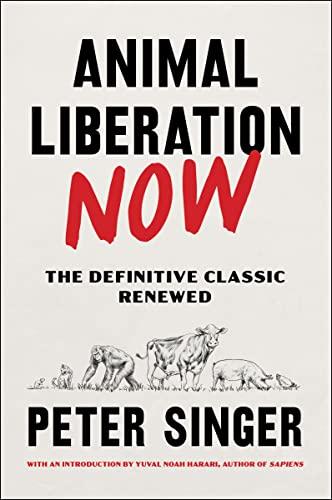
Peter Singer
Mentioned 1 year ago
Episode #209 ... Improving our world through applied ethics. (Peter Singer, Katarzyna de Lazari-Radek)
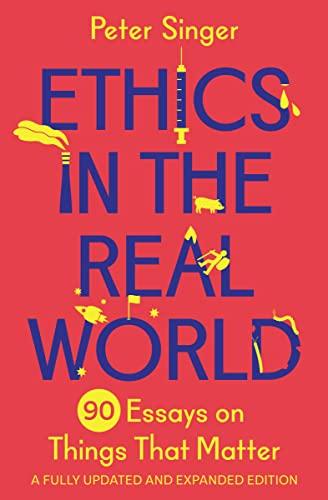
Peter Singer
Mentioned 1 year ago
Episode #209 ... Improving our world through applied ethics. (Peter Singer, Katarzyna de Lazari-Radek)

Peter Singer
Mentioned 1 year ago
Episode #209 ... Improving our world through applied ethics. (Peter Singer, Katarzyna de Lazari-Radek)
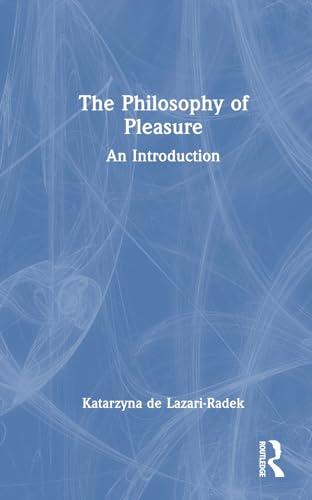
Katarzyna de Lazari-Radek
Mentioned 1 year ago
Episode #209 ... Improving our world through applied ethics. (Peter Singer, Katarzyna de Lazari-Radek)
Robert Nozick
Mentioned 1 year ago
Episode #208 ... The moral evolution of a philosopher. (Peter Singer)
Derek Parfit
Mentioned 1 year ago
Episode #208 ... The moral evolution of a philosopher. (Peter Singer)
The Original Unabridged And Complete Edition (Plato Classics)
The Original Unabridged And Complete Edition (Plato Classics)
In Phaedo, Plato, through Socrates, presented a view that suicide is wrong as it's abandoning a divinely assigned duty. He likened humans to guards at posts, forbidden to leave before receiving orders.
Plato writes in his work Phaedo, through the quintessentially wise character of Socrates, of course, in one of his more Pythagorean moments he talks about a concept that the Pythagoreans actually were...
— Episode: Episode #062 ... Kant pt. 7 - Suicide
In Phaedo, Plato, through Socrates, presented a view that suicide is wrong as it's abandoning a divinely assigned duty. He likened humans to guards at posts, forbidden to leave before receiving orders.
Plato writes in his work Phaedo, through the quintessentially wise character of Socrates, of course, in one of his more Pythagorean moments he talks about a concept that the Pythagoreans actually were the first to lay out. The idea that suicide is definitely wrong. It's wrong because it would be releasing ourselves from our duty that the gods put us here to do.
It was the first work ever written on the sublime, using the ocean as an example of something with the magnitude to produce a sublime experience. The author contrasted the feelings evoked by small streams versus the ocean.
Hence it is almost an instinct that we follow in giving our admiration not to small streams, though they be pollucid and useful, but to the Nile, and the Danube, and the Rhine, and far more to the oce...
— Episode: Episode #060 ... Kant pt. 5 - The Sublim...
It was the first work ever written on the sublime, using the ocean as an example of something with the magnitude to produce a sublime experience. The author contrasted the feelings evoked by small streams versus the ocean.
Hence it is almost an instinct that we follow in giving our admiration not to small streams, though they be pollucid and useful, but to the Nile, and the Danube, and the Rhine, and far more to the ocean.
Burke's work explored the sublime as a unique pleasure derived from feeling one's life is in danger while encountering something immensely powerful; he distinguished it from beauty, emphasizing that the sublime is visceral and not based on intellectual calculation.
if taste has no fixed principles, if the imagination is not affected according to some invariable and certain laws, our labor must be judged a useless undertaking to set up for a legislator of whims a...
— Episode: Episode #060 ... Kant pt. 5 - The Sublim...
Burke's work explored the sublime as a unique pleasure derived from feeling one's life is in danger while encountering something immensely powerful; he distinguished it from beauty, emphasizing that the sublime is visceral and not based on intellectual calculation.
if taste has no fixed principles, if the imagination is not affected according to some invariable and certain laws, our labor must be judged a useless undertaking to set up for a legislator of whims and fancies
these waters must be troubled before they can exert their virtues.

Reconsidering the Demarcation Problem
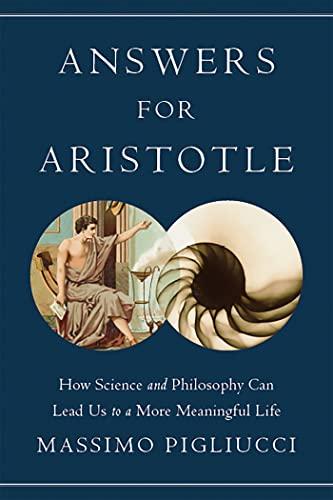
How Science and Philosophy Can Lead Us to A More Meaningful Life

The host discussed Hobbes's views on the state of nature, characterizing it as "solitary, poor, nasty, brutish, and short," and his belief that a strong government is necessary to maintain order.
Thomas Hobbes, guy we've talked about before, he thought that it would be a constant state of war. Remember, he called the state of nature solitary, poor, nasty, brutish, and short.
— Episode: Episode #045 ... Rousseau Government pt....
The host discussed Hobbes's views on the state of nature, characterizing it as "solitary, poor, nasty, brutish, and short," and his belief that a strong government is necessary to maintain order.
Thomas Hobbes, guy we've talked about before, he thought that it would be a constant state of war. Remember, he called the state of nature solitary, poor, nasty, brutish, and short.
That was life in the state of nature to Thomas Hobbes.
nobody truly wants to live in that chaotic world that Thomas Hobbes lays out in his social contract, the state of nature.
The podcast mentioned Rousseau's work, focusing on his idea of the state of nature as a positive state before the corruption of civilization and the introduction of private property.
While government and laws take care of the security and well-being of men in groups, the sciences, letters, and the arts, less despotic and perhaps more powerful, spread garlands of flowers over the i...
— Episode: Episode #045 ... Rousseau Government pt....
The podcast mentioned Rousseau's work, focusing on his idea of the state of nature as a positive state before the corruption of civilization and the introduction of private property.
While government and laws take care of the security and well-being of men in groups, the sciences, letters, and the arts, less despotic and perhaps more powerful, spread garlands of flowers over the iron chains which weigh men down, snuffing out in them the feeling of the original liberty for which they appear to have been born, and make them love their slavery by turning them into what are called civilized people.
Beware of listening to this imposter. You are undone if you once forget that the fruits of the earth belong to us all and the earth itself to nobody. But there is great probability that things had then already come to such a pitch, that they could no longer continue as they were. For the idea of property depends on many prior ideas which could only be acquired successfully and could not have been formed all at once in the human mind.
the fruits of the earth belong to us all and the earth itself to nobody

The podcast host discussed Voltaire's book, describing it as a series of letters offering insights into English culture and its differences from France, particularly in religious tolerance. It was presented as a framework for French revolutionaries.
it's called Letters Concerning the English Nation.
— Episode: Episode #040 ... Superstition
The podcast host discussed Voltaire's book, describing it as a series of letters offering insights into English culture and its differences from France, particularly in religious tolerance. It was presented as a framework for French revolutionaries.
it's called Letters Concerning the English Nation.
Look, don't don't read these letters concerning the English nation expecting me to tell you how beautiful Stonehenge is, or, you know, other various sightseeing excursions that you'd go on if you went there physically.
He was in England, finding and recording the great things about the English nation to give the revolutionaries in France, a sort of framework to work from when they were designing what the country would look like after their revolution.

Winning Back the Middle-Class Majority One Family at a Time
The podcast host briefly mentioned this book, identifying it as Senator Schumer's work.
Senator Schumer's book is called Positively American.
— Episode: Episode #040 ... Superstition
The podcast host briefly mentioned this book, identifying it as Senator Schumer's work.
Senator Schumer's book is called Positively American.

A 19th and 20th-century neotomist's book summarizing St. Thomas Aquinas's view that reason alone cannot demonstrate the world's beginning because it depended on God's free will; Aquinas believed the world could have always existed in dependence on God, similar to a footprint always existing if the foot creating it always existed.
St. Thomas holds that reason alone can never demonstrate that the world had a beginning. And why does this truth transcend the natural powers of our intellect? Because that beginning depended on the f...
— Episode: Episode #021 ... One God - St. Thomas Aq...
A 19th and 20th-century neotomist's book summarizing St. Thomas Aquinas's view that reason alone cannot demonstrate the world's beginning because it depended on God's free will; Aquinas believed the world could have always existed in dependence on God, similar to a footprint always existing if the foot creating it always existed.
St. Thomas holds that reason alone can never demonstrate that the world had a beginning. And why does this truth transcend the natural powers of our intellect? Because that beginning depended on the free will of God. Had he so willed, he might have created the world ten thousand years, or a hundred thousand years, or millions of years before, or at a time even more remote without there having been a first day for the world, but simply dependence of the world on its creator. Just as a footprint in the sand is due to the foot that makes it, so that, had the foot always been there, the footprint would have had no beginning. Although revelation teaches us that the world did in fact have a beginning, it does not seem impossible, says Thomas, for the world to have always existed in its dependence on God the creator.
![[Gorgias (Hackett Classics)] [Author: Plato] [January, 1987] Cover](https://media.podcastbookpicks.com/books/30202.jpg)
A Philosophical Guide to Living (Learning to Live)
Note: The book recommendations on this page are discovered automatically from podcast transcripts, and may be incorrect or incomplete.
Podcast Name