![Twilight of the Idols and The Anti-Christ [Hardcover] cover](https://media.podcastbookpicks.com/books/11603.jpg)
Twilight of the Idols and The Anti-Christ [Hardcover]
Friedrich Nietzsche
Mentioned 1 year ago
Episode #212 ... Nietzsche and Critchley on the tragic perspective. (Amor Fati pt. 2)
Beginner friendly if listened to in order! For anyone interested in an educational podcast about philosophy where you don't need to be a graduate-level philosopher to understand it. In chronological order, the thinkers and ideas that forged the world we live in are broken down and explained.
Recently mentioned
Friedrich Nietzsche
Mentioned 1 year ago
Episode #212 ... Nietzsche and Critchley on the tragic perspective. (Amor Fati pt. 2)
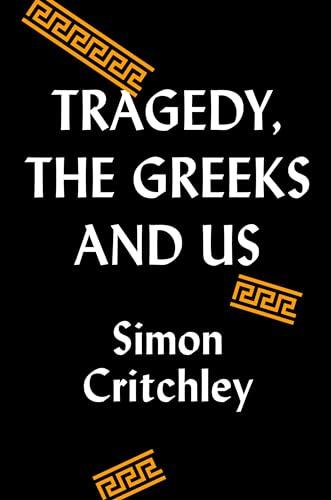
Simon Critchley
Mentioned 1 year ago
Episode #212 ... Nietzsche and Critchley on the tragic perspective. (Amor Fati pt. 2)

Friedrich Nietzsche
Mentioned 1 year ago
Episode #211 ... Nietzsche returns with a hammer!
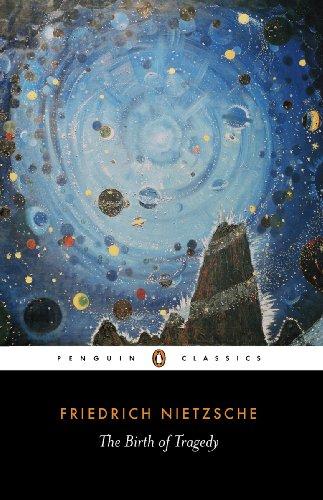
Friedrich Nietzsche
Mentioned 1 year ago
Episode #211 ... Nietzsche returns with a hammer!

Friedrich Wilhelm Nietzsche
Mentioned 1 year ago
Episode #211 ... Nietzsche returns with a hammer!
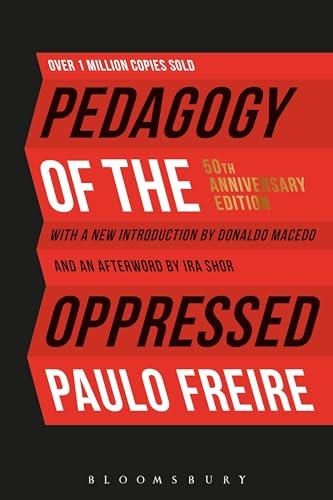
Paulo Freire
Mentioned 1 year ago
Episode #210 ... The Pedagogy of the Oppressed (Paulo Freire, Education)
Peter Singer
Mentioned 1 year ago
Episode #209 ... Improving our world through applied ethics. (Peter Singer, Katarzyna de Lazari-Radek)
Peter Singer
Mentioned 1 year ago
Episode #209 ... Improving our world through applied ethics. (Peter Singer, Katarzyna de Lazari-Radek)
Peter Singer
Mentioned 1 year ago
Episode #209 ... Improving our world through applied ethics. (Peter Singer, Katarzyna de Lazari-Radek)
Katarzyna de Lazari-Radek
Mentioned 1 year ago
Episode #209 ... Improving our world through applied ethics. (Peter Singer, Katarzyna de Lazari-Radek)
Robert Nozick
Mentioned 1 year ago
Episode #208 ... The moral evolution of a philosopher. (Peter Singer)

Derek Parfit
Mentioned 1 year ago
Episode #208 ... The moral evolution of a philosopher. (Peter Singer)
Is There No Alternative?
The hosts discussed the title across two episodes, using it to explain how capitalist realism creates a cultural amnesia that blocks people from diagnosing the present and imagining alternative futures. Stephen West and other contributors highlighted Fisher's argument that neoliberal and post‑modern ideas embed a psychic infrastructure that makes it harder to envision the end of capitalism than the end of the world. The conversation framed the book as a key lens for understanding why contemporary society struggles to think beyond capitalism.
Mark Fisher argues that capitalist realism is a difficult to move away from, particularly in the Western world. He compares how our society deals with the past to Leonard in the movie Memento, as he has enterograde amnesia and can't form new memories. We are in a state of cultural amnesia and, as a result, are unable to properly diagnose the present or imagine a different social future.
Mark Fisher compares how we are as a society to the character named Leonard in the movie Memento, directed by Christopher Nolan back in the year 2000.
We are living in a state of cultural amnesia to Mark Fisher, where we can't remember our past, which then makes it impossible to accurately diagnose the present, and even more difficult to be able to imagine a different social future that may be better off for people.
Mark Fisher has a famous quote. He says that to live in the 21st century is to have 20th century culture delivered to you through 21st century technology.
It is to have the ideas and the art of the 20th century shown to you in 4k or streamed to you with high-speed internet.
And as he said, Capitalist Realism is impossible to define in a single sentence.
Mark Fisher's concept of 'Capitalist Realism' describes a state of affairs where people cannot imagine an alternative future to the capitalist system. This situation, unique to history, results from the confluence of neoliberal and postmodern ideas. Fisher believed it clouds the ability to see the world accurately and weakens the ability to imagine different social futures.
It's easier for me to imagine the end of the world than it is to imagine the end of capitalism.
It's a cultural logic that's accepted among people. Mark Fisher calls it at one point a quote, psychic infrastructure. It's a set of common attitudes that people have that clouds their ability to see the world accurately.
Government is not the solution to our problem, government is the problem.
socialized losses and privatized gains
That's on you, right? You have to work harder. You have to change your life if you want to make that happen.
The Birth of the Prison
The hosts discussed the book while exploring how the Panopticon concept has shaped modern institutions and the subtle ways power operates within the penal system. They highlighted its analysis of the transition from overt punishment to more covert forms of control, noting that prisoners often become complicit in their own oppression. The discussion framed the title as a key text for understanding contemporary mechanisms of surveillance and discipline.
Foucault reintroduced Bentham's Panopticon and highlighted its influence on western society in 1975, suggesting that it pervades major institutions.
Michel Foucault writes a book released in 1975 called Discipline and Punish.
And in it he reintroduces Bentham's idea of the Panopticon and finally gives credit to just how influential this design for a prison has become over the years.
This book examines the shift in treatment of criminals over time, from brutal punishments to more humane methods, questioning the narrative of progress and highlighting the potential for power to operate in subtle and insidious ways.
The prisoners themselves become active supportive participants in the very system that suppresses them.
The Political Economy of the Mass Media
The hosts highlighted the book as a cornerstone of Noam Chomsky’s influential body of work, noting its role in shaping understanding of media bias and propaganda. Stephen West referenced it as one of the few works by a living philosopher that will be remembered for its prolific impact, and a dedicated episode examined its arguments about the media functioning as a filter for powerful interests. The discussion conveyed strong endorsement of its importance for listeners interested in media theory.
Noam Chomsky's book, 'Manufacturing Consent,' was mentioned as an example of his influential work and prolific writing. This book was discussed in a previous episode of the podcast.
We covered his book Manufacturing Consent on this podcast before and for whatever it's worth there are few philosophers, if any, who are alive today that will be remembered as being as prolific, as influential as he's been.
This book, published in 1988, argues that the news media is a filter between us and reality, and that the media landscape is shaped by the interests of powerful individuals and institutions. This is a significant work that is explored in detail by the podcast.
Manufacturing Consent, with many other references to Chomsky's later work entitled Media Control.
Propaganda is to a democracy what the bludgeon is to a totalitarian state.
make no mistake, the word media is just another word for company.
Journalists are not normally kept under control through top-down intervention, but by journalists' internalization of priorities and definitions of newsworthiness that conform to the institution's policy
I'm not saying that you think you're self-censoring. I'm sure you believe every word that you're saying. What I'm saying is that if you believed something different, you wouldn't be sitting where you're sitting.
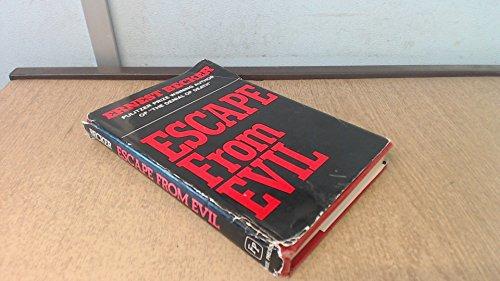
This book, considered Becker's greatest work, continues the theme of the denial of death and explores the darker side of this phenomenon. It discusses the potential for violence and hatred that can arise from our desperate attempts to escape the awareness of our mortality.
kill out of joy
— Episode: Episode #162 ... The Creation of Meaning...
This book, considered Becker's greatest work, continues the theme of the denial of death and explores the darker side of this phenomenon. It discusses the potential for violence and hatred that can arise from our desperate attempts to escape the awareness of our mortality.
kill out of joy
Complete and Unabridged (Illustrated)
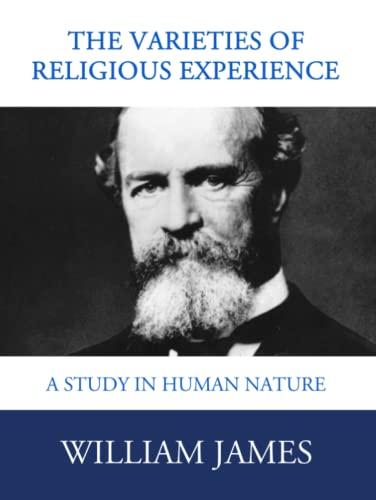
This book was mentioned in relation to William James's views on religious experiences and how they can be interpreted through different lenses, such as the healthy minded or sick soul.
For the record, it is The Varieties of Religious Experience 1902.
— Episode: Episode #154 ... Pragmatism and Truth
This book was mentioned in relation to William James's views on religious experiences and how they can be interpreted through different lenses, such as the healthy minded or sick soul.
For the record, it is The Varieties of Religious Experience 1902.
Now think about the fact that both of these different ways of orienting yourself with reality imply the possibility of action.
We can see how great an antagonism may naturally arise between the healthy minded way of viewing life and the way that takes all this experience of evil as something essential.
To this latter way, the morbid minded way, as we might call it, healthy mindedness, pure and simple seems unspeakably blind and shallow to the healthy minded way.
On the other hand, the way of the sick soul seems unmanly and diseased with their grubbing and rat holes instead of living in the light, with their manufacturer fears and preoccupation with every unwholesome kind of misery.
In this book, William James examines various religious beliefs and experiences throughout history, identifying similarities and exploring the concept of religion broadly as encompassing any fundamental interpretation of life.
we must therefore from the experiential point of view, call these godless or quasi godless creeds religions. And accordingly, when in our definition of religion, we speak of the individual's relation to what he considers the divine. We must interpret the term divine very broadly as denoting any object that is godlike, whether it be a concrete deity or not.
50th Anniversary Edition
The podcast referenced the book in two episodes, highlighting its analysis of paradigm shifts and the non‑linear nature of scientific progress. The hosts explained how Kuhn argued that scientific breakthroughs are driven by social context and revolutions rather than steady rational accumulation, presenting it as a key work for understanding changes in scientific assumptions.
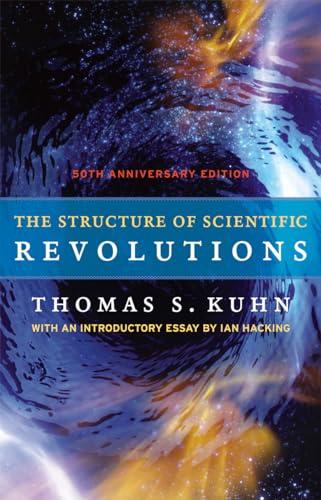
This book was discussed at length, focusing on the argument that scientific progress is not linear, but rather a series of revolutions, shifting perspectives and paradigms. It was said that Kuhn's argument challenged the idea that science is guided by rationality and that it's actually influenced by social context, as well as a desire to start over.
The Structure of Scientific Revolutions
The Structure of Scientific Revolutions.
The Structure of Scientific Revolutions
A Memoir About Chasing Joy
Foucault's fifth book, titled "The Order of Things" and "Archaeology of the Sciences," explores the dichotomy between seeing and saying, or visible systems of representation and the language used to describe them.
In other words and this is a massive through line in Foucault's fifth book in 1966 titled The Order of Things and Archaeology of the Sciences.
— Episode: Episode #122 ... Michel Foucault pt. 2 -...
Foucault's fifth book, titled "The Order of Things" and "Archaeology of the Sciences," explores the dichotomy between seeing and saying, or visible systems of representation and the language used to describe them.
In other words and this is a massive through line in Foucault's fifth book in 1966 titled The Order of Things and Archaeology of the Sciences.
The book discusses the shift in language and perspective on illness and patients between the 18th and 19th centuries, moving from seeing patients as immersed in disease to viewing disease as something internal that needs to be fixed.
There's a similar sort of thing in Foucault's book titled Birth of the Clinic when it comes to the way we treat patients and hospitals.
— Episode: Episode #122 ... Michel Foucault pt. 2 -...
The book discusses the shift in language and perspective on illness and patients between the 18th and 19th centuries, moving from seeing patients as immersed in disease to viewing disease as something internal that needs to be fixed.
There's a similar sort of thing in Foucault's book titled Birth of the Clinic when it comes to the way we treat patients and hospitals.
This book was discussed as a foundational work for logical positivists, emphasizing that language has limitations and only describes empirical states of affairs. It was used as a justification for limiting philosophy to the verifiable and rejecting unverifiable metaphysical claims.
Tractatus
— Episode: Episode #120 ... Logical Positivism
This book was discussed as a foundational work for logical positivists, emphasizing that language has limitations and only describes empirical states of affairs. It was used as a justification for limiting philosophy to the verifiable and rejecting unverifiable metaphysical claims.
Tractatus
Tractatus
Tractatus
A Philosophical Inquiry into Freud
The hosts highlighted the book as Marcuse’s seminal response to Freud, arguing that it examined how repression of desire underpins capitalist societies and how technological advances could enable greater liberation. They noted that Marcuse urged continual questioning of cultural norms to avoid unnecessary repression, positioning the work as a crucial lens for understanding modern sexuality and freedom. Overall, the discussion presented the book as a highly recommended foundation for listeners interested in critical theory.
Marcuse refers to his own book, *Eros and Civilization*, which explores the relationship between Eros and civilization, arguing that the repression of Eros is a key factor in the development of capitalism. It was mentioned in the context of how technology can be an instrument for liberation.
Like Marcuse himself points out in *Eros and Civilization*, technology is often an instrument for liberation.
Remember it's technological breakthroughs like birth control that even allow for the possibility of us reassessing cultural norms and carrying out the sexual liberation movement.
Marcuse wrote this book in response to Freud's arguments about repression in civilization. He questions the necessity and extent of repression in modern society, using sexuality as an example to illustrate how cultural norms can become outdated and oppressive.
Herbert Marcuse, who we talked about on another episode of this series, writes what he considers to be the most important work of his life in response to Freud, titled Eros and Civilization.
What I want to do is talk about where Marcuse thinks Freud is coming from with his argument.
Not only that, but is all repression just sort of garden-variety repression, no distinction to be made when it comes to the severity of it?
Marcuse would say that we have a moral obligation to constantly scrutinize these cultural norms or else we run the risk of living in a much more repressive society than we need to be.
The host referenced Seneca's work in relation to the ideal of emotional self-mastery and the pursuit of improving emotional regulation, even if complete control is unattainable. The book was mentioned within the context of Stoicism.
when Seneca writes his work On the Shortness of Life, famous stoic as we know,
— Episode: Episode #068 ... On Moodiness
The host referenced Seneca's work in relation to the ideal of emotional self-mastery and the pursuit of improving emotional regulation, even if complete control is unattainable. The book was mentioned within the context of Stoicism.
when Seneca writes his work On the Shortness of Life, famous stoic as we know,
Seneca's book addresses the misconception that life is too short, arguing that time is wasted, not lacking. A story of a prisoner playing games moments before execution was used as an example.
He has a book called On the Shortness of Life, where it's all about the common human misconception that life is too short, where Seneca says that it's not that we weren't given enough time to live, it's that we waste so much of it.
The podcast host mentioned rereading this book this week, suggesting its relevance to the discussion on moodiness and emotional self-governance. It appears to have informed his perspective on the topic.
I've been rereading Boethius this week.
— Episode: Episode #068 ... On Moodiness
The podcast host mentioned rereading this book this week, suggesting its relevance to the discussion on moodiness and emotional self-governance. It appears to have informed his perspective on the topic.
I've been rereading Boethius this week.
Written while wrongly imprisoned and awaiting death, it explores philosophical concepts of fortune, free will, and divine foreknowledge, offering solace in adversity. The book features dialogues between Boethius and Lady Philosophy, a personification of wisdom.
the charge of Cyprianus is false, but if Albinus did that, so also have I, and the whole senate with one accord done it. It is false, my lord king,
everything is known not according to itself but according to the capacity of the knower
if I have fully diagnosed the cause and nature of your condition, you are wasting away and pining and longing for your former good fortune. It is the loss of this which, as your imagination works upon you, has so corrupted your mind. I know the many disguises of that monster, fortune, and the extent to which she seduces with friendship the very people she is striving to cheat, until she overwhelms them with the unbearable grief at the suddenness of her desertion.
balance out the good things and the bad that have happened in your life, and you will have to acknowledge that you are still way ahead. You are unhappy because you have lost those things in which you took pleasure, but you can also take comfort in the likelihood that what is now making you miserable will also pass away.
one's virtue is all that one truly has because it's not imperiled by the vicissitudes of fortune
Or, Voyage to the Land of the Rosicrucians (Forgotten Books)
The book was cited as a classic example of utopian fiction, illustrating Bacon's vision of a science‑driven society that could solve humanity's problems and make traditional virtues obsolete. The hosts referenced it while discussing abstract theories of social organization and the potential of scientific abundance.
It is a book outlining Bacon's vision of a utopian society where science is the chief priority and solves all of humanity's problems. The podcast discussed its unique approach to human excess, suggesting science would create abundance, rendering traditional virtues obsolete.
There is yet a much more important and profound kind of fallacies in the mind of man, which I find not observed or inquired at all, and think good to place here, as that which of all others appertaineth most to rectify judgment. The force whereof is such, as it doth not dazzle or snare the understanding in some particulars, but doth more generally and inwardly infect and corrupt the state thereof. For the mind of man is far from the nature of a clear and equal glass, wherein the beams of things should reflect according to their true incidence. Nay, it is rather like an enchanted glass, full of superstition and imposture if it be not delivered and reduced. For this purpose let us consider the false appearances that are imposed upon us by the general nature of the mind.
This dystopian fiction novel describes a future society organized around a meritocracy, culminating in a violent populist uprising by citizens who feel betrayed by their leaders.
He wrote a book called The Rise of the Meritocracy. It's a fiction novel that's about a dystopian future where society organizes things around a meritocracy.
— Episode: Episode #205 ... Why a meritocracy is co...
This dystopian fiction novel describes a future society organized around a meritocracy, culminating in a violent populist uprising by citizens who feel betrayed by their leaders.
He wrote a book called The Rise of the Meritocracy. It's a fiction novel that's about a dystopian future where society organizes things around a meritocracy.
And it's funny, you can hear that and be like, oh, oh my God, what could possibly be wrong with a society based on merit?
Well, Michael Young saw the problems that Sandell thinks are playing out in the real world all around us.
And then in the year 2034 in the book, there's a violent populist uprising of all the citizens that feel betrayed by the leaders of the society that they're a part of.
The podcast mentions specific passages from the Book of Job and the Book of Revelation that describe the leviathan, a creature Hobbes used as a metaphor for his concept of a sovereign.
his sneezing's flash forth light, and his eyes are like the eyelids of the dawn. It says later in the Bible, smoke went up from his nostrils and devouring fire from his mouth, glowing coals flamed for...
— Episode: Episode #026 ... Thomas Hobbes pt. 1 - T...
The podcast mentions specific passages from the Book of Job and the Book of Revelation that describe the leviathan, a creature Hobbes used as a metaphor for his concept of a sovereign.
his sneezing's flash forth light, and his eyes are like the eyelids of the dawn. It says later in the Bible, smoke went up from his nostrils and devouring fire from his mouth, glowing coals flamed forth from him. It says in Revelation later, and I saw a beast rising out of the sea with 10 horns and seven heads with 10 diadems on its horns and blasphemous names on its heads
The podcast host mentioned the book and its depiction of societal collapse on a deserted island; it was used as a cautionary tale regarding human nature without societal structures.
I know every single one of you guys has read Lord of the Flies.
— Episode: Episode #045 ... Rousseau Government pt....
The podcast host mentioned the book and its depiction of societal collapse on a deserted island; it was used as a cautionary tale regarding human nature without societal structures.
I know every single one of you guys has read Lord of the Flies.

The opening line of this book was quoted, "Happy families are all alike. Every unhappy family is unhappy in its own way."
Happy families are all alike. Every unhappy family is unhappy in its own way.
— Episode: Episode #156 ... Emil Cioran part 2 - Fa...
The opening line of this book was quoted, "Happy families are all alike. Every unhappy family is unhappy in its own way."
Happy families are all alike. Every unhappy family is unhappy in its own way.

The podcast discussed a possible influence of Plotinus's life story on the Harry Potter series, specifically comparing a magical incident in Plotinus's youth to elements in Rowling's books. The speaker suggested that Rowling may have been influenced by Plotinus's life.
I mean, basically replace the entire opening sequence of the Harry Potter books with this section of Plotinus' life. I mean, come on.
— Episode: Episode #015 ... A Period of Transition...
The podcast discussed a possible influence of Plotinus's life story on the Harry Potter series, specifically comparing a magical incident in Plotinus's youth to elements in Rowling's books. The speaker suggested that Rowling may have been influenced by Plotinus's life.
I mean, basically replace the entire opening sequence of the Harry Potter books with this section of Plotinus' life. I mean, come on.

The Original Unabridged and Complete Edition (Albert Camus Classics)
The book follows the detached protagonist Meursault, who displays apathy towards societal expectations and commits murder seemingly without remorse. It explores themes of absurdity and challenges conventional notions of morality and human nature.
Mother died today.
— Episode: Episode #088 ... Sartre and Camus pt. 3...
The book follows the detached protagonist Meursault, who displays apathy towards societal expectations and commits murder seemingly without remorse. It explores themes of absurdity and challenges conventional notions of morality and human nature.
Mother died today.
Note: The book recommendations on this page are discovered automatically from podcast transcripts, and may be incorrect or incomplete.
Podcast Name