
The Denial of Death Cover
Podcast Mentions

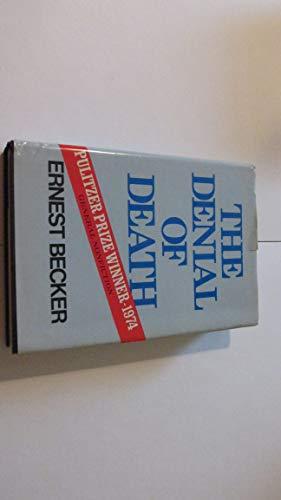
The Denial of Death

Ernest Becker

Drawing from religion and the human sciences, particularly psychology after Freud, the author attempts to demonstrate that the fear of death is man's central concern

Podcasts 15
Quotes 58
The Tucker Carlson Show

He mentioned reading the book, noting it was written years ago by a Pulitzerwinning author who later died of cancer, and said he did not agree with its ideas.

"

I read a book called Denial of Death. It was written years ago by an author who won a Pulitzer and later died of cancer. I don't agree with it; I think it's kind of psychoanalytic babble and I found i...

— Episode: Matt Walsh: Dave Smith/Douglas Murray De...

Episode: Matt Walsh: Dave Smith/Douglas Murray Debate, Tran...

He mentioned reading the book, noting it was written years ago by a Pulitzerwinning author who later died of cancer, and said he did not agree with its ideas.

"

I read a book called Denial of Death. It was written years ago by an author who won a Pulitzer and later died of cancer. I don't agree with it; I think it's kind of psychoanalytic babble and I found it didn't resonate with me.

The Joe Rogan Experience

Brian Greene recalled reading Ernest Becker's "Denial of Death" in his twenties, noting its impact in the 1970s and its Pulitzer Prize recognition.

"

I read a book by a guy named Ernest Becker called Denial of Death. I don't know if you've ever heard of this book. It was big in the 70s and won the Pulitzer Prize.

— Episode: #1428 - Brian Greene

Episode: #1428 - Brian Greene

Brian Greene recalled reading Ernest Becker's "Denial of Death" in his twenties, noting its impact in the 1970s and its Pulitzer Prize recognition.

"

I read a book by a guy named Ernest Becker called Denial of Death. I don't know if you've ever heard of this book. It was big in the 70s and won the Pulitzer Prize.

Stuff You Should Know

It was described as a seminal work suggesting that humans constantly strive to avoid thinking about death, and that facing mortality can be beneficial for well-being. It was mentioned numerous times throughout the episode.

"

I've mentioned this guy scores of times at least, but as the great... Thomas Mann? No. It's Charles Mann, you're thinking of him. Oh, okay. Great psychologist, Ernest Becker.

— Episode: SYSK Selects: How Dying Works

Episode: SYSK Selects: How Dying Works

It was described as a seminal work suggesting that humans constantly strive to avoid thinking about death, and that facing mortality can be beneficial for well-being. It was mentioned numerous times throughout the episode.

"

I've mentioned this guy scores of times at least, but as the great... Thomas Mann? No. It's Charles Mann, you're thinking of him. Oh, okay. Great psychologist, Ernest Becker.

Shout out to our pal, Joe Randazzo, who's like in the Becker now. Isn't it Ernst? Or is it Ernest? Ernest. Okay. You're thinking of Max Ernst. Okay. Ernest Becker wrote The Denial of Death, the seminal work that basically says we're all just doing everything we can to think about our own demise.

Episode: SYSK Selects: How Dying Works

It was discussed as a seminal work on the human response to mortality, suggesting that people engage in behaviors to avoid thinking about death.

"

I've mentioned this guy scores of times at least, but as the great... Thomas Mann? No. It's Charles Mann, you're thinking of him. Oh, okay. Great psychologist, Ernest Becker.

Ernest Becker wrote The Denial of Death, the seminal work that basically says we're all just doing everything we can to think about our own demise.

Episode: SYSK Selects: How Dying Works

It was described as a seminal work that suggests humans constantly try to avoid thinking about their mortality and that facing death can be beneficial.

"

I've mentioned this guy scores of times at least, but as the great... Ernest Becker wrote The Denial of Death, the seminal work that basically says we're all just doing everything we can to think about our own demise.

And there is some sort of health, whether it's spiritual, emotional, there's some sort of health or well-being, I think, from facing the fact that you're going to die.

Huberman Lab

Andrew Huberman highlighted the book in two episodes, noting that it offered valuable insight into how people cope with the inevitability of death and humanity's awareness of mortality. He described it as a challenging, Pulitzer‑winning work that he was reading himself and strongly recommended to listeners. The discussion emphasized its depth and relevance for understanding grief and personal growth.

Highly Recommended

Episode: Healing From Grief & Loss | Dr. Mary-Frances O'Con...

Huberman suggested reading the book to learn about how people cope with the inevitability of death.

"

If you read, uh, the denial of death, you learn about this.

Episode: How to Find & Be a Great Romantic Partner | Lori G...

Andrew Huberman said he was reading the hard, Pulitzerwinning book and strongly recommended it for its insight into humanity's awareness of mortality.

"

I happen to be reading - it's a hard book, a genuinely difficult book, but I'm really enjoying it. I'm reading Ernst Becker's The Denial of Death. I highly recommend it to everyone. One a Pulitzer, after all.

Episode: Create Your Ideal Future Using Science-Based Proto...

They cited The Denial of Death as a 1972 book that discusses humanity's awareness of mortality and its cultural implications.

"

In 1972, Ernest Becker wrote a book, which you'll know all about the book based on the title, called The Denial of Death. He won the Pillaritzer Prize for it.

The Shawn Ryan Show

The book was brought up during conversations about human motivation and the fear of mortality, with the host mentioning it in one episode and a guest highlighting its ideas about immortality cults driving modern society. Both speakers used the title to illustrate how people deny death, but they did not explicitly endorse it as a must‑read.

Episode: #215 Charles Hoskinson - Cardano Founder on the Se...

The speaker referenced this book to illustrate that a primary driver of modern society is the concept of immortality cults, leading people to attempt to deny death through various means.

"

Ernest Becker wrote a lovely book called The Denial of Death. And he says, like, the driving force of the modern world is this concept of immortality cults.

Episode: #316 Brian Keating - Brian Keating - The First Obj...

Ernest Becker's "The Denial of Death" was brought up while discussing human motivations and the fear of mortality.

"

It's a book by Ernest Becker, it's called The Denial of Death.

Freakonomics Radio

It was mentioned by Theresa McPhail as an influential work of anthropology, whose author, Ernest Becker, believed society creates meaning to avoid facing the terror of death, the ultimate failure.

"

I really think I'm an intellectual granddaughter of Ernest Becker, who famously wrote The Denial of Death.

— Episode: 564. How to Succeed at Failing, Part 4:...

Episode: 564. How to Succeed at Failing, Part 4: Extreme Re...

It was mentioned by Theresa McPhail as an influential work of anthropology, whose author, Ernest Becker, believed society creates meaning to avoid facing the terror of death, the ultimate failure.

"

I really think I'm an intellectual granddaughter of Ernest Becker, who famously wrote The Denial of Death.

He was an anthropologist as well and his take was that society everywhere is a living myth of the significance of human life, that we defiantly create meaning where none exists because we do not want to deal with the terror that the ultimate mistake is one that's going to get us killed.

And again, I'm just Becker's granddaughter, because his argument was if we distract ourselves and we try to push down our fears of failing, ultimately that's about our fear of dying, that ironically trying to push all of that down and not talking openly about it creates more problems.

Hidden Brain

It was the second book by Ernest Becker that the speaker grabbed from the shelf; the book discussed death's haunting nature and its impact on human activity.

"

So I grabbed the next book, The Denial of Death. And again, the first paragraph, Becker writes, the idea of death, the fear of it haunts the human animal like nothing else. It is a mainspring of human...

— Episode: We're All Gonna Die!

Episode: We're All Gonna Die!

It was the second book by Ernest Becker that the speaker grabbed from the shelf; the book discussed death's haunting nature and its impact on human activity.

"

So I grabbed the next book, The Denial of Death. And again, the first paragraph, Becker writes, the idea of death, the fear of it haunts the human animal like nothing else. It is a mainspring of human activity.

Matt and Shane's Secret Podcast

The hosts highlighted the book as a deep dive into humanity's fear of mortality, noting that it explains how our deepest insecurities and the personas we adopt stem from a desire to avoid confronting death. Shane mentioned that he had been reading it and found it compelling, and Matt echoed that it was "pretty tight." The discussion framed the title as a valuable lens for understanding why people construct lies to manage existential anxiety.

Highly Recommended

Episode: Ep 473 - Sister's Hot Dog (feat. Duncan Trussell)

They referred to The Denial of Death as the book that tackled the fear of mortality.

"

the book that got the denial of death it's I think Ernest Becker

Episode: Ep 319-CBDhab

It was mentioned as a book discussing how people's deepest insecurities and personalities are formed, often based on lies to avoid confronting mortality.

"

I've been reading the the denial of death dude.

It's such a good I like read it for a little bit and put it back down.

It's about how basically most of our deepest insecurities and are kind of like the personas we build so that we can kind of like go out and function in the world or typically build on like a lie or like we like restrict what we pay attention to so that we don't freak out about the fact that we're just like floating through space and we're gonna die.

It's pretty tight.

It's pretty tight.

The Jordan B. Peterson Podcast

Dr. Peterson discussed Ernest Becker's book, "The Denial of Death," and his hero myth theory. Dr. Peterson argued that the hero myth is not an illusion designed to protect us from the anxiety of death, but rather a signal that we're on the developmental edge that prepares us for all future challenges. He said that confronting a sequence of minor traumas fortifies us, and it's the principle of medicine and learning itself. He went on to say that Ernest Becker went astray in his fundamental presumptions, as did the terror management theorists.

"

The terror management theorist characters, right? Deriving their theories from Ernest Becker.

— Episode: 449. Trauma and the Demolition of Faith...

Episode: 449. Trauma and the Demolition of Faith | Ronnie J...

Dr. Peterson discussed Ernest Becker's book, "The Denial of Death," and his hero myth theory. Dr. Peterson argued that the hero myth is not an illusion designed to protect us from the anxiety of death, but rather a signal that we're on the developmental edge that prepares us for all future challenges. He said that confronting a sequence of minor traumas fortifies us, and it's the principle of medicine and learning itself. He went on to say that Ernest Becker went astray in his fundamental presumptions, as did the terror management theorists.

"

The terror management theorist characters, right? Deriving their theories from Ernest Becker.

But he's also deeply wrong. The hero myth that Becker lays out is not an illusion. It's actually the fundamental principle by which adaptation takes place. Because confronting, so confronting a sequence of minor, no, confronting a sequence of minor traumas, let's say is exactly what fortifies you.

And so did the terror management theorists in consequence.

It's also an interesting and compelling alternative to the death anxiety model, because the fundamental enemy in the entropy model isn't death per se.

I don't think all these things we do in life is based on trying to deny death, which is of course Becker's notion.

Episode: 199. Death, Meaning, and the Power of the Invisibl...

The book 'The Denial of Death' by Ernest Becker was mentioned and discussed as the foundation for Terror Management Theory, exploring human awareness of mortality and the need for meaning and symbolic immortality projects.

"

That's based on Ernest Becker's work the denial of death which is a great book I think he's fundamentally wrong, but it's a great book nonetheless he's wrong in a very interesting way and he's very, very smart person.

So the denial of death is a great book yeah and I'm familiar with some of the major researchers in in a terror management area. I've met a couple of them and we've had some discussions.

That's why the books called denial of death right at some level you have to deny that that's it right now this and and you have to transform yourself into something symbolic and so one of the arguments that becker made is as humans live in kind of two kind of two worlds we live in the material physical world.

The Matt Walsh Show

Matt Walsh noted that the book was written in the 1970s by Ernest Becker, who won a Pulitzer but died shortly after its publication, and that it argued modern society is in denial about the reality of death.

"

The denial of death is a book. I mentioned the show before was written in the 70s by a guy named Ernest Becker who ironically died shortly after it was published; he won a Pulitzer I think for the boo...

— Episode: Ep. 1382 - Outrage Erupts Over Black Rep...

Episode: Ep. 1382 - Outrage Erupts Over Black Republican Wh...

Matt Walsh noted that the book was written in the 1970s by Ernest Becker, who won a Pulitzer but died shortly after its publication, and that it argued modern society is in denial about the reality of death.

"

The denial of death is a book. I mentioned the show before was written in the 70s by a guy named Ernest Becker who ironically died shortly after it was published; he won a Pulitzer I think for the book but was not alive to receive it because he had died.

Episode: Ep. 413 - The Significance Of Celebrity Deaths

Walsh cited the classic hardcover, noting that its central thesis about repressed death anxiety was compelling and relevant to his discussion of celebrity deaths.

"

There was a book written decades ago by a guy named Ernest Becker, which I just read recently as a matter of fact, somebody recommended it to me. And the book is called Denial of Death.

He was a psychoanalyst and there's a lot in his theory that I don't agree with... the central thesis of his book, in my opinion, is compelling and persuasive.

He argued that our repressed anxiety about death is a driving factor in our lives and in the culture, and that much of human culture is set up specifically to distract us from thoughts of death.

So much of human culture, in fact, according to him, is set up specifically to distract us from and to evade thoughts of death.

He won the poll surprise for that book a few months after it was released, but he wasn't around to receive the award because he died shortly after finishing the book.

Philosophize This!

The book explores the idea that human beings cannot function in the world while also having a constant awareness of their death. It posits that we engage in a "denial of death" by creating meaning and significance through cultural heroes and immortality projects, often rooted in our fear of impermanence and insignificance.

"

This is the terror of death. To have emerged from nothing, to have a name, consciousness of self, deep inner feelings and excruciating inner yearning for life and self-expression. And with all this ye...

— Episode: Episode #162 ... The Creation of Meaning...

Episode: Episode #162 ... The Creation of Meaning - The Den...

The book explores the idea that human beings cannot function in the world while also having a constant awareness of their death. It posits that we engage in a "denial of death" by creating meaning and significance through cultural heroes and immortality projects, often rooted in our fear of impermanence and insignificance.

"

This is the terror of death. To have emerged from nothing, to have a name, consciousness of self, deep inner feelings and excruciating inner yearning for life and self-expression. And with all this yet to die.

Power means power to increase oneself, to change one's natural situation from one of smallness, helplessness, finitude, to one of bigness, control, durability and importance.

It is still a mythical hero system in which people serve in order to get a feeling of primary value, of cosmic specialness, of ultimate usefulness to creation, of unshakable meaning.

Civilized society is a hopeful belief and protest that science, money and goods make men count for more than any other animal.

necessary and basic dishonesty about oneself and one's whole situation.

Episode: Episode #162 ... The Creation of Meaning - The Den...

The Denial of Death explores the tension between our biological existence, which is fragile and temporary, and our symbolic existence, which allows us to contemplate the infinite and create meaningful things. Becker argues that we cannot function in the world while constantly aware of our mortality, so we deny it through various means, such as religion, drugs, and immersion in mundane tasks.

"

This is the terror of death. To have emerged from nothing, to have a name, consciousness of self, deep inner feelings and excruciating inner yearning for life and self-expression. And with all this yet to die, end quote.

Power means power to increase oneself, to change one's natural situation from one of smallness, helplessness, finitude, to one of bigness, control, durability and importance. End quote.

necessary and basic dishonesty about oneself and one's whole situation. End quote.

kill out of joy, as Becker says.

Stuff They Don't Want You To Know

The book discusses the idea that people engage in recreational activities beyond survival needs to distract themselves from their mortality.

"

That is the theory proposed. Shout out to our pal Josh Clark, who is out Egypt way now as you hear this.

— Episode: Listener Mail: Targeted Ads, Driving in...

Episode: Listener Mail: Targeted Ads, Driving in Europe, a...

The book discusses the idea that people engage in recreational activities beyond survival needs to distract themselves from their mortality.

"

That is the theory proposed. Shout out to our pal Josh Clark, who is out Egypt way now as you hear this.

Well, maybe back. But let me save you some time and say that the thesis of that is exactly as put in the earlier conversation. The concept being that people generally do things that are recreational beyond reproductive or survival needs entirely to distract themselves from mortality.

Episode: Listener Mail: Rampant Phishing Scams, Alternative...

It was described as a long book about thanatology, the study of death. It suggests people's actions are often driven by a subconscious desire to avoid thinking about mortality.

"

Well, it's not a great book. It's a very long book called The Denial of Death, which is all about fanatology, the study of death. And in that book, the author posits that everything people do is really just to avoid addressing the fact that up until now, everyone who was ever born has died at some point.

Episode: Listener Mail: Rampant Phishing Scams, Alternative...

It was described as a long book about the study of death, where the author discusses how people attempt to avoid thinking about death.

"

There's a great...Well, it's not a great book. It's a very long book called 'The Denial of Death', which is all about thanatology, the study of death. And in that book, the author posits that everything people do is really just to avoid addressing the fact that up until now, everyone who was ever born has died at some point.

Episode: Should We Reverse Aging?

It was mentioned as a book exploring the human drive to distract from mortality through technology, religion, and social structures, which was discussed in the context of the study of death, Thanatology.

"

It's called The Denial of Death. Mentioned it in past episodes.

You do not have to read it. The thesis is that every single piece of all human technology and all religion and all of what we call society, all all the things that the humans are doing is to distract themselves from the fact that one day they will no longer be around.

Episode: Listener Mail: Rampant Phishing Scams, Alternative...

It was described as a lengthy book concerning thanatology, the study of death, and its argument that human behaviour is centred around avoiding the awareness of death.

"

There's a great... Well, it's not a great book. It's a very long book called The Denial of Death, which is all about fanatology, the study of death. And in that book, the author posits that everything people do is really just to avoid addressing the fact that up until now, everyone who was ever born has died at some point.

The Daily Stoic

This book helped the speaker understand how people manage their terror of death through various behaviors and obsessions. It provided insight into their own methods of distraction and avoidance.

"

The worm at the core by Ernest Becker about terror management helped me a little bit with this area...

— Episode: Whitney Cummings on Finding Inspiration...

Episode: Whitney Cummings on Finding Inspiration and Being...

This book helped the speaker understand how people manage their terror of death through various behaviors and obsessions. It provided insight into their own methods of distraction and avoidance.

"

The worm at the core by Ernest Becker about terror management helped me a little bit with this area...

Timothy Keller Sermons Podcast by Gospel in Life

The hosts highlighted the book as a prominent work that tackled modern existential angst, noting how it described the feeling of being a sinner without language and linked our reluctance to share money to a denial of death. They referenced its Pulitzer Prize‑winning status and presented its ideas as insightful explanations for contemporary behavior. Overall, the discussion conveyed a strong endorsement of the book’s relevance.

Highly Recommended

Episode: How Money Makes Us Orphans

The author, Ernest Becker, in his Pulitzer Prize-winning book *The Denial of Death*, explains that people are stingy and struggle to give away their money because they do not want to admit to the inevitability of death.

"

Ernest Becker, brilliant Pulitzer Prize winning sociologist, in his book *The Denial of Death* said, the reason people are stingy, the reason we have trouble giving away our money, the reason that we need money so much is we're, we don't want to admit that we're going to be whisked away.

the reason people are stingy, the reason we have trouble giving away our money, the reason that we need money so much is we're, we don't want to admit that we're going to be whisked away.

Episode: Running From God

It was described as a very prominent book that explored the quintessential problem of modern people, feeling like a sinner but lacking the language to articulate it. The author, a secular atheist, posited that modern people feel like sinners but have no word for it.

"

a modern person is someone who feels like a sinner but has no word for it.

My sense of self comes not from other people but from, from, my sense of self comes not from other people but from myself.

Note: The book recommendations on this page are discovered automatically from podcast transcripts, and may be incorrect or incomplete.