![Twilight of the Idols and The Anti-Christ [Hardcover] cover](https://media.podcastbookpicks.com/books/11603.jpg)
Twilight of the Idols and The Anti-Christ [Hardcover]
Friedrich Nietzsche
Mentioned 1 year ago
Episode #212 ... Nietzsche and Critchley on the tragic perspective. (Amor Fati pt. 2)
Beginner friendly if listened to in order! For anyone interested in an educational podcast about philosophy where you don't need to be a graduate-level philosopher to understand it. In chronological order, the thinkers and ideas that forged the world we live in are broken down and explained.
Recently mentioned
Friedrich Nietzsche
Mentioned 1 year ago
Episode #212 ... Nietzsche and Critchley on the tragic perspective. (Amor Fati pt. 2)
Simon Critchley
Mentioned 1 year ago
Episode #212 ... Nietzsche and Critchley on the tragic perspective. (Amor Fati pt. 2)

Friedrich Nietzsche
Mentioned 1 year ago
Episode #211 ... Nietzsche returns with a hammer!
Friedrich Nietzsche
Mentioned 1 year ago
Episode #211 ... Nietzsche returns with a hammer!
Friedrich Wilhelm Nietzsche
Mentioned 1 year ago
Episode #211 ... Nietzsche returns with a hammer!
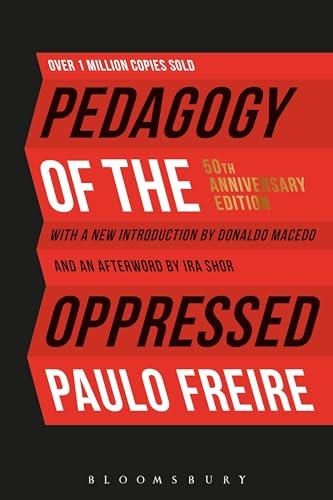
Paulo Freire
Mentioned 1 year ago
Episode #210 ... The Pedagogy of the Oppressed (Paulo Freire, Education)
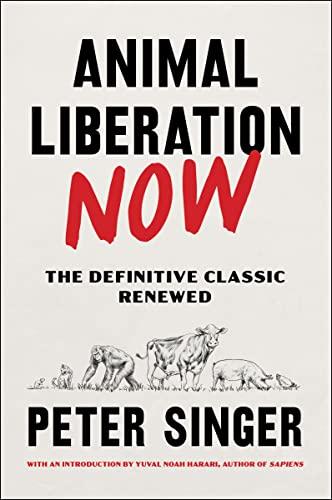
Peter Singer
Mentioned 1 year ago
Episode #209 ... Improving our world through applied ethics. (Peter Singer, Katarzyna de Lazari-Radek)
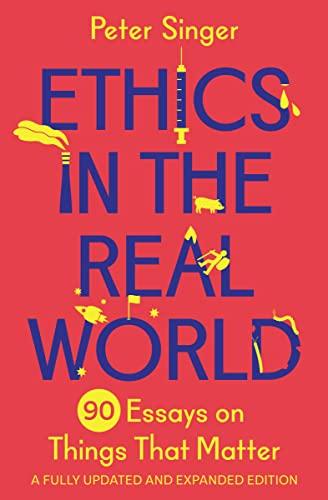
Peter Singer
Mentioned 1 year ago
Episode #209 ... Improving our world through applied ethics. (Peter Singer, Katarzyna de Lazari-Radek)

Peter Singer
Mentioned 1 year ago
Episode #209 ... Improving our world through applied ethics. (Peter Singer, Katarzyna de Lazari-Radek)
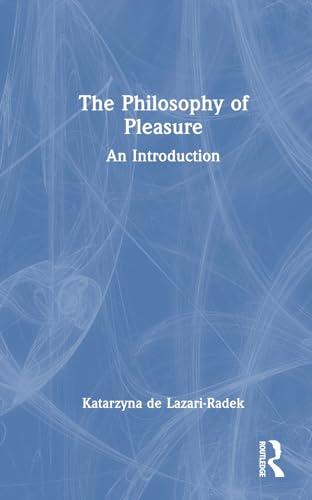
Katarzyna de Lazari-Radek
Mentioned 1 year ago
Episode #209 ... Improving our world through applied ethics. (Peter Singer, Katarzyna de Lazari-Radek)
Robert Nozick
Mentioned 1 year ago
Episode #208 ... The moral evolution of a philosopher. (Peter Singer)

Derek Parfit
Mentioned 1 year ago
Episode #208 ... The moral evolution of a philosopher. (Peter Singer)
The book aimed to answer common questions about how an anarchist society could work in practice, and provided examples throughout history of people demonstrating mutual aid, self-organization, autonomy, and horizontal decision-making.
the state is a mafia that's won control over society and the law is the codification of everything they've stolen from us
— Episode: Episode #194 ... Do we really need the p...
The book aimed to answer common questions about how an anarchist society could work in practice, and provided examples throughout history of people demonstrating mutual aid, self-organization, autonomy, and horizontal decision-making.
the state is a mafia that's won control over society and the law is the codification of everything they've stolen from us
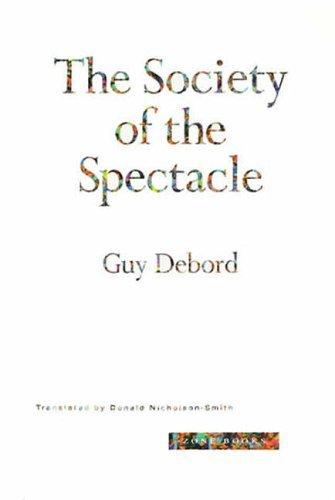
The podcast refers to Debord's book as a source to support how capitalism can function as a religion, masking that reality from those participating.
If you remember our episode we did on the philosopher Guy Debord and his book The Society of the Spectacle, then you already know some of the arguments for how capitalism in particular can not only se...
— Episode: Episode #193 ...The chief export of the...
The podcast refers to Debord's book as a source to support how capitalism can function as a religion, masking that reality from those participating.
If you remember our episode we did on the philosopher Guy Debord and his book The Society of the Spectacle, then you already know some of the arguments for how capitalism in particular can not only serve as a religion for people to participate in but it has a special ability to mask the fact that you're part of a religion when you're in it and more than that oftentimes when you show someone how similar their commodity fetishism is to a religion They don't even usually care that much on the other side of it.
Swann's Way & Within a Budding Grove
The speaker referenced Proust in describing emotions as "geological upheavals of thought" and said that emotions are not simply irrational acts of self-indulgence. This suggests that Proust's work was used to highlight the importance of emotions and their connection to judgments about value, intelligence, and discernment.
They're what she calls geological upheavals of thought, a reference to the author Marcel Proust.
— Episode: Episode #190 ... Are emotions a waste of...
The speaker referenced Proust in describing emotions as "geological upheavals of thought" and said that emotions are not simply irrational acts of self-indulgence. This suggests that Proust's work was used to highlight the importance of emotions and their connection to judgments about value, intelligence, and discernment.
They're what she calls geological upheavals of thought, a reference to the author Marcel Proust.
A Topology of the Present
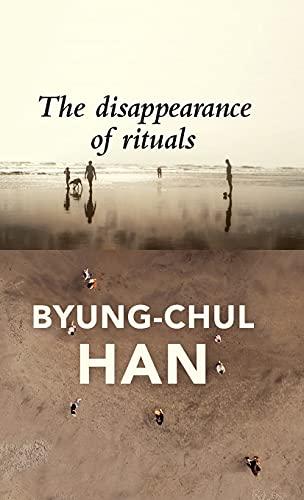
It was mentioned as a book that Han wrote about the importance of rituals as temporal technology for housing oneself.
In his book called The Disappearance of Rituals, Han says he thinks a good way to describe the function of a ritual is to call it a temporal technology for housing oneself.
— Episode: Episode #189 ... Everything that connect...
It was mentioned as a book that Han wrote about the importance of rituals as temporal technology for housing oneself.
In his book called The Disappearance of Rituals, Han says he thinks a good way to describe the function of a ritual is to call it a temporal technology for housing oneself.

Cyber Dreams and Digital Nightmares
It was mentioned as a book that Han wrote about how the ability for people to arrive at truth or knowledge is starting to disappear in a world dominated by an endless stream of fragmented information.
He writes about it in his book called The Information Society.
— Episode: Episode #189 ... Everything that connect...
It was mentioned as a book that Han wrote about how the ability for people to arrive at truth or knowledge is starting to disappear in a world dominated by an endless stream of fragmented information.
He writes about it in his book called The Information Society.

It was mentioned as a book that Han wrote about the importance of Eros, a concept that signifies the relation to the "holy other" and helps us acknowledge real differences in other groups.
He writes about it in his book called The Agony of Eros, and he calls it at one point, quote, the relation to the holy other, end quote.
— Episode: Episode #189 ... Everything that connect...
It was mentioned as a book that Han wrote about the importance of Eros, a concept that signifies the relation to the "holy other" and helps us acknowledge real differences in other groups.
He writes about it in his book called The Agony of Eros, and he calls it at one point, quote, the relation to the holy other, end quote.
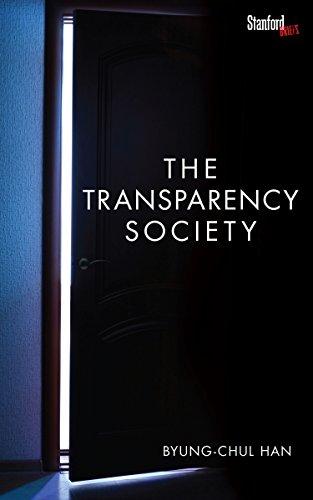
It was mentioned as a book that Han wrote about how the modern society values transparency as a good, but he argues that this can have a negative impact by destroying the need to trust.
So in his book The Transparency of Society, he talks about how society sees transparency as this undeniable good.
— Episode: Episode #189 ... Everything that connect...
It was mentioned as a book that Han wrote about how the modern society values transparency as a good, but he argues that this can have a negative impact by destroying the need to trust.
So in his book The Transparency of Society, he talks about how society sees transparency as this undeniable good.
The Original Unabridged And Complete Edition (Plato Classics)
Plato, in his work *The Republic*, advocates for a philosopher king, someone who utilizes reason to govern an ideal society, highlighting the importance of reason for leadership.
When he writes *The Republic* and designs the structure of an ideal society, not surprisingly, he puts the philosopher king as the person who should be in charge of it all.
— Episode: Episode #186 ... Are we heading for a di...
Plato, in his work *The Republic*, advocates for a philosopher king, someone who utilizes reason to govern an ideal society, highlighting the importance of reason for leadership.
When he writes *The Republic* and designs the structure of an ideal society, not surprisingly, he puts the philosopher king as the person who should be in charge of it all.
The podcast drew parallels between the effects of generative AI on society and Debord's book 'The Society of the Spectacle', highlighting the shift from participation in reality to contemplation of a spectacle.
It just reminds you Of Guy Debord And the Society of the Spectacle
— Episode: Episode #185 ... Should we prepare for a...
The podcast drew parallels between the effects of generative AI on society and Debord's book 'The Society of the Spectacle', highlighting the shift from participation in reality to contemplation of a spectacle.
It just reminds you Of Guy Debord And the Society of the Spectacle
But he says now We live in a world Where your social role Is not to participate In reality anymore But just to contemplate The spectacle That's given to you
This essay, written in 1884, explored the idea of viewing the entire history of the world through the lens of determinism or free will. James suggested seeing history as a series of free-acting agents making decisions, or as a chain of causally related events based on a predetermined order. He argued that regardless of which perspective you choose, the rational way to approach the future is to assume you have free will.
My first act of free will shall be to believe in free will.
— Episode: Episode #182 ... What if free will is an...
This essay, written in 1884, explored the idea of viewing the entire history of the world through the lens of determinism or free will. James suggested seeing history as a series of free-acting agents making decisions, or as a chain of causally related events based on a predetermined order. He argued that regardless of which perspective you choose, the rational way to approach the future is to assume you have free will.
My first act of free will shall be to believe in free will.
Daniel Dennett introduces the metaphor of a computer desktop to explain phenomenal consciousness in his book, Consciousness Explained, published in 1991. The book argues that our experience of consciousness is like a user interface, a simplified representation of the complex processes happening inside our brains.
when I interact with the computer, I have limited access to the events occurring within it. Thanks to the schemes of presentation devised by the programmers I am treated to an elaborate audio-visual m...
— Episode: Episode #181 ... What if consciousness i...
Daniel Dennett introduces the metaphor of a computer desktop to explain phenomenal consciousness in his book, Consciousness Explained, published in 1991. The book argues that our experience of consciousness is like a user interface, a simplified representation of the complex processes happening inside our brains.
when I interact with the computer, I have limited access to the events occurring within it. Thanks to the schemes of presentation devised by the programmers I am treated to an elaborate audio-visual metaphor an interactive drama acted out on the stage of keyboard mouse and screen I the user and subjected to a series of benign illusions I seem to be able to move the cursor a powerful invisible servant to the very place in the computer where I keep my file And once that I see that the cursor has arrived there by pressing a key, I get to retrieve the file spreading it out on a long scroll that unrolls in front of a window at my command I can make all sorts of things happen inside the computer by typing in various commands Pressing various buttons, and I don't have to know the details I maintain control by relying on my understanding of the detailed audio-visual metaphor provided by the user illusion
In this book, Philip Goff explores the idea that a fundamental mistake in our theoretical models may have rendered science incapable of fully explaining consciousness, suggesting a need to reintegrate qualitative experiences into scientific understanding.
Philip Goff in 2019 wrote a book called Galileo's Heir where in it, he talks about what he thinks is a fundamental mistake in the theoretical models we use to understand our reality.
— Episode: Episode #180 ... What if everything is c...
In this book, Philip Goff explores the idea that a fundamental mistake in our theoretical models may have rendered science incapable of fully explaining consciousness, suggesting a need to reintegrate qualitative experiences into scientific understanding.
Philip Goff in 2019 wrote a book called Galileo's Heir where in it, he talks about what he thinks is a fundamental mistake in the theoretical models we use to understand our reality.
And it's a mistake that may have made science in its current form, incapable of ever being able to explain consciousness fully.
Check out his book on Amazon, Galileo's Error, referenced on the episode here today.
In Search of a Fundamental Theory (Philosophy of Mind)
The book 'The Conscious Mind' by David Chalmers was mentioned in relation to the hard problem of consciousness, which Chalmers coined in 1995. The book was described as a foundational text for modern conversations about consciousness and is widely referenced.
It's called The Conscious Mind.
— Episode: Episode #179 ... Why is consciousness so...
The book 'The Conscious Mind' by David Chalmers was mentioned in relation to the hard problem of consciousness, which Chalmers coined in 1995. The book was described as a foundational text for modern conversations about consciousness and is widely referenced.
It's called The Conscious Mind.

This book explores how metaphors are used to describe illness and disease, and how these metaphors can shape our understanding of illness, affect treatment options, and influence the way we treat sick people. Sontag examines the metaphors used to describe tuberculosis in the 19th century and cancer in the 1970s, illustrating how these metaphors can objectify patients, oversimplify their conditions, and lead to harmful assumptions about the causes and treatments of these diseases.
The point of Susan Sontag's 1978 book called Illness as Metaphor was to get us to picture this use of the metaphor applied to the way we see illness and disease, and then how we end up treating people...
— Episode: Episode #178 ... Susan Sontag - How Much...
This book explores how metaphors are used to describe illness and disease, and how these metaphors can shape our understanding of illness, affect treatment options, and influence the way we treat sick people. Sontag examines the metaphors used to describe tuberculosis in the 19th century and cancer in the 1970s, illustrating how these metaphors can objectify patients, oversimplify their conditions, and lead to harmful assumptions about the causes and treatments of these diseases.
The point of Susan Sontag's 1978 book called Illness as Metaphor was to get us to picture this use of the metaphor applied to the way we see illness and disease, and then how we end up treating people differently who get sick as a result of it.
She starts the book by making a case for what's at stake when we uncritically use metaphors by examining all the different ways over the years that people have talked about the disease of tuberculosis.
And again in 1978, she writes one of the books we're referencing today called Illness as Metaphor.
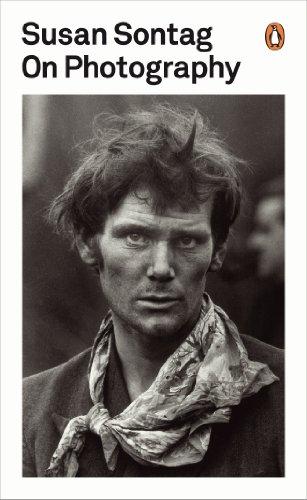
She argues that taking a photograph is an act of objectification, as it freezes a moment and turns it into something that can be appropriated and used. Taking a photo participates in the mortality, vulnerability, and mutability of the subject. It is predatory, violating the subject by seeing them as they do not see themselves.
To photograph people is to violate them, by seeing them as they never see themselves, by having knowledge of them they can never have. It turns people into objects that can be symbolically possessed.
— Episode: Episode #177 ... Susan Sontag - Do you s...
She argues that taking a photograph is an act of objectification, as it freezes a moment and turns it into something that can be appropriated and used. Taking a photo participates in the mortality, vulnerability, and mutability of the subject. It is predatory, violating the subject by seeing them as they do not see themselves.
To photograph people is to violate them, by seeing them as they never see themselves, by having knowledge of them they can never have. It turns people into objects that can be symbolically possessed.
Pictures are both a pseudo-presence and a token of absence.
There is something predatory in the act of taking a picture.
To take a photograph is to participate in another person's, or thing's, mortality, vulnerability, mutability. Precisely by slicing out this moment and freezing it, all photographs testify to time's relentless melt.
Simone Weil's most famous book, it explores the concept of 'attention' as a way to connect with the universe and receive moral truth.
Waiting for God
— Episode: Episode #173 ... Simone Weil - The Need...
Simone Weil's most famous book, it explores the concept of 'attention' as a way to connect with the universe and receive moral truth.
Waiting for God
...our thoughts should be empty, waiting, not seeking anything, but ready to receive in its naked truth the object that is to penetrate it.
The book's epigraph is a quote from the philosopher Ludwig Feuerbach's book, The Essence of Christianity. He spoke about the Christians of his time and their relationship with the truth versus illusion. He said that the highest degree of illusion comes to be the highest degree of sacredness.
but certainly for the present age, which prefers the sign to the thing signified, the copy to the original, representation to reality, the appearance to the essence, illusion only is sacred, truth pro...
— Episode: Episode #171 ... Guy Debord - The Societ...
The book's epigraph is a quote from the philosopher Ludwig Feuerbach's book, The Essence of Christianity. He spoke about the Christians of his time and their relationship with the truth versus illusion. He said that the highest degree of illusion comes to be the highest degree of sacredness.
but certainly for the present age, which prefers the sign to the thing signified, the copy to the original, representation to reality, the appearance to the essence, illusion only is sacred, truth profane. Nay, sacredness is held to be enhanced in proportion as truth decreases and illusion increases so that the highest degree of illusion comes to be the highest degree of sacredness
the highest degree of sacredness is in the illusion and in that worldview the truth has to take a back seat
The Fall is a book that explores the hypocrisy of modern society. The main character, Jean-Baptiste Clemence, is a former successful lawyer who has fallen from grace and now sits in a bar confessing his sins to strangers. The book explores his descent into self-deception and his inability to escape the judgment of others.
The actual title of the book, The Fall, is a reference to The Fall of humanity in the Garden of Eden.
— Episode: Episode #170 ... Albert Camus - The Fall
The Fall is a book that explores the hypocrisy of modern society. The main character, Jean-Baptiste Clemence, is a former successful lawyer who has fallen from grace and now sits in a bar confessing his sins to strangers. The book explores his descent into self-deception and his inability to escape the judgment of others.
The actual title of the book, The Fall, is a reference to The Fall of humanity in the Garden of Eden.
The main character in one of his final books called The Fall, a book released just a couple years before he died in a car accident when he was clearly about to head into a new direction with his work, the main character of The Fall in many ways can be seen as a great example of what not to do as someone creating a system of meaning.
Clemence sits in a bar in the deepest circle of hell, telling strangers the story of his fall.
for anyone who is alone without God and without a master, the weight of days is dreadful. Hence one must choose a master, God being out of style.
irresponsibility is grace
Note: The book recommendations on this page are discovered automatically from podcast transcripts, and may be incorrect or incomplete.
Podcast Name