![Twilight of the Idols and The Anti-Christ [Hardcover] cover](https://media.podcastbookpicks.com/books/11603.jpg)
Twilight of the Idols and The Anti-Christ [Hardcover]
Friedrich Nietzsche
Mentioned 1 year ago
Episode #212 ... Nietzsche and Critchley on the tragic perspective. (Amor Fati pt. 2)
Beginner friendly if listened to in order! For anyone interested in an educational podcast about philosophy where you don't need to be a graduate-level philosopher to understand it. In chronological order, the thinkers and ideas that forged the world we live in are broken down and explained.
Recently mentioned
Friedrich Nietzsche
Mentioned 1 year ago
Episode #212 ... Nietzsche and Critchley on the tragic perspective. (Amor Fati pt. 2)
Simon Critchley
Mentioned 1 year ago
Episode #212 ... Nietzsche and Critchley on the tragic perspective. (Amor Fati pt. 2)

Friedrich Nietzsche
Mentioned 1 year ago
Episode #211 ... Nietzsche returns with a hammer!
Friedrich Nietzsche
Mentioned 1 year ago
Episode #211 ... Nietzsche returns with a hammer!
Friedrich Wilhelm Nietzsche
Mentioned 1 year ago
Episode #211 ... Nietzsche returns with a hammer!

Paulo Freire
Mentioned 1 year ago
Episode #210 ... The Pedagogy of the Oppressed (Paulo Freire, Education)
Peter Singer
Mentioned 1 year ago
Episode #209 ... Improving our world through applied ethics. (Peter Singer, Katarzyna de Lazari-Radek)
Peter Singer
Mentioned 1 year ago
Episode #209 ... Improving our world through applied ethics. (Peter Singer, Katarzyna de Lazari-Radek)

Peter Singer
Mentioned 1 year ago
Episode #209 ... Improving our world through applied ethics. (Peter Singer, Katarzyna de Lazari-Radek)
Katarzyna de Lazari-Radek
Mentioned 1 year ago
Episode #209 ... Improving our world through applied ethics. (Peter Singer, Katarzyna de Lazari-Radek)
Robert Nozick
Mentioned 1 year ago
Episode #208 ... The moral evolution of a philosopher. (Peter Singer)

Derek Parfit
Mentioned 1 year ago
Episode #208 ... The moral evolution of a philosopher. (Peter Singer)
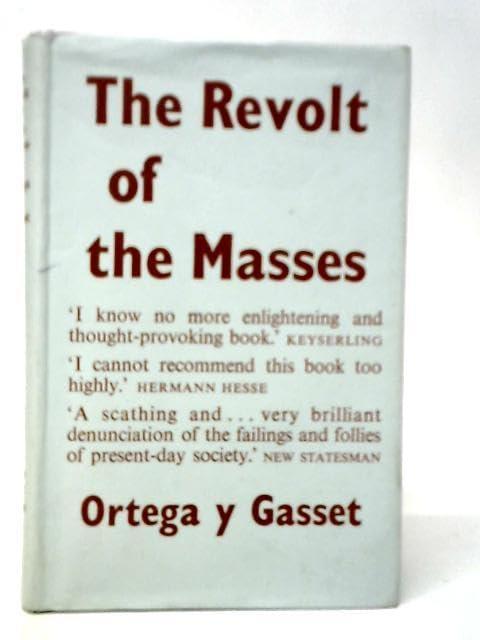
The book argues that the modern world has given rise to a "mass man" - a person who is educated but lacks culture, entitled and self-satisfied in mediocrity, and unconcerned with responsibility. This mass mentality undermines society by promoting egalitarianism, flattening hierarchies, and suppressing true expertise.
for whom to live is to be in every moment what they already are without imposing on themselves any effort towards perfection, mere buoys that float on the waves
— Episode: Episode #167 ... Jose Ortega - Revolt of...
The book argues that the modern world has given rise to a "mass man" - a person who is educated but lacks culture, entitled and self-satisfied in mediocrity, and unconcerned with responsibility. This mass mentality undermines society by promoting egalitarianism, flattening hierarchies, and suppressing true expertise.
for whom to live is to be in every moment what they already are without imposing on themselves any effort towards perfection, mere buoys that float on the waves
The mass crushes beneath it everything that is different, everything that is excellent, individual, qualified, and select
This average person is the new barbarian, a laggard behind the contemporary civilization, archaic and primitive in contrast with his problems which are grimly, relentlessly modern. This new barbarian is above all the professional man, more learned than ever before, but at the same time more uncultured, the engineer, the physician, the lawyer, the scientist
predominance over the world
terrorism of the laboratory
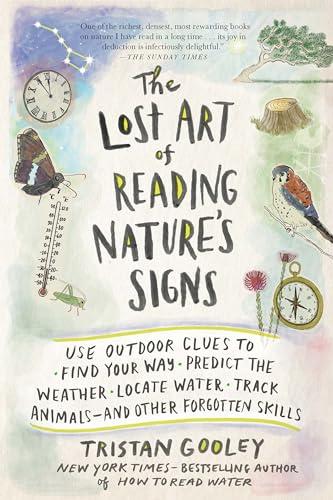
Use Outdoor Clues to Find Your Way, Predict the Weather, Locate Water, Track Animals - and Other Forgotten Skills (Natural Navigation)
Emerson encourages readers to have an intentional relationship with Nature by spending time in it, observing it with a childlike curiosity, and asking questions about its purpose. He emphasizes that a personal connection with nature is crucial for gaining moral and spiritual insights.
To what end is Nature?
— Episode: Episode #165 ... Ralph Waldo Emerson - N...
Emerson encourages readers to have an intentional relationship with Nature by spending time in it, observing it with a childlike curiosity, and asking questions about its purpose. He emphasizes that a personal connection with nature is crucial for gaining moral and spiritual insights.
To what end is Nature?
To what end is Nature?
What does Nature mean?
The ancient precept of know thyself and the modern precept study nature become at last one maxim.
The stars in the night sky.

Three Godly Discourses
This book examines two unlikely teachers from the Bible, the lily of the field and the bird of the air, to show how we can learn from their existence outside of our own human concerns.
The Lily of the Field and the Bird of the Air.
— Episode: Episode #160 ... The Creation of Meaning...
This book examines two unlikely teachers from the Bible, the lily of the field and the bird of the air, to show how we can learn from their existence outside of our own human concerns.
The Lily of the Field and the Bird of the Air.
The Lily of the Field and the Bird of the Air.
Silence is a form of prayer to Kierkegaard.
only by unconditionally obeying does a human being come to understand that what the gospel says is so,
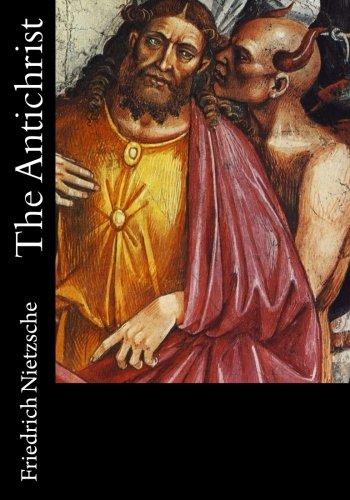
The quote from *The Antichrist* about good and bad was mentioned as an example of how affirming the necessary aspects of life can feel different than negating them.
What is good? Everything that heightens the feeling of power in man, the will to power, power itself. What is bad? Everything that is born of weakness. What is happiness? The feeling that power is gro...
— Episode: Episode #159 ... The Creation of Meaning...
The quote from *The Antichrist* about good and bad was mentioned as an example of how affirming the necessary aspects of life can feel different than negating them.
What is good? Everything that heightens the feeling of power in man, the will to power, power itself. What is bad? Everything that is born of weakness. What is happiness? The feeling that power is growing, that resistance is overcome.

Fromm argues that freedom can be both a good and a bad thing, giving us independence and rationality, but also responsibility and anxiety. He explores the concept of "escape from freedom" through three strategies: authoritarianism, destructiveness, and automaton conformity.
To quote Kierkegaard, anxiety is the dizziness of freedom.
— Episode: Episode #151 ... The Frankfurt School -...
Fromm argues that freedom can be both a good and a bad thing, giving us independence and rationality, but also responsibility and anxiety. He explores the concept of "escape from freedom" through three strategies: authoritarianism, destructiveness, and automaton conformity.
To quote Kierkegaard, anxiety is the dizziness of freedom.
we have been compelled to recognize that millions in Germany were as eager to surrender their freedom as their fathers were to fight for it. That instead of wanting freedom, they sought for ways to escape from it.
we have to find a way to quote, connect to the world without eliminating our individuality.
modern man is still anxious and tempted to surrender his freedom to dictators of all kinds or lose it by transforming himself into a small cog in the machine. Well fed and well clothed yet not a free man, but an automaton.
There was only one meaning to life and that is the act of living it.
first published in 1841 (1st. Page Classics)
The Spectacular Achievements of Propaganda (Open Media Series)

A Novel
Bergson's essay "Laughter" is examined, discussing the comic, and the relationship between people and the funny, and how this relates to the internal experience of human beings. Bergson famously states that we laugh at things because we are witnessing what he calls "the mechanical encrusted upon the living."
the mechanical encrusted upon the living
— Episode: Episode #145 ... Bergson on Laughter pt....
Bergson's essay "Laughter" is examined, discussing the comic, and the relationship between people and the funny, and how this relates to the internal experience of human beings. Bergson famously states that we laugh at things because we are witnessing what he calls "the mechanical encrusted upon the living."
the mechanical encrusted upon the living
Now some people might laugh at that. But why, if we're accepting the premises from before? There wasn't any nervous energy being built up to set up a thwarting of someone's expectations. He was only saying something positive before the punchline.
In everything that is to excite a lively laugh, there must be something absurd, in which the understanding, therefore, can find no satisfaction. Laughter is an affection arising from the sudden transformation of a strained expectation into nothing.

An Essay on Tolstoy's View of History - Second Edition
The Hedgehog and the Fox is a famous essay by Isaiah Berlin. In it, Berlin uses the analogy of a hedgehog and a fox to explain the two different ways of thinking about the world: monism and pluralism. The hedgehog sees one big thing, while the fox sees many things. This essay, according to the speaker, is essential for understanding Berlin's ideas about pluralism.
There's a famous essay by Isaiah Berlin titled The Hedgehog and the Fox.
— Episode: Episode #140 ... Isaiah Berlin pt. 1 - P...
The Hedgehog and the Fox is a famous essay by Isaiah Berlin. In it, Berlin uses the analogy of a hedgehog and a fox to explain the two different ways of thinking about the world: monism and pluralism. The hedgehog sees one big thing, while the fox sees many things. This essay, according to the speaker, is essential for understanding Berlin's ideas about pluralism.
There's a famous essay by Isaiah Berlin titled The Hedgehog and the Fox.
The classic line from the essay is that the hedgehog sees one big thing while the fox sees many things.
The hedgehog, obviously representing the thinking of a typical monist, the fox representing the approach of a pluralist.

Introduction by Samantha Power
Hannah Arendt wrote this book to understand the rise and maintenance of totalitarianism during World War II. She argues that modern society's exclusion of the political realm made it possible for totalitarian regimes to ascend to power and maintain control by dehumanizing people and reducing them to economic cogs.
a mass society of laborers such as Marx had in mind when he spoke of quote socialized mankind consists of worldless specimens of the species mankind, whether they are household slaves driven into thei...
— Episode: Episode #136 ... Hannah Arendt - The Ban...
Hannah Arendt wrote this book to understand the rise and maintenance of totalitarianism during World War II. She argues that modern society's exclusion of the political realm made it possible for totalitarian regimes to ascend to power and maintain control by dehumanizing people and reducing them to economic cogs.
a mass society of laborers such as Marx had in mind when he spoke of quote socialized mankind consists of worldless specimens of the species mankind, whether they are household slaves driven into their predicament by the violence of others or free performing their functions willingly.
this worldlessness of the animal labyrinth to be sure is entirely different from the active flight from the publicity of the world, which we found inherent in the activity of good works. The animal labyrinth does not flee the world. But is ejected from it in so far as he is imprisoned in the privacy of his own body, caught in the fulfillment of needs in which nobody can share and which nobody can fully communicate.
the outcome is what is euphemistically called mass culture and it's deep rooted trouble is a universal unhappiness due on one side to the troubled balance between laboring and consumption and on the other to the persistent demands of the animal labyrinths to obtain a happiness, which can be achieved only where life's processes of exhaustion and regeneration of pain and release from pain strike a perfect balance.
I sensed I would have to live a leaderless and difficult individual life. I would receive no directives from anybody. No orders and commands would any longer be issued to me. No pertinent ordinances would be there to consult. In brief, a life never known before lay ahead of me.

Second Edition
Arendt uses the concept of the 'animal labyrinth' in this book to discuss how modern society has alienated people from the world by reducing their lives to labor and work, leading to a sense of disconnect and meaninglessness.
this worldlessness of the animal labyrinth to be sure is entirely different from the active flight from the publicity of the world, which we found inherent in the activity of good works. The animal la...
— Episode: Episode #136 ... Hannah Arendt - The Ban...
Arendt uses the concept of the 'animal labyrinth' in this book to discuss how modern society has alienated people from the world by reducing their lives to labor and work, leading to a sense of disconnect and meaninglessness.
this worldlessness of the animal labyrinth to be sure is entirely different from the active flight from the publicity of the world, which we found inherent in the activity of good works. The animal labyrinth does not flee the world. But is ejected from it in so far as he is imprisoned in the privacy of his own body, caught in the fulfillment of needs in which nobody can share and which nobody can fully communicate.
The Original Unabridged And Complete Edition (Plato Classics)
Plato, in his Republic, considered implementing something similar to our modern scientific method, but decided against it because he thought the end result would be that it would rob human beings of their identity and values.
Plato seriously considers implementing something extremely similar to our modern scientific method, but he ultimately decides against it because he thought the end result would be that it would rob hu...
— Episode: Episode 135 ... Leo Strauss - Ancients v...
Plato, in his Republic, considered implementing something similar to our modern scientific method, but decided against it because he thought the end result would be that it would rob human beings of their identity and values.
Plato seriously considers implementing something extremely similar to our modern scientific method, but he ultimately decides against it because he thought the end result would be that it would rob human beings of their identity and values.
Lippman's book, "Public Opinion", criticizes democracy by arguing that the average citizen is not equipped to make informed political decisions due to the complexities of the modern world. He believes that public opinion is shaped by stereotypes and pseudo-environments, which are simplified models of reality constructed by individuals to cope with overwhelming information.
The world is, as Lippman says, quote, too big, too complex, and too fleeting for direct acquaintance. We are not equipped to deal with so much subtlety, so much variety, and so many permutations and c...
— Episode: Episode #130 ... Dewey and Lippman on De...
Lippman's book, "Public Opinion", criticizes democracy by arguing that the average citizen is not equipped to make informed political decisions due to the complexities of the modern world. He believes that public opinion is shaped by stereotypes and pseudo-environments, which are simplified models of reality constructed by individuals to cope with overwhelming information.
The world is, as Lippman says, quote, too big, too complex, and too fleeting for direct acquaintance. We are not equipped to deal with so much subtlety, so much variety, and so many permutations and combinations. And although we have to act in that environment, we have to reconstruct it on a simpler model before we can manage it. End quote.
crystallize into what we call Public Opinion. End quote.
for a dollar you may not even get an armful of candy but for a dollar or less people expect reality slash representations of truth to fall into their laps, end quote.
every authoritarian scheme assumes that its value may be assessed by some prior principle if not of family and birth or race and color or possession of material wealth then by the position and rank the person occupies in the existing social scheme. The democratic faith and equality is the faith that each individual shall have the chance and opportunity to contribute whatever he is capable of contributing and that the value of his contribution be decided by its place and function in the organized total of similar contributions not on the basis of prior status of any kind whatever. End quote.
The Original Unabridged And Complete Edition (Plato Classics)
This book, published in 1882, was the first place where Nietzsche talked about eternal return or eternal recurrence.
If the world had a goal, it must have been reached. If there were for it some unintended final state, this also must have been reached. If it were capable of pausing and becoming fixed, of being, in o...
— Episode: Episode #129 ... Gilles Deleuze pt. 5 -...
This book, published in 1882, was the first place where Nietzsche talked about eternal return or eternal recurrence.
If the world had a goal, it must have been reached. If there were for it some unintended final state, this also must have been reached. If it were capable of pausing and becoming fixed, of being, in other words, if in the whole course of its becoming it possessed even for a moment this capability of being, then all becoming would long since have come to an end.

50th Anniversary Edition (Modern Library)
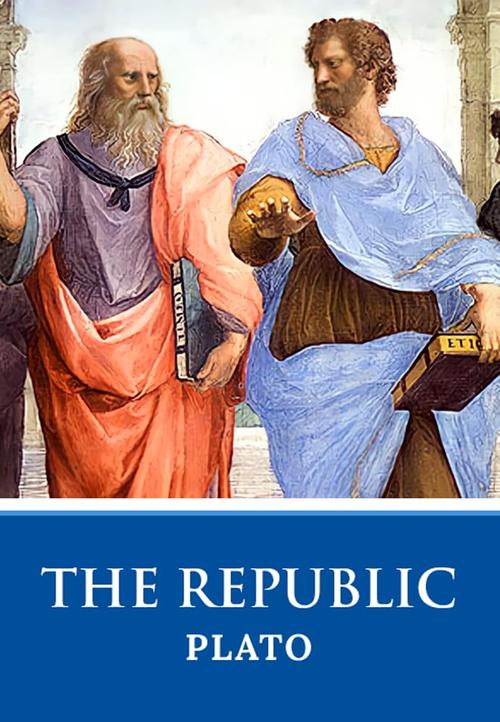
The Original Unabridged And Complete Edition (Plato Classics)
It was a large-scale social engineering project, where social classes were designed and future leaders were groomed from birth.
Think Plato's Republic, social engineering on a massive scale to the point of carving out and actually designing social classes, even grooming and designing the minds of all future leaders from the mo...
— Episode: Episode #128 ... Gilles Deleuze pt. 4 -...
It was a large-scale social engineering project, where social classes were designed and future leaders were groomed from birth.
Think Plato's Republic, social engineering on a massive scale to the point of carving out and actually designing social classes, even grooming and designing the minds of all future leaders from the moment they're born.
Note: The book recommendations on this page are discovered automatically from podcast transcripts, and may be incorrect or incomplete.
Podcast Name