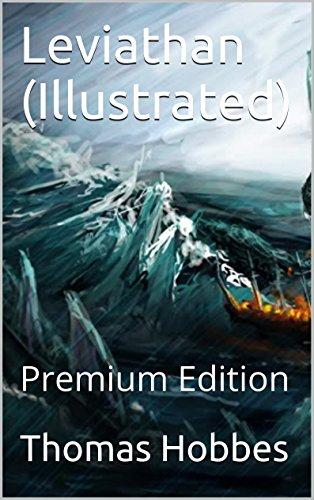
It was Hobbes's most famous work, and he helped design the cover of the first printing, depicting a giant human-shaped figure composed of smaller human bodies, with one man as the head, representing the sovereign. The podcast episode discussed the book's exploration of the social contract and the state of nature.
"
in such condition there is no place for industry because the fruit thereof is uncertain, and consequently no culture of the Earth, no navigation, nor use of the commodities that may be imported by sea, no commodious building, no instruments of moving or removing such things as require much force, no knowledge of the face of the Earth, no account of time, no arts, no letters, no society, and which is worst of all, continual fear and danger of violent death and the life of man solitary, poor, nasty, brutish, and short
To this war of every man against every man, this is also consequent, that nothing can be unjust. The notions of right and wrong, justice and injustice, have there no place. Where there is no common power, there is no law. Where no law, no injustice. Force and fraud are in war the two cardinal virtues. Justice and injustice are none of the faculties neither of the body nor mind. If they were, they might be in a man that were alone in the world, as well as his senses and passions. They are qualities that relate to men in society, not in solitude
...so that in the nature of man we find three principal causes of quarrel. First, competition. Secondly, diffidence. Thirdly, glory. The first maketh men invade for gain. The second, for safety. And the third, reputation. The first use violence to make themselves masters of other people's persons, wives, children, and cattle. The second, to defend them. The third, for trifles as a word, a smile, a different opinion, some other sign of undervalue either direct in their persons or by reflection in their kindred, their friends, their nation, their profession, or their name
From this equality of ability, ariseth equality of hope and attaining of our ends. And therefore, if any two men desire the same thing, which nevertheless they cannot both enjoy, they become enemies, and in the way to their end, endeavor to destroy or subdue another. If one plant, sow, build, or possess a convenient seat, then others may probably be expected to come prepared with forces united, to dispossess and deprive him not only of the fruit of his labor, but also of his life or liberty. And from this dividends of one another, there is no way for any man to secure himself so reasonable as anticipation, that is by force or wiles, to master the persons of all men he can, so long till he sees no other power great enough to endanger him
that every man ought to endeavor peace, as far as he can hope of obtaining it, and when he cannot obtain it, that he may seek and use all helps and advantages of war. The first branch of which rule containeth the first and fundamental law of nature, which is to seek peace and follow it