![Twilight of the Idols and The Anti-Christ [Hardcover] cover](https://media.podcastbookpicks.com/books/11603.jpg)
Twilight of the Idols and The Anti-Christ [Hardcover]
Friedrich Nietzsche
Mentioned 1 year ago
Episode #212 ... Nietzsche and Critchley on the tragic perspective. (Amor Fati pt. 2)
Beginner friendly if listened to in order! For anyone interested in an educational podcast about philosophy where you don't need to be a graduate-level philosopher to understand it. In chronological order, the thinkers and ideas that forged the world we live in are broken down and explained.
Recently mentioned
Friedrich Nietzsche
Mentioned 1 year ago
Episode #212 ... Nietzsche and Critchley on the tragic perspective. (Amor Fati pt. 2)
Simon Critchley
Mentioned 1 year ago
Episode #212 ... Nietzsche and Critchley on the tragic perspective. (Amor Fati pt. 2)

Friedrich Nietzsche
Mentioned 1 year ago
Episode #211 ... Nietzsche returns with a hammer!
Friedrich Nietzsche
Mentioned 1 year ago
Episode #211 ... Nietzsche returns with a hammer!
Friedrich Wilhelm Nietzsche
Mentioned 1 year ago
Episode #211 ... Nietzsche returns with a hammer!
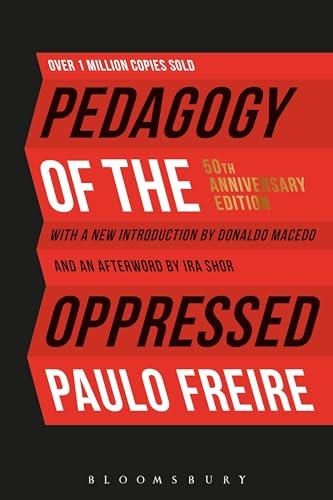
Paulo Freire
Mentioned 1 year ago
Episode #210 ... The Pedagogy of the Oppressed (Paulo Freire, Education)
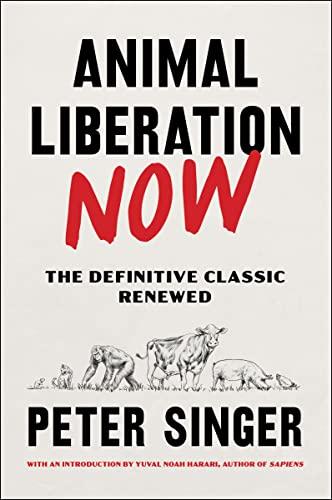
Peter Singer
Mentioned 1 year ago
Episode #209 ... Improving our world through applied ethics. (Peter Singer, Katarzyna de Lazari-Radek)
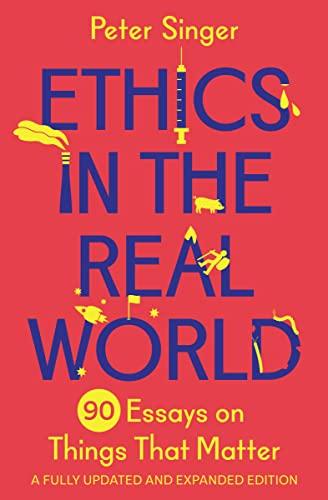
Peter Singer
Mentioned 1 year ago
Episode #209 ... Improving our world through applied ethics. (Peter Singer, Katarzyna de Lazari-Radek)
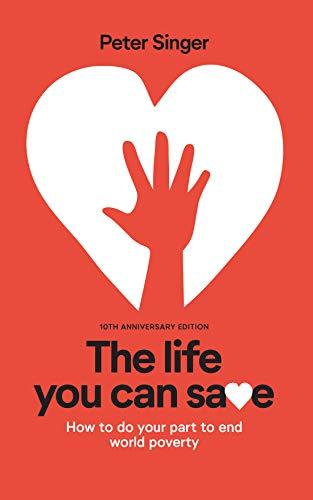
Peter Singer
Mentioned 1 year ago
Episode #209 ... Improving our world through applied ethics. (Peter Singer, Katarzyna de Lazari-Radek)
Katarzyna de Lazari-Radek
Mentioned 1 year ago
Episode #209 ... Improving our world through applied ethics. (Peter Singer, Katarzyna de Lazari-Radek)
Robert Nozick
Mentioned 1 year ago
Episode #208 ... The moral evolution of a philosopher. (Peter Singer)

Derek Parfit
Mentioned 1 year ago
Episode #208 ... The moral evolution of a philosopher. (Peter Singer)
Revised Edition (Belknap)
The book is a theory of how society should be structured and how to distribute "primary social goods" in the most just manner possible, with a focus on distributive justice and the importance of fair and just institutions.
justice is the first virtue of social institutions as truth is to systems of thought
— Episode: Episode #137 ... John Rawls - A Theory o...
The book is a theory of how society should be structured and how to distribute "primary social goods" in the most just manner possible, with a focus on distributive justice and the importance of fair and just institutions.
justice is the first virtue of social institutions as truth is to systems of thought
system of liberal equality
It was said to be a more accurate literary example of a dystopian future than 1984, because of its focus on a society dependent on a drug that calms people and makes them compliant.
To Han, the far more accurate literary example of a dystopian future that resembles the world we're in is not Orwell's 1984, but Aldous Huxley's 1932 book called Brave New World.
— Episode: Episode #189 ... Everything that connect...
It was said to be a more accurate literary example of a dystopian future than 1984, because of its focus on a society dependent on a drug that calms people and makes them compliant.
To Han, the far more accurate literary example of a dystopian future that resembles the world we're in is not Orwell's 1984, but Aldous Huxley's 1932 book called Brave New World.
Volume I (Das Kapital series Book 1)
Debord's first two sentences in his book are a reference to the first two sentences of Karl Marx's Das Kapital. Debord's analysis mirrors the structure of Marx's, but the differences between the two passages point to how much Debord believes the world has changed since Marx's work.
in societies where modern conditions of production prevail, life is presented as an immense accumulation of spectacles. Everything that was directly lived has receded into a representation
— Episode: Episode #171 ... Guy Debord - The Societ...
Debord's first two sentences in his book are a reference to the first two sentences of Karl Marx's Das Kapital. Debord's analysis mirrors the structure of Marx's, but the differences between the two passages point to how much Debord believes the world has changed since Marx's work.
in societies where modern conditions of production prevail, life is presented as an immense accumulation of spectacles. Everything that was directly lived has receded into a representation
the wealth of those societies in which the Capitalist mode of production prevails presents itself as an immense accumulation of commodities. Our investigation must therefore begin with an analysis of a commodity
immense accumulation of commodities
immense accumulation of spectacles
1888 Translated Edition (The Political Classic of Karl Marx And Friedrich Engels)
It was mentioned that Aristotle gave Alexander the Great a copy of Homer's Iliad, a famous epic poem, which Alexander reportedly carried with him throughout his campaigns.
One common story I've read that must be true Is that Aristotle gave Alexander a copy of Homer's Iliad A famous epic poem That they must have studied extensively when he was teaching him poetry.
— Episode: Episode #006 ... Aristotle Pt. 2
It was mentioned that Aristotle gave Alexander the Great a copy of Homer's Iliad, a famous epic poem, which Alexander reportedly carried with him throughout his campaigns.
One common story I've read that must be true Is that Aristotle gave Alexander a copy of Homer's Iliad A famous epic poem That they must have studied extensively when he was teaching him poetry.
The Centennial Edition
Erich Fromm argued that love is a skill and an art that requires effort, commitment, and discipline, as opposed to a passive feeling that just happens. He also said that we need to learn to love ourselves before we can truly love others.
Love is the only sane and satisfactory answer to the problem of human existence.
— Episode: Episode #150 ... The Frankfurt School -...
Erich Fromm argued that love is a skill and an art that requires effort, commitment, and discipline, as opposed to a passive feeling that just happens. He also said that we need to learn to love ourselves before we can truly love others.
Love is the only sane and satisfactory answer to the problem of human existence.
Love is not a thing, it's a faculty.
Love is not an object, it's a faculty.
Love is not a noun, love is a verb.
Love is an art, just as living is an art.
domination springs from impotence and in turn reinforces it. For if an individual can force somebody else to serve him, his own need to be productive is increasingly paralyzed.
Love, in principle, is indivisible as far as the connection between objects and one's own self are concerned.
the capacity to love demands a state of intensity, awareness, enhanced vitality, which can only be the result of a productive and active orientation in many other spheres of life.
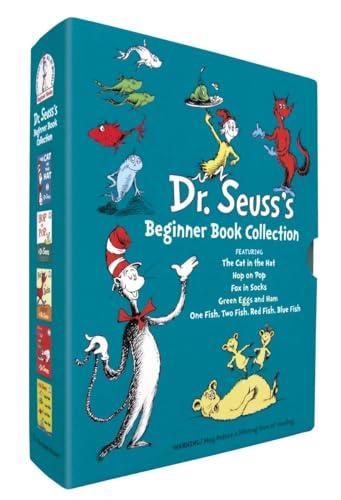
The Cat in the Hat; One Fish Two Fish Red Fish Blue Fish; Green Eggs and Ham; Hop on Pop; Fox in Socks
150th Anniversary Edition
Sir Francis Galton, Darwin's cousin, was inspired by *The Origin of Species* to apply evolutionary theory to intelligence, leading him to propose eugenics.
When Darwin writes *The Origin Of Species*, Sir Francis over there gets inspired and thinks, oh, well, intelligence must be something that people are born with.
— Episode: Episode #186 ... Are we heading for a di...
Sir Francis Galton, Darwin's cousin, was inspired by *The Origin of Species* to apply evolutionary theory to intelligence, leading him to propose eugenics.
When Darwin writes *The Origin Of Species*, Sir Francis over there gets inspired and thinks, oh, well, intelligence must be something that people are born with.
Poems and Drawings
An excerpt was read, describing children's choices of pancakes. It was compared to Shakespeare's Macbeth as a literary masterpiece.
Who wants a pancake? Sweet and piping hot, Good little Grace looks up and says, I'll take the one on the top. Who else wants a pancake? Fresh off the griddle. Terrible Teresa smiles and says, I'll tak...
— Episode: Episode #054 ... Hume pt. 4 - Art
An excerpt was read, describing children's choices of pancakes. It was compared to Shakespeare's Macbeth as a literary masterpiece.
Who wants a pancake? Sweet and piping hot, Good little Grace looks up and says, I'll take the one on the top. Who else wants a pancake? Fresh off the griddle. Terrible Teresa smiles and says, I'll take the one in the middle.
This book was described as Heidegger's primary early work, where he lays out his ideas on Dasein and the inseparability of being and the world. The podcast suggested that it's a magnum opus that could have been written by Thales, greatly impacting philosophy had it been his initial ontological starting point.
What if being in time, Heidegger's primary work early in his life, where he lays out these ideas. What if that was the magnum opus of Thales? What if this was the initial ontological starting point th...
— Episode: Episode #100 ... Heidegger pt. 1 - Pheno...
This book was described as Heidegger's primary early work, where he lays out his ideas on Dasein and the inseparability of being and the world. The podcast suggested that it's a magnum opus that could have been written by Thales, greatly impacting philosophy had it been his initial ontological starting point.
What if being in time, Heidegger's primary work early in his life, where he lays out these ideas. What if that was the magnum opus of Thales? What if this was the initial ontological starting point that philosophy began on?
It was mentioned as the second most influential book on a list of influential people, behind only the Bible. The podcast host discussed the book's significance in modern discourse and its exploration of Ayn Rand's Objectivism philosophy.
Atlas Shrugged is number two on the list, right behind the Bible.
— Episode: Episode #096 ... Is Ayn Rand A Philosoph...
It was mentioned as the second most influential book on a list of influential people, behind only the Bible. The podcast host discussed the book's significance in modern discourse and its exploration of Ayn Rand's Objectivism philosophy.
Atlas Shrugged is number two on the list, right behind the Bible.
An excerpt from Act 5, Scene 5, was read, describing life as a fleeting shadow and a tale told by an idiot. It was compared to Shel Silverstein's work.
Life is but a walking shadow, A poor player that struts and frets his hour upon the stage, and that is heard no more. It is a tale told by an idiot, full of sound and fury, signifying nothing.
— Episode: Episode #054 ... Hume pt. 4 - Art
An excerpt from Act 5, Scene 5, was read, describing life as a fleeting shadow and a tale told by an idiot. It was compared to Shel Silverstein's work.
Life is but a walking shadow, A poor player that struts and frets his hour upon the stage, and that is heard no more. It is a tale told by an idiot, full of sound and fury, signifying nothing.

The speaker mentioned reading Goosebumps books as a child and believed in an evil ventriloquist dummy from the book.
I remember reading these Goosebumps books, it's like a horror book genre by R.L. Stine when I was a kid. I really thought this evil ventriloquist doll was gonna come and choke me out with his wooden h...
— Episode: Episode #044 ... Slavery
The speaker mentioned reading Goosebumps books as a child and believed in an evil ventriloquist dummy from the book.
I remember reading these Goosebumps books, it's like a horror book genre by R.L. Stine when I was a kid. I really thought this evil ventriloquist doll was gonna come and choke me out with his wooden hands. I believed that.
What's the Right Thing to Do?
It presents itself as a philosophical examination of the concept of justice and has dozens of thought experiments and real-world examples from politics. It looks to get people thinking about what we mean when we talk about protecting justice and what criteria we use for determining what the right thing to do is.
The book presents itself on the cover though, as a philosophical examination of the concept of Justice. It has dozens of thought experiments, dozens of real world examples from the re...
— Episode: Episode #204 ... The importance of philo...
It presents itself as a philosophical examination of the concept of justice and has dozens of thought experiments and real-world examples from politics. It looks to get people thinking about what we mean when we talk about protecting justice and what criteria we use for determining what the right thing to do is.
The book presents itself on the cover though, as a philosophical examination of the concept of Justice. It has dozens of thought experiments, dozens of real world examples from the realm of politics.
And the goal seems to be at first to get people thinking about what we mean when we talk about protecting Justice and what criteria we use for determining what the right thing to do is.
And what Sandel very quickly lays out is that there've been three primary ways of thinking about Justice throughout the history of philosophy, three different teams, if you will.
You have one team utilitarianism, the greatest happiness for the greatest number or more accurately utility. Two, you have team libertarianism where Justice is seen as what maximizes people's individual freedom.
And three, you have team virtue ethics where a just society is one where people recognize the type of society that they want to live in and then take steps to cultivate the kind of virtues in the citizens that would help produce that kind of society.
This book was described as taking an oversimplification of Hegel's concept of absolute knowledge and applying it to the early 1990s political climate. Fukuyama argued that the fall of the Soviet Union marked the end of ideological conflict and the triumph of liberal democratic capitalism as the ultimate form of political organization.
Fukuyama took an oversimplification of Hegel, his concept of absolute knowledge, the dialectical change of Hegel, and applied it to the political climate of the early 1990s.
— Episode: Episode #198 ... The truth is in the pro...
This book was described as taking an oversimplification of Hegel's concept of absolute knowledge and applying it to the early 1990s political climate. Fukuyama argued that the fall of the Soviet Union marked the end of ideological conflict and the triumph of liberal democratic capitalism as the ultimate form of political organization.
Fukuyama took an oversimplification of Hegel, his concept of absolute knowledge, the dialectical change of Hegel, and applied it to the political climate of the early 1990s.
Fukuyama in 1992 made the claim that if you look at the history of human ideas for a long time we've been in this battle that's been going on between different ideologies that say what the best way is to organize people in a society.
And Fukuyama in 1992 says maybe we've arrived at that ultimate system. And that system is liberal democratic capitalism or the combination of classical liberalism democracy and capitalism.
He said they thought we were living in a post ideological age.
Tijijek Fukuyama was wrong.

Jacques Lacan in Hollywood and Out (Routledge Classics)
He mentioned the book's title, "Enjoy Your Symptoms," and summarized the core message as symptoms being outward manifestations of inner conflicts, urging listeners to embrace their symptoms rather than suppressing or medicating them.
There's a book Zizek wrote called Enjoy Your Symptoms, and to put it briefly, what he gets at in the book is that we all have these symptoms that we're acting out in our lives that are manifestations...
— Episode: Episode #201 ... Resistance, Love, and t...
He mentioned the book's title, "Enjoy Your Symptoms," and summarized the core message as symptoms being outward manifestations of inner conflicts, urging listeners to embrace their symptoms rather than suppressing or medicating them.
There's a book Zizek wrote called Enjoy Your Symptoms, and to put it briefly, what he gets at in the book is that we all have these symptoms that we're acting out in our lives that are manifestations of some deeper conflict that may be going on inside of us.
And the reflex in modern society, Zizek says, is to treat these symptoms, to medicate them away, to think about them a bunch, and do affirmations in the mirror until you don't have them anymore.
Philip Goff's book "Why?" delves into the possibility of a cosmic purpose without relying on a supernatural deity. He argues that the fine-tuning of physical constants in the universe points towards a teleological law that selects for chemical complexity, rationality, and value.
And on that note we also promise to talk about the new book from the philosopher Philip Goff on this episode and we will we'll use it in this investigation of different ideologies.
— Episode: Episode #197 ... New Atheists and cosmic...
Philip Goff's book "Why?" delves into the possibility of a cosmic purpose without relying on a supernatural deity. He argues that the fine-tuning of physical constants in the universe points towards a teleological law that selects for chemical complexity, rationality, and value.
And on that note we also promise to talk about the new book from the philosopher Philip Goff on this episode and we will we'll use it in this investigation of different ideologies.
But I guess it's important to say this in that book we're going to talk about a little later Philip Goff is building off of the work of a philosopher named Thomas Nagle.
as Philip Goff says over the years you can see this attitude start to crop up in different places Nietzsche famously declaring God is dead Mark saying that religions the opiate of the masses Freud saying that a belief in God is ultimately a longing for daddy and what all this leads to is a more common ideological attitude amongst people living at the beginning of the 20th century that science is the way that we arrive at the truth and that anything that isn't understandable by studying the materials that something's made out of is likely to be religious nonsense and what this leads to is an overall skepticism in people of non-material explanations for things overall hence the views on consciousness where no matter how non material it may seem it's got to be in the brain somewhere hidden from us we just need more time or with hard determinism no matter how much it seems like we make free choices gotta ultimately be predictable with the atoms in the prior events in some way or that morality is at best something that's completely subjective already about it forever and at worst it's a total delusion purely relative just monkeys rattling their cage these positions are logical conclusions if you're starting from the ideology of material reductionism as well as the conclusions that life is completely meaningless that it's obvious we live in a totally disinterested absurd universe and that nothing really matters that's a hallmark of the times as well
but I want to paint a picture of a what if scenario that Thomas Nagel and Philip Goff would want us to consider philosophize this everybody I believe I ever used to do that what if in 500 years people look back on the time we're living in right now and they see the ways that we were thinking about science and materialism and they say look I think I get it I think I get where they were coming from these people knew their religious history they knew how they used to project meanings onto things that were fake they didn't want to do that again these people saw the miracles of science going on all around them you know they were living in the wake of some of the greatest scientific discoveries the world had ever seen at the time they had mad respect for science but because they were living in this precise historical moment because it was understandable to commit yourself to materialism in this extreme of a way these people ignored the obvious purpose in order to the universe that was staring them in the face the whole time that anybody 500 years before or after just assumes is obvious as one of those necessary philosophical assumptions we have to smuggle in to be capable of doing good science something on the level of induction or rational coherence
the title of philip goff's new book retries to explore some answers to this is called why the purpose of the universe and before we talk about how purpose in the universe may make sense without there being some sort of supernatural man with a staff i want to follow up on that what if scenario that we gave before if we are living in a particular moment in history where we're obsessed with materialism in more ways than one then that must mean that there's evidence that the universe has a purpose all around me and I'm just either not seeing it or I'm reframing it through my own biases in a way where I just can't see it where is that evidence if it's there
a universe where there is life in all its richness including people who can fall in love experience great beauty and contemplate their own existence and quote
it's not that I can't see how this could be possible what I'm saying is in my world extraordinary claims require extraordinary evidence
but again look part of the way we model our understanding of the world around us in the sciences and otherwise is by using probabilities and just given the evidence we have now filter through a very standard Bayesian probability equation that we use to model a lot of other ways we see reality to Philip Gough it is just far more likely that the value selection hypothesis is true or that it's far less likely that it's false
scientists in the 16th century struggle to accept the mounting evidence that the earth was not contrary to what had been assumed for thousands of years in the center of the universe popular science discussion often involves scoffing at this inability of our ancestors to follow the evidence where it leads but every generation absorbs a worldview that it can't see beyond in our own time we're so used to the idea that science has done away with cosmic purpose that we're incapable of dispassionately considering the overwhelming evidence that's emerged in support of the value selection hypothesis it may take time for the culture to catch up with the evidence and quote
Gossess quote what Nagel had realized is that there's no incoherence in the idea of cosmic purpose without god provided we can expand our conception of the laws that govern the universe the laws of nature we've been used to for the past 500 years move from past to future ensuring that what happens at earlier times determines what happens at later times Nagel's proposal is that there may also be laws that move from future to past ensuring that the present is shaped by the need to get closer to certain goals in the future such as the emergence of life in other words there may be laws of nature with goals built into them and we call these teleological laws end quote
the book is a fun interesting exploration of a resolution between some common disagreements and the hope from Philip Goff is that this book can help the conversation move forward in a productive way it's called why the purpose of the universe now that's set hopefully this was all very thought provoking today not just when it comes to the details of the scientific theoretical model and our responsibility there if we want to have better and better conversations but also when it comes to the role of ideology and all this if you're Slavaj Giezek I just pictures Giezek waiting for the ideas we're going to talk about next episode I see him sitting on the sidelines in a field and a soccer game you know sitting on one of those fold out chairs eating a hot dog it's watching this game being played that we're talking about on this episode clapping at what he's seeing like he's some kind of Roman Emperor just waiting ready to pounce ready to get us thinking about the real game he thinks we're all playing thanks for sharing the podcast with a friend if it's something you enjoy patreon shout outs this week cat Clark Stanford De Silva James Trab sir you Philippe and yesterday's rice that's both someone's name and you know I just like to thank rice in general really has developed into a fine respectable carbohydrate option thank you for listening i'll talk to you next time
An Anarcho-Capitalist Manifesto
David Friedman, the son of Milton Friedman, advocates for a society with minimal government involvement, including privatizing services such as policing, contract enforcement, and national security.
But how do we actually have what David Friedman calls a system of anonymous coordination among millions of people that all have different subjective takes on what is valuable?
— Episode: Episode #195 ... Could Anarcho-Capitalis...
David Friedman, the son of Milton Friedman, advocates for a society with minimal government involvement, including privatizing services such as policing, contract enforcement, and national security.
But how do we actually have what David Friedman calls a system of anonymous coordination among millions of people that all have different subjective takes on what is valuable?
In other words, police, enforcement of contracts, national security have these things provided by the private sector as well.
The Libertarian Manifesto
Murray Rothbard argues for the non-aggression principle as the foundation of a free and prosperous society, emphasizing the importance of individual rights and property rights.
Well no because this entire anarcho capitalist society that I'm suggesting is founded upon an ethical principle first devised in this way by the philosopher Murray Rothbard, what's known as the non-ag...
— Episode: Episode #195 ... Could Anarcho-Capitalis...
Murray Rothbard argues for the non-aggression principle as the foundation of a free and prosperous society, emphasizing the importance of individual rights and property rights.
Well no because this entire anarcho capitalist society that I'm suggesting is founded upon an ethical principle first devised in this way by the philosopher Murray Rothbard, what's known as the non-aggression principle.
Murray Rothbard would want to stress that any organization in this type of society would need to be founded on a principle of non-aggression where each person understanding how important it is to respect the natural rights and property rights of others, understanding that that's what allows for society to be able to function at all in this world the vast majority of people would agree that initiating force against others is inherently wrong, that you can argue with people, you can completely disagree with how they live their life, you can hire private arbitration companies to mediate a dispute between you and them but there should never be a situation where initiating force against someone else or their property is seen as the correct course of action.
Note: The book recommendations on this page are discovered automatically from podcast transcripts, and may be incorrect or incomplete.
Podcast Name