The Body Keeps the Score
Bessel van der Kolk M.D.
Mentioned 3 weeks ago
Movement Practice to Strengthen Your Mind-Body Connection | Ido Portal
The Huberman Lab podcast is hosted by Andrew Huberman, Ph.D., a neuroscientist and tenured professor in the department of neurobiology, and by courtesy, psychiatry and behavioral sciences at Stanford School of Medicine. The podcast discusses neuroscience and science-based tools, including how our br...
Recently mentioned
Bessel van der Kolk M.D.
Mentioned 3 weeks ago
Movement Practice to Strengthen Your Mind-Body Connection | Ido Portal
Andrew D. Huberman Ph.D.
Mentioned 1 month ago
The Mental Frame & Specific Daily Actions to Succeed | Andy Stumpf
Stefan Klein
Mentioned 1 month ago
The Mental Frame & Specific Daily Actions to Succeed | Andy Stumpf
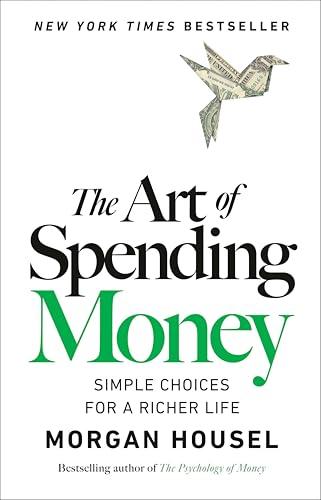
Morgan Housel
Mentioned 1 month ago
The Mental Frame & Specific Daily Actions to Succeed | Andy Stumpf
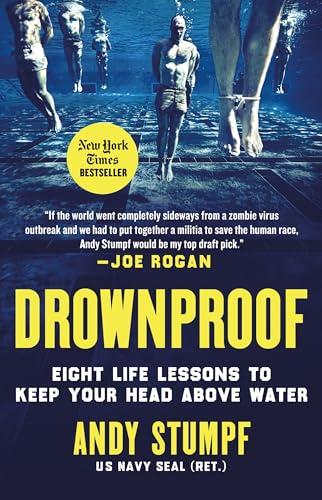
Andy Stumpf
Mentioned 1 month ago
The Mental Frame & Specific Daily Actions to Succeed | Andy Stumpf
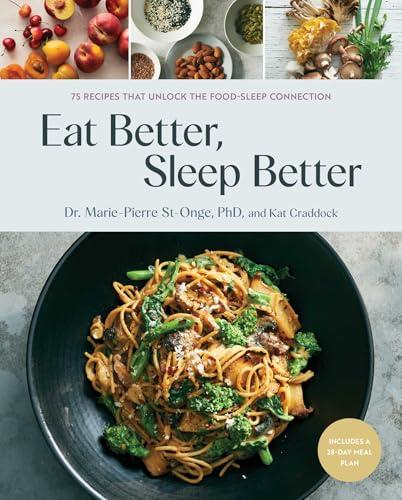
Dr Marie-Pierre St-Onge
Mentioned 1 month ago
Eating for Better Sleep & Foods that Improve Metabolic Health | Dr. Marie-Pierre St-Onge

David Goggins
Mentioned 2 months ago
Master Self Control & Overcome Procrastination | Dr. Kentaro Fujita
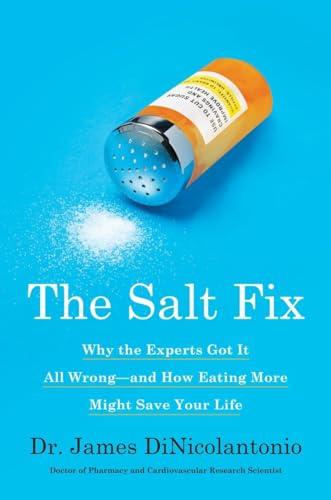
Dr. James DiNicolantonio
Mentioned 3 months ago
Essentials: Using Salt to Optimize Mental & Physical Performance
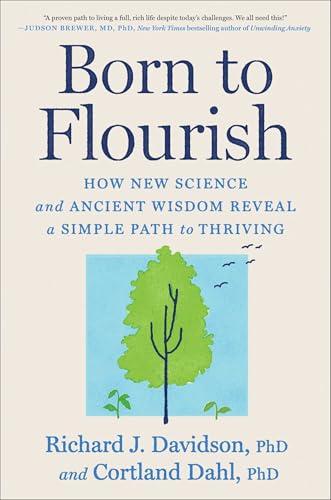
Richard J. Davidson PhD
Mentioned 4 months ago
Science-Based Meditation Tools to Improve Your Brain & Health | Dr. Richard Davidson
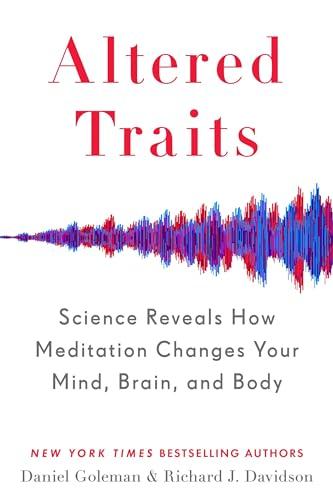
Daniel Goleman
Mentioned 4 months ago
Science-Based Meditation Tools to Improve Your Brain & Health | Dr. Richard Davidson
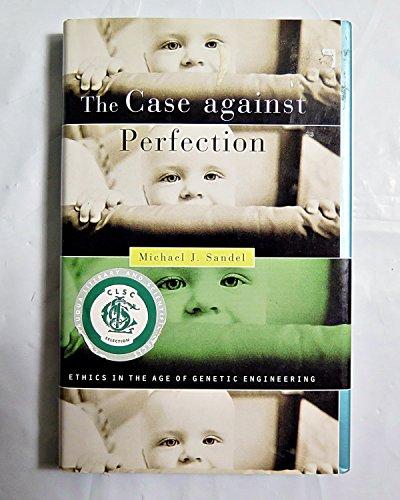
Michael J. Sandel
Mentioned 4 months ago
Avoiding, Treating & Curing Cancer With the Immune System | Dr. Alex Marson
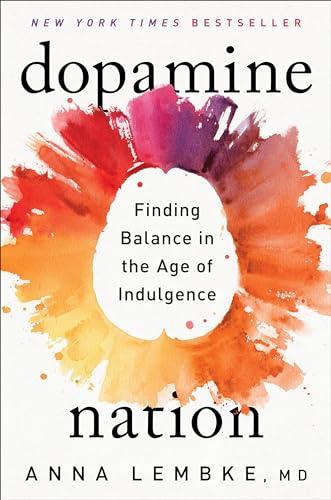
Anna Lembke MD
Mentioned 4 months ago
Unlearn Negative Thoughts & Behaviors Patterns | Dr. Alok Kanojia
The New Science of Everyday Wonder and How It Can Transform Your Life
The book was highlighted as a key source on the science of awe, with the hosts noting how it explained the emotion’s connection to moral beauty and acts of kindness. They also recommended practices like awe walks, citing the title as a valuable tool for processing emotions and deepening environmental connection. Both speakers praised its insights and suggested it as a useful guide for cultivating a positive mindset.
It discussed the importance of awe walks as a way to process emotions and connect with the environment.
And I got this idea, my friend, Dacher Keltner, who I did a research on Awe long ago, and he really continued it. He wrote this amazing book called Awe.
The book discusses awe, an emotion associated with feeling overwhelmed by something vast, and the role of moral beauty in evoking awe. It was mentioned that witnessing acts of kindness and compassion can be a powerful source of awe.
And he wrote a great book on Awe.
And in it, he talks about his research where he catalogued, what are the experiences that most commonly produce Awe in a large sample, large representative sample of people?
Escape 9-5, Live Anywhere, and Join the New Rich
The book was referenced as an example of a work‑life philosophy that encourages people to free up time for activities they value. Dr. Matthew Walker mentioned it while discussing how technology and habits affect sleep, noting its influence on attitudes toward work. Later, Andrew Huberman alluded to it when talking about strategies for working less, highlighting its relevance to the audience’s interest in efficiency.
Dr. Walker mentioned a book by Timothy Ferriss as an example of a book that has influenced people's perspectives on work and life, specifically in the context of people wanting to squeeze in more time for their desired activities.
And there's no amount just like technology in saying leave your phone outside of the room for two hours before bed and don't check it for the first four hours that that genie is out of the bottle
The podcast host mentioned a book that discussed working less, but the title was not clearly mentioned. He may have been referring to 'The 4-Hour Workweek' by Timothy Ferriss.
And there's a whole book on how you can work less, which a lot of people want to do.
The book was cited as a classic illustration of the hero's journey framework, with the host using it to explain how growth mindset applies to life's stages. A guest highlighted it as one of the most important works they've encountered, recommending it for understanding the complex 17-stage return process and suggesting listening to the audio version. Both hosts spoke positively about its depth and cultural breadth, indicating strong endorsement.
The author uses this book as an example to explain the point that life is a series of efforts to apply growth mindset from learning how to walk.
The hero's journey, the hero of 1,000 Faces is that Joseph Campbell.
It is an incredibly complicated book about the 17-stage hero's journey. It was recommended for helping with the return to the ordinary world, with the stages being the ultimate boon, the refusal of the return, magic flight, assistance from a special power, crossing the return threshold, master of two worlds, and freedom to live.
One of the most important books in my life in the last 12 years has been Joseph Campbell's The Hero with a Thousand Faces for the back end of the hero's journey and I haven't read it.
You should actually listen to it.
It's better to listen.
That book is better listen to hero with a thousand faces hero with a thousand faces.
When I so I listened to it audio first and I went back to it and listen to it in paper.
I could not believe how a human could put this narrative together honestly.
When I first read that book Andrews like I'm trapped in the return.
What he lays out in the book is I don't know maybe supposedly 2000 years of culture across multiple cultures.
Further Adventures of a Curious Character
Andrew Huberman recommended the book alongside other Feynman titles, noting that it offered vivid short stories that showcased the physicist's playful personality and unconventional insights. He highlighted anecdotes such as Feynman's lock‑picking at Los Alamos, emphasizing how the title illustrated his curiosity and humor. The discussion presented the book as a worthwhile read for listeners interested in Feynman's character.
It was recommended along with 'Surely You're Joking, Mr. Feynman!' and was mentioned for its connection to Richard Feynman's personality and insights.
If you haven't already read books such as surely your joking Mr. Feynman or What Do You Care What Other People Think I encourage you to do so
The book, written by Feynman, tells stories of him doing things like picking the locks at Los Alamos, and other pranks.
if you read any of the books about Feynman or by Feynman surely you're joking Mr. Feynman or What Do You Care What Other People Think these are wonderful short stories mostly about Feynman doing things like picking all the locks at the Los Alamos laboratory and putting all the top secret documents out on the floor of the office so that when people came in in the morning they were all out there
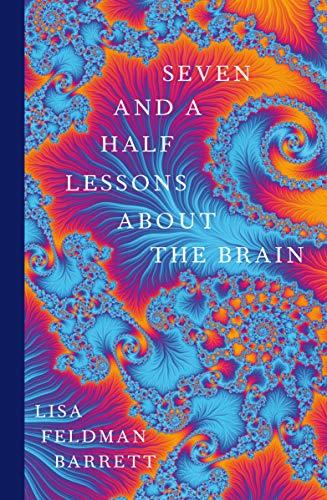
Andrew Huberman highlighted the title as a broader exploration of brain function that goes beyond the science of emotions, noting it as a more recent work by the same author. He described it as another great book that offers insights into how the brain operates, complementing her earlier publication. The discussion conveyed strong endorsement of the book for listeners interested in neuroscience.
This book is a broader exploration of the brain, encompassing the science of emotions but extending beyond that to explore other fascinating aspects of brain function.
The first one entitled How Emotions Are Made and the Second Book, which includes information about emotions but extends beyond that, entitled Seven and a Half Lessons About the Brain.
It was mentioned as another great book by Lisa Feldman Barrett, and was a more recently published book than 'How Emotions Are Made', providing insights on the function of the brain.
Lisa's at Northeastern University she runs a big lab there she's a world expert in emotions she's written two books that are really wonderful one is how emotions are made which was her first book the second one is seven and a half facts about the brain
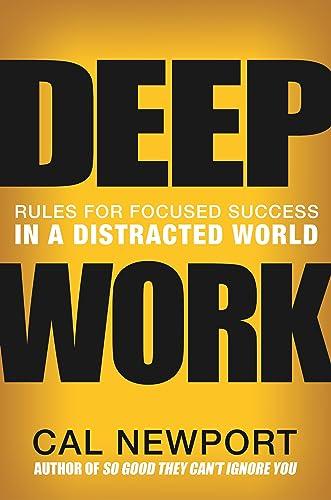
Rules for Focused Success in a Distracted World
In the first episode, the host emphasized the book's focus on producing one's best work without distraction, praised its practical tools, and said he highly recommends it for anyone seeking better productivity. The author also reflected on the principles, noting he hasn't adopted all of them himself. In a later episode, the host cited the title when explaining how context switching impairs the brain and hampers deep learning.
The book emphasizes the importance of doing one's best possible work without distraction and provides tools to achieve that.
One of his more notable books is entitled Deep Work, Rules for Focus Success in a Distracted World.
Deep Work is a book that has had tremendous positive influence on my work life and indeed my life in general, because it spells out how exactly to go about doing one's best possible work.
For me, that's in the context of science and podcasting, but it includes tools that I and many others have extended to other aspects of their life as well, and it's a book that I highly, highly recommend everybody read.
I can't say that I've adopted all the principles but that's on me not you. You provide incredible incentive for Y1, ought to pursue Deep Work and slow productivity in service to high quality true productivity etc.
And I always used to say okay when your Deep Work is not flow because of this like a lot of Deep Work is you're trying to do something that is beyond your comfort zone and that's going to be difficult where Anders actually explicitly says deliberate practice and flow are very different.
It was mentioned in relation to the negative impact of context switching on the brain, hindering productivity and deep learning.
I'm a big fan of Cal Newport, he wrote the book Deep Work. I believe he was the one who said context switching is terrible for the brain.
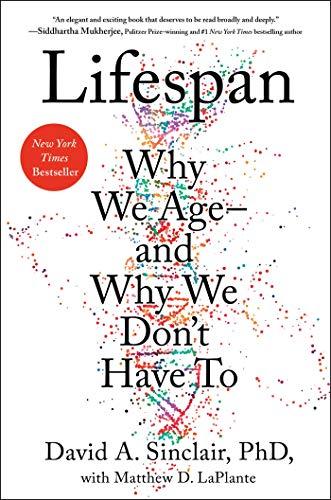
Why We Age―and Why We Don't Have To
The book was highlighted in two episodes, where Dr. Sinclair discussed his work on aging as a disease and the role of the epigenome, while the host praised it as a great resource on current and future longevity treatments. The conversation emphasized practical interventions such as fasting and nutrient timing, and the host expressed strong endorsement of its insights.
Dr. Sinclair discussed his book, "Life Span: Why We Age & Why We Don't Have To," which was a New York Times bestseller. He shared his views on aging as a disease that can be slowed or halted and discussed research on the epigenome, a key driver of aging, and the various interventions that can help us age more slowly.
The title of that book is Life Span Why We Age and Why We Don't Have To.
The book didn't get much attention but one of the things that you just said really remind him of ory I sat down with him I actually went to his home and sat down with him and he said fasting is wonderful but these pulses where you nourish the body or even slightly over nourish the body provided they aren't too frequent have a tremendous effect on vitality
After reading your book, I started purchasing for her and giving her an amend supplement.
It was described as a great book about aging as a disease and covered the future and present of longevity treatments.
David Sinclair's book, Lifespan. David as many of you know is a professor of genetics at Harvard Medical School. LiveWired is a terrific book about aging as a disease and the future and present of longevity treatments.
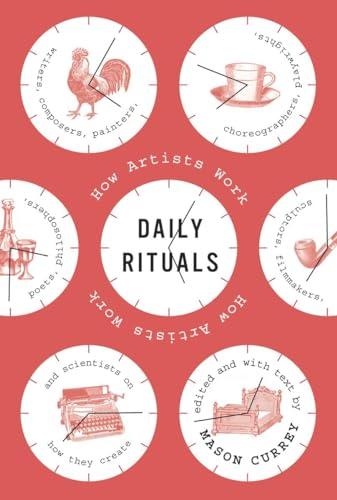
How Artists Work
Huberman noted that he had been listening to the audio‑only title, which offers brief two‑minute chapters describing the daily routines of writers, artists and other creatives. He mentioned it while discussing how environments and habits affect focus and also cited it as an example of Tim Ferriss’s audio productions. The discussion highlighted its concise format and relevance to understanding creative habits, but did not provide a strong endorsement.
Huberman mentioned that he had been listening to the audioonly book Daily Rituals, which presents brief chapters about the daily routines of writers, artists, and creatives.
I'm not going to lean everything on the visual system, but I've been listening to this book that unfortunately is only available as an audio book called Daily Rituals, which it's got two minute chapters and it describes the Daily Rituals of writers and artists and creatives.
The book was referenced as a title that Tim Ferriss had produced an audio version of, highlighting its relevance to daily routines of creative people.
One of the old book that Tim actually produced the audio book, Daily Rituals.
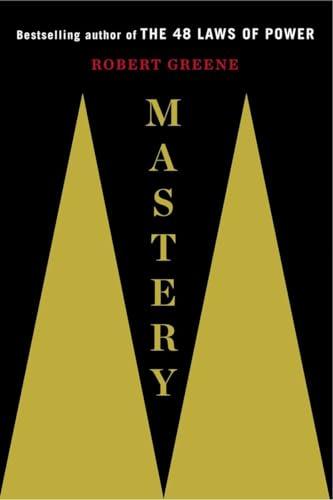
Andrew Huberman highly recommended Robert Greene’s Mastery, calling it a brilliant and practical tool for finding and pursuing one's unique purpose. He personally credited the book with transforming his entire life and inspiring the creation of the podcast itself. Huberman specifically valued the book's detailed guidance on identifying and utilizing mentors and establishing strong mentor-mentee relationships.
The book Mastery was highly recommended for its exploration of how to find and pursue one's purpose. Robert Greene described it as a practical tool for thinking about one's purpose.
I first learned about Robert's work from reading the book Mastery, which to my mind is a brilliant exploration and a practical tool for how to think about and pursue one's purpose.
And the reason I recommended Mastery is because these students were soon going to go into the great jungle of post undergraduate education.
Mastery transform my entire life and in many ways this podcast probably wouldn't exist where it not for Mastery because it really embedded in me this idea that we all have a deeper purpose and it explains how to go about finding that purpose.
And then I read Mastery and I realized yes I love running a laboratory I love teaching but there's something else for me and it has to do not with a podcast I even know what a podcast I probably knew what a podcast was
And so I tell you that and I also will use that as a segue for asking you now since I'm sure people's ears are picked up to this. How do you find your purpose?
Dr. Huberman found Robert Greene's book, "Mastery", valuable, particularly for its focus on finding mentors and establishing mentor-mentee relationships, which he related to his own experiences.
I like Robert Green's book Mastery because I've had amazing mentors and that book is all about finding mentors and assigning mentors to you even if you don't know them.
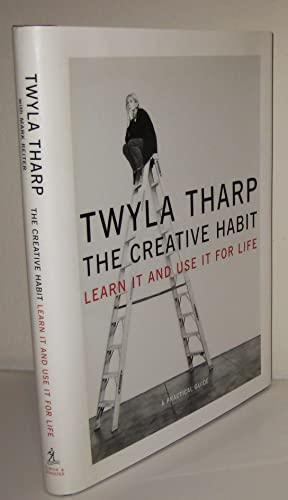
Learn It and Use It for Life
Huberman mentioned Tharp's book, noting her hypothesis that aging slows people because they engage in far less spontaneous movement, a concept he found compelling.
She has a wonderful book called The Creative Habit. And she claims that as people get older, one of the reasons that they slow down so much is that--she's not a neuroscientist, but sh...
— Episode: How to Expand Your Consciousness | Dr. C...
Huberman mentioned Tharp's book, noting her hypothesis that aging slows people because they engage in far less spontaneous movement, a concept he found compelling.
She has a wonderful book called The Creative Habit. And she claims that as people get older, one of the reasons that they slow down so much is that--she's not a neuroscientist, but she hypothesizes that they engage in a lot less spontaneous movement.
Huberman praised the book for its direct, actionoriented advice on building schedules and habits that foster creative output, and Twyla said it taught her a great deal.
I knew I wanted to host Twyla on this podcast after listening to her book, The Creative Habit, where she spells out how to build a schedule, habits, and routines that make your best creative expressions come to life.
The Creative Habit. It's just an incredible book, and it's taught me so much.
To learn more about her work and to find a link to her truly spectacular book, The Creative Habit, please see the show note captions.

One Man's Journey Through the World of Fighting
The book was highlighted as an engaging look at various martial arts, noted for its memorable anecdotes and witty humor. Andrew Huberman introduced it as an interesting account of fighting styles, while Coleman Ruiz strongly recommended it for its insight into the human spirit and self‑discovery through combat sports. Both hosts conveyed a positive view of its relevance to listeners interested in personal growth and martial arts.
It was strongly recommended for the humor and witty banter. It was a great book about the human spirit and the path of self-discovery in various martial arts.
I think it was Sam Sheridan who wrote A Fighter's Heart, an excellent book.
And for anyone male or female, any age who's interested in the human spirit, I recommend A Fighter's Heart because it's about the different fight sports, but it's really about the path of self-discovery.
They mentioned A Fighter's Heart as an interesting account of various martial arts and a memorable anecdote about birthdays.
There's a book called A Fighter's Heart by Sam Sheridan. And it's a pretty interesting account of all the different forms of martial arts and fighting.
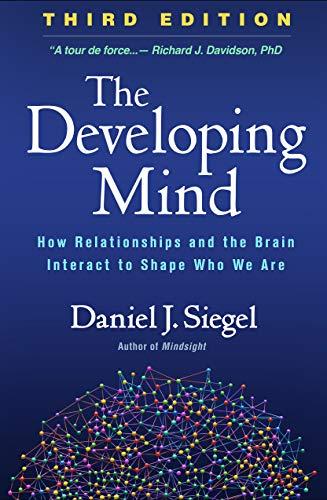
How Relationships and the Brain Interact to Shape Who We Are
Andrew Huberman mentioned the title as a useful resource for understanding child development, including topics like brain hemispheric function, regulation, and attachment. He also discussed its coverage of emotional development theories, noting that while the right‑brain/left‑brain framing is intriguing, it lacks solid neuroscience evidence. Overall, the book was presented as an informative but not definitive guide.
The book was discussed in relation to the right brain, left brain theory of emotional development. Dr Huberman stated that the book and the theory it proposes are fascinating.
There's a theory of emotional development that I find particularly interesting which is from Alan Shore at UCLA, the talks about how most of our testing of bonds and relationships is this sea-sawing back and forth between very dopaminergic so driven by dopamine or serotonergic driven by serotonin states.
...the way it's framed in that book and in his book and in some of the language around there's a round right brain left brain and we've all heard this stuff before that the right brain is thought to be the emotional side...
...that the right brain is holistic that it's emotive and that the left brain is logical sequential and analytic and that's not what Schor was proposing...
...there are some right brain left brain differences but the idea that the right brain is synthetic holistic and emotive and that the left brain is logical sequential and analytic is false, there is zero neuroscience evidence for that whatsoever...
...I invite anyone who's interested in this to look up some of Dr. Shore's work...
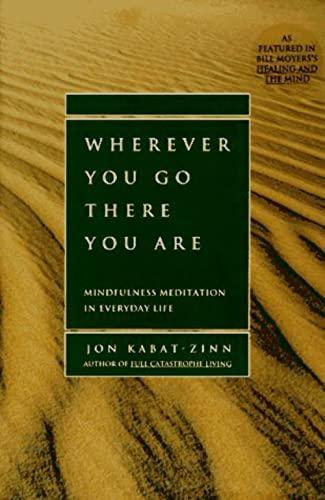
Mindfulness Meditation in Everyday Life
The book was highlighted as a seminal meditation guide that first introduced mindfulness to many in the United States, with one guest recalling it as a high‑school gift that shaped his practice. Another guest described it as his favorite meditation text, noting its lasting impact and the mountain visualization exercise that helped him through years of life. Both speakers praised its influence and enduring value.
This is Rick Rubin's favorite book about meditation, which he was given when he was 14 and a half, and it helped him through many years of life, particularly the mountain visualization meditation.
My favorite book about meditation is called Wherever You Go There You Are.
I just got sent the 30th anniversary edition, which is completely rewritten. I have not yet read the rewritten version. But I love the original version and I know the rewritten version.
Such a great book.
And one of the things that I remember about that book that helped me through so many years of life and I have to go back to is this mountain visualization meditation? Being a mountain.
I don't know why I was so helpful. But goodness, was it helpful for me? It's a beautiful idea.
It was given to the speaker in high school and was one of the first books to popularize meditation and mindfulness practices in the United States.
That book is still available now. That book is called Wherever You Go There You Are by John Kabat-Zinn.
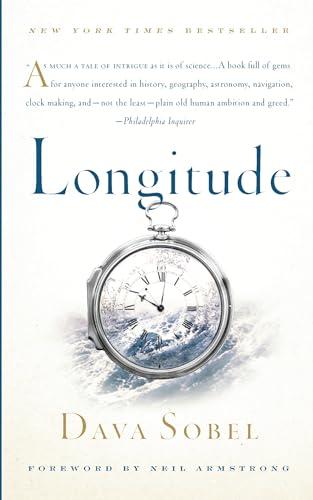
The True Story of a Lone Genius Who Solved the Greatest Scientific Problem of His Time
Andrew Huberman praised the title as an essential, accessible read that required no technical background, highlighting its clear storytelling of the historic quest for accurate sea navigation through timekeeping. He recommended it as a compelling science story about discovery, noting its engaging narrative about the development of maritime clocks.
The book Longitude was recommended as a science book that tells a story of discovery. The story centers around the discovery of time keeping devices at sea.
And one of the books was the book Longitude which is a wonderful story about discovery of time keeping devices at sea.
Andrew Huberman praised the book as an essential, accessible read on the development of accurate timekeeping for navigation.
the book Longitude ... it's an incredible book ... doesn't require any science or technical background to read
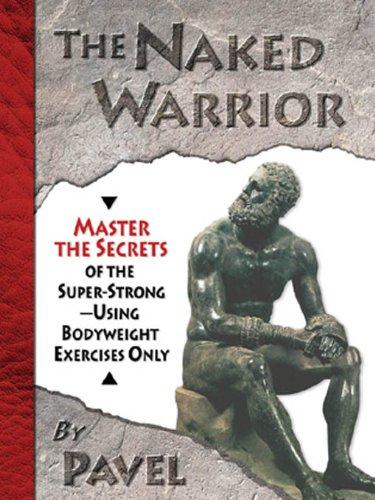
Master the Secrets of the super-Strong--Using Bodyweight Exercises Only
Andrew Huberman mentioned that he had read the book and praised it as a wonderful guide focused solely on bodyweight exercises and grip strength. He also noted that the title inspired his guest to pursue training with movements such as pistol squats and one‑arm push‑ups. The discussion highlighted its practical approach to building strength without equipment, and the overall tone was strongly positive.
The Naked Warrior, a book by Pavel Tsatsouline, focuses on bodyweight exercises, specifically building up to exercises like pistol squats and one-arm push ups, and was a source of inspiration for the speaker to train using only bodyweight.
The Naked Warrior
Andrew noted that he had read The Naked Warrior and described it as a wonderful book focused on bodyweight exercises and grip strength.
I read The Naked Warrior. I was closed when I read it. It's a wonderful book because it talks about body weight only exercises and the concept of crushing your fist to improve grip strength.
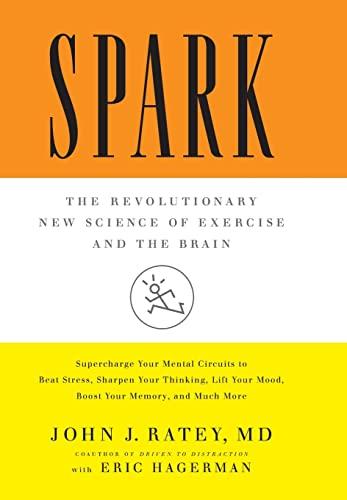
The Revolutionary New Science of Exercise and the Brain
Andrew Huberman highlighted the title as an early academic work that linked exercise and movement to brain plasticity, noting its discussion of animal studies where inactivity led to brain tissue loss. He also pointed out that the book emphasized the role of play, novelty, and varied environments as key drivers of neuroplasticity, and described it as still relevant and quite good. Overall, the discussion presented the book as a valuable resource for understanding how physical activity shapes the brain.
John Ratey, a professor at Harvard Medical School, wrote "Spark", one of the early books about brain plasticity and the relationship between exercise and movement in plasticity. He discussed the observations of ocean dwelling animals that have a robust and complicated nervous system early in life but then become stationary in the late portion of their life and actually digest their own brain.
John Rady who's a professor in Harvard Medical School. He wrote a book called Spark which is one of the early books, at least from an academic about brain plasticity and the relationship between exercise and movement in plasticity.
And John who I have the good fortune to know has described to me experiments or I should say observations of species of ocean dwelling animals that have at least for the early part of their life a very robust and complicated nervous system.
But then these particular animals are in the habit of plopping down onto a rock they find a kind of a safe comfy space and they actually stick to that rock.
And they don't move anymore for a certain portion I should say the late portion of their life and it is at the transition between moving a lot and being stationary that those animals actually digest their own brain.
They literally metabolize a good portion of their nervous system because they decide don't need this anymore and gobble it up use it for its nutritional value and then sit there like a moron version of themselves with a limited amount of brain tissue because they don't need to move anymore.
John Ratey, a psychiatrist at Harvard Medical School, wrote this book about the important role that play exerts in the neuroplasticity process. He also points to the importance of navigating new environments.
one of the more popular books that I think is quite good is from my friend and colleague John Raidi who's a psychiatrist at Harvard Medical School ...he wrote the book Spark a few years back and I think it's still very relevant and John talks about the important role that play exerts in the neuroplasticity process and points to a number of different protocols that one can engage in he also points to the importance of navigating new environments to not just go on the same hike every week or take the same walk but actually get into new novel environments so you're starting to sense a theme here there's novelty exploring contingencies keeping the stakes relatively low etc etc but these really are the gates to this holy grail that we call neuroplasticity
Why the Experts Got It All Wrong--and How Eating More Might Save Your Life
In two episodes, Andrew Huberman highlighted the book as an interesting read that challenges conventional views on salt. He noted that the authors presented data showing that modestly increasing salt while eating unprocessed foods can cut sugar cravings and that a daily intake of 8–12 g of salt may improve health, citing historical errors in salt research. The discussion was positive, presenting the title as a valuable source for rethinking salt recommendations.
The Salt Fix is a book that discusses the history of salt in society, emphasizing the errors made in interpreting its role in various diseases. It suggests that increasing salt intake can actually improve health outcomes, striking a balance between common knowledge and what ought to be known about salt.
The Salt Fix is an interesting read because it points to first of all the history of salt in society and as it relates to health it actually emphasizes some of the major missteps maybe even pretty drastic errors that have been made in terms of trying to interpret the role that salt has in various diseases and emphasizes some of the ways in which perhaps increasing salt can actually improve health outcomes and I think it strikes a pretty nice balance between what's commonly known about salt and what I believe ought to be known about salt or at least taking into consideration.
The recommendation he made was anywhere from 8 to 12 grams of salt a day which corresponds to 3.2 to 4.8 grams of sodium
The Salt Fix also describes in quite beautiful detail the relationship between salt intake potassium intake and the relationship to the sugar consumption system
The Salt Fix describes the rationale behind those recommendations
He noted that the book reviewed data showing that increasing salt intake while eating mostly unprocessed foods can dramatically reduce sugar cravings.
and indeed many people find, and it's reviewed a bit and some of the data are reviewed in the book, The Salt Fix, that when people increase their salt intake in a backdrop of relatively unprocessed foods, that sugar cravings can indeed be vastly reduced.
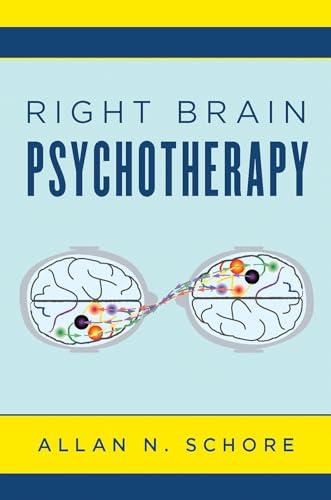
The title was highlighted by Andrew Huberman as a technically detailed yet readable source on how caregiver‑child interactions shape the autonomic nervous system and later attachment patterns. He noted that it covered topics from nursing and play to assessments like the Strange Situation, linking them to adult relational dynamics. Huberman expressed a strong endorsement, calling it an excellent and accessible read for listeners interested in the neurobiology of attachment.
This book delves into the ways that interactions between children and caregivers can shape a child's autonomic nervous system, impacting their later attachment styles.
He has a wonderful book called Right Brain Psychotherapy, it's a little bit technical but if you're interested in some of the studies this book Right Brain Psychotherapy details how everything from nursing of children to play time behavior to strange situation type task behavior that we talked about before which of course occurs when children get dropped off at daycare or nursery school or with babysitters etc and indeed all types of caregiver child interactions tune up that autonomic nervous system so that the child ends up with an autonomic nervous system that either tends to lean more towards alert and anxious or can be very alert but calm or can be very calm and hard to budge again it's the tightness of that hinge that really underlies these attachment styles that we were talking about earlier.
It was discussed as an accessible read for understanding the neurobiology of attachment, particularly in childhood and how it affects adult relationships.
And if you want to check out his work, he's actually got a few YouTube videos out there. Again it's Alan Shore spelled SCHORI. I'd love to get him as a guest on the podcast. He also has a book, it's called Right Brain Psychotherapy and it's an excellent book. It's actually pretty accessible even if you don't have a background in biology or psychology.
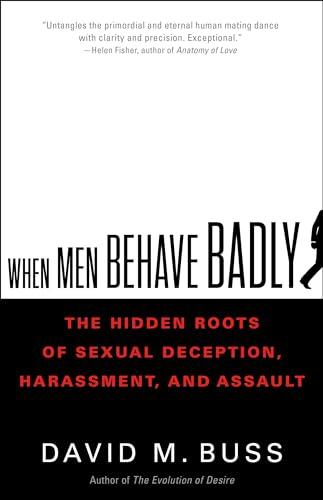
The Hidden Roots of Sexual Deception, Harassment, and Assault
The book was highlighted by both the author and the host as a crucial work that explores the hidden roots of sexual deception, harassment, assault, and other darker aspects of human mating, while also offering strategies for healthier relationships and addressing topics like financial infidelity. The author described it as well‑reviewed and useful for understanding sexual conflict between the sexes, and the host called it an important and fascinating contribution. Overall, it was presented as a valuable resource for listeners seeking insight into these complex issues.
It was described as fascinating and important, focusing on the darker aspects of human mating and sexual violence, with suggestions for maintaining healthy relationships.
And his most recent book is the one that I'm reading now, which is called When Men Behave Badly. The Hidden Roots of Sexual Deception, Harassment and Assault.
It's a really important book, I believe, and one that doesn't just get into the darker aspects of human mating behavior and violence, but also strategies that people can take to ensure healthy mating behavior and relationships.
In my new book When Men Behave Badly I have a section on financial infidelity where I summarize all the research that has been done.
And then in this book, When Men Behave Badly, about some of the darker sides of human mating like intimate partner violence, stalking, sexual harassment, sexual coercion.
So that's what that book's about and I think it, you know, it's gotten well reviewed and people find it very useful in understanding what is otherwise a lot of baffling phenomena and why do men and women seem at odds with each other in so many domains, why do some of these recurrent forms of sexual conflict occur.
He described his most recent book as focusing on sexual deception, harassment, and assault, explaining how it addresses conflict between the sexes and mating market issues.
my most recent book is called When Men Behave Badly, The Hidden Roots of Sexual Deception, Harassment, and Assault. And that book deals with conflict between the sexes, sexual conflict.
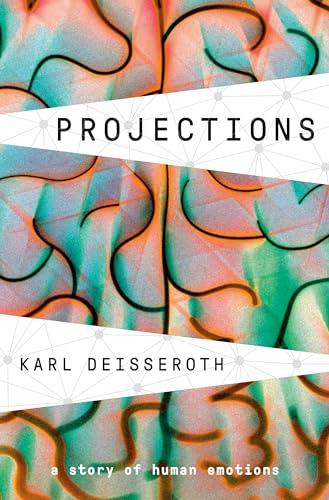
A Story of Human Emotions
In two episodes, the host highlighted the book as a masterfully written work that blended rigorous neuroscience with hopeful optimism. He noted that the author, a psychiatrist and researcher, used patient narratives to explain brain function in health and disease and described the discovery of channelrhodopsins and related therapies. The overall tone was strongly positive, recommending the book for anyone interested in neuroscience, regardless of scientific background.
It was described as a masterfully written book that used patient stories to explain how the brain works in both health and disease. It highlighted the channelrhodopsins discovery and related technologies for treating nervous system disorders.
We also discuss Dr. Deisseroth's newly released book which is entitled Projections, a Story of Human Emotions.
This is an absolutely remarkable book that uses stories about his interactions with his patients to teach you how the brain works in the healthy and disease state and also reveals the motivation for and discovery of these channel options and other technologies by Carl's laboratory that are being used now to treat various disorders of the nervous system
I found our conversation to be an absolutely fascinating one about how the brain functions in the healthy state and why and how it breaks down in disorders of the mind.
Projections is absolutely masterfully written. It's just beautiful and it's accessible to anybody even if you don't have a science background.
I learned through the course of reading Carl's book, Projections, that not only is he an accomplished psychiatrist and obviously an accomplished research scientist and a family man but he's also a phenomenal writer.
The host praised the book for blending rigorous science with optimism, noting its masterful storytelling and accessibility for a wide audience.
One of the things that I took from reading your book, in addition to learning so much science and the future of psychiatry and brain science, was amidst these very tragic cases and sadness, and a lot of the weight that that puts on the clinician, on you also, that there's a central cord of optimism, that where we're headed is not just possible, but very likely and better.
I wanted it to be for everybody, literally everybody in the world who wants to read it. I kept these two goals in mind the entire time, balancing rigorous science with hopeful optimism.
It's a wonderful, it's a masterful book, really, and one that as a scientist and somebody who is a fellow brain explorer, hits all the marks of rigor and is incredibly interesting. Definitely check out the book.
Note: The book recommendations on this page are discovered automatically from podcast transcripts, and may be incorrect or incomplete.
Podcast Name