
Podcast
Huberman Lab
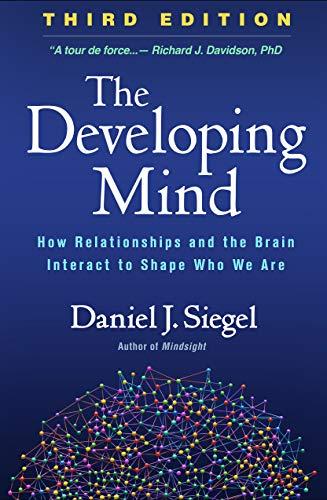
Andrew Huberman mentioned the title as a useful resource for understanding child development, including topics like brain hemispheric function, regulation, and attachment. He also discussed its coverage of emotional development theories, noting that while the right‑brain/left‑brain framing is intriguing, it lacks solid neuroscience evidence. Overall, the book was presented as an informative but not definitive guide.
Episode: The Science of Emotions & Relationships
The book was discussed in relation to the right brain, left brain theory of emotional development. Dr Huberman stated that the book and the theory it proposes are fascinating.
There's a theory of emotional development that I find particularly interesting which is from Alan Shore at UCLA, the talks about how most of our testing of bonds and relationships is this sea-sawing back and forth between very dopaminergic so driven by dopamine or serotonergic driven by serotonin states.
...the way it's framed in that book and in his book and in some of the language around there's a round right brain left brain and we've all heard this stuff before that the right brain is thought to be the emotional side...
...that the right brain is holistic that it's emotive and that the left brain is logical sequential and analytic and that's not what Schor was proposing...
...there are some right brain left brain differences but the idea that the right brain is synthetic holistic and emotive and that the left brain is logical sequential and analytic is false, there is zero neuroscience evidence for that whatsoever...
...I invite anyone who's interested in this to look up some of Dr. Shore's work...