The Body Keeps the Score
Bessel van der Kolk M.D.
Mentioned 3 weeks ago
Movement Practice to Strengthen Your Mind-Body Connection | Ido Portal

The Huberman Lab podcast is hosted by Andrew Huberman, Ph.D., a neuroscientist and tenured professor in the department of neurobiology, and by courtesy, psychiatry and behavioral sciences at Stanford School of Medicine. The podcast discusses neuroscience and science-based tools, including how our br...
Recently mentioned
Bessel van der Kolk M.D.
Mentioned 3 weeks ago
Movement Practice to Strengthen Your Mind-Body Connection | Ido Portal
Andrew D. Huberman Ph.D.
Mentioned 1 month ago
The Mental Frame & Specific Daily Actions to Succeed | Andy Stumpf
Stefan Klein
Mentioned 1 month ago
The Mental Frame & Specific Daily Actions to Succeed | Andy Stumpf
Morgan Housel
Mentioned 1 month ago
The Mental Frame & Specific Daily Actions to Succeed | Andy Stumpf
Andy Stumpf
Mentioned 1 month ago
The Mental Frame & Specific Daily Actions to Succeed | Andy Stumpf
Dr Marie-Pierre St-Onge
Mentioned 1 month ago
Eating for Better Sleep & Foods that Improve Metabolic Health | Dr. Marie-Pierre St-Onge

David Goggins
Mentioned 2 months ago
Master Self Control & Overcome Procrastination | Dr. Kentaro Fujita
Dr. James DiNicolantonio
Mentioned 3 months ago
Essentials: Using Salt to Optimize Mental & Physical Performance
Richard J. Davidson PhD
Mentioned 4 months ago
Science-Based Meditation Tools to Improve Your Brain & Health | Dr. Richard Davidson
Daniel Goleman
Mentioned 4 months ago
Science-Based Meditation Tools to Improve Your Brain & Health | Dr. Richard Davidson

Michael J. Sandel
Mentioned 4 months ago
Avoiding, Treating & Curing Cancer With the Immune System | Dr. Alex Marson
Anna Lembke MD
Mentioned 4 months ago
Unlearn Negative Thoughts & Behaviors Patterns | Dr. Alok Kanojia
Finding Personal Resilience in Changing Times


The Complete and Definitive Text
Dr. Walker discussed Freud's seminal work, "The Interpretation of Dreams", and his attempt to explain the meaning of dreams, which he believed could be interpreted with a special filter.
But it was really Freud who put his seminal works together in 1899 and then published it in 1901 called The Interpretation of Dreams.
— Episode: GUEST SERIES | Dr. Matt Walker: The Scie...
Dr. Walker discussed Freud's seminal work, "The Interpretation of Dreams", and his attempt to explain the meaning of dreams, which he believed could be interpreted with a special filter.
But it was really Freud who put his seminal works together in 1899 and then published it in 1901 called The Interpretation of Dreams.
And it's probably one of his, if not his most famous text.
And you can unfairly sum it up as, you know, if it's not one thing, it's your mother when it comes to Freud.
But in some ways, Freud with his interpretation attempt in my mind was 50% right and 100% wrong.
And Freud believed that he understood the decryption code to our dreams.

The Surprising Connection Between Metabolism and Limitless Health
It was discussed how food, sleep, movement, emotional health, toxins, light, and temperature all impact metabolic health. This book is about how to improve our metabolic health by improving mitochondrial function.
I know it's terrific because I've read it.
— Episode: Dr. Casey Means: Transform Your Health b...
It was discussed how food, sleep, movement, emotional health, toxins, light, and temperature all impact metabolic health. This book is about how to improve our metabolic health by improving mitochondrial function.
I know it's terrific because I've read it.
It is entitled Good Energy, the surprising connection between metabolism and limitless health.
I've read your book and because I follow your work very closely the good news is that we each and all can take matters to some extent into our own hands collaborate with healthcare providers and repair metabolic dysfunction essentially make us metabolically functional.
I give scripts to literally talk to your doctor with because you are going to get pushed back often if you ask for a fasting insulin I would say probably I mean even though doctors are waking up a little bit like maybe 85 percent of people are going to have their doctors say they won't order that for them so I actually think there's a huge benefit I hate to say it but like going outside the system this is where I think innovation has been valuable there's a lot of like amazing companies doing direct to consumer lab testing so you can basically avoid the hassle and some of them are very affordable.
Recovering the Lost Wisdom of Eating Well
It was discussed how processed foods are the ultimate food based variable reward due to their unpredictable nature. This book discusses how processed foods are linked to cravings.
There's a wonderful book that is called The End of Cravings by Mark Shatzer he also wrote the dorito effect but he talks a little bit about what you're talking about which is ideal th...
— Episode: Dr. Casey Means: Transform Your Health b...
It was discussed how processed foods are the ultimate food based variable reward due to their unpredictable nature. This book discusses how processed foods are linked to cravings.
There's a wonderful book that is called The End of Cravings by Mark Shatzer he also wrote the dorito effect but he talks a little bit about what you're talking about which is ideal that processed food is actually the ultimate sort of food based variable reward so in the way that it like things that I mean I'm speaking expert here but things that the body can't predict what the outcome is going to be are going to kind of get you in that dopamine motivation pathway and that's actually what processed food is doing is it's every time we eat a different we think we're eating a tortilla but it's like completely different than all the other weird tortillas ultra processed tortillas on the shelf so every time we eat tortilla and our brain is this incredible prediction machine and as it's coming towards our mouth we're predicting what the load is going to be but we have no idea is it a coke zero is it a diet coke with aspartame is it a regular coke it all tastes the same but the nutrients that our gut are totally different so we end up actually triggering the motivation pathways because of processed food representing a variable reward whereas every time you eat a ribeye your body's pretty much getting a similar thing each time and so the prediction matching is going to be more conducive to getting off the motivation treadmill for more which I think is so fascinating.

The Science of Motivating Young People
Dr. Yeager's forthcoming book, "10 to 25," focuses on the science of motivating young people. He discusses the "mentor's dilemma" and how leaders can maintain high standards while supporting those they mentor. The book also touches on the importance of contribution value and helping others.
He is also the author of an important and extremely useful new book entitled 10 to 25, The Science of Motivating Young People.
— Episode: Dr. David Yeager: How to Master Growth M...
Dr. Yeager's forthcoming book, "10 to 25," focuses on the science of motivating young people. He discusses the "mentor's dilemma" and how leaders can maintain high standards while supporting those they mentor. The book also touches on the importance of contribution value and helping others.
He is also the author of an important and extremely useful new book entitled 10 to 25, The Science of Motivating Young People.
The book is scheduled for release this summer, that is the summer of 2024, and we provided a link to the book in the show note captions.
Your book, 10 to 25 focuses heavily on social appraisal, self-appraisal, basically the idea that we want to be liked and we don't want to be disliked and it hurts when people say mean things about us or when we hear negative feedback, especially if it's provided publicly.
And I interviewed Chip and I was like Chip how do you sell the vision to these players who are 18 to 21 are newfound millionaires.
And he was like, the number one thing I have to do is build trust cause I can't critique a player shot and make them change it if they think they're gonna sacrifice more.

The author uses "War and Peace" as an example of how stories can act as theories in motion, providing a deeper understanding of complex concepts through narrative.
This is why, what's the point of War and Peace? War and Peace is really a theory of great leaders in the war.
— Episode: Dr. David Yeager: How to Master Growth M...
The author uses "War and Peace" as an example of how stories can act as theories in motion, providing a deeper understanding of complex concepts through narrative.
This is why, what's the point of War and Peace? War and Peace is really a theory of great leaders in the war.
There's any English PhDs, I'm sure they'll tell me that's oversimplified version of what Tulsa was doing, but you learn the theory in a narrative way.
So this is a classic idea throughout human history.
Greatness Isn't Born. It's Grown. Here's How.
The author discusses how the book, "The Talent Code," uses the term "magic feedback" to describe the concept of high standards and high support, which is a key element of wise feedback and mentor mindset.
My joke, this is a lame laugh line but I'm a professor so that's the best I can do.
— Episode: Dr. David Yeager: How to Master Growth M...
The author discusses how the book, "The Talent Code," uses the term "magic feedback" to describe the concept of high standards and high support, which is a key element of wise feedback and mentor mindset.
My joke, this is a lame laugh line but I'm a professor so that's the best I can do.
My laugh line was always I just live in fear that Pearson and other textbook companies are gonna sell wise feedback, post it notes say they can magically erase the achievement gap.
And I always said that as a joke and then two things happen.
One is a popular author, like I named Dan Coyle, literally called it magic feedback in his book didn't cite us but like.
But also like magic feedback.
When New Technologies Cause Great Firms to Fail (Management of Innovation and Change)
The author refers to "The Innovator's Dilemma" as an example of how a company's culture can influence its success, and the importance of fostering a "culture of growth" where mistakes are embraced as learning opportunities.
Now, the layperson could draw a line between that and like the Zoon and Bing and other like failed products.
— Episode: Dr. David Yeager: How to Master Growth M...
The author refers to "The Innovator's Dilemma" as an example of how a company's culture can influence its success, and the importance of fostering a "culture of growth" where mistakes are embraced as learning opportunities.
Now, the layperson could draw a line between that and like the Zoon and Bing and other like failed products.
You know, that's I'll leave that to organizational scholars to decide if that's the story but at least the cautionary tale is like Boeing is another example where Calhoun when he came in as a CEO changed the incentive scheme at Boeing to be something called stack ranking which is where you fire the bottom 10% every six months or a year within your group.
So if your group might be higher performing on average than some other group but the bottom 10% of your group are getting fired.
Okay, and this goes back to GE it's a Jack Welch policy.
Anyway, so that happened two years ago and look what's happened in the last two years.
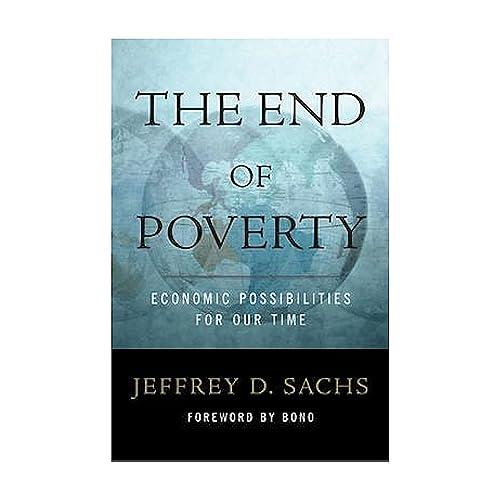
Economic Possibilities for Our Time
The author's experience with Sachs' "End of Poverty" led him to believe that his own passion lay in motivating young people, leading him to pursue a career in psychology and research.
And I remember being in the airport and I picked up Jeffrey Sachs' end of poverty which is a popular book at the time and just thinking like here's a guy who like I don't know, was doing something pre...
— Episode: Dr. David Yeager: How to Master Growth M...
The author's experience with Sachs' "End of Poverty" led him to believe that his own passion lay in motivating young people, leading him to pursue a career in psychology and research.
And I remember being in the airport and I picked up Jeffrey Sachs' end of poverty which is a popular book at the time and just thinking like here's a guy who like I don't know, was doing something pretty mundane macroeconomics but he was spending all his time talking world leaders in other countries out of crushing death that was causing poverty
and it's like taking whatever precocious skill he had and using it for others and I thought law is not my Jeff Sachs skill but what I do know how to do is motivate teenagers like that's how I spend all my time
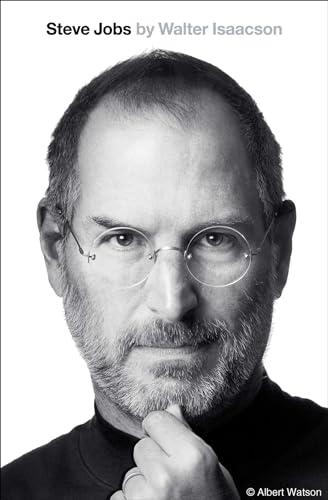
The author references Isaacson's biography of Steve Jobs as an example of a high-achieving individual whose contributions are impressive but often overshadowed by their complex and sometimes ego-driven nature.
So often it seems like we hear the stories of like the Steve Jobs, and I really enjoyed that book by Walter Isaacson and that story very impressed by his contributions, always complic...
— Episode: Dr. David Yeager: How to Master Growth M...
The author references Isaacson's biography of Steve Jobs as an example of a high-achieving individual whose contributions are impressive but often overshadowed by their complex and sometimes ego-driven nature.
So often it seems like we hear the stories of like the Steve Jobs, and I really enjoyed that book by Walter Isaacson and that story very impressed by his contributions, always complicated person as is often the case with people that make big contributions it seems.
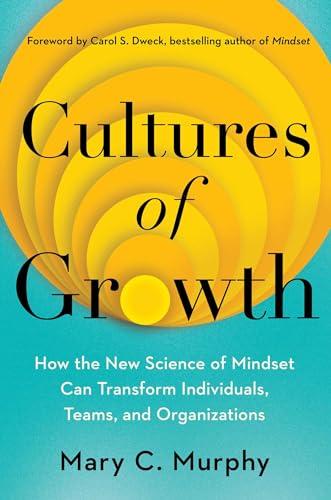
How the New Science of Mindset Can Transform Individuals, Teams, and Organizations
The author discusses Mary Murphy's book, "Cultures of Growth," which examines how fixed mindset can manifest at a cultural level within organizations, leading to negative consequences like hyper-criticism, unethical behavior, and a reluctance to address mistakes.
But what I find compelling is a beautiful new book by Mary Murphy called Cultures of Growth who was trained at Stanford under Claude Steele.
— Episode: Dr. David Yeager: How to Master Growth M...
The author discusses Mary Murphy's book, "Cultures of Growth," which examines how fixed mindset can manifest at a cultural level within organizations, leading to negative consequences like hyper-criticism, unethical behavior, and a reluctance to address mistakes.
But what I find compelling is a beautiful new book by Mary Murphy called Cultures of Growth who was trained at Stanford under Claude Steele.
Was also trained by Carol Dweck.
Just came out a week ago and it's getting tons of great press.
And in her work, what she finds is that fixed mindset can be a cultural variable like a more leadership variable not just in the mind of the individual.
And when that's the culture, then she finds people are more willing to try to make everyone else look like an idiot so that you don't get attacked.
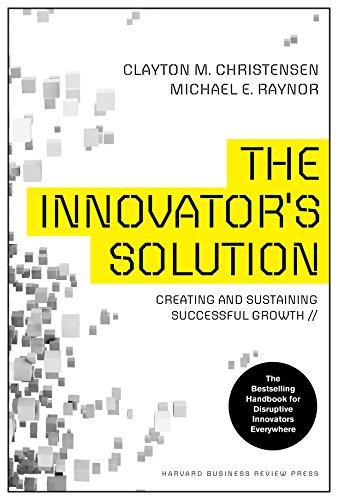
Creating and Sustaining Successful Growth
The book is mentioned in connection with "The Innovator's Dilemma." It's suggested that this book could be used to analyze the case of failed products like Zoon and Bing.
Now, the layperson could draw a line between that and like the Zoon and Bing and other like failed products. You know, that's I'll leave that to organizational scholars to decide if that's the story b...
— Episode: Dr. David Yeager: How to Master Growth M...
The book is mentioned in connection with "The Innovator's Dilemma." It's suggested that this book could be used to analyze the case of failed products like Zoon and Bing.
Now, the layperson could draw a line between that and like the Zoon and Bing and other like failed products. You know, that's I'll leave that to organizational scholars to decide if that's the story but at least the cautionary tale is like Boeing is another example where Calhoun when he came in as a CEO changed the incentive scheme at Boeing to be something called stack ranking which is where you fire the bottom 10% every six months or a year within your group.

The book is referenced as a classic argument for the idea that the rational part of the brain must tame the emotional part in order to achieve goals. This argument is contradicted by Carol Dweck's research, which suggests that the emotional regions of the brain are actually the teachers that train the prefrontal cortex to pursue goals.
And the classic argument in going back to Plato and the Phaedrus, is that the rational acting part of the brain plans out what it wants, makes all these calculations and then has to tame the emotional...
— Episode: Dr. David Yeager: How to Master Growth M...
The book is referenced as a classic argument for the idea that the rational part of the brain must tame the emotional part in order to achieve goals. This argument is contradicted by Carol Dweck's research, which suggests that the emotional regions of the brain are actually the teachers that train the prefrontal cortex to pursue goals.
And the classic argument in going back to Plato and the Phaedrus, is that the rational acting part of the brain plans out what it wants, makes all these calculations and then has to tame the emotional part in order to make those goals into a reality.
And so the emotion, you know, the amygdala, the mesolymbic, that's this unruly horse that the charioteer has to harness, you know?
And I think that Carol argued, and I think other people have argued too. I've seen Adriana Galvan and Ron Dahl and others argue this, that the affective regions are often the teacher and the prefrontal is the student.
And what Carol argued is that Phaedra's had is totally wrong. It's not that the prefrontal charioteer is taming the emotional. It's really that the affective part is training the prefrontal to be better at pursuing the goals that matter in the social milieu that you have.

The book is not explicitly mentioned by name, but it's referenced when discussing Carol Dweck's research on growth mindset and its relation to the brain's prefrontal cortex and the amygdala.
She has this great psych review paper that contradicts a lot of received wisdom about the prefrontal planning regions of the brain and the kind of amygdala in the hippocampus, the affective regions an...
— Episode: Dr. David Yeager: How to Master Growth M...
The book is not explicitly mentioned by name, but it's referenced when discussing Carol Dweck's research on growth mindset and its relation to the brain's prefrontal cortex and the amygdala.
She has this great psych review paper that contradicts a lot of received wisdom about the prefrontal planning regions of the brain and the kind of amygdala in the hippocampus, the affective regions and the memory creation regions.
And the classic argument in going back to Plato and the Phaedrus, is that the rational acting part of the brain plans out what it wants, makes all these calculations and then has to tame the emotional part in order to make those goals into a reality.
And so the emotion, you know, the amygdala, the mesolymbic, that's this unruly horse that the charioteer has to harness, you know?
And I think that Carol argued, and I think other people have argued too. I've seen Adriana Galvan and Ron Dahl and others argue this, that the affective regions are often the teacher and the prefrontal is the student.
And what Carol argued is that Phaedra's had is totally wrong. It's not that the prefrontal charioteer is taming the emotional. It's really that the affective part is training the prefrontal to be better at pursuing the goals that matter in the social milieu that you have.
Grit, Curiosity, and the Hidden Power of Character

This book was cited as a favorite by Dr. Harden for its account of the Norwegian mass shooter, which explored the debate around whether he was insane, given his difficult background, and the idea of keeping people within society's circle.
One of my favorite books that I read when I was when I was writing my book is this book called One of Us. And it's about the Norwegian mass shooter who shot all of those children at a summer camp, who...
— Episode: How Genes Shape Your Risk Taking & Moral...
This book was cited as a favorite by Dr. Harden for its account of the Norwegian mass shooter, which explored the debate around whether he was insane, given his difficult background, and the idea of keeping people within society's circle.
One of my favorite books that I read when I was when I was writing my book is this book called One of Us. And it's about the Norwegian mass shooter who shot all of those children at a summer camp, who was someone who was afflicted with terrible luck from the time he was a child.
An Easy & Proven Way to Build Good Habits & Break Bad Ones
The book was highlighted as a bestseller that sold 25million copies and was used throughout the conversation as the core framework for building and breaking habits. The hosts repeatedly referenced its four laws of behavior change as practical tools for listeners.
James Clear is the author of Atomic Habits and one of the world's foremost experts on how to build rocksolid habits that better your physical and mental health, work, and relationship...
— Episode: Best Ways to Build Better Habits & Break...
The book was highlighted as a bestseller that sold 25million copies and was used throughout the conversation as the core framework for building and breaking habits. The hosts repeatedly referenced its four laws of behavior change as practical tools for listeners.
James Clear is the author of Atomic Habits and one of the world's foremost experts on how to build rocksolid habits that better your physical and mental health, work, and relationships.
Looking back on, you know, now Atomic Habits sold 25 million copies.
All of Atomic Habits is an answer to that question.
Atomic Habits ... It's a super impressive book and it's done incredibly well for all the right reasons. It's one of the bestselling books of all time and the highestrated habits book of all time.
If you haven't already read Atomic Habits, you definitely should.
Note: The book recommendations on this page are discovered automatically from podcast transcripts, and may be incorrect or incomplete.
Podcast Name