Honours versus Money
Bruno S. Frey
Mentioned 4 months ago
62. How Can You Escape a Drama Triangle?
Research psychologist Angela Duckworth (author of "Grit") and tech and sports executive Mike Maughan really like to ask people questions, and they believe there’s no such thing as a stupid one. So they have a podcast where they can ask each other as many “stupid questions” as they want. New episodes...
Recently mentioned
Bruno S. Frey
Mentioned 4 months ago
62. How Can You Escape a Drama Triangle?
William C. Dement
Mentioned 7 months ago
50. Are You as Observant as You Think?
Nassim Nicholas Taleb
Mentioned 7 months ago
49. How Does Facing Death Change Your Life?
Angela Duckworth
Mentioned 8 months ago
46. How Can You Stop Feeling So Irritable?
Michael Erard
Mentioned 8 months ago
45. How Much Better Do You Really Want to Be?
Paul Bloom
Mentioned 9 months ago
44. Is Empathy in Fact Immoral?
Meyer Friedman
Mentioned 9 months ago
44. Is Empathy in Fact Immoral?
Steven D. Levitt
Mentioned 9 months ago
42. How Does When You Are Born Affect Who You Are?
![Freakonomics [Revised and Expanded]: A Rogue Economist Explores the Hidden Side of Everything cover](https://media.podcastbookpicks.com/books/677.jpg)
Steven D. Levitt
Mentioned 9 months ago
41. Why Are We So Attracted to Fame?
Daniel Thomas Cook
Mentioned 9 months ago
41. Why Are We So Attracted to Fame?
Robert B. Cialdini PhD
Mentioned 9 months ago
41. Why Are We So Attracted to Fame?
Jordan Ellenberg
Mentioned 10 months ago
40. Have We All Lost Our Ability to Compromise?
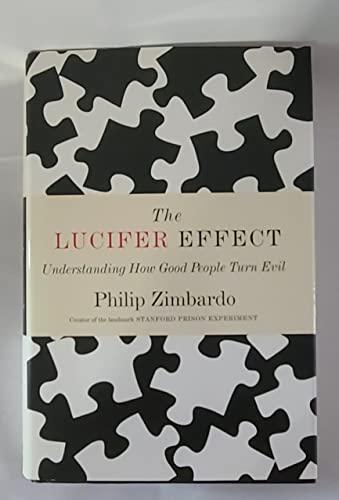
Understanding How Good People Turn Evil
The podcast references Zimbardo's book, discussing its connection to the Stanford Prison Experiment and the concept of 'bad barrels' versus 'bad apples' in understanding the roots of evil. The experiment itself is described in significant detail.
Oh, you read The Lucifer Effect.
— Episode: 213. What Is Evil?
The podcast references Zimbardo's book, discussing its connection to the Stanford Prison Experiment and the concept of 'bad barrels' versus 'bad apples' in understanding the roots of evil. The experiment itself is described in significant detail.
Oh, you read The Lucifer Effect.
So Zimbardo will say it happened. He was there. And by the way, when this was unfolding, right? So there's day one of the prison and there's day two. And I think by day two, there were kids who were having nervous breakdowns. Now day three, now day four. And these like sadistic acts are becoming ever more extreme. So it didn't make it to day seven. It ended on day six.
So Zimbardo likes to point out that it wasn't his conscience that stopped the prisoner experiment. It was his girlfriend's. So his girlfriend, who I believe was a PhD student in psychology at the time, goes down to the basement and sees what's going on and immediately says, this has to stop. And he listened to her. He later married her. And she later became the world's foremost researcher on burnout. And we've talked about her and you'll recognize her name, Christina Maslach.
So I think Zimbardo, as he would put it, is more interested in bad barrels than bad apples because he thinks that the prisoner scenario that he created, and also Abu Ghraib, and also Nazi Germany, that there are these evil situations.
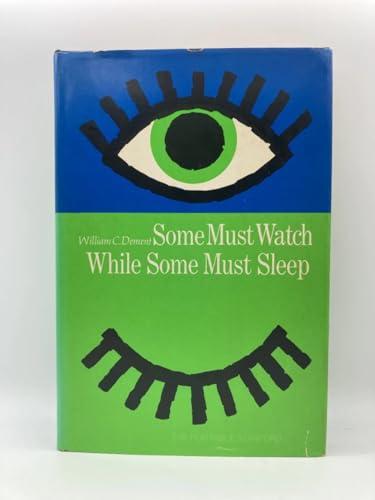
Angela referenced this book she read as a teenager, which had a forest green cover with a Picasso painting of a sleeping woman. The book detailed the story of a colleague of DeMent's who began sleeping only four hours a night after the age of 23, a pattern that continued for the rest of his life.
I read this book when I was a teenager that my sister had on her shelf. I can picture it vividly. It had a forest green cover with a Picasso painting of a woman sleeping. It was called Why Some Must S...
— Episode: 50. Are You as Observant as You Think?
Angela referenced this book she read as a teenager, which had a forest green cover with a Picasso painting of a sleeping woman. The book detailed the story of a colleague of DeMent's who began sleeping only four hours a night after the age of 23, a pattern that continued for the rest of his life.
I read this book when I was a teenager that my sister had on her shelf. I can picture it vividly. It had a forest green cover with a Picasso painting of a woman sleeping. It was called Why Some Must Sleep and Others Must Watch.
The name of the book is actually Some Must Watch While Some Must Sleep, a line from Act 3, Scene 2 of Hamlet. Its author is the famed sleep researcher William DeMent, who died in 2020 at 100 years old.
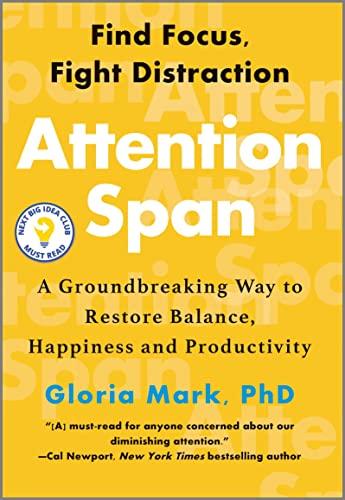
A Groundbreaking Way to Restore Balance, Happiness and Productivity―A Must-Read Guide to Dealing with Distractions and Regaining Focus in the Modern World
This book was mentioned as having some of the only defensible data regarding attention span shrinkage, suggesting that the average adult attention span on computer screens had shrunk from about two and a half minutes two decades prior to about 75 seconds about a decade ago.
Gloria Mark suggests that the Attention Span of, you know, your typical adult has shrunk. For example, like on computer screens, right? Like how often do we switch from one screen to...
— Episode: 220. Is Your Attention Span Shrinking?
This book was mentioned as having some of the only defensible data regarding attention span shrinkage, suggesting that the average adult attention span on computer screens had shrunk from about two and a half minutes two decades prior to about 75 seconds about a decade ago.
Gloria Mark suggests that the Attention Span of, you know, your typical adult has shrunk. For example, like on computer screens, right? Like how often do we switch from one screen to another? In her research, the Attention Span was at some point like about two and a half minutes.
The Impact of the Highly Improbable
The book defined a black swan event as something unpredictable, carrying a massive impact, and which people rationalize after the fact to seem predictable. The speakers noted that people tend to misinterpret the concept by trying to predict these rare events.
Many people think of this now as The Black Swan effect after Nassim Taleb's book of that name.
— Episode: 49. How Does Facing Death Change Your Li...
The book defined a black swan event as something unpredictable, carrying a massive impact, and which people rationalize after the fact to seem predictable. The speakers noted that people tend to misinterpret the concept by trying to predict these rare events.
Many people think of this now as The Black Swan effect after Nassim Taleb's book of that name.
So Nassim defined a black swan event as having three central characteristics. Number one, and this is really important, it is unpredictable. Number two, it carries a massive impact. And number three, after the fact, we concoct an explanation that makes it appear less random and more predictable than it was.
But anyway, I think one weird thing, how's that, about The Black Swan effect is that people go seeking them out. They say, oh, this is a black swan event coming. This is a black swan. When by its nature, it is unpredictable. And rare. And very rare.
Slips, Stumbles, and Verbal Blunders, and What They Mean
The book discussed the observation that people generally did not focus on or complain about the use of 'um' until voice recording became common. The author made the interesting note that all languages possess their own equivalent to 'um'.
With a few exceptions, people didn't really start talking about um or complaining about it until the advent of voice recording. It is likely they were using it all along, but either they didn't notice...
— Episode: 45. How Much Better Do You Really Want t...
The book discussed the observation that people generally did not focus on or complain about the use of 'um' until voice recording became common. The author made the interesting note that all languages possess their own equivalent to 'um'.
With a few exceptions, people didn't really start talking about um or complaining about it until the advent of voice recording. It is likely they were using it all along, but either they didn't notice it or didn't deem it worthy of writing down. It wasn't considered a word, but a noise like a cough.
The Case for Rational Compassion
This book argued that empathy is a leading motivator of inequality and immorality, characterizing it as a capricious and irrational emotion that appeals to narrow prejudices and can diminish kindness and love.
He argues that empathy is one of the leading motivators of inequality and immorality, and that far from helping us to improve the lives of others, empathy is a capricious and irrational emotion that a...
— Episode: 44. Is Empathy in Fact Immoral?
This book argued that empathy is a leading motivator of inequality and immorality, characterizing it as a capricious and irrational emotion that appeals to narrow prejudices and can diminish kindness and love.
He argues that empathy is one of the leading motivators of inequality and immorality, and that far from helping us to improve the lives of others, empathy is a capricious and irrational emotion that appeals to our narrow prejudices.
Empathy, he writes, is a spotlight focusing on certain people in the here and now. This makes us care more about them, but it leaves us insensitive to the long-term consequences of our acts and blind as well to the suffering of those we do not or cannot empathize with.
This book detailed the authors' findings that people exhibiting Type A personality traits, such as impatience and irritability, were significantly more prone to heart attacks than those with more relaxed Type B traits.
In 1974, they published a book about their findings called Type A Behavior and Your Heart.
— Episode: 44. Is Empathy in Fact Immoral?
This book detailed the authors' findings that people exhibiting Type A personality traits, such as impatience and irritability, were significantly more prone to heart attacks than those with more relaxed Type B traits.
In 1974, they published a book about their findings called Type A Behavior and Your Heart.
This encyclopedia was cited as a source for categorizing different types of celebrities, which the speaker found useful for discussing the roles of fame.
He's at the City University of London and he wrote about celebrity for the Wiley-Blackwell Encyclopedia of Consumption and Consumer Studies, it's called.
— Episode: 41. Why Are We So Attracted to Fame?
This encyclopedia was cited as a source for categorizing different types of celebrities, which the speaker found useful for discussing the roles of fame.
He's at the City University of London and he wrote about celebrity for the Wiley-Blackwell Encyclopedia of Consumption and Consumer Studies, it's called.
The Essential Guide to the Psychology of Influence and Persuasion in Everyday Life
A forthcoming new version of this book, which discusses persuasion and mental shortcuts like social proof, was mentioned as being read by Stephen Dubner.
I was just talking to our common friend, Bob Cialdini. Well, he's uncommon as a human being, but we are both friends with him. I was reading his soon to be published new version of influence and how w...
— Episode: 41. Why Are We So Attracted to Fame?
A forthcoming new version of this book, which discusses persuasion and mental shortcuts like social proof, was mentioned as being read by Stephen Dubner.
I was just talking to our common friend, Bob Cialdini. Well, he's uncommon as a human being, but we are both friends with him. I was reading his soon to be published new version of influence and how we persuade each other.
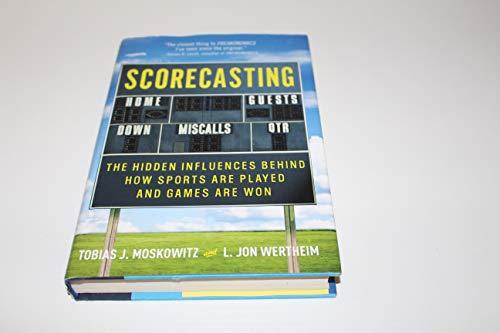
The Hidden Influences Behind How Sports Are Played and Games Are Won
This book, co-written by Toby Moskowitz, explored sports statistics and conventional wisdoms regarding home field advantage.
This is not research of Levitt. This is research done by another economist formerly of the University of Chicago, Toby Moskowitz, who co-wrote a book called Scorecasting.
— Episode: 40. Have We All Lost Our Ability to Comp...
This book, co-written by Toby Moskowitz, explored sports statistics and conventional wisdoms regarding home field advantage.
This is not research of Levitt. This is research done by another economist formerly of the University of Chicago, Toby Moskowitz, who co-wrote a book called Scorecasting.
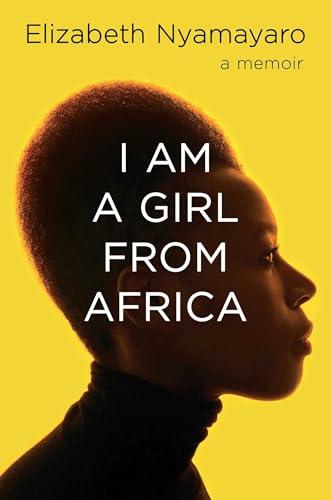
The speaker read this book cover to cover as an advanced copy and was struck by the descriptions of the levels of misogyny and violent behavior towards women around the world described by the author.
I read a book just last month. It was an advanced copy. I think it's coming out in the spring. I read it cover to cover. It's called I'm a Girl from Africa. And it's by a woman named Elizabeth Naya Ma...
— Episode: 38. What Does It Mean to Be a “Good” Man...
The speaker read this book cover to cover as an advanced copy and was struck by the descriptions of the levels of misogyny and violent behavior towards women around the world described by the author.
I read a book just last month. It was an advanced copy. I think it's coming out in the spring. I read it cover to cover. It's called I'm a Girl from Africa. And it's by a woman named Elizabeth Naya Mayaro.
And when she describes the levels of misogyny and not just attitudes but violent behavior toward women around the world. I mean, there may have been misogyny in Cherry Hole, New Jersey, where I grew up.
The Authors of Freakonomics Offer to Retrain Your Brain
This book was described as Stephen Dubner's attempt at writing a self-help book, which was a different writing experience for him because he usually felt unqualified to give direct advice.
Wait, wait, wait, wait. I have to interrupt you. You did write a self-help book, Think Like a Freak.
— Episode: 37. How Do You Know if People Don’t Like...
This book was described as Stephen Dubner's attempt at writing a self-help book, which was a different writing experience for him because he usually felt unqualified to give direct advice.
Wait, wait, wait, wait. I have to interrupt you. You did write a self-help book, Think Like a Freak.
Yeah, the third Freakonomics book we wrote was our attempt at a self-help book called Think Like a Freak.
The New Mood Therapy
This book was suggested as one of the best-selling resources for someone feeling depressed or anxious who cannot access one-on-one cognitive behavioral therapy.
One of the best-selling books, if you're feeling depressed or anxious and you don't have a cognitive behavioral therapist that you can go to one-on-one, you could buy Feeling Good by...
— Episode: 37. How Do You Know if People Don’t Like...
This book was suggested as one of the best-selling resources for someone feeling depressed or anxious who cannot access one-on-one cognitive behavioral therapy.
One of the best-selling books, if you're feeling depressed or anxious and you don't have a cognitive behavioral therapist that you can go to one-on-one, you could buy Feeling Good by David Burns.
This Is Your Chance to Change Your Life
This book, published in 1859, is believed to be the origin of the phrase 'Self-Help' and encouraged people, especially those at the bottom of the social ladder, to improve themselves through hard work and perseverance.
Do you know the book Self-Help, which I believe was the origin of the phrase? Have you ever come across that book by Samuel Smiles?
— Episode: 37. How Do You Know if People Don’t Like...
This book, published in 1859, is believed to be the origin of the phrase 'Self-Help' and encouraged people, especially those at the bottom of the social ladder, to improve themselves through hard work and perseverance.
Do you know the book Self-Help, which I believe was the origin of the phrase? Have you ever come across that book by Samuel Smiles?
And he, Smiles, ended up writing a book that he went on to call Self-Help, which was published in 1859.
The book presented an argument that people want to succeed but also want to do the right thing, and exercising practical wisdom is the way to balance these aims. The authors offered six key qualities of how a wise person should behave, including knowing proper aims, knowing how to improvise, and being perceptive.
And it dawned on me that ruts with wagon wheels and the like are probably not an accessible analogy right now. But if you could go back to that visual of a rut in the mud that gets deeper and deeper a...
— Episode: 36. Which Matters More, a First or Last...
The book presented an argument that people want to succeed but also want to do the right thing, and exercising practical wisdom is the way to balance these aims. The authors offered six key qualities of how a wise person should behave, including knowing proper aims, knowing how to improvise, and being perceptive.
And it dawned on me that ruts with wagon wheels and the like are probably not an accessible analogy right now. But if you could go back to that visual of a rut in the mud that gets deeper and deeper and it's very hard to get out of that groove.
I did come across this book. I'm not sure if you're familiar with it, but I'd like to tell you about it a little bit. Maybe this would prove useful for Yvonne as well. It's written by two authors, one of whom I know you know, Barry Schwartz, who's a psychologist at Swarthmore, and Kenneth Sharp, who is a political scientist at Swarthmore. And it's called Practical Wisdom.
The second one, a wise person knows how to improvise, balancing conflicting aims and interpreting rules and principles in light of the particularities of each context.
Wisdom rule number three from Practical Wisdom. A wise person is perceptive, knows how to read social context and knows how to move beyond the black and white of rules and see the gray in the situation.
The last landmark of this book, Practical Wisdom, is as follows. A wise person is an experienced person. Practical Wisdom is a craft, and craftsmen are trained by having the right experiences.
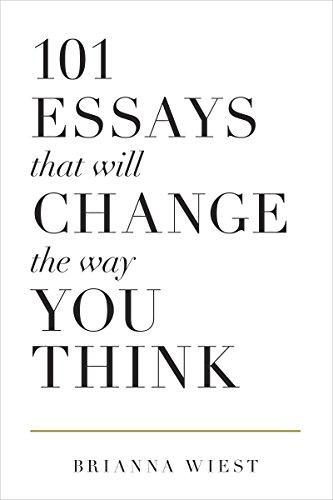
The essays were suggested as an alternative reading choice for someone who might prefer classical philosophy over contemporary self-help books.
And maybe the snob in you would feel better reading Meditations or reading the essays of Michel de Montaigne than reading Dale Carnegie.
— Episode: 37. How Do You Know if People Don’t Like...
The essays were suggested as an alternative reading choice for someone who might prefer classical philosophy over contemporary self-help books.
And maybe the snob in you would feel better reading Meditations or reading the essays of Michel de Montaigne than reading Dale Carnegie.
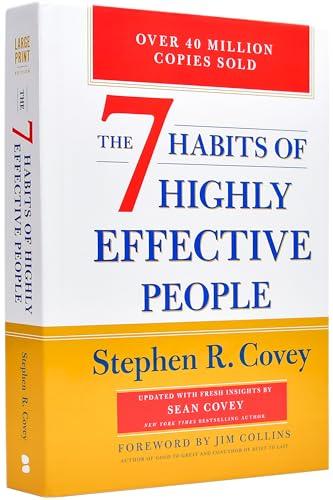
Angela mistakenly confused Dale Carnegie's book with this title in a previous podcast episode when discussing self-help works.
Longtime listeners will know that this was the second time that Angela misreferenced the work. In NSQ episode 24, Why Do We Forget So Much of What We've Read?, Angela, appropriately enough, confuses t...
— Episode: 37. How Do You Know if People Don’t Like...
Angela mistakenly confused Dale Carnegie's book with this title in a previous podcast episode when discussing self-help works.
Longtime listeners will know that this was the second time that Angela misreferenced the work. In NSQ episode 24, Why Do We Forget So Much of What We've Read?, Angela, appropriately enough, confuses the work with another best-selling self-help book, The Seven Habits of Highly Effective People, which was written by author and businessman Stephen Covey.
A book by John Wooden was mentioned because it contained a maxim about the true test of character being actions when no one is watching, which influenced the speaker's earlier search for internal consistency.
John Wooden, the UCLA basketball coach. I remember reading it in his book. They all said some version of the true test of a person's character is what you do when no one is watching.
— Episode: 35. Does Psychotherapy Actually Work?
A book by John Wooden was mentioned because it contained a maxim about the true test of character being actions when no one is watching, which influenced the speaker's earlier search for internal consistency.
John Wooden, the UCLA basketball coach. I remember reading it in his book. They all said some version of the true test of a person's character is what you do when no one is watching.
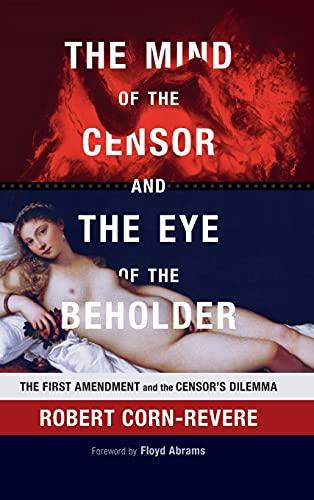
The First Amendment and the Censor's Dilemma
This was James Flynn's final book, which discussed how universities censor their teaching, but the publisher canceled its publication for fear of reputational and legal harm before it was ultimately published by Academia Press.
His final book examines how universities censor their teaching. The title of the book was originally in defense of free speech. The university is censor. But was changed to a book too risky to publish...
— Episode: 34. Are Humans Smarter or Stupider Than...
This was James Flynn's final book, which discussed how universities censor their teaching, but the publisher canceled its publication for fear of reputational and legal harm before it was ultimately published by Academia Press.
His final book examines how universities censor their teaching. The title of the book was originally in defense of free speech. The university is censor. But was changed to a book too risky to publish free speech in universities after his publisher, Emerald Press, canceled its publication for fear of, quote, the potential for serious harm to Emerald's reputation and the possibility of legal action.
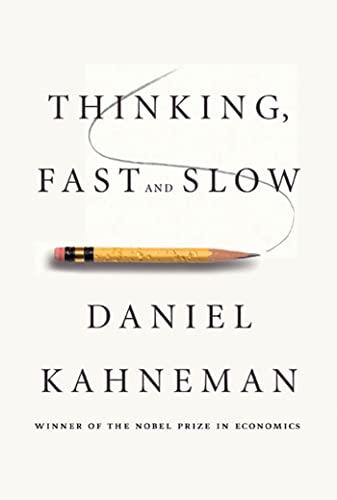
The book was referenced to support the idea that one can be blind to their own blindness regarding cognitive biases. The speaker mentioned a line from the book emphasizing that not only are people blind to the obvious, but they are also blind to their blindness.
You know, I think if you look back to the Dunning-Kruger research on this, which by the way, it's an old effect, but there's still new research being produced. And there was even a paper that came out...
— Episode: 30. Why Do We Seek Comfort in the Famili...
The book was referenced to support the idea that one can be blind to their own blindness regarding cognitive biases. The speaker mentioned a line from the book emphasizing that not only are people blind to the obvious, but they are also blind to their blindness.
You know, I think if you look back to the Dunning-Kruger research on this, which by the way, it's an old effect, but there's still new research being produced. And there was even a paper that came out a couple of years ago. David Dunning is one of the co-authors, and it was called Overconfidence Among Beginners Is a Little Learning a Dangerous Thing? And what I really liked about this paper is that they basically have these graphs of your confidence as you are progressing through multiple trials of tasks.
He wrote, not only are we blind to the obvious, but we are blind to our blindness.
Well, you were quoting Danny Kahneman. And if you ask Danny Kahneman, does reading his book, Thinking Fast and Slow, make you into a less biased, better thinker?
Note: The book recommendations on this page are discovered automatically from podcast transcripts, and may be incorrect or incomplete.
Podcast Name