Honours versus Money
Bruno S. Frey
Mentioned 4 months ago
62. How Can You Escape a Drama Triangle?
Research psychologist Angela Duckworth (author of "Grit") and tech and sports executive Mike Maughan really like to ask people questions, and they believe there’s no such thing as a stupid one. So they have a podcast where they can ask each other as many “stupid questions” as they want. New episodes...
Recently mentioned
Bruno S. Frey
Mentioned 4 months ago
62. How Can You Escape a Drama Triangle?
William C. Dement
Mentioned 7 months ago
50. Are You as Observant as You Think?
Nassim Nicholas Taleb
Mentioned 7 months ago
49. How Does Facing Death Change Your Life?
Angela Duckworth
Mentioned 8 months ago
46. How Can You Stop Feeling So Irritable?
Michael Erard
Mentioned 8 months ago
45. How Much Better Do You Really Want to Be?
Paul Bloom
Mentioned 9 months ago
44. Is Empathy in Fact Immoral?
Meyer Friedman
Mentioned 9 months ago
44. Is Empathy in Fact Immoral?
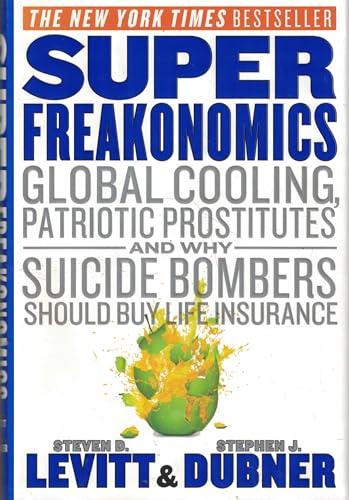
Steven D. Levitt
Mentioned 9 months ago
42. How Does When You Are Born Affect Who You Are?
![Freakonomics [Revised and Expanded]: A Rogue Economist Explores the Hidden Side of Everything cover](https://media.podcastbookpicks.com/books/677.jpg)
Steven D. Levitt
Mentioned 9 months ago
41. Why Are We So Attracted to Fame?
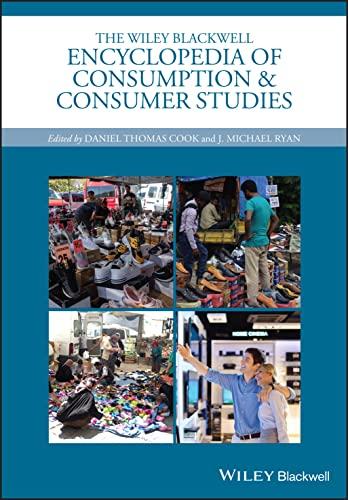
Daniel Thomas Cook
Mentioned 9 months ago
41. Why Are We So Attracted to Fame?
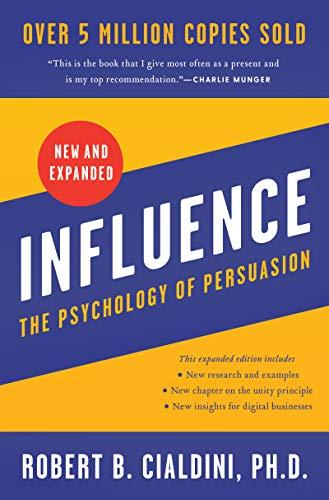
Robert B. Cialdini PhD
Mentioned 9 months ago
41. Why Are We So Attracted to Fame?
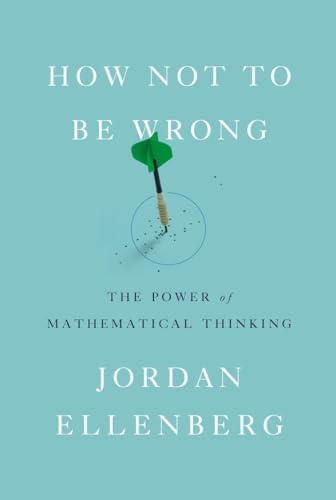
Jordan Ellenberg
Mentioned 10 months ago
40. Have We All Lost Our Ability to Compromise?
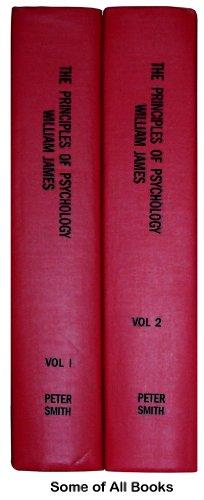
William James's book on psychology was referenced in the context of a formula for self-esteem, where happiness is achieved when expectations align with reality, and self-esteem is a product of success divided by aspirations.
Many people including the great psychologist William James have said something along the lines of happiness is when your expectations meet your reality.
— Episode: 170. Are We Getting Lonelier?
William James's book on psychology was referenced in the context of a formula for self-esteem, where happiness is achieved when expectations align with reality, and self-esteem is a product of success divided by aspirations.
Many people including the great psychologist William James have said something along the lines of happiness is when your expectations meet your reality.
She was thinking of a formula for self-esteem that James outlined in his book, The Principles of Psychology. He wrote self-esteem equals success divided by pretensions.
Essays
Wendell Berry's collection of essays was incorrectly attributed in the podcast as containing a quote about the difference between loneliness and solitude. The quote is from an article about the concept.
For if in solitude one's inner voices become audible and one responds more clearly to other lives than in loneliness, one's inner scream becomes deafening, deadening, severing any thread of connection...
— Episode: 170. Are We Getting Lonelier?
Wendell Berry's collection of essays was incorrectly attributed in the podcast as containing a quote about the difference between loneliness and solitude. The quote is from an article about the concept.
For if in solitude one's inner voices become audible and one responds more clearly to other lives than in loneliness, one's inner scream becomes deafening, deadening, severing any thread of connection to other lives.
True solitude is found in the wild places where one is without human obligation. One's inner voices become audible. One feels the attraction of one's most intimate sources. In consequence, one responds more clearly to other lives.
How Productive Disagreements Lead to Better Outcomes
It was highlighted as helpful for understanding how arguments can be productive and create something new, rather than simply trying to put differences aside.
He said the only thing worse than having toxic arguments is not having arguments at all Because productive disagreements neither reinforce nor eradicate a difference but make something new out of it h...
— Episode: 169. Can We Disagree Better?
It was highlighted as helpful for understanding how arguments can be productive and create something new, rather than simply trying to put differences aside.
He said the only thing worse than having toxic arguments is not having arguments at all Because productive disagreements neither reinforce nor eradicate a difference but make something new out of it humans cannot aspire Only to put our differences aside. They must put them to work

The High Cost of High Achievement
It was discussed in the context of burnout, particularly among dedicated and committed individuals, and was written in the 1980s.
He just posed the question who is prone to Burnout and then has this very unambiguous answer the dedicated and the committed.
— Episode: 166. Are You Suffering From Burnout?
It was discussed in the context of burnout, particularly among dedicated and committed individuals, and was written in the 1980s.
He just posed the question who is prone to Burnout and then has this very unambiguous answer the dedicated and the committed.
There was this psychologist in New York in the early 1970s named Herbert Friedenberger and he worked all of these shifts 10 hours a day at a private practice then he would go down to a free clinic where he would work and you know eventually broke down because he was working so much and in the 1980s he wrote a book called Burnout the high cost of achievement and had also written this paper titled staff Burnout and it was so interesting.
A Newbery Honor Award Winner
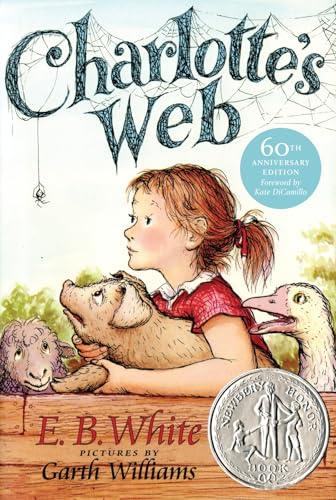
Conan O'Brien had written to E.B. White when he was a teenager. It was mentioned as having one of the best lines in literature.
You know, E.B. White like the author of Charlotte's Web. Right, with one of the greatest lines ever in literature that I am not going to nail right now but-
— Episode: 166. Are You Suffering From Burnout?
Conan O'Brien had written to E.B. White when he was a teenager. It was mentioned as having one of the best lines in literature.
You know, E.B. White like the author of Charlotte's Web. Right, with one of the greatest lines ever in literature that I am not going to nail right now but-
I guess he must have been a teenager and I think E.B. White wrote back and he framed it.
It is not often that someone comes along who is a true friend and a good writer. Charlotte was both.
That is the world's best line and I don't know whether that's why Conan O'Brien wrote to E.B. White and you know, I don't know Conan O'Brien but I will say when you talk about his last day and sort of being fired quote unquote
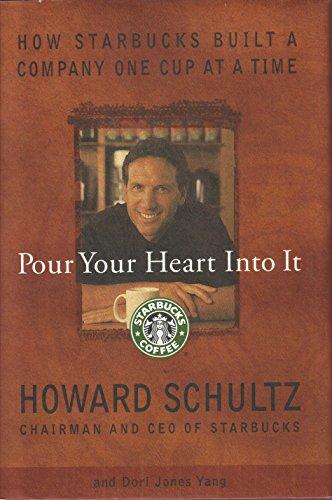
How Starbucks Built a Company One Cup at a Time
It was mentioned as being read by Mike, though he did not get the sense that Howard Schultz suffered from imposter syndrome, contrasting it with the podcast's theme of feeling overrated.
I would love to know Howard Schultz, but I did read his memoir. I think it's called like a cup at a time or something like that.
— Episode: 164. Do You Have Impostor Syndrome?
It was mentioned as being read by Mike, though he did not get the sense that Howard Schultz suffered from imposter syndrome, contrasting it with the podcast's theme of feeling overrated.
I would love to know Howard Schultz, but I did read his memoir. I think it's called like a cup at a time or something like that.
Angela recalls that Schultz's memoir is called A Cup At A Time. She was partially correct. The former CEO actually fit two coffee references into the title of his 1997 book. The full title is, Pour Your Heart Into It, How Starbucks Built a Company One Cup At A Time.

Jay-Z's book 'Decoded' was discussed in the context of an interview where he explained the reason why many rappers grab their crotch on stage, suggesting it's due to nerves rather than bravado.
There was an interview with Terry Gross and Jay-Z and she says I want to ask you kind of an odd question
— Episode: 160. How Do You Like Me Now?
Jay-Z's book 'Decoded' was discussed in the context of an interview where he explained the reason why many rappers grab their crotch on stage, suggesting it's due to nerves rather than bravado.
There was an interview with Terry Gross and Jay-Z and she says I want to ask you kind of an odd question
You know how a lot of hip-hop artists when they're on stage they kind of grab their crotch
And Jay-Z says yes, yes they do and I have an explanation for it
He broke down how in rock and roll bands people that grow up in that musical environment, they start in vans and then they go to these small clubs and they hone their craft over time and grow from these small places to bigger and bigger venues and eventually if all goes well become a rock star
But he said it's very different in the hip-hop genre because usually the music leads first, not the band just growing over time. And so Jay-Z explains that in hip-hop usually you have this hit record and then because the music led first they're just going to throw this person on stage, they've never been on stage before, they don't know how to perform because the music led first versus the band first
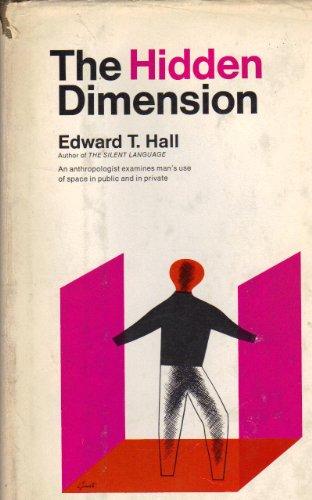
It was discussed as a 1966 book which introduced the concept of proxemics, the study of personal space and the different zones surrounding people, such as intimate, personal, social, and public.
And that was in 1966.
— Episode: 159. How Much Personal Space Do You Need...
It was discussed as a 1966 book which introduced the concept of proxemics, the study of personal space and the different zones surrounding people, such as intimate, personal, social, and public.
And that was in 1966.
And he introduced the idea of proxemics to describe the study of interpersonal spatial behavior and he actually refers to these concentric bubbles as distances, not spaces so intimate distance, personal distance social distance and public distance
A Book of Blessings
It was mentioned as a book about neuroscience, evolution, and human nature, and discusses the peripersonal neurons that react when someone enters our personal space, suggesting that this space is a protective mechanism.
And he wrote this book called The Spaces Between Us, a story of neuroscience, evolution and human nature.
— Episode: 159. How Much Personal Space Do You Need...
It was mentioned as a book about neuroscience, evolution, and human nature, and discusses the peripersonal neurons that react when someone enters our personal space, suggesting that this space is a protective mechanism.
And he wrote this book called The Spaces Between Us, a story of neuroscience, evolution and human nature.
(I Love Baby Books, Mother's Love Book, Baby Books about Loving Life)
Memoirs from a Young Writer’s Life
It was mentioned as a memoir that Angela Duckworth was currently reading, written by a famous poet who she met on a plane.
I'm reading a memoir right now. Dana Goya, he was on a plane next to me and he introduced himself as a famous poet.
— Episode: 156. How Do You Connect With Someone You...
It was mentioned as a memoir that Angela Duckworth was currently reading, written by a famous poet who she met on a plane.
I'm reading a memoir right now. Dana Goya, he was on a plane next to me and he introduced himself as a famous poet.
His memoir, which Angela is currently reading, is titled Studying with Miss Bishop, Memoirs from a Young Writer's Life.
Mastering Change at Any Age
It was discussed as a book that explored various life changes, including voluntary and involuntary ones, and the importance of taking responsibility for the transition process.
And he basically crisscrossed the United States for a year or two and just collected hundreds of stories from people who had been through a major life change, whether that was losing a job, losing a l...
— Episode: 155. How Do You Deal With Big Life Chang...
It was discussed as a book that explored various life changes, including voluntary and involuntary ones, and the importance of taking responsibility for the transition process.
And he basically crisscrossed the United States for a year or two and just collected hundreds of stories from people who had been through a major life change, whether that was losing a job, losing a loved one, changing careers.
He says whether it's a voluntary change or an involuntary change, what he found was a little bit what you're talking about that regardless of the change, you're responsible for the transition.
And he even went through this idea of voluntary versus involuntary. Voluntary, you leave a bad marriage, you start a new company. Involuntary, you get laid off, you get sick. Your dad moves you from West Cherry Hill to East Cherry Hill.
And he even went through this idea of voluntary versus involuntary.
He basically just says it's a meaning making exercise where you kind of take what happened to you, revise it and retell your life story to yourself.
It was discussed in the context of attention restoration theory. The study found that walking in nature or viewing nature pictures can improve attention.
unlike natural environments, urban environments are filled with stimulation that captures attention dramatically and additionally requires directed attention, e.g., to avoid being hit by a car, making...
— Episode: 153. Should You Spend More Time in Natur...
It was discussed in the context of attention restoration theory. The study found that walking in nature or viewing nature pictures can improve attention.
unlike natural environments, urban environments are filled with stimulation that captures attention dramatically and additionally requires directed attention, e.g., to avoid being hit by a car, making them less restorative.
we present two experiments that show that walking in nature or viewing pictures of nature can improve directed attention abilities, thus validating attention restoration theory.
your attention is getting mugged. Your attention is being grabbed by the lapels and shaken down.
"A Small, Good Thing" (THE NCTE High School Literature Series)
It was a short story about a young boy who died on his birthday, which led Angela to decide to quit driving, inspired by the regret of possibly being the cause of such an accident.
Okay so Raymond Carver died at age 50 but before he died he was one of the truly great American fiction writers and his genre was the short story I think he died of maybe lung cancer but he was a ragi...
— Episode: 152. What’s the Worst Kind of Regret?
It was a short story about a young boy who died on his birthday, which led Angela to decide to quit driving, inspired by the regret of possibly being the cause of such an accident.
Okay so Raymond Carver died at age 50 but before he died he was one of the truly great American fiction writers and his genre was the short story I think he died of maybe lung cancer but he was a raging alcoholic he had actually a very tumultuous life but let me just tell you about the cautionary tale that a small good thing was for me. In brief a small good thing is the story of a little boy who dies on his birthday gets hit by a hit and run driver I read this story I think I was in my I want to say my early 20s like I had a license to drive a car but I you know Oles was a little insecure about my driving ability I read that story Mike and in that moment I said as soon as I don't have to drive a car I'm going to stop driving because I never want to be the driver who kills a small child who steps off a curb on their birthday and you know I couldn't have anticipated but then Uber was invented and whenever Uber came to Philadelphia whatever that day was I should google it that was the day I stopped driving I have not driven a car since it's got to be at least I think a decade so here is a story that is a story of regret but it was the regret that I avoided I guess it was a regret of action that I avoided by reading a Raymond Carver short story I actually have read that story and now remember I regret that you made me feel bad but I didn't know who Raymond Carver was so you didn't either do anything or not do anything you have just placed yourself in a point of total abdication of responsibility and that you will never have to be in that situation
It was a 1998 paper that discussed the nature of regret, exploring whether people regret actions or inactions more, concluding that both perspectives had merit.
The paper is called Varieties of Regret, A Debate and Partial Resolution.
— Episode: 152. What’s the Worst Kind of Regret?
It was a 1998 paper that discussed the nature of regret, exploring whether people regret actions or inactions more, concluding that both perspectives had merit.
The paper is called Varieties of Regret, A Debate and Partial Resolution.
people regret actions more in the short term and inactions more in the long run because the sting of regrettable action diminishes relatively quickly whereas the pain of regrettable inaction lingers longer.
people's long term regrets of inaction are largely wistful and therefore not terribly troublesome.
the adverse consequences of inaction often take longer to manifest themselves than the adverse consequences of actions
Gilovich and Medvec agree that like ice cream regret comes in different flavors and that many regrets of inaction are more wistful and therefore less bothersome than their original research on the subject implied that's them conceding point by the way they're like condominium sort of show to something that many regrets of inaction are more wistful and less bothersome than say regrets of action but they continue they still believe however that long term regrets of inaction are truly painful for many individuals and that the pain centers around the feelings of despair documented in the research reported here and just one more thing before I stop quoting them like the Bible here to use a combat metaphor inaction regrets are more troublesome in the long term because they tend to be the last ones still standing.
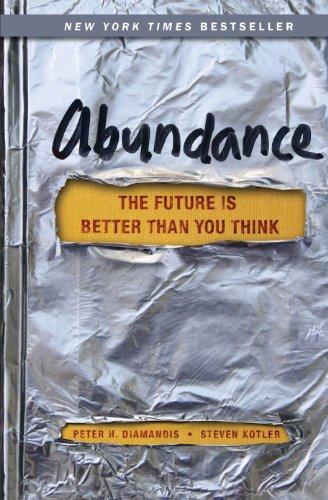
The Future Is Better Than You Think (Exponential Technology Series)
It was mentioned as a book that argues for the abundance argument, asserting that technology will continue to solve problems and improve life.
He actually wrote a book called Abundance and they argue That technology especially Will just keep solving problems and keep making things better.
— Episode: 145. Do You Have a Scarcity Mindset or a...
It was mentioned as a book that argues for the abundance argument, asserting that technology will continue to solve problems and improve life.
He actually wrote a book called Abundance and they argue That technology especially Will just keep solving problems and keep making things better.
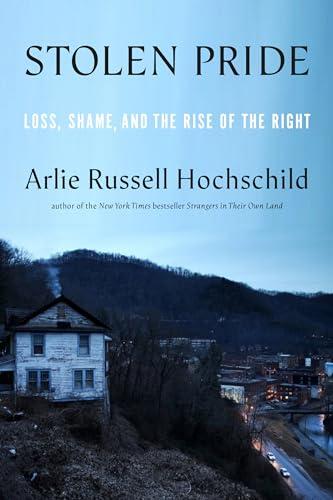
Loss, Shame, and the Rise of the Right
It was described as a lovely popular book about the emotion of pride, focusing on the idea that there are two distinct types of pride: authentic and hubristic.
She's at University of British Columbia and she's actually written a really lovely popular book.
— Episode: 142. Is Pride the Worst Sin?
It was described as a lovely popular book about the emotion of pride, focusing on the idea that there are two distinct types of pride: authentic and hubristic.
She's at University of British Columbia and she's actually written a really lovely popular book.
I think on the cover there's a peacock. And her thesis is that there are really two kinds of pride.
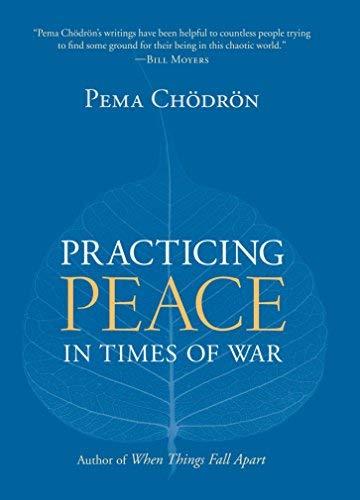
It was mentioned briefly as a book of essays by a New York Times film critic where he discussed his film criticism career, including films he felt he got right or wrong.
Just this morning, Angela, I was reading A Peace in the Times by Tony Scott.
— Episode: 142. Is Pride the Worst Sin?
It was mentioned briefly as a book of essays by a New York Times film critic where he discussed his film criticism career, including films he felt he got right or wrong.
Just this morning, Angela, I was reading A Peace in the Times by Tony Scott.
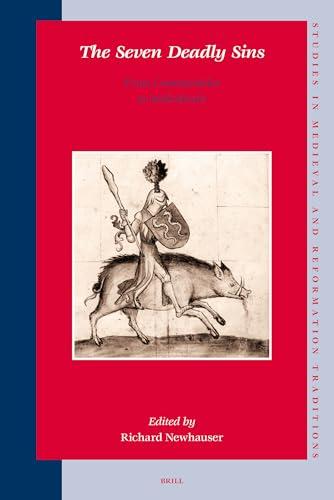
From Communities to Individuals (Studies in Medieval & Reformation Thought, 123)
It was mentioned that Richard Newhauser, an Arizona State University English professor, edited a book on the Seven Deadly Sins and helped clarify the evolution of the concept from a spiritual to a more modern, individual sense.
So sloth, we think about as laziness today, but there's an Arizona State University English professor Richard Newhauser who edited The Seven Deadly Sins from communities to individual...
— Episode: 136. Is Sloth a Sin or a Virtue?
It was mentioned that Richard Newhauser, an Arizona State University English professor, edited a book on the Seven Deadly Sins and helped clarify the evolution of the concept from a spiritual to a more modern, individual sense.
So sloth, we think about as laziness today, but there's an Arizona State University English professor Richard Newhauser who edited The Seven Deadly Sins from communities to individuals.
And Other Essays (Routledge Classics)
It was quoted that Bertrand Russell wrote an essay called 'In Praise of Idleness', discussing the potential harms of overemphasizing work and the value of leisure time. The concept of 'positive idleness' vs. 'negative idleness' was also discussed.
So let me give an example this is from Bertrand Russell the writer and philosopher. I love Bertrand Russell you know he wrote like 100 bucks. He was a busy fella. Yeah. But this is from an essay calle...
— Episode: 136. Is Sloth a Sin or a Virtue?
It was quoted that Bertrand Russell wrote an essay called 'In Praise of Idleness', discussing the potential harms of overemphasizing work and the value of leisure time. The concept of 'positive idleness' vs. 'negative idleness' was also discussed.
So let me give an example this is from Bertrand Russell the writer and philosopher. I love Bertrand Russell you know he wrote like 100 bucks. He was a busy fella. Yeah. But this is from an essay called In Praise of Idleness.
He wrote a great deal of harm is being done in the modern world by belief in the virtuosness of work and the road to happiness and prosperity lies in an organized diminution of work without a considerable amount of leisure a man is cut off from many of the best things and he goes on to distinguish between positive idleness and negative idleness.
Note: The book recommendations on this page are discovered automatically from podcast transcripts, and may be incorrect or incomplete.
Podcast Name