Podcast
No Stupid Questions
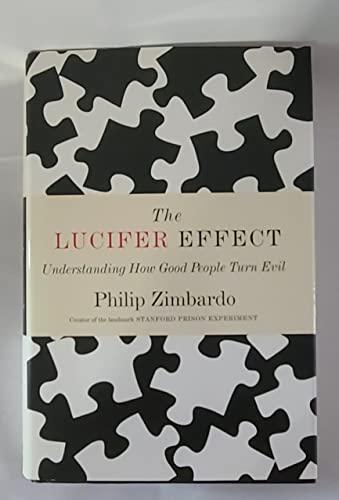
The podcast references Zimbardo's book, discussing its connection to the Stanford Prison Experiment and the concept of 'bad barrels' versus 'bad apples' in understanding the roots of evil. The experiment itself is described in significant detail.
Oh, you read The Lucifer Effect.
— Episode: 213. What Is Evil?
Episode: 213. What Is Evil?
The podcast references Zimbardo's book, discussing its connection to the Stanford Prison Experiment and the concept of 'bad barrels' versus 'bad apples' in understanding the roots of evil. The experiment itself is described in significant detail.
Oh, you read The Lucifer Effect.
So Zimbardo will say it happened. He was there. And by the way, when this was unfolding, right? So there's day one of the prison and there's day two. And I think by day two, there were kids who were having nervous breakdowns. Now day three, now day four. And these like sadistic acts are becoming ever more extreme. So it didn't make it to day seven. It ended on day six.
So Zimbardo likes to point out that it wasn't his conscience that stopped the prisoner experiment. It was his girlfriend's. So his girlfriend, who I believe was a PhD student in psychology at the time, goes down to the basement and sees what's going on and immediately says, this has to stop. And he listened to her. He later married her. And she later became the world's foremost researcher on burnout. And we've talked about her and you'll recognize her name, Christina Maslach.
So I think Zimbardo, as he would put it, is more interested in bad barrels than bad apples because he thinks that the prisoner scenario that he created, and also Abu Ghraib, and also Nazi Germany, that there are these evil situations.