Honours versus Money
Bruno S. Frey
Mentioned 4 months ago
62. How Can You Escape a Drama Triangle?
Research psychologist Angela Duckworth (author of "Grit") and tech and sports executive Mike Maughan really like to ask people questions, and they believe there’s no such thing as a stupid one. So they have a podcast where they can ask each other as many “stupid questions” as they want. New episodes...
Recently mentioned
Bruno S. Frey
Mentioned 4 months ago
62. How Can You Escape a Drama Triangle?
William C. Dement
Mentioned 7 months ago
50. Are You as Observant as You Think?
Nassim Nicholas Taleb
Mentioned 7 months ago
49. How Does Facing Death Change Your Life?
Angela Duckworth
Mentioned 8 months ago
46. How Can You Stop Feeling So Irritable?
Michael Erard
Mentioned 8 months ago
45. How Much Better Do You Really Want to Be?
Paul Bloom
Mentioned 9 months ago
44. Is Empathy in Fact Immoral?
Meyer Friedman
Mentioned 9 months ago
44. Is Empathy in Fact Immoral?
Steven D. Levitt
Mentioned 9 months ago
42. How Does When You Are Born Affect Who You Are?
![Freakonomics [Revised and Expanded]: A Rogue Economist Explores the Hidden Side of Everything cover](https://media.podcastbookpicks.com/books/677.jpg)
Steven D. Levitt
Mentioned 9 months ago
41. Why Are We So Attracted to Fame?
Daniel Thomas Cook
Mentioned 9 months ago
41. Why Are We So Attracted to Fame?
Robert B. Cialdini PhD
Mentioned 9 months ago
41. Why Are We So Attracted to Fame?
Jordan Ellenberg
Mentioned 10 months ago
40. Have We All Lost Our Ability to Compromise?
Games, Life and Utopia
It was mentioned that Johan Huizinga, in his book 'Homo Ludens', provided a definition of play as the voluntary overcoming of unnecessary obstacles.
I mean my favorite definition of play I can't remember who it was I think it was a philosopher said that the definition of play is the voluntary overcoming of unnecessary obstacles.
— Episode: 136. Is Sloth a Sin or a Virtue?
It was mentioned that Johan Huizinga, in his book 'Homo Ludens', provided a definition of play as the voluntary overcoming of unnecessary obstacles.
I mean my favorite definition of play I can't remember who it was I think it was a philosopher said that the definition of play is the voluntary overcoming of unnecessary obstacles.

Doctor Dolittle The Complete Collection, Vol. 1; Doctor Dolittle The Complete Collection, Vol. 2; ... Dolittle The Complete Collection, Vol. 4
Stephen had read the Dr. Doolittle books as a child, remembering that the animals in the books could talk back, though the animals' ability to talk was a fictional element in the stories.
I had Dr. Doolittle books. I think they talked back though, didn't they?
— Episode: 131. Why Do We Cry?
Stephen had read the Dr. Doolittle books as a child, remembering that the animals in the books could talk back, though the animals' ability to talk was a fictional element in the stories.
I had Dr. Doolittle books. I think they talked back though, didn't they?
They did. Those were the outliers. Those were the talkative animals. Fiction and all that. Oh, fiction.
Gene, Organism, and Environment
It was mentioned that economist Joel Waldfogel wrote a book called Screw Genomics that discussed the concept of deadweight loss in gift-giving.
And he is an economist. I want to say he's at the University of Minnesota. And this was a paper from a long time ago and Joel subsequently wrote a book that revolved around this.
— Episode: 128. How Can You Give Better Gifts?
It was mentioned that economist Joel Waldfogel wrote a book called Screw Genomics that discussed the concept of deadweight loss in gift-giving.
And he is an economist. I want to say he's at the University of Minnesota. And this was a paper from a long time ago and Joel subsequently wrote a book that revolved around this.
It was called Screw Genomics and made the point that economists look at gift giving a little bit differently than most people might.
Growing Up Female with the Mass Media
It was mentioned as a book where a comparison between the sitcoms I Dream of Jeannie and Bewitched was explored, in a chapter titled 'Genies and Witches'.
In her 1994 book, Where the Girls Are: Growing Up Female with the Mass Media in a chapter called Genies and Witches.
— Episode: 127. How Can You Be a Better Communicato...
It was mentioned as a book where a comparison between the sitcoms I Dream of Jeannie and Bewitched was explored, in a chapter titled 'Genies and Witches'.
In her 1994 book, Where the Girls Are: Growing Up Female with the Mass Media in a chapter called Genies and Witches.
A medieval folk tale retold by Joseph Telushkin was shared as a cautionary tale about envy, illustrating how it can lead to destructive behaviour.
a king promised a man anything he wanted on condition that the man's neighbor whom he envied would receive double instead of being pleased by this extraordinary offer again it was anything he wanted i...
— Episode: 123. What’s Wrong With Coveting?
A medieval folk tale retold by Joseph Telushkin was shared as a cautionary tale about envy, illustrating how it can lead to destructive behaviour.
a king promised a man anything he wanted on condition that the man's neighbor whom he envied would receive double instead of being pleased by this extraordinary offer again it was anything he wanted instead of being pleased by this extraordinary offer the man obsessed and disheartened by his neighbor's even greater good fortune asked the king to pluck out one of his eyes just so that his neighbor would lose both
A Cultural, Visual, and Personal History
The article is discussed in the context of first impressions and how cultural messages can shape our judgments of others and reinforce stereotypes.
I remember reading an article that made me think like, oh, I'm so glad there is this science. This is a paper by Richard Cook, Adam Eggleston and Harriet Over. And it's called the cultural learning ac...
— Episode: 121. How Good Are Your Snap Judgments?
The article is discussed in the context of first impressions and how cultural messages can shape our judgments of others and reinforce stereotypes.
I remember reading an article that made me think like, oh, I'm so glad there is this science. This is a paper by Richard Cook, Adam Eggleston and Harriet Over. And it's called the cultural learning account of first impressions.
Their thesis is that when you meet somebody that you don't know, very quickly, you come to first impressions. Just like we said, their explanation for this is that we have these associations, these correlations of sort of like, oh, when I see people who are this, I often find that they are that.
The Fourfold Path for Healing Ourselves and Our World
It was discussed as having some of the best thinking on forgiveness and grudges, focusing on the etymology of forgiveness as the opposite of a grudge and its relation to the value of relationships.
I have to point to some of the, I think best thinking about this, which was done by Roy Balmeister and his co-conspirators.
— Episode: 117. What’s Wrong With Holding a Grudge?
It was discussed as having some of the best thinking on forgiveness and grudges, focusing on the etymology of forgiveness as the opposite of a grudge and its relation to the value of relationships.
I have to point to some of the, I think best thinking about this, which was done by Roy Balmeister and his co-conspirators.
Roy Balmeister is a social psychologist. He wrote this article, I think more than two decades ago now, on forgiveness and grudges.
Roy's point is that when we say I forgive you, we use that phrase for when you forgive someone a debt, some monetary transaction or piece of property.
But also we say that when it has nothing to do with monetary compensation, you didn't borrow anything. You lied to me, you cheated on me, you tripped to me, you hurt me, and I'm going to use that same word.
And the reason why I think Roy Balmeister is so interested in the etymology of forgiveness, which I am proposing is the opposite of holding a grudge, is that there is something about restoring the value of a relationship that happens when we forgive someone and there is the refusal to do that when we hold a grudge.
Chasing Happy (Beautiful Word Bible Studies)
It was mentioned as a book by philosopher Bertrand Russell with a similar message to Kieran Setiya's book regarding the pursuit of happiness and focusing on other goals.
I'm reading this book on chasing happiness by Bertrand Russell, also a philosopher who says more or less the same thing.
— Episode: 115. Are You Having a Midlife Crisis?
It was mentioned as a book by philosopher Bertrand Russell with a similar message to Kieran Setiya's book regarding the pursuit of happiness and focusing on other goals.
I'm reading this book on chasing happiness by Bertrand Russell, also a philosopher who says more or less the same thing.
The Journal
It was described as a book that discussed the concept of 'The Rich Life', suggesting that people's idea of a good life involves happiness and also stimulation and learning.
And what I want to say about that is there's a paper that I read recently that I loved and I think it was called The Rich Life by Aaron Westgate and somebody else.
— Episode: 111. Would You Be Happier if You Lived S...
It was described as a book that discussed the concept of 'The Rich Life', suggesting that people's idea of a good life involves happiness and also stimulation and learning.
And what I want to say about that is there's a paper that I read recently that I loved and I think it was called The Rich Life by Aaron Westgate and somebody else.
And it made a striking claim, which is that when people think about the good life like what they want in life, there's some element of that which is happiness, like feelings of joy and pride and comfort, the absence of negative feelings.
People probably think of their relationships and how they have meaning and purpose, but they also think about The Rich Life, which they defined as essentially the curious life, the life of stimulation and of learning.
What Parents and Teachers Really Need to Know to Empower Complicated Kids with Confidence and Calm
It was discussed as a paper written by John Sabini, exploring the reasons why people feel embarrassed. It provided three different categories for embarrassment.
He thinks that they were embarrassed.
— Episode: 109. What Is the Purpose of Embarrassmen...
It was discussed as a paper written by John Sabini, exploring the reasons why people feel embarrassed. It provided three different categories for embarrassment.
He thinks that they were embarrassed.
He wrote this paper called 'Who Is Embarrassed by What?' Published in 2000.
And he says there are three categorically different reasons why we get embarrassed.
He wondered whether there was something else going on in those Milgram studies that nobody really understood.
Maybe it's a situation he was like, no, people are just embarrassed.
It was mentioned in relation to a quote popularized by the author, which was originally not written by him, but used in a discussion about Victor Frankel's life and work.
Years ago, I was wondering between the stacks of books at a university library. I chanced to open a book in which I encountered one of the most powerful significant ideas I've ever come across. The es...
— Episode: 108. Should You Try to Be Less Angry?
It was mentioned in relation to a quote popularized by the author, which was originally not written by him, but used in a discussion about Victor Frankel's life and work.
Years ago, I was wondering between the stacks of books at a university library. I chanced to open a book in which I encountered one of the most powerful significant ideas I've ever come across. The essence of it was this, between stimulus and response, there is space. In that space is our power to choose our response. In our response lies our growth and our freedom.
The Transforming Power of Hospitality in Business
It was described as a very good book, particularly about the hospitality industry and Danny Meyer's innovations regarding tipping.
I read "Setting the Table". It's a really good book.
— Episode: 103. Should Toilets Be Free?
It was described as a very good book, particularly about the hospitality industry and Danny Meyer's innovations regarding tipping.
I read "Setting the Table". It's a really good book.
It was mentioned in relation to the topic of nepotism, specifically highlighting how forced diversity in teams can be detrimental to performance.
It makes me think of a paper by Sophie Calder Wang It's called 'Diversity and Performance in Entrepreneurial Teams'
— Episode: 102. What’s So Bad About Nepotism?
It was mentioned in relation to the topic of nepotism, specifically highlighting how forced diversity in teams can be detrimental to performance.
It makes me think of a paper by Sophie Calder Wang It's called 'Diversity and Performance in Entrepreneurial Teams'
A Brother's Teammate Sports Romance (Denver Kodiaks Book 3)
It was mentioned in the context of habits and addiction, with a quote from the book about addiction being the compulsive and uncontrollable engagement in a behavior despite harm.
Judging from the titles of popular songs one can be addicted to just about anything including love Robert Palmer Orgasms the buzzcocks danger iced tea and base pure tone however Neuroscientists reserv...
— Episode: 101. Are You Really "Addicted" to Diet C...
It was mentioned in the context of habits and addiction, with a quote from the book about addiction being the compulsive and uncontrollable engagement in a behavior despite harm.
Judging from the titles of popular songs one can be addicted to just about anything including love Robert Palmer Orgasms the buzzcocks danger iced tea and base pure tone however Neuroscientists reserve the term addiction more specifically for the compulsive and uncontrollable engagement in a particular behavior in spite of its harmful consequences to the user
The Autobiography
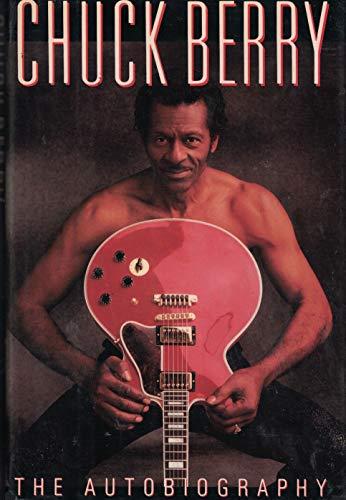
It was mentioned that Chuck Berry felt taken advantage of early in his career but learned from the experience and became savvy about publishing deals, ultimately building a sizable estate.
According to Berry's 1987 memoir, Chuck Berry, The Autobiography, he felt taken advantage of early on in his music career.
— Episode: 99. Do You Mind if I Borrow Your Persona...
It was mentioned that Chuck Berry felt taken advantage of early in his career but learned from the experience and became savvy about publishing deals, ultimately building a sizable estate.
According to Berry's 1987 memoir, Chuck Berry, The Autobiography, he felt taken advantage of early on in his music career.
How to Fall in Love with the Process and Achieve Your Wildest Dreams
The book, titled 'The No-I-Pole Rule', was mentioned in relation to hiring kind and good people to help solve workplace issues.
There's the well-known book The No-Ip-Pole Rule There's this entire philosophy around If you hire people who are good and kind people Then a lot of problems kind of work themselves out But how do you...
— Episode: 96. Why Is Chick-fil-A Such a Big Deal?
The book, titled 'The No-I-Pole Rule', was mentioned in relation to hiring kind and good people to help solve workplace issues.
There's the well-known book The No-Ip-Pole Rule There's this entire philosophy around If you hire people who are good and kind people Then a lot of problems kind of work themselves out But how do you do that?
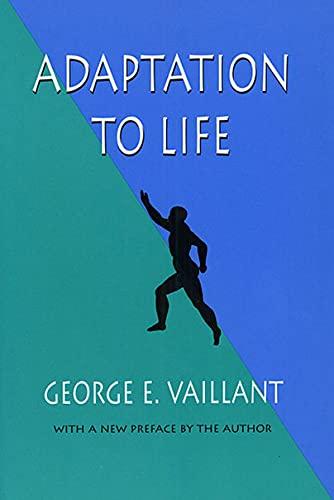
It was mentioned in passing, as a book where the author learned about suppression as a defense mechanism, and the story of a young man who used suppression as a defense mechanism to deal with his fear while in a sinking submarine.
The story is from psychiatrist George Valiant's 1977 book Adaptation to Life.
— Episode: 95. What’s So Bad About Denial?
It was mentioned in passing, as a book where the author learned about suppression as a defense mechanism, and the story of a young man who used suppression as a defense mechanism to deal with his fear while in a sinking submarine.
The story is from psychiatrist George Valiant's 1977 book Adaptation to Life.
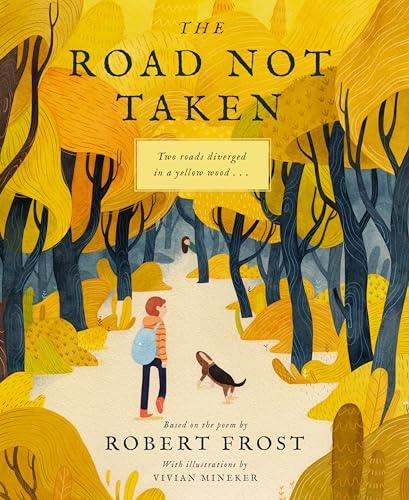
It was mentioned as a poem by Robert Frost, and was incorrectly called 'The Road Less Traveled' by Angela.
Also Angela misremembers the name of Robert Frost's most famous poem. It is in fact titled The Road Not Taken not as she calls it the road less traveled.
— Episode: 95. What’s So Bad About Denial?
It was mentioned as a poem by Robert Frost, and was incorrectly called 'The Road Less Traveled' by Angela.
Also Angela misremembers the name of Robert Frost's most famous poem. It is in fact titled The Road Not Taken not as she calls it the road less traveled.
A Champion's Guide to Winning Under Pressure
It was primarily about Gary Player's approach to golf, focusing on his mental strength, physical fitness, and consistent emphasis on enthusiasm in his practices and strategies.
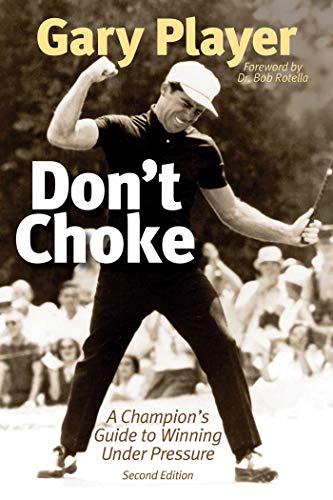
He's in his mid eighties now and this book he wrote some years ago is called quite directly Don't Choke, a champion's guide to winning under pressure.
— Episode: 89. How Valuable Is Enthusiasm?
It was primarily about Gary Player's approach to golf, focusing on his mental strength, physical fitness, and consistent emphasis on enthusiasm in his practices and strategies.
He's in his mid eighties now and this book he wrote some years ago is called quite directly Don't Choke, a champion's guide to winning under pressure.
The book is not really about choking. It's more of a manual for how Gary Player approached the game generally.
I had brainwashed myself to be enthusiastic about everything good in my game and to keep building my own confidence. That enthusiasm is what carried me from the golf course to the gym to keep working hard at getting better. Focus 100% on what you are busy with. Immerse yourself in it and do it with enthusiasm.
And that you could call willpower, but the way he describes it, it's a very exuberant form of willpower.
Gary Player, the way he defines it, enthusiasm is a force and he actually describes it as ingrained hereditary trait, which I have a hard time believing that's true.
A Guide to Aging Well (Aging Well Series Book 101)
It was discussed as a book that explored the secrets to aging well, including factors such as relationships, coping styles, and health choices, mentioned in the context of the importance of healthy choices throughout life for successful aging.
I do know a little bit about the work of the psychologist George Valiant. I'm sure you know much more. I love George. So George wrote about aging well. That was the name of the book.
— Episode: 87. What’s So Great About Retirement?
It was discussed as a book that explored the secrets to aging well, including factors such as relationships, coping styles, and health choices, mentioned in the context of the importance of healthy choices throughout life for successful aging.
I do know a little bit about the work of the psychologist George Valiant. I'm sure you know much more. I love George. So George wrote about aging well. That was the name of the book.
So much of his professional life. He was a psychiatrist at Harvard. I think he's emeritus now. He followed this cohort of several hundred people. Many of them were Harvard graduates, but they're also a sample of Boston residents who are not Harvard graduates.
And the people who started this study are not alive anymore. Even the subjects of the study who started off in their teens. Most of them I think have passed. So this is a study where you can follow people for an entire life and you can ask like what's a good life? What are the secrets to aging well?
Well, here's what he says are seven factors that do predict positive aging, not being a smoker or having stopped smoking young, adaptive coping style, mature defenses, absence of alcohol abuse, healthy weight.
Those are physiological and potentially cognitive drivers that would make a retirement better. But then here we go. Stable marriage, as you referred to, exercise and years of education.
Note: The book recommendations on this page are discovered automatically from podcast transcripts, and may be incorrect or incomplete.
Podcast Name