
Podcast
Hidden Brain
The book was highlighted by host Shankar Vedantam and guest John McWhorter as a clear explanation of why English is always in flux, noting that dictionaries give an illusion of a static language and that changes—like the evolution of “lol”—are natural and creative. They praised the author’s analogy of language as a never‑standing parade and presented the work as a fresh, engaging look at linguistic change. The overall tone was enthusiastic, positioning the title as a must‑listen recommendation for anyone curious about how words move.
Episode: Watch Your Mouth
It was mentioned by Shankar Vedantam, in reference to the topic of language evolution, and how English will not and cannot sit still, like 'literally'.
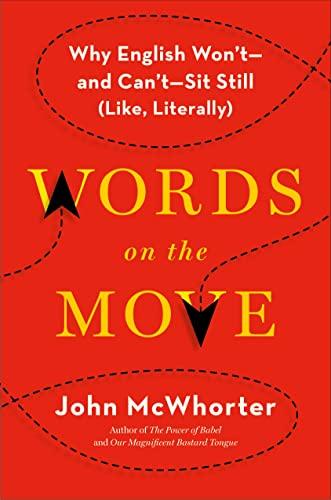
I'm talking to John McWhorter he's a professor of English and comparative literature at Columbia University and the author of the book Words on the Move Why English Won't and Can't Sit Still Like Literally
Episode: Radio Replay: Watch Your Mouth
It was discussed how dictionaries provide an unrealistic view of language, as language is always changing and evolving. It was also highlighted that the changes in language are natural and not necessarily mistakes.
Dictionaries are wonderful things but they create an illusion that there's such thing as a language that stands still when really it's the nature of human language to change.
It's as if you saw a person, I'm not going to say at four because then the person is growing up and if I use that analogy then it seems like I'm saying that language grows up or it moves towards something or it develops.
Mistakes and errors are what turned Latin into French.
Lol was an expression it was a piece of language and so you knew that its meaning was going to change the only question was in which way and it ended up becoming less a direct reflection of hearty laughter than an indication of the kind of almost subconscious laughter that we do in any kind of conversation that's meant as friendly.
Language is a parade and nobody sits at a parade wishing that everybody would stand still if the language stayed the way it was it would be like a pressed flower in a book or as i say i think it would be like some inflatable doll rather than a person I think that it's better to think of language as a parade that either you're watching or frankly that you're in especially because the people are never going to stand still it's never happened it's never going to and if you can enjoy it as a parade instead of wondering why people keep walking instead of just sitting on chairs and blowing on their tubas and not moving then you have more fun I want everybody to have the fun I'm having.
Episode: Episode 57: Slanguage
It was described as a new book discussing how English language changes, and cannot remain stagnant, similar to how a human changes over time, like literally's meaning.
John McWhorter is a professor of English and Comparative Literature at Columbia University. He's also the author of a new book, Words on the Move. Why English Won't and Can't Sit Still Like Literally.
I love this analogy you have in the book where you mention how thinking that a word has only one meaning is like looking at a snapshot taken at one point in a person's life and saying, this photograph represents the entirety of what this person looks like.
We can't help as literate people thinking that the real language is something that sits still with letters written all nice and pretty on a page that can exist for hundreds of years.
One of the points you make in the book of course is that the evolution of words and their meanings is what gives us this flowering of hundreds or thousands of languages.
But I have to say, I noticed that you had a book out a few years ago that seemed to say the opposite. And it was titled Doing Our Own Thing, The Degradation of Language and Music and Why We Should Like Care.