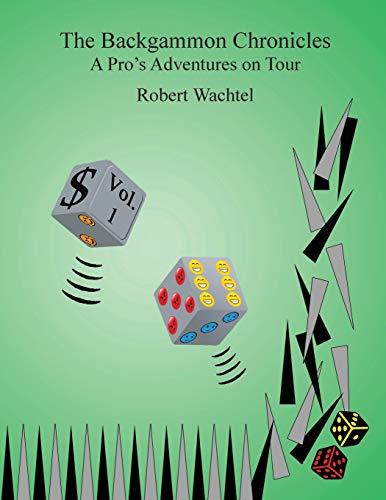
The Backgammon Chronicles
Robert Wachtel
Mentioned 1 month ago
677. Can Backgammon Save Us from Ourselves?
Freakonomics co-author Stephen J. Dubner uncovers the hidden side of everything. Why is it safer to fly in an airplane than drive a car? How do we decide whom to marry? Why is the media so full of bad news? Also: things you never knew you wanted to know about wolves, bananas, pollution, search engin...
Recently mentioned
Robert Wachtel
Mentioned 1 month ago
677. Can Backgammon Save Us from Ourselves?
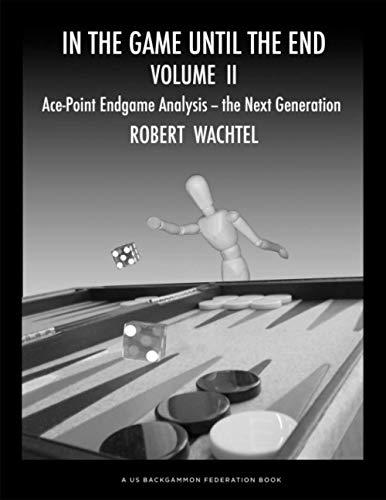
Robert H Wachtel
Mentioned 1 month ago
677. Can Backgammon Save Us from Ourselves?
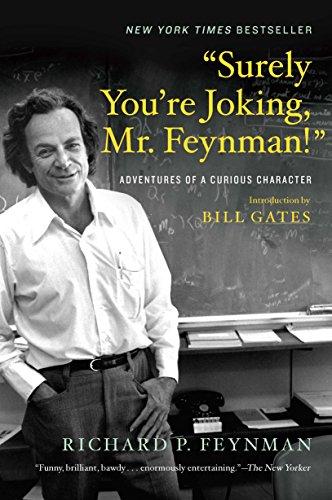
Richard P. Feynman
Mentioned 1 month ago
The Vanishing Mr. Feynman (Update)
Gustave Flaubert
Mentioned 1 month ago
The Vanishing Mr. Feynman (Update)
Richard P. Feynman
Mentioned 1 month ago
The Vanishing Mr. Feynman (Update)
Bernard Suits
Mentioned 2 months ago
675. Has the New York Times Become a Games Company?
Katie Salen Tekinbas
Mentioned 2 months ago
675. Has the New York Times Become a Games Company?

Josef Albers
Mentioned 2 months ago
675. Has the New York Times Become a Games Company?
Adam Smith
Mentioned 2 months ago
674. How Does a Composer Feel After the World Premiere?
Glory M. Liu
Mentioned 2 months ago
674. How Does a Composer Feel After the World Premiere?
Charlotte Bronte
Mentioned 2 months ago
673. What Is Money?
Charles Dickens
Mentioned 2 months ago
673. What Is Money?
![Freakonomics [Revised and Expanded]: A Rogue Economist Explores the Hidden Side of Everything Cover](https://media.podcastbookpicks.com/books/677.jpg)
A Rogue Economist Explores the Hidden Side of Everything
The hosts frequently cited the book as the foundational work that launched the podcast, using it to illustrate themes such as cheating in academia, the non‑destiny of names, and the controversial link between legalized abortion and crime rates. Stephen Dubner and Steve Levitt referenced it throughout the series, and guest David Rubenstein even called it his favorite book of the past two decades. Listeners were encouraged to explore its ideas further, indicating strong endorsement of its insights.
It was mentioned as a book that Stephen Dubner and Steve Levitt published in 2005. It explores the idea that cheating is a prominent feature in every human endeavor and explores why it shouldn't be surprising even among scientific researchers.
I rarely do this, but today I'm going to start by reading a couple sentences from Freakonomics, which Steve Levitt and I published in 2005.
Cheating, we wrote, may or may not be human nature, but it is certainly a prominent feature in just about every human endeavor. Cheating is a primordial economic act, getting more for less. So when you think about it, why shouldn't we expect cheating even among scientific researchers?
It was a book by Steven Dubner and Steve Levitt, published in 2005, that discussed the presence of cheating in many human endeavors.
I rarely do this, but today I'm going to start by reading a couple sentences from Freakonomics, which Steve Levitt and I published in 2005.
The book discussed the unexpected correlation between the legalization of abortion in the 1970s and the decline in crime rates in the 1990s, which was initially met with controversy.
In the first Freakonomics book, published in 2005, Steve Levitt and I wrote about one such consequence of the original Roe v. Wade ruling, and in 2019 we put out a Freakonomics radio episode called Abortion and Crime Revisited.
If you've ever read Freakonomics, the namesake book of this show, you may recall this controversial link between legalized abortion and the fall of crime.
Levitt eventually wrote a paper called Understanding Why Crime Fell in the 1990s, four factors that explain the decline and six that do not.
Legalized abortion, they wrote, appears to account for as much as 50 percent of the recent drop in crime.
In 2001, the economist Steve Levitt and the economist slash legal scholar John Donahue published a paper arguing that the legalization of abortion in the U.S. in 1973 accounted for as much as half of the nationwide reduction in crime a generation later.
It was mentioned as a book co-authored by Steve Levitt and Stephen Dubner, which Steve described as a foundational work in his career.
I am best known for co-authoring Freakonomics with Stephen Dubner.
It was mentioned that Steve Levitt and Stephen Dubner co-authored the first Freakonomics book and they started writing a monthly column for the New York Times magazine.
This was around the time that Levitt and I published our first Freakonomics book.
It was mentioned that the Freakonomics book and movie explored the impact of names, with the book arguing that names are not destiny, but the movie seemingly taking a different view.
In the Freakonomics movie, he gets a chapter on names and he does it completely backwards.
And we tell him that it's completely backwards. And he's completely unbothered by the fact that he's gotten it completely backwards and makes names destiny.
When we wrote about names in Freakonomics, we made it pretty clear that naming is not destiny.
The book was referenced as the namesake of the podcast and it contained the controversial link between legalized abortion and the fall of crime, which was discussed further in the episode.
If you've ever read Freakonomics, the namesake book of this show, you may recall this controversial link between legalized abortion and the fall of crime.
It was described by David Rubenstein as his favorite book from the last 20 years, which he highly recommended to listeners of the podcast.
My favorite book of the last 20 years is Freakonomics. Now, I don't know who wrote that book, but it's a great book. And if you ever meet the author of that book, I'd like to meet that person.
It was mentioned that the speaker writes books with Steve Levitt, one of which is Freakonomics.
Steve Leavitt is the guy I write books with, freakonomics and super freakonomics
The hosts mentioned their first book, 'Freakonomics', in which they analyzed the data from the Bagel Man's business, providing insights into honesty and company dynamics.
In our first book, Freakonomics, we analyzed the Bagel Man's payment data and wrote up the findings, what the payment rates told us about honesty as it relates to the size of a company, time of year, company morale, things like that.
It was briefly mentioned in the context of the authors' prior book and the interesting questions they had received about it since its 2005 publication.
Their 2005 book Freakonomics used economic theory to offer...
It was mentioned as the book related to the podcast and film, and that a chapter on names had been interpreted differently by the filmmaker.
In order to prompt the Google ads, Sweeney needed to find real first and last names, some black and some white. So she would type in a search like Shaunice PhD or Molly MBA to find real people, some of whom were like herself professionals.
So when we wrote about names and Freakonomics, we made it pretty clear that naming is not destiny.
And we made we told that story to reinforce the point that naming is not destiny.
It is amazing how everyone thinks that we said the opposite.
He completely he gets a chapter on names and he does it completely backwards. And we tell him that it's completely backwards. And he's completely unbothered by the fact that he's gotten it completely backwards and makes names destiny.
It was mentioned as a book that could be signed and given as a prize for a donation, suggesting the podcast was affiliated with its authors.
If you do it right, we'll send you a Freakonomics Radio t-shirt or coffee mug or a signed Freakonomics book.
It was mentioned as the name of a book and blog co-authored by Stephen Dubner, discussed in the context of a podcast segment.
It's that moment every couple of weeks we talk to Stephen Dubner, the co-author of the books and the blog of the same name. It is the hidden side of everything.
Stephen Dubner, co-author of the book and blog, was interviewed about family ties and their effect on economic outcomes.
It is altogether now the hidden side of everything.
Stephen Dubner mentioned his co-author, Steve Levitt, and their book Freakonomics, which is implied to be a published work containing ideas related to economic principles.
From WNYC and APM American Public Media, this is Freakonomics Radio, the podcast that explores the hidden side of everything.
The Freakonomics book and blog were mentioned as resources for listeners interested in further exploring the topics discussed.
If you want more Freakonomics Radio, you can subscribe to our podcast on iTunes or go to Freakonomics.com where you'll find lots of radio, a blog, the books and more.
The book and blog of the same name were mentioned in the context of the show's host, Stephen Dubner, being its co-author.
Time now for a little bit of Freakonomics Radio, that moment in the broadcast every couple of weeks where we talk to Stephen Dubner, the co-author of the books and the blog.
Oh, geez, Kai, I'm sorry. I'm sorry. Fight through it. Okay, all right. Books and the blog of the same name. It is, of course, the hidden side of everything.
The book and blog 'Freakonomics' were mentioned, as being co-authored by Stephen Dubner, who was interviewed on the podcast.
the co-author of the books and the blog of the same name. It is the hidden side of everything.
It was referred to as a book that sparked a documentary, with discussion focusing on how the film deviated from the book's conclusion regarding names and destiny.
So what Leavitt is talking about is the freakonomics documentary that came out a couple years ago
He completely he gets a chapter on names and he does it completely backwards and we tell him that it's completely backwards
And he's completely unbothered by the fact that he's gotten it completely backwards and and makes names destiny
When we wrote about names and freakonomics We made it pretty clear that naming is not destiny, right?
In fact we told the story of these two brothers in New York whose parents had named them loser and winner and The fact was is that loser turned out to have a great life as an upstanding citizen
The book and blog were mentioned, and the show host spoke about the general topic of the show, the 'hidden side of everything'.
It is, yes, yes, it is the hidden side of everything.
It was mentioned as the first book by the podcast hosts, where the question of the danger of guns vs swimming pools was first posed.
One of the questions that we posed in our first book, Infreakonomics, was simply this.
Stephen Dubner, the co-author of the book and the blog of the same name, was a guest on the podcast, discussing a range of topics related to the 'hidden side of everything'.
It is the hidden side of everything.
The podcast discussed the book's co-author, Stephen Dubner, and his work exploring the hidden side of everything, including topics like bosses and their impact on productivity.
Every two weeks we talk with Stephen Dubner, the co-author of the books and blog about the hidden side of everything.
Stephen Dovener, Freakonomics Radio. He also puts out a podcast, which you can get on iTunes and hear more at Freakonomics.com.
It was mentioned as the title of the book and blog co-authored by Stephen Dubner, in relation to a discussion about mass transit and the environment.
The hidden side of everything is what it's all about.
The book and blog were mentioned in the context of Stephen Dubner, who is a co-author, and the podcast was discussing the topic of lying to oneself, specifically in relation to surveys and predictions.
Stephen Dubner, the co-author of the books and the blog of the same name.
It was mentioned as being the book and blog of the same name that Stephen Dubner co-authored, also relating to the hidden side of everything.
the co-author of the books and the blog of the same name. It is the hidden side of everything.
The book and blog "Freakonomics" were mentioned, specifically in relation to Stephen Levitt, its co-author. Stephen Levitt discussed poker as a game of skill, not chance, and had written about it.
Stephen Levitt, the co-author of the books in the blog of the same name. It is the hidden side of everything.
The podcast's host and co-author of the book, Stephen Dubner, was interviewed about his work and the concepts explored in the book, including the hidden side of things.
It is the hidden side of everything.
It was mentioned that a 16-year-old girl had read sections of the book to her parents, and it was being considered for a book club discussion.
my daughter bought your book because of the, quote, funny title, end quote, and has read sections to us, her father and me, in the car and at home. She's 16.
What I would like to know is what you think the perfect meal is to match up with your book at our book club discussion.
It was mentioned after the publication of the book, with colleagues attempting to shame the author for his views on mathematics, which backfired as the author was proud of his views.
So for instance, after we published Freakonomics, some of my colleagues were not that wild about the book and the attention we received.
The book, "The Hidden Side of Everything," was mentioned in the context of a podcast where Stephen Dubner, its co-author, was being interviewed.
Books in the blog of the same name, it is of course the hidden side of everything...
The book and blog of the same name, 'Freakonomics', were mentioned as the source of the podcast host's discussion on innovation and patents.
Time now for a little bit of Freakonomics Radio, that moment in the broadcast every couple of weeks where we talk to Stephen Dubner, the co-author of the books and the blog of the same name. It is the hidden side of everything.
It was mentioned as the book and blog of the same name, which covers the hidden side of everything. The books were co-authored by Stephen Dubner, who was being interviewed on the podcast.
Time now for a little bit of Freakonomics Radio, that moment in the broadcast every couple of weeks where we talk to Stephen Dubner, the co-author of the books and the blog of the same name. It is the hidden side of everything.
The book and blog, Freakonomics, were discussed, and its co-author, Stephen Dubner, was a guest on the show.
Time now for a little bit of Freakonomics Radio, that moment in the broadcast every couple of weeks where we talk to Stephen Dubner, the co-author of the books and the blog of the same name.
The book and its blog were mentioned in the context of a discussion about campaign finance and the correlation between spending and winning elections. It was mentioned that the podcast was related to the book's theme of exploring the hidden side of things.
Our once every couple of weeks chat with Stephen Dubner, the co-author of the books and the blog of the same name. It's all about the hidden side of everything.
The book and blog of the same name were mentioned, the book's concept, "the hidden side of everything", was mentioned as a theme of the podcast episode.
It's the hidden side of everything.
It was discussed during the Quiz Bowl segment, where the St. Paul Academy team answered questions from the book's content. It was also mentioned numerous times throughout the podcast episode in relation to the Quiz Bowl.
So in Chapter one of Freakonomics, Dr. Leavitt explores cheating by Chicago school teachers and with what and what type of elite athlete? Oh, was it the fencers? Right. Yeah, I think they're elite or the sumo wrestlers maybe. Yes.
Dr. Leavitt took an observation step further, researching the dangers of childhood. According to this research, a child is 100 times more likely to die in one of these than playing with a gun.
It's in a swimming pool. Swimming pool. It's a swimming pool.
And in Freakonomics, we learn about the financial structure of drug gangs with the leaders prospering from the work of a large number of very low income workers.
To which major corporation did Leavitt compare these drug gangs? Wasn't it like AIG? And your answer, Captain? AIG.
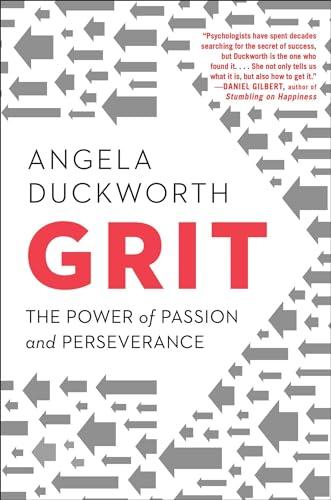
The Power of Passion and Perseverance
The book was repeatedly highlighted by Stephen Dubner and co‑host Angela Duckworth as a bestselling work that explains how perseverance and passion drive long‑term achievement. They described its core idea that grit—defined as sustained effort toward long‑term goals—can be cultivated, and several guests praised it as a valuable resource for personal and educational growth. Overall, the podcast consistently presented the title as a must‑read.
Angela Duckworth, a research psychologist at the University of Pennsylvania, is the author of the book Grit.
Angela, in case you don't know, is a research psychologist at the University of Pennsylvania and author of the book Grit.
It was mentioned that the book focuses on the value of persistence, of staying the course, and not giving up, and this is why so much of Duckworth's research has focused on the psychology of staying the course.
Our friend Angela Duckworth, a research psychologist at the University of Pennsylvania, wrote a book about this. It's called Grit, the Power of Passion and Perseverance.
I think the reason why there are all these aphorisms about not giving up and maybe why so much of my research has focused on the psychology of staying the course is that sometimes the road not taken, the track that you want to switch to, is appealing not because it is objectively better, but because it's objectively easier just in the short run.
In other words, we give up because we're lazy, or maybe impatient or intimidated, or we're scared to fail. That makes sense, doesn't it?
Duckworth is saying we might be better off by learning to tough it out.
Angela Duckworth, a psychologist at the University of Pennsylvania, was mentioned as the author of "Grit", and the book was mentioned in the context of her professional background.
Angela Duckworth is a psychologist at the University of Pennsylvania in Philadelphia. She's the author of the book Grit and she is my co-host on the No Stupid Questions podcast, which you should also be listening to.
It was mentioned that Angela Duckworth is the author of the book Grit, and that it was the origin point for her podcast, 'No Stupid Questions'.
A couple of years ago, I got to be good friends with Angela Duckworth, a psychologist at the University of Pennsylvania and author of the book, Grit.
It was discovered by Chris Bosh after receiving it as a Christmas gift from his coach. He mentioned reading it frequently and recommending it to others.
And that's how I discovered your book, Grit. And, oh man, Grit every day.
It was mentioned that Angela Duckworth is the author of Grit, which was alluded to as being a book she wrote. It was briefly mentioned in the context of her background and podcast co-hosting duties.
Angela Duckworth is a psychologist at the University of Pennsylvania in Philadelphia. She's the author of the book Grit, and she is my co-host on the No Stupid Questions podcast, which you should also be listening to.
It was described as a mega-bestseller, with the core idea being that high achievers across various fields possess a unique combination of perseverance and passion over extended periods, referred to as grit.
In 2016, you wrote a book called Grit that really touched a nerve in society. It became a mega bestseller.
The two minute version of Grit is that when you look at high achievers, so Olympic athletes and frankly, Steve, people like, oh, Levitt, people like you, entrepreneurs who are really successful across all these different fields, they have one thing in common.
Likely not the only thing, but one common denominator that I've studied as a psychologist is this combination of perseverance and passion over really long periods. That's what I call Grit.
And I think if you wanted a one word synonym, it would be stamina.
It was mentioned that a spin-off podcast, 'No Stupid Questions', was created based on a conversational question-asking episode featuring the book's author.
a few months ago, we tried something different, a conversational question-asking episode between me and Angela Duckworth, the University of Pennsylvania psychologist who wrote the book Grit.
Angela Duckworth's book, "Grit," was mentioned as a great book on passion and perseverance, and her work on interventions to increase student motivation was discussed.
Also joining us tonight as co-host, the University of Pennsylvania's psychology professor. She's also the author of the great book, Grit, The Power of Passion and Perseverance.
Angela Duckworth, the episode's co-host, was mentioned as the author of the book 'Grit', which was described as a longtime bestseller focusing on passion and perseverance.
Angela, if you don't know, is the author of the longtime bestseller Grit, the Power of Passion and Perseverance.
Angela Duckworth, the author of Grit, was the co-host of the podcast episode, and her work on grit, passion, and perseverance was discussed throughout.
Angela, here's what we know about you so far. We know that you are founder and CEO of The Character Lab. Correct.
You're best known for having written the book Grit.
Now you're the person that studies Grit, passion and perseverance, so I'm not going to fact check you on whether people stick with things or not.
It was mentioned that Angela Duckworth is the author of Grit: The Power of Passion and Perseverance and that she is a psychology professor at the University of Pennsylvania.
Joining us tonight as co-host, the author of Grit, The Power of Passion and Perseverance.
In your book, Angela, it's passion and pursuit, right?
The book Grit was mentioned in passing and defined as passion and perseverance in the context of achieving long-term goals. The book's relevance was related to behavioral science in the context of this podcast episode.
including people you've heard before on Freakonomics Radio, like Angela Duckworth, the Penn Psychology professor and author of Grit, and David Laibson, chair of the Harvard Economics Department. Grit is passion and perseverance for very long-term goals.
The book 'Grit' was previously discussed on the podcast and was mentioned as a bestselling book by Angela Duckworth, who also founded Character Lab.
You may know Duckworth from her bestselling book called Grit, which we discussed on Freakonomics Radio.
It was discussed and promoted by Angela Lee Duckworth, who defines grit as passion and perseverance for long-term goals, and suggests that it can be cultivated. The book explored the traits of gritty people, the importance of passion, practice, purpose and hope in achieving long-term goals.
I define Grit as passion and perseverance for especially long-term goals.
The message of the book is not that Grit is a good thing in particular. The message of the book is that like so many other things about us that are good, we can do something to intentionally cultivate Grit in ourselves and in others that we care about.
Oh, yes, here comes the self-promotion part. I am also author of a book called Grit, The Power of Passion and Perseverance.
I abbreviated it to 10 items in the book because I have discovered through personal experience that people are not very good at dividing by 12 to calculate their score.
I don't think that any of the measures that are currently available are appropriate for high stakes accountability policy, like whether a school is doing a good job educating their kids.
It was discussed as a book about passion and perseverance for long-term goals. The author's father's negativity about her lack of genius, and her journey to becoming a successful psychologist and author, were mentioned.
I am also author of a book called Grit, The Power of Passion and Perseverance.
I define Grit as passion and perseverance for especially long-term goals.
So the message of the book is not that Grit is a good thing in particular. The message of the book is that like so many other things about us that are good, we can do something to intentionally cultivate Grit in ourselves and in others that we care about.
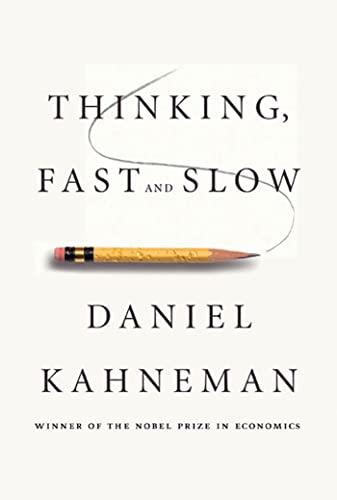
The hosts repeatedly highlighted the book as a seminal work that introduced the concepts of System 1 and System 2 thinking and explained cognitive biases such as the planning fallacy and blind spots. Stephen Dubner, Nate Silver, and several guests cited it as a modern guide to decision‑making and praised its impact on behavioral economics. Overall, the episode discussions portrayed the title as a highly influential and recommended read.
Daniel Kahneman, the author of "Thinking Fast and Slow", was a renowned psychologist and economist who revolutionized both fields. His influence was immense, and this book was a significant part of that.
Daniel Kahneman is perhaps best known as the author of Thinking Fast and Slow, but he also helped revolutionize the fields of both psychology and economics.
It was his 2011 book that made him famous, but it was his earlier research that revolutionized psychology and helped create the field of behavioral economics.
He became famous for his 2011 book Thinking Fast and Slow but it was his decades of earlier research, much of it done with his collaborator Amos Tversky,
The book was mentioned as a source for the concept of 'System 1' and 'System 2' thinking, which was used to explain how people can be both logical and superstitious.
You may be familiar with system one and system two from the book Thinking Fast and Slow by Daniel Kahneman.
It was mentioned that the book Thinking, Fast and Slow, contained a quote that illustrated the idea that people are unaware of what they do not know, which was discussed in the context of Dunning-Kruger effect.
He wrote, not only are we blind to the obvious, but we are blind to our blindness.
The planning fallacy was discussed and was mentioned as being a concept previously explored by Kahneman and Tversky, which is likely a reference to their book 'Thinking, Fast and Slow'.
The phenomenon even had a name, courtesy of the psychologists Danny Kahneman and Amos Tversky. They had called it the planning fallacy.
From an economic standpoint, this sounds backwards. You would think that larger size theoretically creates more specialization of labor and ultimately higher productivity.
If you realistically present to people what can be achieved in solving a problem, they will find that completely uninteresting. You can't get anywhere without some degree of overpromising.
The book was mentioned as having a parallel with Ray Dalio's emphasis on principled decision-making, suggesting that deliberate, reflective thinking ('thinking slow') leads to superior outcomes compared to rapid, intuitive choices.
I read your book. I don't know if you've thought about this or if others have said this to you, but I read this as a little bit of an analog to Danny Kahneman's book, Thinking Fast and Slow. Are you familiar with Danny and or his book?
It was mentioned that Kahneman and Tversky discussed the planning fallacy, and that Kahneman himself endorsed a degree of overpromising to get projects started.
If you realistically present to people what can be achieved in solving a problem, they will find that completely uninteresting. You can't get anywhere without some degree of overpromising.
It was discussed how Daniel Kahneman's book 'Thinking, Fast and Slow' brought increased attention to behavioral economics and its concepts.
Kahneman's book thinking fast and slow really opened a lot of eyes around the world
The book's concept of 'system one' and 'system two' thinking was referenced, illustrating how different environments can lead to varied automatic responses in individuals.
The research paper that Heller and the others would write is called 'Thinking Fast and Slow', which is the same name as Kahneman's 2011 book.
It was mentioned as a great guide to modern thinking, and was highlighted as one of Nate's favourite books.
You know, I kind of often talk about Daniel Kahneman and thinking fast and slow was kind of just, I think, a really great overall kind of modern guide to thinking, if that isn't a little too pretentious or too precious rather.
It was mentioned that the book discusses two different systems of thinking (System 1 & 2) and that it was used to illustrate how advertisers attempt to influence consumer decisions.
Sutherland here subscribes to the theories of Daniel Kahneman, the author of Thinking Fast and Slow, who suggests the brain engages in two distinct kinds of thinking, system one and system two, Kahneman calls it.
It was mentioned as a source that described being 'blind to our blindness', the tendency for people to think others are biased but not themselves.
The best description I've ever heard of this comes from Danny Kahneman, the Nobel-winning psychologist and author of Thinking Fast and Slow. He calls it being blind to our blindness.
Dubner referenced the wellknown work on dualprocess thinking as a "wonderful book" while discussing decisionmaking.
You may have heard. That's the title of a wonderful book by Daniel Kahneman.
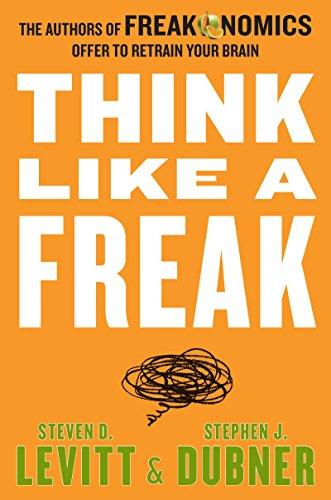
The Authors of Freakonomics Offer to Retrain Your Brain
The hosts repeatedly highlighted the new title, noting it was their third collaboration and that it encouraged readers to rethink problems, think like a child, and view failure as an ally. Dubner and Levitt promoted the launch with tours, a book‑club, and special offers, emphasizing its practical, how‑to style. They presented it as a key resource for listeners seeking fresh perspectives.
The hosts discussed their third book together, 'Think Like a Freak', referencing a chapter specifically about thinking like a child and its potential to unlock new perspectives and solutions.
We've just published our third book together, Think Like a Freak.
So I'm going to give you a childish answer to that question, which is that my second favorite chapter in the book is to think like a child.
It was mentioned in the context of a book tour that the authors, Stephen Levitt and Stephen Dubner, undertook to promote their book.
Last May, when Levitt and I published Think Like a Freak, we went on a long book tour, first in the US and the UK.
It was mentioned as the title of a new book related to the Freakonomics Radio podcast, which was to be discussed in a live Twitter chat.
On Monday, August 4th, I will be doing a live Twitter chat with iBooks at 4pm Eastern Time, 1pm Pacific Time. I will answer your questions about our new book, Think Like a Freak, about Freakonomics Radio, any question you want to throw at me.
It was mentioned as a book that uses the phrase "teaching your garden to weed itself" to describe the practice of using game theory to reveal information about people's actions.
In our book, Think Like a Freak, we give this practice a different name. We call it teaching your garden to weed itself.
The book's central theme was explored, emphasizing the importance of thinking critically rather than relying on autopilot. The authors also discussed how the reluctance to admit ignorance hinders learning and encouraged redefining problems.
The most important idea in your new book was the underlying principle that to Think Like a Freak, you must in fact think.
I love Glenn's question. I think this is super smart and really interesting and important. I think it's great.
I never would have thought this before I started working with companies. I never would have imagined that it is an IT problem.
I do love Glenn's question. I think this is super smart and really interesting and important. I think it's great.
So the minute you hear your name on this program, that means that you are going to get some Think Like a Freak swag.
The first installment of a book club for 'Think Like a Freak' was announced to be in the next Freakonomics Radio episode.
Hey, podcast listeners on the next Freakonomics Radio, the first installment of our Think Like a Freak book club will answer your questions about the first three chapters.
It was mentioned as a new book where the authors argued that failure should be celebrated rather than stigmatized, with the idea that it can lead to more opportunities.
In our new book, Think Like a Freak, we make the argument that perhaps we are not thinking clearly about failure. Maybe failure can be your friend.
The podcast mentioned it was inspired to write a chapter about quitting in their new book, Think Like a Freak.
We heard from a lot of listeners who told us that this episode inspired them to quit something and inspired us to write a chapter about quitting in our new book, Think Like a Freak.
It was mentioned as the third book published by Stephen Dubner and Steve Levitt together, with a chapter specifically discussing the benefits of thinking like a child in various fields.
We've just published our third book together, Think Like a Freak.
So I'm going to give you a childish answer to that question, which is that my second favorite chapter in the book is to think like a child.
And I think that the beauty of thinking like a child and the beauty of that chapter in our book is that sometimes doing things differently and simply and with a kind of joy and triviality leads you to a really special place.
The Freakonomics Radio hosts' new book, 'Think Like a Freak', was mentioned, along with a CBS Sunday Morning segment about it that was scheduled to air on May 4th.
Hey, podcast listeners, as you may have heard, our new book, Think Like a Freak is out on May 12th.
On May 4th, the CBS show Sunday Morning is scheduled to run a segment on us and the book.
The book 'Think Like a Freak' was mentioned and promoted with a free signed bookplate offer. It was discussed in relation to the podcast and its core themes, including the concept of selective outrage.
Hey podcast listeners, our new book, Think Like a Freak is out on May 12th. You can visit Freakonomics.com to learn more or pre-order a copy or 100 copies if you need them.
And happy news here, we are bringing back our free signed bookplate offer.
Which means you can turn a regular old copy of Think Like a Freak into a snazzy autographed copy.
It was mentioned as a new book being published on May 12th and listeners were encouraged to call in sick to read it.
Hey podcast listeners, don't forget our new book Think Like a Freak will be published on May 12th.
So if you think you need to set aside a little time on that day for some light reading, maybe you want to go ahead and call in sick right now just to get it out of the way.
It was mentioned as being published on May 12th in hardcover, ebook, audiobook, and large print formats. Preorders allowed listeners to receive the first chapter.
Hey podcast listeners, our new book, Think Like a Freak, will be published on May 12th as a hardcover ebook, audiobook, large print edition, you name it.
And if you preorder it in any format from any store, you can get the first chapter now delivered to your email inbox.
Remember our new book, Think Like a Freak is out on May 12th.
If you preorder it in any format from any bookstore, you can get the first chapter now.
It was described as a 'how-to' book, attempting a different style than their previous works, and was announced with upcoming book tours, a book club, and podcast episodes based on it.
The date? May 13th. Okay. The title of the book? Think Like a Freak.
But then we had this idea to do something that's more like a, almost like a how-to book, how to Think Like a Freak.
The full title is Think Like a Freak. The authors of Freakonomics offer to retrain your brain.
We are starting a Think Like a Freak book club right here on the podcast.
Hey, podcast listeners, as we mentioned at the top of the show, Levitt and I are putting out a new book called Think Like a Freak on May 13th.
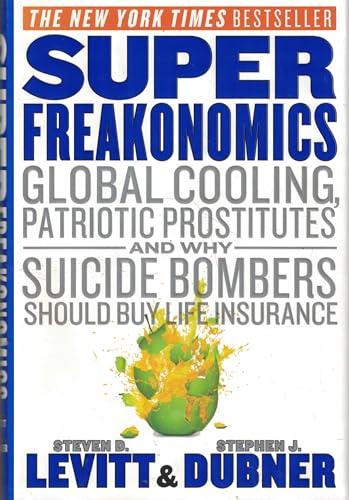
Global Cooling, Patriotic Prostitutes, and Why Suicide Bombers Should Buy Life Insurance
The book was repeatedly cited as a source of unconventional economic anecdotes, from a calculation about baseball lineage to a chapter on altruism and a prediction about carbon emissions that proved accurate. Hosts Stephen Dubner and Steve Levitt highlighted its mix of quirky stories and data‑driven insights, even acknowledging that one terrorist‑life‑insurance tale was a fabricated example. Overall, they treated the title as a notable reference for surprising, thought‑provoking ideas.
The book included a chapter called Unbelievable Stories About Apathy and Altruism, which challenged some of the initial findings about altruism in dictator game experiments.
We wrote about this in our book Superfreakonomics in a chapter called Unbelievable Stories About Apathy and Altruism.
It was mentioned as a book co-authored with Stephen Dubner, where they predicted that controlling carbon emissions would be difficult due to private incentives, a prediction that unfortunately proved accurate.
And a prediction that I made that I wish hadn't been true, but turned out to be quite true was with Stephen Dubner in the book, Super Freakonomics. We suggested that because of private incentives, the attempts to rein in carbon emissions just weren't going to work.
It was mentioned as a book that contained a calculation suggesting a son of a Major League Baseball player is significantly more likely to also play in the major leagues.
In Superfreakonomics, one of the books I wrote with the economist Steve Levitt, we performed a rough calculation showing that if a Major League Baseball player has a son, that boy is about 800 times more likely than a random boy to also make the majors.
It was mentioned that the speaker writes books with Steve Levitt, one of which is SuperFreakonomics.
Steve Leavitt is the guy I write books with, freakonomics and Super Freakonomics
It was mentioned in passing as a book that contained a chapter about climate change, which resulted in a wave of negative online reactions. It was also described as having a chapter about climate change.
It just reminds me, I don't know why, of when Superfreak Analytics came out, and we had this stuff on climate change.
The podcast discussed a story from this book about why terrorists should buy life insurance as a way to catch them via reverse psychology, though it later admitted that was a fabrication.
You remember that story we wrote in Super Freakonomics about why terrorists should buy life insurance?
And that was whether or not a given bank customer had bought life insurance from that bank.
And that was the sort of logic we threw out in the book.
And this whole thing in the Superfreeconomics book about life insurance was just a complete and total lie.
It was mentioned in relation to Sudhir Venkatesh's work as a grad student in Chicago, who embedded himself with a crack gang, as well as his later work surveying street prostitutes in the book.
We wrote about him in Super Freakonomics, too. He did an extensive survey of street prostitutes.
It was mentioned that after writing this book, the authors decided to not write the same book repeatedly and tried a different approach.
And we weren't sure if we'd ever write another book.
It was mentioned towards the end of the episode in the context of the chapter on altruism and how people behave differently when they know they're being watched.
So in Superfreak, there was a chapter on altruism. And we explored how you know when altruism is real, and how do you know whether it's sometimes just the product of scrutiny. You do nice things because you know that you're being watched.
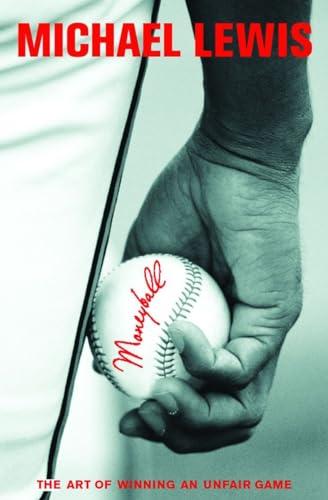
The Art of Winning an Unfair Game
The title was highlighted as a seminal example of how data‑driven thinking can level the playing field, illustrating the Oakland A's use of statistics to find undervalued players and out‑perform richer teams. Hosts Stephen Dubner and Michael Lewis repeatedly referenced it, noting its 20th‑anniversary significance, its easy‑to‑read style, and recommending listeners explore the related episode and book‑club discussion. The overall tone was praise for its influence on both sports and broader market thinking.
The book was about how the Oakland A's baseball team managed to function on a shoestring budget, and about how the market for baseball players misvalued them.
Books like Moneyball, which was about the way the Oakland A's managed to function on a shoestring budget in Major League Baseball and the book was in my mind really about the way the market for baseball players misvalued those players.
The problem we're trying to solve is that there are rich teams and there are poor teams. Then there's 50 feet of crap and then there's us.
I was astonished that anybody bothered to make Moneyball much less The Big Short and so my experience with the movie business is peculiar because what seems to happen is I write books that are ever harder to turn into movies and they work ever harder to make them into movies.
The heart of the story was that markets can really pretty dramatically misvalue and misjudge people. And if a baseball player could be misjudged, who couldn't be kind of thing?
A discussion about this book was aired on a Freakonomics Radio episode last year.
If you need some Michael Lewis before then, you might want to listen to an episode we made with him last year on the 20th anniversary of his book Moneyball.
The podcast host recommended an episode they made with Michael Lewis last year on the 20th anniversary of his book Moneyball.
If you need some Michael Lewis before then, you might want to listen to an episode we made with him last year on the 20th anniversary of his book Moneyball.
We called it Did Michael Lewis Just Get Lucky With Moneyball?
It was discussed as a book about the Oakland A's baseball team and how they used data to find undervalued players and create a successful team, despite having a lower budget than other teams.
I wrote this book because I fell in love with a story the story concerned a small group of undervalued Professional baseball players and executives many of whom had been rejected as unfit for the big leagues
This book is called money ball.
The statistics enabled you to find your way past all sorts of site-based scouting prejudices
One moral of the money ball story was to not trust your gut so much the other moral was that history is one long battle between Traditionalists and new thinkers
If gross miscalculations of a person's value could occur on a baseball field before a live audience of 30,000 and a television audience of millions more What did that say about the measurement of performance in other lines of work?
It was mentioned as one of Michael Lewis's most influential books, with its 20th anniversary being acknowledged in the podcast.
The book is Moneyball, the art of winning an unfair game.
It was discussed as an example of using data to gain an advantage, particularly in the context of baseball team management, and was slated for a future episode of the podcast's book club.
Even if you don't know the book or the movie, even if you didn't know there was a book or a movie, you probably know the word, Moneyball.
That was the title of a book published in 2003 by Michael Lewis. The subtitle is The Art of Winning an Unfair Game.
It tells the story of a baseball executive, the Oakland A's general manager Billy Bean, who realized he couldn't compete with the big budgets of the bigger teams.
So when it came to assembling his roster, he put his money on smaller bets, smarter bets, statistically sound bets.
Next year will mark the 20th anniversary of Lewis's book. So we are going to interview him for an episode of our Freakonomics Radio Book Club.
It was mentioned as a book about how the Oakland A's baseball team used statistics to find undervalued players, and was surprisingly adapted into a successful movie.
Books like Moneyball. Which was about the way the Oakland A's managed to function on a shoestring budget in Major League Baseball.
The problem we're trying to solve is that there are rich teams and there are poor teams. Then there's 50 feet of crap and then there's us.
The heart of the story was that markets can really pretty dramatically misvalue and misjudge people. And if a baseball player could be misjudged, who couldn't be? Kind of thing.
And they said very sweetly that this is a good story Michael Lewis has written, but he doesn't seem to realize that these two guys named Danny Kahneman and Amos Tversky, psychologists, have explored the biases in the human mind that lead people to make these sorts of misjudgments.
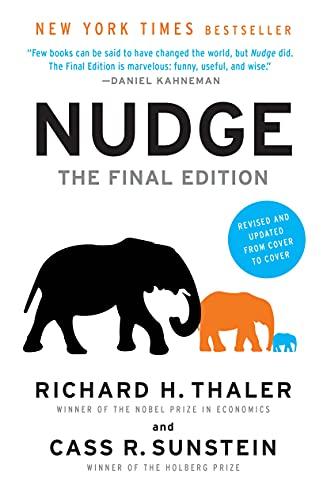
The book was highlighted across multiple episodes as the foundational text for the nudge movement, with Stephen Dubner and co‑hosts describing it as an excellent, practical guide to applying behavioral economics to health, wealth, happiness, climate policy, retirement savings, and government programs. They noted its influence on the creation of "nudge units" worldwide and praised the updated edition for expanding its insights. The overall tone was an enthusiastic endorsement of its impact and usefulness.
It's about how we can nudge people to make better choices.
They're calling them Nudge units after Dick Thaler and Cass Sunstein's work but his job is really to create environments that will lead people to make choices that are good for them and that really comes out of Danny and Amos's work
It was discussed at length, including the updated edition, and how its principles, particularly nudging, could apply to climate change and retirement savings decisions, along with the authors' contrasting styles.
Back in 2008, Thaler published a book called Nudge, improving decisions about health, wealth and happiness. It was co-authored with the legal scholar Cass Sunstein.
A Nudge, as we will use the term, is any aspect of the choice architecture that alters people's behavior in a predictable way without forbidding any options or significantly changing their economic incentives.
The title of the new edition is Nudge, the final edition.
Here's a relevant passage from the new edition of Nudge. It addresses the concern that carbon taxes will necessarily hurt the economy.
The software our publishers provided when we were proofreading the galleys of this book was so sludge ridden that Sunstein gave up and typed up a list of changes.
Richard Thaler, a Nobel Prize winner in economics, wrote this book on behavioral science and how to nudge people towards better outcomes, and a new edition of this book was recently released.
There's so much low-hanging fruit because so many things are done so stupidly...The economist Richard Thaler won a Nobel Prize for showing the world how to Nudge itself toward a better future. We can't solve climate change with nudging, but we can't solve it without nudging. And he's just published an updated edition of his landmark 2008 book Nudge.
The book was discussed regarding the 'nudge' movement, and Richard Thaler's work on retirement savings via automatic enrolment, which was deemed a success.
Also as coauthor of the wonderful book Nudge and the resultant Nudge movement.
It was mentioned in relation to the Nudge Unit, which was named after this book. The book was said to have been written by American academics.
It came to be called the Nudge Unit after the book of that name by the American academics Richard Thaler and Cass Sunstein.
It was mentioned as a book that has become a bit of a bible in the field of behavioral insights, which discusses how nudges can help governments in various aspects, including crime prevention.
They're also known as the Nudge Unit after the book Nudge by Richard Thaler and Cass Sunstein.
It was described as an excellent book that details how behavioral economics can be practically applied to improve decisions about health, wealth, and happiness, and it was the inspiration for the British government's 'nudge unit'.
Dick is the co-author of an excellent book called Nudge, Improving Decisions About Health, Wealth and Happiness, which shows how behavioral economics can be used in the real world.
so-called meaning they named the unit after this book.
It was described as an excellent book that demonstrates how behavioral economics can be implemented in the real world, particularly in regards to health, wealth, and happiness.
Dick is the co-author of an excellent book called Nudge, Improving Decisions About Health, Wealth and Happiness, which shows how behavioral economics can be used in the real world.
The book 'Nudge' was mentioned as the origin of the term 'nudge unit' for the British government's Behavioral Insights Team. It was discussed in the context of using behavioral insights to design better and cheaper policies.
They are more informally called the Nudge unit after the book Nudge by the American academics Richard Thaler and Cass Sunstein.
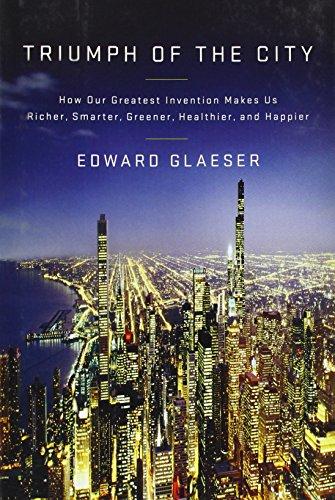
How Our Greatest Invention Makes Us Richer, Smarter, Greener, Healthier, and Happier
The hosts repeatedly highlighted the title as a key argument that cities are humanity's greatest invention, emphasizing its claim that urban life makes us richer, smarter, greener, healthier and happier. Stephen Dubner introduced it, and Zach Ware noted it had inspired the Downtown Project, while the author even discussed its ideas with Zappos staff. The overall tone was enthusiastic endorsement of the book's perspective.
It was a manifesto published by Ed Glazer that served as inspiration for the Downtown Project, discussing the positive impact of cities on various aspects of life. The project was partially inspired by it and Glazer himself visited and gave a talk to Zappos employees.
One of his main inspirations was a Harvard economist named Ed Glazer, who four years ago published a manifesto called Triumph of the City.
The work that we first found that really I think sowed the seeds for what would become the Downtown Project was Ed Glazer's book.
I was very flattered when Tony reached out to me. He read my book and seems to have been excited by it, and it's deeply flattering obviously.
It was discussed as a book that claims cities are humanity's greatest invention, boosting productivity, intelligence, environmental friendliness, health, and happiness, among other things. The podcast host and guest then discuss the book's claims.
In 2011, Glaeser published a book called Triumph of the City. How our greatest invention makes us richer, smarter, greener, healthier and happier.
You call the city our greatest invention, which means you're putting it ahead of mathematics, the computer, antibiotics, rum raisin ice cream. How so?
It was mentioned while discussing how cities are one of humanity's greatest inventions, contributing to various aspects of well-being.
He's the author of a book called Triumph of the City, how our greatest invention makes us richer, smarter, greener, healthier, and happier.
It was mentioned as the work of a Harvard economist, an expert on cities, who believes they are one of humanity's greatest inventions.
He's the author of a book called Triumph of the City, how our greatest invention makes us richer, smarter, greener, healthier, and happier.
It was mentioned as a manifesto that served as an inspiration for the Downtown Project, focusing on the idea that cities are our greatest invention, leading to a variety of benefits.
One of his main inspirations was a Harvard economist named Ed Glazer, who four years ago published a manifesto called Triumph of the City. How our greatest invention makes us richer, smarter, greener, healthier, and happier.
The work that we first found that really, I think, sowed the seeds for what would become the downtown project was Ed Glazer's book.
I was very flattered when Tony reached out to me. He read my book and seems to have been excited by it.
It was mentioned as a book by an economist at Harvard. It was said to be titled 'Triumph of the City', not 'Triumph of the Nation State'.
He's also the author of a book called Triumph of the City.
Notably, the title of this book is not Triumph of the Nation State.
It was mentioned as a book written by an expert on cities who also believes that they are one of humanity's best inventions, and it was said that it makes us richer, smarter, greener, healthier and happier.
He's the author of a book called Triumph of the City, how our greatest invention makes us richer, smarter, greener, healthier and happier.
It was discussed as an example of a book that highlights the importance of cities and how they are one of humanity's best inventions, and also touched upon the topic of infrastructure and maintenance in the context of city development.
He's the author of a book called Triumph of the City, how our greatest invention makes us richer, smarter, greener, healthier and happier.

The hosts highlighted that the nonfiction work co‑authored with an NYU sociologist examined how people meet and mate today versus the past, noting its bestseller status and intriguing statistics such as the 1967 study on women marrying without love. Stephen Dubner praised it as a good, fascinating deep dive that revealed surprising patterns in modern romance. The overall tone was an enthusiastic endorsement of the title.
It was a nonfiction book co-authored with an NYU sociologist, Eric Kleinenberg, and explored how people meet and mate in the modern world compared to the past. It debuted at number two on the New York Times Best Seller list.
And he just published his first book, a nonfiction book with an NYU sociologist, Eric Kleinenberg, as a co-author. It's called Modern Romance, and it debuted at number two on the Times Bestseller List.
It's about how people meet and mate in the modern world and how that is different from the past.
It was a non-fiction book co-written with Eric Kleinenberg, exploring modern dating and mating in comparison to the past, including the shift from companion marriage to soulmate marriage.
It's about how people meet and mate in the modern world and how that is different from the past.
And it's good. And I mean, I guess I'm thinking if I could do what you do, I don't know if I'd want to waste my time writing books.
Considering that his new book, Modern Romance, is about finding love in the digital age, his answer might surprise you.
Listen, really, congratulations on the book. It's just fantastic that it's good and that it's popular, and I wish you all the best with it and with all your other stuff.
It was co-authored with an NYU sociologist and discussed how people meet and mate in the modern world, contrasting it with the past. It debuted at number two on the New York Times Bestseller List.
It's about how people meet and mate in the modern world and how that is different from the past.
And it's good.
Considering that his new book, Modern Romance, is about finding love in the digital age, his answer might surprise you.
It was mentioned that a study in 1967 found 76% of women would marry someone they weren't romantically in love with, and the speaker also discussed why Ansari doesn't take pictures with fans.
He talks about his book, Modern Romance.
To me, the craziest statistic in the book is in 1967, there was a study they did where they found 76% of women said they would marry someone that they are not romantically in love with.
It was discussed in relation to a statistic from 1967, which showed 76% of women would marry someone they weren't in love with, and the reasons behind this were touched upon.
He talks about his book, Modern Romance.
To me, the craziest statistic in the book is in 1967, there was a study they did where they found 76% of women said they would marry someone that they are not romantically in love with.
It was discussed, referencing a statistic from 1967, that a high percentage of women were willing to marry without romantic love, and it was briefly mentioned in relation to the podcast host's internet consumption.
He talks about his book, Modern Romance.
To me, the craziest statistic in the book is in 1967, there was a study they did where they found 76% of women said they would marry someone that they are not romantically in love with.
It was written with an NYU sociologist and explored how people meet and mate in the modern world, compared to the past, and the authors felt they discovered interesting things even with some prior knowledge of the field.
It's about how people meet and mate in the modern world and how that is different from the past.
But I feel like by going really deep into a relatively narrow topic, you came up with stuff that was just even if you know a little bit of literature, it was really interesting.
And it was like, yeah, one out of 12 people married someone in the same building. Eighty some percent. It was the same city. One out of three. It was like within a five block radius. And it was really startling.
And you just think about it now. It's like no one marries someone from the same city. You like meet people throughout your whole life, like that are from different parts of the world. And you go to college.
To me, the craziest statistic in the book, the craziest one that blows my mind the most is in 1967, there was a study they did where they found 76 percent of women said they would marry someone that they are not romantically in love with.
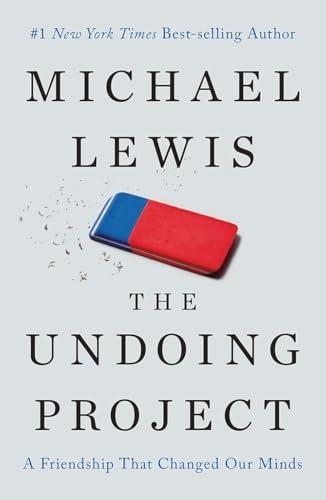
A Friendship That Changed Our Minds
The book was highlighted as a compelling narrative about the partnership of Kahneman and Tversky that reshaped our understanding of decision‑making and gave rise to behavioral economics. Hosts Stephen Dubner and Max Bazerman praised Michael Lewis's engaging writing style and described the title as a vivid portrait of two scholars overturning false assumptions about human nature. The discussion consistently presented it as a highly readable and insightful account of a thinking revolution.
It tells the story of the collaboration between Kahneman and Tversky, and how their friendship changed how we think about decision-making.
In 2016 the journalist Michael Lewis told the Kahneman Tversky story in his book The Undoing Project, a friendship that changed our minds.
His latest book may pose the biggest challenge yet.
It is called The Undoing Project and it's about a pair of academics in a room alone for a few decades writing papers.
The Undoing Project, the title of Michael Lewis' book, was also the name of the last project that Tversky and Kahneman worked on together.
When I saw the phrase, I thought that's a good description of their enterprise because what these guys are engaged in doing is undoing a false view of human nature and the way the mind works.
It was mentioned as a book about Danny Kahneman and Amos Tversky and their research in behavioral economics, which was inspired by 'Moneyball' and the misvaluation of people in markets.
one of your other books excellent book is called The Undoing Project about Danny Kahneman Amos Tversky
Michael Lewis's book The Undoing Project was about the Kahneman Tversky partnership and their research
It was discussed on a previous Freakonomics episode, as it details the work of Danny Kahneman and Amos Tversky and the beginning of the behavioral economics movement.
The two of them were the subject of Michael Lewis's book, The Undoing Project, which Lewis discussed on this program in an episode called The Men Who Started a Thinking Revolution.
It was discussed as a book about two Israeli psychologists who redefined how the human mind works and developed behavioral economics, and despite being hard to adapt to film, eventually became a successful one.
His latest book may pose the biggest challenge yet. It is called The Undoing Project and it's about a pair of academics in a room alone for a few decades writing papers.
The Undoing Project began to germinate more than a decade ago.
The Undoing Project, the title of Michael Lewis's book, was also the name of the last project that Tversky and Kahneman worked on together.
When I saw the phrase, I thought, that's a good description of their enterprise, because what these guys are engaged in doing is undoing a false view of human nature and the way the mind works.
Michael Lewis's book, The Undoing Project, is a portrait of two men who came together to rewrite many of the assumptions about how people think and make decisions.
The book was repeatedly highlighted as the founding text of economics, with the hosts using its ideas to frame modern debates about AI, market power, and trade policy. They noted its historical critique of monopolistic firms like the East India Company and emphasized its arguments about division of labor and the invisible hand as essential for understanding economic systems. The discussion conveyed a strong endorsement of the title as a crucial reference for anyone interested in economic theory.
It was the founding text of economics, and the questions about AI today are essentially variations of the same question: when things change, why do some people win and others lose?
It's right there in the title of the founding text of the field, Adam Smith's book, An Inquiry into the Nature and Causes of the Wealth of Nations.
It was frequently referenced throughout the episode, particularly regarding the East India Company and how its actions contradict the principles of a free market economy.
They know about The Wealth of Nations and they know that Margaret Thatcher, the enemy, always had a copy of Wealth of Nations, the legend goes, in her handbag.
She didn't read the first book, The Theory of Moral Sentiments, clearly.
But she read the second one and she did use that as an authority to promote her economic theories and activities and policies.
When Adam Smith was writing The Wealth of Nations in the mid-18th century, it wasn't supermarkets he was worried about. It was trading firms like the English East India Company, which grew so massive that it began acting like a sovereign, as Smith put it.
Writing in The Wealth of Nations, Smith blamed the severity of the famine on the East India Company's improper regulations and injudicious restraints.
Smith's second and final book, published in 1776, was a polemic against restrictive trade practices. It was written for political leaders of the day and became a blueprint for the science of political economy in the US.
By preferring the support of domestic to that of foreign industry, he intends only his own security. And by directing that industry in such a manner as its produce may be of the greatest value, he intends only his own gain. And he is in this, as in many other cases, led by an invisible hand to promote an end which was no part of his intention.
Great Britain have for more than a century past amused the people with the imagination that they possessed a great empire on the west side of the Atlantic. This empire, however, has hitherto existed in imagination only.
It has hitherto been not an empire, but the project of an empire, not a gold mine, but the project of a gold mine.
A project which has cost, which continues to cost, and which if pursued in the same way as it has been hitherto, is likely to cost immense expense without being likely to bring any profit.
For a very small expense, the public can facilitate, can encourage, and can even impose upon almost the whole body of the people the necessity of acquiring those most essential parts of education.
It was described as a book that explored national wealth and the global economy, focusing on production and output. It was also said to be an attack on the entire commercial system of Great Britain.
If you go at it with the mindset that this is a book of economics, the way that we understand the field of economics today, you're going to narrow your field of vision.
What was Smith's primary purpose of publishing that book or what did he hope would come of it? I think that Smith is hoping that educated readers will understand that national wealth is not measured in terms of gold and silver coin, and that actually you need to pay attention to output. You need to pay attention to how people are producing and where they're producing and what they're producing.
It is not from the benevolence of the butcher, the brewer, or the baker that we expect our dinner but from their regard to their own interest. We address ourselves not to their humanity but to their self-love.
The Wealth of Nations is an attack on the entire commercial system of Great Britain?
By telling a small story about the pin factory, Adam Smith was making a larger argument about some of the ingredients required for a thriving economy. Division in labor and the division of labor.
The podcast highlighted Adam Smith's 1776 treatise as the source material for David Lang's new oratorio, noting how the book's ideas about labor, trade and money inspired the composition.
You may recognize that title. It is a book published in 1776 by the Scotsman Adam Smith, who is widely seen as the father of modern economics, and some people consider The Wealth of Nations a sacred text of capitalism.
By the time I first spoke with David Lang, he had finished writing Wealth of Nations, the score had been distributed, and rehearsals would start soon.
I wasn't going to read the book unless I had a gig to read the book. It's a long book. It's a long book. And it's, you know, 18th century language. The language is very hard, and there's a lot of stuff that I wouldn't have read if I wasn't reading it for purpose.
And the piece we're talking about is Lang's new oratorio, The Wealth of Nations, which repurposes text from the Adam Smith book of the same name.
Lang's music ... a passage from one of the most famous lines in Wealth of Nations. It is not from the benevolence of the butcher, the brewer, or the baker that we expect our dinner, Adam Smith writes, but from their regard to their own interest.
The transcript repeatedly referenced Adam Smith's 1776 classic, noting that Lang's new oratorio was based on its text and that its ideas were still seen as relevant to modern economics.
At the end of March, the composer David Lang debuted a modern piece of music set to a 250-year-old book, Adam Smith's The Wealth of Nations.
The math and aftermath of Wealth of Nations, starting now.
I caught up with David Lang about a week after the last of the four performances of The Wealth of Nations, and I asked what it felt like to work on a big new piece like this for years, and then hear it come to life, and then go away.
To what degree is your new Oratorio Wealth of Nations a, quote, religious piece?
Movement 18, the final section, you go back to the text of Adam Smith.
The Story of Success
The title was highlighted as a classic that introduced listeners to the 10,000‑hour rule and reshaped thinking about success by emphasizing chance, culture, and family. Chris Bosh mentioned receiving it as a gift, while Stephen Dubner and Malcolm Gladwell discussed its influence and debated the accuracy of its interpretation of deliberate practice. Overall, the podcast treated the book as a pivotal, highly regarded work despite noting some oversimplifications.
It was mentioned as one of the classic books Chris Bosh enjoyed reading. His coach gifted him this book and he had the typical reaction, surprise at a tall black athlete reading.
Outliers, you know, the classics.
And he gave me Outliers and I was like, man, thanks.
It was mentioned in relation to the 10,000-hour rule, with a discussion on whether or not the book's interpretation of this rule aligns with Anders Ericsson's research. Some discussion on the book's interpretation of the Beatles' success was had.
Most people who have heard of the 10,000 hour rule heard of it via the book Outliers by Malcolm Gladwell.
I think he's really done something very important, helping people see the necessity of this extended training period before you reach high levels of performance.
But I think there's really nothing magical about 10,000 hours.
One example that you give that Malcolm Gladwell writes about in Outliers that you say looks good on first glance, maybe to a layperson, but falls apart upon inspection is the Beatles playing all those nights in clubs in Hamburg.
And there's a sentence in, I believe it's the chapter called the 10,000 hour rule in Outliers, where you write that 10,000 hours is the magic number of greatness.
It was discussed in the context of deliberate practice, specifically the 10,000-hour rule, which is featured in the book, as a way to improve at any skill.
The kind of deliberate practice that kind of went viral when Malcolm Gladwell wrote Outliers.
It was discussed how the book's main thesis was to move away from the individualistic notion of success and instead highlight the role of chance, culture, and family in achieving success. The 10,000-hour rule was also discussed as a key takeaway from the book.
The point of Outliers, I mean, there's a number of points, but one is that I wanted people to move away from the notion of success as something individual.
And I wanted to get people to understand that a lot of success has to do with chance, with the contribution of your culture, your generation, your family.
I agree that that would be in the average takeaway.
The 10,000 hour stuff that I put in Outliers was really only intended to perform a very specific narrative function or not narrative function, but kind of argumentative function, which was to me, the point of 10,000 hours is if it takes that long to be good, you can't do it by yourself.
So there's a sentence in, I believe it's the chapter called the 10,000 hour rule in Outliers, where you write that 10,000 hours is the magic number of greatness.
It was discussed in terms of the 10,000-hour rule that it popularized, with the podcast host noting a disagreement between Gladwell and Ericsson over the nuances and interpretation of that rule.
You may have heard of the 10,000-hour rule, the idea that you need to practice for 10,000 hours to become great at something.
That idea originates from the research of Anders Ericsson and his colleagues.
Most people who have heard of the 10,000 hour rule heard of it via the book Outliers by Malcolm Gladwell.
Now, right, Gladwell basically thought that was kind of an interesting magical number and suggested that the key here is to reach that 10,000 hours.
The 10,000 hours stuff that I put in Outliers was really only intended to perform a very specific narrative function or not narrative function but argumentative function.
Mastering the Elements of Good Cooking
The title was highlighted for its unusually long development, taking over a decade from conception to publication and requiring about three and a half years of intensive writing. Host Stephen Dubner and author Samin Nosrat discussed how the book became a bestseller, sold over a million copies, won a James Beard award, and was adapted into a popular Netflix series, while also noting the pressure Nosrat felt to follow it up with a second work. The conversation conveyed strong admiration for the book’s impact and originality.
It was discussed in detail, including its creation process spanning several years, and the challenges faced by the author during writing and promotion.
I wrote a book called Salt, Fat, Acid, Heat.
So I wrote a book called Salt, Fat, Acid, Heat. That took me a very long time to write.
I loved your first book.
I already did that.
I'm enough. And what I have to say is enough. And that's okay.
It took almost two decades from initial ideation to publishing, with a significant portion of the writing completed over three and a half years during the COVID pandemic, and was described as a gift from the author to the world.
I wrote a book called Salt, Fat, Acid, Heat.
So I wrote a book called Salt, Fat, Acid, Heat. That took me a very long time to write.
And I had the idea for that book probably sometime around 1999 or 2000. And that book came out in 2017.
The idea, the germination of the idea to the publishing of the book, that's how long it took. The act of writing was about three and a half years maybe.
I loved your first book.
It was a long-gestation project, taking over 17 years from initial conception to publication, with the writing itself taking around three and a half years. It was also adapted into a Netflix series.
I wrote a book called Salt, Fat, Acid, Heat.
I wrote a book called Salt, Fat, Acid, Heat. That took me a very long time to write.
And I had the idea for that book probably sometime around 1999 or 2000. And that book came out in 2017.
The idea, the germination of the idea to the publishing of the book, that's how long it took. The act of writing was about three and a half years maybe.
on behalf of all your readers and fans, of which I am one, I loved your first book.
It was a very novel and successful cookbook that took many years to create. The author was interviewed and discussed the pressures of creating a second book after its initial success.
I wrote a book called Salt, Fat, Acid, Heat that took me a very long time to write.
Salt, Fat, Acid, Heat published in 2017 sold more than a million copies in the US alone.
Yeah, I hated that paper. I found it really insulting.
I mean, it's just like hit me where it hurts, you know?
Oh, making a book is truly the worst thing in the world. It's the hardest thing in the world.
It was a novel cookbook that took many years to write and was very successful, selling over a million copies and adapted into a Netflix series, but the author is struggling with the pressure to produce another one.
I wrote a book called Salt, Fat, Acid, Heat that took me a very long time to write.
Salt, Fat, Acid, Heat published in 2017 sold more than a million copies in the US alone.
Yeah, I hated that paper. I mean, it hit me where it hurts, you know?
Oh, making a book is truly the worst thing in the world. It's the hardest thing in the world.
It would kill my soul to be an accountant.
It was the first book by Samin Nasrat, which was extremely novel and a huge success, leading to a Netflix series. Despite winning a James Beard award, it is taking Nasrat a long time to produce a second cookbook.
I wrote a book called Salt, Fat, Acid, Heat that took me a very long time to write.
Salt, Fat, Acid, Heat published in 2017 sold more than a million copies in the US alone. And it was turned into a popular Netflix series starring Nasrat.
Salt, Fat, Acid, Heat is about cooking, but it's also about Nasrat herself and the history of cooking and a lot more.
That's how long it took. The act of writing, I think, was about three and a half years maybe.
Yeah, I hated that paper. I mean, it's just like hit me where it hurts, you know?
What Dogs See, Smell, and Know
The book was repeatedly highlighted by Stephen Dubner and author Alexandra Horowitz as a bestseller and a classic that reveals dogs' senses, social skills, and subjective experience. It was praised for giving listeners a glimpse into the canine point of view and was chosen for the Freakonomics Radio Book Club, with the host noting he loved reading it a second time. Across episodes, the discussion emphasized its relevance for dog owners, especially during the pandemic surge of new puppies.
It was previously mentioned and discussed on the Freakonomics Radio Book Club, with the host rereading it and enjoying it even more the second time.
Maybe a year and a half ago, we had you on Freakonomics Radio in an episode of the Freakonomics Radio Book Club, and we talked about your first book, Inside of a Dog, which I had read years ago and loved, and then reread it and loved it even more.
It was Alexandra Horowitz's first book, published in 2009, and became a bestseller. The podcast discussed the book's exploration of dog cognition, including their senses, social skills, and communication.
I've gotten inside of the dog and have glimpsed the dog's point of view. You can do the same.
If you have a dog in the room with you, what you see in that great furry pile of dogness is about to change.
Inside of a Dog was Horowitz's first book. It was published in 2009 and it was a significant bestseller. Now it's considered a classic.
It perplexes me that some of the questions I have most often been asked about dogs and that I have about my own dog are not addressed by research on matters of personality, personal experience, emotions and simply what they think about.
The questions are typically of two kinds. What does the dog know? And what is it like to be a dog?
It was described as a wonderful book by the author who runs a dog cognition lab at Barnard College, offering insights into a dog's perspective.
Alexandra Horowitz, who runs a dog cognition lab at Barnard College, is the author of a wonderful book called Inside of a Dog.
It was selected as the next book for the Freakonomics Radio Book Club, with a focus on the increased relevance due to pandemic puppies and the host's personal enjoyment of the book.
The next book club episode we're planning will have me as host again. If you'd like to read that book ahead of time, our selection will be Inside of a Dog, What Dogs See, Smell and Know by Alexandra Horowitz.
Alexandra Horowitz's book, 'Inside of a Dog', was mentioned as one of her works exploring dog cognition and behaviour, contributing to the wider field of comparative psychology.
Alexandra Horowitz has written a couple of fascinating books, Inside of a Dog and Being a Dog.
Alexandra Horowitz's book, 'Inside of a Dog', was mentioned as one of her works exploring canine cognition and behavior, helping to understand the perspective of dogs.
Horowitz has written a couple of fascinating books, Inside of a Dog and Being a Dog.
The Collapse and Revival of American Community
The book was highlighted as a landmark, seminal work on social capital that documents the decline of community involvement in the United States since the 1960s. Stephen Dubner referenced it repeatedly as a key source for understanding social networks and their policy implications, while Mark Zuckerberg cited its relevance to his own ideas about community membership. The discussion emphasized the book’s influence on how scholars and practitioners think about the value of social connections and their impact on upward mobility.
It was discussed as a landmark book on social capital, which was published in 2000. The author had started thinking about the concept decades earlier, and it was initially inspired by a question about Italian politics.
Putnam is also the author of the landmark book Bowling Alone, which was published in 2000.
The book's themes were discussed by Mark Zuckerberg, relating to community membership and its importance. It was described as seminal work in the field.
Putnam's work shares a lot of the themes that I was just talking about today.
He wrote some of the seminal work on community membership and did some of the longest ranging studies on that.
It was discussed as a landmark book published in 2000 that explores social capital and how it has declined in the US. Putnam had begun thinking about this topic decades before.
Putnam is also the author of the landmark book Bowling Alone, which was published in 2000.
It was discussed as an example of social capital, which was explained as the idea of whether a community would help you when needed, and how this affects upward mobility.
Now this concept of social capital, as you may know, Stephen was popularized in a very well-known book by Bob Putnam called Bowling Alone.
The reason for the title of that book is social capital is notoriously difficult to measure.
It is that social networks have value.
So I was amazed to find, I remember actually discussing this with Bob in his office at Harvard that the number of bowling alleys is actually very highly correlated with the rates of upward mobility in our own data.
It was discussed in the context of social capital decline in the US, starting in the 1960s, as people became more isolated from community activities and organizations.
Putnam is also the author of the landmark book Bowling Alone, which was published in 2000.
That's a really enormous effect David Halpern again from the British government's behavioral insights team as Obvious as the benefits of social capital might seem we almost hardly seem to notice that it's there Says incredibly consequential and we see it in lots of areas of policy that we touch on
In other words, would it be in his words a fancy television? In other words, it will isolate us more and more or would it be a fancy telephone and would connect us more and more Because technology has both those capabilities
Putnam found that social capital was relatively low in the US in the early 1900s and rose fairly steadily through the 1960s But that's when the decline began.
But he warns it's not easy to do diversity diversity brings out the turtle in us That in a more diverse setting everybody kind of pulls in and disconnects from their neighbors
Inside the Doomsday Machine
The hosts highlighted the book as one of Michael Lewis's most popular and insightful nonfiction works, praising its clear, pleasurable writing about the 2008 housing bubble and its surprising film adaptation. They noted its ability to make complex financial topics accessible and cited it alongside his other well‑known titles. Overall, the book was presented as a highly recommended read for listeners interested in finance and storytelling.
This book tells the story of how a housing bubble turned into a financial disaster.
Or an even more unlikely book to be turned into a film, The Big Short.
Lewis' book about how a housing bubble turned into a financial disaster.
It was mentioned as a book about the 2008 housing bubble and financial crisis, which despite seeming unsuitable for a film, was surprisingly adapted into one.
Or an even more unlikely book to be turned into a film. The Big Short, Lewis' book about how a housing bubble turned into a financial disaster.
With something called a credit default swap, it's like insurance on the bond and if it goes bust you can make 10 to 1, even 20 to 1 return.
I was astonished that anybody bothered to make Moneyball, much less The Big Short.
Why Personal Finance Doesn't Have to Be Complicated
The hosts highlighted the book's nine simple personal‑finance rules, noting that the advice was easy to grasp but often too simplistic for people in different life stages or income brackets. They explained the concept as a kind of "financial Ten Commandments" and offered commentary on how to apply them, while also acknowledging that the guidance mainly fit a middle‑class audience.
It was presented as a book with 10 simple money rules that was criticized for being too simplistic for certain demographics and life stages.
One popular book in Choi's analysis is called The Index Card, why personal finance doesn't have to be complicated.
It was written by Helene Ohlin, a journalist, and Harold Pollack, who is a professor at the University of Chicago, but not in finance or economics. He works in public health policy.
Rule number one, for instance, strive to save 10 to 20 percent of your income.
Dear Professor Pollack, I'm a 28-year-old single mom and I work as a cashier. You have just told me to save 20 percent of my money. F*** you.
And my response is to all of those emails was, you know what? You're totally right. I totally see where you're coming from. I think that my original card was really good for middle class people like me. It wasn't quite as good for people that were at different stages in their life.
It expanded upon the nine rules of financial advice that were initially summarized on an index card, offering additional context and commentary on those basic rules for readers.
But that didn't stop him from turning his index card into a book co-authored with the journalist Helene Ohlin. It is called, yes, The Index Card.
Why personal finance doesn't have to be complicated.
And to me, it's a little bit like, you know, in some sense, you could say all of religion comes down to the Ten Commandments. But a lot of us seem to need some commentary on those and need to know how to execute those.
Or depending on your religious faith, I sometimes refer to the book as the Midrash to our index card for your Jewish listeners.
And for our non-Jewish listeners, a Midrash is rabbinic commentary or teaching on a biblical text. Not quite a canonical passage, but revered nonetheless.
It was discussed as a book that expanded upon the nine rules of personal finance from the index card, offering more insights and advice for financial planning.
But that didn't stop him from turning his index card into a book co-authored with the journalist Helene Ohlin. It is called, yes, The Index Card. Why personal finance doesn't have to be complicated.
And to me, it's a little bit like, you know, in some sense, you could say all of religion comes down to the 10 commandments. But a lot of us seem to need some commentary on those and need to know how to execute those.
It was mentioned as a book based on the popular index card that listed nine simplified rules for personal finance, with a tenth rule to remember the index card itself.
And then people are saying, well, why is there a book?
And to me, it's a little bit like, you know, in some sense, you could say all of religion comes down to the 10 commandments. But a lot of us seem to need some commentary on those and need to know how to execute those.
Or depending on your religious faith, I sometimes refer to the book as the Midrash to our index card for your Jewish listeners.
And for our non-Jewish listeners, a Midrash is rabbinic commentary or teaching on a biblical text. Not quite a canonical passage, but revered nonetheless.
It is called, yes, The Index Card, Why personal finance doesn't have to be complicated.
The book was highlighted as a popular finance title that argues all personalfinance advice can be reduced to ten simple rules that fit on a single index card.
One popular book in Choi's analysis is called The Index Card, why personal finance doesn't have to be complicated. It was written by Helene Olin, a journalist, and Harold Pollack, who is a professor at the University of Chicago, but not in finance or economics.
The Unconventional Wisdom of Economics
The author appeared on several episodes to explain that the title argued people without STDs should have more sex to lower overall disease risk, using this as an example of how full consequences improve decision‑making. The discussion highlighted the book's central theme that outcomes worsen when individuals do not feel the full impact of their actions. Listeners were presented with the idea rather than a direct endorsement.
It was argued that people without STDs should have more sex to reduce the overall risk, as those with STDs don't always consider the consequences of their actions.
I teach economics at the University of Rochester. I write books about economics. Books that apply an economic treatment to topics that don't usually get the economic treatment.
In his book, More Sex Is Safer Sex, Landsberg argues that people who are free of sexually transmitted diseases or STDs should be having a lot more sex since their participation in the sex pool would diminish the overall risk of disease.
The main theme of the book is that things work out badly when people do not feel the full consequences of their actions and things work out better when people do feel the full consequences of their actions.
People who do have STDs, Landsberg argues, don't feel the full consequences of their actions.
It was argued that people without STDs should have more sex to reduce the overall risk and that negative consequences help people make better decisions.
I teach economics at the University of Rochester. I write books about economics. Books that apply an economic treatment to topics that don't usually get the economic treatment.
In his book, More Sex Is Safer Sex, Landsberg argues that people who are free of sexually transmitted diseases or STDs should be having a lot more sex since their participation in the sex pool would diminish the overall risk of disease.
The main theme of the book is that things work out badly when people do not feel the full consequences of their actions and things work out better when people do feel the full consequences of their actions.
People who do have STDs, Landsberg argues, don't feel the full consequences of their actions.
And so people are not fully accounting for the damage that they're doing to other people when they make decisions.
It was argued that people without STDs should have more sex to reduce overall risk, and that negative consequences for actions lead to better outcomes overall.
In his book, More Sex Is Safer Sex, Landsberg argues that people who are free of sexually transmitted diseases, or STDs, should be having a lot more sex, since their participation in the sex pool would diminish the overall risk of disease.
The main theme of the book is that things work out badly when people do not feel the full consequences of their actions, and things work out better when people do feel the full consequences of their actions.
It was argued that people without STDs should have more sex to reduce the overall risk of disease, as it highlighted how actions without consequences can lead to bad outcomes.
In his book, More Sex Is Safer Sex, Landsberg argues that people who are free of sexually transmitted diseases, or STDs, should be having a lot more sex, since their participation in the sex pool would diminish the overall risk of disease.
The main theme of the book is that things work out badly when people do not feel the full consequences of their actions, and things work out better when people do feel the full consequences of their actions.
It was argued that people without STDs should have more sex to reduce overall risk and that negative consequences often result from not feeling the impact of actions.
In his book, More Sex Is Safer Sex, Landsberg argues that people who are free of sexually transmitted diseases, or STDs, should be having a lot more sex, since their participation in the sex pool would diminish the overall risk of disease.
The main theme of the book is that things work out badly when people do not feel the full consequences of their actions, and things work out better when people do feel the full consequences of their actions.
Serious Scientific Answers to Absurd Hypothetical Questions
The book was highlighted as a source of serious scientific answers to absurd hypothetical questions, with particular emphasis on scenarios involving future robots and the brightness of a supernova. Randall Munroe and Michael Oldham cited it to illustrate its engaging writing style and breadth of topics, and the hosts presented it as a valuable reference for curious listeners. The overall tone was positive, indicating strong endorsement of the title.
It was mentioned as a book of scientific answers to hypothetical questions, particularly about robots, and the speaker worked for NASA building robots.
I think that robots in 50 years are really going to be completely unlike and beyond anything that we'd imagine.
Whenever you're coming up with these doomsday scenarios the tricky part narratively is always like wait how do we actually give the robot control of our nuclear weapons in a way that does not freak people out.
It was mentioned as a book of scientific answers to absurd hypothetical questions, including the idea of robots taking over.
I think that robots in 50 years are really going to be completely unlike and beyond anything that we'd imagine.
Whenever you're coming up with these doomsday scenarios the tricky part narratively is always like wait how do we actually give the robot control of our nuclear weapons in a way that does not freak people out.
It was cited as a source for a fact about a supernova's brightness compared to a hydrogen bomb exploding near the eye, showcasing its diverse range of scientific topics and engaging writing style.
This fact is cited in a recent book by Randall Munroe called What If? If a supernova occurred where the sun is, don't worry, the sun was not going to go into supernova, but if it did, it'd be so bright, it'd be brighter than if a hydrogen bomb exploded at the surface of your eyeball.
It was mentioned as a book of serious scientific answers to absurd hypothetical questions, specifically about robots taking over and the tricky part of narrating doomsday scenarios.
I think that robots in 50 years are really going to be completely unlike and beyond anything that we'd imagine.
Whenever you're coming up with these doomsday scenarios, the tricky part narratively is always like, wait, how do we actually give the robot control of our nuclear weapons in a way that does not freak people out?
It was mentioned as a source of information about the brightness of a supernova, showcasing its content related to hypothetical scientific scenarios.
This fact is cited in a recent book by Randall Munroe called What If?
Techniques for Analyzing Industries and Competitors
The podcast referenced the book as a seminal work by Michael Porter, noting its introduction of the five‑forces framework for analyzing industry competitiveness. It was highlighted across several episodes as evidence of Porter’s expertise in business strategy. The hosts treated it as an important, well‑known contribution to the field without explicitly urging listeners to read it.
It's a landmark book by the renowned business strategist Michael Porter, focusing on strategy and competitiveness in industries. It introduces the framework of the five forces, which helps analyze an industry's competitiveness.
He's written landmark books called Competitive Strategy and On Competition.
Note: The book recommendations on this page are discovered automatically from podcast transcripts, and may be incorrect or incomplete.
Podcast Name