Podcast
Freakonomics Radio
The hosts highlighted the book's nine simple personal‑finance rules, noting that the advice was easy to grasp but often too simplistic for people in different life stages or income brackets. They explained the concept as a kind of "financial Ten Commandments" and offered commentary on how to apply them, while also acknowledging that the guidance mainly fit a middle‑class audience.
Episode: 518. Are Personal Finance Gurus Giving You Bad Adv...
It was presented as a book with 10 simple money rules that was criticized for being too simplistic for certain demographics and life stages.
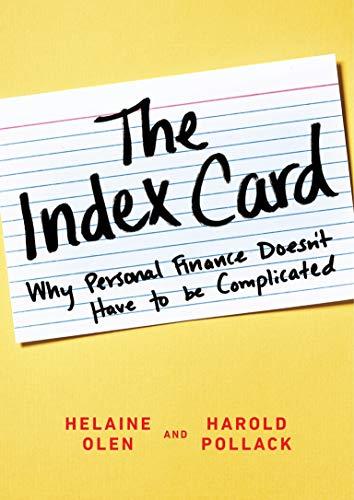
One popular book in Choi's analysis is called The Index Card, why personal finance doesn't have to be complicated.
It was written by Helene Ohlin, a journalist, and Harold Pollack, who is a professor at the University of Chicago, but not in finance or economics. He works in public health policy.
Rule number one, for instance, strive to save 10 to 20 percent of your income.
Dear Professor Pollack, I'm a 28-year-old single mom and I work as a cashier. You have just told me to save 20 percent of my money. F*** you.
And my response is to all of those emails was, you know what? You're totally right. I totally see where you're coming from. I think that my original card was really good for middle class people like me. It wasn't quite as good for people that were at different stages in their life.
Episode: Everything You Always Wanted to Know About Money (...
It expanded upon the nine rules of financial advice that were initially summarized on an index card, offering additional context and commentary on those basic rules for readers.
But that didn't stop him from turning his index card into a book co-authored with the journalist Helene Ohlin. It is called, yes, the index card.
Why personal finance doesn't have to be complicated.
And to me, it's a little bit like, you know, in some sense, you could say all of religion comes down to the Ten Commandments. But a lot of us seem to need some commentary on those and need to know how to execute those.
Or depending on your religious faith, I sometimes refer to the book as the Midrash to our index card for your Jewish listeners.
And for our non-Jewish listeners, a Midrash is rabbinic commentary or teaching on a biblical text. Not quite a canonical passage, but revered nonetheless.
Episode: 298. Everything You Always Wanted to Know About Mo...
It was discussed as a book that expanded upon the nine rules of personal finance from the index card, offering more insights and advice for financial planning.
But that didn't stop him from turning his index card into a book co-authored with the journalist Helene Ohlin. It is called, yes, the index card. Why personal finance doesn't have to be complicated.
And to me, it's a little bit like, you know, in some sense, you could say all of religion comes down to the 10 commandments. But a lot of us seem to need some commentary on those and need to know how to execute those.
Episode: 298. Everything You Always Wanted to Know About Mo...
It was mentioned as a book based on the popular index card that listed nine simplified rules for personal finance, with a tenth rule to remember the index card itself.
And then people are saying, well, why is there a book?
And to me, it's a little bit like, you know, in some sense, you could say all of religion comes down to the 10 commandments. But a lot of us seem to need some commentary on those and need to know how to execute those.
Or depending on your religious faith, I sometimes refer to the book as the Midrash to our index card for your Jewish listeners.
And for our non-Jewish listeners, a Midrash is rabbinic commentary or teaching on a biblical text. Not quite a canonical passage, but revered nonetheless.
It is called, yes, the index card, Why personal finance doesn't have to be complicated.
Episode: Are Personal Finance Gurus Giving You Bad Advice?...
The book was highlighted as a popular finance title that argues all personalfinance advice can be reduced to ten simple rules that fit on a single index card.
One popular book in Choi's analysis is called The Index Card, why personal finance doesn't have to be complicated. It was written by Helene Olin, a journalist, and Harold Pollack, who is a professor at the University of Chicago, but not in finance or economics.