The Backgammon Chronicles
Robert Wachtel
Mentioned 1 month ago
677. Can Backgammon Save Us from Ourselves?
Freakonomics co-author Stephen J. Dubner uncovers the hidden side of everything. Why is it safer to fly in an airplane than drive a car? How do we decide whom to marry? Why is the media so full of bad news? Also: things you never knew you wanted to know about wolves, bananas, pollution, search engin...
Recently mentioned
Robert Wachtel
Mentioned 1 month ago
677. Can Backgammon Save Us from Ourselves?
Robert H Wachtel
Mentioned 1 month ago
677. Can Backgammon Save Us from Ourselves?
Richard P. Feynman
Mentioned 1 month ago
The Vanishing Mr. Feynman (Update)
Gustave Flaubert
Mentioned 1 month ago
The Vanishing Mr. Feynman (Update)
Richard P. Feynman
Mentioned 1 month ago
The Vanishing Mr. Feynman (Update)
Bernard Suits
Mentioned 2 months ago
675. Has the New York Times Become a Games Company?
Katie Salen Tekinbas
Mentioned 2 months ago
675. Has the New York Times Become a Games Company?

Josef Albers
Mentioned 2 months ago
675. Has the New York Times Become a Games Company?
Adam Smith
Mentioned 2 months ago
674. How Does a Composer Feel After the World Premiere?
Glory M. Liu
Mentioned 2 months ago
674. How Does a Composer Feel After the World Premiere?
Charlotte Bronte
Mentioned 2 months ago
673. What Is Money?
Charles Dickens
Mentioned 2 months ago
673. What Is Money?
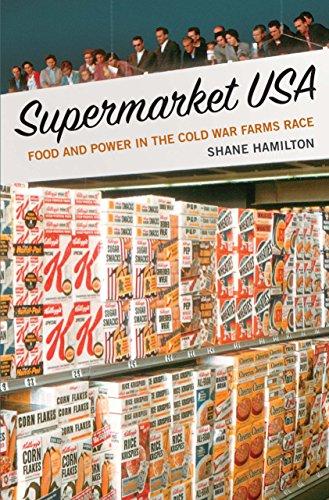
Food and Power in the Cold War Farms Race
It was argued that the supermarket was a purely American invention, enabled by the industrial agriculture system and mass-produced foods, and its development was discussed in detail.
I'm the author of Supermarket USA, Food and Power in the Cold War Farms Race.
— Episode: How the Supermarket Helped America Win t...
It was argued that the supermarket was a purely American invention, enabled by the industrial agriculture system and mass-produced foods, and its development was discussed in detail.
I'm the author of Supermarket USA, Food and Power in the Cold War Farms Race.
I don't mean to deny the power and the might of these weapons systems that were deployed in the space race and all that. But fundamentally, this was a contest to demonstrate that either communism or capitalism was a superior political economic system.
So when the supermarket is upheld as this, you know, effectively missile, this concrete consumer weapon against the claims of communism, it's built on this idea that supermarkets are producing this affordability just through the workings of supply and demand.
Those massive surpluses of cheap corn and later soybeans encourages the rise of industrial meat production, concentrated animal production, livestock feeding operations where that's enabled by cheap grain production.
And it's hard to deny that. On the other hand, we don't apply the same kind of metrics to industrial manufacturing where similarly there's been massive U.S. government investment in science and technology to support economic growth and productivity.
It was argued that the supermarket was a uniquely American invention, enabled by the industrial agriculture system, that helped win the Cold War through food abundance.
I'm the author of Supermarket USA, Food and Power in the Cold War Farms Race.
I argue yes. The easy answer is that the first declared supermarket was built in the United States.
I think the broader answer is that what makes a supermarket a supermarket is the industrial agriculture system that enables the affordability of mass produced foods.
So when the supermarket is upheld as this, you know, effectively missile, this concrete consumer weapon against the claims of communism, it's built on this idea that supermarkets are producing this affordability just through the workings of supply and demand.
Where the reality is for everything from milk to beef to grain to processed foods of all kinds, there's massive government investment in the science and technology that enables the productivity of American farms from fertilizers to frozen food processes to distribution and so forth.
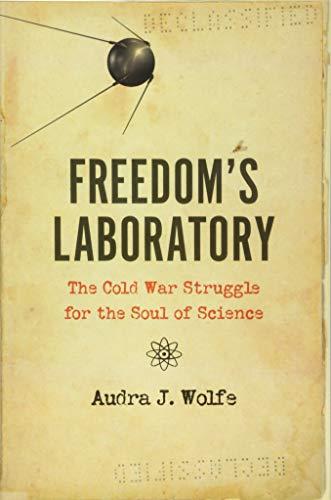
The Cold War Struggle for the Soul of Science
It was described as exploring how science became a tool for Cold War propaganda, particularly in America, highlighting the attempt to influence opinions and promote the American way of life.
Wolf's latest book is called Freedom's Laboratory, The Cold War Struggle for the Soul of Science.
— Episode: How the Supermarket Helped America Win t...
It was described as exploring how science became a tool for Cold War propaganda, particularly in America, highlighting the attempt to influence opinions and promote the American way of life.
Wolf's latest book is called Freedom's Laboratory, The Cold War Struggle for the Soul of Science.
It explored how science became a Cold War propaganda tool, with the American agricultural system as a key example, aiming to influence opinions towards American values.
That is Audra Wolf. I'm a writer, editor and historian. Wolf's latest book is called Freedom's Laboratory, The Cold War Struggle for the Soul of Science.
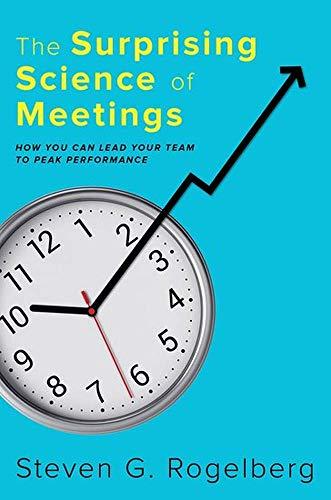
How You Can Lead Your Team to Peak Performance
It was described as an examination of meetings as a workplace phenomenon, exploring why they often fail and how to improve them, particularly given the high number of daily meetings in the U.S.
Basically, it's the examination of meetings as a workplace phenomenon, trying to understand why they go bad, trying to understand the dynamics that emerge in meetings and trying to figure out how to m...
— Episode: How to Make Meetings Less Terrible (Ep....
It was described as an examination of meetings as a workplace phenomenon, exploring why they often fail and how to improve them, particularly given the high number of daily meetings in the U.S.
Basically, it's the examination of meetings as a workplace phenomenon, trying to understand why they go bad, trying to understand the dynamics that emerge in meetings and trying to figure out how to make them better.
It was described as an examination of meetings as a workplace phenomenon, investigating why they often fail and how to improve them, particularly given the prevalence of meetings in workplaces.
He's written a book called The Surprising Science of Meetings.
Basically, it's the examination of meetings as a workplace phenomenon, trying to understand why they go bad, trying to understand the dynamics that emerge in meetings and trying to figure out how to make them better.
A Daily Practice For Developing A Close Relationship With Hashem
It explored meetings within organizations and communities and presented the view that meetings are not just a means to an end but often become the defining characteristic of organizations themselves.
In 1989, Schwarzman published a book called The Meeting, Gatherings in Organizations and Communities.
— Episode: How to Make Meetings Less Terrible (Ep....
It explored meetings within organizations and communities and presented the view that meetings are not just a means to an end but often become the defining characteristic of organizations themselves.
In 1989, Schwarzman published a book called The Meeting, Gatherings in Organizations and Communities.
I would say that meetings are the organization, which is to say that instead of having The Meeting as a place to solve problems, we need to have problems and crises and decisions to produce meetings.
It was published in 1989 and discussed how meetings are often the core of organizational structure, rather than a means to solve problems, and how often problems are created in order to justify holding meetings.
In 1989, Schwartzman published a book called The Meeting, Gatherings in Organizations and Communities.
I would say that meetings are the organization, which is to say that instead of having The Meeting as a place to solve problems, we need to have problems and crises. And decisions to produce meetings.
It was mentioned as a source in the podcast, where a story about a New Yorker living in a rent-controlled apartment for a very low price, despite rarely using most of the space, was shared.
One of my favorite stories about this, and this is quoted by Ken Oletta's The streets were paved with gold.
— Episode: Why Rent Control Doesn’t Work (Ep. 373 R...
It was mentioned as a source in the podcast, where a story about a New Yorker living in a rent-controlled apartment for a very low price, despite rarely using most of the space, was shared.
One of my favorite stories about this, and this is quoted by Ken Oletta's The streets were paved with gold.
It was mentioned in relation to the story of Nat Sherman's rent-controlled apartment in New York City, highlighting how rent control can lead to inefficient housing allocation.
One of my favorite stories about this, and this is quoted by Ken Oletta's The streets were paved with gold.
Shattering Widespread Misconceptions about Human Behavior
It was described as incredibly fun and hugely enjoyable, but also sobering, as it highlighted many common psychology ideas that are not true.
It's kind of like looking at a table of contents of the New York Times over the past 20 years.
— Episode: 5 Psychology Terms You’re Probably Misus...
It was described as incredibly fun and hugely enjoyable, but also sobering, as it highlighted many common psychology ideas that are not true.
It's kind of like looking at a table of contents of the New York Times over the past 20 years.
all these things, all these ideas that people love to embrace and talk about and pass on are somewhere between bogus and trumped up.
It was described as incredibly fun and hugely enjoyable, yet sobering, because it highlighted widespread misunderstandings of psychological topics.
I have to say, so this book is incredibly fun.
It's hugely enjoyable on the one hand, but also hugely sobering on the other because it's kind of like looking at a table of contents of The New York Times over the past 20 years.
The Puzzle of Us All
It was mentioned as a book that discusses the secret history of the workplace, specifically mentioning the evolution of office designs and the rise of the cubicle.
That's Nikhil Saval, the author of a book called Cubed, A Secret History of the Workplace.
— Episode: Yes, the Open Office Is Terrible — But I...
It was mentioned as a book that discusses the secret history of the workplace, specifically mentioning the evolution of office designs and the rise of the cubicle.
That's Nikhil Saval, the author of a book called Cubed, A Secret History of the Workplace.
It was discussed as a book that explored the history of the workplace, particularly the evolution of office design, including the rise of the cubicle.
That's Nikhil Saval, the author of a book called Cubed, a secret history of the workplace.
Philosophy, Justice and Food
It was mentioned that the book argues that almost every environmental problem related to modern agriculture is rooted in meat production, and that issues would be less severe if meat consumption was reduced.
every environmental problem related to contemporary agriculture ends up having its deepest roots in meat production monocropping excessive applications of nitrogen fertilizer addiction to insecticides...
— Episode: The Future of Meat (Rebroadcast)
It was mentioned that the book argues that almost every environmental problem related to modern agriculture is rooted in meat production, and that issues would be less severe if meat consumption was reduced.
every environmental problem related to contemporary agriculture ends up having its deepest roots in meat production monocropping excessive applications of nitrogen fertilizer addiction to insecticides rainforest depletion land degradation topsoil runoff declining water supplies even global warming all these problems would be considerably less severe if people ate meat rarely if ever
It was argued that nearly every environmental issue in contemporary agriculture has roots in meat production, and would be less severe if meat were rarely consumed.
every environmental problem related to contemporary agriculture ends up having its deepest roots in meat production. Monocropping, excessive applications of nitrogen fertilizer, addiction to insecticides, rain forest depletion, land degradation, topsoil runoff, declining water supplies, even global warming. All these problems, McWilliams writes, would be considerably less severe if people ate meat rarely, if ever.
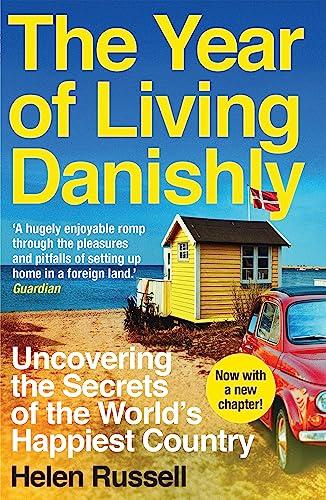
Uncovering the Secrets of the World's Happiest Country
Helen Russell wrote this book after moving to Denmark, detailing her experiences and exploring the reasons behind the country's high happiness rankings and attempting to uncover the secrets of the world's happiest country.
She set out to answer these questions in a book she called The Year of Living Danishly, Uncovering the Secrets of the World's Happiest Country.
— Episode: How to Be Happy (Rebroadcast)
Helen Russell wrote this book after moving to Denmark, detailing her experiences and exploring the reasons behind the country's high happiness rankings and attempting to uncover the secrets of the world's happiest country.
She set out to answer these questions in a book she called The Year of Living Danishly, Uncovering the Secrets of the World's Happiest Country.
Some of the economists that I spoke to for The Year of Living Danishly put it that actually these high levels of trust have been here that predate the social services and the social welfare system.
It was written by Helen Russell after she and her husband moved to Denmark from London, where she explored the reasons for the country's high happiness rankings and even became happier herself.
She set out to answer these questions in a book she called The Year of Living Danishly, Uncovering the Secrets of the World's Happiest Country.
Some of the economists that I spoke to for The Year of Living Danishly put it that actually these high levels of trust have been here that predate the social services and the social welfare system.
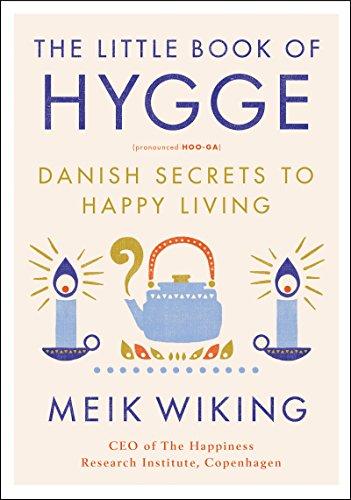
Danish Secrets to Happy Living (The Happiness Institute Series)
Mike Viking, CEO of the Happiness Research Institute, authored this book which explores Hygge, a key cornerstone of Danish culture, exploring its meaning, atmosphere, components and impact on happiness.
Viking is the author of an international bestseller called The Little Book of Hygge.
— Episode: How to Be Happy (Rebroadcast)
Mike Viking, CEO of the Happiness Research Institute, authored this book which explores Hygge, a key cornerstone of Danish culture, exploring its meaning, atmosphere, components and impact on happiness.
Viking is the author of an international bestseller called The Little Book of Hygge.
It was written by Mike Viking, the CEO of the Happiness Research Institute, and explores the Danish concept of hygge, which encompasses a warm and cosy atmosphere, togetherness, and relaxation.
Viking is the author of an international bestseller called The Little Book of Hygge.
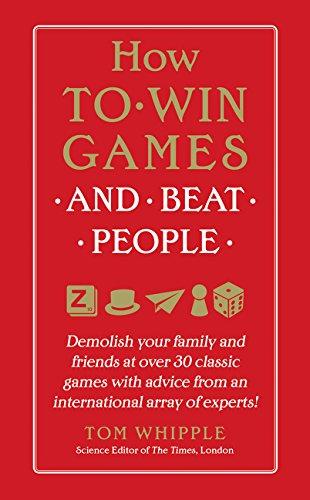
Demolish Your Family and Friends at over 30 Classic Games with Advice from an International Array of Experts
It was mentioned as the title of Tom Whipple's book that aimed to provide strategies to win various games, featuring advice from experts in their respective fields.
Whipple has written a book titled How to Win Games and Beat People.
— Episode: How to Win Games and Beat People (Rebroa...
It was mentioned as the title of Tom Whipple's book that aimed to provide strategies to win various games, featuring advice from experts in their respective fields.
Whipple has written a book titled How to Win Games and Beat People.
Really the premise for it, I suppose the elevator pitch was it's preposterously overqualified people advising on games.
How many people read my book before it's a failure?
I'm very happy to take that risk.
It was the central theme of the episode, wherein the author shared his research into strategies for winning various games and discussed his book with Stephen Dubner.
Whipple has written a book titled How to Win Games and Beat People.
As we mentioned, the title of Whipple's book is How to Win Games and Beat People. Nothing particularly bloodthirsty about that but the subtitle, Defeat and Demolish Your Friends and Family.
Really the premise for it, I suppose the elevator pitch was it's preposterously overqualified people advising on games.
How many people read my book before it's a failure?
I'll just say like, I think both my agent and publisher would agree with this. I'm very happy to take that risk if enough people are prepared to buy my book.
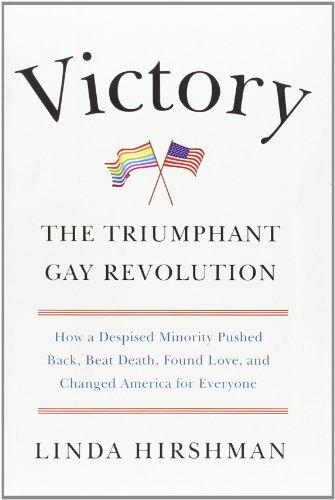
The Triumphant Gay Revolution
It was discussed that the gay rights movement was incremental and not a sudden explosion, as popularly portrayed, and this book by Linda Hirschman was mentioned as exploring this topic.
She is also the author of several books, including Victory, the Triumphant Gay Revolution.
— Episode: In Praise of Incrementalism (Rebroadcast...
It was discussed that the gay rights movement was incremental and not a sudden explosion, as popularly portrayed, and this book by Linda Hirschman was mentioned as exploring this topic.
She is also the author of several books, including Victory, the Triumphant Gay Revolution.
The Ecological History of Greater New York
This book was mentioned at the end of the podcast as the author's latest book, but no further information or discussion was provided.
Ted Steinberg's latest book is Gotham Unbound, The Ecological History of Greater New York.
— Episode: How Stupid Is Our Obsession With Lawns?...
This book was mentioned at the end of the podcast as the author's latest book, but no further information or discussion was provided.
Ted Steinberg's latest book is Gotham Unbound, The Ecological History of Greater New York.
It was mentioned as Ted Steinberg's latest book, an ecological history of the greater New York area.
Ted Steinberg's latest book is Gotham Unbound, the Ecological History of Greater New York.
Building a Child's Brain
It was mentioned as a book by the speaker, and the book's title is based on a study from the 1960s that found that children in poverty heard 30 million fewer words by age three than their more affluent peers.
I am the director of the 30 Million Words Initiative and author of 30 Million Words Building a Child's Brain.
— Episode: Does “Early Education” Come Way Too Late...
It was mentioned as a book by the speaker, and the book's title is based on a study from the 1960s that found that children in poverty heard 30 million fewer words by age three than their more affluent peers.
I am the director of the 30 Million Words Initiative and author of 30 Million Words Building a Child's Brain.
By the end of the age of three, children born into poverty will have heard 30 million fewer words than their more affluent peers.
And how you explain to families and to this country what a rich language environment is is complex. And what we've done in our research program is we've called it down to what we call the three Ts.
Education doesn't start on the first day of school. It starts on the first day of life.
And I truly believe that until we address education as it should be, in a scientific and biological way, right, because learning begins at day one, that we're never going to move the needle.
It was discussed and highlighted as a recently published book about building a child's brain, specifically relating to language development in the first three years of life.
I am the director of the 30 Million Words Initiative And author of the recently published book 30 Million Words Building a Child's Brain
How Drug Companies Mislead Doctors and Harm Patients
It was mentioned as a book written by a physician who knows a lot about bad pharma and bad medicine, echoing what was said about the participants chosen for clinical trials.
When you look at the evidence, what you often find is that trials are conducted in absolutely perfect dream patients.
— Episode: Bad Medicine, Part 2: (Drug) Trials and...
It was mentioned as a book written by a physician who knows a lot about bad pharma and bad medicine, echoing what was said about the participants chosen for clinical trials.
When you look at the evidence, what you often find is that trials are conducted in absolutely perfect dream patients.
It was mentioned as a book about how people misuse statistics, and it echoed what Vinay Prasad had said about the selection of participants for clinical trials.
One of Goldacre's books is called Bad Pharma.
Improving Outcomes, Saving Lives
It was discussed as a book that detailed the topic of medical reversals, where practices are widely accepted and then later contradicted by research.
Vinay Prasad wrote the book on medical reversals, literally. It's called Ending Medical Reversal.
— Episode: Bad Medicine, Part 1: The Story of 98.6...
It was discussed as a book that detailed the topic of medical reversals, where practices are widely accepted and then later contradicted by research.
Vinay Prasad wrote the book on medical reversals, literally. It's called Ending Medical Reversal.
It was discussed as a book that explains the phenomenon of medical reversals, where treatments widely believed to be beneficial are later proven ineffective or harmful through better research.
Vinay Prasad wrote the book on medical reversals, literally. It's called Ending Medical Reversal.
The Feminist Roots of Contemporary Art
It was mentioned as one of Drew Faust's books, and relates to women in the slave-holding South during the American Civil War.
Among her books are This Republic of Suffering, Death and the American Civil War, and Mothers of Invention, Women of the Slave-Holding South in the American Civil War.
— Episode: The Harvard President Will See You Now (...
It was mentioned as one of Drew Faust's books, and relates to women in the slave-holding South during the American Civil War.
Among her books are This Republic of Suffering, Death and the American Civil War, and Mothers of Invention, Women of the Slave-Holding South in the American Civil War.
It was mentioned as one of her books, alongside 'This Republic of Suffering', discussing the Civil War and the role of women from the slave-holding South during that time.
Among her books are This Republic of Suffering, Death and the American Civil War, and Mothers of Invention, Women of the Slave-Holding South and the American Civil War.
The Missing Link to Optimum Health
The book explored the nutritional differences between wild and domesticated fruits and vegetables, emphasizing the importance of choosing less refined options for optimal health.
Robinson's latest book is called Eating on the Wild Side.
— Episode: Food + Science = Victory! (Rebroadcast)
The book explored the nutritional differences between wild and domesticated fruits and vegetables, emphasizing the importance of choosing less refined options for optimal health.
Robinson's latest book is called Eating on the Wild Side.
It's fascinating. Almost every page tells you something you don't know about food, especially fruits and veg and herbs. And a lot of it goes back to that split between delicious and nutritious.
The book explored the nutritional value of different fruits and vegetables, particularly comparing wild and domesticated varieties. It also discussed how certain cooking methods impact nutrient content.
Robinson's latest book is called Eating on the Wild Side. It's fascinating. Almost every page tells you something you don't know about food, especially fruits and veg and herbs.
And it is only now do we have the technology and the slowly accumulating wisdom to know how we should transform our food supply to make it optimum for human health.
The Real Game Exposed
It was discussed in the context of how baseball managers impact game outcomes, concluding that the effect of managers is generally small, but that a figurehead is needed.
What we found when we look at managers is that while some might be slightly better than the others, it's not a big difference between one manager to the next in terms of the decisions that they make.
— Episode: How Much Does the President Really Matte...
It was discussed in the context of how baseball managers impact game outcomes, concluding that the effect of managers is generally small, but that a figurehead is needed.
What we found when we look at managers is that while some might be slightly better than the others, it's not a big difference between one manager to the next in terms of the decisions that they make.
So it's like you kind of need dad in the house.
And the president, if you think about the control that a president might have over the economy for instance, just one area, the president is just a third of our government and we have the legislative and executive branches.
A Secretary General's Memoir
It was mentioned that Geir Lundestad, the former secretary of the Norwegian Nobel Committee, published a book called 'The Peace Secretary', which details the Nobel Committee's inner workings and contained criticisms of some of its members.
Just this year the former secretary of the Norwegian Nobel Committee Gare Lundestad Published a book called the peace secretary
— Episode: 224. How To Win A Nobel Prize
It was mentioned that Geir Lundestad, the former secretary of the Norwegian Nobel Committee, published a book called 'The Peace Secretary', which details the Nobel Committee's inner workings and contained criticisms of some of its members.
Just this year the former secretary of the Norwegian Nobel Committee Gare Lundestad Published a book called the peace secretary
Note: The book recommendations on this page are discovered automatically from podcast transcripts, and may be incorrect or incomplete.
Podcast Name