
Podcast Mentions
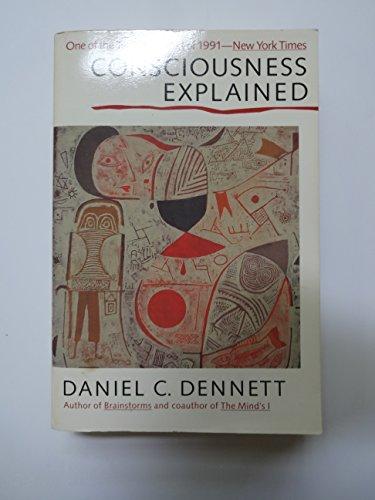
Consciousness Explained
Daniel C. Dennett
Advances a new theory of consciousness based on insights gleaned from the fields of neuroscience, psychology, and artificial intelligence, and clears away obsolete myths about the process of thinking in conscious beings
Podcasts
2
Quotes
1
Podcast
Philosophize This!
Daniel Dennett introduces the metaphor of a computer desktop to explain phenomenal consciousness in his book, Consciousness Explained, published in 1991. The book argues that our experience of consciousness is like a user interface, a simplified representation of the complex processes happening inside our brains.
"
when I interact with the computer, I have limited access to the events occurring within it. Thanks to the schemes of presentation devised by the programmers I am treated to an elaborate audio-visual m...
— Episode: Episode #181 ... What if consciousness i...
Episode: Episode #181 ... What if consciousness is an illus...
Daniel Dennett introduces the metaphor of a computer desktop to explain phenomenal consciousness in his book, Consciousness Explained, published in 1991. The book argues that our experience of consciousness is like a user interface, a simplified representation of the complex processes happening inside our brains.
"
when I interact with the computer, I have limited access to the events occurring within it. Thanks to the schemes of presentation devised by the programmers I am treated to an elaborate audio-visual metaphor an interactive drama acted out on the stage of keyboard mouse and screen I the user and subjected to a series of benign illusions I seem to be able to move the cursor a powerful invisible servant to the very place in the computer where I keep my file And once that I see that the cursor has arrived there by pressing a key, I get to retrieve the file spreading it out on a long scroll that unrolls in front of a window at my command I can make all sorts of things happen inside the computer by typing in various commands Pressing various buttons, and I don't have to know the details I maintain control by relying on my understanding of the detailed audio-visual metaphor provided by the user illusion
Note: The book recommendations on this page are discovered automatically from podcast transcripts, and may be incorrect or incomplete.