Hidden Brain
Book Recommendations

Hidden Brain

Why do I feel stuck? How can I become more creative? What can I do to improve my relationships? If you’ve ever asked yourself these questions, you’re not alone. On Hidden Brain, we help you understand your own mind — and the minds of the people around you. (We're routinely rated the #1 science podca...

Episodes 615
Books 396

Most Recommended

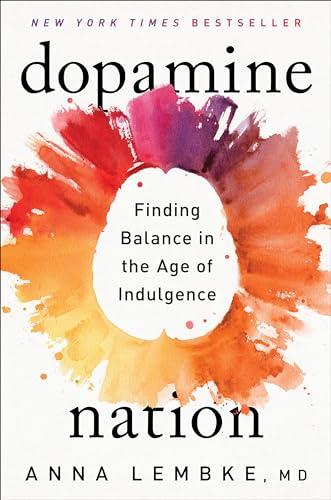
Dopamine Nation: Finding Balance in the Age of Indulgence Cover

Dr. Anna Lembke

Dopamine Nation

Finding Balance in the Age of Indulgence

The host introduced the author as the writer of the book, noting her expertise on addiction and brain chemistry. In each episode, they highlighted that the psychiatrist’s work explains how excessive dopamine contributes to rising mental‑health issues and the need for balance. The discussion framed the title as a relevant source for understanding modern indulgence, but no explicit endorsement was given.

Listen on Audible 7-day free trial

Episode: The Path to Enough

The host noted that Anna Lembke is the author of Dopamine Nation, a book about finding balance in an age of indulgence.

"

She's the author of Dopamine Nation, Finding Balance in the Age of Indulgence.
Episode: The Paradox of Pleasure

Anna Lembke, a psychiatrist and researcher in the behavioral sciences at Stanford University, is the author of *Dopamine Nation*. She believes that the increasing rates of depression, anxiety, and suicide are due to our brains being overloaded with dopamine and our bodies' attempt to compensate for too much pleasure.

"

Anna Lembke is a psychiatrist and researcher in the behavioral sciences at Stanford University. She's the author of *Dopamine Nation*, Finding Balance in the Age of Indulgence.
You're listening to Hidden Brain. I'm Shankar Vedantam. This is Hidden Brain. I'm Shankar Vedantam. Anna Lembke is a psychiatrist and researcher in the behavioral sciences at Stanford University. She's the author of *Dopamine Nation*, Finding Balance in the Age of Indulgence.
Episode: The Paradox of Pleasure

The host introduced Anna Lembke as the author of *Dopamine Nation, Finding Balance in the Age of Indulgence*, highlighting her expertise on addiction and brain chemistry.

"

She's the author of Dopamine Nation, Finding Balance in the Age of Indulgence.
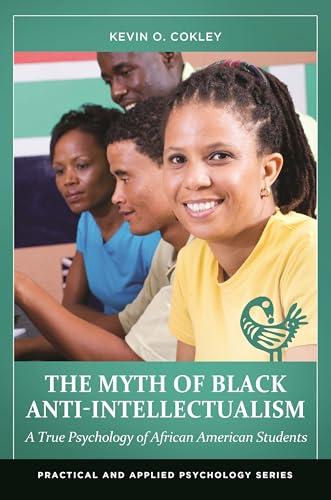
The Myth of Black Anti-Intellectualism: A True Psychology of African American Students (Practical and Applied Psychology) Cover

Kevin O. Cokley

The Myth of Black Anti-Intellectualism

A True Psychology of African American Students (Practical and Applied Psychology)

The book was cited when Shankar Vedantam introduced Kevin Cokley, noting that he is a psychologist at the University of Michigan and the author of a work that explores the true psychology of African American students. The discussion highlighted that the title addresses misconceptions about Black anti-intellectualism and offers an applied psychological perspective. The hosts presented it as a relevant resource for understanding student experiences, without offering a strong endorsement.

Listen on Audible 7-day free trial

Episode: Success 2.0: The Psychology of Self-Doubt

The author shared that this book focuses on a true psychology of African American students.

"

Kevin Coakley is a psychologist at the University of Michigan. He's the author of The Myth of Black Anti-Intellectualism, A True Psychology of African American Students.

Episode: Success 2.0: The Psychology of Self-Doubt

He discussed his book, which he says is a true psychology of African American students.

"

Kevin Coakley is a psychologist at the University of Michigan. He's the author of The Myth of Black Anti-Intellectualism, A True Psychology of African American Students.

Happy Money: The Japanese Art of Making Peace with Your Money Cover

Ken Honda

Happy Money

The Japanese Art of Making Peace with Your Money

The book was highlighted as a key source on the science of happier spending, emphasizing that experiences often bring more lasting joy than material purchases. Host Shankar Vedantam and social psychologist Elizabeth Dunn discussed its findings, noting both supportive evidence and a graduate student's critique of the experience‑focused recommendation. The overall tone was positive about the title’s insights.

Highly Recommended
Listen on Audible 7-day free trial

Episode: Happiness 2.0: Surprising Sources of Joy

The book discusses the science of happier spending and suggests that buying experiences rather than material things might be a better way to spend money.

"

Liz told me that at one point in the interminable journey to the Arctic Ocean, she decided she'd had enough.

So I was like, okay, great. Sure. I just published this book and you think the first chapter is completely wrong. Like let's talk about that.

And so I started with my colleagues and students exploring when people get the biggest emotional boost from giving to charity and when that emotional boost seems to sort of disappear.

Elizabeth Dunn is a social psychologist at the University of British Columbia. Along with Michael Norton, she's the author of Happy Money, the Science of Happier Spending.

Elizabeth Dunn is a social psychologist at the University of British Columbia. Along with Michael Norton, she's the author of Happy Money, the Science of Happier Spending.

Episode: Happiness 2.0: Surprising Sources of Joy

Liz Dunn and her co-author, Michael Norton, explore the science of happier spending, and how spending money on experiences often produces more lasting joy than spending on material goods. This was emphasized with the anecdote about Liz's Arctic road trip, which she initially found miserable but later appreciated for the unique experiences and bonding that occurred.

"

Elizabeth Dunn is a social psychologist at the University of British Columbia. Along with Michael Norton, she's the author of Happy Money, the science of happier spending.

Elizabeth Dunn is a social psychologist at the University of British Columbia. Along with Michael Norton, she's the author of Happy Money, the Science of Happier Spending.

After I wrote my book Happy Money and the first chapter was called By Experiences, I gave it out to a bunch of the grad students in my department.

Episode: Happiness 2.0: Surprising Sources of Joy

The book Happy Money, co-authored by Liz Dunn, explores the science of happier spending, with a particular focus on experiences.

"

Elizabeth Dunn is a social psychologist at the University of British Columbia. Along with Michael Norton, she's the author of Happy Money, the science of happier spending.

Elizabeth Dunn is a social psychologist at the University of British Columbia. Along with Michael Norton, she's the author of Happy Money, the Science of Happier Spending.

And so I gave it out to a bunch of the grad students in my department. And this very smart young grad student named Aaron Weidman came to see me.

And he's like, you know, I love the book. I think chapter one was wrong. He's like, I think this whole by experiences recommendation is, you know, bunk.

Influence, New and Expanded: The Psychology of Persuasion Cover

Robert B Cialdini PhD

Influence, New and Expanded

The Psychology of Persuasion

Host Shankar Vedantam dedicated significant airtime to Robert Cialdini's seminal work, featuring the author as a guest to discuss the core concepts of persuasion. The episodes centered on the seven key techniques of influence, including scarcity, social proof, and reciprocity, which Cialdini outlined in the book. The discussion highlighted how these powerful psychological tools can be applied across various areas of life for both positive and negative ends.

Highly Recommended
Listen on Audible 7-day free trial

Episode: Persuasion: Part 2

It was published in 1984 and explored six main techniques of influence: scarcity, reciprocity, liking, social proof, authority, and commitment and consistency. It discussed how these techniques can be applied in many areas of life and they can be used for good ends and for bad ones.

"

In his book, Influence, Bob Cialdini writes about the psychology of persuasion.

He describes seven techniques that we can use to influence those around us.

These tools can be applied in many areas of life and they can be used for good ends and for bad ones.

Social proof, for example, can be used to help people cut back on energy consumption.

Episode: Persuasion: Part 2

Robert Cialdini discussed his book, 'Influence', which is about the psychology of persuasion and details seven techniques people can use to influence others.

"

In his book, Influence, Bob Cialdini writes about the psychology of persuasion.

Episode: Persuasion: Part 2

The author of the book, "Influence", Robert Cialdini, was a guest on the podcast. Throughout the podcast, they discuss a number of different aspects of the book, which is about persuasion and social influence. The book is mentioned in the final moments of the podcast, when the host thanks the author for being a guest.

"

Robert Cialdini is the author of Influence, The Psychology of Persuasion.

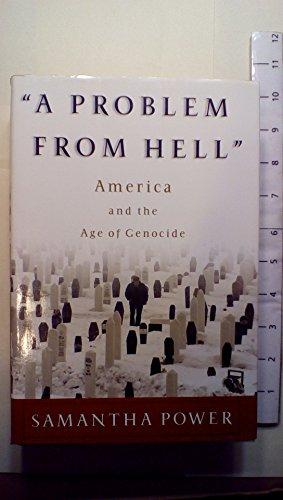
A Problem From Hell: America and the Age of Genocide Cover

Samantha Power

A Problem From Hell

America and the Age of Genocide

The host cited the book to illustrate how officials often ignored warnings unless there was public outcry, noting an administrator who claimed he could only act when his phones were ringing. This anecdote was used across several episodes to discuss the difficulty of getting warnings acted upon. The discussion was neutral and used the title as an illustrative example rather than a recommendation.

Listen on Audible 7-day free trial

Episode: You Don't Need a Crystal Ball

It was mentioned in the context of how warnings are sometimes ignored due to a lack of public clamoring for action, even if the warning is valid.

"

Samantha Power wrote in her book, 'A Problem From Hell,' about the response from one administrator to the warning that was given that unless his telephones were ringing, he couldn't do anything.

Episode: Warnings, Warnings Everywhere

It was mentioned in the context of warnings being ignored, referencing an administrator's reaction to a warning that he needed a public outcry to act, even if he believed the warning.

"

Samantha Power wrote in her book, Problem from Hell, about the response from one administrator to the warning that was given that unless his telephones were ringing, he couldn't do anything.

Episode: The Cassandra Curse

It was mentioned in the context of how one administrator ignored warnings unless there was public clamoring, illustrating the difficulty of getting warnings acted upon.

"

Samantha Power wrote in her book, Problem from Hell, about the response from one administrator to the warning that was given that unless his telephones were ringing, he couldn't do anything.

The Attention Merchants: The Epic Scramble to Get Inside Our Heads Cover

Tim Wu

The Attention Merchants

The Epic Scramble to Get Inside Our Heads

The podcast highlighted the book as a comprehensive history of how advertisers, media, and other platforms have hijacked and monetized human attention. Host Shankar Vedantam and author Tim Wu discussed its analysis of the rise of attention merchants and the implications for personal autonomy. The discussion portrayed it as an essential work for understanding the commodification of attention.

Highly Recommended
Listen on Audible 7-day free trial

Episode: This is Your Brain on Ads

It was discussed as a book that chronicles the history of how companies have captured human attention and monetized it, specifically through advertising.

"

We can lose our freedom and become entrapped really by doing what we think are voluntary choices.

We've explored how advertisements influence our minds. In the next segment of our show, we explore how celebrities, entrepreneurs, and media companies hijack our attention in order to present us with ads.

Attention is the fuel that allows everyone from candy makers to car dealers to sell their wares.

I think that Donald Trump, through The Apprentice and to some degree other parts of his life, understood deeply the power of capturing and using human attention.

And so deciding how that vital resource is spent, in my view, is the key to life, frankly.

Episode: Radio Replay: This Is Your Brain On Ads

The book was discussed in detail, detailing the history of how our attention has been captured and monetized by various media and companies. It was highlighted as a significant piece of work that analyses the commodification of human attention.

"

Tim Wu has written a book titled The Attention Merchants where he recounts the history of the many ways our attention has been hijacked.

Attention merchants are television shows, newspaper articles and podcasts that draw you in and then sell your attention to advertisers.

Tim Wu is a professor at Columbia Law School. He's the author of The Attention Merchants, the epic scramble to get inside our heads.

Episode: Buying Attention

It was mentioned as a book that recounts the history of how companies have captured and monetized human attention, highlighting the rise of 'attention merchants' and their impact on autonomy.

"

Columbia University law professor Tim Wu has written a book titled The Attention Merchants, where he recounts the history of the many ways our attention has been hijacked.

Today, we're talking with author Tim Wu about his book, The Attention Merchants, the epic scramble to get inside our heads.

Attention merchants are television shows, newspaper articles and podcasts that draw you in and then sell your attention to advertisers.

Tim Wu is a professor at Columbia Law School. He's the author of The Attention Merchants, the epic scramble to get inside our heads.

Eat Pray Love: One Woman's Search for Everything Across Italy, India and Indonesia Cover

Elizabeth Gilbert

Eat Pray Love

One Woman's Search for Everything Across Italy, India and Indonesia

The book was cited across three episodes as a cultural touchstone illustrating the modern drive for personal fulfillment and self‑actualization within marriage, highlighting how such aspirations can lead to leaving a seemingly happy partnership. Hosts used the story to discuss both the strengths and pitfalls of seeking growth through a spouse, referencing the film adaptation as an example.

Listen on Audible 7-day free trial

Episode: Relationships 2.0: When Did Marriage Become So Har...

It was mentioned as a book whose movie adaptation exemplified the modern desire to find personal fulfillment and self-actualization through marriage.

"

We'd only bought this house a year ago. Hadn't I wanted this? I had actively participated in every moment of the creation of this life. So why didn't I see myself in any of it? The only thing more impossible than staying was leaving.

Episode: You 2.0: When Did Marriage Become So Hard?

It was mentioned as an example of the modern expectation to find personal growth and fulfillment within marriage, leading to decisions that would have been unthinkable in previous eras.

"

We're going to play a few clips from the movies as we chat, and this one comes from the movie Eat, Pray, Love, featuring Julia Roberts.

We'd only bought this house a year ago. Hadn't I wanted this? I had actively participated in every moment of the creation of this life. So why didn't I see myself in any of it? The only thing more impossible than staying was leaving.

She in some sense helps to epitomize both the strengths and the weaknesses of this modern contemporary approach to marriage where we're looking to our spouse again not only for love but also this sense of personal growth and fulfillment.

Episode: You 2.0: When Did Marriage Become So Hard?

It was discussed in the context of the modern emphasis on personal fulfillment within marriage, where a woman's journey of self-discovery led her to leave a seemingly loving marriage to find personal growth.

"

One example of this comes from the bestselling book by Elizabeth Gilbert about walking out on her husband and trying to create a more meaningful life for herself.

We'd only bought this house a year ago. Hadn't I wanted this? I had actively participated in every moment of the creation of this life. So why didn't I see myself in any of it?

The only thing more impossible than staying was leaving.

Harry Potter and the Deathly Hallows (Book 7) Cover

J. K. Rowling

Harry Potter and the Deathly Hallows (Book 7)

Cal Newport referenced the title in three episodes as an illustration of how the author rented a hotel suite to isolate herself and focus on completing the final installment. He used the example to discuss the benefits of deep‑work environments for finishing a demanding project. The book was mentioned neutrally, primarily as a case study rather than a recommendation.

Listen on Audible 7-day free trial

Episode: Work 2.0: Life, Interrupted

It was mentioned in relation to J.K. Rowling's writing process, specifically how she rented a hotel suite to isolate herself and focus on completing the book.

"

JK Rowling, when she was struggling to finish The Deathly Hallows, rented out this big suite at the Balmore Hotel next to the big castle in downtown Edinburgh where she'd go and just think Harry Potter style thoughts.

Episode: You 2.0: Deep Work

It was mentioned in relation to J.K. Rowling renting a hotel suite to isolate herself and focus on the writing of the book.

"

J.K. Rowling, when she was struggling to finish The Deathly Hallows, rented out this big suite at the Balmore Hotel next to the big castle in downtown Edinburgh where she'd go and just think Harry Potter-style thoughts.

Episode: You 2.0: Deep Work

It was mentioned as an example of a book J.K. Rowling was writing when she rented a hotel suite to focus and isolate herself while she wrote.

"

J.K. Rowling, when she was struggling to finish The Deathly Hallows, rented out this big suite at the Balmore Hotel next to the big castle in downtown Edinburgh where she'd go and just think Harry Potter-style thoughts.

The All-or-Nothing Marriage: How the Best Marriages Work Cover

Eli J Finkel

The All-or-Nothing Marriage

How the Best Marriages Work

The book was highlighted by Shankar Vedantam as a source that examined how modern marriage has become increasingly demanding, with couples often feeling suffocated by the pressure to achieve both love and personal growth. Eli Finkel, the author, appeared on the show and explained his concept of the "all‑or‑nothing" marriage, noting that high expectations can outpace the resources couples have to invest. The discussion framed the title as a useful lens for understanding contemporary marital challenges, though it was not explicitly endorsed as a must‑read.

Listen on Audible 7-day free trial

Episode: Relationships 2.0: When Did Marriage Become So Har...

It was mentioned as a book that explores how marriage has evolved and the challenges faced by couples today, especially with heightened expectations.

"

Modern marriage, he says, runs the risk of suffocation.

Eli Finkel is a social psychologist at Northwestern University. He's the author of The All or Nothing Marriage, How the Best Marriages Work.

Episode: You 2.0: When Did Marriage Become So Hard?

It discussed how modern marriages face the challenge of suffocation due to increased expectations for personal growth and fulfillment within the relationship, which can lead to a sense of disappointment if not met.

"

Eli is the author of The All or Nothing Marriage, and he has a very dramatic term for the challenge that many couples face today.

Modern marriage, he says, runs the risk of suffocation.

So in the terminology of psychology, we wanted to self-actualize through our marriage.

And for the first time you start to see cases where people would say, as I think Liz Gilbert would say, that she was in a loving marriage and he was a good man and treated her well but she felt stagnant and she really wasn't willing to endure a stagnant life for the next 30 or 40 years and she walked out.

It's lovely way up there at the top and if we're looking to try to achieve not only this sense of love and connection but also this sense of personal growth and authenticity through the marriage but we're trying to do it on the cheap that is we're trying to do it without investing the time without investing the psychological energy then we're left up there at the top of the mountain without the resources that we need in order to succeed and so that is what gives us this disconnect between where we are on the mountain the expectations that we're bringing to the marriage and what the marriage is actually able to offer us and that disconnect is what I'm talking about when I talk about the suffocation of marriage.

Episode: You 2.0: When Did Marriage Become So Hard?

It was discussed as a book that explores the modern challenges of marriage in the context of increased expectations and the concept of 'suffocation,' where the marriage is expected to fulfill too many needs.

"

Eli is the author of The All or Nothing Marriage and he has a very dramatic term for the challenge that many couples face today.

Modern marriage, he says, runs the risk of suffocation.

Clearer, Closer, Better: How Successful People See the World Cover

Emily Balcetis

Clearer, Closer, Better

How Successful People See the World

The book was highlighted across multiple episodes as a key resource for understanding how visual perception shapes behavior, motivation, and goal pursuit. Host Shankar Vedantam and author Emily Balcetis discussed the author’s experiments and practical tactics, such as narrowing focus and visualizing success, which the author applied to personal challenges like learning drums. The discussion framed the title as a useful guide for anyone looking to harness sight to achieve their objectives.

Highly Recommended
Listen on Audible 7-day free trial

Episode: You 2.0: The Mind's Eye

It was discussed and recommended throughout the episode, focusing on how visual perception impacts behavior, goal pursuit, and motivation, including techniques like narrow focus and materializing.

"

My guest today says what we see affects more than just what we see. It also affects how we behave. Psychologist Emily Balcheres at New York University is the author of Clearer, Closer, Better, How Successful People See the World.

Emily Bolcheres is a psychologist and the author of Clearer, Closer, Better, How Successful People See the World.

Emily's insights on goal pursuit have come from running experiments on other people, but she's also treated herself like a research subject. She has used the techniques she described here to help her learn to play the drums.

That's what I talk about in this book is these tactics that I suggest others try. I tried them all out on myself across the course of this year, my son's first year of life, and that would happen to be also the same amount of time that it took me in order to learn this song.

Psychologist Emily Balcedes works at New York University. She's the author of Clearer, Closer, Better, How Successful People See the World.

Episode: You 2.0: The Mind's Eye

It was discussed in the podcast, and the author explained how sight and the visual system can affect behavior and choices, and how that is relevant to achieving goals and success.

"

My guest today says what we see affects more than just what we see. It also affects how we behave. Psychologist Emily Balceres at New York University is the author of Clearer, Closer, Better, How Successful People See the World.

Emily's insights on goal pursuit have come from running experiments on other people, but she's also treated herself like a research subject. She has used the techniques she described here to help her learn to play the drums.

And that would happen to be also the same amount of time that it took me in order to learn this song. I wasn't a fast learner, but I got there.

Psychologist Emily Balcedes works at New York University. She's the author of Clearer, Closer, Better, How Successful People See the World.

Episode: You 2.0: Our Pursuit of Happiness

It was discussed as being a book about how successful people see the world, specifically looking at how the visual system in the mind is closely connected with our drives and motivations.

"

My guest today says what we see affects more than just what we see. It also affects how we behave. Psychologist Emily Balcheres at New York University is the author of Clearer, Closer, Better, How Successful People See the World.

Psychologist Emily Balcedes works at New York University. She's the author of Clearer, Closer, Better, How Successful People See the World.

Choke: What the Secrets of the Brain Reveal About Getting It Right When You Have To Cover

Sian Beilock

Choke

What the Secrets of the Brain Reveal About Getting It Right When You Have To

The host and the author discussed the book across several episodes, emphasizing its explanation of why people choke under pressure and the central role of working memory. They highlighted vivid examples, such as a famous golfer’s collapse, and suggested that early skill learning can protect against choking. The conversation presented the title as a valuable resource for understanding and managing performance anxiety.

Highly Recommended
Listen on Audible 7-day free trial

Episode: You 2.0: Overcoming Stage Fright

It was discussed and summarised in the podcast, exploring the psychology of choking under pressure and how working memory plays a key role in this phenomenon.

"

In your book, Choke, you tell the story of the French golfer, Jean Van Der Velde at the British Open in 1999.

You write in the book that the key is to have brain power at your disposal, but be able to turn it off when that brain power is a problem.

She's also the author of Choke, What the Secrets of the Brain Reveal About Getting It Right When You Have To.

Episode: You 2.0: Overcoming Stage Fright

It was discussed in relation to choking under pressure, how even experts can crumble under stress, and explored the role of working memory in this phenomenon.

"

In your book, Choke, you tell the story of the French golfer, Jean Van Der Velde at the British Open in 1999.

You write in the book that the key is to have brain power at your disposal, but be able to turn it off when that brain power is a problem.

So my research and others have shown that when people learn actually really early, they often are protected from choking in these sorts of especially motor skills.

Sian Bailock is a psychologist and the newly elected president of Dartmouth College. She's also the author of Choke, What the Secrets of the Brain Reveal About Getting It Right When You Have To.

Episode: Stage Fright

It was discussed how the book details the science behind 'choking under pressure' and the role of working memory, with examples of athletes and situations where it occurs.

"

In your book, Choke, you tell the story of the French golfer Jean van der Weld at the British Open in 1999.

You write in the book that the key is to have brain power at your disposal but be able to turn it off when that brain power is a problem.

Psychologist Sian Bailock is president of Barnard College. She's also the author of Choke, What the Secrets of the Brain Reveal About Getting It Right When You Have To.

So my research and others have shown that when people learn actually really early they often are protected from choking in these sorts of especially motor skills.

Marriage, a History: From Obedience to Intimacy, or How Love Conquered Marriage Cover

Stephanie Coontz

Marriage, a History

From Obedience to Intimacy, or How Love Conquered Marriage

The book was highlighted as a deep dive into how marriage evolved from a tool for economic and political alliances to a partnership based on romantic love. Host(s) featured historian Stephanie Coontz, who explained early marriages were about resource sharing and alliance building, noting that romantic motivations emerged much later. The discussion emphasized the book’s insight into the shifting purposes of marriage, presenting it as a valuable resource for understanding modern relationship challenges.

Highly Recommended
Listen on Audible 7-day free trial

Episode: You 2.0: When Did Marriage Become So Hard?

It was discussed how the earliest marriages were primarily focused on economics and establishing alliances rather than romantic love, tracing a shift towards the modern concept of love-based partnerships.

"

Well, I've been studying the history of family life for many, many years, but I specifically got interested in marriage as we got into these debates about what traditional marriage was.

Marriage originally arose in more egalitarian band level societies as a way of sharing resources and establishing peaceful relations with groups that you might otherwise only see occasionally and you might not know if they were going to be friends or enemies.

I think that the theme song for that relationship could have been What's Love Got to Do With It? There may have been passion, but it was more passion for power than sexual, although sexual probably entered into it too.

You couldn't run a farm with one person. You couldn't run a bakery with one person. So people who were bakers married other bakers.

And so there was a long period of time where men actually were more romantic than women in the courtship arena.

Episode: You 2.0: When Did Marriage Become So Hard?

It was discussed that early marriages were primarily for economic and political reasons, not based on love or attraction, and that the concept of love matches became more prominent later.

"

Well, I've been studying the history of family life for many, many years, but I specifically got interested in marriage as we got into these debates about what traditional marriage was.

Marriage originally arose in more egalitarian band level societies as a way of sharing resources and establishing peaceful relations with groups that you might otherwise only see occasionally and you might not know if they were going to be friends or enemies.

I marry my child off to you and that means you owe me things but I also owe you things.

You couldn't run a farm with one person. You couldn't run a bakery with one person so people who were bakers married other bakers.

If you were a peasant you wanted somebody who had a good reputation as a hard worker and that was much more important than this frivolous luxury is the way it was really thought of as how attracted you were to the person.

Both/And: A Memoir Cover

Huma Abedin

Both/And

A Memoir

It was mentioned as a book co-authored by Wendy Smith and Marianne Lewis that explored how to embrace creative tensions to solve problems, particularly in organizations.

"

Wendy Smith is a professor of business at the University of Delaware. With her co-author, Marianne Lewis, she's the author of Both & Thinking, Embracing Creative Tensions to Solve Your Toughest Proble...

— Episode: Thriving in the Face of Contradiction

Listen on Audible 7-day free trial

Episode: Thriving in the Face of Contradiction

It was mentioned as a book co-authored by Wendy Smith and Marianne Lewis that explored how to embrace creative tensions to solve problems, particularly in organizations.

"

Wendy Smith is a professor of business at the University of Delaware. With her co-author, Marianne Lewis, she's the author of Both & Thinking, Embracing Creative Tensions to Solve Your Toughest Problems.

Episode: Thriving in the Face of Contradiction

It was discussed as a book that explored how to embrace creative tensions and solve tough problems through a 'both-and' approach rather than an 'either-or' mindset.

"

Wendy Smith is a professor of business at the University of Delaware. With her co-author, Marianne Lewis, she's the author of Both & Thinking, Embracing Creative Tensions to Solve Your Toughest Problems.

Episode: Thriving in the Face of Contradiction

It was discussed as a book that highlights the importance of embracing creative tensions and paradoxes to resolve challenging problems, particularly in business and leadership.

"

Wendy Smith is a professor of business at the University of Delaware. With her co-author, Marianne Lewis, she's the author of Both & Thinking, Embracing Creative Tensions to Solve Your Toughest Problems.

Words on the Move: Why English Won't - and Can't - Sit Still (Like, Literally) Cover

John McWhorter

Words on the Move

Why English Won't - and Can't - Sit Still (Like, Literally)

The book was highlighted by host Shankar Vedantam and guest John McWhorter as a clear explanation of why English is always in flux, noting that dictionaries give an illusion of a static language and that changes—like the evolution of “lol”—are natural and creative. They praised the author’s analogy of language as a never‑standing parade and presented the work as a fresh, engaging look at linguistic change. The overall tone was enthusiastic, positioning the title as a must‑listen recommendation for anyone curious about how words move.

Highly Recommended
Listen on Audible 7-day free trial

Episode: Watch Your Mouth

It was mentioned by Shankar Vedantam, in reference to the topic of language evolution, and how English will not and cannot sit still, like 'literally'.

"

I'm talking to John McWhorter he's a professor of English and comparative literature at Columbia University and the author of the book Words on the Move Why English Won't and Can't Sit Still Like Literally

Episode: Radio Replay: Watch Your Mouth

It was discussed how dictionaries provide an unrealistic view of language, as language is always changing and evolving. It was also highlighted that the changes in language are natural and not necessarily mistakes.

"

Dictionaries are wonderful things but they create an illusion that there's such thing as a language that stands still when really it's the nature of human language to change.

It's as if you saw a person, I'm not going to say at four because then the person is growing up and if I use that analogy then it seems like I'm saying that language grows up or it moves towards something or it develops.

Mistakes and errors are what turned Latin into French.

Lol was an expression it was a piece of language and so you knew that its meaning was going to change the only question was in which way and it ended up becoming less a direct reflection of hearty laughter than an indication of the kind of almost subconscious laughter that we do in any kind of conversation that's meant as friendly.

Language is a parade and nobody sits at a parade wishing that everybody would stand still if the language stayed the way it was it would be like a pressed flower in a book or as i say i think it would be like some inflatable doll rather than a person I think that it's better to think of language as a parade that either you're watching or frankly that you're in especially because the people are never going to stand still it's never happened it's never going to and if you can enjoy it as a parade instead of wondering why people keep walking instead of just sitting on chairs and blowing on their tubas and not moving then you have more fun I want everybody to have the fun I'm having.

Episode: Episode 57: Slanguage

It was described as a new book discussing how English language changes, and cannot remain stagnant, similar to how a human changes over time, like literally's meaning.

"

John McWhorter is a professor of English and Comparative Literature at Columbia University. He's also the author of a new book, Words on the Move. Why English Won't and Can't Sit Still Like Literally.

I love this analogy you have in the book where you mention how thinking that a word has only one meaning is like looking at a snapshot taken at one point in a person's life and saying, this photograph represents the entirety of what this person looks like.

We can't help as literate people thinking that the real language is something that sits still with letters written all nice and pretty on a page that can exist for hundreds of years.

One of the points you make in the book of course is that the evolution of words and their meanings is what gives us this flowering of hundreds or thousands of languages.

But I have to say, I noticed that you had a book out a few years ago that seemed to say the opposite. And it was titled Doing Our Own Thing, The Degradation of Language and Music and Why We Should Like Care.

Capital without Borders: Wealth Managers and the One Percent Cover

Brooke Harrington

Capital without Borders

Wealth Managers and the One Percent

The book was highlighted across several episodes as an in‑depth look at the ultra‑wealthy and the wealth managers who enable them to operate beyond national laws and borders. Host Shankar Vedantam and author Brooke Harrington discussed the author’s 65 interviews in 18 countries, noting how the rich live by a different set of rules that can be both fascinating and potentially dangerous. The conversation emphasized the book’s unique insights into the lives, relationships, and power of the 1%.

Highly Recommended
Listen on Audible 7-day free trial

Episode: Money 2.0: The Rich and the Rest of Us

It was discussed as a book that details the lives of the ultra-wealthy and the wealth managers who handle their finances, including the different set of rules they follow.

"

The lives of the the richest people in the world are so Different from those of the rest of us. It's almost literally unimaginable.

National borders are nothing to them. They might as well not exist.

The laws are nothing to them. They might as well not exist.

It's potentially very very dangerous and I think she's right about that.

Some of them actually do sound a lot like Donald Trump when I heard Donald Trump say that not paying taxes made him smart and That if he had paid his taxes, they would have been wasted anyways I was like, yep, he's the voice of a lot of very wealthy people around the world and And their wealth managers who said essentially the same thing to me.

Episode: Radio Replay: Too Little, Too Much

It was discussed in the context of the insights gained by a sociologist who worked as a wealth manager to understand the lives of the super wealthy and how their wealth impacts their lives and relationships.

"

I understand you conducted about 65 interviews in 18 countries for this book.

My guest today is a sociologist, Brooke Harrington. She spent years trying to understand the lives of people who are so wealthy that they're able to circumvent the constraints of national laws and borders.

Brooke Harrington is a sociologist at the Copenhagen Business School in Denmark. She's the author of the book Capital without Borders, Wealth Managers and the 1%.

Episode: Filthy Rich

It was written based on the author's 65 interviews with wealth managers in 18 countries, exploring the lives of the super wealthy and the different rules they operate by, contrasting their lives with the rest of us.

"

The lives of the richest people in the world are so different from those of the rest of us, it's almost literally unimaginable. The laws are nothing to them. They might as well not exist.

I understand you conducted about 65 interviews in 18 countries for this book.

She's the author of the book Capital without Borders, Wealth Managers and the 1%.

The Broken Ladder: How Inequality Affects the Way We Think, Live, and Die Cover

Keith Payne

The Broken Ladder

How Inequality Affects the Way We Think, Live, and Die

The book was highlighted in three episodes as a central explanation of how growing inequality reshapes self‑perception, stress responses, and risk‑taking. Host Shankar Vedantam and author Keith Payne discussed the status‑ladder metaphor, noting that when the gap becomes too large the ladder “breaks,” leading to chronic psychological strain. Their discussion presented the work as a valuable lens for understanding the hidden costs of inequality, reflecting a strong endorsement.

Highly Recommended
Listen on Audible 7-day free trial

Episode: Money 2.0: The Rich and the Rest of Us

It was discussed in the context of inequality and its effects on how individuals perceive themselves in relation to others, touching on how inequality can impact psychological well-being and social behavior.

"

We think about ourselves in terms of being on a certain rung with some people above us and other people below us and Where we think we stand on that ladder tells you a lot about a person's life and their their life outcomes.

And as the scale of inequality gets larger and larger as it's been doing in the United States and other advanced economies around the world It becomes harder and harder to climb that ladder for a number of reasons.

And so when the scale of inequality gets out of proportion to what we can psychologically handle The ladder is essentially broken. It becomes harder and harder to occupy the rung that we think we ought to be on.

Inequality does a few different things to the way that both our minds and our bodies respond One is that it makes us focused on the short term. It makes us impulsive focused on the here and now And it makes us More willing to seek out risks and engage in high risk high reward sort of gambling behaviors it also affects our bodies in ways that are Similar to physical threats.

So the social threat of feeling lower on the status ladder than somebody else provokes very similar reactions Physiologically to a physical stressor So we react as if we were about to be physically attacked we react with stress responses as if we were about to face a literal physical challenge and The total of all of those effects adds up to Feeling that we're constantly in crisis.

Episode: Why Nobody Feels Rich

It was discussed in detail, focusing on how inequality affects the way people live, think, and die, and uses the analogy of a status ladder to show how people compare themselves to others.

"

He's the author of The Broken Ladder, How Inequality Affects the Way We Live, Think, and Die.

One of the images that I use throughout the book to capture the relative differences between people is this idea of a status ladder that we think about ourselves in terms of being on a certain rung with some people above us and other people below us.

And so when the scale of inequality gets out of proportion to what we can psychologically handle, the ladder is essentially broken.

Keith Bain is a psychologist at the University of North Carolina. He's the author of The Broken Ladder, How Inequality Affects the Way We Live, Think and Die.

Episode: Why No One Feels Rich

It explored the psychological impact of inequality, particularly how comparisons with those who have more can lead to feelings of inadequacy and stress, especially in the context of rising inequality.

"

He's the author of The Broken Ladder, How Inequality Affects the Way We Live, Think, and Die.

One of the images that I use throughout the book to capture the relative differences between people is this idea of a status ladder that we think about ourselves in terms of being on a certain rung with some people above us and other people below us.

And so when the scale of inequality gets out of proportion to what we can psychologically handle, the ladder is essentially broken. It becomes harder and harder to occupy the rung that we think we ought to be on.

I think there's not really any option of not thinking about it because we're constantly making social comparisons to what others have around us to define what's normal and what's enough.

Keith Bain is a psychologist at the University of North Carolina. He's the author of The Broken Ladder, How Inequality Affects the Way We Live, Think, and Die.

Good Habits, Bad Habits: The Science of Making Positive Changes That Stick Cover

Wendy Wood

Good Habits, Bad Habits

The Science of Making Positive Changes That Stick

The book was highlighted on the show as a source of expertise for building good habits and dismantling bad ones by understanding the psychology behind routines. Host Shankar Vedantam and author Wendy Wood discussed how habits function as mental associations and how willpower is less effective than altering context and adding friction, noting research that about 43% of daily actions are habitual. Their discussion conveyed a strong endorsement of the title’s practical insights.

Highly Recommended
Listen on Audible 7-day free trial

Episode: Creatures of Habit

It was argued that understanding the psychology behind routines can help us develop good habits and break bad ones. It was found that willpower is not the best way to achieve goals or change behavior.

"

In her book Good Habits, Bad Habits, The Science of Making Positive Changes That Stick Wendy argues that we can all become experts at building good habits and dismantling bad ones if we only stop to understand the psychology behind our routines.

Willpower is not actually we have found, the best way to achieve our goals and to change our behavior.

When surveys are done of Americans and their beliefs about how to change behavior, particularly something like obesity three-quarters of Americans think that it's a problem with self-control and willpower, that we just don't have enough and if we had more we'd all be thinner.

Habits are cognitive associations They're mental associations that we form when we repeat an action over and over again in a given context and then get a reward.

Wendy Wood is a professor of psychology and business at the University of Southern California She's the author of Good Habits, Bad Habits The Science of Making Positive Changes That Stick

Episode: A Creature of Habit

It was discussed at length throughout the podcast, and the main focus was the psychology of building good habits and breaking bad ones, rather than focusing on willpower.

"

In her book, Good Habits, Bad Habits, The Science of Making Positive Changes That Stick, Wendy argues that we can all become experts at building good habits and dismantling bad ones if we only stop to understand the psychology behind our routines.

One of the first studies we did, we tried to figure out what percentage of daily actions are habitual in the way that you describe. And what we found is that about 43% of everyday actions are done repeatedly, almost every day in the same context.

And that's a subtext that runs through much of your book, this idea that much of our lives actually is being run on autopilot.

It's as if, if they had to think about it, they realized, oh, this stuff really tastes bad, and so I'm not going to eat it anymore.

If you want to make it more difficult to do something, you want to stop yourself, then you figure out ways to add friction to the behaviors that you don't want to engage in. That makes you stop and think, and perhaps gives you a bit of a chance to realize, oh, this is not really what I intended. Maybe I can do something better.

Episode: Creatures Of Habit

It was discussed that the book explores the science of making positive changes that stick and examines the psychology behind habits, including how to form good habits and break bad ones.

"

In her book, Good Habits, Bad Habits, The Science of Making Positive Changes That Stick, Wendy argues that we can all become experts at building good habits and dismantling bad ones if we only stop to understand the psychology behind our routines.

Wendy Wood is a professor of psychology and business at the University of Southern California. She's the author of Good Habits, Bad Habits, The Science of Making Positive Changes That Stick.

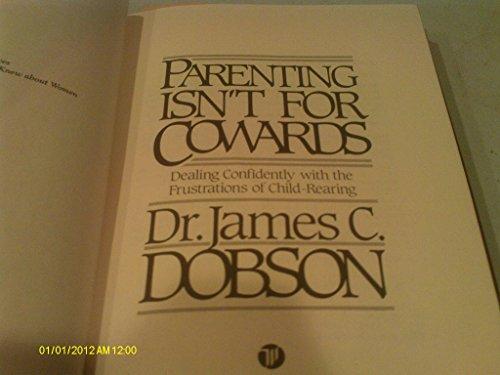
Parenting Isn't for Cowards Cover

James C. Dobson

Parenting Isn't for Cowards

The book was cited as a best‑selling title by Dr. James Dobson while the hosts discussed the evolution of the term "parenting" and the shift in family culture during the late 20th century. It was used as an example of earlier influential parenting literature rather than being actively recommended, and the mentions were neutral in tone.

Listen on Audible 7-day free trial

Episode: Bringing Up Baby

It was mentioned as a best-selling book by Dr. James Dobson, who hosted Focus on the Family, and alluded to in relation to the evolving understanding of parenting in the 1970s.

"

This could be revolutionary You have to change the way you think about parenting because Amy Chua ignited a firestorm by sharing the surprising details of her strict parenting methods in the book Battle Hymn of the Tiger Mother

Episode: Radio Replay: Bringing Up Baby

It was mentioned in relation to a discussion about the evolution and use of the word "parenting" in the context of the parenting culture of the late 20th century.

"

This is Focus on the Family, hosted by psychologist Dr. James Dobson, the author of such best-selling books on the family as Parenting Isn't for Cowards.

Episode: Kinder-Gardening

It was mentioned in the context of the rise in popularity of the term 'parenting' and the influence of books on parenting styles.

"

This is Focus on the Family, hosted by psychologist Dr. James Dobson, the author of such bestselling books on the family as Parenting Isn't for Cowards.

American Hookup: The New Culture of Sex on Campus Cover

Lisa Wade

American Hookup

The New Culture of Sex on Campus

The host highlighted the book as an in‑depth sociological look at hookup culture on college campuses, noting its exploration of the complex social rules and the emotional toll on students, especially regarding gender dynamics. The author, a sociologist, was featured discussing how prevailing expectations label certain behaviors as "desperate" and how public discourse may overstate the prevalence of hookups. Overall, the discussion presented the title as a valuable, insightful resource for understanding modern campus sexual norms.

Highly Recommended
Listen on Audible 7-day free trial

Episode: Just Sex

It was discussed in the context of hookup culture on college campuses, exploring the social rules and expectations around casual sex, and how these impact the emotional well-being of students.

"

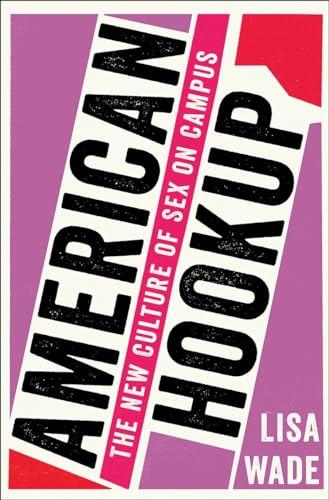
Lisa Wade is a sociologist at Tulane University. In her book, American Hookup, The New Culture of Sex on Campus, Lisa interviews college students and finds that hookup culture has a complex set of social rules.

Lisa Wade is a sociologist at Tulane University. She's the author of the book American The New Culture of Sex on Campus.

This year Lisa updated her research interviewing 150 students at Tulane.

You talk in the book about how even though, you know, talk about hookups is ubiquitous on college campuses, that doesn't necessarily reflect how much of it is actually going on.

I argue in the book that the worst thing a student can be called these days isn't slut and it's not even prude although that one's big one it's desperate so if the rule is that we're supposed to be having meaningless sex and we're enacting all the all the things that enable us to keep that illusion going even when that's not how people actually feel then it's against the rules for them to say I actually quite like you

Episode: Just Sex

It was explored how hookup culture has a complex set of social rules that can negatively affect students' emotional well-being, as well as how the culture might be disproportionately impacting certain groups of students.

"

Lisa Wade is a sociologist at Occidental College. In her book, American Hookup, The New Culture of Sex on Campus,

We spoke with several students in your book, Lisa, and we're going to hear from them in this conversation.

You talk in the book about how even though, you know, talk about hookups is ubiquitous on college campuses, that doesn't necessarily reflect how much of it is actually going on.

Lisa Wade is a sociologist at Occidental College and the author of the book American Hookup, The New Culture of Sex on Campus.

I argue in the book that the worst thing a student can be called these days isn't slut and it's not even prude, although that one's big one. It's desperate.

Episode: Episode 61: Just Sex

It was discussed in the context of hookup culture on college campuses, exploring the social rules, gender dynamics, and emotional impact on students both within and outside of the culture.

"

In her book, American Hookup, The New Culture of Sex on Campus, Lisa interviews college students and finds that hookup culture has a complex set of social rules.

Lisa Wade is a sociologist at Occidental College and the author of the book American Hookup, The New Culture of Sex on Campus.

Hierarchy in the Forest: The Evolution of Egalitarian Behavior Cover

Christopher Boehm

Hierarchy in the Forest

The Evolution of Egalitarian Behavior

It was discussed as an anthropological study of chimpanzee and early human social structures, concluding that early humans possessed a natural tendency toward egalitarianism.

"

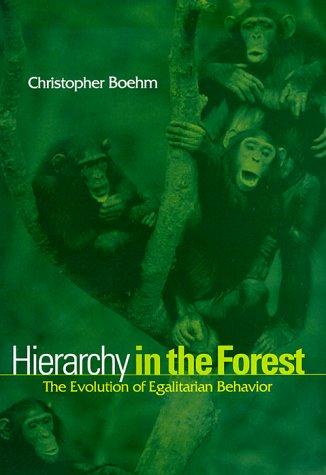
In his book Hierarchy in the Forest, Chris concluded that early human society was marked by a remarkable egalitarianism.

— Episode: From Pedestals to Guillotines

Listen on Audible 7-day free trial

Episode: From Pedestals to Guillotines

It was discussed as an anthropological study of chimpanzee and early human social structures, concluding that early humans possessed a natural tendency toward egalitarianism.

"

In his book Hierarchy in the Forest, Chris concluded that early human society was marked by a remarkable egalitarianism.

Episode: Radio Replay: The Power Hour

It was concluded that early human society had a remarkable degree of egalitarianism, and that the roots of democracy are likely woven into human DNA, rather than originating from specific historical events.

"

Basically, if you look at the individual chimpanzees, you can see that the alpha male is the one that's most active. If you look at the individual chimpanzees and how they behave around their superiors, it's rather ambivalent.

The roots of democracy, he concluded, weren't in the American Declaration of Independence or even in ancient Greece. They're woven into the DNA of human beings.

Note: The book recommendations on this page are discovered automatically from podcast transcripts, and may be incorrect or incomplete.