Podcast
Hidden Brain
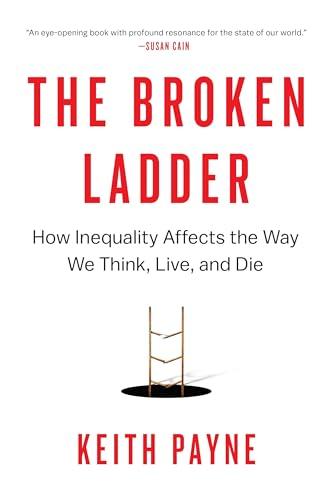
The book was highlighted in three episodes as a central explanation of how growing inequality reshapes self‑perception, stress responses, and risk‑taking. Host Shankar Vedantam and author Keith Payne discussed the status‑ladder metaphor, noting that when the gap becomes too large the ladder “breaks,” leading to chronic psychological strain. Their discussion presented the work as a valuable lens for understanding the hidden costs of inequality, reflecting a strong endorsement.
Episode: Money 2.0: The Rich and the Rest of Us
It was discussed in the context of inequality and its effects on how individuals perceive themselves in relation to others, touching on how inequality can impact psychological well-being and social behavior.
We think about ourselves in terms of being on a certain rung with some people above us and other people below us and Where we think we stand on that ladder tells you a lot about a person's life and their their life outcomes.
And as the scale of inequality gets larger and larger as it's been doing in the United States and other advanced economies around the world It becomes harder and harder to climb that ladder for a number of reasons.
And so when the scale of inequality gets out of proportion to what we can psychologically handle The ladder is essentially broken. It becomes harder and harder to occupy the rung that we think we ought to be on.
Inequality does a few different things to the way that both our minds and our bodies respond One is that it makes us focused on the short term. It makes us impulsive focused on the here and now And it makes us More willing to seek out risks and engage in high risk high reward sort of gambling behaviors it also affects our bodies in ways that are Similar to physical threats.
So the social threat of feeling lower on the status ladder than somebody else provokes very similar reactions Physiologically to a physical stressor So we react as if we were about to be physically attacked we react with stress responses as if we were about to face a literal physical challenge and The total of all of those effects adds up to Feeling that we're constantly in crisis.
Episode: Why Nobody Feels Rich
It was discussed in detail, focusing on how inequality affects the way people live, think, and die, and uses the analogy of a status ladder to show how people compare themselves to others.
He's the author of The Broken Ladder, How Inequality Affects the Way We Live, Think, and Die.
One of the images that I use throughout the book to capture the relative differences between people is this idea of a status ladder that we think about ourselves in terms of being on a certain rung with some people above us and other people below us.
And so when the scale of inequality gets out of proportion to what we can psychologically handle, the ladder is essentially broken.
Keith Bain is a psychologist at the University of North Carolina. He's the author of The Broken Ladder, How Inequality Affects the Way We Live, Think and Die.
Episode: Why No One Feels Rich
It explored the psychological impact of inequality, particularly how comparisons with those who have more can lead to feelings of inadequacy and stress, especially in the context of rising inequality.
He's the author of The Broken Ladder, How Inequality Affects the Way We Live, Think, and Die.
One of the images that I use throughout the book to capture the relative differences between people is this idea of a status ladder that we think about ourselves in terms of being on a certain rung with some people above us and other people below us.
And so when the scale of inequality gets out of proportion to what we can psychologically handle, the ladder is essentially broken. It becomes harder and harder to occupy the rung that we think we ought to be on.
I think there's not really any option of not thinking about it because we're constantly making social comparisons to what others have around us to define what's normal and what's enough.
Keith Bain is a psychologist at the University of North Carolina. He's the author of The Broken Ladder, How Inequality Affects the Way We Live, Think, and Die.