Hidden Brain
Book Recommendations

Hidden Brain

Why do I feel stuck? How can I become more creative? What can I do to improve my relationships? If you’ve ever asked yourself these questions, you’re not alone. On Hidden Brain, we help you understand your own mind — and the minds of the people around you. (We're routinely rated the #1 science podca...

Episodes 615
Books 396

Most Recommended

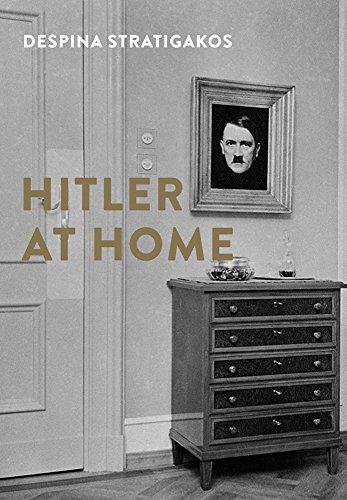
Hitler at Home Cover

Despina Stratigakos

Hitler at Home

Shankar Vedantam cited the book in three episodes to illustrate how Nazi propaganda fashioned a modest, nature‑loving image of Hitler that starkly contradicted his actual deeds. He highlighted the author's analysis of this constructed persona and used it to discuss the broader impact of propaganda on public perception.

Listen on Audible 7-day free trial

Episode: From Pedestals to Guillotines

It was mentioned in relation to how Nazi propaganda crafted an image of Hitler as a humble and relatable leader, contrasting with his reality.

"

In her book, Hitler at Home, Despina Stratigakos explores how the Nazi propaganda machine created an image of Hitler as a humble man of the people at ease in nature.

Episode: Radio Replay: The Power Hour

It explored how the Nazi propaganda machine created a specific image of Hitler as a humble man of the people and at ease with nature, despite his later actions and horrific acts.

"

In her book, Hitler at Home, Despina Stratigakos explores how the Nazi propaganda machine created an image of Hitler as a humble man of the people at ease in nature.

The Power Paradox: How We Gain and Lose Influence Cover

Dacher Keltner

The Power Paradox

How We Gain and Lose Influence

The title was highlighted as a framework for understanding how power originates from prosocial behavior but often erodes those very tendencies once attained, leading to self‑focus and reduced empathy. Host Shankar Vedantam and author Dacher Keltner discussed the paradox, referencing concepts like competitive altruism and the classic warning that power corrupts. Their conversation emphasized the book’s insight that power should be managed as a force for good rather than a source of folly.

Highly Recommended
Listen on Audible 7-day free trial

Episode: Radio Replay: The Power Hour

It was suggested that gaining power is often tied to prosocial tendencies but that once someone attains power, those tendencies diminish and are replaced by self-focus and a decreased ability to empathize with others.

"

Power does make us a little bit more self-focused, but this can happen to us all. This is just what the mind does when we feel powerful.

It's why I call the book The Power Paradox, which is, you know, if you look at this social science of power, we get power through, you know, the pro-social tendencies that we are endowed with, but then once we feel powerful or we come from a background of privilege and feeling above others, we lose those tendencies.

And it really lends credence to Lord Acton's old observation that I think stands the test of time, which is power corrupts and absolute power corrupts absolutely.

Power is part of every moment of our social lives we've got to be aware of it, it can lead us to do foolish things and we should try to do the things that make it a force for good.

Episode: Episode 43: The Perils of Power

It explored how emotional intelligence and kindness can lead to power, but also how power can undermine those very qualities, leading to a loss of influence and ethical considerations.

"

Docker Kantner is the author of the new book, The Power Paradox, How We Gain and Lose Influence.

One of the things that the science of power has done, which I report on in The Power Paradox, is to take a step back and think, what do we really mean by power?

So and that's why I call the book The Power Paradox, which is, you know, if you look at this social science of power, we get power through, you know, the pro-social tendencies that we are endowed with.

And again, this is part of The Power Paradox, which is that there is this really interesting literature called competitive altruism.

Dacher Keltner is a psychologist at the University of California...He's the author of The Power Paradox, How We Gain and Lose Influence.

Episode: Episode 43: The Perils of Power

It was discussed that power can corrupt and that those who rise to power through kindness and empathy can lose those very qualities once they achieve it, creating a paradox.

"

Docker Kantner is the author of the new book, The Power Paradox, How We Gain and Lose Influence.

And so one of the things that the science of power has done, which I report on in The Power Paradox, is to take a step back and think, what do we really mean by power?

So and that's why I call the book The Power Paradox, which is, you know, if you look at this social science of power, we get power through, you know, the pro-social tendencies that we are endowed with.

And again, this is part of The Power Paradox, which is that there is this really interesting literature called competitive altruism.

Dacher Keltner is a psychologist at the University of California. He's the author of The Power Paradox, How We Gain and Lose Influence.

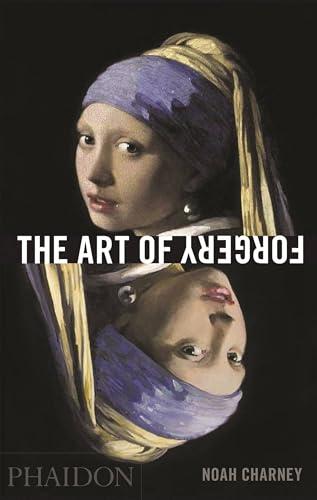
The Art of Forgery: The Minds, Motives and Methods of Master Forgers Cover

Noah Charney

The Art of Forgery

The Minds, Motives and Methods of Master Forgers

The Art of Forgery was the centerpiece of multiple discussions where author Noah Charney detailed the complex psychological motives and meticulous methods of master forgers. Host Shankar Vedantam expressed admiration for the case studies, particularly Eric Hebron, whose work was driven by revenge and scholarly rigor rather than simple financial gain. The podcast emphasized that Hebron's meticulous approach, requiring deep art historical knowledge, placed him on the same level as the artists he was mimicking.

Highly Recommended
Listen on Audible 7-day free trial

Episode: Radio Replay: Loving the Lie

It was mentioned that the book discusses the forger's story and his motivations, which were revenge and the desire to prove his skill, rather than simple financial gain.

"

If I'm allowed to have a favorite forger, which I know sounds a little bit funny, it would be Eric Hebron, who's really the prince of art forgers. He's the author of The Art of Forgery.

And his story is one of revenge over monetary gain. That's why he turned to forgery.

He initially had been a failed artist. He couldn't get traction with his own original artworks, even though he had some serious talent.

Episode: Encore of Episode 11: Forgery

The podcast discussed the book's exploration of art forgers, particularly Eric Hebern, his motivations for forgery, and his meticulous approach to creating convincing forgeries of old master drawings.

"

Noah Charney is the author of The Art of Forgery, The Minds, Motives and Methods of Master Forgers.

Hebern was particularly meticulous. And of all of the forgers I looked at, he was really the one who was the most passionate as an art historian and as a researcher and was focused on getting the materials correct whenever he could.

Hebern is the only one of all the artists I looked at, all the art forgers I looked at, who I think was at a similar level to the people he was forging.

He couldn't have done the forgeries if he hadn't done the scholarship.

And he is up there in terms of his physical ability to reproduce another artist's style, the care that he put in both the concept of playing with the artist's existing oeuvre and reproducing the materials in an accurate way.

Episode: Encore of Episode 11: Forgery

The podcast discussed the book 'The Art of Forgery', which details the motives and methods of art forgers, with a particular focus on Eric Hebern and his unique approach to forgery using 'provenance traps'.

"

Noah Charney is the author of The Art of Forgery, The Minds, Motives and Methods of Master Forgers.

Hebern was particularly meticulous. And of all of the forgers I looked at, he was really the one who was the most passionate as an art historian and as a researcher and was focused on getting the materials correct whenever he could.

And he is the only one of all the artists I looked at, all the art forgers I looked at, who I think was at a similar level to the people he was forging.

He couldn't have done the forgeries if he hadn't done the scholarship.

And he is up there in terms of his physical ability to reproduce another artist's style, the care that he put in both the concept of playing with the artist's existing oeuvre and reproducing the materials in an accurate way.

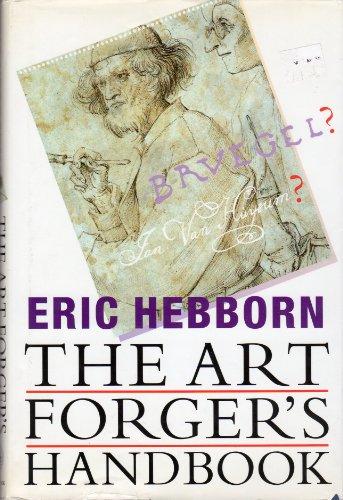
The Art Forger's Handbook Cover

Eric Hebborn

The Art Forger's Handbook

Expert Noah Charney discussed Eric Hebborn’s infamous book, The Art Forger's Handbook, noting that it served as a practical guide for subsequent criminals. The book contained detailed instructions on forgery techniques, including Hebborn's secret of getting drunk while drawing to achieve a crucial fluidity of line and prevent overthinking. The podcast highlighted that this instructional text has since been found in the possession of many arrested art forgers, underscoring its influence in the criminal world.

Listen on Audible 7-day free trial

Episode: Radio Replay: Loving the Lie

It was mentioned as a book written by Eric Hebron, which contained the forger's secrets and has since been found in the studios of other forgers.

"

And one of his tricks was to get drunk. He would get drunk while he was making the drawings and it would achieve a certain fluidity of line and body. He would not overthink things.

He would do dozens of sketches to prepare the fluidity of line he was after, but then he would start drinking heavily and then do his sketches as well in order to ensure that he wouldn't overthink things.

And one of his tricks was to get drunk.

And he wrote a book called The Art Forger's Handbook, which incidentally has been found in the studio of many an art forger arrested since it came out.

Episode: Encore of Episode 11: Forgery

The podcast mentioned that the art forger Eric Hebern wrote a book called 'The Art Forger's Handbook' which contained detailed instructions on how to commit art forgeries, which has been found in the studios of other forgers.

"

And one of his tricks was to get drunk. He would get drunk while he was making the drawings and it would achieve a certain fluidity of line and body and the process, he would not overthink things.

He would do dozens of sketches to prepare the fluidity of line he was after, but then he would start drinking heavily and then do his sketches as well in order to ensure that he wouldn't overthink things.

And that's one of the ways we can work backwards and see, well, if these were the techniques employed by Hebron, other forgers might have used similar techniques. And future forgers literally reproduced the recipes that he put into play in his book.

Episode: Encore of Episode 11: Forgery

It was mentioned that Eric Hebern wrote 'The Art Forger's Handbook', which contained details of his forgery techniques, including getting drunk while creating forgeries to achieve a certain fluidity of line.

"

And he wrote a book called The Art Forger's Handbook, which incidentally has been found in the studio of many an art forger rested since it came out.

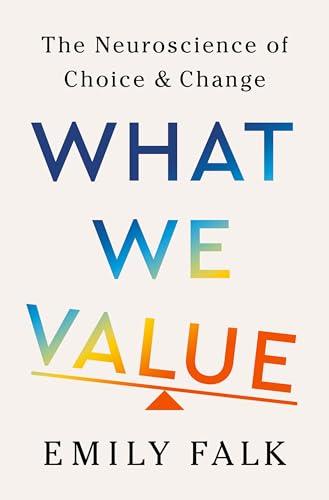
What We Value: The Neuroscience of Choice and Change Cover

Emily Falk

What We Value

The Neuroscience of Choice and Change

Across three episodes, the host introduced Emily Falk as a psychologist and neuroscientist and noted that she had written the book, which explored how values shape decision‑making and change. The mentions served primarily to establish her credentials rather than to recommend the title. The discussion highlighted the book’s focus on the neuroscience behind choice and change.

Listen on Audible 7-day free trial

Episode: It's Not My Fault!

The book was cited as authored by Emily Falk and presented as a work on the neuroscience behind choice and change.

"

Emily Falk is a psychologist and neuroscientist at the University of Pennsylvania. She's the author of What We Value, The Neuroscience of Choice and Change.

Episode: Winning the Battle Against Yourself

Emily Falk was identified as the author of the book, which was mentioned while introducing her credentials at the end of the episode.

"

Emily Falk is a psychologist and neuroscientist at the University of Pennsylvania. She's the author of What We Value, The Neuroscience of Choice and Change.

Episode: You 2.0: Trusting Your Doubt

Emily Falk was introduced as the author of What We Value, The Neuroscience of Choice and Change, highlighting her expertise on how values influence decisionmaking.

"

Emily Falk is a psychologist at the University of Pennsylvania. She's the author of What We Value, The Neuroscience of Choice and Change.

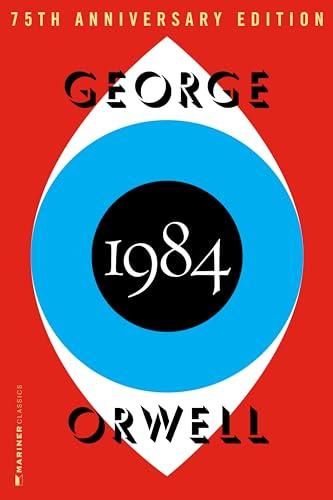
1984 Cover

George Orwell

1984

It was mentioned that in the book, '1984' by George Orwell, there were many ways to get into trouble with a totalitarian state, from protesting to having the wrong opinions.

"

In George Orwell's dystopian novel, 1984, there were lots of ways to get in trouble with a totalitarian state. Protesting in the street was a quick way to get seized by the authoritie...

— Episode: Revealing Your Unconscious: Part 2

Listen on Audible 7-day free trial

Episode: Revealing Your Unconscious: Part 2

It was mentioned that in the book, '1984' by George Orwell, there were many ways to get into trouble with a totalitarian state, from protesting to having the wrong opinions.

"

In George Orwell's dystopian novel, 1984, there were lots of ways to get in trouble with a totalitarian state. Protesting in the street was a quick way to get seized by the authorities, but you could also get in trouble for subtler things, like reading the wrong book or having the wrong opinions.

Episode: Revealing Your Unconscious: Part 2

It was mentioned as a book that could get you in trouble with a totalitarian state, suggesting it challenged authority and promoted independent thought.

"

In George Orwell's dystopian novel, 1984, there were lots of ways to get in trouble with a totalitarian state.

Protesting in the street was a quick way to get seized by the authorities, but you could also get in trouble for subtler things, like reading the wrong book or having the wrong opinions.

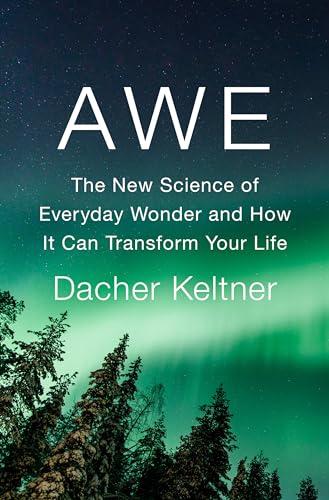
Awe: The New Science of Everyday Wonder and How It Can Transform Your Life Cover

Dacher Keltner

Awe

The New Science of Everyday Wonder and How It Can Transform Your Life

The author, a psychologist, discusses his book and his experiences with awe, a powerful emotion that can transform our lives.

"

He's the author of the book, Awe, The New Science of Everyday Wonder and How It Can Transform Your Life.

— Episode: Happiness 2.0: The Reset Button

Listen on Audible 7-day free trial

Episode: Happiness 2.0: The Reset Button

The author, a psychologist, discusses his book and his experiences with awe, a powerful emotion that can transform our lives.

"

He's the author of the book, Awe, The New Science of Everyday Wonder and How It Can Transform Your Life.

Dacher Keltner is a psychologist at the University of California, Berkeley. He's the author of Awe, the new science of everyday wonder and how it can transform your life.

Episode: The Reset Button

The host noted that Dacher Keltner is the author of a book on awe, describing it as a guide to the new science of everyday wonder and its transformative potential.

"

He's the author of the book Awe the new science of everyday wonder and how it can transform your life.

The Twilight Saga: Complete 4 Book Set ( 1 Pb & 3 Hb ) (Twilight (pb) / New Moon (hb) / Eclipse (hb) / Breaking Dawn (hb)) Cover

Stephenie Meyer

The Twilight Saga

Complete 4 Book Set ( 1 Pb & 3 Hb ) (Twilight (pb) / New Moon (hb) / Eclipse (hb) / Breaking Dawn (hb))

Anna Lembke describes reading the Twilight Saga around the time she turned 40. She felt mesmerized by the books, and the feeling of self-forgetting resonated with her, leading to an obsessive pursuit of paranormal romance novels.

"

Now you've always loved reading and around this time you fell in love with a very popular book series. What was it? It was The Twilight Saga.

— Episode: The Paradox of Pleasure

Listen on Audible 7-day free trial

Episode: The Paradox of Pleasure

Anna Lembke describes reading the Twilight Saga around the time she turned 40. She felt mesmerized by the books, and the feeling of self-forgetting resonated with her, leading to an obsessive pursuit of paranormal romance novels.

"

Now you've always loved reading and around this time you fell in love with a very popular book series. What was it? It was The Twilight Saga.

And can you tell me a little bit about what The Twilight Saga is? I confess I have not read the books. What is their broad plot and what is it about?

Well, you know, I was turned on to The Twilight Saga when I dropped my kids off at elementary school and there was a group of moms clustered around. Megan was one of the moms, my friend, and they were all laughing hysterically.

And I went over and I said, hey, what's so funny? And Megan said, oh, I've been reading this romance novel that I absolutely love. And I went into the bookstore to try to get the sequel and I couldn't find it.

So I went up to the bookstore owner and I said, hey, you know, where's the sequel? And he said, it's in the teenager section.

So all the moms started cracking up. They thought that was the funniest thing. But she said, but you guys have to read it. It's so good.

So I said, okay, Megan, what is it called? Because I'm always looking for a good read, right?

She said, oh, it's called The Twilight Saga.

So I thought, okay, I'll give it a try. And it was absolutely mesmerizing for me. It was as if I had never read a novel in my life. And all of a sudden, this novel about a bunch of teenage vampires running around biting each other on the neck just absolutely transported me.

It was really weird.

So the Twilight books eventually spawned a very popular series of films.

I want to play you a clip from one of those movies. A teenage girl named Bella is confronting a boy she knows, Edward, about his true nature. I know what you are.

Say it out loud. Say it. Vampire.

Are you afraid?

No.

Okay.

So there are a lot of, you know, breathless pauses here, but I'm hearing, you know, fantasy paranormal stuff, but it sounds like an innocent enough pastime, Anna.

Oh, an innocent enough pastime? Sure. It always starts out innocent.

And of course, you know, it was, but what happened was it changed the way I felt in the moment in a way that resonated so deeply that I wanted to keep recreating that feeling.

And what was that feeling? It was essentially a feeling of non-being.

While I was reading The Twilight Saga, it just transported me to another time and place such that I completely forgot myself.

And that self forgetting was clearly something that I needed and wanted.

You know, I read the whole saga.

I think it's like four books.

And then I wanted to recreate that feeling again.

So I read the whole saga again.

Wow.

Pleasurable, but not as pleasurable as the first time around.

But by then I was completely tapped into this whole genre of vampire romance novels.

And so I started to invest larger and larger amounts of time, energy, and creativity into obtaining and reading vampire romance novels.

You know, seemingly innocent to start with, but it became a bit of an obsession.

And when I ran out of vampire romance novels, I moved on to werewolf romance novels.

And then there was necromancers and soothsayers and all kinds of paranormal romance novels.

Episode: The Paradox of Pleasure

Anna Lembke described how she discovered the Twilight Saga while dropping her kids at school, saying it was mesmerizing and that she read the entire series multiple times, eventually moving on to similar paranormal romance novels.
"

Now, you've always loved reading. And around this time, you fell in love with a very popular book series. What was it? It was The Twilight Saga.

And all of a sudden, this novel about a bunch of teenage vampires running around biting each other on the neck just absolutely transported me. It was really weird.

While I was reading The Twilight Saga, it just transported me to another time and place such that I completely forgot myself. I read the whole saga, I think it's like four books, and then I wanted to recreate that feeling again.

Grit: The Power of Passion and Perseverance Cover

Angela Duckworth

Grit

The Power of Passion and Perseverance

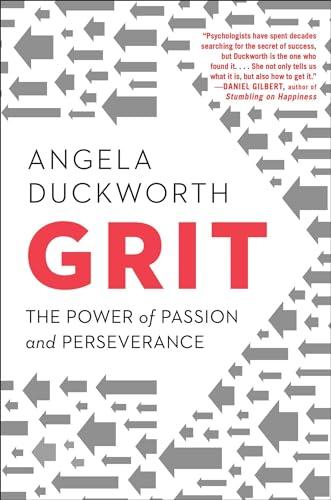
It was released in the spring and focuses on the power of passion and perseverance. It was mentioned in the context of the speaker's work and research on grit.

"

Angela Duckworth is a psychologist at the University of Pennsylvania. She's also founder and scientific director of the Character Lab. Her new book, Grit, The Power of Passion and Per...

— Episode: Episode 26: Grit

Listen on Audible 7-day free trial

Episode: Episode 26: Grit

It was released in the spring and focuses on the power of passion and perseverance. It was mentioned in the context of the speaker's work and research on grit.

"

Angela Duckworth is a psychologist at the University of Pennsylvania. She's also founder and scientific director of the Character Lab. Her new book, Grit, The Power of Passion and Perseverance, is out this spring.

Episode: You 2.0: Remember More, Forget Less

The book on grit was referenced in a discussion about deliberate practice and focusing on areas of weakness to improve learning and memory. The author's research on spelling bee champions was highlighted.

"

I remember talking to Angela Duckworth many years ago after she wrote her book on Grit, and one of her studies was looking at spelling bee champions, and the thing that she found was that spelling bee champions obviously put in a lot of time and preparation, but they also did what she called deliberate practice, and the way she defined deliberate practice was very similar to what you're talking about, Dan, which is it was a process of deliberately trying to identify areas of weakness and focus on those areas of weakness.

No Country for Old Men Cover

Cormac McCarthy

No Country for Old Men

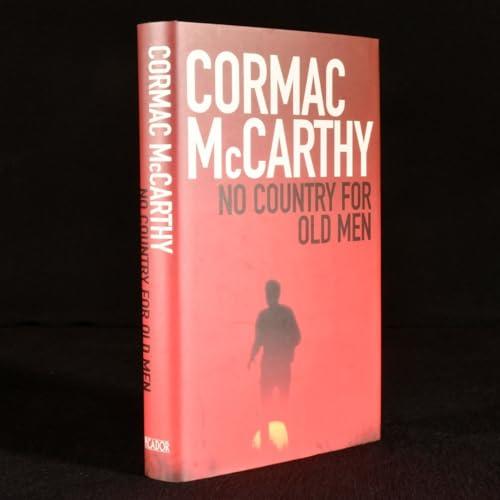
The movie "No Country for Old Men" is based on the book by Cormac McCarthy. It features a psychopathic killer named Anton Chigurh, whose haircut makes him look like a psychopath to Vivian. The actor who played Anton Chigurh was later seen at the Oscars looking very handsome, which made Vivian realize that the actor had transformed himself physically for the role and was actually acting.

"

Yeah one thing that stuck with me was his bow cut right. His haircut was just cut straight across down and I think the way that framed his face was just he looked like a psychopath.

— Episode: The Ugly Side of Beauty

Listen on Audible 7-day free trial

Episode: The Ugly Side of Beauty

The movie "No Country for Old Men" is based on the book by Cormac McCarthy. It features a psychopathic killer named Anton Chigurh, whose haircut makes him look like a psychopath to Vivian. The actor who played Anton Chigurh was later seen at the Oscars looking very handsome, which made Vivian realize that the actor had transformed himself physically for the role and was actually acting.

"

Yeah one thing that stuck with me was his bow cut right. His haircut was just cut straight across down and I think the way that framed his face was just he looked like a psychopath.

And so part of me thought that the way he looked was the way the actor looked. And so to me I was like well that must be an easy role since the actor looks like that. It's easy for him to play a psychopath.

And at the Oscars like Javier Bardem you know is a very attractive man right and very handsome, warm you know he transformed himself physically for that role.

And it's really interesting because sometimes you think I mean that's the same person.

The person in the movie would not be someone that you would judge as attractive right. Not attractive, unattractive and yet he as an actor is extremely attractive.

Episode: The Ugly Side of Beauty

The movie adaptation was based on the novel and the main character, Anton Chigurh, was played by actor Javier Bardem, who was able to drastically transform himself physically for the role.

"

Yeah one thing that stuck with me was his bow cut right. His haircut was just cut straight across down and I think the way that framed his face was just he looked like a psychopath.

And so part of me thought that the way he looked was the way the actor looked. And so to me I was like well that must be an easy role since the actor looks like that. It's easy for him to play a psychopath.

And at the Oscars like Javier Bardem you know is a very attractive man right and very handsome, warm you know he transformed himself physically for that role.

And it's really interesting because sometimes you think I mean that's the same person. The person in the movie would not be someone that you would judge as attractive right. Not attractive, unattractive and yet he as an actor is extremely attractive.

I mean really what this shows is that he was actually acting. He wasn't just playing himself. He was actually acting.

Harry Potter Hardcover Boxed Set: Books 1-7 (Slipcase) Cover

J. K. Rowling

Harry Potter Hardcover Boxed Set

Books 1-7 (Slipcase)

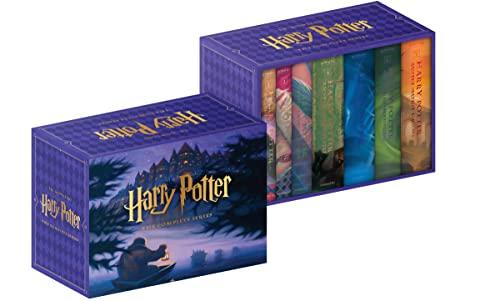
The speaker was rushing to the gym to listen to the latest Harry Potter novel, finding it so engaging that she didn't even notice the pain of her workout.

"

I did it with page turners. I listened to audiobooks. So whatever, you know, the latest Harry Potter novel or Hunger Games novel that I was listening to, I just wanted to know what happened next.

— Episode: You, But Better

Listen on Audible 7-day free trial

Episode: You, But Better

The speaker was rushing to the gym to listen to the latest Harry Potter novel, finding it so engaging that she didn't even notice the pain of her workout.

"

I did it with page turners. I listened to audiobooks. So whatever, you know, the latest Harry Potter novel or Hunger Games novel that I was listening to, I just wanted to know what happened next.

Episode: You, But Better

It was mentioned as an example of an audiobook used in the context of temptation bundling to make exercise more enjoyable and encourage gym attendance.

"

I did it with page turners. I listened to audiobooks so whatever you know the latest Harry Potter novel or Hunger Games novel that I was listening to I just wanted to know what happened next. So I'm rushing to the gym time is flying while I'm there.

Meditations: A New Translation (Modern Library) Cover

Marcus Aurelius

Meditations

A New Translation (Modern Library)

The conversation referenced the classic Stoic text as something people might carry around but not necessarily live by.

"

So Massimo, it has to be tempting to carry around a copy of Meditations to talk the Marcus Aurelius talk, but not walk the Marcus Aurelius walk?

— Episode: The Power of Family Stories

Listen on Audible 7-day free trial

Episode: The Power of Family Stories

The conversation referenced the classic Stoic text as something people might carry around but not necessarily live by.

"

So Massimo, it has to be tempting to carry around a copy of Meditations to talk the Marcus Aurelius talk, but not walk the Marcus Aurelius walk?

Episode: You 2.0: The Wisdom of Stoicism

Massimo rediscovered the ancient personal journal while coping with divorce, his father's death and a new job, and a passage about bitter cucumbers led him to focus on what he could control rather than complain.

"

The book was The Meditations by Marcus Aurelius, which is a Stoic book. ... when I opened it up at random, one of the first few sentences that I found ... you don't like the cucumber because it's bitter. Well, don't eat it. Why do you have to go on and complain about the fact that there are bitter cucumbers in the world?

I don't need the additional step of complaining and wallowing in this fact that the world is so unfair because there's bitter cucumbers.

Nudge Cover

Richard H. Thaler

Nudge

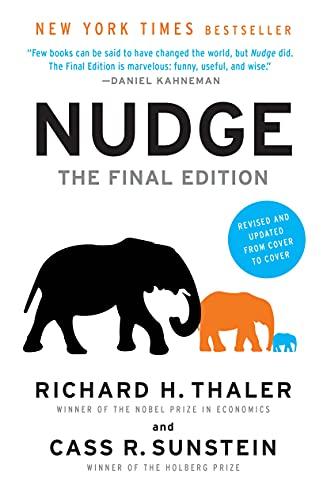
It was mentioned as the origin of the term 'choice architecture', which refers to how choices are presented to influence decisions, either intentionally or unintentionally.

"

The term comes from actually Richard Thaler and Cass Sunstein in the book Nudge.

— Episode: Choose Carefully

Listen on Audible 7-day free trial

Episode: Choose Carefully

It was mentioned as the origin of the term 'choice architecture', which refers to how choices are presented to influence decisions, either intentionally or unintentionally.

"

The term comes from actually Richard Thaler and Cass Sunstein in the book Nudge.

Episode: Misbehaving with Richard Thaler

It was mentioned as a previous book by Richard Thaler, which also explores how people don't always act the way traditional economists assume.

"

If you've read Thaler's previous book, Nudge, you know he's an economist who studies why people don't really act the way traditional economists say they will.

The Millionaire Next Door: The Surprising Secrets of America's Wealthy Cover

Thomas J. Stanley Ph.D.

The Millionaire Next Door

The Surprising Secrets of America's Wealthy

It was mentioned as a book that challenged conventional notions about wealth, highlighting how many millionaires live unassuming lives with modest spending habits, not the flashy lifestyles often portrayed.

"

I'm thinking about that book that came out some years ago, The Millionaire Next Door, and was all about how the people who are next door living very ordinary lives, you know, driving,...

— Episode: Money 2.0: Rewrite Your Money Story

Listen on Audible 7-day free trial

Episode: Money 2.0: Rewrite Your Money Story

It was mentioned as a book that challenged conventional notions about wealth, highlighting how many millionaires live unassuming lives with modest spending habits, not the flashy lifestyles often portrayed.

"

I'm thinking about that book that came out some years ago, The Millionaire Next Door, and was all about how the people who are next door living very ordinary lives, you know, driving, you know, 12-year-old cars and, you know, not even very expensive cars, these are the people who are truly wealthy.

One of the most profound things about The Millionaire Next Door is it took our vision of who rich people are and how they live their life and it just turned it on its head.

Episode: Rewrite Your Money Story

The book challenged the common perception of wealthy individuals, highlighting that many millionaires live modestly, contrary to popular belief. It was referenced to illustrate that outward displays of wealth don't always correlate with actual wealth.

"

I'm thinking about that book that came out some years ago, The Millionaire Next Door. And it was all about how the people who are next door living very ordinary lives, driving 12-year-old cars and not even very expensive cars, these are the people who are truly wealthy.

One of the most profound things about The Millionaire Next Door is it took our vision of who rich people are and how they live their life and it just turned it on its head.

Lord of the Flies (Penguin Drop Caps) Cover

William Golding

Lord of the Flies (Penguin Drop Caps)

The book, written by an English schoolteacher, tells a story of a group of schoolboys stranded on a deserted island after a plane crash. Initially, they celebrate their newfound freedom, but soon descend into chaos, violence, and fear.

"

This is the story told in the 1954 novel, Lord of the Flies.

— Episode: Parents: Keep Out!

Listen on Audible 7-day free trial

Episode: Parents: Keep Out!

The book, written by an English schoolteacher, tells a story of a group of schoolboys stranded on a deserted island after a plane crash. Initially, they celebrate their newfound freedom, but soon descend into chaos, violence, and fear.

"

This is the story told in the 1954 novel, Lord of the Flies.

It was written by an English schoolteacher named William Golding and it reflected his harsh view of humans in general, and children in particular.

The novel entered the cultural consciousness as a warning.

Without rules, systems, and adult supervision, children left alone would descend into chaos.

There was a real case in the 1960s of a group of schoolboys about the same age as the fictitious children in Lord of the Flies living on a Pacific island.

Episode: Parents: Keep Out!

The novel was cited as a cautionary tale about children descending into chaos without adult supervision.

"

the story told in the 1954 novel, Lord of the Flies.

Lord of the Flies

Free to Learn: Why Unleashing the Instinct to Play Will Make Our Children Happier, More Self-Reliant, and Better Students for Life Cover

Peter Gray

Free to Learn

Why Unleashing the Instinct to Play Will Make Our Children Happier, More Self-Reliant, and Better Students for Life

The book, written by Peter Gray, discusses the importance of allowing children to play, explore, and learn independently of adults. It argues that excessive adult supervision can lead to anxiety, depression, and a lack of resilience in children.

"

Peter Gray is a psychologist at Boston College. He's the author of Free to Learn. Why unleashing the instinct to play will make our children happier, more self-reliant and better stud...

— Episode: Parents: Keep Out!

Listen on Audible 7-day free trial

Episode: Parents: Keep Out!

The book, written by Peter Gray, discusses the importance of allowing children to play, explore, and learn independently of adults. It argues that excessive adult supervision can lead to anxiety, depression, and a lack of resilience in children.

"

Peter Gray is a psychologist at Boston College. He's the author of Free to Learn. Why unleashing the instinct to play will make our children happier, more self-reliant and better students for life.

Peter Gray is a psychologist at Boston College. He's the author of Free to Learn, Why Unleashing the Instinct to Play Will Make Our Children Happier, More Self-Reliant and Better Students for Life.

Episode: Parents: Keep Out!

Gray's own book was highlighted as a guide to unleashing children's instinct to play for happier, more selfreliant learners.

"

Peter gray is a psychologist at boston college he is the author of Free to Learn why unleashing the instinct to play will make our children happier more self-reliant and better students for life

Inclusify: The Power of Uniqueness and Belonging to Build Innovative Teams Cover

Stefanie K. Johnson

Inclusify

The Power of Uniqueness and Belonging to Build Innovative Teams

Stephanie Johnson, the psychologist who conducted the study, is also the author of this book, which is about the power of uniqueness and belonging to build innovative teams.

"

Stephanie Johnson is a psychologist at the University of Colorado Boulder. She's also the author of Inclusify, The Power of Uniqueness and Belonging to Build Innovative Teams.

— Episode: The Ugly Side of Beauty

Listen on Audible 7-day free trial

Episode: The Ugly Side of Beauty

Stephanie Johnson, the psychologist who conducted the study, is also the author of this book, which is about the power of uniqueness and belonging to build innovative teams.

"

Stephanie Johnson is a psychologist at the University of Colorado Boulder. She's also the author of Inclusify, The Power of Uniqueness and Belonging to Build Innovative Teams.

The Divine Comedy (The Inferno, The Purgatorio, and The Paradiso) Cover

Dante Alighieri

The Divine Comedy (The Inferno, The Purgatorio, and The Paradiso)

Frank Wilczek referenced Dante's Inferno to describe his experience in a Phoenix emergency room and likened the suffering people to the artwork in the book.

"

It really made me think about Dante's Inferno, these paintings of suffering people.

— Episode: The Mystery of Beauty

Listen on Audible 7-day free trial

Episode: The Mystery of Beauty

Frank Wilczek referenced Dante's Inferno to describe his experience in a Phoenix emergency room and likened the suffering people to the artwork in the book.

"

It really made me think about Dante's Inferno, these paintings of suffering people.

Episode: We're All Gonna Live Forever!

It was mentioned as an example of how, historically, people imagined souls residing in a specific place, which in this case, was a detailed description within Dante's work.

"

Whereas Dante in The Divine Comedy describes in great detail where he thought all the souls were.

Resilient Grieving, Second Edition: How to Find Your Way Through Devastating Loss (Second Edition) Cover

Lucy Hone

Resilient Grieving, Second Edition

How to Find Your Way Through Devastating Loss (Second Edition)

Lucy Hone, a public health researcher in New Zealand, wrote this book to explore her experience with grief after losing her daughter in a car crash. The book challenges conventional wisdom regarding the five stages of grief and encourages readers to actively engage in their own grief journey, focusing on positive emotions and making conscious choices about how to cope with loss.

"

Lucy Hone is a public health researcher and practitioner in New Zealand she's the author of Resilient Grieving finding strength and embracing life after a loss that changes everything.

— Episode: Healing 2.0: Life After Loss

Listen on Audible 7-day free trial

Episode: Healing 2.0: Life After Loss

Lucy Hone, a public health researcher in New Zealand, wrote this book to explore her experience with grief after losing her daughter in a car crash. The book challenges conventional wisdom regarding the five stages of grief and encourages readers to actively engage in their own grief journey, focusing on positive emotions and making conscious choices about how to cope with loss.

"

Lucy Hone is a public health researcher and practitioner in New Zealand she's the author of Resilient Grieving finding strength and embracing life after a loss that changes everything.

She was not just a grieving mom and researcher but a writer and she found that putting her experience on the page gave her both perspective and comfort. Her writing eventually became a book titled Resilient Grieving.

One of the ideas she explored in the book had to do with how many people deal with grief by asking why me? Lucy came to see that this was counterproductive.

Episode: Healing Your Heart

It was written by Lucy Hone based on her experiences and research after her daughter's death, exploring the idea that grief is not solely passive but also involves active choices and coping mechanisms.

"

one of the ideas she explored in the book had to do with how many people deal with grief by asking why me

The Great Gatsby: The Original 1925 Edition (Booklover's Library Classics) Cover

F. Scott Fitzgerald

The Great Gatsby

The Original 1925 Edition (Booklover's Library Classics)

The podcast discussed the famous ending of the book and how the character of Jay Gatsby embodies the cultural obsession with appearance and achievement.

"

F. Scott Fitzgerald's masterpiece, The Great Gatsby, describes the story of a man who desperately tried to climb the social ladder.

— Episode: Escaping Perfectionism

Listen on Audible 7-day free trial

Episode: Escaping Perfectionism

The podcast discussed the famous ending of the book and how the character of Jay Gatsby embodies the cultural obsession with appearance and achievement.

"

F. Scott Fitzgerald's masterpiece, The Great Gatsby, describes the story of a man who desperately tried to climb the social ladder.

Gatsby believed in the green light, the orgiastic future that year by year recedes before us. It eluded us then, but that's no matter. Tomorrow we will run faster, stretch out our arms farther and one fine morning. So we beat on, boats against the current, born back ceaselessly into the past.

Episode: Escaping Perfectionism

The host cited it as a classic example of social climbing and quoted its famous closing passage.

"

F. Scott Fitzgerald's masterpiece, The Great Gatsby, describes the story of a man who desperately tried to climb the social ladder. The final lines of the novel are amongst the most famous in literature.

Note: The book recommendations on this page are discovered automatically from podcast transcripts, and may be incorrect or incomplete.