
Podcast
Hidden Brain
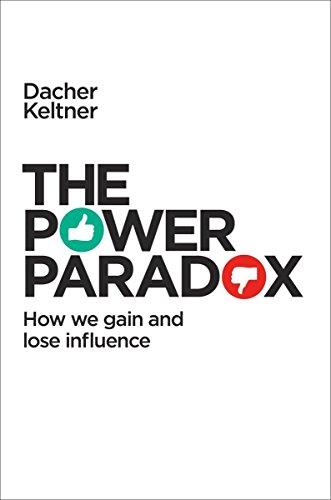
The title was highlighted as a framework for understanding how power originates from prosocial behavior but often erodes those very tendencies once attained, leading to self‑focus and reduced empathy. Host Shankar Vedantam and author Dacher Keltner discussed the paradox, referencing concepts like competitive altruism and the classic warning that power corrupts. Their conversation emphasized the book’s insight that power should be managed as a force for good rather than a source of folly.
Episode: Radio Replay: The Power Hour
It was suggested that gaining power is often tied to prosocial tendencies but that once someone attains power, those tendencies diminish and are replaced by self-focus and a decreased ability to empathize with others.
Power does make us a little bit more self-focused, but this can happen to us all. This is just what the mind does when we feel powerful.
It's why I call the book The Power Paradox, which is, you know, if you look at this social science of power, we get power through, you know, the pro-social tendencies that we are endowed with, but then once we feel powerful or we come from a background of privilege and feeling above others, we lose those tendencies.
And it really lends credence to Lord Acton's old observation that I think stands the test of time, which is power corrupts and absolute power corrupts absolutely.
Power is part of every moment of our social lives we've got to be aware of it, it can lead us to do foolish things and we should try to do the things that make it a force for good.
Episode: Episode 43: The Perils of Power
It explored how emotional intelligence and kindness can lead to power, but also how power can undermine those very qualities, leading to a loss of influence and ethical considerations.
Docker Kantner is the author of the new book, The Power Paradox, How We Gain and Lose Influence.
One of the things that the science of power has done, which I report on in The Power Paradox, is to take a step back and think, what do we really mean by power?
So and that's why I call the book The Power Paradox, which is, you know, if you look at this social science of power, we get power through, you know, the pro-social tendencies that we are endowed with.
And again, this is part of the power paradox, which is that there is this really interesting literature called competitive altruism.
Dacher Keltner is a psychologist at the University of California...He's the author of The Power Paradox, How We Gain and Lose Influence.
Episode: Episode 43: The Perils of Power
It was discussed that power can corrupt and that those who rise to power through kindness and empathy can lose those very qualities once they achieve it, creating a paradox.
Docker Kantner is the author of the new book, The Power Paradox, How We Gain and Lose Influence.
And so one of the things that the science of power has done, which I report on in The Power Paradox, is to take a step back and think, what do we really mean by power?
So and that's why I call the book The Power Paradox, which is, you know, if you look at this social science of power, we get power through, you know, the pro-social tendencies that we are endowed with.
And again, this is part of the power paradox, which is that there is this really interesting literature called competitive altruism.
Dacher Keltner is a psychologist at the University of California. He's the author of The Power Paradox, How We Gain and Lose Influence.