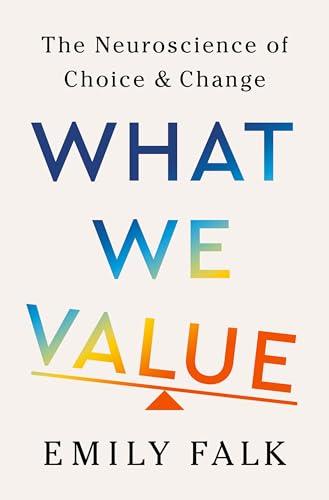

What We Value: The Neuroscience of Choice and Change Cover
Podcast Mentions

What We Value The Neuroscience of Choice and Change

Emily Falk

A neuroscientist reveals the hidden calculations that shape our daily decisions―and how to make more fulfilling, impactful choices in our work, relationships, and lives. With so many competing priorities pulling us in different directions every day―family, friends, work, our health―it can feel diff...

Podcasts 2
Quotes 7
Hidden Brain

Across three episodes, the host introduced Emily Falk as a psychologist and neuroscientist and noted that she had written the book, which explored how values shape decision‑making and change. The mentions served primarily to establish her credentials rather than to recommend the title. The discussion highlighted the book’s focus on the neuroscience behind choice and change.

Episode: It's Not My Fault!

The book was cited as authored by Emily Falk and presented as a work on the neuroscience behind choice and change.

"

Emily Falk is a psychologist and neuroscientist at the University of Pennsylvania. She's the author of What We Value, The Neuroscience of Choice and Change.
Episode: Winning the Battle Against Yourself

Emily Falk was identified as the author of the book, which was mentioned while introducing her credentials at the end of the episode.

"

Emily Falk is a psychologist and neuroscientist at the University of Pennsylvania. She's the author of What We Value, The Neuroscience of Choice and Change.

Episode: You 2.0: Trusting Your Doubt

Emily Falk was introduced as the author of What We Value, The Neuroscience of Choice and Change, highlighting her expertise on how values influence decisionmaking.

"

Emily Falk is a psychologist at the University of Pennsylvania. She's the author of What We Value, The Neuroscience of Choice and Change.

Think Fast Talk Smart: Communication Techniques

The episode highlighted the book's explanation of the brain's social relevance system and its role in predicting others' actions and communicating effectively. The host introduced the work and the guest elaborated on its focus on the brain's value, social relevance, and self-relevance systems, noting a chapter on brain synchrony during storytelling. The discussion presented the title as a valuable neuroscientific guide for communicators.

Highly Recommended

Episode: 216. Wired for Words: A Neuroscientist’s Guide to...

The book revealed the concept of the brain's "social relevance system," which relates to understanding what other people are thinking and feeling to better predict their actions and communicate successfully. The author discussed how the book centers its final section on the three core brain systems: value, social relevance, and self-relevance.

"

In her book What We Value: The Neuroscience of Choice and Change, she reveals that our brains have what she calls a "social relevance system" -- our ability to understand what other people are thinking and feeling.

Her latest book is entitled What We Value, The Neuroscience of Choice and Change.

I want to turn to your new book, What We Value. And you dedicated a whole chapter of that book to brain synchrony that happens between people when we communicate, when we tell stories.

I'm going to focus on sort of the three ingredients that the book centers on, which have to do with our brain's value system, our brain's social relevance system, and our brain's self-relevant system.

Note: The book recommendations on this page are discovered automatically from podcast transcripts, and may be incorrect or incomplete.