Essentialism
Greg McKeown
Mentioned 4 months ago
BONUS | 3 Practices to Improve Your Life In a Week
For centuries, all sorts of people—generals and politicians, athletes and coaches, writers and leaders—have looked to the teachings of Stoicism to help guide their lives. Each day, author and speaker Ryan Holiday brings you a new lesson about life, inspired by the thoughts and writings of great Stoi...
Recently mentioned
Greg McKeown
Mentioned 4 months ago
BONUS | 3 Practices to Improve Your Life In a Week
Bronnie Ware
Mentioned 4 months ago
BONUS | 3 Practices to Improve Your Life In a Week
Marcus Aurelius
Mentioned 4 months ago
This is How You Win the Day | Circumstances Have No Care For Our Feelings
Ryan Holiday
Mentioned 4 months ago
This is How You Win the Day | Circumstances Have No Care For Our Feelings
Epictetus
Mentioned 5 months ago
Simple Stoic Rules That Actually Change Your Life
Jim Mattis
Mentioned 5 months ago
What A Wonderful Thing to Measure | Stoic Strategies for Becoming More Resilient
Steven Pressfield
Mentioned 5 months ago
If You Only Read a Few Books This Year, Read These
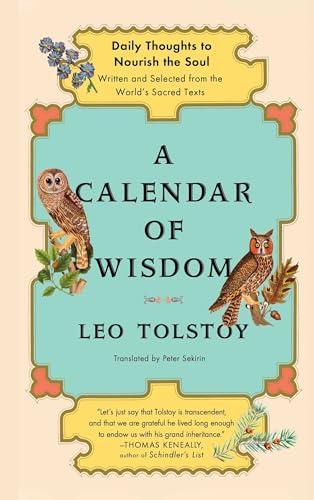
Leo Tolstoy
Mentioned 5 months ago
If You Only Read a Few Books This Year, Read These
Dr. Becky Kennedy
Mentioned 5 months ago
If You Only Read a Few Books This Year, Read These
Morgan Housel
Mentioned 5 months ago
If You Only Read a Few Books This Year, Read These
Anne Morrow Lindbergh
Mentioned 5 months ago
If You Only Read a Few Books This Year, Read These
Bill Perkins
Mentioned 5 months ago
If You Only Read a Few Books This Year, Read These
The Epic Story of the Deadliest Plague in History
The speaker learned more about how to spend the last 15 months from this book, than from any breaking news story. The speaker found that the news stories during the pandemic were mostly just reconfirming what was already known.
The Great Influenza, a book that I read at the beginning of the pandemic taught me much more about how to spend the last 15 months than, you know, any breaking news story because the...
— Episode: Waste No More Time Doing This | Keeping...
The speaker learned more about how to spend the last 15 months from this book, than from any breaking news story. The speaker found that the news stories during the pandemic were mostly just reconfirming what was already known.
The Great Influenza, a book that I read at the beginning of the pandemic taught me much more about how to spend the last 15 months than, you know, any breaking news story because the news story has never really changed anything.
The podcast host had raved about this book during COVID and found it fascinating. They mentioned reading it and recommending it recently.
During COVID, I raved about this book, The Great Influenza by John Embary, who I've had on the podcast. Fascinating book. I read this great book.
It was described as the best book read during COVID, offering a factual account of the Spanish Flu pandemic, which was used for comparison and understanding of the current situation.
the best book I read during COVID was John Embarry's book The Great Influenza right so you're reading about the Spanish flu and you're like okay here's everything that's true right
The book was referenced in the context of the similarities between the 1918 influenza pandemic and the COVID-19 pandemic, highlighting the cyclical nature of such events in history.
I remember at the start of the pandemic crap you'll probably know the book about the Spanish flu yeah The Great Influenza by John and Barry yeah so I was reading that book and it's the same like down to the freaking masking like all of it is the same
The speaker stated that this book taught them more about how to spend the last 15 months of the pandemic than any breaking news story, because the news stories never really changed anything.
The Great Influenza a book that I read at the beginning of the pandemic taught me much more about how to spend the last 15 months than you know any breaking news story because the news stories never really changed anything.
The speaker recommended *The Great Influenza* as a book to read instead of following breaking pandemic news.
You know, you can, you could have followed one of Donald Trump's impeachment or you could have read a biography of Nixon or Andrew Johnson. You know, it's better to go back further. It's better to look deeper. You may even learn more from something fictional than you at like you could, you could learn as much from Camus the plague as you could from, you know, the latest New York Times report.
if you haven't read a great influenza yet, you should, it's incredible.
This book was highly recommended by Ryan Holiday as a way to understand the pandemic.
one book I highly recommend it to everyone was James M. Barry's The Great Influenza.
The speaker recommended this book, noting its relevance to current events and its historical parallels to situations faced by Marcus Aurelius.
I recommended The Great Influenza, right? What he talked about a hundred years ago and that pandemic would have been quite familiar to Marcus and really is in the Antonin plague.
It was mentioned in the context of the author's other works, including a book about pandemics, that were eerily present.
I was talking to John Embarry who wrote The Great Influenza
It was described as an incredible book that accurately predicted many of the mistakes made during the COVID-19 pandemic. The speaker was blown away by its contents.
I don't know why I never read The Great Influenza the story of the deadliest pandemic in history but I did read it in March 2020 in those early days of lockdown and was just fucking blown away. It's an incredible book.
If you read it, you could have consumed zero news over the last three years, spent zero time talking about the pandemic, learning about the pandemic and just read this book and don't effectively exactly what to do.
All the mistakes policymakers would make, all the mistakes people would make, all the things to be worried about, the things not to be worried about, basically everything you would need to do, you could have learned from this book
This book, read at the beginning of the pandemic, was cited as more helpful in navigating the pandemic than breaking news stories, emphasizing the enduring value of in-depth analysis over fleeting news reports.
The Great Influenza a book that i read at the beginning of the pandemic taught me much more about how to spend the last 15 months than you know any breaking news story because the news stories never really change anything it's like hey this thing is real here's the scientific advice take it seriously wait for it to be over right the latest report is only adding to what we already know for the most part
The speaker recommended this book, referencing it as a valuable resource for understanding pandemics, providing an alternative to following breaking pandemic news.
you could read a book about the Spanish flu which I recommended a bunch of times if you haven't read a great influenza yet you should it's incredible.
Ryan Holiday raved about this book and recommended it to listeners. It was said to be an important book for understanding the American story.
if you haven't read The Great Influenza you should
The book was suggested as a resource to understand the current situation, contrasting it with unreliable information found on social media. It was presented as a reliable historical account relevant to the contemporary discussion about misinformation and pandemics.
I think you want to let's like read John Berry's The Great Influenza to understand what's happening today as opposed to reading Alex Berencens nonsense tweets about it right like who you want to you want to study the past to help you understand the future
This book, read by the speaker during the pandemic, was cited as a source of more relevant and lasting information about handling crises than breaking news reports, suggesting that such reports rarely effect lasting change.
The Great Influenza a book that I read at the beginning of the pandemic taught me much more about how to spend the last 15 months than you know any breaking news story because the news stories never really changed anything it's like hey this thing is real here's the scientific advice take it seriously wait for it to be over right
The book was described as incredible and recommended as one of the best for understanding what happens during a pandemic, specifically referencing the 1918 flu pandemic and its context within World War I.
Yes, I have. Yeah, incredible book.
It is an incredible book.
And, you know, it's fascinating that, you know, what came out of that, right? Like it led directly to the discovery of DNA and, you know, all this sort of stuff.
If you're, you know, as far as like late people books, that's one of the best ones, you know, to understand what happens in a pandemic and, you know, what can happen with in this case with the flu and, you know, the first world war.
This non-fiction book about the 1918 influenza pandemic was recommended as relevant reading at the beginning of the COVID-19 pandemic, highlighting the historical parallels between the two events.
I was uh i've talked about um john emberry's book The Great Influenza which is an incredible book that i think everyone should have read at the beginning of this pandemic
It was mentioned as an amazing book about the Spartans, with a lot of Stoic themes.
This is the early manuscript draft of Gates of Fire, Pressfield's amazing book about the Spartans, which has all sorts of Stoke themes in it.
— Episode: All Success Comes From This | 9 Stoic Ti...
It was mentioned as an amazing book about the Spartans, with a lot of Stoic themes.
This is the early manuscript draft of Gates of Fire, Pressfield's amazing book about the Spartans, which has all sorts of Stoke themes in it.
He sent this to me. This is the signed last page of the manuscript, which if you read the book is this heartbreaking, super beautiful ending.
And this is that last page and he signed it. So I have that. But then I have this thing, which is one of my favorite quotes from Hemingway that we sort of messed around with. I think we even have a shirt for it in the painted porch.
It was about the Battle of Thermopylae and the 300 Spartans. The speaker had gotten the final page of the manuscript because he gave the author the idea for a pre-order promotion that included giving away manuscript pages to those who pre-ordered enough copies.
The final page of the first manuscript of Gates of Fire, Stephen Pressfield's amazing book about the Battle of Thermopylae and the 300 Spartans.
He was like, Hey, uh, I'm trying to promote my next book and I don't know what I should do. You got any ideas?
And he was, he had been telling me earlier how he had just found the manuscript of Gates of Fire, which he'd written on a typewriter.
I said, you know what would be cool? What if you came up with a thing where if people pre-ordered a certain number of copies, they could get one of those manuscript pages.
And he was like, I love the idea. I'm absolutely going to do it.
A couple of months later, he told me he was doing it and he said, I'd like to give, you can pick any page for giving me the idea.
And I was like, I want the last page of Gates of Fire because that's the one that has the famous poem at the end about how, Hey, stranger passing by, tell the Spartans here obedient to their laws we lie.
It's the epitaph to the sacrifice that these 300 Spartans made, not just to their fellow Spartans, their fellow Greeks, but all of Western civilization, which was saved from being conquered by Xerxes and what was then sort of Eastern despotism.
The book is described as an epic historical novel about the Battle of Thermopylae; it explores the concept of what is the opposite of fear and concludes that it is love.
Gates of Fire, the epic historical novel of this battle by Stephen Pressfield is today passed from soldier to soldier person to person as a kind of tribute to that example.
The central question of that book is what is the opposite of fear? It's not enough to simply conquer or quench fear. In writing the book, Pressfield wanted to know as the Spartans did what lay beyond it.
It's not just courage because you can be courageous for selfish reasons. You have to override fear to jump out of an airplane sure but if you're doing it for fun is it really that meaningful?
As Pressfield concludes the opposite of fear, the true virtue contrasted with that vice was not fearlessness. The opposite of fear is love, he says.
The book's final, typewritten manuscript page, signed by the author, was mentioned as a cherished item. Its value and significance to the speaker were highlighted.
if you haven't read The War of Art, Do The Work, Turning Pro, Gates of Fire, government cheese, Tides of War, A Man at Arms, what are you even doing with your life?
I have the last page from the type written manuscript of Gates of Fire signed by the author.
It was mentioned as one of Steven Pressfield's books that has sold millions of copies; the podcast host discussed Pressfield's new book and his writing process.
Steven Pressfield whose books like Gates of Fire and the War of Art have sold millions of copies explains in his new book put your ass where your heart wants to be the rather penal and low key process of creation.
The podcast host mentioned having a framed, numbered page from the original manuscript in their office; it holds personal significance to them.
I've got a copy from Stephen Pressfield's Gates of Fire that I've framed in my office. It means so much to me.
This was the first book by Steven Pressfield that the host read; they felt a connection to the author's writing that they hadn't experienced with many other writers.
And from the moment I first read one of his works actually the first book I read of his was Gates of Fire. I just I felt the connection to him in his writing that I have not felt to many thinkers or writers at any other point in my life.
The author considers the last page of the original manuscript, containing the epitaph of the Spartans who died at Thermopylae, to be the most important and beautiful page of the book, and keeps it displayed as a reminder of duty, responsibility, and sacrifice.
Go tell the Spartans, stranger passing by, that here obedient to their laws we lie.
This book by Steven Pressfield was briefly mentioned as one of his amazing books.
obviously has all these amazing books that are afghan campaign Gates of Fire or legend of backer vans
This historical novel about the Battle of Thermopylae was discussed as a tribute to the Spartans' courage and selflessness. The author explored the concept of what is the opposite of fear, concluding it is love.
Gates of Fire the epic historical novel of this battle by Stephen pressfield is today passed from soldier to soldier person to person as a kind of tribute to that example the central question of that book is what is the opposite of fear it's not enough to simply conquer or quench fear in writing the book press field wanted to know as the Spartans did what lay beyond it if fear was the vice what was the virtue it's not just courage because you can be courageous for selfish reasons you have to override fear to jump out of an airplane sure but if you're doing it for fun is it really that meaningful it wasn't just the men and their arms that made feats at thermopoly possible was also the wives who not only allowed their husbands to go but whose courage and iron self discipline was the backbone of the country the toughness and selflessness of Spartan women is legendary when one Spartan king was killed in a vicious coup his mother rushed to his body and when the killers offered to spare her if she kept quiet she stood up and defied them her last words as she offered her neck was may this only be in service of sparta we are mistaken to see the Spartans as mere warriors just courageous fighters as press field concludes the opposite of fear the true virtue contrasted with that vice was not fearlessness the opposite of fear is love he says love for one another love for ideas love for your country love for the vulnerable in the weak love for the next generation love for all is that not what hits us in the solar plexus when we hear leonitis is final cheerful words to his wife as he leaves marry a good man who will treat you well bear him children and live a good life and it is this profound meridip love that allows one to rise above the logic of self-preservation and achieve true greatness whether that's shielding someone from a bullet risking your job to speak out in defense of the common good or fighting against all hope for cause you know is right Florence Nightingale cared tenderly for the suffering of the sick in her country De Gaulle fought exasperatingly hard to preserve France the Spartans at the hot gates were something beyond this truly selfless giving the most a person can possibly give sure not all selflessness requires the ultimate sacrifice but there is no selflessness without sacrifice the sacrifice they made was incredible all the more so because it had not been for themselves or their own people that they had made it leonitis could have survived if he chose he and the Spartans could have ruled all of Greece nevertheless he went and died so that all those other Greeks could be free so that we could be free if courage is rare than this kind of heroism is a critically endangered species if courage is by itself unreasonable then love in this higher form the truly selfless kind is insane it's baffling in its majesty it is real human greatness it is us transcending logic self-interest in millions of years of our own biology to find quarter however briefly in a higher realm the Spartans are the heroes we recognize as the embodiment of that idea but we should remember that they are stand-ins they represent the anonymous courage of countless resistors for all time for people who testified in trials and faced reprisals people who registered to vote and were beaten for it union organizers who went up against robber barons pioneers who sent out rescue parties athletes who played through career-ending injuries to keep their team in the game or their families fed these were moments of true greatness a soul what we're willing to give that full measure of our devotion to the effort to the stranger to what must be done that's what takes us higher that's what transforms us from brave to heroic maybe for a moment maybe just to one person maybe to be enshrined in the history books for all time
A scene from this novel was used to illustrate a point about reading and learning, focusing on the value of critical engagement with the text.
It's fitting that a scene in Stephen Pressfield's novel Gates of Fire would use a young storyteller making the same point in Seneca.
Pressfield has the young squire turned warrior explain when Priem of Troy kneels before Achilles to kiss in supplication the hand of the man who has slain his sons including the mightiest endures to him Hector, Hero and Protector of Iliam.
The podcast discussion referenced this book, which portrays the battle of Thermopylae, highlighting the theme of love for fellow soldiers as the opposite of fear in combat.
a book that i often recommend to people who want to understand uh what it's like for people in combat is Gates of Fire yes even press field and you may recall it's about the the 300 spartans who stand and delay the massive persian army as it seeks to invade and conquer Greece and there's much to admire about that book and much to learn from it but there's a conversation in it about by the greeks about why they stand in battle and to boil it down quickly the comment is simply that in in combat the opposite of fear is not courage the opposite love is love it is love filo in greek for the men and women who stand on either side of you and that is as true today as it is for the ancient greeks or any other civilization two three four thousand years ago
i reread uh Gates of Fire at the beginning of the pandemic and i'm very glad i did i think one of the things that's been so hard for me to wrap my head around the last 12 months you know totally agree with your points about the sort of millennial generation it steven wrote a great piece about you know the spartan the spartan line that that the spartan soldier carries their shield not for their own protection but to create the impenetrable line for the person next to you it you couldn't invent a better metaphor for that than masks during the middle of a pandemic or social distancing in the middle of a pandemic he was saying and just how hard that's been for people to do and and and how little it actually asks of us i think i think uh i think that's been the hardest thing for me to watch and to struggle with it's like it's been hard to watch people who you care about not care about other people
It was reread at the beginning of the pandemic and enjoyed as much the second time as the first. It was described as an incredible story, and at its core, a story about love and the power of love.
I reread Stephen's book, Gates of Fire at the beginning of the pandemic. I loved it as much the second time as I did the first time when I read it almost 15 years ago.
I think his best book since Gates of Fire
Max Joseph mentioned that he had seen Ryan Holiday do a Q and A about "The Laws of Human Nature" in Los Angeles.
And then I recognized you and I came up to you and I was like, you know, dealing with my own anxieties about certain things. I came up to you and I just was like, Ryan.
— Episode: Storytelling In A Competitive Content Wo...
Max Joseph mentioned that he had seen Ryan Holiday do a Q and A about "The Laws of Human Nature" in Los Angeles.
And then I recognized you and I came up to you and I was like, you know, dealing with my own anxieties about certain things. I came up to you and I just was like, Ryan.
This book is described as being about how human nature tends to be and what people in power do, and that it is not a prescription for how the world should be.
author who sold millions of copies, 48 laws of power, 33 strategies of war, mastery, The Laws of Human Nature.
And so what I have loved so much about Robert, what's impressed me so much is what a cheerleader and selfless patron of my career he's been. He helped me get my first book deal, he introduced me to book agents, he's blurbed my books, he's given me advice. I feel like I've repaid him where I can. But he has selflessly supported and rooted for me and given me advice and had to put up, I'm sure obnoxiously with people asking him about me in interviews when they should be talking to him about him and his work. So for me that's such a great insight into Robert. He knows the law, he knows how other people typically behave in this situation, he knows what he could get away with, but then how he comports himself, the standard he holds himself to is something higher than the 48 Laws of Power, more virtuous than the 48 Laws of Power.
And then what did he do? He goes to this incredibly difficult, grueling rehab regimen so he could get back and market that book, which would become the fastest selling of all of his books.
This book, along with others by Robert Greene, was discussed, highlighting its ambitious scope, unexpected commercial success, and the author's unique approach to scholarship. The book's impact and the author's perseverance were emphasized.
he had an idea for the 40 laws of power and that guy fronted him uh Joe Steilfers who's oh that's right yeah on the first one.
The Laws of Human Nature should not be The Laws of Human Nature is a 600 book page book about you know everything that makes humans both rational and irrational
The Laws of Human Nature literally almost killed him like two months before it came out he had a near fatal stroke driving in his car in Los Angeles and like was recestated by the paramedics and you know very easily could not have regained function yeah yeah his limbs let alone his mind
It was mentioned in relation to a planned event with Robert Greene that had to be canceled due to health issues. The author's dedication to his fans and the importance of self-care were emphasized.
I knew working with Robert on The Laws of Human Nature launch that he would literally do anything for his fans but sometimes discipline moderation is taking care of yourself and being safe rather than sorry.
The book was mentioned as containing some discussion of sublime experiences. It was favorably mentioned alongside the upcoming book on the same topic.
Robert's next book is about the concept of the sublime these sort of sublime experiences he talks a little bit about this in The Laws of Human Nature also very good but I think practicing gratitude really looking at all the good in your life all the lucky breaks that you've gotten how wondrous and amazing everything is this is also very humbling and that's sort of what I get on those walks outside in nature as well it's just some sense of something larger than myself something that I'm I feel lucky to be a part of and appreciate and so yeah I think gratitude and mastery are two sides of the same coin.
The speaker mentioned this book in relation to the concept of 'Mittenfreude,' the active wishing of success on others.
Robert Greenin in in his uh book The Laws of Human Nature he talks about the difference between shot and Freud like wishing bad things uh and other people in mitten Freud probably pronouncing least horribly wrong uh this is also a day we broke out in the daily laws which I was lucky enough to work on if you haven't ready should carry them in the paint of porch I think we even have some signed copies again I don't that there's another awesome daily book out there like I remember Rob going is that gonna be a problem with your book and I was like no this is amazing more people reading something every day it's good for the world and probably good for the category two anyways there's also a section of this in in the daily laws but mitten Freud is the active wishing of success or goodwill towards people I heard love once defined as as willing the good of the other like wanting good for the other wishing them happiness wishing them success as an author wishing wishing you the biggest first week sales you could possibly have I want that for you it doesn't come at my expense and even if it did who am I to root against you
The interviewee mentioned listening to Robert Greene's podcast episode on this book, indicating he values Greene's insights.
you're still in this is key I mean he's had literally everyone you can imagine on professional art forgers to billionaire entrepreneurs to mafia hitmen to models to professional athletes he did this episode about birth control and how it alters the partners we pick and how medicine can affect\elements of our personalities he talks about just everything you can imagine it's just a great show recommend it
Robert Greene mentioned this book himself during the interview, describing how he sees it embodying two main lessons from his life: the importance of a realistic outlook and daily practice.
yeah it depends it depends on your background and you read a lot of books on psychology and if you can stem it going through a nearly 600 page book but it's you know I have a lot of people who you wouldn't think would be reading The Laws of Human Nature but who reads it slowly and bit by bit and particularly here in a situation where you're dealing with a lot of difficult people
It was mentioned as one of Robert Greene's books, and was referenced in relation to biases.
which I think you talk a lot about in laws of human nature and then you end up very surprised by the bad results
The book's chapter on rationality was discussed. The speaker mentioned the author's ideas on how to be rational by acknowledging one's irrationality and emotional reactions.
in the chapter on rationality
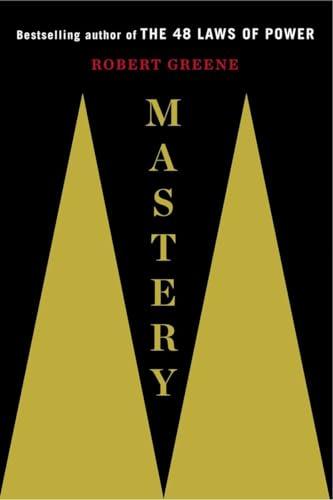
Max Joseph mentioned that he had read "Mastery" by Robert Greene multiple times. He had listened to it a couple of years ago while running.
Like I've read Robert Greene's books a couple of times. Like I've read Mastery.
— Episode: Storytelling In A Competitive Content Wo...
Max Joseph mentioned that he had read "Mastery" by Robert Greene multiple times. He had listened to it a couple of years ago while running.
Like I've read Robert Greene's books a couple of times. Like I've read Mastery.
Oh, it's an incredible. I've read Mastery. Like I think I read it like a bunch, like two years ago. I listened to it as I was running.
Robert Greene's Mastery inspires people by showing them what can be achieved through dedication and hard work. Seeing the results of someone who has dedicated their life to something and reached the peak of mastery is inspiring.
I think one of the most motivating books that I've ever read is Robert Greene's Mastery.
The book was mentioned as an important part of the speaker's development of the idea of being patient and letting time do its work.
I know that you've worked very closely with Robert Green over the years and his book, Mastery, was just instrumental in my development of the idea of being patient and letting time do its work.
It was mentioned as a favorite of the podcast host, and was praised by a recent podcast guest.
Check out Mastery.
I just had a podcast guest yesterday who was raving about Mastery.
The book discusses the importance of apprenticeships and learning from masters in one's field. Ryan Holiday's apprenticeship with Robert Greene is directly linked to this book's teachings.
author who sold millions of copies, 48 laws of power, 33 strategies of war, Mastery, the laws of human nature.
And in Robert's amazing book Mastery, he talks about how everyone has to undergo a long apprenticeship. You have to learn from someone who's further along than you, who's mastered that thing, that's the fastest way for you to become a master.
The book was said to have changed Sam Parr's life. It was mentioned in the context of his journey towards mastering business and his career.
I read Mastery robber green it changed my life and that's why i purposely use those words of trade and Mastery
It was recommended to the listeners and described as an incredible book about finding your life's task and becoming a perpetual student in your field.
Robert wrote an incredible book called Mastery which I would recommend to everyone here um like how do you decide not just like I want to be good at something but he says like you find what your life's task is what you're put on this planet to do and then how you become a perpetual student and you know hopeful but never in practice master of that domain yeah unbelievable he is he is it's amazing though because he is one of the to your point one of the greatest thought leaders and thinkers ever for sure and definitely an average and you're now following in his footsteps in that in that same in that same space
A book by Robert Greene that the speaker highly recommends, describing it as wonderful.
He wrote a wonderful book called Mastery and he has another book I can't recommend enough called The Daily Laws,
The book was highly recommended by the speaker.
Mastery by Robert Green, definitely.
The podcast host mentioned Robert Greene's book, "Mastery," in relation to his fascination with people achieving mastery in their fields, connecting it to his interest in chefs and their dedication to their craft.
This is what Robert Green's book master is about.
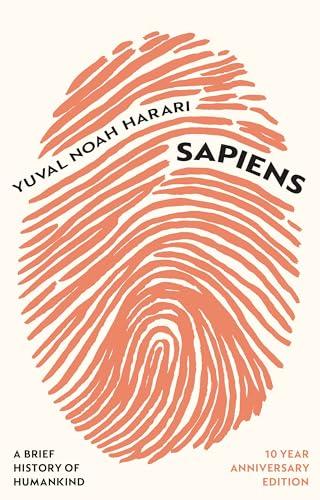
The podcast host mentioned this book in the context of an app that provides summaries of non-fiction books.
Blinkist lets you get the topline information and the most important points from the most important nonfiction books out there, whether it's Ryan's own The Daily Stoic, Yuval Harari's Sapiens, and mor...
— Episode: Admiral James Stavridis on James Stockda...
The podcast host mentioned this book in the context of an app that provides summaries of non-fiction books.
Blinkist lets you get the topline information and the most important points from the most important nonfiction books out there, whether it's Ryan's own The Daily Stoic, Yuval Harari's Sapiens, and more.
The podcast mentioned Sapiens by Yuval Harari as another nonfiction book offered in summary form by the Blinkist app.
whether it's Ryan's own The Daily Stoic, Yuval Harari's Sapiens, and more.
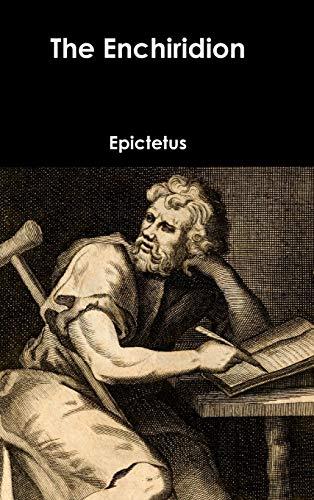
This handbook, viewed as a defensive weapon against adversity, details Epictetus's journey through slavery, torture, and exile, emphasizing his cultivation of resilience and strength.
This is something that epictetus would of course know himself quite well.
— Episode: Who Possesses You? | 12 Must-Read Stoic...
This handbook, viewed as a defensive weapon against adversity, details Epictetus's journey through slavery, torture, and exile, emphasizing his cultivation of resilience and strength.
This is something that epictetus would of course know himself quite well.
This is a new translation by Robin Waterfield it's got all the stuff in here but if you haven't read epictetus you're doing yourself a disservice, you're not as strong or as well armed as you could be so you must read this book.
A translation from 1865 by Thomas Wentworth Higginson was mentioned, though a Penguin edition or Robin Waterfield's translation were recommended as alternatives. The book's content was referenced to illustrate Epictetus's frugal lifestyle.
He afterwards became free, Thomas Wentworth Higginson would write in his 1865 translation of Epictetus, which is a good translation by the way, although I recommend the Penguin edition or Robin Waterfield's recent translation.
The Enchiridion was referenced as outlining the core Stoic principle of distinguishing between what is within our control and what is not. The podcast highlighted its emphasis on focusing on internal choices rather than external events.
the distinction between things that are up to us in our control and the things that are not up to us. It is this, the dichotomy of control that is the first principle in the entire philosophy
the chief task in life is simply this: to identify and separate matters so that I can say clearly to myself which are externals not under my control and which have to do with the choices I actually control. Where then do I look for good and evil? Not in uncontrollable externals, but within myself, to the choices that are my own.
Some things are in our control while others are not. We control our opinion, our choice, our desire, our aversion, in a word, everything of our own doing. We don't control our body, our property, our reputation, our position, and in a word, everything not of our own doing. And even more, the things in our control are by nature free, unhindered, and unobstructed, while those not in our control are weak and slavish and can be hindered and are not our own.
we control our reasons, choice, and all acts that depend on moral will. What's not under control are our body and any of its parts, our possessions, our parents, our siblings, our children, our country, anything with which we might associate.
The podcast mentioned Epictetus's Enchiridion, highlighting his life experiences and philosophical approach to acceptance. His writings, despite a life of hardship, didn't question the fairness of his circumstances, leading to a discussion of the balance between acceptance and striving for change.
don't seek for everything to happen as you wish it would but rather wish that everything happens as it actually will and then your life will flow well
to be truly educated means this learning to wish that each thing happens exactly as it does.
The speaker referenced a passage from this book about how one's own beliefs fuel anger, not necessarily the actions of others. This was mentioned as a tool for self-reflection and managing reactions to hate.
Keep in mind that it isn't the one who has it in for you and takes a swipe that harms you. But rather, the harm comes from your own belief about the abuse.
The podcast mentioned Epictetus's Enchiridion, highlighting its title, which in its earliest usage referred to a hand knife or dagger, suggesting its defensive or protective function; the speaker noted that the book's message should be kept close at hand.
Even the title of Epictetus's In Corridion shows this, as A.A. Long writes in his recent translation of Epictetus for the Princeton University Press, in its earliest usage in Corridion refers to a hand knife or a dagger.
Arian may have wished to suggest that connotation of the works defensive or protective function.
It fits his admonition to the beginning and the end of the text to keep Epictetus's message to hand.
And that really tells you something about this philosophy, doesn't it? That it's not just a book, it's not just handy. It's designed to become almost an extension of ourselves to protect and serve us in each day's task.
The Enchiridion was described as beginning with a powerful exercise on distinguishing between what is in our control and what is not. The speaker noted it's importance to Stoicism.
Epictetus's handbook, The Incaridian, begins with the most powerful exercise in all of stoicism, the distinction between things that are up to us in our control and the things that are not up to us.
It is this, the dichotomy of control that is the first principle in the entire philosophy.
Inchoridian 1-1 he riffs on what is and isn't in our control. It says some things are in our control while others are not we control our opinion or choice or desire or our versions in a word everything of our own doing.
And then 1-22 he says we control our reasons, choice and all acts that depend on moral will. What's not under control are our body and any of its parts, our possessions, our parents, our siblings, our children, our country, everything with which we might associate.
The Enchiridion, a handbook of Epictetus's teachings, was discussed as a key text for understanding his philosophy. It was described as a concise and practical guide to Stoicism, ideal for daily application.
He says every day and night keep thoughts like these at hand, write them, read them aloud, talk to yourself and others about them
The Enchiridion by Epictetus was mentioned as a source of wisdom in the podcast. It was referenced in relation to the concept of "two handles" for events, one making them harder and one easier to manage, emphasizing the importance of choosing the right approach for managing difficult situations.
Epictetus offered a powerful tool in his handbook the In Coridion which the Stoics use as an exercise in decision making about difficult events everything Epictetus says it's two interpretations or handles by which it can be grabbed one that will make it harder one that will make it easier
It was described as a book advice manual, and the speaker, Scott Thompson, said reading it was a pivotal moment that helped him cope with difficult emotions and find a sense of inner peace. He started reading it after hearing Ryan Holiday mention it on the Breakfast Club podcast.
we all have to um die but do we have to die bawling
It hit me like a shot to the heart.
It's a lovely piece and I've been a fan of Scott Thompson forever.
He ordered The Enchiridion, Epictetus's still-relevant book advice manual, and when it arrived, he made a cup of tea, sat down with his two cats, Rusty and Dusty, and began to read.
The podcast mentioned that the Haitian revolutionary leader, Toussaint Louverture, studied Epictetus's works. The speaker also referenced Epictetus's teachings on daily reflection.
To sainth Levantur the leader of the Haitian revolution studied Epictetus as he rose against Napoleon.
As Epictetus says, every day and night we keep thoughts like this at hand, write them, read them aloud and talk to yourself others about them.
The speaker mentioned this book and its emphasis on guarding one's perceptions to protect peace of mind and freedom.
as Epictetus says every day and night we keep thoughts like this at hand write them read them aloud and talk to yourself and others about them.
Epictetus reminds us that we need to pay attention to what matters and learn how to ignore so many of the relentless provocations that come our way and here we have epictetus telling us keep constant guard over your perceptions for it is no small thing you are protecting but your respect trustworthiness and steadiness peace of mind freedom from pain and fear in a word your freedom for what would you sell these things
It's a book by Epictetus on Stoicism that was mentioned as having helped the podcast guest through a difficult time. A newer translation by a woman was specifically mentioned.
he is a a philosopher of the school stoicism you know he was slave and he wrote this book called the interidian or the manual and I forget which translation he had um I think it's one it's a newer one by a woman um share in the bell
The Enchiridion, Epictetus' handbook, was referenced for its concept of "two handles" for interpreting events--one making things harder, the other easier. The podcast discussed using the 'smooth handle' to improve situations.
Epic Titus offered a powerful tool in his handbook, The Incaridian, which the Stoics use as an exercise in decision-making about difficult events.
Every event has two handles. He says one by which it can be carried and one by which it can't. If your brother does you wrong, don't grab it by its wrongdoing because this is the handle incapable of lifting it. Instead use the other that he is your brother, that you are raised together and then you have hold of the handle that it carries.
No, it is events that give rise to fear when another has power over them or can prevent it, that a person becomes able to inspire fear. How is the fortress destroyed not by iron or fire, but by judgments?
always grab things by their smooth handle.
Are you going to try to say this was done to me? Or are you going to say this is done for me? Are you going to say look at all I've lost? Are you going to say look at all I've gained?
You grab the handle that makes you stronger, the one that gives you agency, not the one that strips you of agency. You grab the one that gives you hope, not the one that strips you of hope. You grab the one that gives you a path forward, not the one that freezes you hopelessly in place.
I knew I would survive and if I did, I would turn this into the very best thing that happened to me.
It was recommended to Admiral James Stockdale three years before he was shot down in Vietnam; he said it saved his life. The book's teachings on autonomy and freedom of mind helped him endure his seven years as a prisoner of war.
do you not know that life is a soldier's service? If you neglect your responsibilities when some severe order is laid upon you, do not understand to what a pitiful state you bring the army.
a podium and a prison is each a place one high in the other low, but in either place your freedom of choice can be maintained if you so wish.
look not for any greater harm than this destroying the trustworthy self-respecting well behaved man within you.
Daily Thoughts to Nourish the Soul, Written and Selected from the World's Sacred Texts
Tolstoy's book is a collection of quotes and commentary that he compiled towards the end of his life, and was rediscovered in the 1980s. It is a spiritual text with a focus on Christianity.
Have you read Tolstoy's A Calendar of Wisdom?
— Episode: Paper Trails: How Notebooks Changed The...
Tolstoy's book is a collection of quotes and commentary that he compiled towards the end of his life, and was rediscovered in the 1980s. It is a spiritual text with a focus on Christianity.
Have you read Tolstoy's A Calendar of Wisdom?
It's incredible. So, so Tolstoy towards the end of his life, just become sort of this spiritual seeker, not doesn't see himself as a novelist anymore.
And he writes this collection called The Calendar of Wisdom, which is also a page a day book of like his favourite quotes, and some riffing and commentary on those quotes.
And he puts it together shortly before he dies. It's the thing he's most proud of, then he does die.
And then only a few, it's only a few years later that the Russian Revolution happens.
A book of quotes compiled by Tolstoy, which the speaker attempts to read a page from daily. It was described as a collection of quotes accumulated over Tolstoy's lifetime.
There's a book I try to read every day by Tolstoy called A Calendar of Wisdom.
It's one page a day of quotes that this great wise novelist accumulated over the course of his life and I try to read a page of that every day.
This book of daily readings was mentioned as one the podcast host reads every morning. It's cited as part of his regular reading routine.
one of the books I read every morning is Tolstoy's A Calendar of Wisdom
This book, read daily by the podcast host, is a collection of Tolstoy's favorite quotes and his reflections on them. It was described as one of the host's absolute favorite books, offering daily wisdom.
one of my favorite books I read it every morning is Tolstoy's A Calendar of Wisdom I don't know if you've read this but but towards the end of his life Tolstoy put together a collection of his favorite influences in what shaped him and along with the road etc in here is you know Marcus Aurelius is in here Epochitis is in here a Confucius is in here Kant is in here but people that I didn't see Gandhi referencing much
I am going to order it so if you finish up on the season yeah it sounds like what you're saying is you're talking about college students and a lot of them listen to this podcast it sounds like what Gandhi didn't get was a liberal arts education he didn't have an undergrad degree I mean he was educated shall we say about the University of life yes but and that probably in some ways allowed him to by not having the same philosophical upbringing as many of his adversaries would have been because they all would have been elite educated British men for the most power is that it also allowed him to see and form a new paradigm because he wasn't boxed in by there he understood sort of British Western thought because he was educated in their legal system but he was not as indoctrinated with all of the same ideas and this allows him to to come up with a radical new way of how human should interact
This book, written at the end of Tolstoy's life, was mentioned as having been suppressed by communists for nearly a century. Its rediscovery highlights the potential for ideas to be lost and then later rediscovered.
One of my similar books since we were talking about recommending books. I don't know if you ever read Tolstoy as A Calendar of Wisdom. But at the end of Tolstoy's life, Tolstoy wrote this book, A Calendar of Wisdom that was also suppressed by the communists for almost 100 years.
It was mentioned as a page-a-day book that the speaker keeps on their desk and tries to read daily.
I have Tolstoy's calendar of wisdom here on my desk. I was lucky enough to work on Robert Green's The Daily Laws. These are two books I try to read on a daily basis.
Bob Bowman reads this book daily as part of his morning routine. It includes quotes and ideas from various sources, including the Bible and Stoics.
I read a daily book that you might like called A Calendar of Wisdom by Leo Tolstoy he you know of a warm piece and all his famous books but he he collected like what he thought were his favorite quotes or ideas sometimes their Bible passages sometimes their passages from the Stoics it's not it's it's a little less like put together it's not like quote story quote story or something but I like to flip through that every day and it's it's part of my morning routine
This book was mentioned as a daily read the host enjoys.
I love A Calendar of Wisdom.
This was described as a daily book containing Tolstoy's favorite quotes and sayings, considered by Tolstoy to be his most important work. It was mentioned that the book was rediscovered in the late 1980s after being repressed following the Russian Revolution.
Have you read Tolstoy as A Calendar of Wisdom?
So so I didn't know about this book until maybe a year or two years ago. But Tolstoy did a sort of a daily book. It was his collection of favorite quotes and sayings and little bits of wisdom with some commentary from him. But he actually thought it was his most important work.
Tolstoy considered this book his best work, even over his classic novels, intending it as a daily study guide for self-improvement composed of wise thoughts from philosophers like Epictetus and Buddha. The speaker noted that the book, which took 17 years to publish and nearly 100 years to appear in English, is meant to provide inner calmness and happiness by communing with great thinkers one page at a time.
One of the most famous writers of all time, who many consider to be one of the greatest writers of all time. He didn't think that his classic novels were his best work. He thought this was his best work.
I'm talking about Tolstoy's A Calendar of Wisdom, which, as I said, he thought was more important and a better work even than war and peace.
The purpose of the book, he said, was to give you like a great inner force, a kind of calmness and happiness. And that communing with these great thinkers, whether it's Socrates or Epictetus or Matthew Arnold, it helps you understand humanity and helps you understand the human condition and helps you understand yourself.
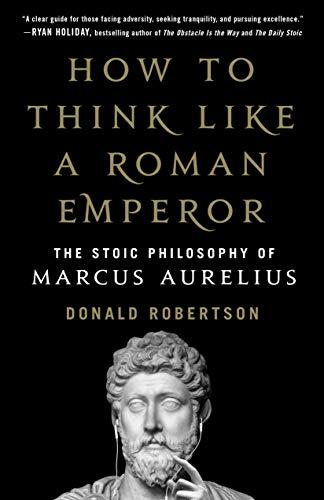
The Stoic Philosophy of Marcus Aurelius
It was suggested alongside the book *Marcus Aurelius: The Stoic Emperor*, with the speaker suggesting to grab a copy of both from The Painted Porch.
So listen to this episode, grab a signed copy of Marcus Aurelius, The Stoic Emperor, and How to Think Like a Roman Emperor, The Stoic Philosophy of Marcus Aurelius. You can grab both...
— Episode: How Marcus Aurelius Became Marcus Aureli...
It was suggested alongside the book *Marcus Aurelius: The Stoic Emperor*, with the speaker suggesting to grab a copy of both from The Painted Porch.
So listen to this episode, grab a signed copy of Marcus Aurelius, The Stoic Emperor, and How to Think Like a Roman Emperor, The Stoic Philosophy of Marcus Aurelius. You can grab both of those from The Painted Porch.
This book was mentioned in the same context as 'Marcus Aurelius: The Stoic Emperor' by Ryan Holiday, and was also recommended highly by him.
I also really enjoyed his book, How to Think Like a Roman Emperor.
Two of the only non-Ryan Holiday Stoicism books we carry at The Painted Porch, not written by actual Stoics. So I can't recommend them enough.
This book was described as something the author enjoyed.
He has another book, which I also love, called How to Think Like a Roman Emperor, The Stoic Philosophy of Marcus Aurelius. Two books that I have enjoyed quite a bit.
And grab Marcus Aurelius, The Stoic Emperor and How to Think Like a Roman Emperor, The Stoic Philosophy of Marcus Aurelius from the Painted Porch or anywhere books are sold.
This biography of Marcus Aurelius uses his Meditations to explore his unique worldview and perspectives, highlighting their applicability to modern life despite his extraordinary circumstances.
what was his perspective on life it sort of baffles us and yet when you read Marcus Aurelius you find that there's something very relatable despite all the pressures and temptations and everything that he faced he had a really unique worldview he thought about things in a way that was both peculiar and unique to his extraordinary circumstances and then also incredibly applicable for all of us
It was described as a wonderful book that explains how a stoic would respond to a situation; the truly important thing in life is how one chooses to respond.
the stoic tells himself that although the situation may appear frightening the truly important thing in life is how he chooses to respond
A biography of Marcus Aurelius and his Meditations, this book aims to help readers understand Marcus Aurelius's perspective and worldview, particularly his ability to maintain sanity amidst immense power, responsibility, and adversity, including pandemics, corruption, and war.
It really should have been an incomprehensible life totally foreign way of thinking the most powerful man in the world ahead of an enormous army living 2,000 years ago, totally different time with totally different customs.
How did he go through the world? What was his perspective on life? It sort of baffles us.
And yet, when you read Marx's Realist, you find that there's something very relatable, very human about all of it.
Despite all the pressures and temptations and everything that he faced, he had a really unique world view.
He thought about things in a way that was both peculiar and unique to his extraordinary circumstances and that also incredibly applicable for all of us.
It was positively mentioned as a good book, showing the speaker's preference for it over another book on a similar topic.
No, that's a book called Roman Honor, which is also good, but How to Think Like a Roman Emperor is very good.
The author asserts that it is natural to feel fear in dangerous situations, but what truly matters is how one chooses to respond. The example of Cato and Marcus Aurelius' bravery despite fear is used to illustrate this point.
It's perfectly reasonable to tremble in the face of danger, he says. And it was likely that Cato and Marcus Arelius were scared on the eve of battle or before an important speech, but we don't hold that against them because what mattered is what they did next.
It was described as one of the great books on Stoic philosophy published in recent years; the interviewee stated that it would have been near him in his store. The book focuses on the Stoic philosophy of Marcus Aurelius.
Donald Robertson's amazing book How to Think Like a Roman Emperor it's actually a book that would have been 10 feet from me inside the store one of the great books on stoke philosophy published in the last couple years How to Think Like a Roman Emperor the stoke philosophy of Marx really is
check out How to Think Like a Roman Emperor you can pick that up in the paint at portrait anywhere books are sold
The book discusses Roman practices, including the use of incense for protection against illness, and how Marcus Aurelius lived under the constant awareness of death due to the prevalence of disease and death during his time.
In How to Think Like a Roman Emperor, the author Donald Robertson talks about how the Romans, knowing little about the spread of germs or disease, and their proneness to superstitions, burned incense to keep them safe and to protect a family from falling ill.
This is one of Ryan Holiday's favorite quotes by Seneca, a quote from the essay "The Shortness of Life". The essay's message is about the importance of making wise choices about how we spend our time.
Today's entry is a quote from Seneca on his essay On the Shortness of Life, which is one of my all-time favorite quotes from Seneca.
— Episode: Look Through The Window | Finding The Ri...
This is one of Ryan Holiday's favorite quotes by Seneca, a quote from the essay "The Shortness of Life". The essay's message is about the importance of making wise choices about how we spend our time.
Today's entry is a quote from Seneca on his essay On the Shortness of Life, which is one of my all-time favorite quotes from Seneca.
We like to say that we don't get to choose our parents, that they were given to us by chance.
Yet we can truly choose whose children we would like to be.
I just love that quote so much because to me, that's what I've done in my life. I've picked who my ancestors are, who my parents are. I'll get into more of that in a minute.
Seneca's essay on the shortness of life was discussed, emphasizing the importance of being intentional with one's time and mindful of mortality, as time is a finite resource.
Seneca knew this. That's why he wrote his famous essay On the Shortness of Life.
It's not that life is short, he writes. It's that we waste a lot of it.
We watch our money, we protect our property, yet we fritter away the most valuable of our resources, the most finite of them, the one thing we can never get back that they aren't making anymore of.
The time that passes Seneca writes belongs to death. It's gone forever, never to return.
Once a dawn happens, it is gone to you forever. Once a day ends, it's done for you for all time.
Seneca argues that life is long enough if used well, emphasizing the importance of time management and making the most of one's finite time.
it isn't that life is short although it can feel that way it's that we waste a lot of it
life is long if you know how to use it
The biography of Seneca, focusing on his life in Nero's court, was discussed. Its exploration of Seneca's writings and portrayal as both a powerful political figure and a renowned playwright was highlighted.
if you read James Rom's book dying every day I'm gonna give it to you in the bookstore it's incredible he writes this biography it's called dying every day Senica in the court of Nero and um he goes this is how this is how good a Senica is as a writer um for most of history we did not know that Senica the playwright and Senica the philosopher were the same person because they're both so good and so different it seemed inconceivable that Rom's greatest philosopher could also be at Rom's greatest philosopher and most powerful political broker could also be its greatest playwright
The podcast host discussed Seneca's essay on the shortness of life, emphasizing the importance of not wasting time and being mindful of how we spend it. He recommended rereading it a couple of times a year.
It's not that life is short, it's that we waste a lot of it.
Life is long enough and it's given in sufficient measure to do many great things if we spend it well but when it's poured down the drain of luxury and neglect, when it's employed to no good end. We're finally driven to see that it is passed by without us even recognizing its passing.
It is not that we all have too short a time to live...we squander a great deal of it.
Seneca's *On the Shortness of Life* was referenced; the speaker stated it's better to focus on self-reflection than on trivial matters.
Believe me, Seneca says in On the Shortness of Life, it's better to produce the balance sheet of your own life than that of the grain market.
It's about understanding the balance sheet of one's life as Sena was saying.
And it's just another sort of deeply powerful, powerful question from Sennaka as the Stoics tell us always come an expert in the things that matter, focus on the things that matter.
The podcast mentioned Seneca's "On the Shortness of Life" and its relevance to the concept of finding peace and rest. The narrator highlights how even those with many privileges still yearned for leisure, which is a key theme in Seneca's work.
The deified Augusta, as Seneca writes in On the Shortness of Life, which you must read, to whom the gods granted more than to anyone else never ceased to pray for rest and to seek a respite from public affairs.
The book was recommended as a pairing with Bozoma Saint John's book, as it aligns with the theme of living urgently and making the most of life. The speaker highlighted a quote from the book: "Life is long if you know how to use it."
Life is long if you know how to use it
The podcast host reads this book every time he loses someone he cares about. It's presented as a source of comfort and reflection.
I do read novels people think I only read nonfiction but my wife recommended sorrow and bliss which is this beautiful novel about depression surprisingly funny I read as well I was traveling I like that um I read Susan Cain's new book I love her book Quiet about introverts as an introvert myself her new book bitter sweet about sort of the melancholy side of life because I was speaking at the Naval Academy I was very excited that Admiral Steph Riddis sent me a galley of his new book about Navy Adenrals and captains who took huge risks there's a lot of great stories in here and I read this on my way to the Naval Academy while I was in Big Bend I read this new book from Steve Rinella about how to raise outdoor kids in inside worlds obviously I'm bookish obviously I spend a lot of time front of screens but I also live in the country I also love the outdoors and how do you raise a kid that appreciates that and understands the beauty of the outdoors anyways this is a great book I really liked it I interviewed him for the podcast as I was saying I read the mayor of Castro Street biography of part of New Milk the think of Stokes as apathetic or passive accepting the status quo in fact they change things they make the world better so I'm as I'm starting to think and research for the next book in the series about justice I'm looking for people who who were pioneers who made changes you brought new awareness of things and this biography was fascinating some stuff to do some stuff not to do but overall a great book we got to read it and then this one was highly recommended to me it's about Gandhi but not Gandhi in India I'm reading that one next but this is Gandhi the activist in South Africa he went to school in London then immigrated to the colony of South Africa where he suddenly faced all this scene and you're really similar to what would later happen in America sort of Jim Crow S.K. Laws so I don't know this is probably two three thousand pages worth of books but when you treat reading like a job and you take it seriously you can get a lot done and in a normal month I'm at home more so I it's actually harder for me to read because I was traveling so much time and airplanes try not to watch tv or movies I try not to space out I don't need I just sit and I read on the airplane I get a lot done and this is a great reading for me but I think of the main lessons of this month I think there's a couple a big one is of course it's easy to over commit and be too busy right when I look at the calendar and when I was starting to get stressed my wife and I laid the calendar down we wrote everything out that we had to do for the month and it was too much it's a calibration as the world kind of adjusts and we embrace like whatever this phase of the pandemic is I agree to more that I wanted and so I emailed my speaking agency and I said this is as busy as I would ever want to be this is the line can't go past it so that's important from a like work-life balance standpoint but also professionally by drawing the line by creating scarcity here's what I'm willing to do here's what I'm not willing to do here's how many slots there are you'll soon increase value so saying no to me is the big lesson momentum worry that life is short you can't take people for granted you have to be with them while you can be with them and this is something I remind myself of every night when I touch my kids in the bed I'm not rushing through this I'm not rushing to try to get them to sleep I'm not saying no I'm not gonna read you one more book because what are my rushing towards Netflix you know email none of that stuff matters but I'm also rushing away from one of however many nights I get with my kids I'm rushing away from them as three-year-olds and five-year-olds I'm rushing away from this moment and I don't want to do that I want to be in this moment presents to me is an important lesson and you just have to practice it and actually it's funny one of the things we we rolled out for daily stoke this month is this momentum worry calendar this your life is made up of roughly four thousand weeks this month was you know four weeks how did I spend those four weeks did I live those four weeks Sena says death isn't something in the future death is happening now yes my grandmother died now but she died slowly over eighty five years she actually exceeded the four thousand weeks on the chart which is great that's wonderful but what do you have to show for those weeks and she had a wonderful life but you know if I was just on autopilot this month or today or this minute I'm rejecting that gift I'm not being present I'm taking life for granted and then you know I have tattooed on my wrist here and I talked about it in a couple of different talks I gave it when I think of all the moments that I'm happiest that I did my best work you know I wasn't doing 50 things at one time I was connected I was present I tuned things out the stokes talk about adoraxia right not being disturbed by internal or external forces but I think the idea is like you don't control what's happening in the world you don't control necessarily how busy your month is or all the things that could go wrong so you have to find a way to be still and content and focused in the midst of that there's a letter from Sena Corrie's in Rome trying to write and there's crazy noises going on and someone's getting arrested and you know the rooms too hot you you have to be able to tune all that out and focus especially as a writer in this digital world where there's alerts and interruptions and attempting can you focus amidst the crates can you be still as the world is spinning faster and faster around you because if you can't not only you're not going to perform at a good level you're going to miss all the wonderful moments you're going to miss the sunset you're going to miss the dinner with people that you care about you're going to miss the sweetness of that bedtime you're going to miss all the little things that Marcus really observes you know grains of wheat bending under their own weight or you know the furrow of an animal's brow or the way that bread splits open you're going to miss the ordinary extraordinary ness of life and so when I think about this month I think about the time that I spent with my kids I think about the progress that I made on my book I think about the runs that I took on the beach and all of that to me made it a wonderful month I hope you like this video I hope you subscribe but what I really want you to subscribe to is our daily stoic email one bit of stoic wisdom totally for free to the largest community of stoics ever in existence you can sign up at daily stoic.com slash email there's no spam you can unsubscribe at anytime I love sending it I've sent it every day for the last six years and I hope to see you there at daily stoic.com slash email you can listen to the daily stoic early and add free on amazon music download the amazon music app today or you can listen early and add free with wonder plus in apple podcasts. The early 2000s was a breeding ground for bad reality competition series from shows like kid nation CBS is weird lord of the flies style social experiment that took 40 kids to live by themselves in a ghost town to the swan a horrifying concept where women spent months undergoing a physical transformation and then were made to compete in a beauty pageant hi i'm micha brown and i'm the host of wonderry's podcast the big flop each episode comedians join me to chronicle one of the biggest pop culture fails of all time and try to answer the age old question who thought this was a good idea recently on the big flop we looked at the reality TV show the swan the problem this dream opportunity quickly became a viewing nightmare they were isolated for weeks berated operated on and then were ranked by a panel of judges follow the big flop on the wonderry app or wherever you get your podcasts
This collection of Seneca's writings was described as one of the podcast host's favorites, containing the quote, "No one is crushed by fortune unless they are first deceived by her."
On the Shortness of Life one of my favorite little collections of seneca's writings but we'll get to the quote now he says no one is crushed by fortune unless they are first deceived by her those who aren't pompous in good times don't have their bubbles burst with change against either circumstance
if you haven't read On the Shortness of Life pick up the copy there and the pain of porch if you could all I'll link to it in today's episode
This collection of essays by Seneca, part of the Penguin Great Ideas series, was also suggested as an accessible entry point into Stoic philosophy.
there's another short penguin one called On the Shortness of Life and it's a collection of essays from Seneca I think it's called the penguin grade ideas series which is very good
This was described as a good translation containing not only the title essay but also Seneca's letter to his mother, "Consolation to Helvia," and "On Tranquility of Mind."
Penguin has a little translation called On the Shortness of Life, which has not just that title, it has Consolation to Helvia...and On Tranquility of Mind. This one's awesome.
It was highly recommended as a powerful essay worth rereading multiple times a year, focusing on the importance of not wasting time.
Seneca says we're all the geniuses of history to focus on a single theme that could never fully express their bafflement to darkness, to human mind. No person would give even an inch of their estate and the slightest dispute with a neighbor can mean hell to pay. Yet we easily let others encroach on our lives worse. We often pave the way for those who will take it over. No person would hand out their money to a passerby but how many of us, but how many of us hand out our lives. We're tight-fisted with our property and money. Yet we think too little of wasting time, the one thing we should all be the toughest risers about that's Seneca On the Shortness of Life.
It's not that we all have too short a time to live. Seneca says that we squander a great deal of it. Life is long enough and it's given in sufficient measure to do many great things if we spend it well. But when it's poured down the drain of luxury and neglect, when it's employed to no good end, we're finally driven to see that it is passed by without us even recognizing it's passing. So it is we don't receive short life. We make it so. Or as I've also heard it rendered by Seneca, it's not that life is short. It's that we waste a lot of it.
It's a very powerful essay. It's worth rereading a couple times a year to be quite frank.
The podcast mentioned Seneca's writing on how people postpone living their ideal lives until a time that may never come. The speaker highlighted Seneca's point about the regret of only dedicating time to wisdom at the end of life.
you will hear many people saying when I am 50 I shall retire into leisure. When I am 60 I shall give up public duties.
And what guarantee do you have of a longer life?
Who will allow your course to proceed as you arrange it?
Aren't you ashamed to keep for yourself just the remnants of your life and to devote to wisdom only that time which cannot be spent on any business?
How late it is to begin to live only when life must end?
366 Meditations on Parenting, Love, and Raising Great Kids
The book was recommended to Patrick Dempsey by Ryan Holiday, and Dempsey stated that he found it amazing.
Did I send you the parenting one? No. Grab that one to your left, daily dad. Great. I'll definitely do this.
— Episode: Patrick Dempsey on Ethical Dilemmas, Bei...
The book was recommended to Patrick Dempsey by Ryan Holiday, and Dempsey stated that he found it amazing.
Did I send you the parenting one? No. Grab that one to your left, daily dad. Great. I'll definitely do this.
This book is described as a sequel to "The Daily Stoic", offering daily meditations on parenting. It was said to draw wisdom from various sources, including previously mentioned books and personal experiences.
if you read the daily stoeic this is basically the sequel The Daily Dad 366 meditations on parenting love and raising great kids can pre-order it now at dailydadbook.com and it is the collection of the wisdom of these books plus the books in the philosophy section and all the books I've ever read all the advice that I've ever gotten all the things I've learned as a parent I hope you like it check it out
This book, described as offering daily meditations to improve parenting, was mentioned as a resource for improving oneself as a parent and as a person overall. The podcast host recommended checking it out.
That's obviously the idea behind the new book, The Daily Dad. One page a day to help you be better at parenting, being a better spouse, being a better person, stoicism is there so we're all the different philosophical traditions.
If you haven't checked out either book The Daily Dad or The Daily Stoke, I hope you do.
This book, described as a collection of daily meditations, was promoted as offering guidance and support on the journey of parenthood. The speaker emphasized that parenting is a continuous learning process, rather than a one-time event, and this book helps with that process.
whether your kids are old or not yet born whether you have one or almost a dozen this book is about the journey that you're going on a timeless journey that generations millions billions of people have been on before you they've done things right they've made mistakes they've learned things you're on the journey to be the best parent that you can be you're on the journey to be the parent that your kids need you to be
The podcast was recorded during the author's book tour for this book. The concept of "ambient parenting" was discussed in relation to the book.
Ryan speaks with his longtime friend fellow father Austin Kleon during a stop along his book tour for *The Daily Dad: 366 Meditations on Parenting, Love, and Raising Great Kids*.
I was reading a lot of *The Daily Dad* in the past couple of days and one of the things I was thinking about is how ambient parenting is.
It was promoted on a book tour with a Barnes & Noble special edition, featuring a ribbon; the author was only willing to do a book tour if it was conversational and could be recorded for others.
Barnes and Noble did a large printing of their own version of it but it's different color it's got this cool ribbon.
I'm only willing to do it if we can have it be more of a conversation as opposed to me giving a talk and then I want to record that
The speaker announced that this book was available for pre-order, including numbered, signed first editions. His parents were reading it and found it helpful in their role as grandparents.
On the parenting front by the way trying to be a better role model at home the new book The Daily Dad 366 Meditations on Parenting Love and Raising Great Kids is available for pre-order now including some numbered sign first editions
My father and mom was telling me today that he reads it and it's helped him be a better grandparent to my kids. The Daily Dad 366 Meditations on Parenting Love and Raising Great Kids, you can grab at dailydadbook.com.
It was described as a book about recommitting to being a better parent, focusing on improving daily actions and priorities. The speaker mentioned pre-ordering the book as a way to support its release.
It's up for pre-order right now. It would mean a lot to me if you could pre-order it.
And one of the things I try to recommit to on a regular basis is I go like, you know what? I haven't been the parent that I've wanted to be. I've been slipping up on this or that. Distracted by this or that, had the wrong priorities in this way or that way. And today, today I'm going to do better and that's really what the book is about.
It would mean a ton to me if you could pre-order it would help a great deal if you could. And you can grab it at dailydadbook.com or click in the links below.
I've been posting about it on social media and all of that. It would mean so much to me grab the new book The Daily Dad.
It's for parents of all genders, ages, even parents to be and I hope you check it out.
The speaker promoted Ryan Holiday's book, *The Daily Dad*, mentioning the availability of a signed and numbered first edition.
Preorder your signed and numbered first edition of The Daily Dad: 366 Meditations on Parenting, Love, and Raising Great Kid before its May 2 release.
The speaker discussed the book's creation, emphasizing its intention as a daily resource rather than a one-time read for transformative results. It was described as a book that would become a part of one's daily routine.
If you want to be a better parent, we have a book about that too. One page a day just like the Daily Stoic called The Daily Dad 366 meditations on parenting and love and raising great kids.
Although I actually found so many of the parenting books to be not very good, which is why I've been working for the last four years on The Daily Dad.
The idea being that you don't read a parenting book once and you're transformed but it becomes part of your daily routine, a daily ritual and like The Daily Stoic, like Stoicism by returning to it over and over again, you're making a commitment to yourself about your values, about who you want to be, about what's important to you.
Anyways, please do pre-order the book. It's a huge help, especially the earlier you do them. I'm really proud of this book. I just finished recording the audio book so you can pre-order that also.
But if you want to sign the numbered first edition from me, you can grab that at dailydadbook.com. It would mean a ton.
This book was mentioned as the source of a podcast excerpt discussing the importance of lifelong learning and showing children that education doesn't end with graduation. It was promoted for pre-order.
This is an excerpt from Ryan Holiday's latest book The Daily Dad.
This book, described as a daily read similar to "The Daily Stoic," contains collected wisdom from history's greatest thinkers and parents. It was described as a book the speaker is proud of, and is currently recording the audiobook for.
And this is basically the idea behind the new book, The Daily Dad 366 Meditations on Parenting and Love and Raising Great Kids.
It's a daily read like The Daily Stoic made up of a collected wisdom of some of history's greatest thinkers and parents, easily people whose children we should aspire to be that I aspire to be.
So if you could please grab The Daily Dad 366 Meditations on Parenting Love and Raising Great Kids. If you're a parent, if you know a parent, if you've got parents, I think this book will help.
It was described as a sequel to "The Daily Stoic", and the author had spent the last week and a half recording the audiobook. It's a book of meditations on parenting that he's been working on for six or seven years.
I've been spending the last week and a half recording the audiobook and it's been so exciting to go back over this thing that I've been working on basically every day for the last six or seven years since my wife and I decided to have kids.
It's a journey I'm on, it's a journey I know that many of you are on. And if you want to get better at it, if you want to find one thing to digest each day, that's what The Daily Dad email is about which is totally free.
But it would mean so much to me if you could support the book by pre-ordering it. It's out on May 2nd but the earlier the pre-orders come in, the more the publisher gets behind the book, the more that retailers get behind the book.
And it just, it makes a huge difference as far as moving the needle goes. So if you could check that out, if you could pre-order it, The Daily Dad 366 meditations on parenting and love and raising great kids, it's basically the sequel to The Daily Stoic which I know so many of you have read.
A Fable About Epictetus
It was described as a fable about Epictetus, teaching the importance of inner strength and resilience, written for children but relevant to all ages. It emphasizes that even when external circumstances are difficult, the strength of one's mind remains.
Well we refer to it in The Girl Who Would Be Free as the empire between your ears.
— Episode: The Most Valuable Real Estate In The Wor...
It was described as a fable about Epictetus, teaching the importance of inner strength and resilience, written for children but relevant to all ages. It emphasizes that even when external circumstances are difficult, the strength of one's mind remains.
Well we refer to it in The Girl Who Would Be Free as the empire between your ears.
This is obviously the idea in The Girl Who Would Be Free which is about epictetus. Epictetus having so much taken from him, having so little control in some cases even over his physical body that the greatest empire, the empire between his ears is really all that's left and that's what that book is about.
It's a it's a fable, supposed to teach this idea to young kids I wrote it for my boys but it's for boys and girls and all of us who need a reminder of this sort of basic premise of Stoic philosophy.
You can grab The Girl Who Would Be Free at store.dailystoic.com and I think if you get a sign copy I'll link to this in today's show. If you get it there's a thing you click you get a sign copy you can get the boy who would be king for like 75% off or vice versa.
It is a fable based on the life of Epictetus, and was written for the author's two young boys. It tells the story of Stoicism for all audiences.
In The Girl Who Would Be Free are fable based on the life of epic Titus epic Titus his father says that to be great we have to first focus on the empire between our ears he's referring to our thoughts our emotions our urges our desires our fears our own choices.
I'm actually just so proud of that book The Girl Who Would Be Free I did the boy who would be king early in the pandemic I did The Girl Who Would Be Free later in the pandemic.
This book is about Epictetus. It was written by the speaker and is part of a series of books.
I did a boy a book called The Boy Who Would Be King which is about the story of Marcus Realis and then I did a book called The Girl Who Would Be Free which is about epictetus to serve a boy and a girl one.
It is a fable about Epictetus, celebrating its first anniversary this month. It follows the author's other book, The Boy Who Would Be King, illustrating the lives and journeys of these two philosophers.
Actually my fable about epictetus is life. The Girl Who Would Be Free celebrates its first anniversary this month.
The Girl Who Would Be Free if follows my other book The Boy Who Would Be King, that Marcus Aurelius and the idea is that I wanted to illustrate the incredible lives and the journeys of these two philosophers on their way to their own unique and inspiring greatness.
A children's book about Epictetus (rendered as a girl in the book) focusing on inner freedom despite external constraints. It emphasizes controlling one's thoughts and finding freedom within adversity.
in The Girl Who Would Be Free which is my sort of fictional kids book about epictetus but I actually render as a girl for a bunch of whatever reasons but I have epictetus's father say that we have to worry about controlling the empire between our ears right so there's all this stuff that epictetus doesn't control other people do what other people say what he's allowed to do and say but no one can control his thoughts right that's what he controls or she controls so it's a book about controlling what actually the stokes called the greatest empire which is the self the interior self or thoughts or opinions all of that so The Girl Who Would Be Free is really about that finding freedom within captivity finding freedom within inside constraint finding freedom inside misfortune and adversity that's what the book is about usually when I sign this one all right a more faulty because sort of a theme in the book it's about sort of finding what you love about your situation what you can do inside your situation who you can be inside your situation so that's what The Girl Who Would Be Free is about and I think ultimately that's what stoicism itself is about and I wanted to write a kid's book to help kids with that very idea like I also did in the boy who would be king
This children's book about Epictetus was given by Molly Bloom to the podcast host's daughter.
She left with a copy of The Girl Who Would Be Free for her young daughter,
This book, by the speaker, is mentioned while discussing Epictetus' philosophy teacher's take on a quote from Epictetus' discourses.
this is in my Kinks book The Girl Who Would Be Free. He said that it's not what you read or he says it's not that you read, it's what we read and how we read right?
It is a fable about Epictetus, reimagined as a girl, exploring stoicism and resilience in the face of hardship. The book's release was delayed due to a global printing shortage.
the fact that it's not out in the world or it's not out in the world in March when I wanted struck me as a sort of stoic reality which is you have all your plans you have how you want to do things and then sort of life gets in the way in this case a global printing shortage which is repeatedly delayed the book.
the theme behind this book is much more nuanced much more layered than the boy would be king the boy would be king is essentially your classic hero's journey yes you know he doesn't you know he runs away from his challenge finally accepts the challenge overcomes it brings back something to his community um this one starts off right away heavy yeah she's she's a slave she's a slave uh the first couple of pages were talking about how uh you're talking about and I'm drawing the the lives of slaves in Rome uh and and so we have that and then we have just the philosophy itself as opposed to the boy would be king
how do you make a picture of that idea that's not a i don't know a symbol or so you know and you ended up coming up with something cool about with like hands and a bird appearing from epictetus's father's hands but i imagine illustrating abstract ideas is much harder than the narration of it actual events
I'm not against anyone and don't have any phobias but you could have written a story for females for the females without trying to turn epictetus one of the greatest philosophers ever into a female I quit I'm flabbergasted shaking my head
I wanted to write about a female stoic because I thought it would be interesting I thought it would be different I thought it's important that it reach all genders and so I was originally going to do a story about Porcia Cato this would be Cato's daughter but from what even from what we know of her historically she is although really interesting and really inspiring and I write about her in lives of the stoics there's it's just the arc of her story is not that great it she's like a wife widow and then she commit suicide she's a very strong and brave woman but there's not that much of an arc there and so I was like you know what I just want to tell a great story and what do I care like what does it matter the least important thing about epictetus in real life is that she happened to be a man do you know what I mean so to me it was an easy decision artistically creatively but also ethically
It is a fable for all ages, based on the life of Epictetus, focusing on conquering the internal world rather than external control. It was officially launched during this podcast episode.
In The Girl Who Would Be Free, Epic Titus' father advises his young child to stop trying to control the whole world and instead conquer the empire between our ears.
That is, get a hold of our mind, our desires, our versions, our fears, our passions, our emotions.
It's like my book, The Boy Who Would Be King, its stoicism in fable form based on a true story but of course it takes some liberties because what I want to do is make this accessible and memorable for our kids, for ourselves, for someone who might be on the fence about these stoic ideas.
Today is the day, this awesome book produced here by Daily Stoke. Printed here in the US is officially available everywhere, books are sold but you can get some awesome bonuses including the ebook and audiobook for free.
It is a fable about Epictetus, reimagined as a female character, exploring the journey from slavery to achieving internal freedom. The author hoped it would particularly resonate with young girls and teach Stoic ideals.
I've been working on this fable about epictetus I'm calling it The Girl Who Would Be Free I know epictetus historically is male I decided to make it female because I wanted I wanted it particularly for young girls to be able to have something in the stout can and to relate to but all of that is secondary to this story this idea of how epictetus went from being a slave to one of the greatest philosophers who ever lived to achieving a kind of internal freedom conquering the empire between his or her years.
I've been talking a lot about the book on the podcast I hope you check it out it's just like my first book The Boy Who Would Be King which thousands of people all over the world have loved if you are a parent you've got nieces or nephews are thinking about becoming a parent maybe you're a teacher you want to teach the ideas of stoicism to someone who's not a big reader I think this book is for you I can't wait for you to check it out
if you pre-order The Girl Who Would Be Free it's out next week you can get the ebook an audio book for free if you buy a sign copy you can get the boy who would be king for free if you order an unsigned copy I'll even give you the boy who would be king for 50% off so we got a bunch of awesome bonuses check that out go over to daily stoward.com slash girl
I'm really proud of this book I hope you enjoy your fourth of July but I hope you're after that real freedom which has nothing to do with government nothing to do with politics nothing to do with where you live as epictetus shows us in his life and in his struggle through real slavery finding an internal freedom that's what this book is about and I can't wait for you to read it The Girl Who Would Be Free it's out next week but you can pre-order it now and get a bunch of awesome bonuses at daily stoward.com slash girl
This 148-page book, written in the style of "The Boy Who Would Be King", tells the story of Epictetus and is illustrated by Victor Juhasz. It was delayed by a global printer shortage.
Last year I put out this book, The Boy Who Would Be King about the boyhood of Marcus Aurelius.
And so epictetus's story from a slave to a symbol of the human ability to find freedom in the darkest circumstances is incredible.
So this book which I've been working on now for the thought over a year, it was significantly delayed by a global printer shortage.
This 148 page book is written by me in The Vane of The Boy Who Would Be King. It's illustrated also by Victor Ujas who did the great book The Boy Who Would Be King with me.
I'm really excited for you to check out this book. I'm so proud of it.
Chris Bosh had been talking about the ideas in the book 'The Obstacle is the Way', which one of his coaches had given him, and Ryan recommended the book 'Letters to a Young Athlete' that he and Chris Bosh did together.
Chris and I talked books. Chris and I actually did a book together, which I always recommend to people called Letters to a Young Athlete
— Episode: The Self-Discipline of Running | Matt Ch...
Chris Bosh had been talking about the ideas in the book 'The Obstacle is the Way', which one of his coaches had given him, and Ryan recommended the book 'Letters to a Young Athlete' that he and Chris Bosh did together.
Chris and I talked books. Chris and I actually did a book together, which I always recommend to people called Letters to a Young Athlete
It was mentioned in passing as a book that Chris Bosh collaborated with Ryan Holiday on, focusing on the importance of commitment and effort, even in challenging times.
And the last person I wanted to talk to is the one and only Chris Bosch, who I was lucky enough to work on a book with a couple of years ago called Letters to a Young Athlete.
you can check out his book Letters to a Young Athlete, which is all about the importance of putting everything into what we do, even when it's tough.
Another book that was mentioned as being in the basketball coach's office, given to players who were struggling.
stacks of another awesome book that I was looking up to work on Letters to a Young Athlete by Chris Bosch who's like coach sends all the recruits, coach will send the recruits in here or players who are having trouble and he'll specifically say you know give him this book from Ryan or this book from Chris
The podcast briefly mentioned this book, which the host helped Chris Bosh write. The conversation touched upon the book in the context of a discussion about basketball teams and leadership.
I did this book with with Chris Bosch I did a I wrote I helped him write a book called Letters to a Young Athlete
The podcast host mentioned his book "Letters to a Young Athlete," co-authored with Chris Bosh, highlighting a lack of similar resources for ambitious young people.
I did a book a couple years ago with Chris Bosch called Letters to a Young Athlete I feel like there's not enough good books out there for like young people who have potential and have ambition where someone kind of lays it out they're like this is how I did it this is when I learned words at all right like because you're this one doesn't end with like you crushing it right it ends you coming out of that first restaurant not not succeeding the way you wanted but also not giving up
The podcast host discussed his collaboration with Chris Bosh on this book, which explores the pursuit of greatness and how to respond to challenges in athletics. It was mentioned that the book includes a quote from Kipling about treating winning and losing as the same.
To me the definition of stoicism is that you don't control what happens, you control how you respond.
failure is not trying. Not even trying, just saying whatever excuse you give yourself not to try.
I hate the term losing builds character but it kind of does you just don't want to make it a habit?
You know were you able to come out of that a little bit closer? After the loss yeah for sure.
You quote Kipling in the book to treat winning and losing as the same impostor.
This book was mentioned in the context of the speaker's outreach to Chuck Klosterman's publisher, who was also involved in publishing this book.
and I said could you please find a way to have me to let me have Chuck Losterman on who's just one of my favorite thinkers and writers about music, about history, about pop culture, about sports.
Chris Bosh discussed his book, "Letters to a Young Athlete", and the importance of perseverance and responding effectively to challenges, even when faced with setbacks.
To me the definition of stoicism is that you don't control what happens, you control how you respond.
Quitting is not an option.
failure is not trying.
Everything you go after, you're going to take some lumps, you're going to take some punches, you're going to get knocked down.
I hate the term losing. It's just not going to make it a habit.
This book, co-authored by Ryan Holiday, was mentioned; a passage was read that discussed the unexpected ending of a career and the challenges that follow.
at some point in your childhood, you and your friends went outside to play together for the last time and nobody knew it.
my last game in the NBA was against the Spurs on a Wednesday night in February. We didn't win. We didn't play particularly well. It was a pretty ordinary day and an ordinary season in the history of the league.
Ryan Holiday worked on this book with Chris Bosh; it was described as a fantastic book with relevance for coaches, parents, young athletes, and anyone striving for greatness. It was compared favorably to similar advice books like "Letters to a Young Jazz Musician" and "Letters to a Young Poet."
I think the book that came out of it, Letters to a Young Athlete, it's a fantastic book, honored to have been a part of it. I think it's got the legs to go the distance. I think it's relevant if you're a coach, if you're a parent, if you're a young athlete, if anyone is trying to be great at what you do, I think there's a lot you can learn from it.
Just like I learned a bunch from reading Letters to a Young Jazz Musician by Winston Marsalis or Letters to a Young Poet by Rilke, even though I'm not a poet or a jazz musician.
I think he really delivered the goods and I was lucky enough to just arrange it and put it all together.
You can check out his book Letters to a Young Athlete of course at Barnes & Noble.
It's a funny thing with competition. It's something else about knowing that sometimes your best just isn't good enough and taking that challenge and accepting that if you come up short of your goal. Win or lose, there's always something to learn.
It was described as a wonderful new book, offering advice to young athletes based on the author's experiences and understanding of the game, also incorporating elements of Stoicism.
I was very excited and honored to get to work on with him.
It's been weird how my books, which are ostensibly totally unrelated to sports in any way, have managed to make their way through all these locker rooms. Because coaches are looking for things that will improve their athletes personally, professionally, mentally, spiritually. And I said, why isn't there a book of Letters to a Young Athlete?
I said, what are all the things that you wish that you knew when you were coming up in the league and how can people benefit from your experiences?
It comes out this week. It's incredible. I was so impressed with Chris every step of the way he inspired me.
Here's the new book, Letters to a Young Athlete. You gotta read it.
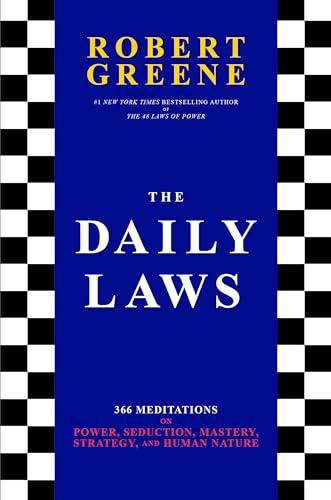
366 Meditations on Power, Seduction, Mastery, Strategy, and Human Nature
This book was written in collaboration with Ryan Holiday. He has worked on this book in the past.
And then The Daily Laws, which I was lucky enough to work on.
— Episode: There’s A Reason People Like This Line |...
This book was written in collaboration with Ryan Holiday. He has worked on this book in the past.
And then The Daily Laws, which I was lucky enough to work on.
You can grab all those at the Painted Porch.
Described as a daily devotional designed to help people seize their destiny. The speaker, Ryan Holiday, stated that The Daily Stoic wouldn't exist without Robert Greene.
The Daily Laws,
I'm Ryan Holiday, the daily stoic wouldn't exist without Robert Green. The books that I've written wouldn't have existed without Robert Green. The places that I've talked to work that I've done wouldn't exist without Robert Green.
The speaker, Ryan Holiday, discussed this book's concept of 'Mittenfreude,' the active wishing of success for others, contrasting it with 'Schadenfreude.' He mentioned the book's daily format and expressed enthusiasm for its positive message.
I think that's a great way to look at the screen in his book, The Laws of Human Nature. He talks about the difference between Shadon Freud, like wishing bad things, or other people in Mitten Freud, probably pronouncing least horribly wrong.
This is also a day we broke out in The Daily Laws, which I was lucky enough to work on if you haven't read it. You should carry it in the pane of porch. I think we even have some signed copies.
Anyways, again, I don't that there's another awesome daily laws, a daily book out there. Like I remember Rob going, is that going to be a problem with your book?
And I was like, no, this is amazing. More people reading something every day is good for the world and probably good for the category too.
But Mitten Freud is the active wishing of success or goodwill towards people.
A book by Robert Greene that the speaker highly recommends as a daily primer on his way of thinking.
He wrote a wonderful book called Mastery and he has another book I can't recommend enough called The Daily Laws, which is a sort of a daily primer on his way of thinking.
This book is recommended by the podcast host. It's described as another book he enjoys reading.
Robert Green's The Daily Laws is another one I recommend that I spent some time with this month
This page-a-day book was mentioned alongside Tolstoy's calendar of wisdom as something the speaker tries to read daily.
I have Tolstoy's calendar of wisdom here on my desk. I was lucky enough to work on Robert Green's The Daily Laws. These are two books I try to read on a daily basis.
The podcast host described it as a "greatest hits" compilation of Robert Greene's work, offering his best insights in a digestible format. It was mentioned as the second best-selling book at the Painted Porch bookstore that year.
This is the new book The Daily Laws I see it as kind of a greatest hits at one uh a best of Robert Green because to me I feel like it's a question people ask me a lot they they'll hear me or someone else talk about you and then know the what Robert Green book should I start with and it's kind of a tricky thing because if you go 48 laws of power maybe to get turned off it's dark if you went with seduction maybe there that's not what they're in it.
it's actually the second best-selling book in the Painted Ports this year
It was mentioned as Robert Greene's new book, and listeners could pick it up at the Painted Porch.
his new book The Daily Laws is out. You can pick that up in the Painted Porch.
This book was described as a greatest hits collection of Robert Greene's work, offering a digestible survey of his 20+ years of writing on strategy, warfare, history, greatness, and mastery. It was designed to be an accessible entry point for new readers intimidated by his more challenging works.
And that book is now out, it came out yesterday. I'm talking about The Daily Laws, 366 meditations on power, seduction, mastery, strategy and human nature.
I see it as kind of a greatest hits at one, a best of Robert Green because to me, I feel like it's a question people ask me a lot. They'll hear me or someone else talking about you and then they'll know what Robert Green books should I start with.
But it's really on read number two and three, where 50 depending on how many of them are going to be by the book, that's where the value of the daily practice is like, imagine your meditation is relatively the same as it was 10 years ago, 15 years ago.
So it's really that we bring to the text exactly what we need. Because why fortune cookies and horoscopes seem to have power is that we see in them what we already knew but couldn't articulate to ourselves.
It was described as a greatest hits album of wisdom, offering one piece of wisdom per day, making it easy to digest and apply to daily life. The author's decades of experience advising various leaders and professionals are highlighted, emphasizing its practical value.
And his new book, The Daily Laws, 366 Meditations on Power, Seduction, Mastery, Strategy, and Human Nature is only more so.
In my view, The Daily Laws is kind of like a greatest hits album.
It gives readers one piece of wisdom every day which will help you understand and internalize the many lessons and ideas that Phil Roberts books.
Each is an easy to digest lesson which takes only a few minutes to read and concludes with the daily law a prescription or a prompt for the reader to put this lesson into practice on that day.
The Daily Laws then is packed page after page with his hard one wisdom.
What America's Founders Learned from the Greeks and Romans and How That Shaped Our Country
The book talks about the philosophical influences on the Founders of America, specifically focusing on Stoicism.
The book First Principles is incredible and talks about the philosophical influences on the Founders.
— Episode: This Is What Freedom Requires | Ask DS
The book talks about the philosophical influences on the Founders of America, specifically focusing on Stoicism.
The book First Principles is incredible and talks about the philosophical influences on the Founders.
The book explored the philosophical underpinnings of the American Revolution, focusing on what the founders were reading and discussing, however, it didn't explicitly mention Stoicism.
I loved Tom Rick's book, First Principles, which we carry at the pain of porch.
He talked about what was the philosophical underpinnings of the American revolution?
What were the founders reading and talking about?
And it's a great book, but he doesn't explicitly talk about Stoicism really at all.
I thought that was, I was disappointed when I was hoping someone would home in on just that.
This book, exploring the ideas of the American founders and their early education, was mentioned in the context of their exposure to Stoicism and other classical philosophies.
if you read his book First Principles
This book by Thomas Ricks was mentioned in relation to the reading habits of General Mattis. The book was used to illustrate the enduring relevance of ancient wisdom in modern contexts.
he wrote First Principles which is about the beliefs of the founding fathers he wrote I think fiasco about the war and records anyways he he wrote in one of his books he was talking about he's like you can imagine Mattis stressed out life or death all this stuff's happening he's dusty and dirty he's thousands of miles from home and he goes into his bag or his tent or reaches into the car and he picks up this book this two thousand year old book written by a guy also on campaign he was trying to center himself yeah himself down remind himself of his values
This book was mentioned as another great book, and it was noted that George Washington modeled his life after Cato, a prominent figure in this book.
When I had Tom Rick's on the podcast, who's another great book I highly recommend First Principles which we also sell in the bookstore.
You know, Kato was Washington's Kato. Washington built his whole life around living up to the example of Cato and he didn't always get there but he pushed himself to get there.
It details a group of men in the late 1700s who were steeped in Greek and Roman philosophy and who sought to form a more perfect union.
They sought to form a more perfect union just as forescore and seven years later Lincoln would carry on that work.
The podcast host recommended this book by Tom Rickson, noting that it is another great book.
When I had Tom Rickson on the podcast, who's another great book, I highly recommend First Principles, which we also sell in the bookstore.
It was described as a "jewel of a book" by General Mattis, and discussed the founding fathers' familiarity with ancient Stoics and how that shaped the country. The paperback version was recently released.
Tom Ricks knocks it out of the park with his jewel of a book and every page I learned something new. Read it every night if you want to restore your faith in our country.
First Principles what America's founders learned from the Greeks and Romans and how that shaped our country.
The book, focusing on the beliefs of America's founders, was mentioned in relation to the podcast host's work, which explores and examines widely held beliefs and assumptions.
I was just talking to Tom Rex who wrote this book called First Principles which is really about what did the founders believe as they were creating America but the concept of First Principles seems to kind of be at the root of your work which is in the sense that you're like you know instead of just assuming that all these things are true all these sort of lessons or rules or guidelines why don't we actually explore them and see if this is what we're doing this is not what doing is that sort of how you think about your work.
The book, First Principles, was favorably mentioned. The speaker noted that philosophically-inspired founders believed that liberty from the state was intended to be checked by private virtue.
Anyone who has read Thomas Ricks' wonderful book First Principles or listened to my great interview with him here on the Daily Stoke podcast, you know that the philosophically inspired founders believed very deeply that liberty from the state was always intended to be checked by private virtue.
The podcast host discussed the book with its author, Thomas Ricks. The book explores the influence of ancient Greek and Roman philosophy on the Founding Fathers of America and how their understanding of those principles shaped the country, highlighting both positive and negative aspects.
The book is First Principles What America's Founders Learned from the Greeks and Romans and How That Shaped Our Country.
Thomas Ricks knocks it out of the park with this jewel of a book. On every page I learned something new. Read it every night if you want to restore your faith in this country.
Absolutely, and to a degree that I think we don't recognize. We're not even equipped as a society generally to recognize. They took their inspiration to a surprising degree from the ancient world.
They would find it surprising, but remember it wasn't everybody then, it was elites.
So it is all around us, but we don't even see what is in front of our eyes.
The Beginning of the End of the Roman Republic
It was described as a favorite book, highlighting the often-overlooked historical events leading up to Caesar's crossing of the Rubicon.
One of my favorite books is this book called The Storm Before the Storm.
— Episode: Francis Ford Coppola Opens Up About How...
It was described as a favorite book, highlighting the often-overlooked historical events leading up to Caesar's crossing of the Rubicon.
One of my favorite books is this book called The Storm Before the Storm.
the idea is that we kind of just see Caesar crossing the Rubicon one day as if it just popped into his head, as if there wasn't all this history and all these other events leading up to this other major event.
It was described as an amazing book, a must-read that details the events leading up to the collapse of the Roman Republic, including the normalization of violence and political dysfunction across generations. The author was interviewed about it on the podcast, and it was noted as being highly relevant to current events.
It's an amazing book. You absolutely have to read it.
He says, look, what Julius Caesar did, what happened in that lifetime is the epilogue to a story that stretches back almost 100 years.
And he looks at the events which lead up to the collapse of the republic, the normalization of mob violence, the normalization of political violence, assassinations, people breaking the rules, people not following the norms, people thinking that they alone were the solution to the republic's problems.
And then also on the other end of the spectrum, people who had their head in the sand and thought that nothing needed to change. Cato being a great example of this and the dysfunction and the gridlock of the Roman system over not in one person's lifetime, but generations lead to a kind of a pent-up energy and a frustration. And then this thing goes very, very quickly.
the first couple of chapters of the book are just extremely relevant to what we're facing right now like as a country.
It was mentioned as one of many books that Mark Zuckerberg should read; the context suggests it's a book offering insightful commentary.
By the way there are plenty of books at Suckerberg ought to read these days in that vein, including amusing ourselves to death, The Storm Before the Storm, the brass check, the filter bubble and trust me online.
It was described as a fabulous book that details the events leading up to the fall of the Roman Republic. The podcast host mentioned an interview about it on a previous episode.
As Mike Duncan writes in his fabulous book The Storm Before the Storm and as we talked about our interview here on The Daily Stoic you can listen to.
The speaker mentioned reading Mike Duncan's book, "The Storm Before the Storm", and how it led him to learn more about the Stoic Rutilius Rufus, who subsequently received his own chapter in "Lives of the Stoics".
when i had one of my favorite books and i'm forgetting the author's name let me just look it up uh what's it called before the storm oh so i interviewed for for the podcast no no not for the podcast this is a written interview but i interviewed this guy mike duncan who wrote a great book called The Storm Before the Storm which is a history of the 100 years of Rome before julia cesar overthrew the republic um and and i was talking to him about what stillex um you know he was interested in he mentioned this guy rutilius rufus who i'd seen mentioned in some usenica's writings but i really knew nothing about him and and and steve who did a lot of the groundwork on lives of the stoics and my job was to sort of write the stories um i said steve i'd love for you to find everything we possibly can about rutilius rufus and he said you know there's really like nothing about him like i'm you know maybe this will fill like a few paragraphs but we we managed to find so much stuff on him that he that he ended up getting his own chapter and it's it's actually one of my favorite chapters in the books um he's this guy for people who haven't read lives of the stoics um rutilius rufus was this was a governor he's a stoic uh philosopher he's a governor of this roman province and he's brought up on false charges um for corruption actually he wasn't corrupt he was brought up he was sort of a trumpian thing where he sort of accused uh his enemies accuse him of exactly the thing he's he's uh that they are guilty of and anyway so he's he's brought up on these false charges and he ends up being exiled but he but he's allowed to choose where he wants to be exiled and he chooses the country that he was chosen of uh that he was fraudulently accused of defrauding and they of course welcomed him with open arms because he was a very honest guy and so it's just a fascinating story and I think really illustrates like you know a stoics are struggling in the in the real world
Mike Duncan's book was described as a must-read for understanding current world events by drawing parallels to the 100 years leading up to Julius Caesar's rise in ancient Rome. The discussion focused on how the book illustrates the cyclical nature of political strife and the importance of individual responsibility.
A while back when we had Mike Duncan on the podcast, whose fantastic book The Storm Before the Storm is a must read for anyone that's trying to understand what's happening in the world today, he said that by looking at the events of the 100 years leading up to the rise of Julius Caesar, we can understand not just what went wrong in Rome, but what's going wrong today in so many modern nations.
It was described as a favorite book that had changed the speaker's understanding of current events, even more so upon a rereading years later. The book was said to explain the circumstances that led to Julius Caesar's rise to power, showing how a century of smaller events contributed to the fall of the Roman Republic.
Today's episode, I wanted to go back even further to one of my absolute favorite books, a book I've recommended many, many times. I won't get into it because we talked about it in the interview but has totally changed my understanding of what's happening in the world right now. And it did when I first read it in 2017.
The book is The Storm Before the Storm by the great Mike Duncan.
people think that Julius Caesar just happened that he just overthrew the Roman Republic out of you know force of personality or genius or necessity you know sort of depending on where you come down but that it was sort of in he was an aberration that it was a force of nature essentially. But the argument of your book is like no history doesn't just happen 100 years of smaller events contributed to that happening and you have to you don't start at Julius Caesar if you want to understand why the Roman Republic fell you have to look at the generation before and the generation before that and the generation before that and what The Storm Before the Storm does is give you is sets the table to then understand what you heard about from Shakespeare or movies or anything like that.
That's exactly what I was trying to do and that is exactly you know sort of what I discovered for myself when I was writing The History of Rome and going through all those episodes and one of the things that I have said you know coming out of The History of Rome and this remains true is that if you talk to people just out in the general public you know what do they know about Roman history start telling me things about Roman history they will tell you things that are really confined to about a hundred year period of the sort of thousand years that at least the Western Roman Empire existed and it usually starts around Julius Caesar.
The classic tribute to hope from the Holocaust (With New Material)
It was described as one of the greatest books ever written in English, a powerful testament to human resilience and decency; its underlying philosophy is Stoicism. The book focuses on how we find meaning in suffering and includes a discussion of the Statue of Liberty and the need for a "statue of responsibility".
One of the greatest books ever written in English, one of the most powerful testaments to human resilience and decency. And I think the underlying philosophy of that book is Stoicism.
— Episode: How To Do Good For People | Congressman...
It was described as one of the greatest books ever written in English, a powerful testament to human resilience and decency; its underlying philosophy is Stoicism. The book focuses on how we find meaning in suffering and includes a discussion of the Statue of Liberty and the need for a "statue of responsibility".
One of the greatest books ever written in English, one of the most powerful testaments to human resilience and decency. And I think the underlying philosophy of that book is Stoicism.
Victor Frankel survives three different concentration camps. The book focuses on how we find meaning in our suffering.
it's interesting that there's a statue of liberty in New York City, but there's no statue of responsibility to counterbalance it.
It was described as one of the greatest books ever written in English and a powerful testament to human resilience and decency; its underlying philosophy is Stoicism, focusing on finding meaning in suffering. The author's experience surviving concentration camps was highlighted, and his observation about the need for a "statue of responsibility" to balance the Statue of Liberty was mentioned.
One of the greatest books ever written in English, one of the most powerful testaments to human resilience and decency. And I think the underlying philosophy of that book is Stoicism.
Victor Frankel survives three different concentration camps. The book focuses on how we find meaning in our suffering.
it's interesting that there's a statue of liberty in New York City, but there's no statue of responsibility to counterbalance it.
It was described as one of the greatest books ever written in English, a powerful testament to human resilience and decency; its underlying philosophy is Stoicism. The speaker recalled a detail about the book where the author notes the existence of the Statue of Liberty but the lack of a "statue of responsibility" to balance it.
One of the greatest books ever written in English, one of the most powerful testaments to human resilience and decency. And I think the underlying philosophy of that book is Stoicism.
Victor Frankel survives three different concentration camps. The book focuses on how we find meaning in our suffering.
it's interesting that there's a statue of liberty in New York City, but there's no statue of responsibility to counterbalance it.
The speaker described it as one of the greatest books ever written in English, a powerful testament to human resilience and decency. The book's underlying philosophy is discussed as being Stoicism, focusing on finding meaning in suffering and touching upon the lack of a "statue of responsibility" to counterbalance the Statue of Liberty.
One of the greatest books ever written in English, one of the most powerful testaments to human resilience and decency. And I think the underlying philosophy of that book is Stoicism.
Victor Frankel survives three different concentration camps. The book focuses on how we find meaning in our suffering.
it's interesting that there's a statue of liberty in New York City, but there's no statue of responsibility to counterbalance it.
It was mentioned alongside "The Choice" as a highly recommended and impactful read.
Incredible book, Life Changing Book and it's up there. It's up there right alongside Man's Search For Meaning which everyone should also read.
The podcast briefly mentioned this book, focusing on the author's unexpected success and the lesson he shared about not directly pursuing success, but instead focusing on the process. The podcast described it as having sold millions of copies.
Victor Franco would talk about how strange and remarkable it was that Man's Search For Meaning became such a success because he wrote it not to build up his reputation as an author. And in fact, after the book had sold millions of copies, Franco shared the fundamental lesson of that book. He said, don't aim at success. The more you aim at it and make it a target, the more you are going to miss it. For success like happiness cannot be pursued, it must ensue. And it only does so as the unintended side effect of one's dedication.
This book was mentioned in the context of a quote often attributed to Frankl but actually a paraphrase by Stephen Covey. The speaker highlighted the challenges of misinformation online and how it can distort original meanings.
there's this famous quote from from Victor Frankle where he says you know like in between stimulus and response there is a space and in that space we you know have the ability to determine our condition well like I've used that quote a billion times I've read I've read a man search for meaning a bunch of times and that yeah there's something about that quote that sounds exactly like something Frankle would say and more or less does say but this is actually like a paraphrasing of him by Stephen Covey that he never actually did say but then it it sort of enters the internet ecosystem in you it means something to someone so many times that you I think he comes to a place where you almost don't want to believe that it's it wasn't exactly said that way
It was highly praised as one of the greatest books ever written; the speaker received a copy from his aunt, originally belonging to his grandmother.
Mansourge for Meaning, I got this from my aunt when I was in high school. Apparently my grandmother had loved it and she sent me even her copy. Actually, no, I guess, yeah, I got this in June 2005. I think this is one of the greatest books ever written by human being.
The podcast host mentioned it as one of his favorite books, highlighting its power in conveying the meaning of life from someone who experienced the worst of it.
one of my favorite books is Man Search for Meaning there is something powerful about hey let me tell you what the meaning of life is from someone who has seen the worst of life as opposed to
It was mentioned in relation to Viktor Frankl's ideas on finding meaning in life, particularly in the context of his experiences during the Holocaust. The book's central theme, the search for meaning, was discussed as a way to create a fulfilling life.
He says we ask what is the meaning of life but he says actually it is life that is asking us that question and it's our actions, it's our decisions that provide the answer.
A Counterintuitive Approach to Living a Good Life
Christina Pazsitzky mentioned this book and its focus on discerning what matters and what doesn't. She highlighted the importance of knowing the difference in life.
what's that not not giving a fuckbook what's his name the subtle art of not giving a fuck mark he's great yeah well I think it people think about the last part of the title like not giving a fuck but...
— Episode: Christina Pazsitzky On Teaching Comedian...
Christina Pazsitzky mentioned this book and its focus on discerning what matters and what doesn't. She highlighted the importance of knowing the difference in life.
what's that not not giving a fuckbook what's his name the subtle art of not giving a fuck mark he's great yeah well I think it people think about the last part of the title like not giving a fuck but like actually that the weight in that title is the subtle art because it's like there's some stuff you should give a fuck about and other stuff that you shouldn't care about at all it's really knowing the difference that is the whole thing or as he says where to put your fucks yes
It was an enormous bestseller, with millions of copies sold; it was adapted into a documentary film.
The Settle Art of Not Giving The Fuck Was a freak an enormous success millions upon millions of copies sold so too was the sequel everything this fucked a book about hope
Mark Manson's book was referenced for its 'hell yes or no' rule for decision-making, suggesting that if you're not completely enthusiastic about a decision, it should be a 'no'.
My friend Mark Manson, who wrote The Subtle Art of Not Giving a F*ck, he has this rule, or he talks about, he says it should be 'hell yes' or no.
The book's cover design, featuring censored curse words, was mentioned as an example of a trend in book cover design that the speaker felt was derivative.
when mark manson put the subtle art of not giving a fuck then all books had to have blanked out curse words on the cover
It was mentioned as one of the self-improvement books that Blinkist provides summaries for. The podcast host stated he had recommended it many times.
Mark Manson's The Settle Art of Not Giving A Fuck
The speaker referenced this book and its concept of choosing what to care about, which is related to managing emotions and perceptions.
you know i've i've had mark manson on the podcast before you know the subtle art of not giving a fuck is not not caring about anything it's about finding the right things to care about and things not to care about so that sort of discernment is really essential to managing our emotions and our perceptions which is the theme in the journal this month
The book was mentioned in passing as a source where Mark Manson discussed the story of Dave Mustaine in relation to comparison and accomplishments.
Well, funny because both our mutual friend Mark Manson and I use this story of Dave Mustaine in our I did an Ego's the Enemy and he did it in the Subtle Art.
Embrace the Possible
It was mentioned that the book's author had experience in the Holocaust and talked about how the optimists who believed they'd be freed on a certain date ended up crushed by disappointment.
This is also a theme that came up in my interview with Dr. Edith Egger, who wrote The Choice, which was about her experience in the Holocaust. And she talks about how there was a pers...
— Episode: There Are Some Things Only Adversity Unl...
It was mentioned that the book's author had experience in the Holocaust and talked about how the optimists who believed they'd be freed on a certain date ended up crushed by disappointment.
This is also a theme that came up in my interview with Dr. Edith Egger, who wrote The Choice, which was about her experience in the Holocaust. And she talks about how there was a person who knew, she knew in the camps who thought they would get out, be freed by a certain date. And then the woman died on that day of despair, of disappointment.
Ryan Holiday spoke highly of this book, calling it amazing and recommending it to listeners. He mentioned that the author's experiences and approach are influenced by Stoicism.
She's got these great courses which I'll link to in today's show notes, her grandson Jordan runs them.
She had this conceit of are you evolving or you revolving right? Are you doing the same thing over and over again? Were you evolving and growing and changing?
It was described as an incredible and life-changing book, comparable to Man's Search for Meaning.
Seriously if you haven't read Dr. Eager's book, The Choice, you absolutely should.
Incredible book, Life Changing Book and it's up there. It's up there right alongside Man's search for meaning which everyone should also read.
It was mentioned as one of two amazing books by Dr. Edith Eger, a Holocaust survivor and renowned therapist. The speaker, Ryan Holiday, stated that he loves them and carries them with him.
The Choice. Let me find them both sorry. The Choice and the gift both two books I carry the paid report. I love them quite a bit.
if I knew then what I know now, I would do things differently.
if you haven't read Dr. Eager's books, you absolutely should
The podcast host discussed an interview with the author where they talked about a person in the camps who died on the day they expected to be freed, highlighting how misplaced hope can lead to despair.
this is also a theme that came up in my interview with doctor Edith Eger who wrote The Choice which was about her experience in the holocaust and she talked about how there was a person who knew she knew and in the camps who thought they would get out be freed by a certain date and then the woman died on that day of despair of disappointment
The podcast host mentioned Edith Eger's book, "The Choice," comparing its themes to Lt. Carey's experiences and emphasizing the importance of choice in overcoming adversity.
I was just thinking Dr. Edith Eager, who also lives in San Diego, she's she's in her 90s now but she is a Holocaust survivor. She wrote this beautiful book called The Choice which basically comes down to very similar thing.
Dr. Eger's bestselling memoir, The Choice, was highly praised and discussed in the podcast. It was mentioned as a book that the host raved about and recommended.
I have raved about Dr. Eager's book The Gift 14 Lessons To Save Your Life and The Choice embrace the possible both of which we sell at the Painted Port shall I'll link to those
The book details Dr. Eger's experiences in the Holocaust and discusses the dangers of excessive hope and its relation to despair, touching on the theme of the interviewee's discussion of hope and fear.
this was a theme that also came out this is also a theme that came up in my interview with Dr. Edith Egger who wrote The Choice which was about her experience in the Holocaust and she talks about how she talked about how there was a person who knew she knew in the camps who thought they would get out be freed by a certain date and then the woman died on that day of despair, of disappointment
Dr. Edith Eger discussed her book, detailing her experiences in Auschwitz, the importance of processing trauma for healing, and the power of choosing forgiveness. The book emphasizes choosing one's response to suffering and finding strength.
Please read The Choice.
I sell this in the Painted Porch because it's one of my all-time favorite books.
Please read this book.
You choose how you respond.
Her book is all about how you respond to the trauma, to the pain, to the suffering, to the difficulty, as well as the good luck and the fortune and the joy that life provides you. You choose how you respond.
A Guide to Becoming the Parent You Want to Be
Dr. Becky Kennedy writes that the wrongdoer has a nature related to our own. We can see a behavior, but underneath we see a person. Behavior is never the story, but rather it is a clue to the bigger story begging to be addressed.
In her wonderful book, Good Inside, yes, we love it. I know I've been raving about it, but if you haven't bought it yet, you should.
— Episode: Look Through The Window | Finding The Ri...
Dr. Becky Kennedy writes that the wrongdoer has a nature related to our own. We can see a behavior, but underneath we see a person. Behavior is never the story, but rather it is a clue to the bigger story begging to be addressed.
In her wonderful book, Good Inside, yes, we love it. I know I've been raving about it, but if you haven't bought it yet, you should.
Dr. Becky Kennedy writes that on the surface, we see a behavior, but underneath we see a person.
Talking about children, but also unfortunately adults sometimes, Dr. Becky explains that the tantrum or the throne punch or the big mistake is not the main event.
It is a window into the main event, she writes. Behavior in all its forms is a window into the feelings, the thoughts, urges, sensations, perceptions, and unmet needs of a person.
Behavior is never the story, but rather it is a clue to the bigger story begging to be addressed.
It was described as an emotional vaccination, helping to deal with difficult situations by preparing for them in advance. The podcast host raved about it.
Dr. Becky Kennedy, whose book Good Inside We've Been Raving About calls this emotional vaccination.
The book discusses teaching children the difference between having an urge and acting on it; it suggests humanizing the urge and finding a better way to release it, which helps children gain self-regulation and make better decisions over time.
In our wonderful book Good Inside Dr. Becky talks about teaching this to children.
Children's often have the goal of getting rid of the urge she writes. What's wrong with you? Why would you want to hurt someone? But its better if we can try humanizing the urge and then shifting where we allow a child to discharge it.
The book was positively reviewed by the podcast hosts, who described it as helpful for managing challenging situations with children, similar to an emotional vaccination, preparing individuals for difficult experiences.
Dr. Becky Kennedy, whose book Good Inside We've Been Raving About calls this emotional vaccination.
This book on parenting was discussed in the context of handling children's meltdowns. The speaker highlighted a quote suggesting parents should see their child's emotional outburst as their child "doing their job" of expressing feelings.
My child is just doing their job of expressing feelings. We're both doing what we need to do. I can handle this.
It was described as a wonderful book that explains that to raise happy kids, one should focus on resilience and self-awareness rather than directly trying to make them happy. The book emphasizes the importance of emotional regulation in cultivating happiness.
If you want to raise happy kids, you don't try to make them happy. You try to make them resilient and self-aware.
The wider the range of feelings we can regulate--if we can manage the frustration, disappointment, envy and sadness--the more space we have to cultivate happiness. Regulating our emotions essentially develops a cushion around those feelings, softening them and preventing them from consuming the entire jar. Regulation first, happiness second.
It was described as a wonderful book about parenting that explains why it is impossible to simply remove children's uncomfortable feelings. The speaker mentioned having raved about the book and a related podcast episode.
In a wonderful book about parenting, Good Inside which I've raved about a lot I know but it's that good and she has a great episode on the podcast.
Dr. Becky Kennedy reminds parents that it's impossible to simply remove your children's uncomfortable feelings.
You can't just as your parents couldn't tell them to stuff it down.
You can't gaslight them into thinking that the emotions aren't there.
You can't make life so wonderful and fun that they're never sad or angry or jealous or frustrated.
It was described as a great book about raising happy children by focusing on emotional regulation first and then happiness second. The book's key advice was cited multiple times.
Regulation first, happiness second.
The book focuses on emotional regulation, particularly for parents and children. It was praised for its stoic approach, suggesting that parents focus on regulating their own emotions before addressing their children's.
Sometimes you read a book and it's just exactly what you need at the moment that you need it.
when I read Dr. Becky's book Good Inside, a guide to becoming the parent you want it was one of those books just filled in those and the best kind of books where it's about one topic but it's actually about a bunch of other topics
the real theme of the book is emotional regulation dealing with frustration dealing with adversity it's just awesome I've loved the book I've been raving about it talking about it a lot
well I'm very excited to do this because I absolutely loved your book
people want their kids to be happy I would say most of us want to be happy that's what we sort of think we're aiming at but then you sort of say well actually maybe resiliency or dealing with frustration or having flexibility having a sort of self-aware that there are these other skills that actually allow happiness to happen and in fact if you are aiming at happiness you're probably not going to get it
The speaker considered this book fantastic, stating it made him a better parent and human being, and claimed it would be the best parenting book listeners would ever read, even for those without children. A core takeaway was the importance of 'repair'--owning mistakes, apologizing, and finding connection after disconnection.
And my wife told me to read this book. And I'm very much in her debt. Because it made me a better parent and a better human being.
But what Dr. Becky talks about here the most. Or what I took most from this book. Is that what we need to do is get better at repair. How do you own your mistakes? How do you apologize? How do you fix them? How do you come back after a disconnection? And find connection.
An Ancient Guide to the End of Life (Ancient Wisdom for Modern Readers)
A modern collection of Seneca's writings was mentioned as being quite good, with the focus on the topic of death.
Seneca for his part spoke so much about death there's literally a modern collection of his writings titled How to Die.
— Episode: This is What To Do With Joy
A modern collection of Seneca's writings was mentioned as being quite good, with the focus on the topic of death.
Seneca for his part spoke so much about death there's literally a modern collection of his writings titled How to Die.
It's actually quite good by the way.
Another book from Princeton University press, suggested alongside "How to Keep Your Cool", offering selections from Stoic philosophers.
there's sort of little collections of the stoics and one is called how to keep your cool and the other is called How to Die
The book, "How to Die," was mentioned as a book that might be read in relation to the concept of mortality and preparing for death. It was mentioned alongside other Stoic writings.
You can read Marcus Aurelius, you can read Senica perhaps even the recent collection How to Die,
This book is a selection of Seneca's writings on death, compiled by James Rom. The podcast host recommended it.
James Rom has this translation of Seneca which I love, called How to Die
Ryan Holiday mentioned Seneca's "How to Die" as a book to read if one wants a reminder of the reality of death. He mentioned it in the context of memento mori and the importance of taking mortality seriously.
I mean look, there's even a book, an edition of Seneca's writings called How to Die.
It was described as the ultimate collection of Seneca's musings on the shortness of life, a 300-page book filled with insightful reflections on death and its significance. The speaker considers it to be the best translation of Seneca's work.
But his translation of Seneca for Princeton University Press' Ancient Wisdom series, How to Die, is just the best.
It is the ultimate collection of Seneca's musings on the shortness of life.
Look, Seneca talked about death so much it feels almost a 300-page book. But it's just fire. Just all of it is so good.
Seneca's How to Die from Princeton University Press, translated by James Rom.
really I love this series of books. I'm a big fan. I recommend reading the Stoics in multiple translations.
This book is a collection of Seneca's thoughts on the shortness of life and the importance of preparing for death. The podcast featured an excerpt from the audiobook version.
It is the ultimate collection of Seneca's musings on the shortness of life.
Just fire. Just all of it is so good.
I love this series of books. I'm a big fan. I recommend reading the Stoics in multiple translations.
It's just a rare treat.
Note: The book recommendations on this page are discovered automatically from podcast transcripts, and may be incorrect or incomplete.
Podcast Name