Common Sense
Thomas Paine
Mentioned 8 months ago
192: A Conversation with Ken Burns and Sarah Botstein: The American Revolution and WWII
HTDS is a bi-weekly podcast, delivering a legit, seriously researched, hard-hitting survey of American history through entertaining stories. To keep up with History That Doesn’t Suck news, check us out htdspodcast.com or follow on Facebook and Instagram: @Historythatdoesntsuck. Become a premium memb...
Recently mentioned
Thomas Paine
Mentioned 8 months ago
192: A Conversation with Ken Burns and Sarah Botstein: The American Revolution and WWII
H.G. Wells
Mentioned 9 months ago
191: Halloween Special V: “The War of the Worlds” on the Radio
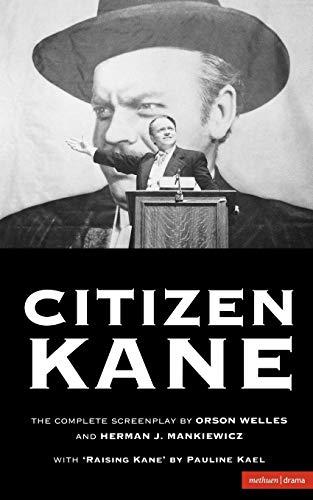
Orson Welles
Mentioned 9 months ago
191: Halloween Special V: “The War of the Worlds” on the Radio
Robert O. Paxton
Mentioned 9 months ago
190: An Epilogue to US Pre-WW2 Turn from Isolationism to Interventionism and the Influential Americans in London Who Brokered the FDR-Churchill Bromance
Lynne Olson
Mentioned 9 months ago
190: An Epilogue to US Pre-WW2 Turn from Isolationism to Interventionism and the Influential Americans in London Who Brokered the FDR-Churchill Bromance
Michael Ford
Mentioned 10 months ago
187: From the Rhineland to Poland (1935–1939): Annexation, Appeasement, & the Start of World War II
Mary Howitt
Mentioned 10 months ago
187: From the Rhineland to Poland (1935–1939): Annexation, Appeasement, & the Start of World War II
Joyce Carol Oates
Mentioned 10 months ago
186: From Czardom to Stalinism: Building the USSR & the Ascent of Joseph Stalin
Sholem Alekhem
Mentioned 11 months ago
The Early Holocaust: From the “Jewish Question” to Kristallnacht
Theodor Herzl
Mentioned 11 months ago
The Early Holocaust: From the “Jewish Question” to Kristallnacht
Collectif
Mentioned 11 months ago
The Early Holocaust: From the “Jewish Question” to Kristallnacht

Archbishop Carlo Maria Vigano
Mentioned 11 months ago
The Early Holocaust: From the “Jewish Question” to Kristallnacht

The episode introduced the book as a groundbreaking 1897 novel that reshaped fiction by blending folklore, social commentary, and psychological thrills. Hosts Greg Jackson and Lindsay Graham highlighted its enduring influence, noting its rich themes, gothic atmosphere, and lasting relevance, even noting its impact on film adaptations. They expressed strong enthusiasm, calling it an amazing gothic thriller that still holds up today.
The novel was released on May 26, 1897, by Archibald Constable & Company and was not an initial financial hit, but it fundamentally changed fiction. It was described as an elaborate synthesis of folklore, social commentary, and psychological thrills that merged legend with history and modern science with age-old nightmares, remaining influential over 125 years later.
While the movie isn't a scene-for-scene lift from author Bram Stoker's 1897 novel, Dracula, it's close enough that Bram Stoker's widow, Florence, sued the filmmakers for copyright infringement.
Bram Stoker's Dracula tells the tale of an ancient vampire who leaves his homeland to terrorize Victorian Britain.
On May 26, 1897, the British publishing house Archibald Constable & Company released a new book. Bound in cheap yellow cloth, it was written by a little-known Irish theater manager living in London.
But Bram Stoker's Dracula would change the world of fiction forever. Stoker's novel was an elaborate synthesis of folklore, social commentary, and psychological thrills that melded legend with history and modern science with age-old nightmares.
And I was stunned at what a treasure chest of themes and tropes were in there. And the book just kept unpacking and exploding and exploding. It's just an amazing gothic thriller.
The Irish author wrote the ultimate vampire tale, framed around journal entries from characters like Jonathan Harker, who travels to Count Dracula's castle before the Count preys on his fiance, Mina. The book was based on collected legends, folklore, and some history.
See, while the movie isn't a scene-for-scene lift from Bram Stoker's 1897 novel, Dracula, it's close enough that Bram Stoker's widow, Florence, sued the German film company, Prana, for copyright infringement.
Bram Stoker's Dracula. If you've never read it, it totally holds up.
Based on collected legends, folklore, and some history, Irish author Bram Stoker tells the ultimate vampire tale.
We follow Jonathan Harker to the Transylvanian castle of the vampire, Count Dracula.
The count then uses Jonathan to get himself to London, only to then prey on the young professional soon-to-be bride, Mina.
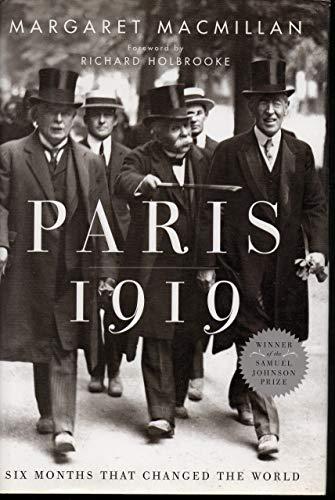
Six Months That Changed the World
The book was referenced to argue that the Versailles Treaty was a pivotal but not inevitable factor in the rise of later conflicts, emphasizing that leaders made choices that shaped history. Host Greg Jackson highlighted this perspective, and the author herself underscored that the treaty’s outcomes could have been better or worse, reinforcing that 20th‑century evils were not foreordained. The discussion conveyed a positive appraisal of the book’s insights.
Margaret Macmillan's book Paris 1919 was cited to emphasize that the leaders of the nations at the time made choices, and therefore the domino effect of the Versailles Treaty was not inevitable, but the treaty was a major factor in shaping the hyper-nationalism that contributed to the rise of Nazism.
I really did like Margaret Macmillan's point in her book Paris 1919 that their successors, they made choices. So yes, we shouldn't just look at the Versailles Treaty and blame everything as though the dominoes had to fall, but the domino was not. Yeah. It was a big part of that. It set up the hyper...
And it's these sorts of instances where I contrast this to the Congress of Vienna and the words of Abraham Lincoln actually come to mind for me, with malice toward none, with charity for all. When you go tooth for tooth, you do that in... It doesn't end well. It never does. You have to go into it saying, I get that I'm really angry at you because of all this, but we have to find a way to work together. How do we build a better future? Yeah. Yeah. Otherwise, I'll go with another analogy. It's like a fishtail in a car, right? Yeah. That just keeps swinging and swinging. It takes enormous strength to do what the leaders of Europe did in Vienna in 1815. To not pile all the blame. Yeah. To not pile the blame, to not say, well, we're going to make them pay. We're just going to crush you. And again, I totally get the strategic thought, the idea that we will neuter Germany so that they can't. Yeah. In doing so. Yeah. Really, Woodrow had it right on that whole self-determination point, allowing nations to be themselves. Yeah. And of course, to bring this full circle, we should discuss Woodrow, the idealist who in so many ways wouldn't compromise, yet he would readily compromise on that and many other points. Again, trying to get into his head, right? It's easy to point out where Woodrow became a hypocrite. Where he fell short. Yeah, and fell short. We can do that all day long with- Of course, but we could do that with everyone. Yes. Yes, we could do that with any villain, hero, doesn't matter, right? It's easy to do. To understand whether or not we agree or condone is to grasp how deeply he believed in the idea of the League of Nations. Yeah. And in his mind, if he could just get that across the finish line, we're golden because the League of Nations is going to fix everything. It's going to solve all the problems. Yes. Will be fixed. We'll all hold hands and sing Kumbaya. So it's okay, I can compromise on these other issues, but I can't do is compromise on the League, which he then, as we saw stubbornly, would not. He compromised in Paris to get the League, but he wouldn't compromise in the United States to get the Senate to approve the treaty, which as I just had this discussion with my students this last week, as I'm teaching my Middle East class and we were talking through covering the Iran nuclear agreement under the Obama administration and discuss the difference between binding treaties versus executive orders and so forth. Woodrow Wilson's looking for a binding treaty. The president, yes, oversees our foreign policy and secretary of state assists with that. But per the constitution, it's the Senate that approves the treaty. Yeah. So if you can't get- If you can't get them on board with it, it doesn't matter. Yep. It's toast. And as we know, he didn't. The agony. It's so ironic. It's super ironic. It's the only thing he wouldn't compromise on. Yep. So he gets his Nobel Peace Prize for the idea and we get the League of Nations. It's not like it doesn't exist. The United States is not a part of it. It is not. It super, super is not a part of it.
Professor Margaret Macmillan, the author of the book, acknowledges the failings of the Treaty of Versailles, but reminds us that none of the 20th century's evils, even Hitler, was guaranteed or foreordained by the Treaty of Versailles.
if they could have done much better, they certainly could have done much worse.
Ken Burns cited the book as an example of how fiction can give a tangible relationship to a historic landmark, noting its role in highlighting the forgotten Notre Dame Cathedral. In a later episode, the novel’s dramatic portrayal of the 1832 Paris rebellion was referenced as a key moment in the French struggle for liberty. Both mentions treated the title as a vivid illustration of historical storytelling.
Ken Burns uses this work of fiction as an example of how storytelling can create a relationship with an object and make it more tangible. This book highlighted the Notre Dame Cathedral, which was later destroyed by fire.
I'm I think about Victor Hugo, it's a it's a work of fiction, but his note for them to Pali that he was highlighting a forgotten forsaken overlooked Cathedral that most of us in the 21st century and In my childhood in the 20th We couldn't fathom Paris without it and the whole world mourned When the Cathedral caught fire a few years back
![How the Other Half Lives Studies Among the Tenements of New York 1890 [Hardcover] Cover](https://media.podcastbookpicks.com/books/3246.jpg)
The hosts highlighted the book as a groundbreaking photojournalistic work that exposed tenement conditions in 1890s New York, noting its shock value for middle‑class readers and its role in spurring social reform. They cited Jacob Riis’s photographs and personal stories as the catalyst that even inspired Theodore Roosevelt to take action on poverty relief. The overall tone was enthusiastic, presenting the title as a pivotal and highly recommended work.
Jacob Rees published this book in the 1890s, containing stories, photographs and drawings. This book was impactful and shocking to many middle and upper class Americans, with some taking action as a result.
He soon publishes them along with the stories of the real people living in these deplorable conditions. Readers devour the stories, and in the 1890s, The Danish Immigrant produces a whole book packed with yet more stories, photographs, and drawings. It's called How the Other Half Lives, and the impact is both immediate and massive.
It was a photojournalism book that documented the living conditions in the tenements of New York City; it was so influential that it inspired Theodore Roosevelt to help improve the lives of those living in poverty.
I have read your book and I have come to help.
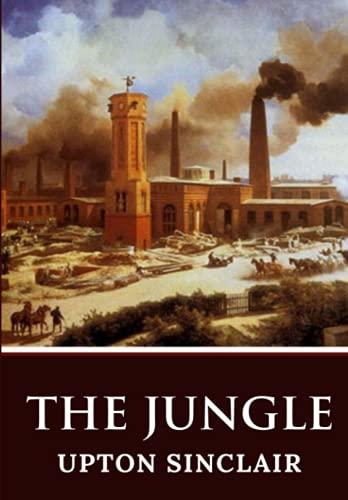
It was mentioned as a novel based on real events in Chicago's meatpacking industry, causing disgust and ultimately leading to new federal regulations.
I have come to write the Uncle Tom's Cabin of the labor movement.
— Episode: 113: A Square Deal (pt. 2): Consumer Pro...
It was mentioned as a novel based on real events in Chicago's meatpacking industry, causing disgust and ultimately leading to new federal regulations.
I have come to write the Uncle Tom's Cabin of the labor movement.
Chicago will be ours.
I aimed at the public's heart and by accident, I hit it in the stomach.
A Translation Controversy
Adolf Hitler described his need for more land, or Lebensraum, in this book to justify the expansion of the German people.
the quote-unquote need for more land, that is, living space, or Lebensraum, for the expanding German people, as described by Adolf in Mein Kampf.
— Episode: 187: From the Rhineland to Poland (1935–...
Adolf Hitler described his need for more land, or Lebensraum, in this book to justify the expansion of the German people.
the quote-unquote need for more land, that is, living space, or Lebensraum, for the expanding German people, as described by Adolf in Mein Kampf.
This was cited as the classic, quintessential work for understanding fascism, though the author purposely held off on defining the term until the end due to the complexity of the subject.
And yet Paxton's book, The Anatomy of Fascism, which is kind of the classic quintessential work, if you want to understand fascism, I highly recommend reading it.
— Episode: 190: An Epilogue to US Pre-WW2 Turn from...
This was cited as the classic, quintessential work for understanding fascism, though the author purposely held off on defining the term until the end due to the complexity of the subject.
And yet Paxton's book, The Anatomy of Fascism, which is kind of the classic quintessential work, if you want to understand fascism, I highly recommend reading it.
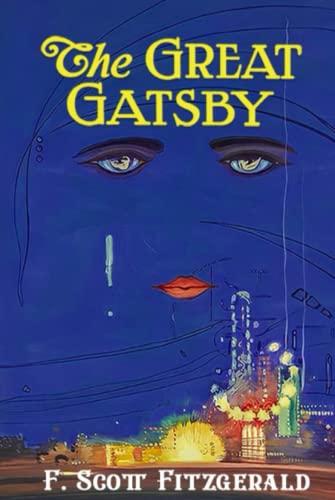
The Original 1925 Edition (Booklover's Library Classics)
The novel was discussed as an enduring masterpiece from the 1920s, whose power lies in the tension between America's illusions and realities, often overlooked due to its glamorous veneer.
And enduring literature like F. Scott Fitzgerald's masterpiece, The Great Gatsby...if you read it in high school but have forgotten, or if you've never read it, we get right to the ma...
— Episode: 169: An Epilogue to the 1920s: Youth cul...
The novel was discussed as an enduring masterpiece from the 1920s, whose power lies in the tension between America's illusions and realities, often overlooked due to its glamorous veneer.
And enduring literature like F. Scott Fitzgerald's masterpiece, The Great Gatsby...if you read it in high school but have forgotten, or if you've never read it, we get right to the major themes of it and why it's still relevant today.
But it's a very dark novel. And part of what makes it so great is the way that the darkness in it gives gravitas to what otherwise would be superficial party scenes.
But what makes Gatsby so great is that what Fitzgerald did was he suspended two things together. . . Basically, it's about the tension between America's illusions and its realities.
So if you ask me the question of why does Gatsby endure, Gatsby captures that constant need to reinvent our own idealism, to try to keep striving, to try to keep pushing forward.
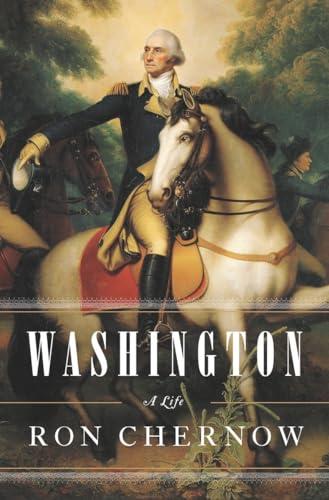
A Life
It was mentioned as a multi-volume biography of George Washington that was later condensed into a shorter, more accessible version. The podcast host used it as a source for an episode about the number of slaves on George Washington's Mount Vernon estate.
Thomas Flexner, who is basically the god of George Washington.
— Episode: 94: Epilogue to Gilded Age Part I (or Gi...
It was mentioned as a multi-volume biography of George Washington that was later condensed into a shorter, more accessible version. The podcast host used it as a source for an episode about the number of slaves on George Washington's Mount Vernon estate.
Thomas Flexner, who is basically the god of George Washington.
He literally wrote the book on Washington. The multi-volume books. The books. Yeah, the multi-volume. Plural.
So you need to know that if you look at Chernow and you think, wow, that's a long, that's a long book. That's a dense book. That is. That is the Reader's Digest version of what Thomas Flexner did in terms of biographies.
Thomas Flexner mentioned there being 20 enslaved people.
The Unabridged and Complete Edition (Thomas Paine Classics)
A quote from this pamphlet was used as the title for the second episode of the film being discussed, relating to the Declaration of Independence.
an asylum for mankind, a quote from Common Sense.
— Episode: 192: A Conversation with Ken Burns and S...
A quote from this pamphlet was used as the title for the second episode of the film being discussed, relating to the Declaration of Independence.
an asylum for mankind, a quote from Common Sense.
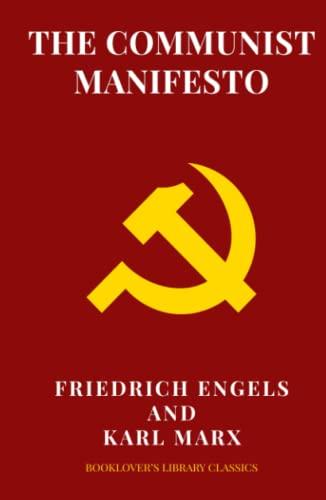
1888 Translated Edition (The Political Classic of Karl Marx And Friedrich Engels)
Karl Marx co-authored this book with Friedrich Engels in 1848 and it outlined the principles of scientific socialism, also known as Marxism. This work, and his later book 'Das Kapital', explained his theory of history through four stages, culminating in a socialist state.
Three years later in 1848, Friedrich serves as junior author and the primarily Karl Marx authored Communist Manifesto.
— Episode: 151: The First Red Scare - Bombings, The...
Karl Marx co-authored this book with Friedrich Engels in 1848 and it outlined the principles of scientific socialism, also known as Marxism. This work, and his later book 'Das Kapital', explained his theory of history through four stages, culminating in a socialist state.
Three years later in 1848, Friedrich serves as junior author and the primarily Karl Marx authored Communist Manifesto.
In this and future writings like Das Kapital, Karl explains his scientific socialism.
The novel was mentioned in relation to the exaggerated presence of dust bowl migrants in California, contrasting with the reality that most people stayed in the Southern Plains or moved elsewhere.
But don't let John Steinbeck's novel, The Grapes of Wrath, make you think that all of Oklahoma is forced to abandon their homes for the green fields of California.
— Episode: 175: The Dirty Thirties (The New Deal pt...
The novel was mentioned in relation to the exaggerated presence of dust bowl migrants in California, contrasting with the reality that most people stayed in the Southern Plains or moved elsewhere.
But don't let John Steinbeck's novel, The Grapes of Wrath, make you think that all of Oklahoma is forced to abandon their homes for the green fields of California.
Between widespread newspaper coverage and later books, like Steinbeck's much-celebrated The Grapes of Wrath, the Okies and Arkies, as these dust bowl-fleeing migrant workers are derogatorily called, become a greatly exaggerated presence, an imagined nuisance in the minds of many Californians.
The Dark Story of America's Shining Women (Thorndike Press Large Print Popular and Narrative Nonfiction)
It was mentioned that the author is slowly reading the book because it's a sad story that goes into a lot of detail about what happened to these girls.
I'm reading the book. You are very slowly because it's a sad story.
— Episode: 141: Wartime Interlude
It was mentioned that the author is slowly reading the book because it's a sad story that goes into a lot of detail about what happened to these girls.
I'm reading the book. You are very slowly because it's a sad story.
Yeah, like and they go into a lot of detail about what happened to these girls in the book. And it's just really sad.
Oh, like, yeah, I'm trying to imagine. They're like, your bones are like breaking. And you have no idea why.
They didn't know why. Because radium was supposed to be this miracle, you know, and we can look back and say, oh, my gosh, how did I know that? But we've done this many times over.
It's you only know what you know. Exactly.
The Call of the Wild was discussed in the context of Jack London's writing career, which was inspired by his Klondike experiences, and it was briefly summarized as a captivating novel featuring a sled dog in the Yukon.
That's my half a sentence and not doing full justice summary of The Call Of the Wild.
— Episode: 88: “The Last Frontier:” The Purchase of...
The Call of the Wild was discussed in the context of Jack London's writing career, which was inspired by his Klondike experiences, and it was briefly summarized as a captivating novel featuring a sled dog in the Yukon.
That's my half a sentence and not doing full justice summary of The Call Of the Wild.
The Original 1901 Edition (A Booker T. Washington Classics)
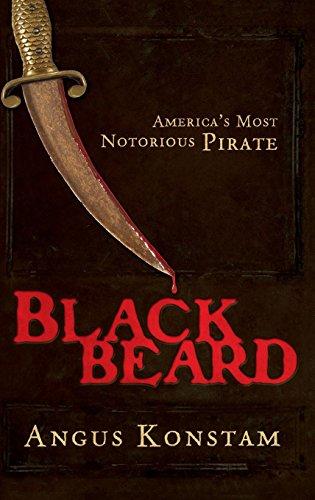
America's Most Notorious Pirate
The podcast mentioned 'Blackbeard' as an example of a book about pirates, and compared rum runners to pirates in the golden age of piracy.
And a reference to the golden age of piracy is spot on because the modern day pirates that are rum runners do a lot of business among the same group of islands that those early 18th century pirates us...
— Episode: 158: Prohibition - So You Wanna Be a Rum...
The podcast mentioned 'Blackbeard' as an example of a book about pirates, and compared rum runners to pirates in the golden age of piracy.
And a reference to the golden age of piracy is spot on because the modern day pirates that are rum runners do a lot of business among the same group of islands that those early 18th century pirates used.
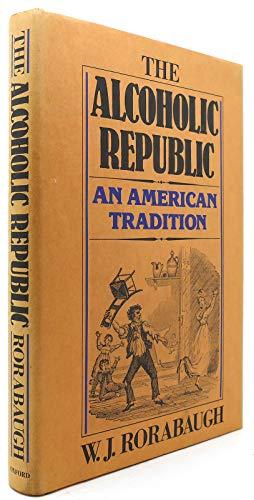
An American Tradition
The book covers the heavy drinking habits of early American generations, highlighting the widespread use of alcohol as medicine, the cheaper cost of whiskey compared to tea and coffee, and the dangers associated with alcohol abuse.
Good God, no wonder historian W.J. Rohrabach's book on this era of American history is titled The Alcoholic Republic.
— Episode: 157: Temperance, Prohibition, and the Pa...
The book covers the heavy drinking habits of early American generations, highlighting the widespread use of alcohol as medicine, the cheaper cost of whiskey compared to tea and coffee, and the dangers associated with alcohol abuse.
Good God, no wonder historian W.J. Rohrabach's book on this era of American history is titled The Alcoholic Republic.

This poem was written by Grace Coolidge as a way to cope with the loss of their son.
You, my son, have shown me God. Your kiss upon my cheek has made me feel the gentle touch of him who leads us on.
— Episode: 156: The Presidency of “Silent” Cal Cool...
This poem was written by Grace Coolidge as a way to cope with the loss of their son.
You, my son, have shown me God. Your kiss upon my cheek has made me feel the gentle touch of him who leads us on.
Note: The book recommendations on this page are discovered automatically from podcast transcripts, and may be incorrect or incomplete.
Podcast Name