Common Sense
Thomas Paine
Mentioned 8 months ago
192: A Conversation with Ken Burns and Sarah Botstein: The American Revolution and WWII
HTDS is a bi-weekly podcast, delivering a legit, seriously researched, hard-hitting survey of American history through entertaining stories. To keep up with History That Doesn’t Suck news, check us out htdspodcast.com or follow on Facebook and Instagram: @Historythatdoesntsuck. Become a premium memb...
Recently mentioned
Thomas Paine
Mentioned 8 months ago
192: A Conversation with Ken Burns and Sarah Botstein: The American Revolution and WWII
H.G. Wells
Mentioned 9 months ago
191: Halloween Special V: “The War of the Worlds” on the Radio
Orson Welles
Mentioned 9 months ago
191: Halloween Special V: “The War of the Worlds” on the Radio
Robert O. Paxton
Mentioned 9 months ago
190: An Epilogue to US Pre-WW2 Turn from Isolationism to Interventionism and the Influential Americans in London Who Brokered the FDR-Churchill Bromance
Lynne Olson
Mentioned 9 months ago
190: An Epilogue to US Pre-WW2 Turn from Isolationism to Interventionism and the Influential Americans in London Who Brokered the FDR-Churchill Bromance
Michael Ford
Mentioned 10 months ago
187: From the Rhineland to Poland (1935–1939): Annexation, Appeasement, & the Start of World War II
Mary Howitt
Mentioned 10 months ago
187: From the Rhineland to Poland (1935–1939): Annexation, Appeasement, & the Start of World War II
Joyce Carol Oates
Mentioned 10 months ago
186: From Czardom to Stalinism: Building the USSR & the Ascent of Joseph Stalin
Sholem Alekhem
Mentioned 11 months ago
The Early Holocaust: From the “Jewish Question” to Kristallnacht
Theodor Herzl
Mentioned 11 months ago
The Early Holocaust: From the “Jewish Question” to Kristallnacht
Collectif
Mentioned 11 months ago
The Early Holocaust: From the “Jewish Question” to Kristallnacht
Archbishop Carlo Maria Vigano
Mentioned 11 months ago
The Early Holocaust: From the “Jewish Question” to Kristallnacht
The Life of John D. Rockefeller, Sr.
The book was referenced during a discussion of Gilded Age robber barons, with the host noting that it suggested the subject's father's secret second marriage may have influenced his early career choices. No explicit endorsement was given, and the mention served mainly to illustrate a personal detail about the historical figure.
The hosts referenced the book to illustrate Carnegie's authentic philanthropic motives from his early years, before his fortune expanded. They used it as supporting evidence for the discussion on the Gilded Age's robber barons.
It was mentioned as a satirical novel written by Mark Twain and Charles Dudley Warner, that gave a name to the era and described the period as materialistic, greedy, and shallow.
What is the chief end of man? Answer, to get rich. In what way? Answer, dishonestly if we can, honestly if we must.
— Episode: 91: The Gilded Age, Industrialization, a...
It was mentioned as a satirical novel written by Mark Twain and Charles Dudley Warner, that gave a name to the era and described the period as materialistic, greedy, and shallow.
What is the chief end of man? Answer, to get rich. In what way? Answer, dishonestly if we can, honestly if we must.
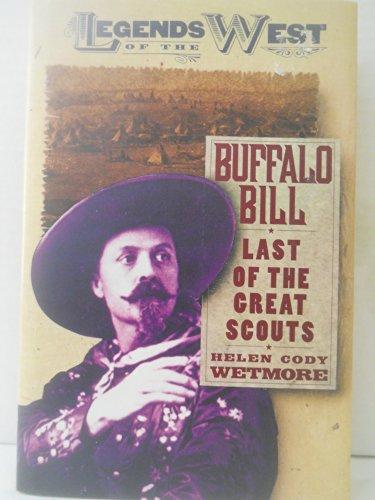
In the episode the hosts noted that the book had been gifted to President Theodore Roosevelt's son and used it to illustrate Buffalo Bill as the final figure of the frontier, marking the shift from rugged wilderness to modern achievement. They highlighted the author's portrayal of Bill as the vanishing point of Western life, emphasizing his role in transitioning the Wild West into history. The discussion was informative but did not constitute a strong endorsement.
It was gifted to President Theodore Roosevelt's son, Quentin, and summarized Buffalo Bill as the end of the frontier, a transition between the wilderness of the past and the present.
He has not and never can have a successor. He is the vanishing point between the rugged wilderness of the past in Western life and the vast achievement in the present. When the Wild West disbands, the last vestige of our frontier life passes from the scene of active realities and becomes a matter of history.
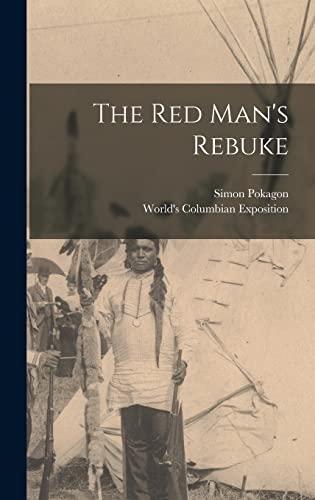
In the episode, the hosts highlighted that the book was authored by a Pottawatomie writer as a direct rebuttal to Frederick Jackson Turner's frontier thesis, emphasizing how the United States' growth came at the expense of Native American homes and a once happy race. They presented it as a crucial perspective on the true cost of American expansion, urging listeners to remember the sacrifices behind the nation's grandeur.
It was written by a Pottawatomie man and served as a rebuttal to Frederick Jackson Turner's thesis, highlighting the cost of the United States' success, specifically the loss of Native American homes and a happy race.
your hearts in admiration rejoice over the beauty and grandeur of this young republic. Do not forget that this success has been at the sacrifice of our homes and a once happy race,
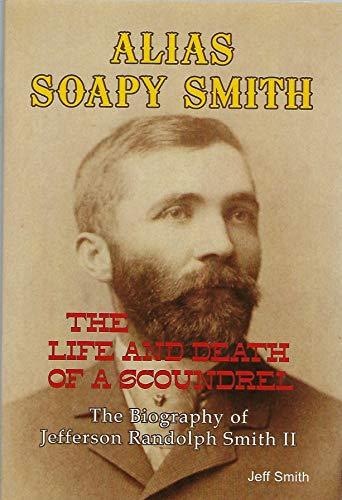
The Life and Death of a Scoundrel
The book was noted as a biography that offers a different perspective on Soapy Smith’s death, specifically addressing who fired the fatal shot. Host Greg Jackson cited it as a reference for that viewpoint, highlighting its usefulness for understanding that episode of history.
It was mentioned as a biography of Soapy Smith, providing a different perspective on his death, specifically regarding who fired the fatal shot.
Alias Soapy Smith, The Life and Death of a Scoundrel
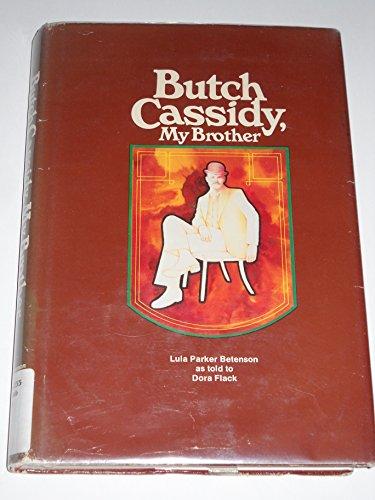
Host Greg Jackson cited Lula Parker's book, Butch Cassidy, My Brother, as a key historical source for the controversial theory that the outlaw survived his supposed death in Bolivia. Written by Cassidy's sister, Lula Parker, the memoir detailed a secret 1925 visit to the family home where her brother allegedly appeared, confirming he was alive and possessed intimate family knowledge. The book further claimed that Butch revealed The Sundance Kid and Etta Place were also still living, using this memoir to fuel the enduring historical debate surrounding Cassidy's true fate.
It was mentioned as the book where Lula Parker, Butch's sister, claimed Butch visited her family in 1925 after his supposed death in Bolivia and spoke of Sundance and Etta still being alive.
In her book, Butch Cassidy, My Brother, Butch's sister Lula tells us he visited the Parker home in 1925.
She, her 81-year-old father, and brother Mark related, they chatted all night with this man who had the Parker family grin and knew all the right intimate details.
He reported that Sundance and Etta were alive too.
He crossed paths with the reunited couple in Mexico City.
She tells us that her brother, died in the Northwest in the fall of 1937, a year before dad died.
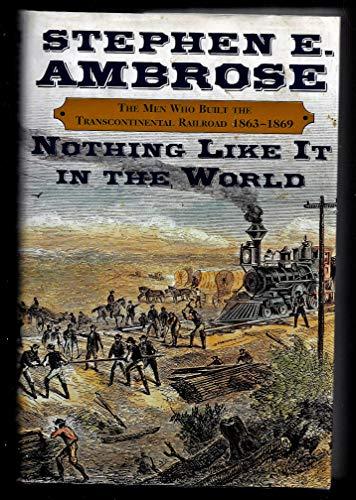
The Men Who Built the Transcontinental Railroad, 1863-1869
The title was brought up while the hosts recounted Lincoln’s visit to Council Bluffs and his conversation with Dodge about selecting the optimal western railroad route. They used the book as background material for the discussion of Dr. Thomas Durant and the Union Pacific’s role in the transcontinental railroad. The overall tone was informative but not a strong endorsement.
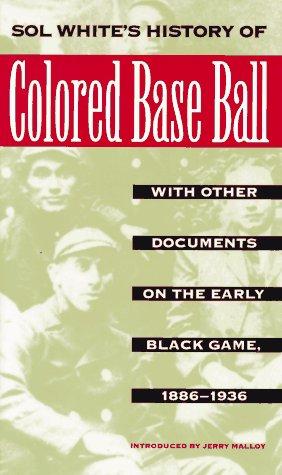
In the episode the hosts referenced the book as a historical source that documented at least 18 professional black baseball teams operating in the United States by 1908, highlighting its 1907 publication date. The discussion treated it as a factual reference for early black baseball history.
The episode referenced the poem, noting speculation that its protagonist, Mudville's mighty Casey, was inspired by baseball player Michael King Kelly. No strong recommendation was made, and the mention served mainly as a cultural aside.
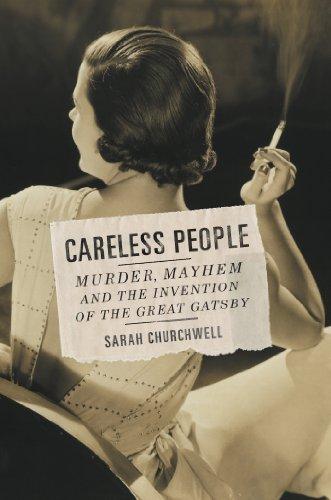
Murder, Mayhem, and the Invention of The Great Gatsby
In the episode, host Greg Jackson highlighted Sarah Churchwell's acclaimed book Careless People, noting that it skillfully combined the Hall Mills double murder story with the creation of The Great Gatsby to provide cultural context for Fitzgerald's work. He praised the book for illuminating the forgotten darkness of the 1920s and its influence on the novel.
This acclaimed book was mentioned as providing context for F. Scott Fitzgerald's work by skillfully combining the sensational story of the Hall Mills double murder with the creation of The Great Gatsby.
She has written extensively about 1920s American culture, including her acclaimed book Careless People, Murder, Mayhem, and the Invention of the Great Gatsby.
Your book, Careless People, skillfully combines the sensational story of the Hall Mills double murder with the creation of The Great Gatsby, giving some context for how the now forgotten darkness of the era affected Fitzgerald's opus.
This work was mentioned as part of the brilliant Hollywood career of Orson Welles.
While we won't hear that story today, the only consequence that this gifted storyteller saw was a brilliant Hollywood career, which included directing Citizen Kane and playing Harry L...
— Episode: 191: Halloween Special V: “The War of th...
This work was mentioned as part of the brilliant Hollywood career of Orson Welles.
While we won't hear that story today, the only consequence that this gifted storyteller saw was a brilliant Hollywood career, which included directing Citizen Kane and playing Harry Lyne in The Third Man.
The Americans Who Stood with Britain in Its Darkest, Finest Hour
This book chronicled the pivotal role played by three Americans in London--Edward R. Murrow, Averell Harriman, and John Gilbert Winant--who influenced the decisions of President Franklin Roosevelt and Prime Minister Winston Churchill.
It is my distinct pleasure today to be talking about this terrific book, Citizens of London, The Americans Who Stood with Britain in its Darkest, Finest Hour. And the author of this b...
— Episode: 190: An Epilogue to US Pre-WW2 Turn from...
This book chronicled the pivotal role played by three Americans in London--Edward R. Murrow, Averell Harriman, and John Gilbert Winant--who influenced the decisions of President Franklin Roosevelt and Prime Minister Winston Churchill.
It is my distinct pleasure today to be talking about this terrific book, Citizens of London, The Americans Who Stood with Britain in its Darkest, Finest Hour. And the author of this book, Lynn Olsen.
And, you know, the best part about it is I kind of brought my back to history because he was really forgotten. And so that's the thing I'm proud of stuff.
The moment that I can think of is more of a symbol of how important they were, the three of them, and how much of an impact they had and how influential they were with the two leading characters in this drama.
A Novella (Kindle Single)
This book was mentioned as Joseph Stalin's favorite during his time at the Tiflis Theological Seminary. He latched onto the revenge-driven protagonist named Koba, which later became a nickname for Stalin himself.
He joins underground political clubs, which is where Soso discovers his favorite book, The Patricide by Alexander Kozbecki. He latches onto its revenge-driven protagonist, Koba.
— Episode: 186: From Czardom to Stalinism: Building...
This book was mentioned as Joseph Stalin's favorite during his time at the Tiflis Theological Seminary. He latched onto the revenge-driven protagonist named Koba, which later became a nickname for Stalin himself.
He joins underground political clubs, which is where Soso discovers his favorite book, The Patricide by Alexander Kozbecki. He latches onto its revenge-driven protagonist, Koba.
Koba had become Soso's god, the sense of his life. He wanted to become another Koba, as famous a fighter and hero as he.
This classic collection of tales was used to illustrate the struggles Eastern European Jews faced balancing traditional adherence to Judaism with the demands of the modern world around the turn of the 20th century. The biographer described the work as ironically juxtaposing the past with the changing present, including elements of playfulness and self-reference.
Perhaps the best way to wrap our heads around late 19th century Eastern European Jewish life is by experiencing a fictionalized shtetl world created by Solomon Rabinovich, or Shalom Aleichem, to use h...
— Episode: The Early Holocaust: From the “Jewish Qu...
This classic collection of tales was used to illustrate the struggles Eastern European Jews faced balancing traditional adherence to Judaism with the demands of the modern world around the turn of the 20th century. The biographer described the work as ironically juxtaposing the past with the changing present, including elements of playfulness and self-reference.
Perhaps the best way to wrap our heads around late 19th century Eastern European Jewish life is by experiencing a fictionalized shtetl world created by Solomon Rabinovich, or Shalom Aleichem, to use his better-known Yiddish pseudonym, which he shares with us in his classic collection of tales, Tevye the Dairyman and the Railroad stories.
According to his biographer, Jeremy Dauber, Shalom uses this work to, quote, ironically juxtapose the past in changing present and, for good measure, include doses of playfulness, disruption, along with the occasional self-referential or autobiographical excursion. Close quote.
This 1896 essay laid out Theodor Herzl's argument that the 'profound barbarism of anti-Semitism in Europe' meant the Jewish problem was political and required a political solution. Herzl further developed the idea of a Jewish state in a subsequent pamphlet.
He first lays this out in his 1896 essay, A Solution to the Jewish Question, which argues that with the, quote-unquote, profound barbarism of anti-Semitism in Europe, the continent's Jewish problem is...
— Episode: The Early Holocaust: From the “Jewish Qu...
This 1896 essay laid out Theodor Herzl's argument that the 'profound barbarism of anti-Semitism in Europe' meant the Jewish problem was political and required a political solution. Herzl further developed the idea of a Jewish state in a subsequent pamphlet.
He first lays this out in his 1896 essay, A Solution to the Jewish Question, which argues that with the, quote-unquote, profound barbarism of anti-Semitism in Europe, the continent's Jewish problem is a political for requires a political solution.
He further develops this idea of a Jewish state in a subsequent pamphlet called The Jewish State, and is convinced that nations the world over will love the idea, too.
This publication by French politician douard Drummond was noted for rehashing medieval anti-Semitic claims to assert that a cabal of French Jews was behind everything wrong with the world. Adolf Hitler later looked to this text for inspiration.
See French politician douard Drummond's recent publication, La France Juif, Jewish France, which rehashes medieval dating anti-Semitic claims to assert that a cabal of French Jews are behind everythin...
— Episode: The Early Holocaust: From the “Jewish Qu...
This publication by French politician douard Drummond was noted for rehashing medieval anti-Semitic claims to assert that a cabal of French Jews was behind everything wrong with the world. Adolf Hitler later looked to this text for inspiration.
See French politician douard Drummond's recent publication, La France Juif, Jewish France, which rehashes medieval dating anti-Semitic claims to assert that a cabal of French Jews are behind everything wrong with the world, has helped create a spike in French anti-Semitism.
Autobiography, Poor Richard, and Later Writings (Library of America)
The speaker referenced Benjamin Franklin, noting that even he could not have imagined the political flame that would eventually blaze from the initial union of colonies. It was also mentioned that Franklin spoke about how the Constitutional Convention delegates could assemble their joint wisdom despite their individual flaws.
No one, not even Ben, Joyner, Di Franklin, could have imagined the political flame that would blaze to where we are today.
— Episode: The Unlikely Union: New Tour Dates
The speaker referenced Benjamin Franklin, noting that even he could not have imagined the political flame that would eventually blaze from the initial union of colonies. It was also mentioned that Franklin spoke about how the Constitutional Convention delegates could assemble their joint wisdom despite their individual flaws.
No one, not even Ben, Joyner, Di Franklin, could have imagined the political flame that would blaze to where we are today.
That, as Ben Franklin once said of his fellow Constitutional Convention delegates, we too can assemble our joint wisdom.
Shedding Light on my "Excommunication"
This was an open letter published by acclaimed author and journalist mile Zola to the president of the French Republic that systematically tore apart the nightmare of Alfred Dreyfus's trial and conviction. mile was sued for libel after publishing the letter, but remained unshaken.
Acclaimed author and journalist, mile Zola, is livid. He publishes an open letter to the president of the French Republic, entitled J'Accuse.
— Episode: The Early Holocaust: From the “Jewish Qu...
This was an open letter published by acclaimed author and journalist mile Zola to the president of the French Republic that systematically tore apart the nightmare of Alfred Dreyfus's trial and conviction. mile was sued for libel after publishing the letter, but remained unshaken.
Acclaimed author and journalist, mile Zola, is livid. He publishes an open letter to the president of the French Republic, entitled J'Accuse.
In it, he systematically tears apart the nightmare that was Alfred's trial and subsequent conviction.
Note: The book recommendations on this page are discovered automatically from podcast transcripts, and may be incorrect or incomplete.
Podcast Name