Common Sense
Thomas Paine
Mentioned 8 months ago
192: A Conversation with Ken Burns and Sarah Botstein: The American Revolution and WWII
HTDS is a bi-weekly podcast, delivering a legit, seriously researched, hard-hitting survey of American history through entertaining stories. To keep up with History That Doesn’t Suck news, check us out htdspodcast.com or follow on Facebook and Instagram: @Historythatdoesntsuck. Become a premium memb...
Recently mentioned
Thomas Paine
Mentioned 8 months ago
192: A Conversation with Ken Burns and Sarah Botstein: The American Revolution and WWII
H.G. Wells
Mentioned 9 months ago
191: Halloween Special V: “The War of the Worlds” on the Radio
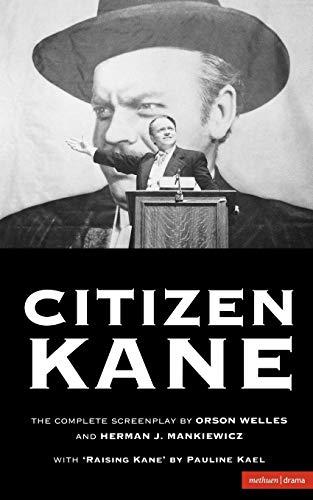
Orson Welles
Mentioned 9 months ago
191: Halloween Special V: “The War of the Worlds” on the Radio
Robert O. Paxton
Mentioned 9 months ago
190: An Epilogue to US Pre-WW2 Turn from Isolationism to Interventionism and the Influential Americans in London Who Brokered the FDR-Churchill Bromance
Lynne Olson
Mentioned 9 months ago
190: An Epilogue to US Pre-WW2 Turn from Isolationism to Interventionism and the Influential Americans in London Who Brokered the FDR-Churchill Bromance
Michael Ford
Mentioned 10 months ago
187: From the Rhineland to Poland (1935–1939): Annexation, Appeasement, & the Start of World War II
Mary Howitt
Mentioned 10 months ago
187: From the Rhineland to Poland (1935–1939): Annexation, Appeasement, & the Start of World War II
Joyce Carol Oates
Mentioned 10 months ago
186: From Czardom to Stalinism: Building the USSR & the Ascent of Joseph Stalin
Sholem Alekhem
Mentioned 11 months ago
The Early Holocaust: From the “Jewish Question” to Kristallnacht
Theodor Herzl
Mentioned 11 months ago
The Early Holocaust: From the “Jewish Question” to Kristallnacht
Collectif
Mentioned 11 months ago
The Early Holocaust: From the “Jewish Question” to Kristallnacht

Archbishop Carlo Maria Vigano
Mentioned 11 months ago
The Early Holocaust: From the “Jewish Question” to Kristallnacht
The poem was referenced to describe the intimidating dynamic between Austrian Chancellor Kurt Schuschnig (the fly) and Adolf Hitler (the spider) during their meeting at the Berghof.
The imagery is not lost on Kurt, who now personifies Mary Howitt's poem, The Spider and the Fly.
— Episode: 187: From the Rhineland to Poland (1935–...
The poem was referenced to describe the intimidating dynamic between Austrian Chancellor Kurt Schuschnig (the fly) and Adolf Hitler (the spider) during their meeting at the Berghof.
The imagery is not lost on Kurt, who now personifies Mary Howitt's poem, The Spider and the Fly.
It was read aloud without commentary, and describes a man driven to madness by an old man's eye, leading to a murder and eventual confession to the police.
True, nervous, very, very dreadfully nervous, I had been and am. But why will you say that I am mad?
— Episode: 100: Halloween Special! Edgar Allan Poe:...
It was read aloud without commentary, and describes a man driven to madness by an old man's eye, leading to a murder and eventual confession to the police.
True, nervous, very, very dreadfully nervous, I had been and am. But why will you say that I am mad?
How then am I mad? Hearken and observe how healthily, how calmly I can tell you the whole story.
I loved the old man. He had never wronged me. He had never given me insult.
He had the eye of a vulture, a pale blue eye with a film over it.
I think it was his eye. Yes, it was this.
A Reference Guide (Guides to Historic Events in America)
In the episode on women's suffrage, the hosts cited the book as a comprehensive reference for the movement, detailing the various organizations, key activists, and the anti‑suffragist opposition. They highlighted its usefulness for listeners seeking a deeper factual overview. The overall tone was supportive, positioning the title as a valuable resource for anyone studying the 19th Amendment.
How Andrew Carnegie, John D. Rockefeller, Jay Gould, and J. P. Morgan Invented the American Supereconomy
In the episode, the book was referenced to offer a nuanced critique of Ida Tarbell’s portrayal of Standard Oil, noting that while Rockefeller had many questionable practices, he was not a criminal like early Jay Gould. The author highlighted that many accusations stemmed from reformers’ standards rather than actual wrongdoing, presenting a more balanced view of his business acumen. This perspective was presented as a valuable correction to the prevailing narrative.
It provided a critique of Ida Tarbell's work on Standard Oil, acknowledging Rockefeller's business acumen while suggesting her writing overstated his negative actions.
while there were skeletons aplenty in John Rockefeller's closet, he was not a brigand or embezzler or stock manipulator in the manner of the early Jay Gould. Many of the accusations against him are for violating standards as reformers wished them to be, not as they actually were.
A Life
The biography was mentioned in passing while the host was introducing the muckraking journalist Ida Tarbell. The book, referred to as The Life of Lincoln and attributed to Tarbell, was cited solely to establish her prior reputation and credibility as a major author before she undertook her famous investigation into Standard Oil. It served purely as contextual background rather than a dedicated recommendation.
It was mentioned as one of Ida Tarbell's works, alongside her Standard Oil history, highlighting her established reputation as a writer before undertaking the Standard Oil investigation.
The History of the Standard Oil Company by Ida M. Tarbell, author of The Life of Lincoln.
All Volumes
Ida's serialized work in McClure's magazine, later published as a book, which detailed the practices of Standard Oil, including its monopolistic tendencies and impact on the oil industry.
Suddenly, at the very heyday of this confidence, a big hand reached out from nobody knew where to steal their conquest and throttle their future. The suddenness and the blackness of the assault on the...
— Episode: 113: A Square Deal (pt. 2): Consumer Pro...
Ida's serialized work in McClure's magazine, later published as a book, which detailed the practices of Standard Oil, including its monopolistic tendencies and impact on the oil industry.
Suddenly, at the very heyday of this confidence, a big hand reached out from nobody knew where to steal their conquest and throttle their future. The suddenness and the blackness of the assault on their business stirred to the bottom their manhood and their sense of fair play and the whole region arose in a revolt which is scarcely paralleled in the commercial history of the United States.
throughout her series, Tarbell acknowledges Standard Oil's legitimate greatness and recognizes the extraordinary business acumen of John D. Rockefeller,
Where did you get that stuff?' Ida answers, 'Mr. Rogers, you can't for a moment think that I would tell you where I got it. You will recall my efforts to get from you anything more than a general denial that these practices of espionage so long complained of were untrue, could be explained by legitimate competition. You know this bookkeeping record is true.
You are today the most famous woman in America,' and he continues, half-joking, 'People universally speak of you with such irreverence that I'm getting sort of afraid of you.
An American Banking Dynasty and the Rise of Modern Finance
It was described as a biography that highlighted J.P. Morgan's contradictory nature, including his work ethic, philanthropy, and aversion to the volatile free market.
sociable and shy, deliberate and impulsive, domineering and flexible, extravagant and frugal, worldly and religious, inscrutably reserved and deeply sentimental.
— Episode: 112: A Square Deal (pt. 1): Corp. Regula...
It was described as a biography that highlighted J.P. Morgan's contradictory nature, including his work ethic, philanthropy, and aversion to the volatile free market.
sociable and shy, deliberate and impulsive, domineering and flexible, extravagant and frugal, worldly and religious, inscrutably reserved and deeply sentimental.
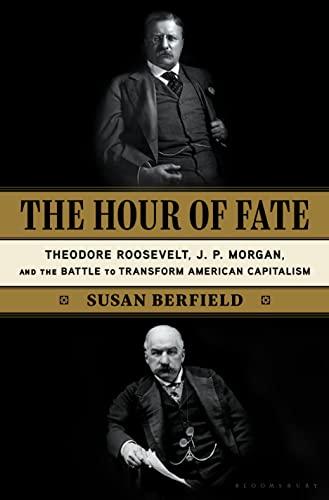
Theodore Roosevelt, J.P. Morgan, and the Battle to Transform American Capitalism
It was mentioned as a history of J.P. Morgan and Teddy Roosevelt, with a quote highlighting Morgan's influence on the railroad and coal industry.
by 1874, most of the coal land in northeastern Pennsylvania was controlled by the railroads. By 1900, most of the railroads were controlled by Pierpont Morgan.
— Episode: 112: A Square Deal (pt. 1): Corp. Regula...
It was mentioned as a history of J.P. Morgan and Teddy Roosevelt, with a quote highlighting Morgan's influence on the railroad and coal industry.
by 1874, most of the coal land in northeastern Pennsylvania was controlled by the railroads. By 1900, most of the railroads were controlled by Pierpont Morgan.
It was described as a fascinating read with excellent prose and engaging narrative, and was recommended as a good addition to anyone's collection of autobiographies.
I would also recommend to add to your pantheon of autobiographies. You get to read is Hawaii story by Hawaii's queen, uh, by Queen Lily Okolani.
— Episode: 110: Epilogue to the Age of Imperialism
It was described as a fascinating read with excellent prose and engaging narrative, and was recommended as a good addition to anyone's collection of autobiographies.
I would also recommend to add to your pantheon of autobiographies. You get to read is Hawaii story by Hawaii's queen, uh, by Queen Lily Okolani.
She's a good writer. She's a phenomenal writer. The prose is excellent.
Uh, and in fact, she's, she's an excellent poet.
So I recommend that strongly for anyone interested.
The Philippine-American War, 1899-1902
It was mentioned that the book suggested that while both sides committed atrocities in the war, it was not a war of wholesale slaughter, and that the US would grow to accept Filipinos.
a vote against annexing the islands after February 4th was a vote against the troops
— Episode: 107: The Philippine-American War
It was mentioned that the book suggested that while both sides committed atrocities in the war, it was not a war of wholesale slaughter, and that the US would grow to accept Filipinos.
a vote against annexing the islands after February 4th was a vote against the troops
both sides committed atrocities, some large and some small, but for the most part, the war was executed without the kind of wholesale slaughter that was all too common in that period.
It was mentioned that the book highlighted how the narrative of the war has shifted from an altruistic approach to one of barbarity in later times, but how that narrative itself can be overly simplified.
The imperialist myth of selfless Americans saving their little brown brothers from the violent tyranny of Aguinaldo and the Tagalogs has long been discredited. The current view of a brutal and racist...
— Episode: 107: The Philippine-American War
It was mentioned that the book highlighted how the narrative of the war has shifted from an altruistic approach to one of barbarity in later times, but how that narrative itself can be overly simplified.
The imperialist myth of selfless Americans saving their little brown brothers from the violent tyranny of Aguinaldo and the Tagalogs has long been discredited. The current view of a brutal and racist soldiery slaughtering defenseless natives has been unchallenged for far too long. The actual war was a far more complex and challenging phenomenon than either of these superficial interpretations acknowledge.
The book was described as a source that provided sensationalized news coverage in response to the sinking of the USS Maine. The book is associated with a 24-hour news cycle and was mentioned within the context of a discussion of William Randolph Hearst's work and techniques.
This is the type of news that deserves 24-hour coverage and some truth-stretching sensationalism
— Episode: 104: The Road to the Spanish-American Wa...
The book was described as a source that provided sensationalized news coverage in response to the sinking of the USS Maine. The book is associated with a 24-hour news cycle and was mentioned within the context of a discussion of William Randolph Hearst's work and techniques.
This is the type of news that deserves 24-hour coverage and some truth-stretching sensationalism
The Story of Plessy v. Ferguson, and America's Journey from Slavery to Segregation
The book, 'Separate', was mentioned in relation to the Jim Crow era and the understanding of the term 'Jim Crow' by people in the North during the late 19th century.
It's worth noting, as Steve Luxemburg does in his history of Plessy v. Ferguson, titled Separate, that the article does so casually, thus assuming even in this early decade that its N...
— Episode: 101: The New South, Jim Crow (Plessy v....
The book, 'Separate', was mentioned in relation to the Jim Crow era and the understanding of the term 'Jim Crow' by people in the North during the late 19th century.
It's worth noting, as Steve Luxemburg does in his history of Plessy v. Ferguson, titled Separate, that the article does so casually, thus assuming even in this early decade that its Northern readers understand and know the term.
Fifteen of Edgar Allan Poe's Greatest Stories
The episode featured a reading of the title without any commentary, presenting the classic revenge tale of a man luring his friend into catacombs and walling him in. The host highlighted the story's dark atmosphere and plot details while simply letting the text speak for itself.
It was read without commentary, and tells the story of a man seeking revenge on Fortunato, luring him into his family's catacombs and walling him in.
The thousand injuries of Fortunato I had borne as I best could. But when he ventured upon insult, I vowed revenge.
I must not only punish, but punish with impunity.
He prided himself on his connoisseurship in wine.
In this respect, I did not differ from him materially. I was skillful in the Italian vintages myself and bought largely whenever I could.
It was about dusk one evening during the supreme madness of the carnival season that I encountered my friend.
The Reconstruction of America after the Civil War
It was mentioned in passing as a book that details how the West became the place where Americans felt unified again after the Civil War.
And then you look at what's happening in the Gilded Age, the primary focus of expansion is the West. Well, sure. I mean, even by the time we get to World War I, we're still going to be trying in some...
— Episode: 99: The Gilded Age’s Singer Sewing Machi...
It was mentioned in passing as a book that details how the West became the place where Americans felt unified again after the Civil War.
And then you look at what's happening in the Gilded Age, the primary focus of expansion is the West. Well, sure. I mean, even by the time we get to World War I, we're still going to be trying in some ways to be inward. Oh, you don't feel that way. No, no, or trying. I think the key word there is trying. Right. Well, ebbs and flows. I mean, this is the thing is that the progressive era, I mean, you see, and you'll talk about this in upcoming episodes. You get to the point where you clearly see that in 1898, it's just, well, this is it. We've done this. And so there's going to be the Philippine War, which is going to last years and millions of lives. Philippines is going to be a United States territory till just after World War II. Right. You've got expansion. We de facto control Haiti from 1915, I believe it is, when we go in. Wilson orders the Marines to go in after a coup and then takes all their money, puts it in a bank in New York and says, you guys can have this back when you act the way we want you to. You've got Cuba. So what I'm saying is we back off from some of that later on, but it's that back and forth. Gilded Age is a time where the United States is primarily focused on trying to figure out how to heal these wounds between the North and the South. And the West, as Heather Cox Richardson argued very well in West for Mathematics, the West becomes the place where suddenly we're all Americans again, and that's the focus there.
Note: The book recommendations on this page are discovered automatically from podcast transcripts, and may be incorrect or incomplete.
Podcast Name