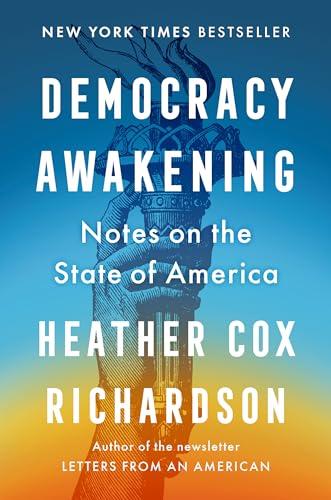
The book details the historical context leading to the rise of Donald Trump and authoritarianism in America, and offers potential solutions. It was discussed in relation to the American political landscape and the current state of democracy.
"
democracies die more often through the ballot box than a gunpoint
Trump is a really different situation in a sense here in 2024. And that is that, you know, he remains popular with his base. And yet if you think about the way he is approaching the election of 2024, one of the things that fascinates me is he is not trying to appeal to undecided voters. He's really not trying to expand that base at all. In fact, he's doubling down on the extremism that attracts that very small group of people who are fervently loyal to him.
He is admitting he wants to be a dictator. He is saying that he will be a dictator from day one. He is talking about rounding up, putting in camps and deporting 10 million people who are here in the United States, including citizens, citizens under birthright citizenship, which he says he's going to get rid of. He is openly talking about staying in power longer than one more term.
the reason I started the book in 1937 is that people wanted me to write a book explaining the questions that people ask me every day, you know, how did the parties switch sides? What is a southern strategy? But I realized that the question people ask me most often is how did we get here? What on earth is going on and how do we get out of it?
in all the periods that you're talking about, there was a fervent defense of the principles of the Declaration of Independence, not only among people who were in office, often they were not defending those principles, but among marginalized Americans who stood on those principles with the argument that if we're really going to be this country by God, we ought to act like we're part of this country.