The Jungle Cover
Podcast Mentions

The Jungle

Upton Sinclair

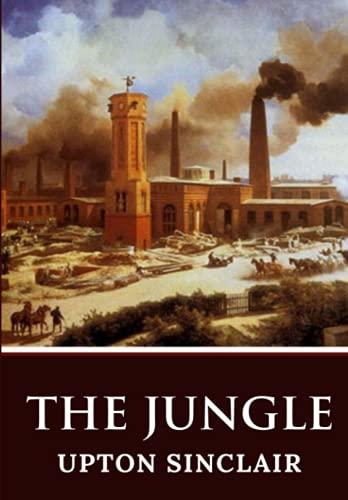
“They use everything about the hog except the squeal.” ― Upton Sinclair, The Jungle The Jungle is a 1906 novel written by the American journalist and novelist Upton Sinclair (1878–1968). Sinclair wrote the novel to portray the lives of immigrants in the United States in Chicago and similar industri...

Podcasts 16
Quotes 51
Pod Save America

The conversation referenced Sinclair's classic novel as a historic example of a book that exposed industry abuses.

"

the famous book by Upton Sinclair, the jungle.
— Episode: Taxing Cory Booker's Patience

Episode: Taxing Cory Booker's Patience

The conversation referenced Sinclair's classic novel as a historic example of a book that exposed industry abuses.

"

the famous book by Upton Sinclair, the jungle.
Stuff You Should Know

The hosts highlighted that the book exposed the inhumane treatment of animals and workers in meatpacking, prompting major food safety legislation the following year. They also noted that its graphic descriptions contributed to a lasting negative perception of hot dogs among the public. Overall, the discussion framed the title as a historically significant exposé rather than a current reading recommendation.

Episode: Selects: How Restaurant Health Inspections Work

It was published in 1905 and brought attention to the meatpacking industry and slaughterhouses. The book chronicles the inhumane treatment of both the animals and the workers. It's impact was huge and Congress passed the Pure Food and Drug Act and the Federal Meat Inspection Act the next year.

"

That's the impact that Upson Sinclair's the jungle had.

And in the book, I mean, he went undercover, he was a muckraking journalist, God bless him.

And he went undercover to basically just take notes on all the horrible things he saw in the, in the meatpacking industry and slaughterhouses.

And he chronicled all the inhumane things that he saw and the way the animals were treated.

But he also saw the inhumane ways the workers were treated.

Episode: Hot Dog!(s)

It was mentioned as a book that didn't help the public perception of hot dogs, likely due to its descriptions of unsanitary meatpacking practices.

"

Upton Sinclair certainly didn't help later on with his book The Jungle.

Episode: Hot Dog!(s)

It was mentioned in passing, as it likely influenced the perception of hot dogs, specifically regarding the potential use of mystery meat or unsavory ingredients.

"

Upton Sinclair certainly didn't help later on with his book, The Jungle.

Episode: Hot Dog!(s)

It was mentioned in passing as a book that didn't help the public perception of hot dogs, due to its content.

"

Upton Sinclair certainly didn't help later on with his book The Jungle.

Episode: Hot Dog!(s)

It was mentioned in passing as a book that did not help the public perception of hot dogs, possibly because of its depiction of the meat packing industry.

"

Upton Sinclair certainly didn't help later on with his book, The Jungle.

Episode: Hot Dog!(s)

It was mentioned in passing as a book that didn't help the public perception of hot dogs, due to its depiction of unsanitary meat processing practices.

"

Upton Sinclair certainly didn't help later on with his book, The Jungle.

My Favorite Murder with Karen Kilgariff and Georgia Hardstark

It was discussed as a catalyst for meat inspection after detailing the harsh conditions of Chicago slaughterhouses, which led to the Pure Food and Drug Act and the Federal Meat Inspection Act.

"

I remember reading that. It was so disgusting. So awful. Reading is good. Reading is fundamental. Books are great.

— Episode: 342 - The Debras of the World

Episode: 342 - The Debras of the World

It was discussed as a catalyst for meat inspection after detailing the harsh conditions of Chicago slaughterhouses, which led to the Pure Food and Drug Act and the Federal Meat Inspection Act.

"

I remember reading that. It was so disgusting. So awful. Reading is good. Reading is fundamental. Books are great.

And people finding out about stuff that isn't right outside their front door and then caring about it is what books are for, aka don't let weirdos shut down your local public libraries.

Yeah. And banning books is fucking bad. Banning books is what fascists and Nazis do.

Matt and Shane's Secret Podcast

It was mentioned as a book that detailed the horrific conditions within Chicago's meatpacking industry, and was used as an example of the harsh realities faced by workers in the North during the period of industrialization.

"

read what's his name Upton Sinclair what shit was going on in Chicago in the slaughterhouses

— Episode: Ep 393 - The Presidents (feat. Louis C.K...

Episode: Ep 393 - The Presidents (feat. Louis C.K.)

It was mentioned as a book that detailed the horrific conditions within Chicago's meatpacking industry, and was used as an example of the harsh realities faced by workers in the North during the period of industrialization.

"

read what's his name Upton Sinclair what shit was going on in Chicago in the slaughterhouses

it's about the meatpacking shit right?

Behind the Bastards

It was discussed as a catalyst for change in the food industry after exposing the unsanitary conditions of meatpacking plants and the lack of food safety regulations, prompting public outrage and eventually leading to the Pure Food and Drug Act.

"

There were cattle which had been fed on whiskey malt, the refuse of the breweries and had become what the men called 'stearly', which means covered in boils. It was a nasty job killing these for when...

— Episode: Part One: The Food And Drug Administrati...

Episode: Part One: The Food And Drug Administration

It was discussed as a catalyst for change in the food industry after exposing the unsanitary conditions of meatpacking plants and the lack of food safety regulations, prompting public outrage and eventually leading to the Pure Food and Drug Act.

"

There were cattle which had been fed on whiskey malt, the refuse of the breweries and had become what the men called 'stearly', which means covered in boils. It was a nasty job killing these for when you plunged your knife into them, they would burst and splatter foul smelling stuff onto your face. And when a man's sleeves were smeared with blood, his hands steeped in it, how was he ever to wipe his face or to clear his eyes so that he could see?

I aimed at the public's heart and by accident I hit it in the stomach.

Episode: Part One: The Food And Drug Administration

The Jungle was discussed as a catalyst for change in the meatpacking industry, as it vividly depicted the unsanitary conditions and spurred public outrage, which led to federal investigations and reforms.

"

There were cattle which had been fed on whiskey malt, the refuse of the breweries and had become what the men called stearly, which means covered in boils. It was a nasty job killing these for when you plunged your knife into them, they would burst and splatter foul smelling stuff onto your face.

And when a man's sleeves were smeared with blood, his hands steeped in it. How was he ever to wipe his face or to clear his eyes so that he could see?

I aimed at the public's heart and by accident I hit it in the stomach.

Pivot

Podcast

Pivot

It was mentioned as an example of how liability laws prevent harm in the workplace; if businesses weren't liable for worker safety, accidents like people falling into meat grinders would still occur, as depicted in Sinclair's novel.

"

do you remember in high school, did you read Upton Sinclair as the jungle?

— Episode: Congress weighs liability for businesses...

Episode: Congress weighs liability for businesses, Amazon w...

It was mentioned as an example of how liability laws prevent harm in the workplace; if businesses weren't liable for worker safety, accidents like people falling into meat grinders would still occur, as depicted in Sinclair's novel.

"

do you remember in high school, did you read Upton Sinclair as the jungle?

If people weren't liable for ensuring that there were guards around meat grinders, we'd still have people falling into meat grinders.

99% Invisible

The hosts highlighted the title as a groundbreaking work that stemmed from Upton Sinclair's undercover experience in Chicago meatpacking plants, exposing dangerous, unsanitary conditions for immigrant workers. They noted that, although Sinclair aimed to sway public sentiment, the book inadvertently provoked outrage that led to federal food safety reforms. The episode also featured a graphic passage read aloud to illustrate the stark realities described in the novel.

Highly Recommended

Episode: The White Castle System of Eating Houses

It was cited as Upton Sinclair's bestselling novel that exposed unsanitary meatpacking conditions, influencing public attitudes toward meat consumption. A graphic passage from the book was read aloud.

"

Journalist Upton Sinclair's bestselling novel, The Jungle, was meant to raise the alarm of the unsanitary and appalling working conditions at meat processing plants.

There would be meat stored in great piles in rooms and the water from leaky roofs would drip over it and thousands of rats would race about on it.

Episode: The New Jungle

The episode explained that Sinclair wrote The Jungle after going undercover in Chicago meatpacking plants, using it to expose the harsh conditions faced by immigrant workers.

"

In 1904, the journalist Upton Sinclair went undercover working in meatpacking plants in Chicago. Then he wrote a novel based on his experiences called The Jungle. He described poor, newly arrived immigrants, mostly from Eastern Europe, who worked in dangerous, squalid conditions.

Even if Sinclair's book didn't do exactly what he wanted it to, it was still influential. Federal laws were enacted to enforce inspections and sanitation.

When people are deported in droves, it leaves a vacuum. When refugees aren't allowed to come, it leaves a vacuum. And when there's no one left to slaughter our cows, we're reminded of a truth Upton Sinclair tried to tell us in the jungle.

Episode: The New Jungle

The episode noted that Sinclair went undercover in Chicago meatpacking plants, then authored The Jungle to expose brutal conditions and immigrant exploitation, which sparked public outrage and helped drive reform.

"

In 1904, the journalist Upton Sinclair went undercover working in meatpacking plants in Chicago. Then he wrote a novel based on his experiences called The Jungle. He described poor, newly arrived immigrants, mostly from Eastern Europe, who worked in dangerous, squalid conditions.

But it wasn't those brutal conditions that captured the public's outrage. As Sinclair later said, quote, I aimed at the public's heart and by accident, I hit it in the stomach. Even if Sinclair's book didn't do exactly what he wanted it to, it was still influential.

When people are deported in droves, it leaves a vacuum. When refugees aren't allowed to come, it leaves a vacuum. And when there's no one left to slaughter our cows, we're reminded of a truth Upton Sinclair tried to tell us in the jungle.

The Prof G Pod with Scott Galloway

The hosts highlighted the book as a striking example of storytelling that sparked a major shift in the meatpacking industry, noting that its narrative prompted reforms more effectively than data on worker conditions. They used it to illustrate how a compelling story can drive structural change.

Episode: No Mercy / No Malice: Storytelling

It was mentioned as a novel that caused a major shift in the meatpacking industry, not due to data on worker conditions, but because of the compelling narrative it presented.

"

The meatpacking industry famously registered structural upheaval not in response to data on worker conditions, but Upton Sinclair's novel The Jungle.

The MeatEater Podcast

It was mentioned that the author's book, *The Jungle*, is about how sausage is made. The speaker said they did not read this book in high school.

"

You ever read Upton Sinclair's The Jungle?

— Episode: Ep. 141: Squirrel Brains, Stags, and the...

Episode: Ep. 141: Squirrel Brains, Stags, and the Fourth Wa...

It was mentioned that the author's book, *The Jungle*, is about how sausage is made. The speaker said they did not read this book in high school.

"

You ever read Upton Sinclair's The Jungle?

About how the sausage is made?

One of the books I skipped in high school that I was supposed to read or don't remember, at least.

Lovett or Leave It

A speaker compared a recent experience to the novel "The Jungle" by Upton Sinclair, invoking the book as a metaphor.

"

It makes me think the book of the jungle by Upton Sinclair because I just found a coffee inside the cavity of my Costco chicken.

— Episode: The Grim Veeper

Episode: The Grim Veeper

A speaker compared a recent experience to the novel "The Jungle" by Upton Sinclair, invoking the book as a metaphor.

"

It makes me think the book of the jungle by Upton Sinclair because I just found a coffee inside the cavity of my Costco chicken.

Stuff They Don't Want You To Know

The hosts repeatedly cited the book as a landmark exposé of the early meat‑packing industry that helped spur the creation of food‑safety regulations such as the FDA. Ben and Noah highlighted its role in illustrating how unchecked contamination could return under current policy shifts, and they used it as a cautionary example for today’s debates on food safety. The discussion conveyed strong endorsement of the work as essential reading for understanding the origins of modern consumer protections.

Highly Recommended

Episode: Strange News: SCOTUS Rules Against Democracy, A Tr...

The Supreme Court rolling back the Chevron doctrine is a dangerous move that could lead to a return to the days of Upton Sinclair's The Jungle, where food and other products were contaminated with harmful substances.

"

This opens the door to return to the days of Upton Sinclair's The Jungle.

Episode: Listener Mail: Massive Recalls, Chicken Nuggets, t...

It was mentioned as the first book to expose the horrors of the meatpacking industry, a time when there was no oversight, making it a relevant book today due to the food contamination discussion.

"

It's like the first expose blown the lid off of meatpacking at a time where there was like zero oversight.

Episode: What is snake oil?

It was discussed as a primary motivator behind the creation of the FDA, having exposed unsanitary practices in Chicago's meatpacking industry.

"

It was called the jungle written by a guy named Upton Sinclair And it shed a lot of light on things people would rather not think about you know what I mean and

Episode: What is snake oil?

It was discussed as a primary motivating factor behind the FDA's creation, as it highlighted disturbing practices in the Chicago stockyards, including meat production.

"

one of the primary motivating factors for the creation of the FDA was a book a quite disturbing book About stockyards in Chicago. It was called the jungle written by a guy named Upton Sinclair

Episode: CLASSIC: Big Pharma: Conspiracies and Cover-ups

It was discussed as a gruesome account of the meatpacking industry, which served as a negative example of the potential consequences of lacking food safety regulations.

"

That was going to say gross. Yeah, gross and gruesome story about the meatpacking industry.

History That Doesn't Suck

It was mentioned as a novel based on real events in Chicago's meatpacking industry, causing disgust and ultimately leading to new federal regulations.

"

I have come to write the Uncle Tom's Cabin of the labor movement.

— Episode: 113: A Square Deal (pt. 2): Consumer Pro...

Episode: 113: A Square Deal (pt. 2): Consumer Protection–Th...

It was mentioned as a novel based on real events in Chicago's meatpacking industry, causing disgust and ultimately leading to new federal regulations.

"

I have come to write the Uncle Tom's Cabin of the labor movement.

Chicago will be ours.

I aimed at the public's heart and by accident, I hit it in the stomach.

American History Tellers

The searing novel depicted the horrors Upton Sinclair witnessed while working undercover in Chicago's meatpacking plants and slaughterhouses, shocking the nation and spurring Congress to action.

"

He depicted the horrors he witnessed in a searing novel called The Jungle that shocked the nation and spurred Congress to action.

— Episode: The Progressive Era | The Muckrakers | 2

Episode: The Progressive Era | The Muckrakers | 2

The searing novel depicted the horrors Upton Sinclair witnessed while working undercover in Chicago's meatpacking plants and slaughterhouses, shocking the nation and spurring Congress to action.

"

He depicted the horrors he witnessed in a searing novel called The Jungle that shocked the nation and spurred Congress to action.

This book followed the life of a Lithuanian immigrant working in the Chicago meatpacking industry.

Sinclair described walls stained with animal blood, rotten beef treated with chemicals, and dead rats mixed into sausage meat.

Sinclair quipped that he aimed at the heart of the American people and instead hit their stomach.

Swindled

Podcast

Swindled

The Forward compared the environment at AgriProcessors to the world Upton Sinclair wrote about in his seminal work, The Jungle, and referred to the semi-indentured employees as quote, the impoverished humans who drew the first line of the jungle. The impoverished humans who drew the factory's dirty work.

"

The impoverished humans who drew the first line of the jungle. The impoverished humans who drew the factory's dirty work.

— Episode: 44. The Raid (Agriprocessors)

Episode: 44. The Raid (Agriprocessors)

The Forward compared the environment at AgriProcessors to the world Upton Sinclair wrote about in his seminal work, The Jungle, and referred to the semi-indentured employees as quote, the impoverished humans who drew the first line of the jungle. The impoverished humans who drew the factory's dirty work.

"

The impoverished humans who drew the first line of the jungle. The impoverished humans who drew the factory's dirty work.

The Daily Stoic

The Jungle, an expose of the meatpacking industry, was mentioned as inspiration for the author's book. Its impact and relevance were discussed in relation to understanding news manipulation.

"

if you read the jungle as a kid in high school or whatever eptanson clears expose of the meat packing industry then i strongly suggest you read his book the brass check which is actually an expose of...

— Episode: There Needs To Be Outlets | Keeping “The...

Episode: There Needs To Be Outlets | Keeping “The News” In...

The Jungle, an expose of the meatpacking industry, was mentioned as inspiration for the author's book. Its impact and relevance were discussed in relation to understanding news manipulation.

"

if you read the jungle as a kid in high school or whatever eptanson clears expose of the meat packing industry then i strongly suggest you read his book the brass check which is actually an expose of the news industry around the same time and sadly almost nothing this changed

Episode: Leaders Are Made Not Born | Keeping “The News” In...

The book, an expos of the meatpacking industry, was mentioned as a work that, if read in the past, makes reading the author's book, Trust Me, I'm Lying, a good idea.

"

if you read The Jungle as a kid in in high school or whatever epton Sinclair's expose of the meatpacking industry then I strongly suggest you read his book The Brass Check which is actually an expose of the news industry around the same time and sadly almost nothing has changed

Note: The book recommendations on this page are discovered automatically from podcast transcripts, and may be incorrect or incomplete.