Common Sense
Thomas Paine
Mentioned 8 months ago
192: A Conversation with Ken Burns and Sarah Botstein: The American Revolution and WWII
HTDS is a bi-weekly podcast, delivering a legit, seriously researched, hard-hitting survey of American history through entertaining stories. To keep up with History That Doesn’t Suck news, check us out htdspodcast.com or follow on Facebook and Instagram: @Historythatdoesntsuck. Become a premium memb...
Recently mentioned
Thomas Paine
Mentioned 8 months ago
192: A Conversation with Ken Burns and Sarah Botstein: The American Revolution and WWII
H.G. Wells
Mentioned 9 months ago
191: Halloween Special V: “The War of the Worlds” on the Radio
Orson Welles
Mentioned 9 months ago
191: Halloween Special V: “The War of the Worlds” on the Radio
Robert O. Paxton
Mentioned 9 months ago
190: An Epilogue to US Pre-WW2 Turn from Isolationism to Interventionism and the Influential Americans in London Who Brokered the FDR-Churchill Bromance
Lynne Olson
Mentioned 9 months ago
190: An Epilogue to US Pre-WW2 Turn from Isolationism to Interventionism and the Influential Americans in London Who Brokered the FDR-Churchill Bromance
Michael Ford
Mentioned 10 months ago
187: From the Rhineland to Poland (1935–1939): Annexation, Appeasement, & the Start of World War II
Mary Howitt
Mentioned 10 months ago
187: From the Rhineland to Poland (1935–1939): Annexation, Appeasement, & the Start of World War II
Joyce Carol Oates
Mentioned 10 months ago
186: From Czardom to Stalinism: Building the USSR & the Ascent of Joseph Stalin
Sholem Alekhem
Mentioned 11 months ago
The Early Holocaust: From the “Jewish Question” to Kristallnacht
Theodor Herzl
Mentioned 11 months ago
The Early Holocaust: From the “Jewish Question” to Kristallnacht
Collectif
Mentioned 11 months ago
The Early Holocaust: From the “Jewish Question” to Kristallnacht
Archbishop Carlo Maria Vigano
Mentioned 11 months ago
The Early Holocaust: From the “Jewish Question” to Kristallnacht
On the Jews and Their Lies
In this work, 16th-century reformer Martin Luther encouraged that synagogues be set on fire and anything that didn't burn be covered with dirt so no cinder stone could be seen, all done for the honor of God. Martin Luther's call to action was noted as not far off from the events of Kristallnacht four centuries later.
In his book, On the Jews and their lies, 16th century reformer Martin Luther encouraged the synagogues be quote, set on fire and whatever does not burn up should be covered or spread over with dirt so...
— Episode: The Early Holocaust: From the “Jewish Qu...
In this work, 16th-century reformer Martin Luther encouraged that synagogues be set on fire and anything that didn't burn be covered with dirt so no cinder stone could be seen, all done for the honor of God. Martin Luther's call to action was noted as not far off from the events of Kristallnacht four centuries later.
In his book, On the Jews and their lies, 16th century reformer Martin Luther encouraged the synagogues be quote, set on fire and whatever does not burn up should be covered or spread over with dirt so that no one may be able to see a cinder stone of it and this ought to be done for the honor of God. Close quote.
Jewish Activities in the United States
This was a series of 91 articles run in Henry Ford's newspaper, the Dearborn Independent, beginning on May 20th, 1920, that claimed to criticize the Jewish race, people, or nation for conspiracies, rather than the Jewish faith. The newspaper's most damning contribution was the publication of the Protocols of the Elders of Zion.
On May 20th, 1920, the newspaper runs its first of a 91 series of articles on Jews called The International Jew.
— Episode: The Early Holocaust: From the “Jewish Qu...
This was a series of 91 articles run in Henry Ford's newspaper, the Dearborn Independent, beginning on May 20th, 1920, that claimed to criticize the Jewish race, people, or nation for conspiracies, rather than the Jewish faith. The newspaper's most damning contribution was the publication of the Protocols of the Elders of Zion.
On May 20th, 1920, the newspaper runs its first of a 91 series of articles on Jews called The International Jew.
The Independent claims to make quote, no attack on the Jews as Jews, close quote, implying that it is not attacking the Jewish faith, but rather criticizing the Jewish race, people, nation, etc. for their monumental shadowing, money-making conspiracies, and so on.
Perhaps the most damning contribution of The Independent is its publication of the Protocols of the Elders of Zion.
A Prelude to Genocide (Perspectives on the Holocaust)
This was Adolf Hitler's autobiography, written while he was imprisoned for high treason after the Beer Hall Putsch. It detailed the imperial/expansionist component of fascism, framing it as the German people needing Lebensraum, and elaborated on his anti-Semitism, arguing Marxism was a Jewish idea.
As incoherent as a bad social media rant before others edit it, Mein Kampf hits on the imperial or expansionist component of fascism, which Adolf frames as the German people needing Lebensraum, or liv...
— Episode: 184: The Rise of Adolf Hitler: From Fail...
This was Adolf Hitler's autobiography, written while he was imprisoned for high treason after the Beer Hall Putsch. It detailed the imperial/expansionist component of fascism, framing it as the German people needing Lebensraum, and elaborated on his anti-Semitism, arguing Marxism was a Jewish idea.
As incoherent as a bad social media rant before others edit it, Mein Kampf hits on the imperial or expansionist component of fascism, which Adolf frames as the German people needing Lebensraum, or living space.
Mein Kampf doesn't sell well, and it won't until Adolf is in power.
Edición completa traducida al Español | Anotada con una biografía de Giovanni Gentile y Benito Mussolini. (Spanish Edition)
This was the title of the article Mussolini was finishing for the Italian Encyclopedia, which detailed his evolving fascist ideology.
The Doctrine of Fascism
— Episode: 183: The Origin of Fascism: “Il Duce” Be...
This was the title of the article Mussolini was finishing for the Italian Encyclopedia, which detailed his evolving fascist ideology.
The Doctrine of Fascism
A Prelude to Genocide (Perspectives on the Holocaust)
Adolf Hitler reportedly quoted from his recently published book during a one-on-one conversation with Mussolini, which reportedly annoyed Il Duce.
instead quotes his own recently published book, Mein Kampf.
— Episode: 183: The Origin of Fascism: “Il Duce” Be...
Adolf Hitler reportedly quoted from his recently published book during a one-on-one conversation with Mussolini, which reportedly annoyed Il Duce.
instead quotes his own recently published book, Mein Kampf.
A Primer to Our Profession of Arms May 2025
This official US Army field manual was mentioned as one that features stories at the beginning of each chapter, with Corporal Alvin York being one example. The manual's introduction emphasized the task to look ahead to the future and noted that the Army's capability is due to its agility to meet challenges in a changing world.
In this book, I understand that each of the chapters begins with the story, which of course, I love that approach. In fact, a number of my listeners would be familiar with World War I's at the time, C...
— Episode: 182: A Prologue to World War II: US Army...
This official US Army field manual was mentioned as one that features stories at the beginning of each chapter, with Corporal Alvin York being one example. The manual's introduction emphasized the task to look ahead to the future and noted that the Army's capability is due to its agility to meet challenges in a changing world.
In this book, I understand that each of the chapters begins with the story, which of course, I love that approach. In fact, a number of my listeners would be familiar with World War I's at the time, Corporal Alvin York. He's featured in there.
it is your task to look ahead to the future as well. Our Army has an incredible history, but we are the most capable land force in the world because of our ability and agility to meet the challenges of a changing world.
That manual you're quoting from is a field manual one, which we have a lot of doctrine in the Army. It's awesome. It's one of our strengths. That piece is interesting because it is personally written by the chief of staff of the Army.
How American Business Produced Victory in World War II
This book was highlighted as telling the story of how the United States brought its industrial might to bear, noting that the captains of industry were as responsible for winning the war as anything else. The speaker suggested it is interesting now because of current discussions about the defense industrial base and rapid manufacturing capability.
I don't want to drop name, drop a whole bunch of books, but there's a great book called Freedom's Forge. That's the story of how the United States brought its industrial might to pray...
— Episode: 182: A Prologue to World War II: US Army...
This book was highlighted as telling the story of how the United States brought its industrial might to bear, noting that the captains of industry were as responsible for winning the war as anything else. The speaker suggested it is interesting now because of current discussions about the defense industrial base and rapid manufacturing capability.
I don't want to drop name, drop a whole bunch of books, but there's a great book called Freedom's Forge. That's the story of how the United States brought its industrial might to prayer. We knew the war was coming before the war.
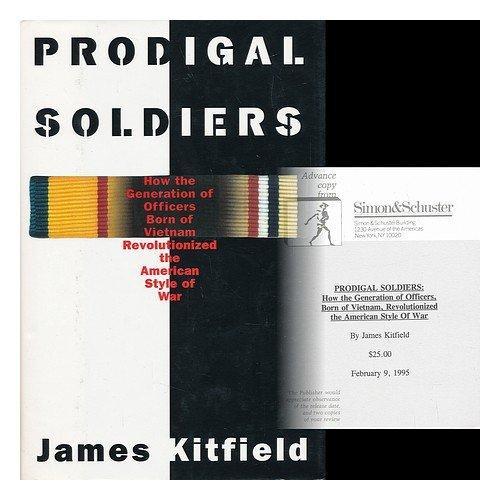
How the Generation of Officers Born of Vietnam Revolutionized the American Style of War
This book was mentioned in the context of studying the period from post-Vietnam up to Desert Storm and beyond, as an example of how an army can transform from a dark period into a premier fighting force.
So books like prodigal soldier, real soldiering, there's a couple of great pieces in there.
— Episode: 182: A Prologue to World War II: US Army...
This book was mentioned in the context of studying the period from post-Vietnam up to Desert Storm and beyond, as an example of how an army can transform from a dark period into a premier fighting force.
So books like prodigal soldier, real soldiering, there's a couple of great pieces in there.
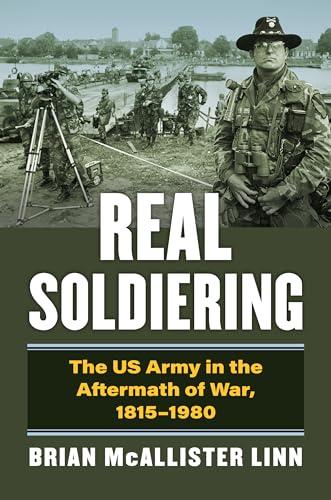
The US Army in the Aftermath of War, 1815-1980 (Modern War Studies)
This book was referenced as a great piece to read when studying the transformation of the US Army from a period after Vietnam leading up to Desert Storm.
So books like prodigal soldier, Real Soldiering, there's a couple of great pieces in there.
— Episode: 182: A Prologue to World War II: US Army...
This book was referenced as a great piece to read when studying the transformation of the US Army from a period after Vietnam leading up to Desert Storm.
So books like prodigal soldier, Real Soldiering, there's a couple of great pieces in there.
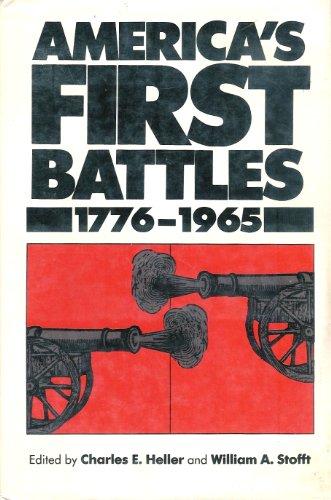
The book was brought up to support the observation that the U.S. often has a less than great entry into conflicts, learning lessons from initial failures to fix things later. The speaker suggested that in the next war, the Army will not have the luxury of losing the first fight and recovering.
So there's a great book, America's first battles. I'm sure you've read it in your, you know, we, we kind of got a track record in the U S of not having a great entry into conflict.
— Episode: 182: A Prologue to World War II: US Army...
The book was brought up to support the observation that the U.S. often has a less than great entry into conflicts, learning lessons from initial failures to fix things later. The speaker suggested that in the next war, the Army will not have the luxury of losing the first fight and recovering.
So there's a great book, America's first battles. I'm sure you've read it in your, you know, we, we kind of got a track record in the U S of not having a great entry into conflict.
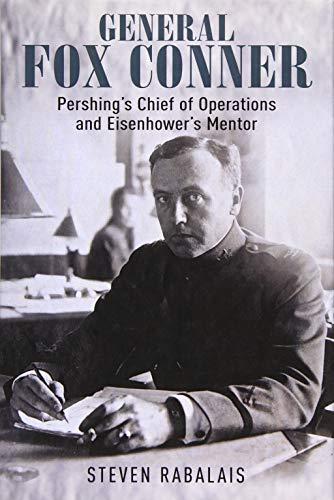
Pershing’s Chief of Operations and Eisenhower’s Mentor (Leadership in Action)
General Fox Conner was referenced as an important mentor to World War II generals like Marshall and Eisenhower, whose lessons were still relevant and taken seriously in passing on knowledge.
I could talk for hours on the interwar period, the way you can take a guy like Fox Connor, I don't know if you're familiar with who mentored the World War II generals and, you know, Marshall and, and...
— Episode: 182: A Prologue to World War II: US Army...
General Fox Conner was referenced as an important mentor to World War II generals like Marshall and Eisenhower, whose lessons were still relevant and taken seriously in passing on knowledge.
I could talk for hours on the interwar period, the way you can take a guy like Fox Connor, I don't know if you're familiar with who mentored the World War II generals and, you know, Marshall and, and Eisenhower's relationship, you know, that everybody thinks was just in combat. Yes. General Connor was part of Blackjack Pershing staff in World War I.
From the GI Bill to the VA Crisis (Conflict and Today's Congress)
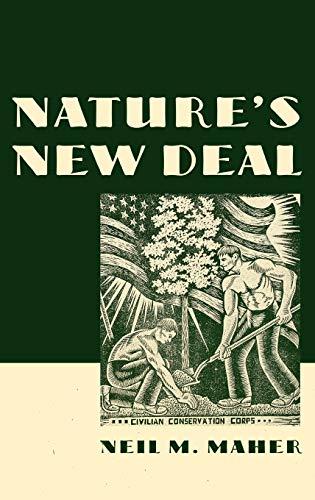
The Civilian Conservation Corps and the Roots of the American Environmental Movement
This book, which focuses on the CCC, was discussed as an excellent resource by Professor Maher, and the episode served as a book club discussion about it.
Professor Marr wrote an excellent book about one of the most popular and successful programs of the New Deal, the Civilian Conservation Corps, which we briefly covered in Episode 171.
— Episode: 177: An Epilogue to the New Deal and CCC...
This book, which focuses on the CCC, was discussed as an excellent resource by Professor Maher, and the episode served as a book club discussion about it.
Professor Marr wrote an excellent book about one of the most popular and successful programs of the New Deal, the Civilian Conservation Corps, which we briefly covered in Episode 171.
I wanted to get into the book that you wrote, Nature's New Deal, The Civilian Conservation Corps and the Roots of the American Environmental Movement.

A personal account where Benjamin Franklin described an awkward appearance as a young man walking down Market Street in Philadelphia while eating rolls, which was witnessed by his future wife, Deborah Reed.
she, standing at the door, saw me and thought I made, as I certainly did, a most awkward, ridiculous appearance.
— Episode: 14 (Second Edition): The Newburgh Conspi...
A personal account where Benjamin Franklin described an awkward appearance as a young man walking down Market Street in Philadelphia while eating rolls, which was witnessed by his future wife, Deborah Reed.
she, standing at the door, saw me and thought I made, as I certainly did, a most awkward, ridiculous appearance.
A Beginner Book for Aspiring Engineers
The speaker mentioned that Herbert Hoover's future biographer, Kenneth White, used a specific phrase when describing Hoover's actions during the railway leaders conference.
He hounds them, to borrow a phrase from the stout president's future biographer, Kenneth White, getting them to agree to spend $1 billion on upgrading construction projects over the next year.
— Episode: 172: Breadlines, Bank Failures, & the Bo...
The speaker mentioned that Herbert Hoover's future biographer, Kenneth White, used a specific phrase when describing Hoover's actions during the railway leaders conference.
He hounds them, to borrow a phrase from the stout president's future biographer, Kenneth White, getting them to agree to spend $1 billion on upgrading construction projects over the next year.
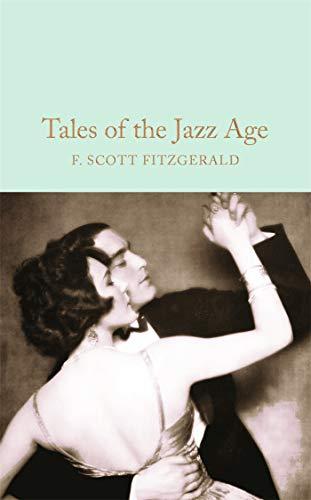
This short story collection, published in 1922, was credited with popularizing the term 'Jazz Age' for the decade.
It was popularized by Scott Fitzgerald in his short story collection, Tales of the Jazz Age, which was in 1922.
— Episode: 169: An Epilogue to the 1920s: Youth cul...
This short story collection, published in 1922, was credited with popularizing the term 'Jazz Age' for the decade.
It was popularized by Scott Fitzgerald in his short story collection, Tales of the Jazz Age, which was in 1922.
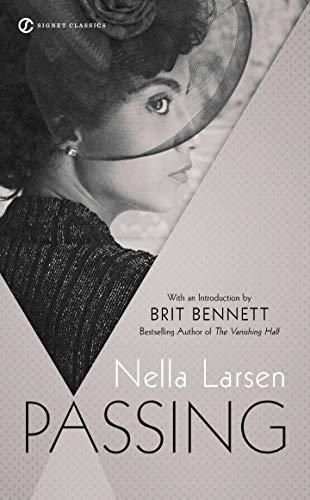
The novel, published in the late 1920s, was mentioned, and the speaker noted that a recent film adaptation of it was very good.
And there was just that, in the late 20s, there was just that very good adaptation of her novel Passing.
— Episode: 169: An Epilogue to the 1920s: Youth cul...
The novel, published in the late 1920s, was mentioned, and the speaker noted that a recent film adaptation of it was very good.
And there was just that, in the late 20s, there was just that very good adaptation of her novel Passing.
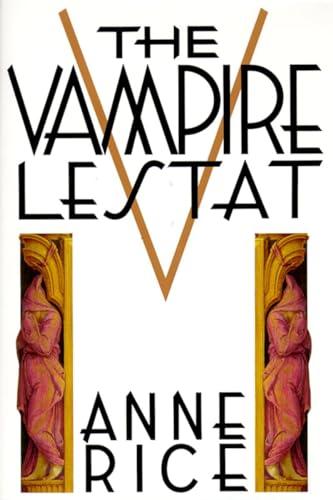
This gothic tale, produced from a writing contest involving John Polidori, Lord Byron, and Mary Shelley, depicted a seductive aristocrat with power over both men and women, laying the track for future influential vampire literature.
These stories inspired many a creative mind, particularly as John Polidori, Lord Byron, and Mary Shelley held a fun little horror writing contest with themselves in 1816.
— Episode: 168: Halloween Special IV: Nosferatu and...
This gothic tale, produced from a writing contest involving John Polidori, Lord Byron, and Mary Shelley, depicted a seductive aristocrat with power over both men and women, laying the track for future influential vampire literature.
These stories inspired many a creative mind, particularly as John Polidori, Lord Byron, and Mary Shelley held a fun little horror writing contest with themselves in 1816.
I'm referring specifically to how it culminated in John's book, The Vampire.
This gothic tale of a seductive aristocrat with power over both men and women laid the track for the most influential piece of vampire literature to come at the end of the century in 1897.
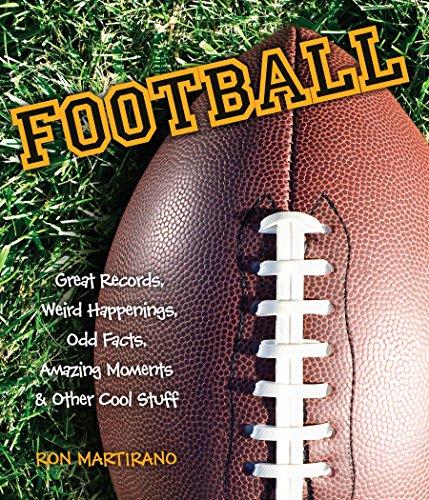
Great Records, Weird Happenings, Odd Facts, Amazing Moments & Other Cool Stuff
The book was mentioned as something Theodore Roosevelt appreciated, which showed that despite a peak year of violence in football, the sport was statistically safer than public feeling suggested.
which shows that, despite this peak year of violence, Football is in fact safer than the currently charged feelings of the nation would have you believe.
— Episode: 167: The Golden Age of Sports: Horse Rac...
The book was mentioned as something Theodore Roosevelt appreciated, which showed that despite a peak year of violence in football, the sport was statistically safer than public feeling suggested.
which shows that, despite this peak year of violence, Football is in fact safer than the currently charged feelings of the nation would have you believe.
Note: The book recommendations on this page are discovered automatically from podcast transcripts, and may be incorrect or incomplete.
Podcast Name