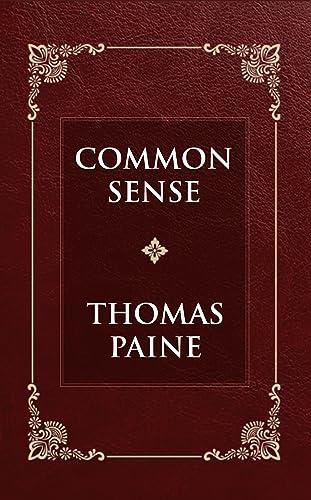
Common Sense
The Unabridged and Complete Edition (Thomas Paine Classics)
Thomas Paine
Common Sense is a 47-page pamphlet written by Thomas Paine in 1775–1776 advocating independence from Great Britain to people in the Thirteen Colonies. Writing in clear and persuasive prose, Paine collected various moral and political arguments to encourage common people in the Colonies to fight for...
Sheriff Lamb mentioned this book while talking about his hope for the future of America and his optimism about people stepping up to protect it. He says that this book, along with the Declaration of Independence, was instrumental in motivating people to stand up against England.
"
And then a guy named Thomas Paine who wrote the book common sense, but he was one of the founding fathers. Great, great things. But Thomas Paine wrote a series of pamphlets because he knew that they n...
— Episode: #119 Sheriff Mark Lamb - Fixing the Bord...
Episode: #119 Sheriff Mark Lamb - Fixing the Border Crisis...
Sheriff Lamb mentioned this book while talking about his hope for the future of America and his optimism about people stepping up to protect it. He says that this book, along with the Declaration of Independence, was instrumental in motivating people to stand up against England.
"
And then a guy named Thomas Paine who wrote the book common sense, but he was one of the founding fathers. Great, great things. But Thomas Paine wrote a series of pamphlets because he knew that they needed to motivate that percentage of Americans who did not want to go against England to motivate him to do something about it. And so he wrote something called the American crisis.
Dan Bongino highlighted the pamphlet as a historic work that helped convince colonists to pursue liberty and truth, using it as a rallying point for modern commonsense politics.
"
Thomas Paine, 1776. Common sense. I'll show you what I mean in a minute.
— Episode: Charlie (Ep. 2550)
Episode: Charlie (Ep. 2550)
Dan Bongino highlighted the pamphlet as a historic work that helped convince colonists to pursue liberty and truth, using it as a rallying point for modern commonsense politics.
"
Thomas Paine, 1776. Common sense. I'll show you what I mean in a minute.
Remember Thomas Paine? Common Sense, one of the great works of writing that convinced a lot of the colonists.
The cause of America was truth, liberty, and freedom, inalienable rights granted by God. Those were objective, not subjective, truths.
This pamphlet was released at the beginning of 1776 and sold an astonishing 120,000 copies in its first three months of publication.
"
at the beginning of 1776 thomas paine releases common sense it sells an astonishing 120 000 copies in its first three months again there are only 2.5 million citizens of the colonies at the time non-s...
— Episode: Prelude to Independence
Episode: Prelude to Independence
This pamphlet was released at the beginning of 1776 and sold an astonishing 120,000 copies in its first three months of publication.
"
at the beginning of 1776 thomas paine releases common sense it sells an astonishing 120 000 copies in its first three months again there are only 2.5 million citizens of the colonies at the time non-slave non-native american citizens
Chris Hayes mentioned Thomas Paine's book "Common Sense," a pamphlet that argued for American independence from Great Britain and was influential during the American Revolution.
"
It's funny you say that because I often think about how when Thomas Paine writes Common Sense in The Leader of the Revolutionary War he's on the radical fringes of the people who are agitating and he...
— Episode: BONUS: Live with Chris Hayes and Rachel...
Episode: BONUS: Live with Chris Hayes and Rachel Maddow
Chris Hayes mentioned Thomas Paine's book "Common Sense," a pamphlet that argued for American independence from Great Britain and was influential during the American Revolution.
"
It's funny you say that because I often think about how when Thomas Paine writes Common Sense in The Leader of the Revolutionary War he's on the radical fringes of the people who are agitating and he was a real committed small-D Democrat particularly compared to his cohort.
Al Mutar mentions reading this alongside Paine's *Age of Reason* and Jefferson's writings during the Iraq War, highlighting its relevance to his understanding of American values and ideals.
"
And I was able to just explore the world through the internet and see what America is like and what the values of America were. So when all of that civil wars was happening, I was sitting at home read...
— Episode: Immigrant Fighting Against U.S. Hating Y...
Episode: Immigrant Fighting Against U.S. Hating Youth | Fai...
Al Mutar mentions reading this alongside Paine's *Age of Reason* and Jefferson's writings during the Iraq War, highlighting its relevance to his understanding of American values and ideals.
"
And I was able to just explore the world through the internet and see what America is like and what the values of America were. So when all of that civil wars was happening, I was sitting at home reading Thomas Jefferson and The Age of Reason by Thomas Paine and Common Sense and stuff like that.
It was mentioned that Thomas Paine wrote 'Common Sense' in 1776, which helped crystallize the American Revolution and the idea of the law being king.
"
The other thing just to think about is what's on trial here is something that this is the winter in 1776 when Thomas Payne wrote Common Sense and then later the American Crisis, these pamphlets that r...
— Episode: Morning Joe 12/20/22
Episode: Morning Joe 12/20/22
It was mentioned that Thomas Paine wrote 'Common Sense' in 1776, which helped crystallize the American Revolution and the idea of the law being king.
"
The other thing just to think about is what's on trial here is something that this is the winter in 1776 when Thomas Payne wrote Common Sense and then later the American Crisis, these pamphlets that really crystallized the American Revolution that gave us the system that we wanted to defend.
Episode: Morning Joe 12/20/22
It was mentioned that Thomas Paine, who lived near the speaker, wrote the pamphlet 'Common Sense' during the winter of 1776, as well as other pamphlets that crystallized the American Revolution.
"
this is the winter in 1776 when thomas pain wrote common sense and then later the american crisis these pamphlets that really crystallized the american revolution they gave us the system that we wanted to fend he wrote that people say where's the king of america
thomas pain lived and collected taxes he was a tax collector about 15 miles from where i'm sitting now and there's a pub called the age of reason that he used to go to
This pamphlet was cited as the catalyst that stirred many to enlist in the war, becoming the first American bestseller.
"
I know about common sense. I know that this war is a conflict much bigger than our farm, our state. The cause of America is in great measure the cause of all mankind.
— Episode: Revolution | The Virginia Planter | 1
Episode: Revolution | The Virginia Planter | 1
This pamphlet was cited as the catalyst that stirred many to enlist in the war, becoming the first American bestseller.
"
I know about common sense. I know that this war is a conflict much bigger than our farm, our state. The cause of America is in great measure the cause of all mankind.
The pamphlet that stirred Martin's grandfather, Common Sense, would become the first American bestseller.
It was discussed as being the top-selling book in colonial America and a highly influential piece of media that was read aloud in various public spaces.
"
The bestseller in colonial America was Thomas Paine's Common Sense and exactly what you're talking about.
— Episode: The History of American Bookshops (From...
Episode: The History of American Bookshops (From Benjamin F...
It was discussed as being the top-selling book in colonial America and a highly influential piece of media that was read aloud in various public spaces.
"
The bestseller in colonial America was Thomas Paine's Common Sense and exactly what you're talking about.
Episode: The History of American Bookshops (From Benjamin F...
It was mentioned as a bestseller during colonial America, read aloud in various public spaces and discussed in the context of a shared cultural moment due to its wide readership.
"
The bestseller in colonial America was Thomas Paine's Common Sense and exactly what you're talking about.
This was a pamphlet that many, many colonial Americans heard about, which is a remarkable thing considering how anemic the kind of media infrastructure was at the time.
Episode: The History of American Bookshops (From Benjamin F...
It was described as the bestseller in colonial America, often read aloud in public spaces, and was likened to a modern-day cultural phenomenon like Harry Potter or Taylor Swift.
"
The bestseller in colonial America was Thomas Paine's Common Sense and exactly what you're talking about.
That book, that pamphlet was read aloud in taverns and churches and city halls and squares across the country and was probably in terms of a kind of cultural zeitgeist or what we would call a kind of water cooler moment where everybody is talking about the same piece of media was probably as galvanizing and as momentous and as influential and as broad of a readership as any book since, you know, Harry Potter, Taylor Swift, whatever kind of contemporary examples we could think of.
Episode: The History of American Bookshops (From Benjamin F...
It was discussed as a bestseller in colonial America that was read aloud and highly influential in shaping the cultural landscape during that period.
"
The bestseller in colonial America was Thomas Paine's Common Sense and exactly what you're talking about.
Episode: The History of American Bookshops (From Benjamin F...
The podcast highlighted Thomas Paine's Common Sense as a bestseller in colonial America, emphasizing its widespread influence through public readings.
"
And sort of relatedly, the bestseller in colonial America was Thomas Paine's Common Sense and exactly what you're talking about. The colonial population was still largely illiterate, but that book, that pamphlet was read aloud in taverns and churches and city halls and squares across the country and was probably in terms of a kind of cultural zeitgeist or what we would call a kind of water cooler moment where everybody is talking about the same piece of media was probably as galvanizing and as momentous and as influential and as broad of a readership as any book since, you know, Harry Potter, Taylor Swift, whatever kind of contemporary examples we could think of.
Note: The book recommendations on this page are discovered automatically from podcast transcripts, and may be incorrect or incomplete.