Our Man in Mexico
Jefferson Morley
Mentioned 1 year ago
10/8/24: Kamala Says Iran Greatest Threat, US Approved IDF Aid Strikes, Hillary Demands Censorship, CIA Caught In Major Coverup
Breaking Points is a fearless anti-establishment multi-week Youtube and Podcast which holds the powerful to account hosted by Krystal Ball and Saagar Enjeti
Recently mentioned
Jefferson Morley
Mentioned 1 year ago
10/8/24: Kamala Says Iran Greatest Threat, US Approved IDF Aid Strikes, Hillary Demands Censorship, CIA Caught In Major Coverup
Tess Gerritsen
Mentioned 1 year ago
10/7/24: October 7th One Year Later, Biden Bribes Israel To Limit Iran Attack, New Trump The Apprentice Movie
Malcolm X
Mentioned 1 year ago
10/3/24: Jill Stein Sounds Off On Dem Lawfare, Lesser Of Two Evils Voting
J.D. Vance
Mentioned 1 year ago
Tim Walz Vs. JD Vance Debate Best And Worst Moments
Michelle Obama
Mentioned 1 year ago
9/24:24: Nebraska Saves Kamala, Trump Too Old For Rallies, Trump Takes Bernie Policy, How CIA Propped Up Afghan Heroin
Don Winslow
Mentioned 1 year ago
9/24:24: Nebraska Saves Kamala, Trump Too Old For Rallies, Trump Takes Bernie Policy, How CIA Propped Up Afghan Heroin
Evan Wright
Mentioned 1 year ago
9/24/24: US Floods Troops To Middle East, Ryan Unloads On IDF Al Jazeera Raid, Josh Shapiro Signs Ukraine Bombs
Cooper Gauldin
Mentioned 1 year ago
9/17/24: Hezbollah Pagers Detonated, JD Blames Media For Ohio Bomb Threats, Kamala Pressed At Black Journo Event, China Secures Pakistan Port, Matt Walsh Confronted On US Racism
Nate Silver
Mentioned 1 year ago
9/12/24: Trump Meltdown On Fox, Abortion Tops Search Term, RFK Says Kamala Won Debate, Taylor Swift Voter Surge, GenZ Men Pro-Trump, Kamala Google Collusion
Glynnis MacNicol
Mentioned 1 year ago
8/30/24 DEBATE: Did RFK Jr BETRAY His Voters w/Trump Endorsement? | CounterPoints Friday
Naomi Klein
Mentioned 1 year ago
8/29/24: Kamala First Interview, American Dream Over, Trump Tariff Debate, Trump Facing Six Years In Prison, UN Aid Car Shot By IDF, Bernie To Trump Pipeline
Mollie Hemingway
Mentioned 1 year ago
8/28/24: Tulsi Joins Trump Campaign, Swing States Keep RFK On Ballot, Israel Attacks West Bank, Zuckerberg Admits Biden Censorship, France Erupts Over Macron Election Denial, Independent Tied In NB
A Critique Of The Contemporary Left
It was mentioned as a book that explores the Rogan controversy from the angle of Rogan being seen as 'anti-politics'.
For more on Rogan as anti-politics, here is Ben Burgis's Book:
— Episode: 2/7/22: Breakdown of the Rogan Controver...
It was mentioned as a book that explores the Rogan controversy from the angle of Rogan being seen as 'anti-politics'.
For more on Rogan as anti-politics, here is Ben Burgis's Book:
It was mentioned as a source to understand the 'anti-politics' surrounding the Rogan controversy, implying that the controversy was orchestrated by certain actors.
For more on Rogan as anti-politics, here is Ben Burgis's Book:
It was mentioned as a resource for those interested in the topic of Rogan being considered 'anti-politics'. It was said that it provided more context on the subject.
For more on Rogan as anti-politics, here is Ben Burgis's Book.
A Vision for the Renewal of Work in America
A Deconstruction and Reconstruction of Economic Theory
It was described as a book about neoclassical economics, and the book's author was a guest on the show. The author felt that economists should take a closer look at the effects of low birth rates and aging populations on the economy.
He is an economist, he's also written a book critical of neoclassical economics called The Reformation in Economics.
— Episode: 1/10/22: Jobs Report, 1/6 Cringe, Ted Cr...
It was described as a book about neoclassical economics, and the book's author was a guest on the show. The author felt that economists should take a closer look at the effects of low birth rates and aging populations on the economy.
He is an economist, he's also written a book critical of neoclassical economics called The Reformation in Economics.
Yeah, so it's um, I'm kind of making the case off a book that was released recently and has got a lot of attention in economic policy circles and also in finance, I've worked in finance for about 10 years so I know kind of both scenes. It's a book by Charles Goodheart and another economist called Pratam and they're making it, they're kind of laying out, we've known for a long time that uh that birth rates were becoming problematic probably for about 20 years and there have long been debates about it, I know in America it's long been debated about social security and whether it can maintain its um its its its solvency, but this book kind of was was talking about more of the kind of real forces that most people would face and I thought it was the first time that economists had actually tried to to think through what it would be like to live in a world that has serious problems with population growth and um although the book is very good and I much recommend it, it is a technical macroeconomics book and it focused really on the technicals and I thought that there was a case to be made to try and write an essay about that kind of imagining what that would look like through a political economy lens.
The speaker mentioned that the guest had written a book critical of neoclassical economics called The Reformation in Economics. The speaker said that it was a good book that he recommends.
He's also written a book critical of neoclassical economics called The Reformation in Economics. Welcome.
Yeah so it's um I'm kind of making the case off a book that was released recently and has got a lot of attention in economic policy circles and also in finance I've worked in finance for about 10 years so I know kind of both scenes it's a book by Charles Goodheart and another economist called Pratam and they're making it they're kind of laying out we've known for a long time that uh that birth rates were becoming problematic probably for about 20 years and there have long been debates about it I know in America it's long been debated about social security and whether it can maintain its um its its its solvency but this book kind of was was talking about more of the kind of real forces that most people would face and I thought it was the first time that economists had actually tried to to think through what it would be like to live in a world that has serious problems with population growth and um although the book is very good and I much recommend it it is a technical macroeconomics book and it focused really on the technicals and I thought that there was a case to be made to try and write an essay about that kind of imagining what that would look like through a political economy lens.
This book, which is critical of neoclassical economics, was written by Philip Pilkington and was said to be very good. He mentioned it has received a lot of attention in economic policy circles and also in finance.
He's also written a book critical of neoclassical economics called The Reformation in Economics.
Yeah so it's um I'm kind of making the case off a book that was released recently and has got a lot of attention in economic policy circles and also in finance.
It's a book by Charles Goodheart and another economist called Pratam and they're making it they're kind of laying out we've known for a long time that uh that birth rates were becoming problematic probably for about 20 years and there have long been debates about it I know in America it's long been debated about social security and whether it can maintain its um its its its solvency.
But this book kind of was was talking about more of the kind of real forces that most people would face and I thought it was the first time that economists had actually tried to to think through what it would be like to live in a world that has serious problems with population growth and um although the book is very good and I much recommend it it is a technical macroeconomics book and it focused really on the technicals.
And I thought that there was a case to be made to try and write an essay about that kind of imagining what that would look like through a political economy lens.
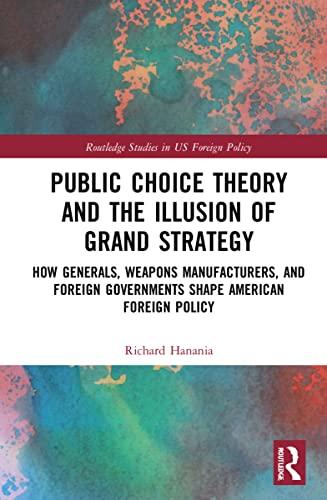
The author argues that people have been thinking about American foreign policy wrong, with the illusion that there is somebody in charge and a grand strategy, which is not the case. He uses the example of Afghanistan, where the money for the war flowed into the pockets of private contractors who got very wealthy.
My book argues that I've been studying international relations sort of as you guys are as just a consumer of the news, but also in academically.
— Episode: 1/4/22: Meatpacking, Omicron Update, WaP...
The author argues that people have been thinking about American foreign policy wrong, with the illusion that there is somebody in charge and a grand strategy, which is not the case. He uses the example of Afghanistan, where the money for the war flowed into the pockets of private contractors who got very wealthy.
My book argues that I've been studying international relations sort of as you guys are as just a consumer of the news, but also in academically.
And I think that it just came to the conclusion that people are basically thinking about the whole thing wrong whether they think the US should have a prominent role in world affairs, whether they believe in support this war or that war. I think that the problem is we think that there's actually somebody in charge, that there is a grand strategy where sort of like wise men are sitting around and sort of determining what the US should be doing about Afghanistan, about Iraq, about the rise of China about any number of things.
I think that the money in Afghanistan, the war of Afghanistan just like the war in Iraq, the money runs into the spending runs into the trillions. A lot of it was government contractors and the government contractors would do everything from built girls schools to supply the US bases to provide security.
And these people got very, very wealthy. I mean, these people are one of the reasons why Washington DC has now all basically every single one of the wealthiest counties in the country are around Washington DC.
I think that even people who are skeptical of foreign policy, they sort of elevate the foreign policy elite by saying they have a grand strategy, but it just happens to be wrong. I don't think that's the correct way of looking at it. I think the correct way of looking at it is look there's these interests and they're trying to sell you something like a tobacco lobbyist online.
The book argued that people are thinking about foreign policy the wrong way and that there is no real grand strategy behind U.S. actions overseas, just individual actors seeking their own gain.
So my book argues that I've been studying international relations sort of as you guys are as just a consumer of the news, but also in academically. And so I've read pretty much all the important thinkers in international relations, the theories about what we're supposedly doing overseas. And I think that it just came to the conclusion that people are basically thinking about the whole thing wrong, whether they think the US should have a prominent role in world affairs, whether they believe in support this war or that war. I think that the problem is we think that there's actually somebody in charge that there is a grand strategy where sort of like wise men are sitting around and sort of determining what the US should be doing about Afghanistan, about Iraq, about the rise of China about any number of things. And I don't think that that's actually what's happening.
So yeah, that money, that money in Afghanistan, the war of Afghanistan just like the war in Iraq, the money runs into the spending runs into the trillions. A lot of it was government contractors and the government contractors would do everything from built girls schools to supply the US bases to provide security. And these people got very, very wealthy. I mean, these people are one of the reasons why Washington DC has now all basically every single one of the wealthiest counties in the country are around Washington DC. I mean, this is these people who made money off of Afghanistan who made money off Iraq. We left Afghanistan and the same people are in charge as they were when we originally went in.
So if you understand foreign policy this way, and this is a theme of my book, it's working the way the system is designed for certain interests and it's helping those interests and it's sort of working as design. While if you think in terms of national interest, you're gonna be constantly confused by what we're doing overseas.
I think we, I mean, I think we really underplay the money because you know, I don't think money is everything that they power and the ideology is very important, but look the money is absolutely huge. So when you have basically every three and four star general now when retiring going to work for a defense contractor, it's 100% or close to it in the last decade, decade and a half. Basically, you know, anytime you see a general he's gonna be go, he's gonna, you know and he's near the end of his career he's gonna be working for a weapons manufacturer some kind of government contractor soon.
I think that even people who are skeptical of foreign policy, they sort of elevate the foreign policy elite by saying they have a grand strategy but it just happens to be wrong. I don't think that's the correct way of looking at it. I think the correct way of looking at it is look there's these interests and they're trying to sell you something like a tobacco lobbyist online.
The book explores the author's theory that American foreign policy is not driven by a coherent grand strategy or national interests but rather by self-serving individuals seeking their own personal gain. It was referenced during a discussion about the US involvement in Afghanistan and Iraq, emphasizing the lack of planning and strategic thinking behind these conflicts.
So my book argues that I've been studying international relations sort of as you guys are as just a consumer of the news but also in academically.
So I've read pretty much all the important thinkers in international relations, the theories about what we're supposedly doing overseas.
And I think that it just came to the conclusion that people are basically thinking about the whole thing wrong whether they think the US should have a prominent role in world affairs whether they believe in support this war or that war.
I think that the problem is we think that there's actually somebody in charge that there is a grand strategy where sort of like wise men are sitting around and sort of determining what the US should be doing about Afghanistan about Iraq about the rise of China about any number of things.
And I don't think that that's actually what's happening. I think Afghanistan is such a good way to sort of introduce people to the rest of what foreign policy is like because the mistakes and the blunders and how disastrous it is and the waste and everything else. I mean it's just so obvious and it's so clear. It's been like that for 20 years.
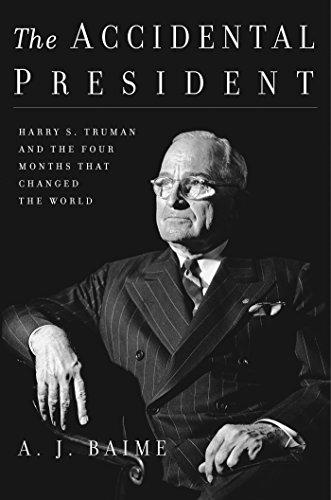
Harry S. Truman and the Four Months That Changed the World
The book "Harry Truman" was mentioned as being a biography of Harry Truman.
And then one of my favorite books is actually a biography of Harry Truman by David McCullough.
— Episode: 10/18/21: John Deere Strike, Sanders vs...
The book "Harry Truman" was mentioned as being a biography of Harry Truman.
And then one of my favorite books is actually a biography of Harry Truman by David McCullough.
It's a biography of Harry Truman by David McCullough.
And then one of my favorite books is actually a biography of Harry Truman by David McCullough.
This biography of Harry Truman describes the post World War II period and the labor movement's growth across the United States.
And then one of my favorite books is actually a biography of Harry Truman by David McCullough.
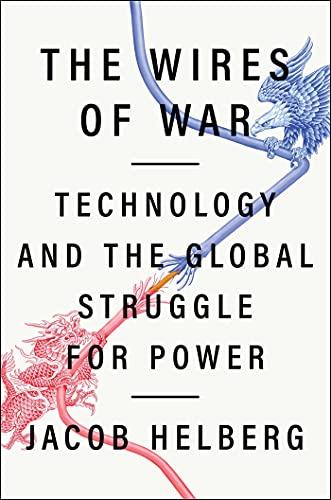
Technology and the Global Struggle for Power
The book delves into technological warfare between the US and China, particularly in relation to Taiwan, which has been at the epicenter of the 'gray zone conflict'.
The book is all about a struggle for war and technology and specifically about the US and China.
— Episode: 10/11/21: Jobs Report Fail, Mass Shortag...
The book delves into technological warfare between the US and China, particularly in relation to Taiwan, which has been at the epicenter of the 'gray zone conflict'.
The book is all about a struggle for war and technology and specifically about the US and China.
As I write in the book, war has always been a spectrum and it's you're not either in a total state of war or a total state of peace.
And one of the things that technology has done over the last few years is it's allowed state actors to wage war in the gray zone, which is a concept that military experts referred to to talk about attacks that don't quite rise the conventional threshold of war.
And with Taiwan you have a situation that has been at the epicenter of gray zone conflict and what I call the gray war.
And unfortunately we're now reaching a point where it could potentially turn into a hot war.
The book discusses the use of technology in waging war in the gray zone, which refers to attacks that don't rise to the conventional threshold of war. It uses Taiwan as an example of how technology is pervasive and how it can lead to a potential hot war.
War has always been a spectrum, and it's you're not either in a total state of war or a total state of peace. And one of the things that technology has done over the last few years is it's allowed state actors to wage war in the gray zone, which is a concept that military experts referred to to talk about attacks that don't quite rise the conventional threshold of war. That has become a pervasive aspect of international politics because technology now infuses every aspect of our lives.
The South China Sea is a major corridor for infrastructure, submarine cables which carries the bulk of information that connects North America and the Indo-Pacific, allowing China to take control of that it would be a huge setback to American national security, to intellectual property, to the sovereignty of a lot of countries in that region for reasons that I detail in the book.
Obviously an enormous amount of supply of computer chips get made in fabs that are in Taiwan by TSMC, and as I explained in the book, allowing China to control that would jeopardize our access to chips and also the integrity of the chips themselves.
Meauretime trade route is another major issue, and the last is precedent, and this has been a very thorny topic in the foreign policy community, but setting the precedent of allowing China to annex a democratic country like Taiwan is a really, really bad precedent to set, that is basically giving Russia the green light to invade Ukraine, it's letting China know that it can basically move forward and annex other parts of its disputed territories like the Senkaku Islands, China has disputed territories with 17 countries.
So Xi Jinping has made his intention of unification very very clear, so then the question is, what do we do about it? Do we want Taiwan to... The two scenarios that we have to avoid a war is scenario number one, we just let him take the island, or scenario number two, we prevent him from taking the island in the first place, we prevent him from trying to carry out an attempt to invade the island in the first place.
The book was described as being about the technological struggle for power between the US and China, specifically discussing the concept of "gray zone" conflict and the potential for war in Taiwan.
War has always been a spectrum, and it's you're not either in a total state of war or a total state of peace.
It's probably the most dire in our lifetimes. I don't think we've ever had a situation where we realistically face the scenario of an actual hot war between major powers that are nuclear powers nonetheless.
And the old saying that you're not...We are confronted in China with a pattern of behavior that is completely at variance with our own.
So if you want to live in a healthy prosperous, stable country for years to come, solving this problem seems to be one of the key things that you can do.
Xi Jinping has made his intention of unification very very clear. So then the question is, what do we do about it?
It was mentioned in the context of China's demographic crisis, discussing the projected loss of working-age adults and gain of senior citizens each year.
China will lose 5 to 10 million working age adults and gain 5 to 10 million senior citizens every year for the foreseeable future.
— Episode: 1/19/23: Trump Returns to Social Media,...
It was mentioned in the context of China's demographic crisis, discussing the projected loss of working-age adults and gain of senior citizens each year.
China will lose 5 to 10 million working age adults and gain 5 to 10 million senior citizens every year for the foreseeable future.
It was mentioned in the context of a demographic crisis in China, where the country is projected to lose millions of working-age adults and gain millions of senior citizens annually for the foreseeable future.
China will lose 5 to 10 million working age adults and gain 5 to 10 million senior citizens every year for the foreseeable future.
The Book of Mormon was mentioned along with other projects that Trey and Matt have done, which was described as a musical that was quite popular.
Trey and Matt, Book of Mormon, basketball, everything they've ever done, I've encouraged it.
— Episode: 5/28/24: Dave Smith Sounds Off On Trump...
The Book of Mormon was mentioned along with other projects that Trey and Matt have done, which was described as a musical that was quite popular.
Trey and Matt, Book of Mormon, basketball, everything they've ever done, I've encouraged it.
It was mentioned briefly as a work by a novelist who represented the creators of South Park and The Book of Mormon, who paid Hunter Biden's tax bill.
novelis who earned a fortune representing the quote, the creators of South Park and the Book of Mormon, decided to pay the overdue taxes totaling over $2 million for Hunter Biden in the previous.
It was mentioned as a great book, and one of the speaker's favorites, particularly the law of creating compelling spectacles, which was referenced in the context of the ongoing speaker drama.
Something I think about a lot is uh The 48 Laws of Power, it's a great book if people haven't have read it, one of my favorite ones is called create compelling spectacles.
— Episode: 1/5/23: McCarthy Speaker Vote Chaos, AOC...
It was mentioned as a great book, and one of the speaker's favorites, particularly the law of creating compelling spectacles, which was referenced in the context of the ongoing speaker drama.
Something I think about a lot is uh The 48 Laws of Power, it's a great book if people haven't have read it, one of my favorite ones is called create compelling spectacles.
It was mentioned as a great book, and one of the speaker's favorites, particularly law 15 'Create Compelling Spectacles'. It was discussed in the context of the House Speaker drama being a compelling spectacle that captured national attention.
Something I think about a lot is uh The 48 Laws of Power, it's a great book if people haven't have read it, one of my favorite ones is called create compelling spectacles.
Saagar compared DeSantis's statement to Trump's remarks about him as a 'RINO' and said that the Florida governor's statement about being attacked by the media was a weak response because he should have just let the election results speak for themselves.
I thought it was a bit of a weak response because I think he should have just led with that. I think it would have been had some gravitas to it.
— Episode: Krystal and Saagar REACT To Trump 2024 A...
Saagar compared DeSantis's statement to Trump's remarks about him as a 'RINO' and said that the Florida governor's statement about being attacked by the media was a weak response because he should have just let the election results speak for themselves.
I thought it was a bit of a weak response because I think he should have just led with that. I think it would have been had some gravitas to it.
The Secret History of How Big Money Took Over Big Government
The book details the history of lobbying in Washington, specifically focusing on the careers of three influential lobbyists, and the changes in the industry over time. It was described as a fascinating read, and it provided insight into the evolving relationship between lobbyists, lawmakers, and corporations.
Brody did an incredible job. He outlined the careers of three mega lobbyists, people that changed the field.
— Episode: 5/31/24: DC Lobbyist REVEALS Washington'...
The book details the history of lobbying in Washington, specifically focusing on the careers of three influential lobbyists, and the changes in the industry over time. It was described as a fascinating read, and it provided insight into the evolving relationship between lobbyists, lawmakers, and corporations.
Brody did an incredible job. He outlined the careers of three mega lobbyists, people that changed the field.
And also terribly for us as a country. Nobody won here. Even the winners lost.
I loved it. Brody did an incredible job.
And the way he's survived for so many years is making contacts with the most important people in Washington, working for President Reagan, working for President Bush after that.
I think the culture has changed in Washington. That was very, you know, Mad Men 1950s mentality that we had in Washington through the 1980s. I think a lot of that has cleaned up.
The book delves into the secretive and ever-changing world of lobbying, providing insights into how it has evolved in recent years. The book was described as a deep dive into the world of lobbying.
It's called "The Wolves of K Street."
Wolves of K Street.
Underdogs, Misfits, and the Art of Battling Giants
It was mentioned that Matt Stoller had written about Bob Iger and Disney in his book Goliath, highlighting Disney's transformation into a hedge fund-like entity during Iger's tenure.
Matt Stoller has made this on his sub stack Goliath which is uh or it's called big I'm sorry the book is Goliath about bob iger a lot which is that he basically under iger he was he was the ceo of dis...
— Episode: Counter Points #15: Rail Strike, Kanye &...
It was mentioned that Matt Stoller had written about Bob Iger and Disney in his book Goliath, highlighting Disney's transformation into a hedge fund-like entity during Iger's tenure.
Matt Stoller has made this on his sub stack Goliath which is uh or it's called big I'm sorry the book is Goliath about bob iger a lot which is that he basically under iger he was he was the ceo of disney for a long time transformed disney into like a a hedge fund with an entertainment or with theme parks um because what they did was just buy up all of this other stuff and there was so much consolidation under iger
The Art of the Deal
It was mentioned as a book that Donald Trump reportedly used to read, specifically an annotated version, according to Ivana Trump.
Like that he was, one book that he would actually read like according to Ivana Trump.
— Episode: 4/15/24: Israel Vows Retaliation, Iran S...
It was mentioned as a book that Donald Trump reportedly used to read, specifically an annotated version, according to Ivana Trump.
Like that he was, one book that he would actually read like according to Ivana Trump.
Saagar commented that Mike Pence was going on a book tour and was trying to get back in good with conservative media. He seemed to be referring to a specific book written by Pence.
He's, I mean the man is on a book tour right now going and sitting down Sean Hannity of course it's like the biggest Trump booster of all time and trying to get back in good with conservative media.
Glenn Greenwald mentioned it in relation to the concept of existentialism and how the impermanence of life influenced his perspective during a difficult time, particularly in the context of his husband's illness and death.
Martin Heidegger's book, Being and Time, which helped to define continental existentialism, took its title from the notion that life or what he called being got its meaning from time or more to the po...
— Episode: 5/10/23: Trump GUILTY And NOT Guilty In...
Glenn Greenwald mentioned it in relation to the concept of existentialism and how the impermanence of life influenced his perspective during a difficult time, particularly in the context of his husband's illness and death.
Martin Heidegger's book, Being and Time, which helped to define continental existentialism, took its title from the notion that life or what he called being got its meaning from time or more to the point, the lack of time that we get.
Glenn Greenwald reflected on the book's concept of 'being' and the fleeting nature of life, past tense, while grieving the loss of his partner, David Miranda.
Martin Heidegger's book, Being in Time, which helped to define continental existentialism, took its title from the notion that life or what he called being got its meaning from time or more to the point, the lack of time that we get.
every day since 2005 that David and I woke up and went to sleep and shared and built our lives and careers together and then began raising our children together, we assumed due to our age and health and hubris that we would have that for decades to come as if it were a guarantee, as if the universe had provided us with some enforceable contract that entitled us to assume this belonged to us and could not be taken away.
And because we assumed it, we took it for granted. And because we took it for granted, we often ceased valuing it the way it deserved to be valued.
What remains most astounding to me is that after all these years, these decades of running and chasing and striving and reaching and grabbing and struggling and pursuing, everything that I actually need for core happiness, fulfillment and gratitude are things I already have and have had for a long time.
the lack of permanence of those things that provide us the greatest happiness does not make them less valuable. That is what makes them valuable.
Matt Stoller mentioned his book *Big*, which is a collection of essays that he writes on his Substack, examining the relationship between big business and politics.
He is, of course, the author of Big by Matt Stoller over on Substack
— Episode: 6/18/24: Biden Bets On Trump Criminal La...
Matt Stoller mentioned his book *Big*, which is a collection of essays that he writes on his Substack, examining the relationship between big business and politics.
He is, of course, the author of Big by Matt Stoller over on Substack
A Memoir
Hunter Biden's memoir, "Beautiful Things", was mentioned. The speaker stated that Hunter Biden openly writes about smoking drugs and making arrangements to buy drugs at the exact time that he was buying the gun, and he is on tape using drugs at the time of the gun purchase.
smoking drugs and making arrangements to buy drugs at the exact time that he was buying the gun.
— Episode: 6/4/24: Biden Shamelessly Copies Trump B...
Hunter Biden's memoir, "Beautiful Things", was mentioned. The speaker stated that Hunter Biden openly writes about smoking drugs and making arrangements to buy drugs at the exact time that he was buying the gun, and he is on tape using drugs at the time of the gun purchase.
smoking drugs and making arrangements to buy drugs at the exact time that he was buying the gun.
It was mentioned that Hunter Biden discussed some of his wrongdoings in his book, which contrasted with his father's claims that he had done nothing wrong.
It felt like a lie so brazen that it wasn't a lie. It's like we have photos of him doing things wrong all the time. It's in his book. He wrote about it in his book.
The book, "The Israel Lobby", was mentioned as having opened the speaker's eyes to the influence of the Israel Lobby in Washington, many years ago.
I read your book, The Israel Lobby, many, many years ago.
— Episode: 6/1/24: John Mearsheimer UNLEASHED: Isra...
The book, "The Israel Lobby", was mentioned as having opened the speaker's eyes to the influence of the Israel Lobby in Washington, many years ago.
I read your book, The Israel Lobby, many, many years ago.
It really opened my eyes as to the influence here in Washington.
It was mentioned as a book that provides insight into the influence of pro-Israel lobbying groups in Washington, D.C., and was previously smeared as anti-Semitic.
Again, I recommend the book Israel Lobby by John Mearsheimer, which at the time was also smeared as anti-Semitic.
How Microdosing Made a Mega Difference in My Mood, My Marriage, and My Life
Krystal referenced the book 'A Really Good Cry' as one that had changed her life. It was mentioned in a segment about self-care, emotional well-being, and the importance of expressing feelings.
Authors of books that have changed my life.
— Episode: 5/23/24: Hamas Gains Thousands Of Recrui...
Krystal referenced the book 'A Really Good Cry' as one that had changed her life. It was mentioned in a segment about self-care, emotional well-being, and the importance of expressing feelings.
Authors of books that have changed my life.
Now you're talking about sympathy, which is different than empathy, right?
The podcast host Radhi Devlukia discusses books that have changed her life and offers advice on regulating emotions.
Authors of books that have changed my life.
Authors of books that have changed my life.
Authors of books that have changed my life.
Authors of books that have changed my life.
Authors of books that have changed my life.
The Secret History of the CIA and a Cold War Assassination
It was recommended as a good read and was described as a new biography about Patrice Lumumba.
Emily and I interviewed the author of the new biography of Patrice Lumumba.
— Episode: 5/21/24: CNN Admits Michael Cohen Crime...
It was recommended as a good read and was described as a new biography about Patrice Lumumba.
Emily and I interviewed the author of the new biography of Patrice Lumumba.
The Lumumba Plot. I know you love these kinds of books.
I haven't read that one yet.
I would like to.
Put that on your audible. It's so good.
It details the CIA's involvement in the assassination of Patrice Lumumba, the first Prime Minister of Congo, following his request for Soviet aid amidst a post-independence crisis.
The CIA played a key role in green lighting Lumumba's transfer to a place where everyone knew he was going to die.
If you like books like Devil's Chessboard and Chaos, you will like The Lumumba Plot.
Make sure to pick up a copy.
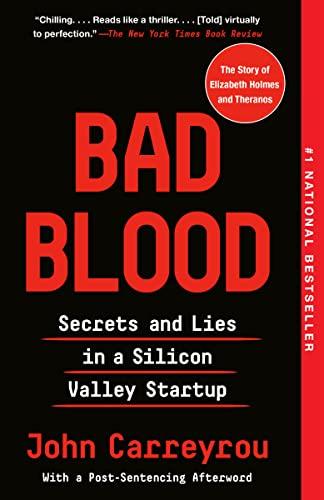
Secrets and Lies in a Silicon Valley Startup
The book "Bad Blood" details the story of Elizabeth Holmes, founder of Theranos, and the downfall of her company due to faulty blood testing technology. It was mentioned in the context of a discussion about Holmes's trial and how she was found not guilty of defrauding patients, despite the book highlighting the real-time medical decisions people made based on her company's inaccurate tests.
You read the book, Bad Blood and all the cases here.
— Episode: 1/4/22: Meatpacking, Omicron Update, WaP...
The book "Bad Blood" details the story of Elizabeth Holmes, founder of Theranos, and the downfall of her company due to faulty blood testing technology. It was mentioned in the context of a discussion about Holmes's trial and how she was found not guilty of defrauding patients, despite the book highlighting the real-time medical decisions people made based on her company's inaccurate tests.
You read the book, Bad Blood and all the cases here.
People made real time medical decisions with her bullshit tests.
The podcast mentioned this book in relation to Elizabeth Holmes's fraudulent blood-testing company, Theranos. It highlighted how patients made life-altering health decisions based on inaccurate test results.
John Kerry used Bad Blood book
Note: The book recommendations on this page are discovered automatically from podcast transcripts, and may be incorrect or incomplete.
Podcast Name