The Clash of Civilizations and the Remaking of World Order
Samuel P. Huntington
Mentioned 5 months ago
It Could Happen Here Weekly 220
There’s a reason the History Channel has produced hundreds of documentaries about Hitler but only a few about Dwight D. Eisenhower. Bad guys (and gals) are eternally fascinating. Behind the Bastards dives in past the Cliffs Notes of the worst humans in history and exposes the bizarre realities of th...
Recently mentioned
Samuel P. Huntington
Mentioned 5 months ago
It Could Happen Here Weekly 220
Robert D. Kaplan
Mentioned 5 months ago
It Could Happen Here Weekly 220
Elizabeth J. Perry
Mentioned 5 months ago
It Could Happen Here Weekly 220

J.R.R. Tolkien
Mentioned 5 months ago
Part One: How Jeffrey Epstein Helped Build the Modern World

Joshua Green
Mentioned 5 months ago
Part One: How Jeffrey Epstein Helped Build the Modern World
Professor Gilles Deleuze
Mentioned 5 months ago
It Could Happen Here Weekly 219
Madoka Kishi
Mentioned 5 months ago
It Could Happen Here Weekly 219
Samuel Miller McDonald
Mentioned 5 months ago
It Could Happen Here Weekly 219
Klaus Mann
Mentioned 5 months ago
It Could Happen Here Weekly 219
Mentioned 5 months ago
The Greg Bovino Episode Extravaganza!
Robert A. Heinlein
Mentioned 5 months ago
The Greg Bovino Episode Extravaganza!
John Lindsay-Poland
Mentioned 5 months ago
It Could Happen Here Weekly 218
A Novel
This book, set in a dystopian future California, follows Lauren Olamina, a young girl who has hyper-empathy syndrome, as she navigates a chaotic world while dealing with the ideas of religion and change. She is also developing her new system of thought, Earthseed, which shapes her decisions and the outcome of the book.
She was somewhat Afrofuturist, but she was also very much... A lot of her stories really blended. A lot of people have a lot of different backgrounds and histories.
— Episode: It Could Happen Here Weekly 34
This book, set in a dystopian future California, follows Lauren Olamina, a young girl who has hyper-empathy syndrome, as she navigates a chaotic world while dealing with the ideas of religion and change. She is also developing her new system of thought, Earthseed, which shapes her decisions and the outcome of the book.
She was somewhat Afrofuturist, but she was also very much... A lot of her stories really blended. A lot of people have a lot of different backgrounds and histories.
The book is set in California, and they are struggling with pervasive water shortages, and masses of poor people will do basically anything to live to see another day.
She really gets you invested in the setting and in the character early on.
She really emphasizes that change is neither good or bad, but it is potential.
Her shit's all over the library.
This book takes place in the early 2020s and depicts a California struggling with water shortages and chaos due to climate change and economic crisis. It follows Lauren Olamina, a 15-year-old girl who lives in a gated community with her family, and her struggle to navigate a chaotic world while dealing with hyper-empathy syndrome and developing her new philosophy, Earthseed.
She really gets you invested in the setting and in the character early on.
Because, I mean, to be fair, she knew America.
And so I think that as she's writing of this horrific future, she's drawing a lot from her horrific past, or rather America's horrific past, of which her history is a part.
And she has to figure out a way out of it, which she comes to believe in so much that in her own way, she becomes stuck in that new thing.
In her speech to the UN in 2001, that would be like five years before she passed away. I think she died in, like I said, 2006.
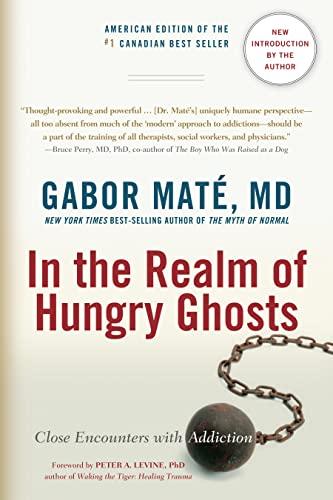
Close Encounters with Addiction
It was mentioned as a book about famine in the Soviet Union that discussed Lysenko's impact on agricultural practices and food shortages.
All these ideas helped transform a rich farming nation into one beset by permanent food shortages.
— Episode: Part One: The Russian Scientist Who Help...
It was mentioned as a book about famine in the Soviet Union that discussed Lysenko's impact on agricultural practices and food shortages.
All these ideas helped transform a rich farming nation into one beset by permanent food shortages.
On the collectives, farmers could use neither chemical fertilizers nor the hybrid corn that America was using to boost yields by 30 percent. Lysenko didn't believe you should use fertilizers either at all.
Furthermore, the fields were left fallow most of the time. And when the crops were sown, the vernalized wheat did not sprout. Nor did Lysenko's frost-resistant wheat and rye seeds or the potatoes grown in summer or the sugar beets planted in the hot plains of Central Asia. They all rotted.
Another hero of the Lysenko school was the son of an American engineer, Facile Williams, who became a professor at the Moscow Agricultural Academy. Williams thought that capitalism and American-style commercial farming based on the application of chemical fertilizers were taking the world to the brink of catastrophe.
The podcast mentioned the book as a source about famine, including the impact of Lysenko's agricultural theories on the Soviet Union, and how it transformed a rich farming nation into one with permanent food shortages.
All these ideas helped transform a rich farming nation into one beset by permanent food shortages.
On the collectives, farmers could use neither chemical fertilizers nor the hybrid corn that America was using to boost yields by 30 percent.
Furthermore, their fields were left fallow most of the time. And when the crops were sown, the vernalized wheat did not sprout. Nor did Lysenko's frost resistant wheat and rye seeds or the potatoes grown in summer or the sugar beets planted in the hot plains of Central Asia. They all rotted.
Another hero of the Lysenko school was the son of an American engineer, Facile Williams, who became a professor at the Moscow Agricultural Academy. Williams thought that capitalism and American style commercial farming based on the application of chemical fertilizers were taking the world to the brink of catastrophe.
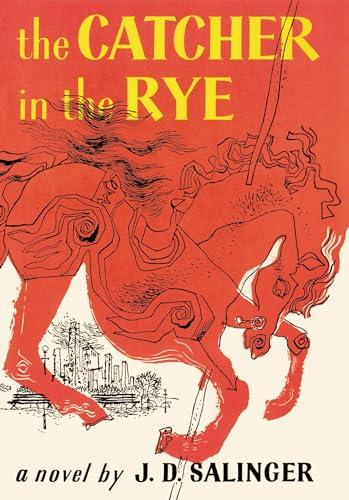
This book was brought up in the context of teachers being 'cops,' and how even well-loved books can be used as tools of control in the education system.
Unfortunately, ACAB includes the person who tried to get me to read Catcher in the Rye.
— Episode: It Could Happen Here Weekly 40
This book was brought up in the context of teachers being 'cops,' and how even well-loved books can be used as tools of control in the education system.
Unfortunately, ACAB includes the person who tried to get me to read Catcher in the Rye.
Catcher in the Rye was a good book.
It was mentioned as a book read by the speaker during their education, with no further commentary.
Unfortunately. ACAB includes the person who tried to get me to read Catcher in the Rye.
Why Your Thinking Is The Beginning & End Of Suffering
This book is a reassembly of early human history, claiming that early humans were just as intelligent as modern humans and could design their political arrangements.
Okay yeah it's definitely on my list That is a long one that's less of a read I think most People are gonna be less of a read in one sweep than like Maybe for over the course of the year like graduall...
— Episode: It Could Happen Here Weekly 16
This book is a reassembly of early human history, claiming that early humans were just as intelligent as modern humans and could design their political arrangements.
Okay yeah it's definitely on my list That is a long one that's less of a read I think most People are gonna be less of a read in one sweep than like Maybe for over the course of the year like gradually yeah
Yeah it's very very dense and very long but very readable Like not to say that it's like dense and the I got to like Slug through this textbook it's extremely readable it's Just like there's a lot in there and you're gonna want to Pause and think about shit yeah so so the thought of Everything is this is the last book David Graeber ever Wrote and it's David Wengro also they wrote it together And it's it's this basically an attempt to reassemble I Guess early human history and but the thing that they're Doing that that's that's really unique is that so they They're David Wengro's as archaeologist David Graeber's An anthropologist and they're going you know so they spend a Whole bunch of time going through the sort of early Archaeological records and what they find basically is that None of the things that you see make any sense at all unless You're willing to unless you're willing to accept that people You know twenty thirty fifty thousand years ago and then even You know people like four or five thousand years ago were as Smart as we are and have the have the capacity to recreate And redesign their own political arrangements Self-consciously which is something that doesn't sound that Weird except everyone assumes that they can't and that you Know everyone that's you know one of the other things they're Really sort of heavily doing here is trying to break this Idea that you know human society sort of evolves in these This linear progression you know you start out with like These small hunter-gatherer bands and they get more complex And more complex and eventually they develop farming Farming developed the state and the answer is just you know When you look through the actual archaeological record none of This is true you have you know they have a lot of very Interesting sort of historical examples of this looking at Like what looked like incredibly democratic and egalitarian Cities and then you know on the outskirts of those cities you Have the emergence of the states among things that look like States among barbarian groups and they have and what I think Is maybe the most interesting part of it is that they're Concerned with the question of human freedom but freedom in a Way that like we don't like freedom on a level fundamental Enough that like we can barely imagine it so they have these Things called the three freedoms which is one of them is so The first one is the freedom to just move to leave and to It's a freedom to you know be in a place and then leave and Know that you will be cared for when you get to wherever You're going yeah though these kind of networks that were set Up to travel that have like the descendant of those ideas is Sort of the way if you've ever if you've ever spent time in The Middle East not in like hotels and shit like it's that Same idea that kind of deeper than religious belief about The importance of that has gotten added to like Islam and To a number of other faiths in the area like but this idea That like there's nothing more sacred than taking care of A guest like and how that that existed to enable kind of a Sort of cross cultural contract and contact and like Recreational travel in a way that I think is would be deeply Surprising to people who just sort of assumed everyone before A certain age died within five miles of their house or was Yeah, you know yeah part of a band of wandering hunters Yeah, and it's interesting in that like like you like we in a Lot of ways travel less than early people did because you Know that people would just leave and people you know people Just didn't like their families and so they'd walk like 500 Miles and they'd come to a place and they'd be accepted and Yeah, yeah, it's you know the second one that I think The one that is the the one we have the least capacity I think To understand which is just the ability to disobey orders To just like anyone tells you do something you could just tell Them no at any time and it's not only can you just tell them No like the social expectation is that you is that you don't Act is that it's it's not just that you have the ability to Do it it's that someone giving you an order is treated as Weird and this is the thing that you know it But like this This is the thing this is a freedom that used to exist and No longer does and was sort of destroy in various ways along With sort of the third freedom they talk about which is about How people have the right to sort of just shift and recreate Their social political arrangements And yeah, and people used to do this sort of common people Yeah, a lot of the what their early part of the book is about Is about how societies use there's a lot of societies that Would you know flip seasonally right so what like one half of The year you have this just like absolute dictatorship the Other half of the year it's like well it looks like a hippie Commune and you know the fact that we do not like the fact That like we we just don't like it cannot conceive of Completely shifting our political arrangements like that Is it's also there's this fascinating discussion of like The the fact that and this is kind of counter to what I Always I had always kind of thought that like once you As a group groups of people when they when they made the Decision to like move to agriculture and like set Founded cities that it was kind of a one-way street you know You just keep going along that road and there's actually Multiple examples of people's like this is what happened to The British Isles or at least in what is currently Great Britain people's like developing agriculture settling Down and then being like oh you know what fuck this and like Going back like that that short it should happen all the time And and one of the things that's really kind of optimistic About the vision of the sweep of human history in the dawn Of everything is the idea that like no we don't have to keep Like it's not inevitable that we just keep doing more of what We're doing now all throughout history large groups of people Have been like it's time to let's do something else let's Make a radical change like it happens and it's probably more Normal to do that than it is to do what we've been doing and We've been doing it for a long time and I think that's Probably more normal to do that than it is to do what we've Been doing and when you I think one of the things that kind Of one of the things that leads to the sense of inevitability Of development along the lines that we have is the fact that We only really have about 10,000 years of even vaguely Reliable like data or vaguely comprehensive data on human History but people have been around for tens of thousands Of years longer than that and for most of it we've been a lot More experimental than we are now and it's it's always Possible for people to try different things in a way that Maybe seems impossible to us now but but necessarily won't For our kids
This book is about the history of human society. The authors argue that early humans were much more capable of self-governance than we often think, and that there is no inevitable progression towards more complex societies.
That is a long one that's less of a read I think most People are gonna be less of a read in one sweep than like Maybe for over the course of the year like gradually yeah Yeah it's very very dense and very long but very readable Like not to say that it's like dense and the I got to like Slug through this textbook it's extremely readable it's Just like there's a lot in there and you're gonna want to Pause and think about shit yeah so so the thought of Everything is this is the last book David Graeber ever Wrote and it's David Wengro also they wrote it together And it's it's this basically an attempt to reassemble I Guess early human history and but the thing that they're Doing that that's that's really unique is that so they They're David Wengro's as archaeologist David Graeber's An anthropologist and they're going you know so they spend a Whole bunch of time going through the sort of early Archaeological records and what they find basically is that None of the things that you see make any sense at all unless You're willing to unless you're willing to accept that people You know twenty thirty fifty thousand years ago and then even You know people like four or five thousand years ago were as Smart as we are and have the have the capacity to recreate And redesign their own political arrangements Self-consciously which is something that doesn't sound that Weird except everyone assumes that they can't and that you Know everyone that's you know one of the other things they're Really sort of heavily doing here is trying to break this Idea that you know human society sort of evolves in these This linear progression you know you start out with like These small hunter-gatherer bands and they get more complex And more complex and eventually they develop farming Farming developed the state and the answer is just you know When you look through the actual archaeological record none of This is true you have you know they have a lot of very Interesting sort of historical examples of this looking at Like what looked like incredibly democratic and egalitarian Cities and then you know on the outskirts of those cities you Have the emergence of the states among things that look like States among barbarian groups and they have and what I think Is maybe the most interesting part of it is that they're Concerned with the question of human freedom but freedom in a Way that like we don't like freedom on a level fundamental Enough that like we can barely imagine it so they have these Things called the three freedoms which is one of them is so The first one is the freedom to just move to leave and to It's a freedom to you know be in a place and then leave and Know that you will be cared for when you get to wherever You're going yeah though these kind of networks that were set Up to travel that have like the descendant of those ideas is Sort of the way if you've ever if you've ever spent time in The Middle East not in like hotels and shit like it's that Same idea that kind of deeper than religious belief about The importance of that has gotten added to like Islam and To a number of other faiths in the area like but this idea That like there's nothing more sacred than taking care of A guest like and how that that existed to enable kind of a Sort of cross cultural contract and contact and like Recreational travel in a way that I think is would be deeply Surprising to people who just sort of assumed everyone before A certain age died within five miles of their house or was Yeah, you know yeah part of a band of wandering hunters Yeah, and it's interesting in that like like you like we in a Lot of ways travel less than early people did because you Know that people would just leave and people you know people Just didn't like their families and so they'd walk like 500 Miles and they'd come to a place and they'd be accepted and Yeah, yeah, it's you know the second one that I think The one that is the the one we have the least capacity I think To understand which is just the ability to disobey orders To just like anyone tells you do something you could just tell Them no at any time and it's not only can you just tell them No like the social expectation is that you is that you don't Act is that it's it's not just that you have the ability to Do it it's that someone giving you an order is treated as Weird and this is the thing that you know it But like this This is the thing this is a freedom that used to exist and No longer does and was sort of destroy in various ways along With sort of the third freedom they talk about which is about How people have the right to sort of just shift and recreate Their social political arrangements And yeah, and people used to do this sort of common people Yeah, a lot of the what their early part of the book is about Is about how societies use there's a lot of societies that Would you know flip seasonally right so what like one half of The year you have this just like absolute dictatorship the Other half of the year it's like well it looks like a hippie Commune and you know the fact that we do not like the fact That like we we just don't like it cannot conceive of Completely shifting our political arrangements like that Is it's also there's this fascinating discussion of like The the fact that and this is kind of counter to what I Always I had always kind of thought that like once you As a group groups of people when they when they made the Decision to like move to agriculture and like set Founded cities that it was kind of a one-way street you know You just keep going along that road and there's actually Multiple examples of people's like this is what happened to The British Isles or at least in what is currently Great Britain people's like developing agriculture settling Down and then being like oh you know what fuck this and like Going back like that that short it should happen all the time And and one of the things that's really kind of optimistic About the vision of the sweep of human history in the dawn Of everything is the idea that like no we don't have to keep Like it's not inevitable that we just keep doing more of what We're doing now all throughout history large groups of people Have been like it's time to let's do something else let's Make a radical change like it happens and it's probably more Normal to do that than it is to do what we've been doing and We've been doing it for a long time and I think that's Probably more normal to do that than it is to do what we've Been doing and when you I think one of the things that kind Of one of the things that leads to the sense of inevitability Of development along the lines that we have is the fact that We only really have about 10,000 years of even vaguely Reliable like data or vaguely comprehensive data on human History but people have been around for tens of thousands Of years longer than that and for most of it we've been a lot More experimental than we are now and it's it's always Possible for people to try different things in a way that Maybe seems impossible to us now but but necessarily won't For our kids.
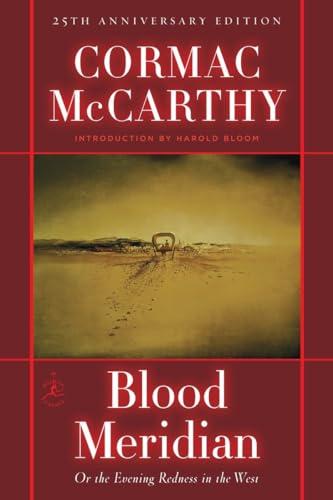
Or the Evening Redness in the West (Modern Library (Hardcover))
The podcast hosts had planned to release a version of the book read aloud in a Boston accent, but ultimately decided against it due to the writers' and actors' strikes.
Starting in like 2021, kind of late, you know, early pandemic period, I started chatting with a good friend of mine, Cormac McCarthy, about bringing one of his books to life in the way he'd always int...
— Episode: Part One: Why Kidnapping Conspiracy Theo...
The podcast hosts had planned to release a version of the book read aloud in a Boston accent, but ultimately decided against it due to the writers' and actors' strikes.
Starting in like 2021, kind of late, you know, early pandemic period, I started chatting with a good friend of mine, Cormac McCarthy, about bringing one of his books to life in the way he'd always intended, which was by having me read Blood Meridian in my award-winning Boston accent in its entirety.
We finished, you know, kind of our discussions right before he tragically passed earlier this year.
Sophie and I recorded the whole thing. We were about to release it as a surprise, but we've, as a result of the writers and now the actors strike, in solidarity decided to delete the entirety of Boston Blood Meridian.
It was compared to James Joyce's Finnegans Wake, but described as closer to a typical novel in terms of its style and readability. It was noted for its challenging nature and reader's frequent questioning of the author's intent.
I think like Blood Meridian is, is challenging in some ways that aren't different.
Cause like so much of reading Blood Meridian is like, what the fuck did he mean by that?
Like what was the action? Like what was going on here?
Blood Meridian is a lot, is, is much more closer to like a normal novel than, than Finnegan's Wake is though.
But like they're both interesting.
Lenin was obsessed with the German postal service and argued that socialism should be planned by a bureaucratic state, leading to a conflict with workers who wanted control of their work.
A witty German social Democrat of the 1870s called the postal service an example of the socialist economic system.
— Episode: It Could Happen Here Weekly 37
Lenin was obsessed with the German postal service and argued that socialism should be planned by a bureaucratic state, leading to a conflict with workers who wanted control of their work.
A witty German social Democrat of the 1870s called the postal service an example of the socialist economic system.
To organize the whole national economy on the lines of the postal service, so that technicians, foremen, bookkeepers, as well as all officials that receive no salaries higher than a workman's wage, all under the control and leadership of the armed proletariat.
This is our immediate aim.
Lenin's book about the future socialist state was said to be almost all lies, but it contained a passage about the postal service, which he described as an example of a socialist economic system.
A witty German social Democrat of the 1870s called the postal service an example of the socialist economic system. This is very true. At present, the postal service is a business organized along the lines of a state capital of monopoly, imperialism, this whole thing, but like imperialism is making everything also this. But so to organize the whole national economy on the lines of the postal service, so that technicians, foremen, bookkeepers, as well as all officials that receive no salaries higher than a workman's wage, all under the control and leadership of the armed proletariat. This is our immediate aim.
Reserve Police Battalion 101 and the Final Solution in Poland
It was discussed as one of the worst books about the Holocaust ever written, specifically for its use of Nazi race science, which was deemed unnecessary.
I think I've ever read called Hitler's willing executioners.
— Episode: Part Two: Ancient Genocide and the War o...
It was discussed as one of the worst books about the Holocaust ever written, specifically for its use of Nazi race science, which was deemed unnecessary.
I think I've ever read called Hitler's willing executioners.
He hits the Nazis with their own race science.
It was discussed as one of the worst books on the Holocaust ever written, in a negative context, but also as a good source for understanding how ordinary people participated in atrocities.
I think I've ever read called Hitler's willing executioners.
He hits the Nazis with their own race science.
It was mentioned as one of the classic books Mark Zuckerberg enjoyed during his youth, along with other similar works.
Zuck loved the classics, The Odyssey and the like.
— Episode: Part Two: Mark Zuckerberg: The Worst Per...
It was mentioned as one of the classic books Mark Zuckerberg enjoyed during his youth, along with other similar works.
Zuck loved the classics, The Odyssey and the like.
It was mentioned briefly in a humorous context, where Robert Evans compared Hitler's rant about elephants and the meat industry to a passage from the book, highlighting the absurdity of the situation.
I can't believe that Hitler's literally, like, reciting from Jonathan Safran Foer's Eating Animals, and like, at the same time-- Dude, you know how strong elephants are? They don't ea...
— Episode: Part Two: Hitler's Drug Problem
It was mentioned briefly in a humorous context, where Robert Evans compared Hitler's rant about elephants and the meat industry to a passage from the book, highlighting the absurdity of the situation.
I can't believe that Hitler's literally, like, reciting from Jonathan Safran Foer's Eating Animals, and like, at the same time-- Dude, you know how strong elephants are? They don't eat meat. They're just like me! I'm like an elephant!
It was briefly mentioned in relation to Hitler's bizarre rant about elephants and the meat industry while being injected with animal hormones, highlighting a strange juxtaposition of topics.
I can't believe that Hitler's literally, like, reciting from Jonathan Safran Foer's Eating Animals, and like, at the same time-- Dude, you know how strong elephants are? They don't eat meat. They're just like me! I'm like an elephant!
The Spectacular Achievements of Propaganda (Open Media Series)
It was discussed as Bernays's first book, detailing his ideology of manipulating the masses' habits and opinions, which he saw as a positive element in a democratic society. This was compared to Alex Jones's beliefs about the world, but Bernays believed he was the good guy.
The conscious and intelligent manipulation of the organized habits and opinions of the masses is an important element in a democratic society Those who manipulate this unseen mechanism of society cons...
— Episode: Part Two: Edward Bernays: The Founding F...
It was discussed as Bernays's first book, detailing his ideology of manipulating the masses' habits and opinions, which he saw as a positive element in a democratic society. This was compared to Alex Jones's beliefs about the world, but Bernays believed he was the good guy.
The conscious and intelligent manipulation of the organized habits and opinions of the masses is an important element in a democratic society Those who manipulate this unseen mechanism of society constitute an invisible government Which is the true ruling power of our country?
We are governed our minds are molded our tastes formed and our ideas suggested largely by men We have never heard of it is they who pull the wires that control the public mind
It was discussed as a book written by Bernays in 1928, where he detailed his views on manipulating the masses, which he saw as a positive force for society, despite it being used by others for harmful purposes.
The conscious and intelligent manipulation of the organized habits and opinions of the masses is an important element in a democratic society
Those who manipulate this unseen mechanism of society constitute an invisible government Which is the true ruling power of our country?
We are governed our minds are molded our tastes formed and our ideas suggested largely by men We have never heard of it is they who pull the wires that control the public mind
50th Anniversary Edition
It is Paulo Freire's greatest contribution to education, and explores Marxist class analysis in the relationship between colonizer and colonized, oppressor and oppressed.
But his greatest contribution, to me at least and to most people, is his book, The Pedagogy of the Oppressed.
— Episode: It Could Happen Here Weekly 40
It is Paulo Freire's greatest contribution to education, and explores Marxist class analysis in the relationship between colonizer and colonized, oppressor and oppressed.
But his greatest contribution, to me at least and to most people, is his book, The Pedagogy of the Oppressed.
He says that humankind's central problem is how we affirm our identity as human beings.
Oppressors, they tend to treat people as objects to be possessed. They see freedom as threatening. And in turn, oppressed people end up becoming alienated from each other through oppression and begin to see the oppressors as something to strive towards.
He talks about the banking model of education that traditional pedagogy espouses because it treats the student as like this bank, this empty vessel to be filled with knowledge.
He, the teacher, talks about reality as if it were motionless, static, compartmentalized and predictable, or else he expounds upon a topic completely alien to the existential experience of the students.
The book was written by Paulo Freire, a Brazilian educator. It explores Marxist class analysis in the context of colonization and oppression, arguing for a co-creative approach to education that challenges the traditional 'banking' model.
But his greatest contribution, to me at least and to most people, is his book, The Pedagogy of the Oppressed.
In the book, he sort of explores a detailed Marxist class analysis in the relationship between like the colonizer and colonized, the oppressor and the oppressed.
he, the teacher, talks about reality as if it were motionless, static, compartmentalized and predictable, or else he expounds upon a topic completely alien to the existential experience of the students.
His task is to fill the students with the contents of his narration, contents which are detached from reality, disconnected from the totality that engendered them and could give them significance.
Words are emptied of their concreteness and become a hollow, alienated and alienating verbosity.
Indigenous Wisdom, Scientific Knowledge and the Teachings of Plants
Robin Wall Kimmerer recounted the Haudenosaunee mythology of the mother goddess Sky Woman, who became indigenous by listening to the land, learning from other species, giving as she received, and caring for the earth.
According to Haudenosaunee mythology, as recounted by Robin Wall Kimmerer in Braden's Sweetgrass,
— Episode: It Could Happen Here Weekly 139
Robin Wall Kimmerer recounted the Haudenosaunee mythology of the mother goddess Sky Woman, who became indigenous by listening to the land, learning from other species, giving as she received, and caring for the earth.
According to Haudenosaunee mythology, as recounted by Robin Wall Kimmerer in Braden's Sweetgrass,
the mother goddess Sky Woman came to the land as an immigrant from the heavens, but became indigenous by listening to the land, learning from other species to understand how to live on it, giving as she received, and caring for the earth and its keepers for the sake
of those who would inherit it when she passed on. In their view, the land is identity. It is ancestral connection. It is pharmacy, it is library, and it is home, the source of all that sustains, and the sacred
ground upon which those would observe their responsibility to the world.
Robin Wall Kimmerer discusses Haudenosaunee mythology in Braiden's Sweetgrass, specifically about the mother goddess Sky Woman becoming indigenous to the land by listening and learning from the earth.
According to Haudenosaunee mythology, as recounted by Robin Wall Kimmerer in Braiden's Sweetgrass,
The mother goddess Sky Woman came to the land as an immigrant from the heavens, but became indigenous by listening to the land, learning from other species to understand how to live on it, giving as she received, and caring for the earth and its keepers for the sake of those who would inherit it when she passed on.
How White Evangelicals Corrupted a Faith and Fractured a Nation
It was mentioned in the context of John Wayne's upbringing, specifically the rise of muscular Christianity and its relationship with white American masculinity.
As a young man, Roosevelt had been ridiculed for his high voice, tight pants and fancy clothing, and derided as a weakling and a pumpkin lily. But Roosevelt wanted power, determined to reinvent himsel...
— Episode: Part One: John Wayne: A Dude Who Sucked
It was mentioned in the context of John Wayne's upbringing, specifically the rise of muscular Christianity and its relationship with white American masculinity.
As a young man, Roosevelt had been ridiculed for his high voice, tight pants and fancy clothing, and derided as a weakling and a pumpkin lily. But Roosevelt wanted power, determined to reinvent himself.
He went west, rechristening himself the cowboy of the Dakotas. It was on the frontier that a new masculinity would be forged, a place where white men brought order to savagery, where men served as armed protectors and providers, where violence achieved a greater good.
If the Wild West could mold the exquisite Mr. Roosevelt into a rugged, masculine specimen, perhaps it could do the same for American manhood generally.
When the war came to a close, no amount of patriotism could obscure the fact that it had been fought at great cost and with little apparent gain. Roosevelt's model of masculinity had been found wanting.
The war, it seemed, had presented Americans with the horror of having myths about blood and fire and mutilation and blindness come true.
It was mentioned in relation to John Wayne's persona and the rise of Christian masculinity in the United States. The book was referenced several times throughout the episode to support the narrative.
As a young man, Roosevelt had been ridiculed for his high voice, tight pants and fancy clothing, and derided as a weakling and a pumpkin lily.
But Roosevelt wanted power, determined to reinvent himself. He went west, rechristening himself the cowboy of the Dakotas.
It was on the frontier that a new masculinity would be forged, a place where white men brought order to savagery, where men served as armed protectors and providers, where violence achieved a greater good.
If the Wild West could mold the exquisite Mr. Roosevelt into a rugged, masculine specimen, perhaps it could do the same for American manhood generally.
When the war came to a close, no amount of patriotism could obscure the fact that it had been fought at great cost and with little apparent gain.
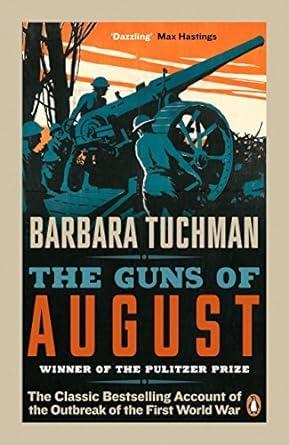
The book was mentioned as a history of World War I, and the author likened the circumstances to the current political climate, where events seem to be marching towards a negative end point.
Barbara Tuckman, who is a historian, who wrote a book called "The Guns Of August," that's a history of World War One, that describes kind of the machinery that got set up and marched...
— Episode: It Could Happen Here Weekly 42
The book was mentioned as a history of World War I, and the author likened the circumstances to the current political climate, where events seem to be marching towards a negative end point.
Barbara Tuckman, who is a historian, who wrote a book called "The Guns Of August," that's a history of World War One, that describes kind of the machinery that got set up and marched everybody into that situation exploding like sleepwalkers, right. Like this system has been set up and the people are kind of so unwilling to see where it's leading that everything's just kind of marching with a sense of inevitability towards a worse and a worse end point.
The Guns of August is a historical account of the events leading up to World War I, specifically the political and diplomatic factors that contributed to the war's outbreak, that was mentioned in connection with the idea of sleepwalkers and the inevitability of our current situation.
The Guns Of August is a history of World War I...that describes kind of the machinery that got set up and marched everybody into that situation exploding like sleepwalkers right...like this system has been set up and the people are kind of so unwilling to see where it's leading that everything's just kind of marching with a with a sense of inevitability towards a worse and a worse end point and that's that's what scares me most about this.
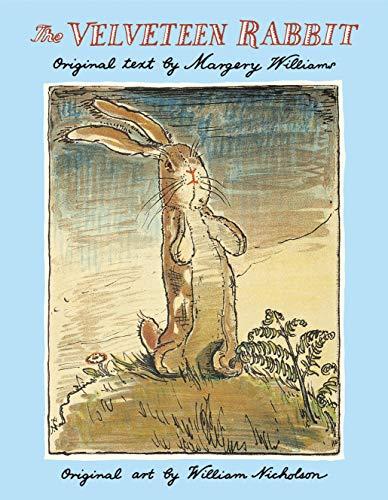
The Classic Children's Book
The speaker expressed a fondness for it, even proposing a dark Disney-style ride based on the book's concept of achieving reality.
My favorite was The Velveteen Rabbit.
— Episode: Part Two: The Idiot Who Made, And Destro...
The speaker expressed a fondness for it, even proposing a dark Disney-style ride based on the book's concept of achieving reality.
My favorite was The Velveteen Rabbit.
It was briefly mentioned as Robert Evans' favorite book, followed by a humorous comment about a possible ride at a theme park based on it.
My favorite was The Velveteen Rabbit.
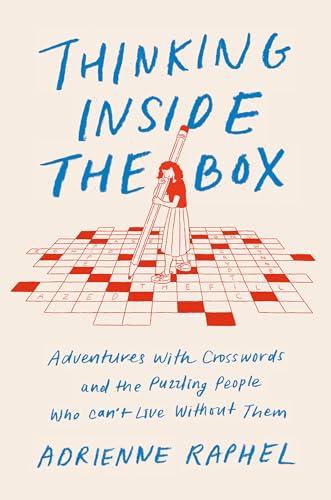
Adventures with Crosswords and the Puzzling People Who Can't Live Without Them
The author wrote about crossword puzzles, comparing them to the way humans solve puzzles, describing how crosswords force the brain to balance the visual spatial part of the brain with the logic run part.
Author Adrian Raffel, who wrote the book Thinking Inside the Box, Adventures with Crosswords of the Puzzling People Who Can't Live Without Them, wrote in the Paris Review in 2020, quo...
— Episode: It Could Happen Here Weekly 139
The author wrote about crossword puzzles, comparing them to the way humans solve puzzles, describing how crosswords force the brain to balance the visual spatial part of the brain with the logic run part.
Author Adrian Raffel, who wrote the book Thinking Inside the Box, Adventures with Crosswords of the Puzzling People Who Can't Live Without Them, wrote in the Paris Review in 2020, quote, If you're a piece of artificial intelligence software, you might have a hard time solving a crossword.
You'd have to separate the puzzle into two separate strands of problems to tackle the issue. How to figure out what a clue is saying, or rather, what it's precisely not saying, and how to fill the letters in the grid in the way that makes the most sense.
Crosswords force the brain to cross wires and solve both these problems at once, balancing the visual spatial part of the brain with the logic run part of the brain.
This is part of the reason why even the best crossword solving AI in the world isn't yet better than the best human. The AI can fill in the grid pretty quickly, but in terms of resolving that grid through riddle logic, humans are still a step ahead.
The most innovative aspect of the crossword is that, through braiding together tasks the mind already wanted to do, it created an itch we didn't know we had. And yet, we've always been primed to solve them.
In his book, Thinking Inside the Box Adventures with Crosswords of the Puzzling People Who Can't Live Without Them, Adrian Raffel described crosswords as puzzles that force the brain to balance logic with spatial reasoning.
Author Adrian Raffel, who wrote the book Thinking Inside the Box Adventures with Crosswords of the Puzzling People Who Can't Live Without Them, wrote in the Paris Review in 2020, quote, If you're a piece of artificial intelligence software, you might have a hard time solving a crossword.
Crosswords force the brain to cross wires and solve both these problems at once, balancing the visual spatial part of the brain with the logic run part of the brain.
The most innovative aspect of the crossword is that, through braiding together tasks the mind already wanted to do, it created an itch we didn't know we had. And yet, we've always been primed to solve them.

The author attributed the Windsor Enigma puzzle to Queen Victoria, a puzzle that involved solving nine clues to spell out a town in England.
In her 1861 book, Victorian Enigmas, author Charlotte Eliza Capple attributes the Windsor Enigma puzzle to Queen Victoria.
— Episode: It Could Happen Here Weekly 139
The author attributed the Windsor Enigma puzzle to Queen Victoria, a puzzle that involved solving nine clues to spell out a town in England.
In her 1861 book, Victorian Enigmas, author Charlotte Eliza Capple attributes the Windsor Enigma puzzle to Queen Victoria.
Charlotte Eliza Capple attributed the Windsor Enigma puzzle to Queen Victoria in her 1861 book, Victorian Enigmas, which included a riddle for her subjects to solve.
In her 1861 book, Victorian Enigmas, author Charlotte Eliza Capple attributes the Windsor Enigma puzzle to Queen Victoria.

A passage from the book, written by one of Queen Victoria's servants, states that the Queen takes delight in a clever riddle.
From a passage from The Private Life of the Queen by quote one of Her Majesty's servants written in 1897, quote, Her Majesty Queen Victoria takes delight in a clever riddle or rebus.
— Episode: It Could Happen Here Weekly 139
A passage from the book, written by one of Queen Victoria's servants, states that the Queen takes delight in a clever riddle.
From a passage from The Private Life of the Queen by quote one of Her Majesty's servants written in 1897, quote, Her Majesty Queen Victoria takes delight in a clever riddle or rebus.
A passage from the book The Private Life of the Queen, written by one of Queen Victoria's servants, described her enjoyment of riddles and enigmas.
From a passage from The Private Life of the Queen by quote one of Her Majesty's servants written in 1897, quote, Her Majesty Queen Victoria takes delight in a clever riddle or rebus.
The book contains examples of doublet word puzzles, which involve transforming one word into another of equal length, changing a single letter at a time using as few moves as possible.
In Charles Dobson's or Lewis Carroll's 1880 book, Doublets, a Word Puzzle, there are examples of this, where he says to quote, drive pig into stye, raise four to five, make wheat into bread.
— Episode: It Could Happen Here Weekly 139
The book contains examples of doublet word puzzles, which involve transforming one word into another of equal length, changing a single letter at a time using as few moves as possible.
In Charles Dobson's or Lewis Carroll's 1880 book, Doublets, a Word Puzzle, there are examples of this, where he says to quote, drive pig into stye, raise four to five, make wheat into bread.
Charles Doxon, better known by his pseudonym Lewis Carroll, published a book called Doublets, A Word Puzzle, where he provided examples of a word puzzle that transformed one word into another by changing a single letter at a time.
In Charles Doxon's or Lewis Carroll's 1880 book Doublets, A Word Puzzle, there are examples of this, where he says to quote drive pig into stye, raise four to five, make wheat into bread.

What Chaos in Arabia Tells Us about the World
The book discusses a lot of the factors that start the war in Yemen, including the Saudi's investment in Yemeni real estate.
It's by Isa Blumi called Destroying Yemen, which is about like a lot of the factors that start the war in Yemen.
— Episode: It Could Happen Here Weekly 139
The book discusses a lot of the factors that start the war in Yemen, including the Saudi's investment in Yemeni real estate.
It's by Isa Blumi called Destroying Yemen, which is about like a lot of the factors that start the war in Yemen.
Isa Blumi's book, Destroying Yemen, explores the factors that led to the war in Yemen, including the Saudi investment in Yemeni real estate.
There's a very good book about this. It's by Isa Blumi called Destroying Yemen, which is about, like, a lot of the factors that start the war in Yemen.
Note: The book recommendations on this page are discovered automatically from podcast transcripts, and may be incorrect or incomplete.
Podcast Name