
Podcast
Behind the Bastards
The author wrote about crossword puzzles, comparing them to the way humans solve puzzles, describing how crosswords force the brain to balance the visual spatial part of the brain with the logic run part.
Author Adrian Raffel, who wrote the book Thinking Inside the Box, Adventures with Crosswords of the Puzzling People Who Can't Live Without Them, wrote in the Paris Review in 2020, quote, If you're a p...
— Episode: It Could Happen Here Weekly 139
Episode: It Could Happen Here Weekly 139
The author wrote about crossword puzzles, comparing them to the way humans solve puzzles, describing how crosswords force the brain to balance the visual spatial part of the brain with the logic run part.
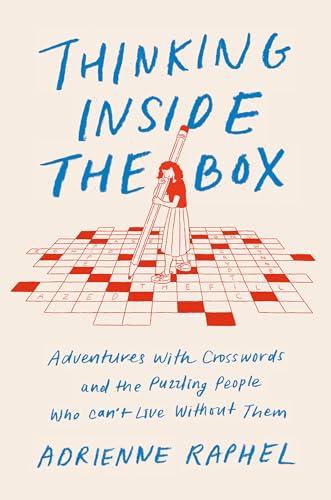
Author Adrian Raffel, who wrote the book Thinking Inside the Box, Adventures with Crosswords of the Puzzling People Who Can't Live Without Them, wrote in the Paris Review in 2020, quote, If you're a piece of artificial intelligence software, you might have a hard time solving a crossword.
You'd have to separate the puzzle into two separate strands of problems to tackle the issue. How to figure out what a clue is saying, or rather, what it's precisely not saying, and how to fill the letters in the grid in the way that makes the most sense.
Crosswords force the brain to cross wires and solve both these problems at once, balancing the visual spatial part of the brain with the logic run part of the brain.
This is part of the reason why even the best crossword solving AI in the world isn't yet better than the best human. The AI can fill in the grid pretty quickly, but in terms of resolving that grid through riddle logic, humans are still a step ahead.
The most innovative aspect of the crossword is that, through braiding together tasks the mind already wanted to do, it created an itch we didn't know we had. And yet, we've always been primed to solve them.
Episode: It Could Happen Here Weekly 139
In his book, Thinking Inside the Box Adventures with Crosswords of the Puzzling People Who Can't Live Without Them, Adrian Raffel described crosswords as puzzles that force the brain to balance logic with spatial reasoning.
Author Adrian Raffel, who wrote the book Thinking Inside the Box Adventures with Crosswords of the Puzzling People Who Can't Live Without Them, wrote in the Paris Review in 2020, quote, If you're a piece of artificial intelligence software, you might have a hard time solving a crossword.
Crosswords force the brain to cross wires and solve both these problems at once, balancing the visual spatial part of the brain with the logic run part of the brain.
The most innovative aspect of the crossword is that, through braiding together tasks the mind already wanted to do, it created an itch we didn't know we had. And yet, we've always been primed to solve them.