The Clash of Civilizations and the Remaking of World Order
Samuel P. Huntington
Mentioned 5 months ago
It Could Happen Here Weekly 220
There’s a reason the History Channel has produced hundreds of documentaries about Hitler but only a few about Dwight D. Eisenhower. Bad guys (and gals) are eternally fascinating. Behind the Bastards dives in past the Cliffs Notes of the worst humans in history and exposes the bizarre realities of th...
Recently mentioned
Samuel P. Huntington
Mentioned 5 months ago
It Could Happen Here Weekly 220
Robert D. Kaplan
Mentioned 5 months ago
It Could Happen Here Weekly 220
Elizabeth J. Perry
Mentioned 5 months ago
It Could Happen Here Weekly 220

J.R.R. Tolkien
Mentioned 5 months ago
Part One: How Jeffrey Epstein Helped Build the Modern World
Joshua Green
Mentioned 5 months ago
Part One: How Jeffrey Epstein Helped Build the Modern World
Professor Gilles Deleuze
Mentioned 5 months ago
It Could Happen Here Weekly 219

Madoka Kishi
Mentioned 5 months ago
It Could Happen Here Weekly 219
Samuel Miller McDonald
Mentioned 5 months ago
It Could Happen Here Weekly 219

Klaus Mann
Mentioned 5 months ago
It Could Happen Here Weekly 219
Mentioned 5 months ago
The Greg Bovino Episode Extravaganza!
Robert A. Heinlein
Mentioned 5 months ago
The Greg Bovino Episode Extravaganza!
John Lindsay-Poland
Mentioned 5 months ago
It Could Happen Here Weekly 218
A Memoir
It was a memoir written by a man who was raised in the Synanon school, primarily discussing his life after the cult, but the book's beginning focused on his Synanon childhood.
"The school is where they put the kids when they took us from our parents. It's where we all lived from the time we were six months old. Since Chuck, the old man, said that dope fiends would just mess...
— Episode: Part Two: Synanon: The Drug Rehab Progra...
It was a memoir written by a man who was raised in the Synanon school, primarily discussing his life after the cult, but the book's beginning focused on his Synanon childhood.
"The school is where they put the kids when they took us from our parents. It's where we all lived from the time we were six months old. Since Chuck, the old man, said that dope fiends would just mess up their kids anyway, we were all put in a building together to become children of the universe."
"You had to listen to Chuck. We had demonstrators who were like teachers and classes and songs and I was lucky because I had a Bonnie. She would hug me every day and sing songs with me and call me son and ask me what I want for a snack."
"Most of the other kids didn't have a Bonnie though and some never even saw their moms or dads. They just never came to visit."
"Dmitri said he doesn't remember his mom's face. She was somewhere else. He didn't know where his dad was. The demonstrators say we don't need our parents because we have each other, but we don't like sharing our toys and I don't know who to talk to when I woke up with a bad dream or fell off of the monkey bars."
"Some of the kids were very sad. Tony, his brother, used to sit alone at the edge of the playground all day and his brother was a little older than him. He would turn away when one of the demonstrators tried to hug him. He doesn't trust the adults and he doesn't play with other kids that much. When mom came to visit, she would say he's just like that and he needs to learn how to deal with his anger, but maybe it's because someone did bad things to him. That happens sometimes. The kids would get hit really hard or locked in a closet and there was no mom or dad to tell because they lived somewhere else and you couldn't even remember their faces."
It was a memoir by a man who was raised in a Synanon school as a child. The book details his experiences and the impact of the cult on his life.
the school is where they put the kids when they took us from our parents. It's where we all lived from the time we were six months old.
Since Chuck, the old man, said that dope fiends would just mess up their kids anyway, we were all put in a building together to become children of the universe.
You had to listen to Chuck. We had demonstrators who were like teachers and classes and songs and I was lucky because I had a Bonnie.
She would hug me every day and sing songs with me and call me son and ask me what I want for a snack.
Most of the other kids didn't have a Bonnie though and some never even saw their moms or dads. They just never came to visit.
Kwasi Balagun, formerly Donald Weems, was inspired by the book, along with Malcolm X's autobiography, as he recognized that black liberation would only come about through protracted guerrilla warfare.
He also learned from the leaders that surrounded him, like the leader of the SNCC and the leaders of the Black Panthers.
— Episode: It Could Happen Here Weekly 46
Kwasi Balagun, formerly Donald Weems, was inspired by the book, along with Malcolm X's autobiography, as he recognized that black liberation would only come about through protracted guerrilla warfare.
He also learned from the leaders that surrounded him, like the leader of the SNCC and the leaders of the Black Panthers.
Kwasi Balagun was inspired by the book "Negroes with Guns" by Robert F. Williams, which was about the Black Power movement and the need for armed self-defense.
He began to read literature like the autobiography of Malcolm X and Robert F. Williams' book, Negroes with Guns.
in large print
It was a book written by Stanley about his expedition to find Dr. Livingstone, and it helped invent the genre of travel writing.
How I Found Livingston
— Episode: Part Two: Henry Morton Stanley: The Expl...
It was a book written by Stanley about his expedition to find Dr. Livingstone, and it helped invent the genre of travel writing.
How I Found Livingston
Stanley wrote this book after finding Dr. Livingston, which catapulted him to fame and essentially created the genre of travel writing.
How I Found Livingston
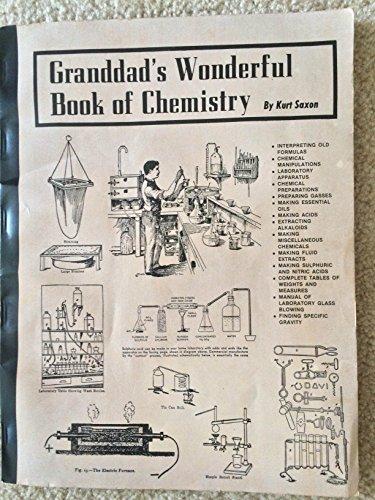
This book was mentioned as the source for information on alcohol, and was referenced in a section about making a still.
For the real poop on alcohol for its own sake, get granddad's wonderful book of chemistry.
— Episode: The Survivor: A Magazine For Nerdy Terro...
This book was mentioned as the source for information on alcohol, and was referenced in a section about making a still.
For the real poop on alcohol for its own sake, get granddad's wonderful book of chemistry.
Alcohol Matry starts on page 129.
We did poop used to mean something else.
You don't want the real poop on alcohol?
He's trying to keep it light.
It was mentioned in the context of Kurt Saxon's magazine as containing information on the production of alcohol, though it was not a book specifically by Kurt Saxon.
For the real poop on alcohol for its own sake, get granddad's wonderful book of chemistry.

This classic book on fireworks was mentioned as one of the sources of information found in "The Poor Man's James Bond."
Plus George W. Weingart's classic on fireworks, pyrotechnie.
— Episode: The Survivor: A Magazine For Nerdy Terro...
This classic book on fireworks was mentioned as one of the sources of information found in "The Poor Man's James Bond."
Plus George W. Weingart's classic on fireworks, pyrotechnie.
It gives full and simple instructions for making tear gas, explosives, firearms, silencers, poisons, zip guns, grenades, knockout drops, flamethrowers and a wide variety of weapons.
The poor man's James Bond is the undisputed leader in the field of books on improvised weaponry and do-it-yourself mayhem.
Includes fireworks and explosives like granddad used to make.
This book has hundreds of formulas and processes for making fireworks, blasting compounds, gunpowder, nitro, gun cotton, et cetera.
It was mentioned as a source Kurt Saxon used in 'The Poor Man's James Bond', contributing to the book's focus on creating fireworks and explosive materials.
Plus George W. Weingart's classic on fireworks, pyrotechnie.
It was discussed in the context of the author's predictions, which he claimed to have made accurately about the rise of ISIS, however, it was stated that the prediction was not accurate, and the details within it were quite different to reality.
And he brings up his 2004 book, The Religion War.
— Episode: We Read The Dilbert Guy's Attempt to Mak...
It was discussed in the context of the author's predictions, which he claimed to have made accurately about the rise of ISIS, however, it was stated that the prediction was not accurate, and the details within it were quite different to reality.
And he brings up his 2004 book, The Religion War.
I predicted the rise of an Islamic caliphate in the Middle East and their use of hobby sized drones for terror attacks.
It was described as a racist and atheistic rant that imagined a caliphate destroying Israel and the West, which was also portrayed negatively. It was criticised for not being nuanced and prescient about Islam or ISIS.
In the year 2007, a brilliant and charismatic leader named Al-Z began his rise to power in the Palestinian territories.
He was the architect of the 20-year plan for eliminating Israel, the success of which started a domino effect in the Middle East as one Arab dictatorship after another fell and their territories rolled into the Great Caliphate.

Politics and the Popular Imagination in the Era of Trujillo (American Encounters/Global Interactions)
It was highly recommended as a great book about Trujillo, and the podcast hosts shared a direct quote from it that detailed his control and use of the state to personally enrich himself and his cronies.
he then fashioned all public works policy formation and patronage as personal gifts from the dictator to the pueblo or people with his family and a few close friends Trujillo used the state to develop...
— Episode: Part Two: Rafael Trujillo: The Most Brut...
It was highly recommended as a great book about Trujillo, and the podcast hosts shared a direct quote from it that detailed his control and use of the state to personally enrich himself and his cronies.
he then fashioned all public works policy formation and patronage as personal gifts from the dictator to the pueblo or people with his family and a few close friends Trujillo used the state to develop a system of highly profitable economic monopolies as he gradually took over all core national industries such as meat milk sugar rice oil cement and beer he then used the law to guarantee their profitability and allocated state contracts to his family and cronies for example he prohibited the production of sea salt so the public would have to purchase salt from the Baharona mines where he could which he controlled his wife Maria Martinez was allotted a government bank for cashing state paychecks Trujillo's sister's husband was given the military pharmaceutical contract a highly lucrative enterprise given the massive expansion of the armed forces in this extreme example of pre-bindalism the appropriation of the state for private ends the state became an instrument that guaranteed flows of profit to Trujillo and his circle Trujillo initially eventually became one of the wealthiest men in Latin America under his regime there was no effective distinction between the national treasury and the dictator's own purse he also used the state as a legal screen which shielded the public from the regime's extraordinarily lawlessness and corruption he enabled his own divorce for example by altering divorce legislation
It was mentioned as a source for the episode, highlighting the US's recruitment of the 'worst rascals' to form the Dominican military, including Trujillo.
Widespread resistance to becoming part of the United States-led force meant that recruiters were forced to enlist what a witness described as the worst rascals, thieves and assassins in the country.
If the military had previously been a means of social assent for the respectable poor, it was now open to the anonymous crowd.
![[(Dilbert 2.0 : 20 Years of Dilbert)] [By (author) Scott Adams] published on (November, 2008) Cover](https://media.podcastbookpicks.com/books/12027.jpg)
20 Years of Dilbert)] [By (author) Scott Adams] published on (November, 2008)
It was discussed as a book where he blamed diversity programs and black people for the failure of his career and specifically his TV show. It was contrasted with his more reasonable explanation of the show's failure a few years earlier.
The show started out well, but in the second season, the network made a strategic decision to focus on shows with African-American actors.
— Episode: Part Two: How The Dilbert Guy Lost His M...
It was discussed as a book where he blamed diversity programs and black people for the failure of his career and specifically his TV show. It was contrasted with his more reasonable explanation of the show's failure a few years earlier.
The show started out well, but in the second season, the network made a strategic decision to focus on shows with African-American actors.
It was used as a primary source for Scott Adams' childhood and early life, though it was noted that he was already starting to show signs of erratic behavior by 2008 when it was published.
If you're into comic, obviously, which which you are, Randy, you know how like you had those like the the the far side big collection.
Gary Larson.
He writes a bunch of stuff at the beginning and he kind of like explains different comics.
There was another one for Calvin and Hobbes.
Most of like the really big cartoonists get one of those at some point in their career.
Complete Works
It was described as a weird algorithmic novel from the 1920s that explored 1,462 possible book plots. A short excerpt from its forward was read, which began with a man and a woman walking through a thick London fog in 1926.
Let's let's give just a short excerpt from the forward of Plato by William Wallace Cook.
— Episode: Part Two: AI Is Coming for Your Children
It was described as a weird algorithmic novel from the 1920s that explored 1,462 possible book plots. A short excerpt from its forward was read, which began with a man and a woman walking through a thick London fog in 1926.
Let's let's give just a short excerpt from the forward of Plato by William Wallace Cook.
Yeah, it begins. Picture a man and a woman walking through a thick fog in London. The year is 1926. They are in love and they are miserable.
Well, I mean, already. Yeah, I'm hooked. Tell me more.
It was mentioned in the context of its challenging content and how it fosters a dialogue between the reader and author. A scene featuring a character masturbating through a hole in his pocket while his wife is with another man was referenced.
It took him a lot longer.
— Episode: Part Two: AI Is Coming for Your Children
It was mentioned in the context of its challenging content and how it fosters a dialogue between the reader and author. A scene featuring a character masturbating through a hole in his pocket while his wife is with another man was referenced.
It took him a lot longer.
You know, actually, when you read Ulysses, because one of the most famous scenes in that book that got it attacked by a lot of anti-obscenity laws is, uh, is one of the characters, uh, walking along the strand basically and masturbating through a hole in his pocket while his wife fucks some other guy.
And when you are reading a story about a man masturbating through a hole in his pocket, again, all fiction is a dialogue between reader and author.
Vince McMahon and the Unmaking of America
It was discussed and referenced multiple times, detailing Vince McMahon's early life and career in wrestling, including stories from his friends and associates.
Josie Reisman found when she interviewed his friend Dutch for her book.
— Episode: Part Three: Vince McMahon, History's Gre...
It was discussed and referenced multiple times, detailing Vince McMahon's early life and career in wrestling, including stories from his friends and associates.
Josie Reisman found when she interviewed his friend Dutch for her book.
When Josie talks to other kids at the military school they'd bring up, is that like, you know, we're men in a military school.
Josie Reisman's research includes uncovering arbitration documents from a separate legal case at around the same time.
The father's wisdom as imparted to the son was, 'wrestlers are like seagulls'.
In Vince's telling, he went to Ali's room and discussed the matter with him.
It was mentioned as a source for information on Vince McMahon's life. The book was used for a number of quotes and facts in the podcast episode.
Josie Reisman writes that this was presumably in blackface, and I suspect she is correct there.
Reisman notes, quote, However, the picture that emerges from those who knew him is surprisingly of a kind kid who made friends with ease.
In other interviews that he gave earlier, his story is a lot more realistic. He claims that his school had to integrate while he was in 10th grade. This caused tumult and perhaps due in part to being racist, Vince no longer liked it at his school once it was integrated. His grades and behavior were bad enough that the administration decided to kick him out. So military school was one of his only options. This wound up being what ultimately made him.
I didn't say that. Vince countered in a tone that suggested a rising shield.

Dispatches from the Front Lines of Homeland Security (City Lights Open Media)
A deep dive on how we got to the current militarized state of the border.
I really like a blog and it's also a podcast every week, Border Chronicles, Todd Miller's Border Chronicles.
— Episode: It Could Happen Here Weekly 69
A deep dive on how we got to the current militarized state of the border.
I really like a blog and it's also a podcast every week, Border Chronicles, Todd Miller's Border Chronicles.
I also would recommend reading all of Todd Miller's books. He is an incredible investigative journalist that does a deep dive on how we got to this militarized state of the border.
So, I would recommend starting with Border Patrol Nation and just going straight through there.
How Jack Welch Gutted the Heartland and Crushed the Soul of Corporate America―and How to Undo His Legacy
It was mentioned and quoted several times throughout the podcast, particularly in relation to Jack Welch's leadership style and its impact on GE and the broader business world.
One analyst asked how the price for copper would impact earnings in the next quarter. "What the hell difference will that make?" Welch shot back. "You should be asking me where I want to take the comp...
— Episode: Part Two: Jack Welch Is Why You Got Laid...
It was mentioned and quoted several times throughout the podcast, particularly in relation to Jack Welch's leadership style and its impact on GE and the broader business world.
One analyst asked how the price for copper would impact earnings in the next quarter. "What the hell difference will that make?" Welch shot back. "You should be asking me where I want to take the company."
Some people think it's cruel or brutal to remove the bottom 10% of our people. It isn't. It's just the opposite. What I think is brutal is false kindness. False kindness is keeping people around who aren't going to grow and prosper.
Within months of his departure, it became clear that GE was deeply troubled. And in a matter of years, the corporation was falling apart.
Had so much of the wealth created by corporations not been reverse distributed back to investors in the form of buybacks and dividends over the past 45 years and had pay kept pace with productivity, the average full-time American worker would be making about $102,000 annually, roughly double what he or she is today.
He's full of shit, Jack said. "He's a bullshitter." But Jack, I asked, "Didn't you choose Jeff?" "Yes," he conceded he had. "That's my burden and that I have to live with," he continued. "But people have been hurt. Employees, people's pensions, shareholders. It's bad." There were tears in his eyes. "I fucked up," he said again. "I fucked up."
It was used as a primary source for the episode, providing a critical assessment of Jack Welch's career and his impact on American capitalism, while also acknowledging a possible bias towards a romanticized view of the past.
An annual report from 1953 described how GE worked in the balanced best interests of all. The report trumpeted how much the company had paid in taxes, the virtues of paying its suppliers well and how critical it was to take care of its employees.
That year, GE proudly stated that it spent some 37 percent of its sales on pay and benefits for its workers, resulting in the biggest payroll in the company's history, with more people at work than ever before.
Next to the statistic was an illustration of a grinning factory worker walking away from the assembly line holding bags of money only after enumerating all the ways in which it was helping the government suppliers and employees.
layoff spread to other divisions as Welch amassed more responsibility. And as he toured GE's facilities around the country, he took the opportunity to remind the rank and file who was now in charge.
In Cleveland at the light bulb factory, he berated a manager for the relative high costs of GE's bulbs, screaming that competitors in communist Europe made similar products for half the price.
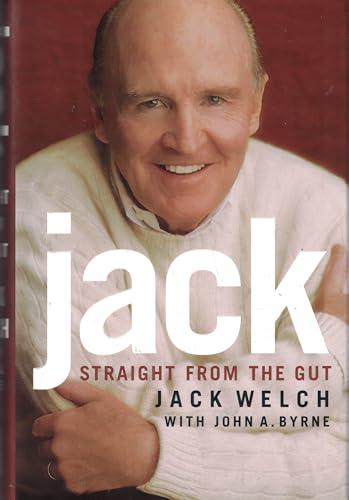
Straight from the Gut
It was mentioned as a book that was written by Jack Welch, who was being discussed in the podcast. It was jokingly suggested as reading material that could potentially lead to suicide.
...murder yourself with it like Keanu Reeves fighting a giant in a library. It's the only way out for you.
— Episode: Part Two: Jack Welch Is Why You Got Laid...
It was mentioned as a book that was written by Jack Welch, who was being discussed in the podcast. It was jokingly suggested as reading material that could potentially lead to suicide.
...murder yourself with it like Keanu Reeves fighting a giant in a library. It's the only way out for you.
It was mentioned as Jack Welch's autobiography, described as a self-serving piece of trash that took credit for everything good that happened at GE. It was used as a source for the episode, particularly for insights into Jack Welch's personality and childhood.
This may seem a strange way to begin an autobiography, a confession I hate having to use the first person. Nearly everything I've done in my life has been accomplished with other people. Yet when you write a book like this, you're forced to use the narrative I when it's really the we that counts now.
Please remember that every time you see the word I in these pages, it refers to all those colleagues and friends and some I might have missed. Now we move on.
my mother poured her love into me as if I were a found treasure.
don't kid yourself. That's the way it is. If you don't study, you'll be nothing. Absolutely nothing. There are no shortcuts. Don't kid yourself.
she knew how to be tough with me, but also how to hug and kiss. She wanted to make sure I knew how wanted and loved I was.

Whisky, Warfare, and a Scottish Adventure Like No Other
It was written by Louis Beam in 1983, encouraging fellow fascist Vietnam veterans to bring the war home to the United States. It was written after he was involved in multiple hate crimes and the C-Drift conflict.
So beam continued to write speeches newsletters and articles in various far-right journals of record culminating in his 1983 book essays of a clansman
— Episode: Part Four: How To Build An Army
It was written by Louis Beam in 1983, encouraging fellow fascist Vietnam veterans to bring the war home to the United States. It was written after he was involved in multiple hate crimes and the C-Drift conflict.
So beam continued to write speeches newsletters and articles in various far-right journals of record culminating in his 1983 book essays of a clansman
It was written by Louis Beam in 1983, encouraging fellow fascist Vietnam veterans to bring the war home to the United States. It was discussed as one of the many works he published in an attempt to spread his ideals and promote a violent revolution.
He did start making other plans. Oh he continued. Oh, no Spoilers it ends with a federal building exploding actually
So beam continued to write speeches newsletters and articles in various far-right journals of record culminating in his 1983 book essays of a clansman in this book he encouraged his fellow fascist Vietnam veterans to bring the war on home to the United States
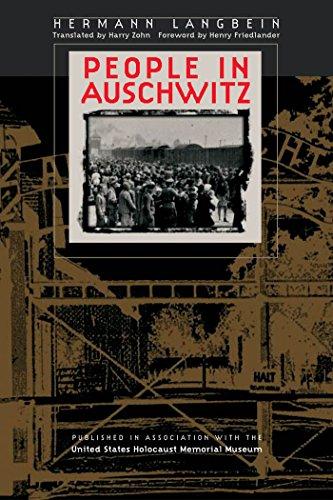
It was mentioned as a seminal work on the topic of Auschwitz where the Mengele Effect was coined as a form of memory displacement. The author claimed that many survivors idealized or misattributed acts of violence to Mengele.
He noted that many former inmates not only insisted they'd had direct contact with Mengele, but, and this is really strange, they tended to remember him as being hot.
— Episode: Part Four: Josef Mengele & The Nazi Doct...
It was mentioned as a seminal work on the topic of Auschwitz where the Mengele Effect was coined as a form of memory displacement. The author claimed that many survivors idealized or misattributed acts of violence to Mengele.
He noted that many former inmates not only insisted they'd had direct contact with Mengele, but, and this is really strange, they tended to remember him as being hot.
those who kept the machinery of murder going in Auschwitz were not devils. They were humans.
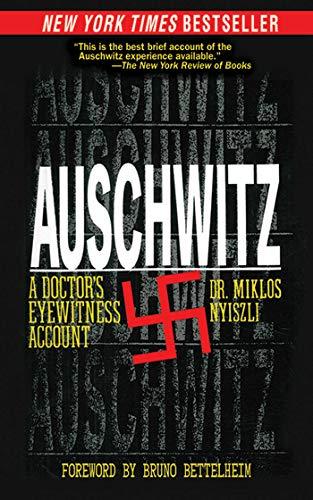
A Doctor's Eyewitness Account
It was recommended as a harrowing but short read for those who want a personal physical context of what Auschwitz was like. The transcript quoted a section of it, detailing the typhus outbreak and liquidation of the Czech camp.
I recommend if you want to get an actual degree of personal physical context for what it was like there. Miklos Niesley's memoir, Auschwitz, a doctor's eyewitness account is short. Yo...
— Episode: Part Three: Josef Mengele & The Nazi Doc...
It was recommended as a harrowing but short read for those who want a personal physical context of what Auschwitz was like. The transcript quoted a section of it, detailing the typhus outbreak and liquidation of the Czech camp.
I recommend if you want to get an actual degree of personal physical context for what it was like there. Miklos Niesley's memoir, Auschwitz, a doctor's eyewitness account is short. You can finish it in an afternoon. It's not a long book and it's fucking harrowing.
The quarantine camp, C camp, D camp and the F section were terribly overcrowded, despite the quotas which were filled daily for shipment to more distant camps.
The Czech section of the Auschwitz concentration camp was liquidated. This date, due to a prevalence of typhus among the prisoners. Signed, Dr. Mengele, Hauptsturmfhrer.
Bernays's most influential book was published in 1933 and focused on engineering consent, which was described as controlling and regimenting the masses without them knowing it. It was mentioned as being kept in a place of honour in Joseph Goebbels's office.
his focus in this book was on what he called the engineering of consent a phrase is horrified as it is
— Episode: Part Two: Edward Bernays: The Founding F...
Bernays's most influential book was published in 1933 and focused on engineering consent, which was described as controlling and regimenting the masses without them knowing it. It was mentioned as being kept in a place of honour in Joseph Goebbels's office.
his focus in this book was on what he called the engineering of consent a phrase is horrified as it is
He says is to provide leaders with the ability to quote control and regiment the masses according to our will without they're knowing about it
Published in 1933, it became Bernays's most influential work. This book focused on his concept of 'engineering consent', which he believed allowed leaders to control the masses without their knowledge, which was considered by his daughter to be an indication of him being a 'piece of shit'.
he says is to provide leaders with the ability to quote control and regiment the masses according to our will without they're knowing about it
Straight Talk Strategies For Success
The MMS newsletter detailed Humble's strategy for spreading his medicine across the world using the church as a way to push the agenda, and it was discussed during the episode.
look at the Catholics their priests have been molesting women and children for centuries and the governments have not been able to stop it if handled properly a church can protect us from vaccinations...
— Episode: Part One: The International Church of: D...
The MMS newsletter detailed Humble's strategy for spreading his medicine across the world using the church as a way to push the agenda, and it was discussed during the episode.
look at the Catholics their priests have been molesting women and children for centuries and the governments have not been able to stop it if handled properly a church can protect us from vaccinations that we don't want from forced insurance and for many things that a government might want to use to oppress us
The MMS newsletter was discussed, detailing Jim Humble's strategy of using the church to spread his bleach-based medicine around the world, in an attempt to protect people from vaccines and insurance.
Look at the Catholics, their priests have been molesting women and children for centuries and the governments have not been able to stop it. If handled properly a church can protect us from vaccinations that we don't want, from forced insurance, and for many things that a government might want to use to oppress us.
Note: The book recommendations on this page are discovered automatically from podcast transcripts, and may be incorrect or incomplete.
Podcast Name